Author: GizNews

  • EndeavourOS 2026.03.06 Released with Installer Enhancements and Kernel 6.19.6

    EndeavourOS 2026.03.06 Released with Installer Enhancements and Kernel 6.19.6

    Key Takeaways

    1. The new version of EndeavourOS, 2026.03.06 Titan, features the Linux 6.19.6.arch1-1 kernel.
    2. Users can upgrade to Titan without a full reinstallation.
    3. The ISO file size has increased from 3 GB to 3.4 GB to include new features.
    4. Download options include Magnet and Torrent links, as well as direct mirrors on the official website.
    5. EndeavourOS focuses on providing a streamlined and user-friendly Linux experience without unnecessary bloatware.


    In their effort to provide a top-tier Arch-based Linux experience, the EndeavourOS team has released yet another update. This new version, identified as 2026.03.06 and named Titan after a celestial theme, utilizes the Linux 6.19.6.arch1-1 kernel, which is accessible for both the live environment and the offline installer.

    Key Features of Titan

    Alongside the aforementioned kernel, EndeavourOS 2026.03.06 Titan includes several noteworthy features. Users with existing systems can transition to Titan without needing to perform a full reinstallation. For those looking to install EndeavourOS from the ground up, it’s important to note that the ISO file size has grown from 3 GB to 3.4 GB. This change is to include all the fresh features while still aiming for a streamlined Linux experience, devoid of unnecessary bloatware.

    Download Options

    You can start downloading the new version from the official website, where you will find Magnet and Torrent links, in addition to several mirrors for direct downloading. The team has made it easy for users to obtain the latest update and enjoy the enhancements that come with Titan.

    EndeavourOS is committed to enhancing user experience and ensuring that the system remains efficient and user-friendly.

    Source:
    Link


  • Budget USB-C Game Controller for Mobile Gamers – Now Cheaper!

    Budget USB-C Game Controller for Mobile Gamers – Now Cheaper!

    Key Takeaways

    1. Touch screen controls can be difficult for gaming due to lack of physical feedback and ergonomic design issues.
    2. Mobile controllers enhance the gaming experience, but they can be expensive, with prices often exceeding those of traditional gaming controllers.
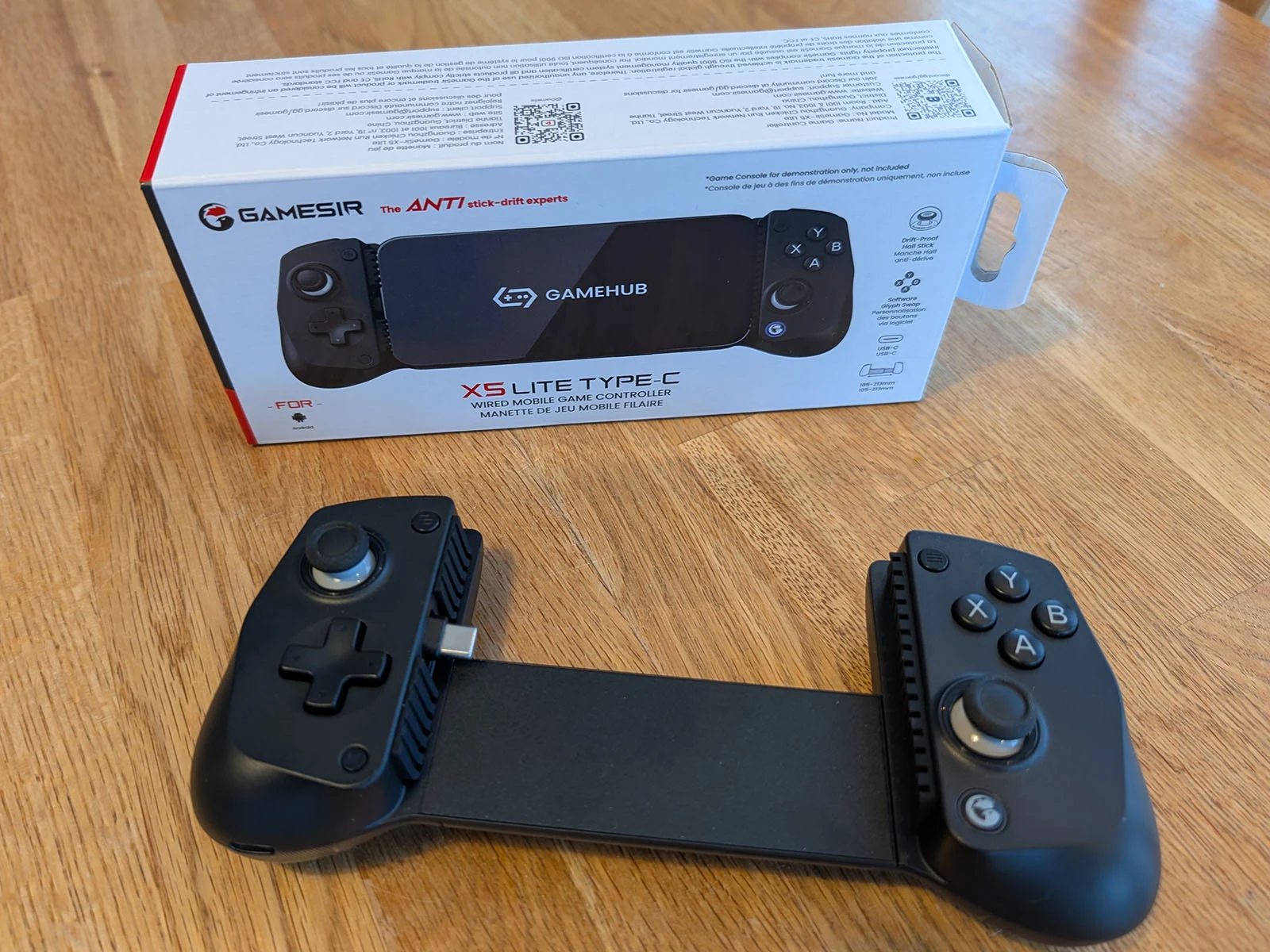
    3. The GameSir X5 Lite offers basic features, including a wired USB-C connection, but lacks advanced options like Bluetooth and haptic feedback.
    4. It provides minimal latency and the ability to charge your phone simultaneously, improving overall performance during gaming.
    5. At a competitive price, the GameSir X5 Lite is a great value for enhancing both retro and high-end mobile gaming experiences.


    Whether you enjoy classic games or the newest high-end titles on your mobile device, touch screen controls can be quite a headache. The absence of physical feedback often causes your fingers to slip away from the buttons, making it nearly impossible to play games that require you to hit multiple buttons at once, like any retro Mario game!

    Ergonomic Concerns

    In the same vein, smartphones and tablets lack proper ergonomic design. Holding a phone for long gaming sessions can become exhausting, and having a good grip can mean the difference between experiencing discomfort and truly enjoying the game. With many high-end games available on mobile that were not designed for touchscreens, using a dedicated controller vastly improves the gaming experience.

    Price Tag of Controllers

    That being said, mobile controllers can be pricey, particularly since they are often secondary devices used sporadically. Take the Razer Kishi V3 as an example; it retails for more than an official PS5 controller, priced at $119.99 (with a 20% discount on Amazon) compared to $73.99. While options exist for nearly every budget, finding one that matches the quality at such a price is quite challenging.

    Features of GameSir X5 Lite

    The GameSir X5 Lite isn’t particularly extravagant. It lacks RGB lighting (just a glowing GameSir button on the right side to indicate connection), uses a USB-C connection, has no haptic feedback, and doesn’t support Bluetooth. Instead, it features a standard set of controls that are somewhat cramped, resembling most regular controller layouts.

    The thumbsticks are clickable and utilize Hall effect technology, which means they won’t develop stick drift over time. The buttons, although membrane types instead of microswitches, still offer a decent tactile feel and clickiness. The palm grips are fairly comfortable, though they are a bit small compared to full-sized controllers.

    The controller can extend to fit devices up to 213mm wide, accommodating most phones and even some smaller tablets like the iPad Mini. It comes with removable rubber pads to fit different cases and varying USB port depths. Most devices should work well, provided the controller can be expanded sufficiently.

    Performance and Reliability

    Since the controller connects via a wired USB-C connection instead of Bluetooth, it experiences minimal latency, and you can charge your phone at the same time thanks to USB-C passthrough. It also includes various shortcuts to adjust volume and assign turbo modes to specific buttons. The grip on the phone is adequate; it won’t hold up well to rough handling, but it is relatively secure.

    The GameSir X5 Lite can best be described as “good enough.” The thumbsticks, buttons, ergonomics, and latency all perform adequately for their intended use, ensuring a smooth gaming experience without much hassle.

    Value for Money

    Where the X5 Lite truly excels is in its value. At £29.75 (after a 15% discount) on Amazon UK and $34.99 on Amazon US, it is one of the most affordable mobile controllers available. However, the enhancement it brings to the retro or AAA gaming experience on mobile is invaluable.

    Source:
    Link


  • Grand Seiko SBGA521 Limited Edition Titanium Automatic Watch Launch

    Grand Seiko SBGA521 Limited Edition Titanium Automatic Watch Launch

    Key Takeaways

    1. Grand Seiko unveiled the limited edition Heritage Collection SBGA521, celebrating the revamped luxury floor at Hankyu Umeda Main Store in Osaka, Japan.
    2. The watch features a violet “Hana-ikada” dial texture and a bezel-less design, enhancing its visual appeal.
    3. It is powered by the Caliber 9R65 Spring Drive movement, offering a power reserve of 72 hours.
    4. The SBGA521 is made from High-Intensity Titanium, making it lighter and more scratch-resistant than stainless steel.
    5. Only 45 pieces will be available, making it a rare regional exclusive coinciding with the gallery’s reopening on March 20.


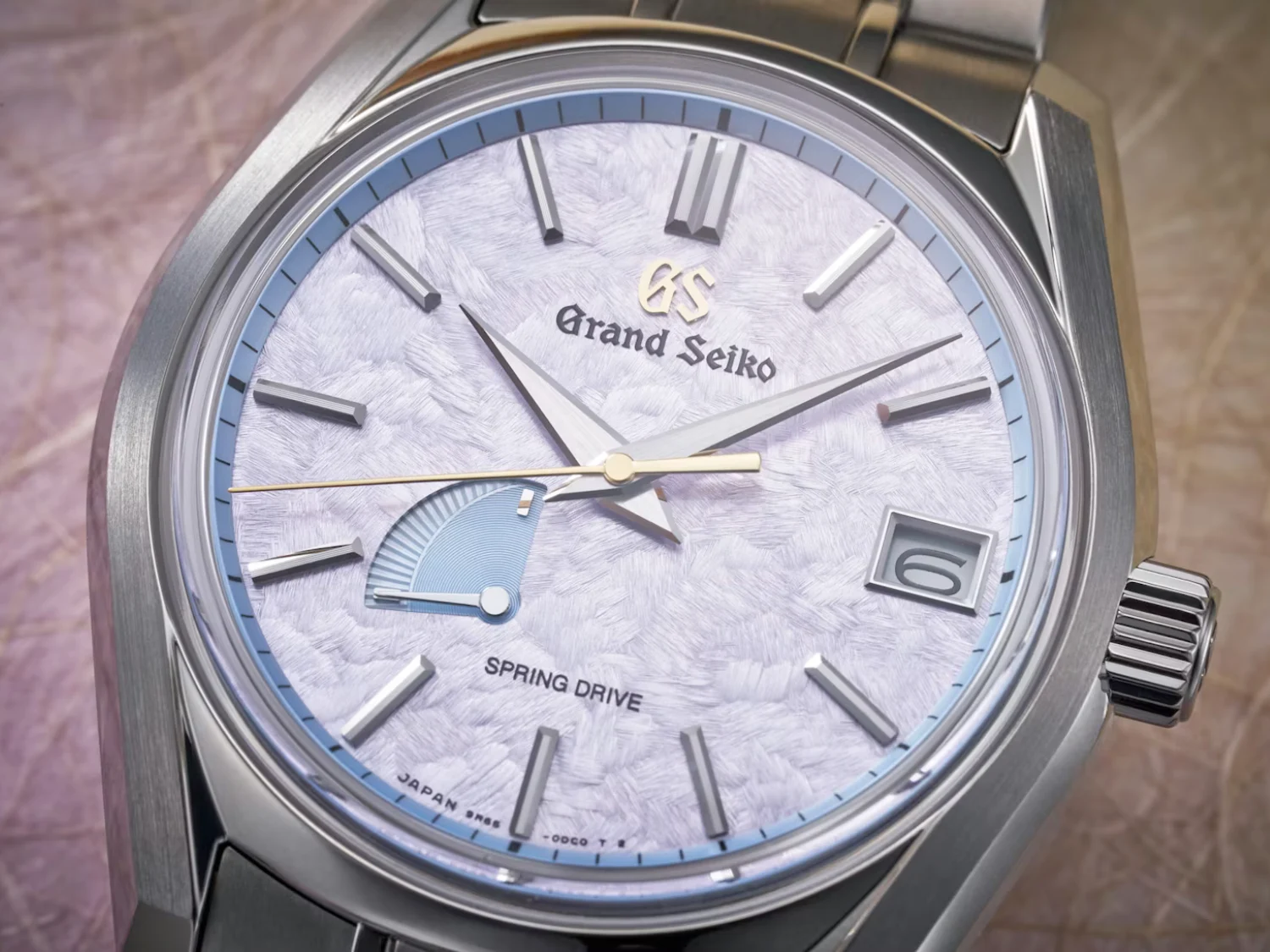
    Grand Seiko has just unveiled the Heritage Collection SBGA521, a fresh limited edition exclusive to boutiques. This release marks the celebration of the revamped luxury floor at the Hankyu Umeda Main Store in Osaka, Japan. It showcases the beloved “Hana-ikada” (flower raft) dial texture, creatively reinterpreted in a violet shade that draws inspiration from both the Takarazuka Revue and the store’s unique branding.

    Case Design and Dial Features

    The SBGA521 features the 62GS Modern Design case, which is a modern version of the brand’s first automatic watch introduced in 1967. Its bezel-less design allows the violet dial to stretch right to the edge of the boxed sapphire crystal, enhancing its visual appeal.

    The color scheme reflects the “Sumire” (violet) flower, with the dial displaying a gentle violet-grey tone. It includes a blue power reserve indicator and a blue outer ring. Gold-toned accents, such as the GS logo and seconds hand, provide a striking contrast against the textured “Hana-ikada” design, which evokes the image of cherry blossoms drifting on water.

    Movement and Construction

    This timepiece is powered by the Caliber 9R65, which is the core Spring Drive movement. It boasts a power reserve of 72 hours and features a smooth, gliding seconds hand that is beloved by Grand Seiko enthusiasts. The movement can be admired through a display case back, revealing the “Shinshu Wave” finishing applied to the bridges and rotor.

    The new GS model is crafted from High-Intensity Titanium, making both the case and bracelet significantly lighter and more resistant to scratches compared to traditional stainless steel. The watch has a diameter of 40 mm and a thickness of 12.8 mm. With only 45 pieces available, this edition is a particularly rare regional exclusive, coinciding with the reopening of the “Hankyu Luxury” gallery in Osaka on March 20.

    Source:
    Link


  • Compact 35mm f/1.7 Full-Frame Lens with 6 Aspherical Surfaces

    Compact 35mm f/1.7 Full-Frame Lens with 6 Aspherical Surfaces

    Key Takeaways

    1. Brightin Star introduces the Apex 35 mm f/1.7, its first fast lens for the Leica M system.
    2. The lens features a classic Leica M design with a glossy black finish and a focus ring that allows for precise manual focusing.
    3. It has a minimum focus distance of 30 centimeters, shorter than most Leica M lenses, which typically have a distance of 70 centimeters.
    4. The lens is designed for exceptional image quality, with a sophisticated apochromatically corrected design and eleven lenses, including three with aspherical surfaces.
    5. The Apex 35 mm f/1.7 is still in development, with no release date or pricing announced yet; more information will be available on the Brightin Star website soon.


    After introducing the Brightin Star 35 mm f/1.4 for the Leica SL system, the company now unveils its first fast lens for the Leica M, known as the Apex 35 mm f/1.7. One of the main benefits of the Leica M mount is that it allows for easy focusing using the rangefinder of a Leica M11. Moreover, users can attach the lens to cameras from brands like Nikon, Canon, or Sony, including the Sony A7 III ($1,698 on Amazon), by using affordable adapters.

    Design and Functionality

    The lens showcases the classic design typical of Leica M lenses, featuring a sleek glossy black finish and red lettering, which are also seen in Leica’s special editions. The focus ring has a rotation of 307 degrees, enabling precise manual focusing. As is standard with Leica M lenses, autofocus capabilities are not included. The minimum focus distance is a mere 30 centimeters, which is notably shorter than the usual 70 centimeters found in most Leica M lenses.

    Image Quality and Construction

    Primarily, this lens aims to deliver exceptional image quality. Brightin Star has crafted a sophisticated, apochromatically corrected design that includes eleven lenses. Among these, three feature aspherically ground surfaces on both sides, in addition to a floating lens group that can be adjusted independently from the main focus group during close focusing to enhance image quality. The lens itself weighs 266 grams and has a length of just 4.3 centimeters.

    Future Release Information

    The Brightin Star Apex 35 mm f/1.7 is currently still under development, and the manufacturer has yet to disclose the release date or pricing for the lens. Additional details regarding its launch are expected to be shared on the Brightin Star website in the upcoming months.

    Source:
    Link


  • Astronomers Observe Magnetar Birth Within Supernova for First Time

    Astronomers Observe Magnetar Birth Within Supernova for First Time

    Key Takeaways

    1. A supernova occurs when a star’s outer layers are ejected and its core collapses, forming a neutron star.
    2. Neutron stars can become magnetars, which have strong magnetic fields, rapid rotations, and high energy outputs.
    3. Superluminous supernovae shine significantly brighter and last longer than typical supernovae, linked to the presence of a magnetar at their core.
    4. Observations of SN 2024afav revealed brightness patterns and chirps, indicating interactions between the magnetar and surrounding material.
    5. Future surveys by the Vera C. Rubin Observatory aim to discover more chirping supernovae and deepen understanding of magnetars and their effects.


    At the end of their life cycles, some stars undergo a catastrophic event known as a supernova. During this process, the star’s outer layers are forcefully ejected, while the core collapses, creating a neutron star. This type of star is incredibly dense and primarily composed of neutrons. Among neutron stars, there are special ones called magnetars, which possess extremely strong magnetic fields, rotate very rapidly—sometimes over 1,000 times per second—and emit vast amounts of energy. This energy output significantly affects the area around them.

    Discovery of Superluminous Supernovae

    In the early 2000s, astronomers identified superluminous supernovae, which are explosions that shine 10 times brighter or even more than typical supernovae and can last for a longer period. In 2010, astrophysicists Dan Kasen, Lars Bildsten, and Stan Woosley introduced a theory suggesting that when a massive star collapses, it creates a fast-spinning magnetar at its core. This magnetar generates a magnetic field that accelerates particles, causing them to collide with the supernova debris, ultimately reheating it. As a result, the explosion appears brighter and endures for a longer time.

    Observations of SN 2024afav

    Recent studies have provided further understanding through the observation of SN 2024afav’s brightness over a period exceeding 200 days. The brightness revealed four bumps that occurred progressively closer together, accompanied by increased oscillation, a phenomenon known as a chirp.

    When a star explodes and results in a magnetar, some of the leftover material spirals in toward the magnetar, creating a rotating ring called an accretion disk. This disk is misaligned with the magnetar’s rotational axis, a situation that leads to general relativity frame dragging. As the disk moves closer to the magnetar, the chirp frequency accelerates. Future surveys conducted by the Vera C. Rubin Observatory are set to search for additional chirping supernovae, which may uncover more young magnetars and enhance our understanding of these explosive events.

    Nature via Phys.org

    Source:
    Link


  • Meta Unveils AI Tools to Combat Scammers and Safeguard Users

    Meta Unveils AI Tools to Combat Scammers and Safeguard Users

    Key Takeaways

    1. Meta is introducing new warnings on WhatsApp for device linking to protect users from scams.
    2. Facebook will implement alerts for suspicious friend requests to help users identify impersonation scams.
    3. The new tools are part of a broader strategy that uses AI to identify and disrupt scam activities across multiple platforms.
    4. Meta has removed over 159 million scam ads worldwide in 2025, with significant efforts in India to combat scams.
    5. Meta is collaborating with external organizations for awareness initiatives and has filed lawsuits against misleading advertisers in various countries.


    Meta has revealed a new suite of tools to combat scams on WhatsApp, Facebook, and Messenger. The company is leveraging AI technologies to enhance its ability to identify and disrupt fraudulent activities. In a post from March 11, Meta outlined updates such as device-linking warnings on WhatsApp, alerts for suspicious friend requests on Facebook, and improved detection systems targeting scam networks and misleading advertisers.

    Changes in WhatsApp and Facebook

    One of the key changes for users is on WhatsApp, where Meta is introducing new warnings related to device linking. This aims to protect users from being tricked into connecting their accounts to devices controlled by attackers. On Facebook, similar alerts for suspicious friend requests are being added to help users recognize impersonation and social-engineering scams before they interact with them.

    A Broader Strategy Against Scams

    Meta highlighted that these new tools form part of a larger strategy to address scams that are increasingly crossing over various services and employing more advanced methods to appear genuine. The company noted that as scammers continue to adapt their tactics, its defenses are being updated across multiple applications instead of just one isolated area.

    Moreover, Meta is implementing AI technologies to quickly identify and halt scam activities. This approach wasn’t described as a single new feature but rather as part of an extensive safety framework that includes automated detection, actions against scam ads, and collaborations with external agencies and organizations.

    Ongoing Efforts and Legal Actions

    The scale of the scam issue remains considerable, with Meta stating that in 2025, it removed over 159 million scam ads worldwide for breaching its policies. Specifically in India, Meta reported banning over 12.1 million scam-related ad pieces, with more than 93% being taken down proactively.

    In addition to these product updates, Meta continues to collaborate with external partners on awareness initiatives against scams. The company emphasized its partnership with India’s I4C and SEBI on the third edition of the “Scams se Bacho” campaign, which aims to enhance user knowledge about common online fraud methods.

    This announcement follows Meta’s recent actions against scams. In late February, the company disclosed that it had filed several lawsuits against misleading advertisers in Brazil, China, and Vietnam as part of its ongoing efforts to combat scam activities on its platforms.

    Scams are among the most persistent safety challenges on major online platforms, especially as fraudsters utilize AI tools, impersonation strategies, and cross-platform messaging to create convincing fake offers and urgent requests. Meta’s latest updates indicate that the company is attempting to tackle these issues from multiple angles: providing clearer warnings for users, enhancing automated detection systems, and increasing legal and collaborative enforcement efforts.

    Source:
    Link


  • Oppo Watch X3 Launch: Titanium Body, 3000 Nits OLED, ECG Feature

    Oppo Watch X3 Launch: Titanium Body, 3000 Nits OLED, ECG Feature

    Key Takeaways

    1. The Oppo Watch X3 features a lightweight titanium case, making it 16% lighter and 6.4% thinner than its predecessor.
    2. It has an IP69 and MIL-STD-810H certification, allowing it to be used while swimming, and a bright AMOLED display with a maximum brightness of 3,000 nits.
    3. The smartwatch includes advanced health monitoring features such as heart rate, SpO2, skin temperature sensors, and an ECG.
    4. It offers a 60-second health check to provide a snapshot of various health metrics, although it does not measure blood pressure accurately.
    5. The Oppo Watch X3 can connect to both Apple and Android devices simultaneously and supports over 100 apps, with LTE modem and eSIM for independent mobile network access.


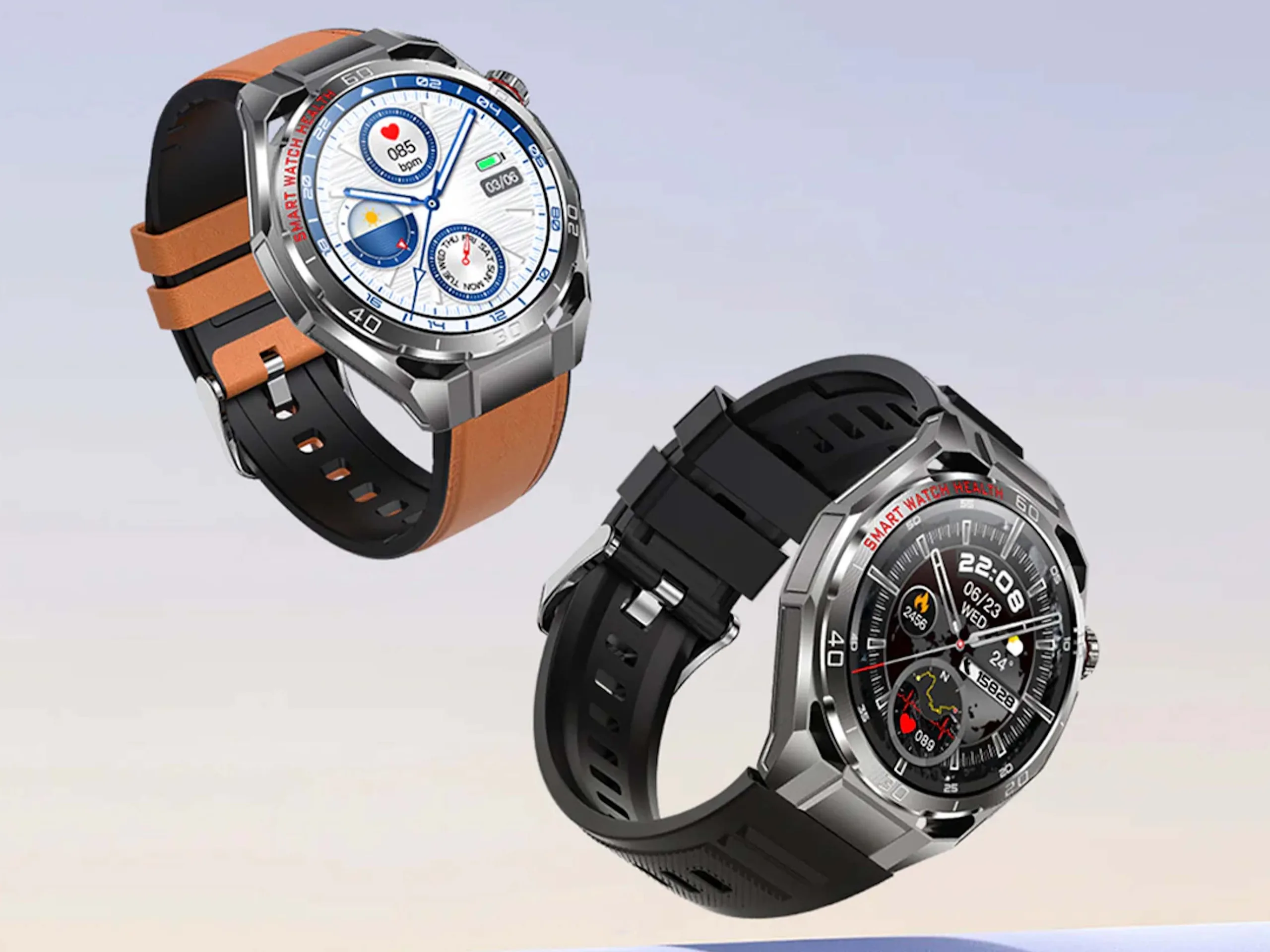
    Another option to the OnePlus Watch 3 ($341 on Amazon) will be officially revealed on Tuesday, March 17. A teaser website from Oppo has shown many key details about the smartwatch’s features ahead of time. The new design uses titanium instead of stainless steel for the case, which makes it 16 percent lighter and 6.4 percent thinner.

    Durability and Display

    The case is IP69 and MIL-STD-810H certified, so the smartwatch can be used while swimming. The round AMOLED display achieves a much higher brightness of 3,000 nits, which is especially useful since the maximum brightness of most smartwatches is usually only available in direct sunlight to enhance readability. For operation, besides the touchscreen, there is also a button and a digital crown.

    Health Features and Connectivity

    The Oppo Watch X3 boasts a comprehensive range of functions, particularly regarding health features. It includes a heart rate and SpO2 sensor, a skin temperature sensor, and an ECG. A 60-second health check allows the smartwatch to gather data from all sensors at once, giving a snapshot of all metrics. It is designed to alert users if they might be at risk of high blood pressure, though it does not actually measure blood pressure accurately.

    One neat feature is that this smartwatch can connect to both an Apple iPhone and an Android smartphone at the same time, which is great for users with multiple phones. The Oppo Watch X3 supports over 100 apps. With an LTE modem that has eSIM, the smartwatch can also connect to the mobile network without needing a smartphone when you’re on the go.

    Oppo’s new offering looks set to make a splash in the smartwatch market.

    Source:
    Link


  • Rogbid Rowatch 12: Affordable ECG and Blood Pressure Monitor

    Rogbid Rowatch 12: Affordable ECG and Blood Pressure Monitor

    Key Takeaways

    1. The Rogbid Rowatch 12 can create and analyze electrocardiograms (ECGs), but its accuracy in interpretation is uncertain.
    2. It uses an optical sensor to monitor heart rate and blood oxygen levels but lacks a GNSS module for performance tracking during activities like running.
    3. The smartwatch makes several bold claims, including assessing depression risk and monitoring blood pressure, which should be viewed skeptically.
    4. The design features a 1.47-inch AMOLED screen and a stainless steel case, but it is only water-resistant (IP68) and not suitable for swimming.
    5. The Rowatch 12 is priced at US$60 and is available for purchase at the official store.


    The Rogbid Rowatch 12 is a recent smartwatch that boasts a wide range of features. One of its key highlights is its capability to create and analyze electrocardiograms (ECGs). We have established that even budget-friendly smartwatches can produce ECGs, due to the simplicity of the technology involved. However, it remains uncertain if the Rowatch 12 can not only generate ECGs but also accurately interpret them as it claims. It’s important to note that this product is not a certified medical device, unlike the Samsung Galaxy Watch series (which you can find here on Amazon).

    Sensor Capabilities

    The Rowatch 12 employs an optical sensor to monitor heart rate and blood oxygen saturation. This feature allows the gadget to track exercise intensity; however, it falls short in performance tracking since it doesn’t include a GNSS module, which is crucial for activities like running. The product page makes several assertions that should be viewed with skepticism, including its alleged capacity to evaluate depression risk and monitor blood pressure.

    Design and Availability

    This smartwatch comes with a 1.47-inch AMOLED screen and is housed in a stainless steel case. Due to its IP68 rating, it is not completely waterproof and should not be worn while swimming. The Rowatch 12 is currently available for purchase at the official store for US$60.

    Source:
    Link


  • Silent Hill F Developers Explain Melee-Only Gameplay Choice

    Silent Hill F Developers Explain Melee-Only Gameplay Choice

    Key Takeaways

    1. Melee-Only Combat Focus: Silent Hill f breaks new ground by emphasizing close-range weapons, aiming to create a unique survival horror experience without firearms.

    2. Emotional Over Historical Context: The development team prioritizes evoking emotions rather than strict historical accuracy, focusing on building tension and anticipation.

    3. Resource Management Innovation: The game uses weapon durability instead of bullets, creating pressure without revealing enemy health values, enhancing the sense of uncertainty.

    4. Intentional Lack of Information: The absence of detailed combat stats is designed to heighten tension, making players rely on instinct and observation for combat effectiveness.

    5. Balancing Pressure and Relief: The introduction of the “fox arm” as a gameplay mechanic offers players moments of relief, disrupting the combat flow while maintaining the melee-focused design.


    Silent Hill f is breaking new ground in the series by focusing its combat exclusively on close-range weapons. In a recent PlayStation Blog post dated March 11, Al Yang, the creative director and game director at NeoBards, explained how the team aimed to envision a “first melee-only Silent Hill title,” all while maintaining the core tension that defines survival horror.

    Emotional Over Historical

    Yang noted that the development team began with the idea of what weapons would fit in 1960s Japan, which is the backdrop for Silent Hill f. However, the overarching goal was more about evoking emotions rather than sticking strictly to historical accuracy. He emphasized that horror enthusiasts seek more than just jump scares; they crave a sense of tension. The real dread stems from anticipation and buildup, which became a key principle guiding both the story and combat mechanics.

    A Shift from Ranged Combat

    This idea clarifies why NeoBards decided to move away from firearms. According to Yang, the studio was not merely simplifying combat for the sake of being different. Instead, they aimed to recreate that unsettling rhythm typical of ranged survival horror combat, but using close-quarter mechanics instead.

    Silent Hill f manages resources in a unique way. Yang explained that the game does not include bullets; instead, weapon durability is used to instill a similar pressure. Each strike against a monster reduces the weapon’s durability, but players won’t see specific enemy health values or damage statistics.

    Intentionally Missing Information

    This absence of detailed information is deliberate. Yang mentioned that revealing exact numbers would lessen the tension, as horror is most effective when players must make choices without knowing precisely how safe they are or how near an enemy is to defeat. This uncertainty helps to ensure that every encounter remains unsettling rather than predictable.

    NeoBards also aims to recreate the experience of executing a critical hit without providing players with guns. Yang pointed out that enemy behavior and their reactions play a crucial role in this. The game features a Focus system that serves a similar purpose. By employing patience and timing, players can execute counterattacks or focus attacks aimed at weak points. Yang likened this to aiming down sights with a firearm, but adapted for melee combat.

    Balancing Pressure and Precision

    The expected outcome is a combat system that rewards precision and timing while keeping players close and vulnerable. While players may not know the exact damage they inflict, Yang believes they should still be able to interpret a monster’s responses and sense when a significant blow has been delivered.

    Yang also introduced a concept referred to as the “master key,” a mechanism designed to disrupt the usual combat flow and provide players with moments of relief. In more conventional horror games, this function might involve a grenade launcher or another powerful ranged weapon that allows players to eliminate danger without overthinking the situation. In Silent Hill f, this role is taken on by the fox arm, which is part of the protagonist Hinako’s transformation throughout the game.

    Moments of Relief

    Yang mentioned that systems like this are important since combat cannot maintain the same level of pressure indefinitely. Players need opportunities to break the usual rhythm on their own terms, and NeoBards views the fox arm as a way to offer that release while staying true to the game’s melee-only format.

    Silent Hill f already appears to be one of the more distinctive installments in the series, and Yang’s insights underscore that the melee-only approach is not simply a stylistic choice. NeoBards is reimagining traditional survival horror concepts like scarcity, vulnerability, pacing, and relief centered around close-range combat. Whether this will work effectively in practice will depend on how these systems feel to players, but the design intentions are now more transparent than ever.

    In contrast, Konami has provided significantly less information about Silent Hill Townfall, although a new teaser trailer suggests that the project is still very much active.

    Source:
    Link



  • James Webb Telescope Discovers Possible 12 Billion-Year-Old Comet

    James Webb Telescope Discovers Possible 12 Billion-Year-Old Comet

    Key Takeaways

    1. Comet 3I/ATLAS was initially thought to be an alien spaceship, but new data shows it has normal cosmic origins.
    2. It is estimated to be 10 to 12 billion years old, making it older than both Earth and the solar system.
    3. The comet likely originated in a cold region of the Milky Way galaxy, close in age to the galaxy itself.
    4. The James Webb Space Telescope (JWST) provided new insights into the comet’s gas composition, confirming its ancient origins.
    5. 3I/ATLAS measures about 1,400 ft (440 m) in size and entered the solar system at a speed of approximately 137,000 mph (221,000 km/h).


    The comet 3I/ATLAS was found last year, moving through the solar system, with some folks suggesting it was a spaceship from aliens. Recent observations by the JWST, however, have provided evidence that this space object has more normal origins.

    Age and Origins of 3I/ATLAS

    The results indicate that 3I/ATLAS originated in a chilly, distant region of the Milky Way galaxy. With estimates ranging from 10 to 12 billion years old, this comet’s age is more than twice that of both Earth and the solar system. Furthermore, 3I/ATLAS is quite close in age to the Milky Way, which is around 13.6 billion years old, and to the universe itself, at approximately 13.8 billion years.

    New Data from JWST

    The advanced JWST collected new data while it was passing by the comet in late 2025. It analyzed the gas composition that formed on the comet as the sun warmed it up, leading to the sublimation of the ice on its surface.

    Earlier assessments had estimated the age of 3I/ATLAS to be between 3 billion and 11 billion years. However, research scientist Romain Maggiolo stated, “They show that 3I/ATLAS isotopic composition is very different from solar system comets and suggest that it likely formed 10-12 billion years ago.”

    Size and Speed Details

    The comet is thought to measure 1,400 ft (440 m) and stretch about 3.5 miles (5.6 km) wide. Observations from the Hubble Space Telescope indicate it entered the solar system at a speed of around 137,000 mph (221,000 km/h). The nearest point of approach to Earth was at a distance of 168 million miles (270 million km), which was recorded on December 19, 2025.

    Source:
    Link