Author: GizNews

  • Next-Gen 3D Printing: Scrap 1 Transforms Metal into Precision Parts

    Next-Gen 3D Printing: Scrap 1 Transforms Metal into Precision Parts

    Key Takeaways

    1. The Scrap 1 3D printer by Scrap Labs can print with both plastics and metals, increasing its range of applications, such as creating strong replacement parts for heavy machinery.
    2. It uses a unique laser sintering mechanism instead of traditional filament extrusion, allowing it to work with various metal alloys, including stainless steel and cobalt-chrome.
    3. The printer can achieve precise layer thicknesses (20 to 100 µm) and has a laser focus of 0.135 mm, ensuring high-quality prints without drift.
    4. The Scrap 1’s dimensions are 43 × 50 × 57 cm, with a build volume of 100 × 100 × 100 mm, making it suitable for smaller components.
    5. With a starting price of $17,990, the Scrap 1 targets the professional market and emphasizes quality and capability in metal 3D printing.


    We have previously discussed 3D printers that can work with both plastics and metals. The Scrap 1 made by Scrap Labs is one of these machines. By allowing a wider variety of materials, it significantly increases the range of applications available — for example, it can create strong replacement parts for heavy machinery. The company claims that it can make models from stainless steel, tool steel, as well as copper and nickel alloys. It can also handle cobalt-chrome alloys, which are frequently used in the medical field.

    Unique Printing Mechanism

    In traditional 3D printers, the hot end and heating element are replaced in the Scrap 1 by a 200-watt laser that operates at a wavelength of 915 nm. However, the way it works is very different from standard 3D printing. Instead of pushing out filament layer by layer, the Scrap 1 uses a laser to sinter powder in the build chamber selectively. This laser is what makes it possible to work with those metal alloys. The manufacturer boasts that it can achieve layer thicknesses ranging from 20 to 100 µm, with a laser focus of 0.135 mm and no drift during the printing process. The dimensions of the printer are 43 × 50 × 57 centimeters (16.9 × 19.7 × 22.4 inches) and it weighs 30 kilograms. The build volume is 100 × 100 × 100 millimeters (3.9 × 3.9 × 3.9 inches), which is ideal for making smaller components. They assert that operation is simple, and it is compatible with software like PrusaSlicer.

    Professional-Grade Solution

    The starting price for the Scrap 1 is $17,990, which clearly indicates that Scrap 1 is aimed at the professional market. This price point emphasizes its quality and capability in the realm of 3D printing, especially when it comes to metal applications.

    Source:
    Link


  • Lenovo Launches New Lightweight 16-Inch Laptop with AMD or Intel

    Lenovo Launches New Lightweight 16-Inch Laptop with AMD or Intel

    Key Takeaways

    1. Lenovo introduced the IdeaPad Slim 5i Ultra at MWC 2026, with sales starting in June.
    2. The new IdeaPad Slim 5 models (16IPH11 and 16AGP11) replace older Gen 10 versions and offer customizable display options.
    3. The 16AGP11 model features Ryzen AI processors, while the 16IPH11 comes with Intel Core Ultra processors.
    4. Pricing for the IdeaPad Slim 5 models varies by region, with the 16AGP11 starting at $849.99 and the 16IPH11 at $949.
    5. Display options for both models may include different resolutions and refresh rates, depending on the market.


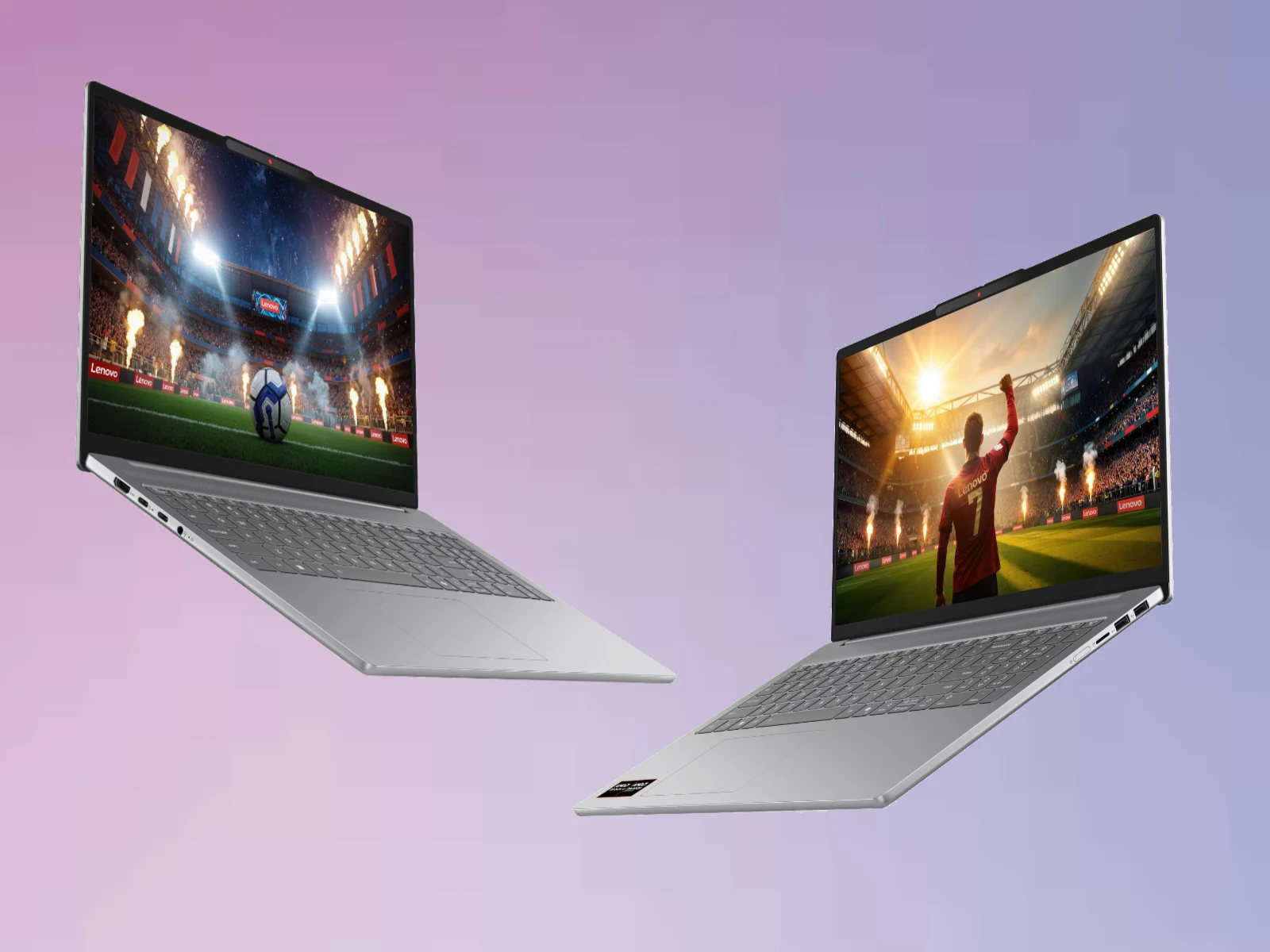
    Less than a month has gone by since Lenovo broadened its IdeaPad Slim lineup with the introduction of the IdeaPad Slim 5i Ultra. To give you some background, the laptop was unveiled at MWC 2026 in Barcelona. Lenovo plans to begin selling this 14-inch device starting in June.

    New Global Releases

    In the meantime, Lenovo has launched the IdeaPad Slim 5 16IPH11 and 16AGP11 worldwide. These new models are taking the place of older Gen 10 versions (currently priced at $649.99 on Amazon). The Gen 11 models can be customized with 1200p IPS, 1200p OLED, or 2.8K OLED screens. Do keep in mind that the specific display options can differ by region, with some markets getting 120 Hz IPS and others having 120 Hz OLED displays.

    Processor Options

    In a similar fashion, the IdeaPad Slim 5 16AGP11 comes with the Ryzen AI 5 430 in Europe, while Australia and North America get the Ryzen AI 7 445. The Ryzen AI 7 450 is also available in those latter two regions. On the other hand, Lenovo markets the IdeaPad Slim 5 16IPH11 globally with either the Core Ultra 5 322 or Core Ultra 7 355 from Intel’s Panther Lake series.

    Pricing Overview

    The pricing for the IdeaPad Slim 5 16AGP11 is set at $849.99, £870, AUD 1,869, CAD 1,179, and €999 in the Eurozone. In contrast, the IdeaPad Slim 5 16IPH11 costs $949 in the US, along with £870, AUD 1,679, CAD 1,319, and €999 in the Eurozone. For further information, please refer to the regional links provided below.

    Source:
    Link


  • Lenovo Launches 16-Inch Laptop with Intel Panther Lake & 105W GPU

    Lenovo Launches 16-Inch Laptop with Intel Panther Lake & 105W GPU

    Key Takeaways

    1. Lenovo has launched the IdeaPad Pro 5i Gen 11 series in North America, featuring a 16-inch model with Nvidia GeForce RTX 5050 GPU.
    2. The North American version differs from the European and Australian models, which include a 14-inch version without discrete graphics.
    3. The 16-inch model in the US starts at $2,449.99, while prices in Canada and Australia are CAD 3,399.99 and AUD 4,399, respectively.
    4. The standard configuration includes a Core Ultra 7 356H processor, 32 GB of RAM, 1 TB storage, and a 2.8K OLED display.
    5. Future options will include the Core Ultra 9 386H processor and a 99 Wh battery setup.


    Lenovo has begun to distribute its new IdeaPad Pro 5i generation throughout North America. However, there are noticeable differences between the version available in Canada and the United States and the one recently introduced in Europe and Australia. To summarize, the company launched the IdeaPad Pro 5i Gen 11 series in those regions with a 14-inch model that does not include discrete graphics.

    Distinct Features for North America

    In contrast, North American consumers can now get a 16-inch model featuring an Nvidia GeForce RTX 5050 GPU with a Total Graphics Power (TGP) of 105 W, similar to last year’s version (curr. $1,299 on Amazon). Interestingly, the GeForce RTX 5060, which was talked about during CES 2026 in January, is exclusively available in Australia, where Lenovo has placed a price of AUD 10,098.90 (~$6,945) on it.

    Specifications and Pricing

    Currently, Lenovo is marketing the IdeaPad Pro 5i (16IPH11) with options between the Core Ultra 7 356H and Core Ultra 9 386H processors. The standard version comes with a Core Ultra 7 356H chip, 32 GB of LPDDR5X-8533 RAM, 1 TB of M.2 2242 storage, and an 84 Wh battery that allows for 170 W charging. This setup also includes a 2.8K OLED non-touch display that can reach up to 120 Hz, with 500 nits for SDR and 1,000 nits for HDR brightness.

    Costs and Future Options

    In the US, the starting price for the IdeaPad Pro 5i 16-inch is $2,449.99; in Canada, it’s CAD 3,399.99, and in Australia, it’s AUD 4,399. Alternatively, customers can opt for a configuration featuring the Core Ultra 9 386H and a touchscreen display. Eventually, Lenovo plans to introduce options for the Core Ultra X9 388H and a 99 Wh battery setup as well.

    Source:
    Link


  • PS5 Pro Panic Buying Starts Before $150 Price Increase

    PS5 Pro Panic Buying Starts Before $150 Price Increase

    Key Takeaways

    1. PS5 Pro Price Increase: The MSRP for the PS5 Pro will rise from $749.99 to $899.99 effective April 2, reflecting a significant price jump in a short time.

    2. Surge in Purchases: Community discussions reveal increased buying activity as customers rush to buy the PS5 Pro at the current price to avoid the upcoming $150 hike.

    3. Manufacturing Costs: The price increase is attributed to rising manufacturing costs and component shortages, particularly in memory components, impacting production across the industry.

    4. Wider Price Adjustments: Other PlayStation products, including the standard PS5 and Digital Edition, will also see price increases of $100, while the PlayStation Portal will rise by $50.

    5. Limited Time to Buy: Retailers still have stock available at the old price, but buyers have a short window to make purchases before the price change takes effect.


    Sony’s recent price hike for the PS5 Pro, which will take effect on April 2, is causing concern among potential buyers. In the U.S., the manufacturer’s suggested retail price (MSRP) will rise from $749.99 to $899.99. This change follows another price increase that happened in August 2025, showing a significant jump in the console’s price over the past year.

    Increased Buying Activity

    New discussions on community forums indicate a surge in PS5 Pro purchases. Users on sites like Reddit are sharing their experiences of buying the new consoles, claiming that the looming price change is driving their decisions. Essentially, these customers want to lock in the current price to avoid paying an extra $150.

    Reasons Behind the Price Change

    The increase in price is tied to the rising costs of manufacturing. A high demand for memory components in various industries has caused shortages, affecting console and PC production alike. Sony seems to be making this move to protect their profits before the anticipated release of Grand Theft Auto VI, which is likely to spur hardware demand, no matter the cost.

    Broader Impact on PlayStation Products

    It’s important to note that the price changes don’t only impact the Pro model. The adjustments will affect a significant portion of the PlayStation range. Both the standard PS5 with a disc drive and the Digital Edition will see their prices rise by $100, while the PlayStation Portal remote player, currently priced at $200 on Amazon, will increase by $50.

    Retailers still have stock available at the old price of $749.99. Buyers have a limited time, just a few days, to make their purchases before the new price of $899.99 takes effect worldwide. Although there is still inventory, the recent uptick in sales could lead to temporary shortages as the April 2 deadline approaches.

    Source:
    Link


  • Garmin Smartwatches Receive inReach Remote Update Before Rollout

    Garmin Smartwatches Receive inReach Remote Update Before Rollout

    Key Takeaways

    1. Garmin released Beta Version 26.07 to fix a bug in Beta Version 26.06 affecting inReach Remote.
    2. Beta Version 26.07 is now available for Pro smartwatches, including Fenix 7 Pro and Fenix 7X Pro.
    3. Users must manually request the update through the smartwatch menu.
    4. The update process involves going to Menu, then System, and selecting Software Update.
    5. Beta Version 26.07 includes all changes from Beta Version 26.06.


    Hardly any time has gone by since Garmin rolled out Beta Version 26.06 for its Enduro 2, Fenix 7, Quatix 7, and Marq Gen 2 smartwatches. At first, the company mentioned that they would also release the same update for Pro-branded smartwatches, but didn’t give a clear timeline for when that would happen.

    Update on Beta Version 26.07

    Not long after, Garmin acknowledged a bug in Beta Version 26.06 that affected the use of inReach Remote. In response, the company has moved on to Beta Version 26.07 to fix this problem. This new version is now available for Pro smartwatches like the Fenix 7 Pro and the Fenix 7X Pro, which is currently priced at $484 on Amazon.

    How to Request the Update

    It’s important to note that this update needs to be requested manually. To do this, go to Menu, then System, and choose Software Update before pressing ‘Check for Updates’. Beta Version 26.07 also includes all the other modifications that Garmin added in Beta Version 26.06. The complete list of changes between Beta Version 26.04 and 26.07 is provided below:

    Garmin’

    Source:
    Link


  • Hades II Launches on Xbox Game Pass in April with Play Anywhere

    Hades II Launches on Xbox Game Pass in April with Play Anywhere

    Key Takeaways

    1. Hades II is launching on Xbox Series X|S, Xbox on PC, and Xbox Cloud on April 14, and will be available on Game Pass from day one.
    2. The Xbox version will include all previous updates, quality-of-life enhancements, and additional content, making it the most complete version yet.
    3. The game features a new main character, Melinoë, and introduces significant gameplay changes, including a sprint ability and a Magick bar.
    4. Hades II will support Xbox Play Anywhere, allowing players to carry their progress and ownership across Xbox consoles and PC.
    5. Currently, there are no announcements for a PlayStation version, with the focus on Xbox hardware, PC, and cloud streaming for the release.


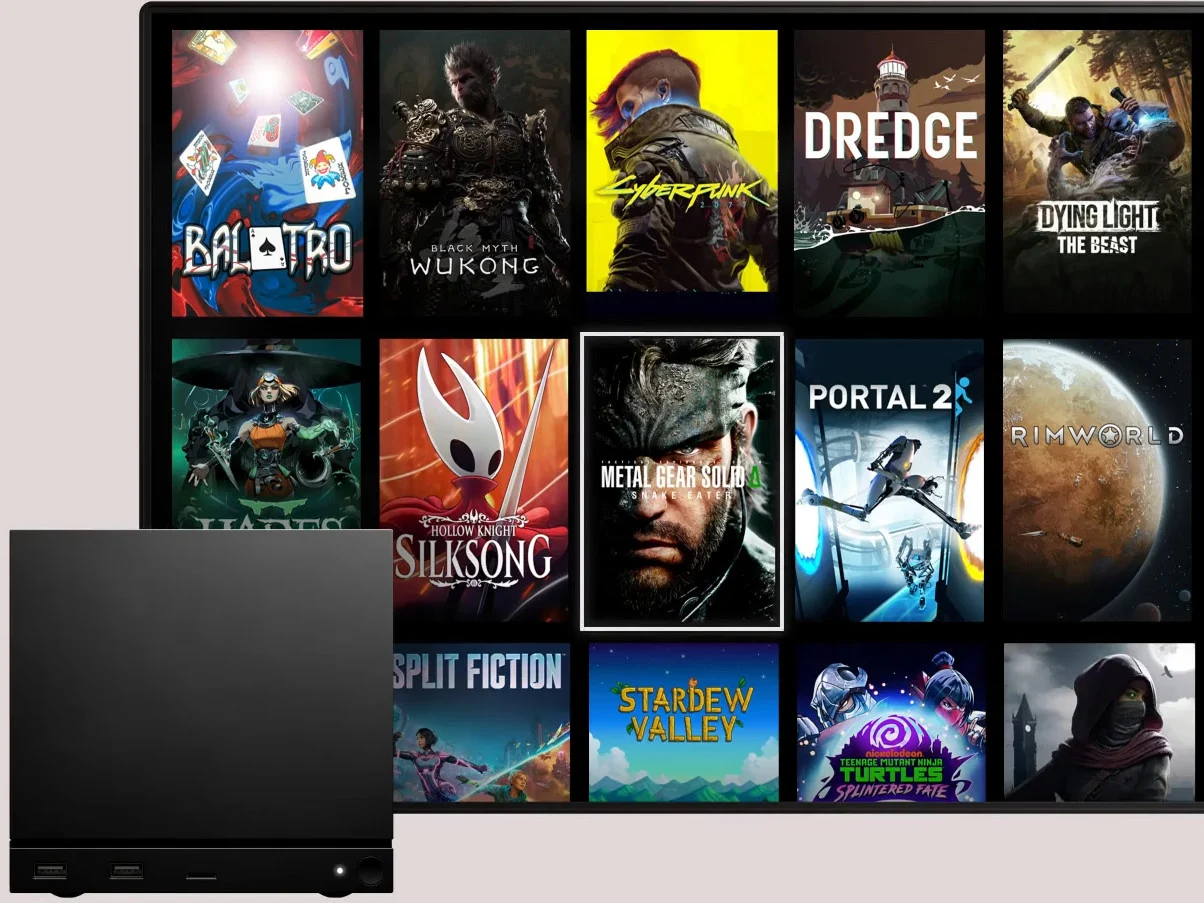
    Hades II is set to launch on Xbox on April 14, with Microsoft announcing that Supergiant Games’ sequel will arrive on Xbox Series X|S, Xbox on PC, and Xbox Cloud. The game will be part of Xbox Game Pass from day one and will support Xbox Play Anywhere.

    A Clearer Release Path

    This confirmation gives Hades II a more defined rollout on Xbox compared to previous discussions about the game. It also marks an important addition to the Game Pass lineup for April. According to Microsoft’s Xbox Wire, the Xbox version will come with all updates that have been released on other platforms, along with some quality-of-life enhancements and additional content.

    The Most Complete Version Yet

    Microsoft is promoting the April 14 release as the most comprehensive version of Hades II available. Xbox Wire states that this edition includes all the patches that have been sent out for other platforms, providing new Xbox players a smoother experience from the start compared to those who played on other systems at launch. The game will also be an Xbox Play Anywhere title, which allows players to carry their progress and ownership across Xbox consoles and PC in Microsoft’s ecosystem.

    Gameplay and Features

    The main concept of Hades II is still recognized: fast-paced roguelike gameplay inspired by Greek mythology, but now with Melinoë as the main character instead of Zagreus. Xbox’s announcement emphasizes some significant gameplay changes in the sequel, like Melinoë’s sprint ability, a Magick bar for Omega moves, a new Cast feature, and various route choices instead of just one upward escape option.

    Subscription Access is Key

    For Xbox, the more significant aspect is not only the platform availability but also access via subscription. Microsoft emphasizes that Hades II will be playable on Game Pass from the day of its release while also being accessible on Series X|S, Xbox on PC, and through cloud streaming. This adds another well-known third-party title to the Game Pass spring lineup.

    Currently, Xbox hasn’t announced any details for a PlayStation version, keeping the focus on Xbox hardware, PC via Xbox, and cloud streaming for the April 14 date. So for now, mark your calendars for April 14.

    Source:
    Link


  • Steam Machine Price Should Beat PlayStation 5 Hike

    Steam Machine Price Should Beat PlayStation 5 Hike

    Key Takeaways

    1. PlayStation 5 price increases: Digital edition now $599, Disc version $649, and PlayStation 5 Pro $899.
    2. Valve’s Steam Machine could challenge PlayStation by pricing below $899 or $649, especially during PlayStation’s price hike period.
    3. Price increases for PlayStation influenced by RAM and NAND supply issues, along with global trade challenges.
    4. Valve’s opportunity to promote Steam Machine as a rival, leveraging its strong software platform and potential pricing strategies.
    5. Steam Machine may achieve higher framerates than PlayStation 5 despite having a weaker GPU, thanks to a robust CPU and advanced upscaling support.


    Let’s get right to it—both versions of the PlayStation 5 have recently seen a price increase of $100 ($599 for the Digital edition, $649 for the Disc version), and the PlayStation 5 Pro has gone up by $200 (now at $899). This moment could not be better for Valve to reveal the pricing and release date for the Steam Machine, especially if they can keep it below $899 or $649. There’s talk about PlayStation reducing its PC ports because of the Steam Machine news, and even a former Xbox executive thinks that the Steam Machine will challenge PlayStation 5 and 6 more than Project Helix. It’s evident that the current console market is recognizing Valve as a genuine rival in the living room.

    The Reasons Behind the Price Hikes

    It’s no surprise that PlayStation has faced criticism from Xbox fans and analysts for these unusual price increases—they’ve been influenced by the ongoing RAM and NAND supply issues that have driven up costs for manufacturers. Since today’s consoles rely on PC technology, they’ve felt the impact of these price spikes as well. Plus, we can’t ignore the changes in global trade, imports, and tariffs. These market challenges are precisely why Valve has delayed announcing a final price or release date for both the Steam Machine and its standalone VR headset, Steam Frame. This situation has also resulted in erratic availability of the Steam Deck OLED, alongside the discontinuation of the Steam Deck LCD.

    Timing for Valve’s Opportunity

    From a strategic standpoint, PlayStation’s decision to raise prices on its hardware makes it an ideal time for Valve to promote the Steam Machine as a rival to the PlayStation 5. The hardware inside should definitely be capable enough—my colleague Zak Killian at Hot Hardware built and tested a simulated Steam Machine with 27 games. This simulated system cost around $600 before adding RAM and didn’t benefit from any potential savings Valve could gain through bulk buying or manufacturing. Additionally, Steam is one of the most lucrative software platforms globally—if Valve employs some tactical loss-leading pricing strategies, it could make a significant impact, something that used to be quite prevalent in the console market.

    Performance Comparisons

    In all honesty, the Steam Machine might not reach the same graphical levels as the PlayStation 5 Pro due to its weaker GPU. However, its CPU is quite robust, and since the PlayStation 5 Pro is limited by the same AMD Zen 2 CPU as the standard version, the Steam Machine could achieve higher framerates than either PlayStation console, especially with lower graphics settings. Moreover, even at similar graphics settings, particularly when aiming for 60 FPS, the Steam Machine appears more than capable of competing with the PlayStation 5 due to its advanced AMD FSR and Intel XeSS upscaling support. This comparison could improve even further if the anticipated AMD FSR 4 support becomes a reality.

    The next move is yours, Valve—and from my perspective as a tech writer for a decade and a lifelong gamer, I strongly urge you to seize this chance.

    Source:
    Link


  • Vivo X300 Ultra: Key Upgrades Unveiled and Features Explained

    Vivo X300 Ultra: Key Upgrades Unveiled and Features Explained

    Key Takeaways

    1. The Vivo X300 Ultra will launch on March 30 in China as the premium model in the Vivo X300 lineup.
    2. It features the Snapdragon 8 Elite Gen 5 processor, built on 3nm technology.
    3. The device will have a 2K display with a 144Hz refresh rate and support for 100W wired and 40W wireless charging.
    4. The X300 Ultra will include a 200MP main camera, a 200MP periscope telephoto lens, and a 50MP ultrawide camera.
    5. It will also have a redesigned speaker system, improved haptic feedback, and a quad-microphone configuration.


    The Vivo X300 Ultra is set to be launched on March 30 in China. This device aims to be the premium model in the Vivo X300 lineup. Recently, the company has disclosed some significant enhancements for the X300 Ultra.

    Performance and Specs

    The X300 Ultra will utilize the Snapdragon 8 Elite Gen 5 processor. This high-end Qualcomm chip is developed using a 3nm technology and is already found in devices like the Xiaomi 17 Ultra and the OnePlus 15 (currently priced at $799 on Amazon).

    Display and Charging

    It is also confirmed that the X300 Ultra will come with a 2K screen that has a 144Hz refresh rate, a step up from the 120Hz seen in the Vivo X200 Ultra. While the precise battery size has not been announced, Vivo has confirmed support for 100W wired charging and 40W wireless charging. Additionally, the thickness of the phone will be 8.19mm. The device will include a redesigned speaker system and an improved haptic feedback engine, along with a quad-microphone configuration.

    Camera Features

    As for photography, Vivo has already mentioned that the X300 Ultra will include a 200MP main camera, a 200MP periscope telephoto lens, and a 50MP ultrawide camera. Alongside the X300 Ultra, Vivo is also expected to introduce the Vivo X300s and the Vivo Pad 6 Pro.

    Source:
    Link


  • Cuktech Launches 100W GaN Laptop Charger with Display

    Cuktech Launches 100W GaN Laptop Charger with Display

    Key Takeaways

    1. The Cuktech 10 Ultra charger features four USB ports (three USB-C and one USB-A) with a maximum output of 100 watts.
    2. It includes a 1.57-inch smart display with touch controls for real-time charging information and settings access.
    3. The charger uses GaN technology for enhanced efficiency and thermal performance, along with smart dynamic power allocation.
    4. It has a comprehensive 8-layer safety protection system to guard against overvoltage, short circuits, and other hazards.
    5. The charger is compatible with various devices and is priced at $56.99, including a free 240 W USB-C cable.


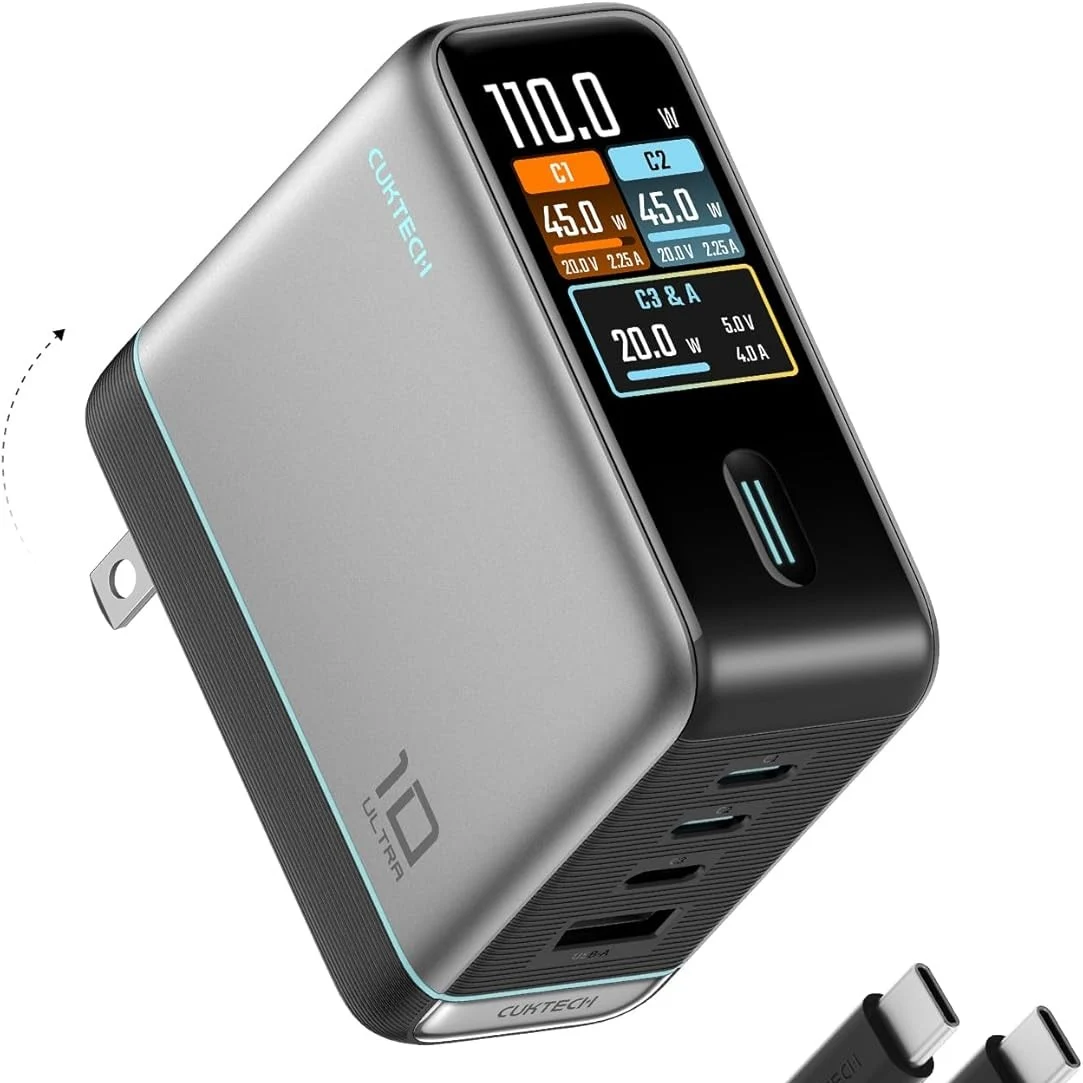
    Earlier this month, Cuktech introduced the 6 Ultra, a charger that outputs 100 watts and has three ports. Now, the company has officially launched its new 10 Ultra wall charger designed for laptops, tablets, smartphones, and earbuds. This latest charger features a total of four USB ports, but the power output remains the same as its predecessor.

    Smart Display Features

    The Cuktech 10 Ultra comes equipped with a built-in 1.57-inch smart display that has touch controls, allowing users to access extra settings and get charging information, including temperature, wattage in real time, voltage, and current. The display boasts a peak brightness of up to 700 nits and offers a broad 160° viewing angle.

    Power Distribution

    When it comes to power, the 10 Ultra charger delivers a maximum output of 100 watts across its four USB ports, which include three USB-C and one USB-A. In terms of power distribution, the charger can provide up to 100 W (USB-C1/C2), 45 W (USB-C3), and 18 W (USB-A) when using a single port. If all ports are utilized simultaneously, the output changes to 45 W, 45 W, 10 W, and 10 W, respectively.

    Enhanced Efficiency

    This charging accessory utilizes GaN technology, which enhances efficiency and improves thermal performance. Additionally, it features smart dynamic power allocation to ensure optimal power distribution among all connected devices. Another important aspect of the Cuktech 10 Ultra is its temperature monitoring system, which can conduct up to 36,000 checks every hour, according to the brand.

    Furthermore, Cuktech has integrated an 8-layer safety protection system into the charger to protect against overvoltage, short circuits, and other electrical hazards. It is compatible with a wide range of devices, including MacBooks, iPhone 17/16 series, Galaxy S26 series, Pixel, and more.

    You can now buy the Cuktech 10 Ultra 100 W wall charger directly from Amazon for $56.99. Additionally, the company is providing a 240 W USB-C cable for free in the box.

  • Netflix’s Price Hike Makes 4K and Privacy a Luxury Tax

    Netflix’s Price Hike Makes 4K and Privacy a Luxury Tax

    Key Takeaways

    1. Netflix has raised subscription prices again, with the Premium 4K option now at $26.99/month and the ad-supported plan at $8.99/month, creating a stark choice between quality and privacy.

    2. The price increase reflects a strategy to widen the gap between paying tiers, where avoiding ads and gaining higher quality can lead to significant annual costs, with Premium 4K reaching $323.88/year.

    3. Consumers now face a dilemma as privacy has shifted from being a standard feature to a premium one, with lower-tier users subjected to ad tracking and segmentation.

    4. Industry trends show other streaming services like Amazon and Disney+ adopting similar pricing strategies, indicating a move towards charging extra for high-quality content and data privacy.

    5. As streaming costs rise, the value of 4K streaming is diminishing compared to physical media, prompting consumers to consider “subscription hopping” for cost-effective access and quality.


    Netflix has just increased its U.S. subscription prices for the second time this year. The new pricing is starting to feel like a tax on your devices. As of March 26, 2026, the Premium 4K option is now $26.99 per month, while the entry-level ad-supported plan is priced at $8.99. This creates a significant price difference that compels viewers to choose between two things that were once seen as standard: the quality of their display and the privacy of their viewing habits. If you invested in a high-end laptop like a MacBook Pro M5 for its impressive 1,600-nit brightness and Mini LED display, Netflix is now charging you a hefty yearly fee just to make the most of that screen.

    Price Gap Analysis

    The details behind this price increase reveal a deliberate strategy to widen the gap between different paying customers. The ad-supported plan now runs about $108 a year, while moving up to a basic ad-free experience costs $19.99 per month, equating to a shocking $132 annual hike just to avoid tracking. For those wanting the Premium 4K experience, the yearly cost climbs to $323.88. That’s a significant investment for a service that still restricts high-bitrate content behind its priciest tier, despite the fact that 4K resolution has become the standard for most high-end monitors and TVs sold recently.

    Changing Consumer Dynamics

    This shift in pricing alters how consumers relate to their devices more than you might realize. When streaming services were still emerging, they felt like utilities that enhanced your hardware. However, in 2026, it seems more like a hurdle. By setting the ad-free Standard tier at $20, Netflix has essentially assigned an $11 monthly value to your personal information. Users on the lower tier aren’t just watching ads; they are being segmented and monitored by a more aggressive ad-technology system that targets them based on their real-time watching habits. It’s unfortunate, but privacy has shifted from a basic right to a premium feature that demands a higher-tier commitment. This sounds ridiculous, but many platforms are embracing this approach these days.

    Wider Industry Trends

    Analysts are dubbing this trend “resolution gating.” Beginning April 10, 2026, Amazon will also be renaming its ad-free tier to “Prime Video Ultra” and increasing the surcharge from $2.99 to $4.99 per month. More crucially, Amazon is mimicking Netflix’s strategy by removing 4K/UHD access from its standard plan entirely, meaning high-resolution streaming will become a paid privilege instead of a standard feature for Prime members. Likewise, Disney+ has been steadily raising its prices over the last year, with CEO Bob Iger openly mentioning that these hikes aim to “steer” subscribers toward the more lucrative ad-supported tiers. The message from streaming giants in 2026 is crystal clear: if you want to keep your data private and enjoy high-quality visuals, expect to pay more – and it’s likely to get worse over time.

    Rethinking Streaming Value

    For the average tech-savvy user, the justification for 4K streaming is starting to weaken under the pressure of these price hikes. At over $320 a year, a single Netflix Premium subscription now exceeds the cost of a high-end standalone 4K Blu-ray player (this Panasonic model is currently $90 on Amazon) and a small collection of physical discs. Unlike streaming, a physical disc offers a fixed bitrate that doesn’t change with your internet speed and incurs no monthly fee. If Netflix continues to test how much consumers are willing to pay, the “all-you-can-eat” appeal of streaming may eventually lose its competitive advantage against the superior quality and ownership that physical media provides. We’re already witnessing this shift in the music realm, where more audiophiles are moving away from services like Spotify and Apple Music, opting for dedicated music players that can play offline tracks from their digital libraries.

    The Future of Streaming Subscriptions

    We should begin to view streaming subscriptions as a rotating door; permanence appears to be the enemy of today’s tech budgets. If the goal is to maximize your hardware without overspending for basic privacy, “subscription hopping” is the only viable option. Subscribing for one month to binge-watch a series in 4K and then promptly canceling can prevent the service from becoming a stagnant, overpriced burden on your OLED display. We as consumers need to be more intentional about which months we choose to pay for these services, and if we truly want to pay for them at all.

    Source:
    Link