Tag: Starlink

  • Starlink Standard Dish Now $149 in Select US States

    Starlink Standard Dish Now $149 in Select US States

    Key Takeaways

    1. Starlink Standard dish price lowered to $149 in select US states, a $200 discount from the usual $349.
    2. Discount applies to Residential and Residential Lite service plans and is automatically deducted when purchased from starlink.com.
    3. Purchase from authorized retailers like Best Buy still qualifies for the discount as service credits after activation.
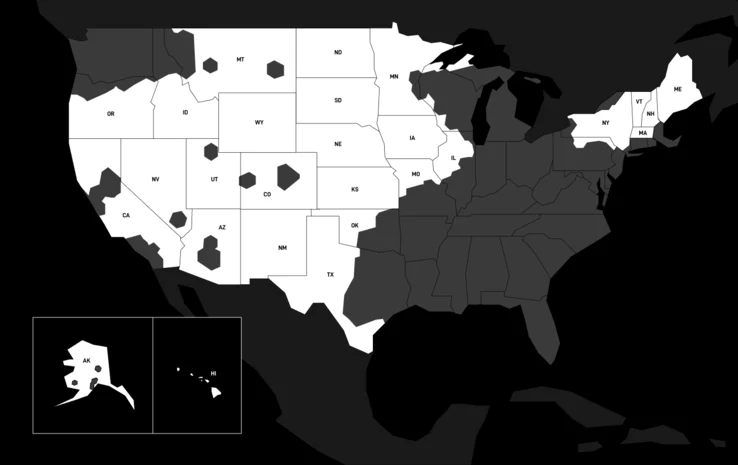
    4. Offer available in 27 US states until March 31, but eligibility may vary due to network congestion in certain areas.
    5. Starlink dish price history shows several reductions, from $599 in January 2024 to the current $149 under the Regional Savings initiative.


    SpaceX has lowered the cost of the Starlink Standard Kit in the United States, with the satellite dish now significantly discounted in specific states where there is an abundance of network availability.

    New Pricing Details

    Customers in qualifying US states can now purchase a Starlink Standard dish for only $149, which is a direct $200 off the usual price of $349. This price cut is part of the company’s “Regional Savings” initiative and applies exclusively to the Residential and Residential Lite service plans. When you buy directly from starlink.com, the discount will be automatically deducted at checkout. If you choose to buy the hardware from an authorized retailer like Best Buy, you will still qualify for the discount, but it will come as service credits to your Starlink account after activation.

    Eligibility and Limitations

    The $200 discount is accessible in 27 US states until March 31. According to Starlink’s coverage map, some areas within these states might not qualify for the offer due to network congestion. Therefore, it’s a good idea to visit starlink.com to confirm if your service address is eligible.

    Starlink also cautions that if you relocate your address outside of these eligible regions, switch your service plan, or cancel the service during the 30-day trial without returning your Starlink dish, a $300 fee will apply.

    Price History Overview

    Looking at the bigger picture, the Starlink Standard dish has undergone several price adjustments since it debuted in January 2024 at a price of $599. In June 2024, SpaceX reduced the cost to $499 and rolled out a new Regional Savings program that offered a further $200 discount for new customers. Then in July, certain regions saw the dish priced at $199, with new users able to receive discounts up to $300 under the same program. Finally, in October, SpaceX set a nationwide price of $349 and discontinued the Regional Savings discount, which had already been lowered to $100.

    Source:
    Link


  • Starlink Residential Lite: Affordable Unlimited Data Plan Now Live

    Starlink Residential Lite: Affordable Unlimited Data Plan Now Live

    Key Takeaways

    1. New Budget-Friendly Option: SpaceX has launched a new service plan called “Residential Lite” for $80 per month, which is $40 less than the standard Residential plan.

    2. Unlimited Deprioritized Data: The Residential Lite plan offers unlimited data but with lower network priority, meaning slower speeds may occur during peak times.

    3. Expected Speeds: Users can expect speeds ranging from 30Mbps to 100Mbps, suitable for smaller households with moderate internet needs.

    4. Availability: The Residential Lite plan is currently available in 15 select states across the US, and existing Residential plan users can downgrade easily.

    5. Usage Limitations: The plan is intended for personal and household use at a fixed address, with a fair usage policy still in effect.


    SpaceX has quietly rolled out a new budget-friendly Starlink service plan in the United States. This offering is called “Residential Lite,” and it comes with a price tag of $80 per month, providing users with unlimited deprioritized data. This plan is $40 less than the standard Residential plan, which costs $120 monthly.

    What to Expect from the Plan

    So, what’s the downside? Starlink indicates that the Residential Lite plan comes with lower network priority when compared to both the Residential and Priority service plans. This means customers who choose the Lite option might experience slower data speeds during peak times on Starlink’s network. However, the bright side is that there are no data limits, and Starlink assures users that there are no speed restrictions. The availability of the network is the only thing that will affect your data speeds. According to the information provided by Starlink, users on the Residential Lite plan can anticipate speeds ranging from 30Mbps to 100Mbps. This could be a good fit especially for smaller households that do not always need high-speed internet. Additionally, if your internet needs grow in the future, switching back to the standard Residential plan is simple and can be done at any time.

    Availability of the Plan

    Currently, the Residential Lite option is only available in 15 select states across the US.

    According to a Reddit user with the handle /u/jester_56, current Residential plan users in these states have the option to downgrade to the Lite plan. To make this change, simply access your Starlink account via the app or website, then go to “Manage Subscription” and select “Change Service Plan.” Keep in mind that the new plan will be active from your next billing period.

    Usage and Limitations

    The Residential Lite service is designed for personal and household usage at a fixed address. While it does offer unlimited data, it’s important to note that Starlink’s fair usage policy is still applicable.

    Source:
    Link

  • US Smartphones May Soon Connect to Starlink Satellites for Free

    US Smartphones May Soon Connect to Starlink Satellites for Free

    Key Takeaways

    1. SpaceX and T-Mobile announced free internet access via Starlink satellites as part of a beta test, starting in July with fees afterward.
    2. The service is open to all users, not just T-Mobile customers, through a sign-up form.
    3. Starlink’s Direct to Cell technology allows phones to connect for broadband service where cellular coverage is lacking.
    4. Initially, the service will support text messaging, with plans to expand to picture messaging, data, and voice calls after the beta period.
    5. Pricing will vary: free for Go5G Next plan users, $15 per month for others, and $20 per month for customers of other providers post-beta.


    SpaceX and T-Mobile revealed at the Super Bowl that users can get internet through the Starlink satellites at no charge. They confirmed during the event that this access will be part of a beta test, which will start charging from July. After that, users will need an eSim smartphone to use the service, which will be priced accordingly.

    Access for All Users

    This complimentary access isn’t only for T-Mobile customers; anyone who signs up via the T-Mobile form can join the trial.

    Starlink has deployed 451 satellites known as Direct to Cell, which enable phones to link up and get broadband when cellular service is out of reach. This means users in the US can maintain a steady connection.

    How It Works

    The company explains, “Direct to Cell technology—functions like cellphone towers in space—enabling connections almost anywhere you can see the sky,” according to the T-Mobile website. However, the beta services are quite limited to text messaging through users’ native apps. In the future, after the beta period, services will expand to include picture messaging, data, and voice calls.

    Currently, roughly 500,000 square miles in the US lack coverage from any wireless provider, making this service a significant advantage, as noted by T-Mobile.

    Pricing Details

    Starting in July, the service will be free for those on the Go5G Next plan and other plans will cost $15 per month. Early testers who aren’t on the free plan will benefit from a $5 monthly discount. Additionally, customers of Verizon, AT&T, and others can access T-Mobile Starlink without switching providers for $20 per month once the beta concludes in July.

    Source:
    Link

  • Satellite Internet Launching on European Smartphones This Year

    Satellite Internet Launching on European Smartphones This Year

    In the video below, Vodafone showcases how users can make video calls through a satellite network using just a regular smartphone, without needing extra equipment. Vodafone claims this is a groundbreaking achievement. Unlike the Apple iPhone 16 or a Starlink connection, this service is not restricted to just text messages and emergency calls.

    Full Broadband Access

    Vodafone states that smartphone users will enjoy complete broadband internet access via satellite, allowing their devices to function just like they would on a 5G network. The transition between the radio tower and the satellite network will happen seamlessly. While SpaceX has similar plans for Starlink, Vodafone is expected to be ahead of the US satellite provider, with the first European smartphone users anticipated to connect to Vodafone’s satellite network by the end of 2025. For this initiative, Vodafone will rely on the BlueBird satellite network from AST SpaceMobile.

    Connecting Remote Areas

    The goal of satellite connectivity is to eliminate dead zones and link customers in isolated locations to the network. Essentially, any 4G or 5G smartphone should be able to establish a satellite connection without the need for specialized hardware. Theoretically, users could achieve data speeds up to 120 MBps, although the bandwidth will decline just like traditional broadband when multiple users in the same area access the network simultaneously. However, it is still uncertain how much the mobile plans or contracts for these satellite connections will cost.

    Source:
    Link

  • Subaru Software Vulnerability Gives Hackers Full Vehicle Access

    Subaru Software Vulnerability Gives Hackers Full Vehicle Access

    As the automotive sector becomes increasingly advanced and interconnected, the risks associated with security weaknesses are on the rise. A recent report highlights how exposed connected vehicles can be.

    Discovery of Vulnerabilities

    A security researcher named Sam Curry has shared a blog post explaining how he and a partner, Shubham Shah, managed to breach the Starlink software system utilized by Subaru vehicles. Starlink is responsible for the infotainment system in Subaru cars, providing functionalities like remotely locking or unlocking the car and even starting it from a distance.

    Curry noted that a flaw in the Subaru employee login page for the Starlink system enabled him to discover a valid employee email, reset the employee’s password, and bypass any two-factor authentication measures to access the system.

    Accessing Sensitive Information

    Upon gaining entry into the Starlink system, Curry found he could track any registered Subaru vehicle using various identifiers: customer name, phone number, email address, or vehicle identification number (VIN). (It’s important to mention that VINs are easily obtainable through a license plate.) After locating a vehicle, a wealth of information was available for the taking, including billing details, emergency contacts, and much more.

    The personal data was not only accessible but also included the vehicle’s location history for the past year, which, according to Curry, was straightforward to download and visualize. This data comprised time stamps, the car’s odometer reading, and GPS coordinates with a precision of about 15 feet or 5 meters.

    Alarming Control Capabilities

    What’s particularly concerning is that Curry was able to find a friend’s car within the database and add his own credentials as an authorized Starlink user for that vehicle. Once granted access, he could control the vehicle remotely, unlocking and locking it, starting it from afar, and pinpointing its location. The original Starlink user received no alerts about the new user being added to their vehicle’s Starlink account.

    Fortunately, Subaru seems to have addressed the security flaw, which was identified by Curry in November 2024. The automaker acted commendably, deploying a patch within 24 hours of Curry’s report. This incident underscores the reality that, despite the intelligence of our vehicles, they remain susceptible to thieves and other malicious entities.

    Source:
    Link

  • Iris²: European Starlink Alternative Secures €10.6 Billion Funding

    Iris²: European Starlink Alternative Secures €10.6 Billion Funding

    Iris² is a significant satellite initiative by the European Union, following in the footsteps of Galileo, which is a GPS alternative, and the Copernicus program for earth observation. This project aims to create a competitor to Starlink by 2030, ensuring that EU member states have their own reliable and secure internet access, free from the influence of wealthy individuals or the political agendas of other countries.

    Investment Details

    As reported by the Financial Times, the total funding for this initiative will reach 10.6 billion euros. Of this amount, 61% will originate from public resources, while the remaining 39% will come from SpaceRise, an industrial group that includes companies like Eutelsat, Hispasat, SES, Airbus, and Deutsche Telekom. SpaceRise has entered into a twelve-year agreement to develop and manage the network. The planned Iris² system will feature 290 satellites, with a mix of some in medium and others in low earth orbit.

    Service Offerings

    Similar to Starlink, most of the bandwidth from Iris² will be allocated for delivering broadband internet to individuals and businesses, particularly in regions with limited internet access. Nevertheless, a portion of this capacity will also be set aside for government use, which is crucial for maintaining essential infrastructure during crises and for conducting surveillance activities. Currently, there are no additional specifics available regarding the expected bandwidth or the satellite technology that will be utilized.

    Source: Link

  • Starlink Set to Launch in South Africa by Mid-2025

    Starlink Set to Launch in South Africa by Mid-2025

    While the official Starlink coverage map indicates that the service date for South Africa is “unknown at this time,” those eager for this service to launch should monitor this page and revisit it periodically. The reason for this is that upcoming regulatory changes could enable Starlink to enter the African market before the end of 2025.

    Regulatory Changes Ahead

    Local news reports mention that the Department of Communication and Digital Technologies (DCDT) has announced plans to implement new regulations under the Electronic Communications Act, which oversees sectors like telecommunications and broadcasting.

    At present, a key challenge for Starlink is the requirement that companies seeking telecom licenses must have at least 30% ownership by historically disadvantaged groups. However, there’s a silver lining: Elon Musk appears to have political backing. In September, he met with South Africa’s President Cyril Ramaphosa in New York.

    Public Feedback Expected

    The DCDT is set to release a notice early next year, inviting public feedback on the proposed changes to the policy. If the process goes as planned, the adjustments could be finalized by mid-2025, allowing Starlink to arrive in South Africa soon after. So far, Starlink has engaged in multiple discussions with the Independent Communications Authority of South Africa (ICASA) regarding this issue, but no licensing application has been submitted at this point. The satellite internet services from Elon Musk‘s company are already accessible in neighboring countries like Zimbabwe, Botswana, and Mozambique.

    Source: Link

  • Starlink Launches in 4 New Markets in Just 5 Days

    Starlink Launches in 4 New Markets in Just 5 Days

    Active since 2019, Elon Musk’s SpaceX subsidiary, Starlink, has deployed over 7,000 small satellites in low Earth orbit as part of its satellite internet constellation. The smallest of these satellites weigh about 500 pounds, while the largest can go beyond 2,700 pounds. The service first opened to a select group of users at the end of October 2020, which was more than five years after the public announcement in early 2015 when the SpaceX satellite development center started in Redmond, Washington. The full commercial rollout took place in early 2021, initially covering the US and Canada.

    Expanding Reach

    As of now, more than four million users are enjoying Starlink’s services across over 100 markets. Recently, four new regions were added to the network, starting Monday. Canada received the Starlink Mini, along with three small insular areas that previously had no access to the service. These areas are Nauru, Timor-Leste, and Cape Verde.

    Future Developments

    The official Starlink coverage map indicates that next year will see the addition of markets like Serbia, Montenegro, Turkey, Tunisia, the Democratic Republic of Congo, Uganda, Bolivia, and Cambodia. However, there are still territories with unspecified release dates for Starlink, including popular tourist locations such as Egypt, Thailand, and Taiwan. In the United States, the average download speed for Starlink users peaked above 100 Mbps but has since struggled to regain that level, currently hovering around 80 Mbps.

    For those interested in learning more about Starlink, “The Science Behind Starlink and How It Actually Works: A Comprehensive Analysis of Elon Musk’s Vision for a World Without Internet Boundaries” is available on Amazon for $7.99 in Kindle format, which is a 47% discount. The paperback version is priced at $14.99.

    Source: Link

  • SpaceX Plans Starlink Upgrade for Gigabit Internet Speeds

    SpaceX Plans Starlink Upgrade for Gigabit Internet Speeds

    On October 11, 2024, SpaceX made a formal request to the FCC to modify several aspects of the Starlink Network. These modifications are part of SpaceX’s Gen2 NGSO satellite system, which the company says will introduce a range of enhancements. Specifically, the upgraded network aims to provide gigabit service to its customers. Additional improvements include reduced latency, widespread mobile connectivity, and adjustments to the network to accommodate the rising demand from users.

    Proposed Satellite Adjustments

    To boost the performance of the network, SpaceX is seeking to lower the altitude of three groups of satellites by approximately 8.5 percent from their current nominal height. SpaceX asserts that this adjustment will enhance space sustainability by decreasing the chances of collisions and shortening the time required for the post-mission disposal of Gen2 satellites. In simpler terms, this means that the satellites will have a lower risk of crashing into other objects and will disintegrate in the atmosphere more quickly once they reach the end of their operational life. The transition to a lower orbit will also facilitate the deployment of more satellites in the future, which is crucial given the growing demand for services, particularly in remote regions. Furthermore, SpaceX is looking to modify the number of satellites in each group to maximize coverage.

    Changes to Elevation Angles

    Along with lowering the nominal altitude, SpaceX is proposing a shift in the minimum elevation angle from 25 degrees to 20 degrees. This adjustment would extend the communication time between satellites and ground stations by allowing satellites to keep in touch even when they are closer to the horizon. Despite this potential benefit, there are worries that the lower altitude may interfere with other satellite systems, although SpaceX has provided evidence to counter these concerns.

    In conclusion, there are numerous reservations regarding these proposed modifications, and various stakeholders are opposed to them. Companies like Amazon, along with astronomers and regulatory bodies, have legitimate reasons for their opposition to SpaceX’s plans. For further information on the proposed changes, the full filing is available below.

    FCC filing via Ars Technica and Pixabay.

  • Certification for Starlink’s WiFi 6 Router From FCC and IMDA Underway

    Certification for Starlink’s WiFi 6 Router From FCC and IMDA Underway

    Following its recent announcement about launching a “cellphone tower in space,” Starlink, the satellite communication and internet connectivity company owned by Elon Musk, is now focusing on a more grounded project. It seems that Starlink is working on developing a new WiFi 6 router, as revealed by certifications obtained from the IMDA (Infocomm Media Development Authority) and FCC (Federal Communications Commission) databases. Here are the details we have so far.

    Certification Details

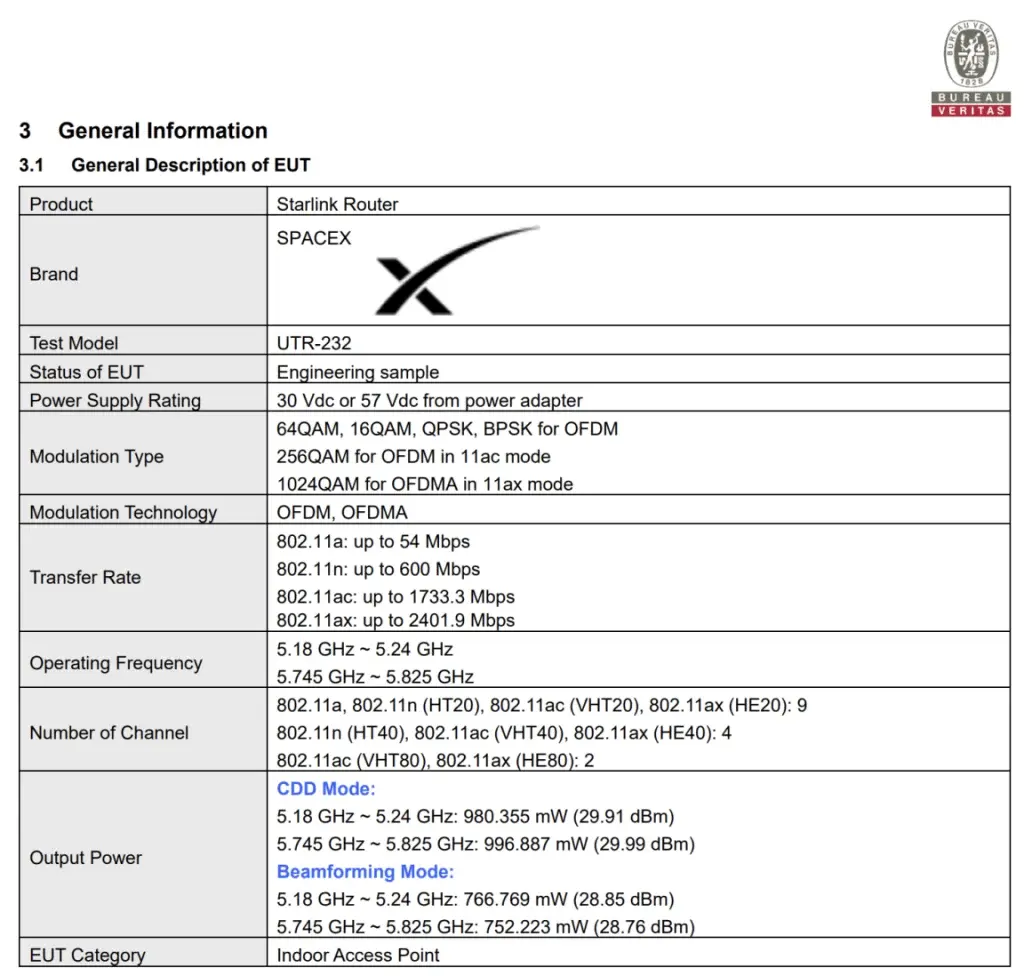
    The IMDA certification disclosed that the new router carries the model number UTR-232 and is classified as a low-power WLAN device. On the other hand, the FCC listing confirmed that it will utilize the same wireless bands as other WiFi 6 routers. This indicates that the upcoming router will be compatible with existing WiFi 6 devices.

    Features and Specifications

    According to the FCC listing, the new Starlink WiFi 6 router will come equipped with two built-in LAN ports. In addition, it will include two power adapters, namely UTP-231L and UTP-232C. This suggests that the router will offer enhanced connectivity options for users.

    Gen 3 Mesh Router

    It is speculated that the UTR-232 WiFi 6 router is an upgraded version of the UTR-231 WiFi 6 router, which is considered a Gen 3 mesh router. The UTR-231 router is expected to serve as an accessory for existing Starlink customers, allowing them to boost their connectivity with Starlink’s coverage. This indicates that the new WiFi 6 router will provide improved performance and faster broadband speeds compared to the previous generation routers bundled with Starlink’s dish.

    Benefits of WiFi 6

    By upgrading to WiFi 6, users can expect not only faster broadband speeds but also improved energy efficiency on mobile devices and reduced bandwidth congestion. This means a more seamless and efficient internet experience for Starlink customers.

    Conclusion

    While these are all the details available at the moment, it is likely that Starlink will release more information about the new WiFi 6 router in the near future. As Starlink continues to innovate in the field of satellite communication and internet connectivity, the introduction of a WiFi 6 router further demonstrates their commitment to providing cutting-edge technology to their customers. Stay tuned for more updates on this exciting development from Starlink.