Tag: Spotify

  • Apple Music Surpasses Spotify: A New Era in Streaming Services

    Apple Music Surpasses Spotify: A New Era in Streaming Services

    Key Takeaways

    1. Improved Music Discovery: Apple Music’s new “Playlist Playground” feature enhances song discovery, competing effectively with Spotify’s “Discover Weekly.”

    2. Superior Sound Quality: Apple Music offers higher sound quality with “Hi-Res Lossless” and Dolby Atmos, surpassing Spotify’s recent lossless audio launch.

    3. Competitive Pricing: Apple Music is cheaper at $10.99 compared to Spotify’s $12.99, especially beneficial for users within the Apple ecosystem.

    4. Better User Interface: Apple Music’s user interface is visually appealing and user-friendly, while Spotify’s interface is more social media-like and less cohesive.

    5. Fairer Artist Compensation: Apple Music pays higher royalties per stream than Spotify, making it a more artist-friendly platform.


    The ongoing arguments in technology seem like they will never end—there are so many examples. You have Android vs iOS, team red vs team green, Azure vs AWS, and many more. Music streaming is another hot topic, with two major players in the US (let’s not include YouTube Music for now). With the latest update of iOS 26.4, I’m happy to say I’ve made my decision. For context, I’ve been a longtime user of Spotify over Apple Music, but it always felt like a trade-off: I chose Spotify for its user interface and the chance to discover new songs, while I used Apple Music for its higher sound quality. However, in 2026, I believe Apple has finally addressed the “discovery gap,” and considering all factors—the technology, pricing, and ethics—Spotify is no longer the top choice.

    A New Player in Discovery

    Spotify’s “Discover Weekly” used to be its biggest strength. But with the introduction of “Playlist Playground” in iOS 26.4, the competition is more balanced than ever. Although I haven’t tried it myself yet (it’s only available in the US), it looks promising. Unlike Spotify’s algorithm, Playlist Playground leverages on-device intelligence to create a 25-song playlist from a simple text prompt—like “a synth-heavy playlist with moody songs.” It’s quick, it’s precise, and I hope it gives me more control over my music curation, which was previously Spotify’s domain.

    Sound Quality Matters

    When it comes to sound quality, Apple wins by a landslide. Spotify just launched its lossless audio tier at the end of 2025, but it feels like it came too late. While Spotify’s lossless audio reaches 24-bit/44.1 kHz, Apple Music’s “Hi-Res Lossless” goes up to 24-bit/192 kHz (I stick with the former since I don’t have the right equipment). Then there’s Dolby Atmos Spatial Audio—although I usually keep it off, it is a cool feature. Spotify still struggles with immersive audio, which is a dealbreaker for those who care about sound quality. Plus, as of March, Spotify Lossless isn’t even available in India, making my decision much easier.

    Pricing Changes the Game

    Pricing used to be similar between the two services, but Spotify’s recent price increases have altered the situation. As of early 2026, a Spotify Premium Individual plan in the US has risen to $12.99. In contrast, Apple Music remains at $10.99 and includes “Apple Music Classical” and high-resolution audio at no extra cost. If you’re already in the Apple ecosystem, the Apple One bundle, which includes TV+, Arcade, and 50 GB of iCloud storage, makes the music service feel nearly free.

    From a visual perspective, I think it’s not even close, but that might be because I’m using iOS. Spotify looks nearly the same across both platforms, but Apple Music on Android is quite different from iOS. Apple’s new user interface is gorgeous, featuring full-screen artwork that colors the entire display to match the album’s mood. In comparison, Spotify has opted for a TikTok-style vertical feed for some reason—the home feed feels more like a social media platform, which aligns with the company’s focus on that aspect. Additionally, Apple Music includes a karaoke/sing-along feature that works smoothly for the most part, while Spotify’s lyrics tab doesn’t even come close.

    Treatment of Artists

    Lastly, what really pushed me over the edge was how these companies treat the musicians. Apple Music pays about $0.01 per stream, which is nearly two to three times the $0.003 – $0.005 average rate that Spotify offers. Being a premium-only service means Apple doesn’t have to drain royalties to support a large “free” ad-supported tier. Moreover, Spotify has used generative AI for features like daylists and the 2024 Wrapped, which didn’t sit well with some users.

    Certainly, neither of these giants is perfect. Spotify is still reeling from the backlash of its “podcasting-first” strategy, facing ongoing protests about misinformation on platforms like the Joe Rogan Experience. Meanwhile, Apple is under scrutiny from global regulators, having recently faced a hefty €1.8 billion fine for “anti-steering” practices that allegedly disadvantage competitors like Spotify.

    But when you look at the app on your phone today, the choice seems clear. Apple Music offers better sound, greater value, and now, with Playlist Playground and “Concerts Near You,” improved song discovery. If you’ve been sticking with Spotify out of habit and have been thinking of switching—now’s the time. Apple Music makes it simple to transfer your albums and playlists from Spotify too.
  • Spotify Taste Profile Beta: Premium Users Customize Recommendations

    Spotify Taste Profile Beta: Premium Users Customize Recommendations

    Key Takeaways

    1. Spotify has launched a new feature called “Taste Profile” for Premium subscribers in New Zealand, currently in beta form.
    2. Taste Profile allows users to actively tailor their music recommendations based on personal preferences and changing habits.
    3. Users can modify their preferences as often as they like or continue using Spotify without changes, impacting personalized suggestions.
    4. The feature addresses issues with recommendation algorithms by providing a broader view of users’ musical tastes beyond just their listening history.
    5. Taste Profile is part of Spotify’s effort to enhance personalization and AI-driven recommendations, with no current timeline for global release.


    Spotify has unveiled a new feature called “Taste Profile” that provides certain users with a more hands-on approach to tailoring their recommendations for Discover Weekly, Wrapped, and other customized options. The feature is currently being launched in beta form exclusively for Premium subscribers in New Zealand.

    Enhancing User Experience

    Spotify states that the Taste Profile aims to improve beyond just passive listening behavior by allowing users to share more details about their music preferences. This tool can adapt to changing tastes and habits, such as needing more energetic tracks for exercising or seeking out additional news podcasts during commutes on weekdays.

    Personalization Control

    Taste Profile is described by Spotify as a means for users to “shape” the algorithm that generates personalized suggestions. The company emphasizes that listeners have the option to modify their preferences as often as they like or simply continue their usual Spotify usage without making changes. This feature is intended to affect recommendations related to Spotify’s personalization system, which includes playlists and annual summaries.

    Addressing Feedback

    This initiative seems to tackle a long-standing issue with recommendation algorithms: they can be influenced by brief listening trends or by content that doesn’t accurately represent a user’s typical preferences. Spotify particularly highlights this feature as a way to capture a broader view of a user’s musical tastes beyond just their play history.

    Currently, Spotify has revealed that Taste Profile is in beta for Premium subscribers in New Zealand and is not yet available on a global scale. Reports from SXSW suggest that this feature was introduced as part of Spotify’s larger effort to enhance personalization and implement AI-driven recommendation features.

    Due to this limited rollout, the majority of Spotify users will not have immediate access to Taste Profile. As of the information available, Spotify has not provided a specific timeline for when it will be released internationally.

    Source:
    Link


  • Spotify Raises Prices for All Major Plans in the US

    Spotify Raises Prices for All Major Plans in the US

    Key Takeaways

    1. Spotify has officially confirmed price increases for subscription plans in the US and other regions, following prior reports.
    2. The price adjustments aim to reflect the value provided to users and enhance the listening experience while supporting artists.
    3. Updated pricing includes: Individual Premium plan at $12.99, Duo plan at $18.99, Family plan at $21.99, and Student Premium plan at $6.99.
    4. The last price hike in the US was in 2024, with analysts estimating a potential $500 million increase in annual revenue from the current changes.
    5. New prices will apply on the next billing date for current subscribers, while new subscribers will see the updated prices immediately.


    Just last month, there were reports suggesting that Spotify intended to raise its prices in the US during the first quarter of 2026, following similar hikes in the UK and Switzerland last autumn. These reports have turned out to be correct, as Spotify has now officially confirmed new price increases in various regions, including the United States, Estonia, and Latvia.

    Reason Behind the Changes

    In its announcement, Spotify stated that these adjustments in pricing are designed to mirror the value it offers to its users. They also highlighted the need to continue enhancing the overall listening experience and to provide better support for artists. Along with this clarification, the company disclosed the revised pricing for all of its key subscription plans in the US.

    Updated Pricing Details

    Under the revised pricing model, the Individual Premium plan now costs $12.99 per month, up from the previous price of $11.99. The Duo plan, which accommodates two users, has increased from $16.99 to $18.99 monthly. The Family plan has also seen a rise, moving from $19.99 to $21.99 per month. Students are affected as well, as the Student Premium plan has gone up from $5.99 to $6.99 per month.

    Impact of the Changes

    It’s interesting to note that the company last raised prices in the US back in 2024, with an increase of $1 across most plans. While this change may appear minor, analysts predict that even a $1 increase in the US alone could lead to about $500 million in extra annual revenue.

    For current subscribers, the new pricing will not take effect immediately. Instead, the updated rates will apply on their next billing date. However, new subscribers will encounter the updated prices instantly upon signing up.

    Spotify’s

    Source:
    Link


  • Spotify to Increase US Subscription Prices in Q1 2026

    Spotify to Increase US Subscription Prices in Q1 2026

    Key Takeaways

    1. Spotify plans to raise US subscription prices in early next year.
    2. Expected price increase may be around $1 per month for individual plans.
    3. Previous major price hike occurred in June 2024, raising individual accounts to $11.99.
    4. External pressure from record labels is influencing the decision to increase fees.
    5. Spotify has recently added features like lossless audio, justifying a potential price rise.


    Spotify is said to be planning a rise in its subscription prices in the United States beginning early next year. A report from the Financial Times mentions that Spotify is “getting ready to raise US subscription prices in the first quarter of next year” as the company aims to show its investors that it can maintain profitability over time.

    Price Adjustments Likely

    Even though Spotify hasn’t confirmed the exact increase, US users might experience a small price change. Typically, the company raises the price of its individual plan by about $1 per month at a time. This follows a long-standing trend since the service began, having only increased by $2 in total over the last 14 years. The previous major adjustment took place in June 2024, when the price for an individual account rose to $11.99 per month, while the Family plan went up to $19.99 per month.

    Industry Pressure Influencing Changes

    It seems external factors are pushing this potential change, as major record labels have been urging Spotify and its competitors to raise their fees. They claim that music streaming is still quite affordable compared to video platforms like Netflix. Moreover, Spotify has recently implemented several updates to its service, including the introduction of lossless audio, making a price increase more understandable.

    This possible increase in the US comes after Spotify had already raised subscription fees in parts of South Asia, Europe, and Latin America just a few months back. Currently, US users are paying $11.99 for Individual plans, $16.99 for Duo accounts, $19.99 for Family plans, and $5.99 for Student subscriptions, but these numbers might change soon if the reports are accurate.

    Source:
    Link


  • Spotify Video Podcasts Coming to Netflix in 2026

    Key Takeaways

    1. Partnership Launch: In early 2026, Netflix will feature select Spotify video podcasts in the U.S., with plans for international expansion.

    2. Strategic Media Shift: This move is part of a broader strategy for both companies to stay relevant in the evolving media landscape.

    3. Cost-Effective Content: Netflix gains new unscripted content without full production costs, while Spotify benefits from increased distribution.

    4. Distribution is Key: The success of the partnership depends on Netflix’s ability to effectively promote the new content.

    5. Potential Risks: Poor promotion could lead to the partnership failing to reach its potential, losing valuable content to inadequate visibility.


    In early 2026, Netflix will start showing a selected range of Spotify’s video podcasts in the U.S., with plans to expand internationally later. The two companies have made a licensing deal that will bring specific titles from Spotify Studios and The Ringer to Netflix’s service.

    A Strategic Shift in Media

    This initiative seems to be more than just a simple content agreement; it could be a strategic move to maintain relevance in the changing media world. Over the past year, Spotify has been actively improving its video podcast tools, increasing monetization options, and launching a Partner Program for creators, aiming to compete with YouTube.

    A Cost-Effective Solution for Netflix

    For Netflix, this is a cost-effective method to add new, unscripted content to its platform without taking on full production responsibilities. Experts see it as a mutually beneficial strategy: Spotify gets more distribution, while Netflix secures a safeguard against YouTube’s stronghold in video podcast viewership.

    The Importance of Distribution

    While the idea of consolidating the current fragmented streaming world into one easy-to-use platform is enticing, the success of this partnership relies heavily on how Netflix promotes this content. The saying from the DVD days is true: “content is king, but distribution is queen.” If Netflix does not effectively highlight these shows, the agreement might not perform well, turning what could have been a clever and beneficial partnership into another instance of excellent content being lost due to poor promotion.

    Source:
    Link


  • Spotify Freemium Updates: Free Song Selection and New Features

    Spotify Freemium Updates: Free Song Selection and New Features

    Key Takeaways

    1. Free users can now search for and play specific songs without a subscription.
    2. Free users can create playlists, add cover art, and play songs in any order.
    3. Spotify offers daily and weekly playlists tailored to users’ listening habits.
    4. Free users can share tracks and view song lyrics.
    5. Premium subscription provides better sound quality and additional features like offline listening and AI-generated playlists.


    Music streaming platform Spotify has long provided a free tier, but it came with major restrictions. Users without a paid plan had to deal with interruptions from advertisements and faced much lower audio quality due to a compression rate of 160 kbp. Moreover, these free users were unable to search for or play songs on demand.

    New Changes for Free Users

    Now, things are getting better. Free users can finally search for and play specific songs without needing a subscription. They can also open links to individual tracks, create their own playlists, and even add cover art. Playlists can now be played in any order they want. Additionally, Spotify provides recommendations for songs or podcasts that can be added to user-generated playlists.

    Enhanced Features for Freemium Users

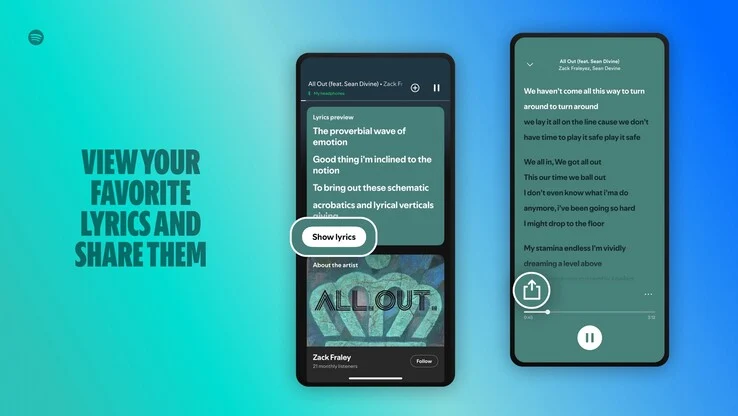
    Moreover, Spotify is now offering freemium users access to daily and weekly playlists that are generated automatically based on their listening habits. Users can also share tracks and see song lyrics. These new features are designed to keep free users engaged with the app, which will increase the amount of advertising they see, ultimately raising Spotify’s revenue.

    The premium subscription, priced at $11.99, aims to entice users with various extra features. This includes much better sound quality with lossless audio. As is the case every time, a premium account is necessary for creating AI-generated playlists, downloading music for offline listening, or streaming audiobooks.

    Source:
    Link


  • Spotify Lossless: Key Insights from Engineering Manager Before Launch

    Spotify Lossless: Key Insights from Engineering Manager Before Launch

    Key Takeaways

    1. Country Selection for Early Access: Spotify evaluates each feature’s rollout based on its suitability for subscribers, prioritizing quality and reliability over speed.

    2. Enhancements for Audio Quality: A new labeling system in the Now Playing view indicates when tracks are streaming in lossless quality, reflecting the team’s commitment to transparency and user control.

    3. Complexity Behind the Scenes: Implementing lossless audio involves intricate backend challenges, requiring compatibility across various platforms and extensive testing.

    4. Focus on Reliability: The development team emphasized the importance of delivering a solution that works seamlessly across different hardware setups and device ecosystems.

    5. Ongoing User Engagement: Spotify is actively monitoring user feedback on platforms like Reddit and encourages users to engage and ask questions during the AMA.


    Spotify has finally launched its long-awaited lossless audio feature, and the engineering manager responsible for this update engaged with users on Reddit to respond to their inquiries. His responses provided insights into technical choices, deployment criteria, user experience improvements, and the glue that holds everything together.

    Country Selection for Early Access

    When users inquired how Spotify decides which countries get early access to lossless streaming, the engineering manager clarified that there isn’t a fixed formula or predetermined list. Each feature is evaluated on its own based on what makes sense for its subscribers. Given that Spotify boasts tens of millions of users worldwide, the company’s approach reportedly prioritizes quality and reliability rather than the speed of rollout.

    Enhancements for Audio Quality

    For those worried about sound quality, Spotify has introduced a labeling system in the Now Playing view and Connect Picker. This system clearly indicates when tracks are streaming in lossless quality. A common question arose from users regarding the significant delay in this feature’s launch. According to John, the manager, the team recognized the high stakes involved and the necessity for a solution that operates seamlessly across nearly all hardware setups and device ecosystems. He mentioned that extensive collaboration within the team and a strong emphasis on reliability led to some challenging decisions. John noted that transparency and user control were the two main principles guiding their design.

    Complexity Behind the Scenes

    In another response, he elaborated that the backend challenges were much more intricate than simply uploading and serving higher-resolution files. The undertaking required continuous effort from distributed teams. Ensuring smooth compatibility across various platforms, devices, markets, and ever-evolving regions necessitated advanced infrastructure and thorough testing.

    One inquiry specifically addressed bit-perfect output and the potential support for WASAPI Exclusive Mode on Windows desktops. While this hasn’t been confirmed, the Spotify team expressed that their engineers regard this as a priority and are keen to see it come to fruition.

    Ongoing User Engagement

    The team is continuously monitoring feedback from Reddit and other platforms. If you have any questions of your own, feel free to visit the AMA while it’s still active.

    Source:
    Link


  • Spotify Introduces Lossless Music Streaming at No Extra Cost

    Spotify Introduces Lossless Music Streaming at No Extra Cost

    Key Takeaways

    1. Spotify has introduced lossless music streaming in its standard Premium tier, not as a new subscription level.
    2. Users can stream audio up to 24-bit / 44.1 kHz FLAC, which is better than CD quality but lower than some competitors.
    3. The difference in audio quality may be hard to notice without specialized equipment, and users must manually enable the feature on each device.
    4. The rollout of lossless audio is planned for over 50 countries by October 2025, with notifications sent to Premium users through the app.
    5. For optimal experience, Spotify recommends using wired headphones or speakers, as streaming 24-bit audio over Bluetooth is currently not possible without high-resolution codecs.


    Spotify has at last introduced support for lossless music streaming on its service. This announcement follows years of anticipation, with the initial discussions dating back to 2017. Contrary to earlier reports, this high-fidelity streaming feature will not be part of a new premium subscription tier, which is a relief for many users.

    Details on Lossless Audio

    Lossless audio will be included in the standard Premium tier, allowing users to stream music at a quality of up to 24-bit / 44.1 kHz FLAC. While this level is better than CD quality, it falls short compared to what platforms like Apple Music, Qobuz, and Tidal provide. Specifically, those services support streaming up to 24-bit / 192 kHz.

    Noticing the Difference

    However, the distinction between the superior quality from competing services and Spotify’s offering will be almost imperceptible without specialized audiophile equipment. The company has mentioned that lossless streaming will function on all devices, but users will need to manually switch on this feature from every device they use to listen to music.

    Rollout Plan

    Currently, Spotify aims to implement lossless audio streaming in more than 50 countries by October 2025, including the US, UK, Germany, Denmark, New Zealand, and Japan. When this feature is available, Premium users will receive a notification through the app, and they can activate it via the Settings and Privacy tab.

    The company also recommends using wired headphones or speakers to fully appreciate the lossless audio streaming option. Streaming 24-bit audio over Bluetooth is not achievable at this time without high-resolution codecs. However, streaming via WiFi is feasible with devices that support Spotify Connect, such as the Yamaha RX-V6A, which is currently priced at $699.95 on Amazon.

    Source:
    Link


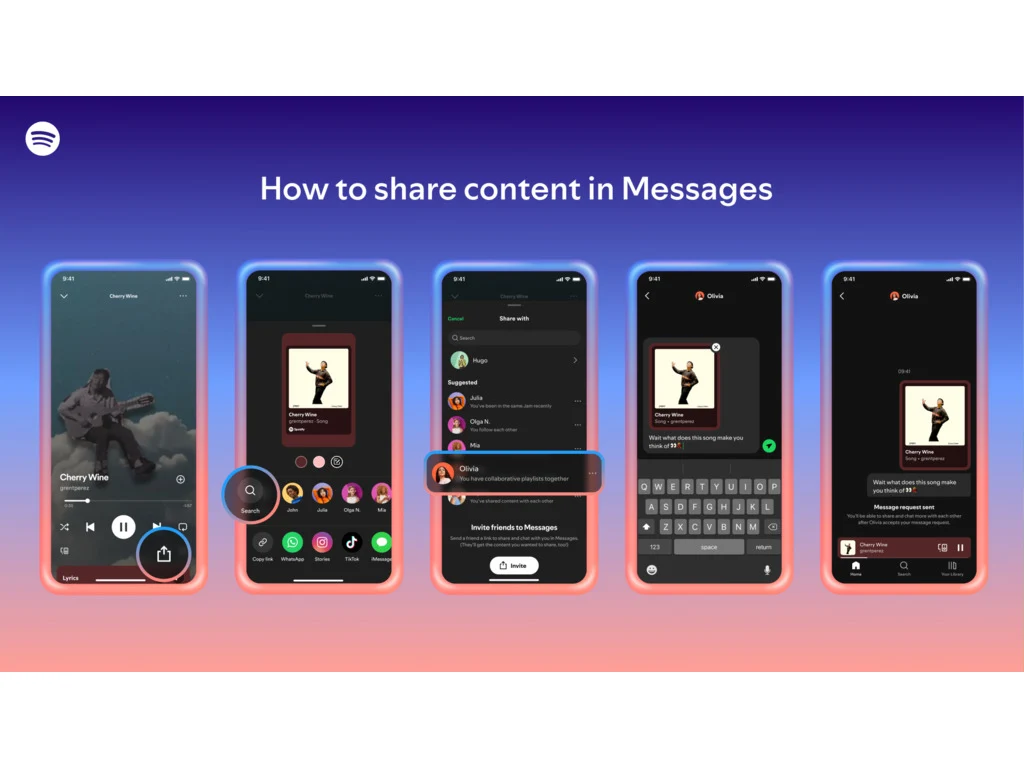
  • Spotify Unveils New Messaging Feature for All Users

    Spotify Unveils New Messaging Feature for All Users

    Key Takeaways

    1. Spotify is launching a new Messages feature for users to share content directly within the app, similar to social media direct messaging.
    2. The Messages feature is available to both free and premium users aged 16 and above, allowing easy sharing of music, podcasts, and audiobooks.
    3. Users can find Messages by clicking their profile picture, with suggestions based on past interactions and shared playlists.
    4. External sharing options remain available, with Messages intended to enhance, not replace, these integrations.
    5. Safety features include the ability to accept or decline message requests, report inappropriate behavior, block users, and secure conversations with encryption.


    Spotify is enhancing its social features by introducing Messages, a new way for users to share content directly within the app. This comes after the company previously experimented with social features through Inbox, which was available from 2010 until its closure in 2017.

    A Familiar Approach

    Messages takes a more direct route, similar to the direct messaging options found on social media platforms like Instagram and WhatsApp. This feature enables users to share music, podcasts, or audiobooks straight from the app. However, users can still share content on other platforms if they choose to do so.

    User Accessibility

    The Messages feature will be accessible to both free and premium users aged 16 and above. To initiate a message, you can send a request or connect with people you have already chatted with. After your request is accepted, sharing content will be easy and smooth. You can also include emojis in your messages.

    Finding Messages

    To find Messages, just click on your profile picture in the top left corner. You’ll receive suggestions based on factors like whether you’ve previously shared Spotify content with that person, if you’ve participated in Jams, Blends, or collaborative playlists, or if you are part of a Family or Duo plan together.

    Spotify emphasizes that external sharing is still possible and that Messages are intended to enhance these integrations, not to replace them.

    Safety Features

    For user safety, you have the option to accept or decline message requests and to report any inappropriate behavior. You can also block users or disable Messages entirely in the settings. These conversations are secured with “industry standard encryption,” and the platform will actively monitor chats for any unlawful or harmful content, with moderators reviewing reported conversations.

    Source:
    Link


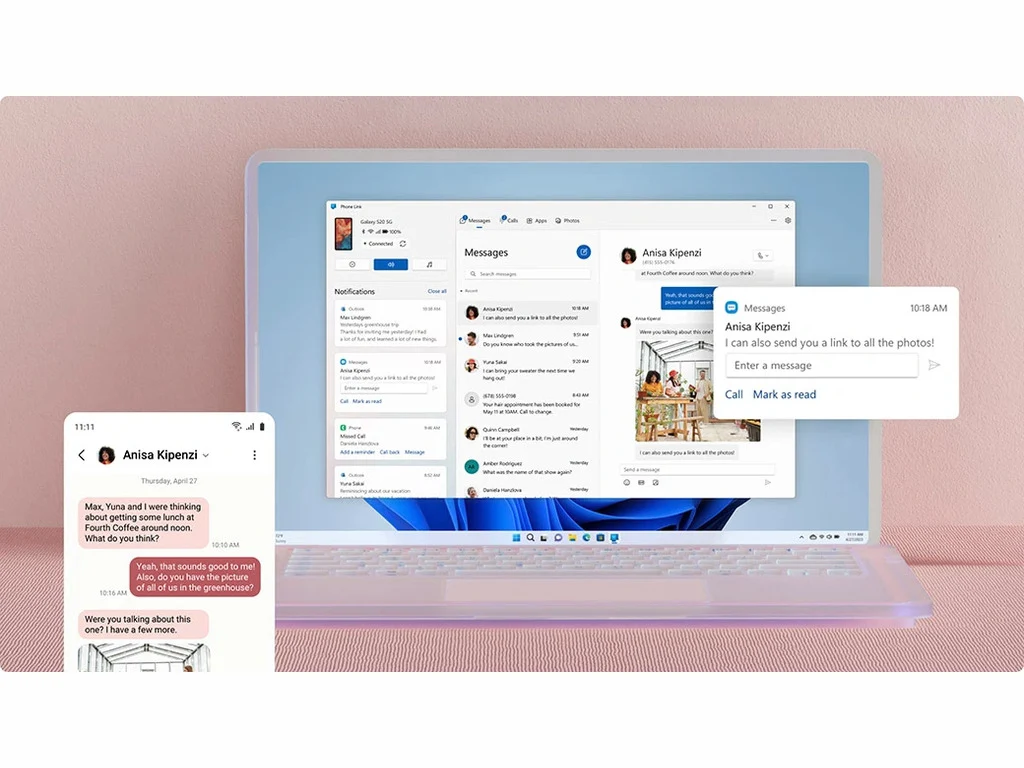
  • Microsoft Introduces Spotify Cross-Resume for Android and Windows 11

    Microsoft Introduces Spotify Cross-Resume for Android and Windows 11

    Key Takeaways

    1. Microsoft is introducing a feature similar to Apple’s Handoff for Windows 11 Insiders, starting with Spotify.
    2. Users can resume Spotify songs or podcasts on their PC through a “Resume Alert” on the taskbar.
    3. Clicking the alert will automatically download the Spotify app from the Microsoft Store if it’s not already installed.
    4. To access this feature, users must enroll in the Windows Insider Program and install the Microsoft Link to Windows app on their Android device.
    5. Users need to enable access to their Android phone in Windows 11 settings for full functionality, with plans for more app support in the future.


    Microsoft is slowly introducing its version of Apple’s Handoff to Windows 11 Insiders. This initiative is starting with users in the Dev and Beta channels, allowing them to easily continue using their favorite apps across Android and Windows 11 devices.

    Starting with Spotify

    Initially, Insiders can pick up where they left off with songs or podcasts on the Spotify app for Android, with plans to add support for more applications soon. To take advantage of this feature, simply start listening to a song or podcast on Spotify, and a “Resume Alert” will appear on your taskbar. By clicking on this alert, the Spotify desktop app will launch, enabling you to switch to your PC.

    Installing the App

    If you don’t have the Spotify app on your desktop, clicking the alert will trigger an automatic download from the Microsoft Store. To ensure this works, you must be logged into the same account on both your phone and your computer.

    Getting Started with Windows Insider Program

    To access this feature, you’ll need to enroll in the Windows Insider Program. Begin by opening the settings on your Windows 11 device, then select “Windows Update.” Look for “Windows Insider Program,” click on “Get Started,” and follow the prompts.

    After signing up, go to the Play Store on your Android device and download the Microsoft Link to Windows app. Log in with your Microsoft account and follow the necessary steps.

    Enabling Access

    You must also allow access to your Android phone by navigating to Windows 11 Settings, selecting “Bluetooth and devices,” then “Mobile devices.” Switch “Allow this PC to access your mobile devices” to On, and click on “Manage devices” to link your Android phone.

    The rollout of this feature is happening gradually, so you might have to wait for it to become available for your account. Microsoft is also encouraging developers to incorporate this functionality into their apps, with support for additional applications coming soon.

    Source:
    Link