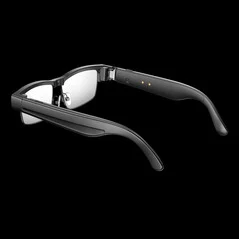
Tag: smart glasses

  • Apple’s AI Wearables: New AirPods, AirTag Charm, and Smart Glasses

    Apple’s AI Wearables: New AirPods, AirTag Charm, and Smart Glasses

    Key Takeaways

    1. Apple is accelerating the release of AI-focused wearables, including AirPods with cameras and smart glasses, to stay ahead of competitors.
    2. The new AirPods will incorporate low-resolution cameras for environmental perception, shifting from their initial audio-focused design.
    3. A charm wearable is also in development, resembling a pendant, featuring two low-resolution cameras and functioning as an AI interface with the iPhone.
    4. Apple’s smart glasses are expected to have high-resolution cameras and advanced features like voice commands, music playback, and navigation assistance, all in a stylish design.
    5. Mass production of the smart glasses is set to begin in December 2026, with a potential market release in early 2027.


    The whispers about Apple working on various AI-focused wearables have recently gained momentum, with new information suggesting that their release dates are being moved up to stay ahead of competitors.

    AirPods Release and Features

    The initial release is expected to include AirPods with cameras, which might launch around the same time as the anticipated Google Gemini-enhanced Siri assistant in iOS 27. Following this, Apple plans to unveil its smart glasses in early 2027, along with a wearable charm device.

    Interestingly, while earlier discussions hinted at the AirPods having a camera solely for audio purposes, they are now envisioned as vision-oriented gadgets, similar to the smart glasses and brooch. Previous Apple analysts had indicated that the AirPods would include infrared cameras for spatial audio, but the shift towards AI seems to have altered these initial designs.

    Camera Capabilities

    It will be fascinating to discover how Apple incorporates a camera into such a small device like an AirPod. However, the report notes that these cameras will be of low resolution, primarily designed to allow the AI assistant to perceive its environment rather than for taking high-quality photos. They may resemble the 6.5 MP 3D camera system found in the Vision Pro, aimed at capturing spatial images and videos.

    On the other hand, the charm wearable will take the form of a pendant that can be worn on a necklace or clipped to clothing like a brooch. It will be compact, similar to an AirTag, but it is expected to feature two low-resolution cameras, microphones, and potentially a speaker, functioning as the iPhone’s eyes and ears, with the AI processing handled by the phone.

    Smart Glasses Features and Expectations

    Apple’s smart glasses are anticipated to be the most sophisticated in terms of hardware among the new AI-focused wearables, which is predictable given their size. These glasses are rumored to have high-resolution cameras that can record videos, take pictures, or assist with computer vision tasks. They will also enable calls, respond to voice commands, play music, offer navigation assistance, and provide translation on the move.

    Apple aims to distinguish its AI glasses with a stylish design that integrates microphones, speakers, batteries, and cameras, available in various sizes and colors to match individual preferences. It is yet unclear whether they will be priced higher than Meta’s similar product, the fashionable Oakley AI glasses, which are listed at $479 on Amazon and come in multiple styles for those keen on fashion.

    Mass production for Apple’s first AI-powered smart glasses is reportedly slated to begin in December 2026, suggesting they could hit the market by the first quarter of 2027.

    Source:
    Link
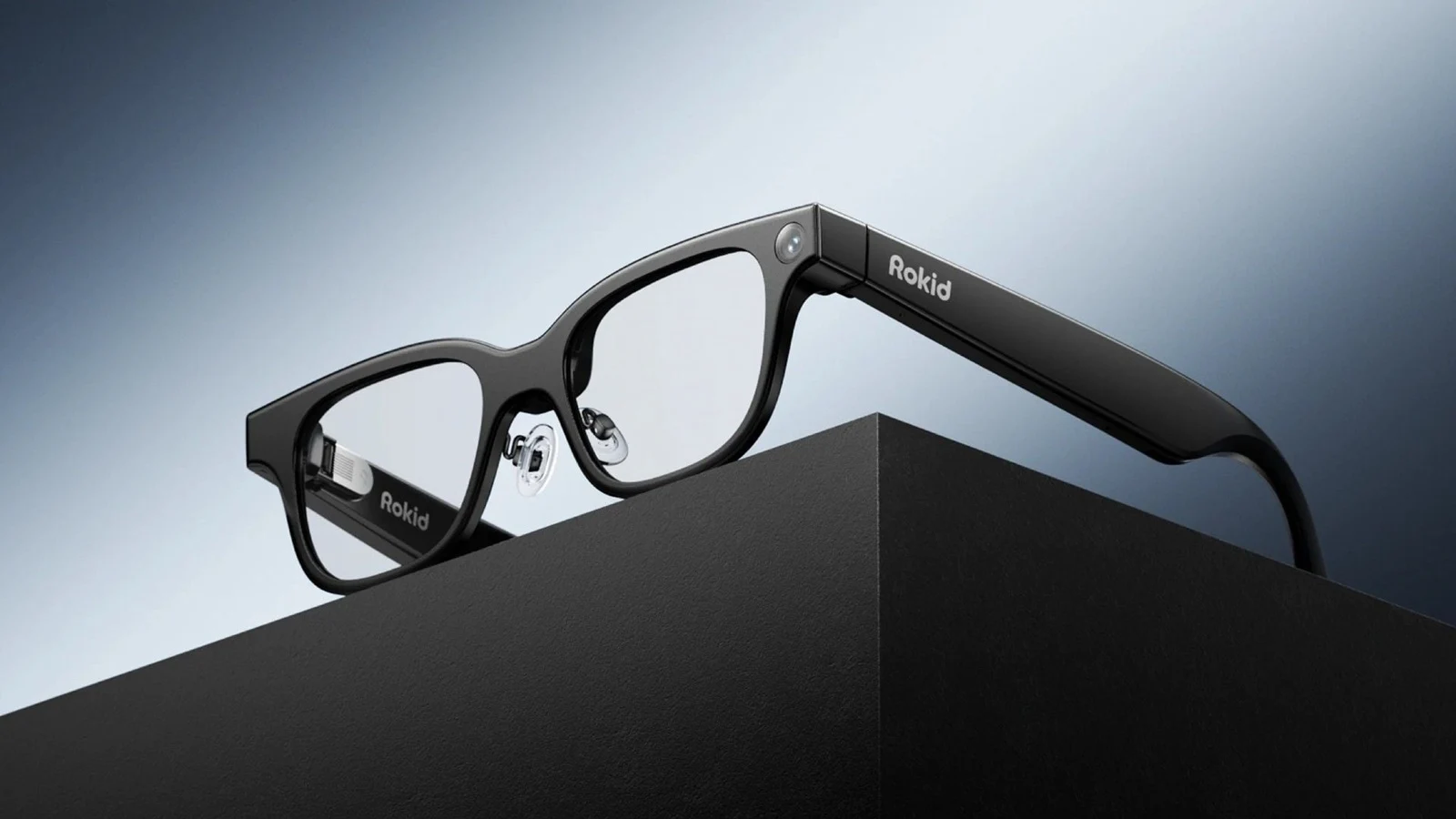


  • Rokid AI Glasses: Global Launch of $299 Screenless Smart Glasses

    Rokid AI Glasses: Global Launch of $299 Screenless Smart Glasses

    Key Takeaways

    1. Rokid’s AI Glasses Style are lightweight, screenless smart glasses focused on voice commands and audio features.
    2. The glasses offer a “prescription-first” option, allowing users to submit optical prescriptions for custom lenses.
    3. They utilize a dual-chip setup for efficient performance, separating low-power functions from demanding AI processes.
    4. Users can perform tasks through voice commands, including translations and navigation, without needing a phone screen.
    5. Priced at $299, the Style is cheaper than Meta’s Ray-Ban smart glasses and offers longer video recording time and wider AI support.


    Rokid is launching its latest AI Glasses Style globally, believing that consumers desire the advantages of AI smart glasses without a display. Following their introduction at CES 2026, these lightweight, screenless glasses will be available worldwide starting at $299 later this month, with online sales already underway.

    Unique Features of the AI Glasses Style

    Unlike Rokid’s previous AR glasses, the Ai Glasses Style completely lacks a heads-up display or micro-screen. Instead, they focus on voice commands, audio features, and a camera for everyday functionality.

    Rokid is promoting the Style as “prescription-first” eyewear. Customers can submit their optical prescriptions to have custom lenses made, allowing them to use the glasses for regular vision correction while also enjoying AI capabilities. Packages that include prescription photochromic lenses are priced higher, around $398, but they still offer a better deal compared to similar products from Meta’s Ray-Ban lineup.

    Advanced Technology Inside

    Rokid’s dual-chip setup efficiently separates low-power voice and sensor functionalities from more demanding AI processes. The company emphasizes its “open AI ecosystem,” allowing users to utilize various models and services instead of being tied to a single assistant.

    With voice commands like “Hey Rokid,” users can perform tasks such as real-time translations, meeting transcriptions, summarization, object recognition, and navigation prompts through open-ear speakers. There’s no need for an always-on phone screen, and the absence of a display helps minimize both weight and power consumption.

    Competitive Landscape

    Rokid’s strategy also increases competition for Meta’s Ray-Ban smart glasses line. The Style is priced $80 less than Meta’s current offerings in many regions, while boasting longer video recording time, a lighter design, and wider support for AI models — albeit without a fashion partnership or an included charging case.

    Source:
    Link


  • BlitzWolf BW-AG1 Smart Glasses: Heart Rate, UV Sensor, Audio Features

    BlitzWolf BW-AG1 Smart Glasses: Heart Rate, UV Sensor, Audio Features

    Key Takeaways

    1. BlitzWolf’s BW-AG1 smart glasses do not have a built-in display and are not technically AR glasses.
    2. The glasses feature a microphone and speakers for voice assistant use without a smartphone, similar to headphones.
    3. The BW-AG1 is priced at approximately $40 and offers various lens options, including clear, tinted, red, and photochromic lenses.
    4. The photochromic lenses automatically adjust tint in sunlight, eliminating the need for an extra pair of sunglasses.
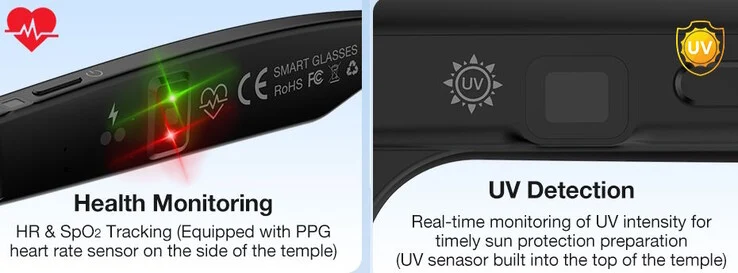
    5. The glasses include a UV sensor to monitor sun exposure and can measure heart rate and oxygen saturation, with data displayed in a linked smartphone app.


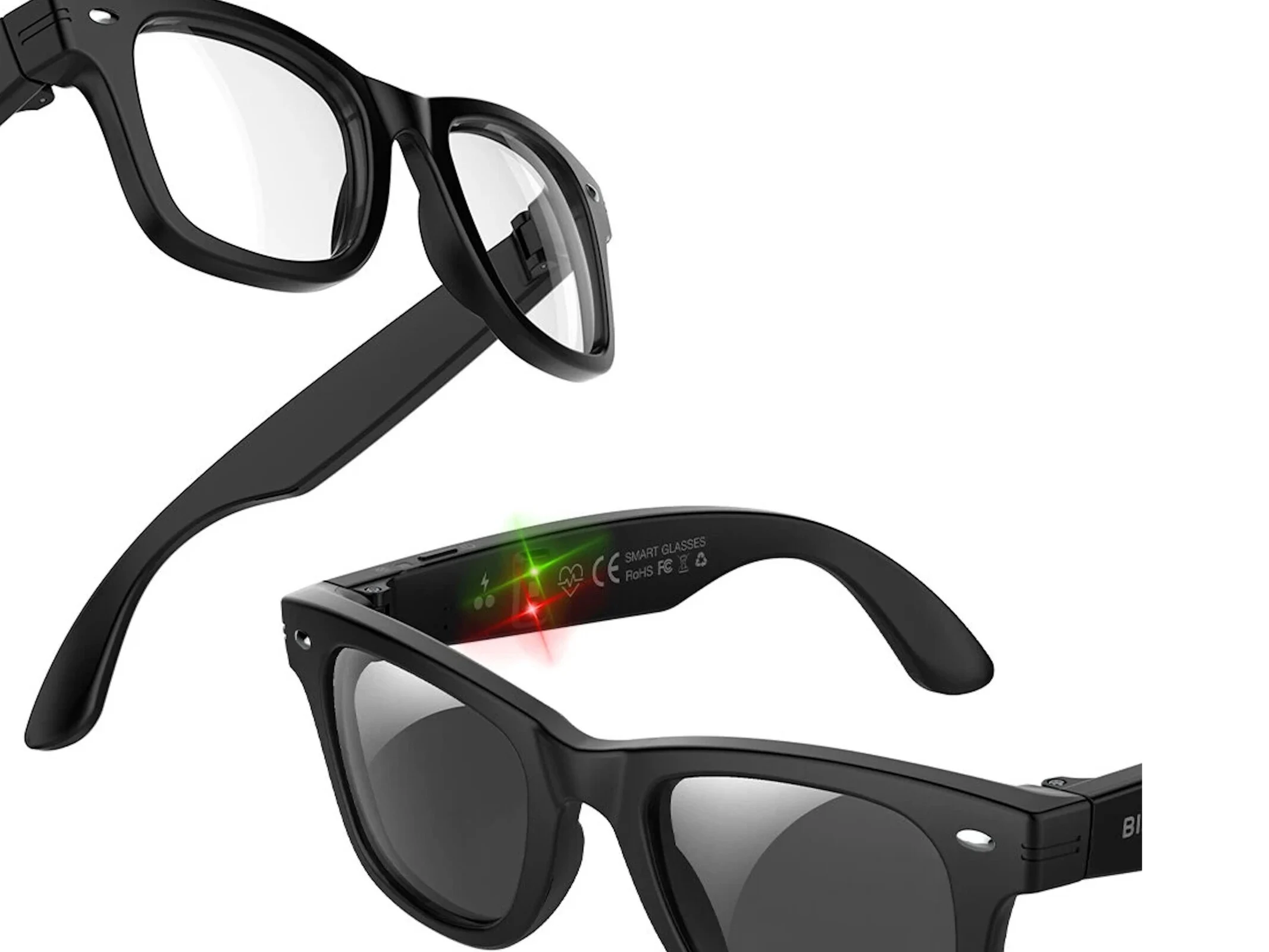
    BlitzWolf has introduced a new pair of smart glasses named the BW-AG1. These glasses do not include a built-in display, which means they aren’t technically AR glasses. However, they come equipped with a microphone and speakers, allowing users to utilize voice assistants without needing to connect to a smartphone. This capability is similar to what many headphones offer. The BW-AG1 is priced at around $40.

    Different Variants Available

    There are several models of the BW-AG1, each featuring various lens options. Depending on the specific version, the lenses can be either clear or tinted. In addition to the standard sunglasses, there are models available with red lenses and another with photochromic lenses. To explain, the photochromic lenses adjust their tint automatically in sunlight, which means users do not have to bring an extra pair of sunglasses with them.

    Sun Exposure Features

    Moreover, the BW-AG1 includes a UV sensor designed to monitor sun exposure. While we can’t confirm how accurate these measurements are, UV sensors themselves are usually not very complicated. The data regarding sun exposure is displayed in the linked smartphone app, helping users recognize high levels of UV radiation and take the necessary precautions. Furthermore, these smart glasses are also capable of measuring heart rate and oxygen saturation optically.

    Source:
    Link


  • Oakley Meta Vanguard Smart Glasses with Garmin and Limited AR

    Oakley Meta Vanguard Smart Glasses with Garmin and Limited AR

    Key Takeaways

    1. The Oakley Meta Vanguard smart glasses are now available for purchase starting at $499, including retailers like Amazon and opticians.
    2. Users can utilize voice commands to access workout metrics, and the glasses feature automatic recording during key workout moments.
    3. The glasses enhance reality mainly through sound but do not provide a visual overlay for information display.
    4. Equipped with a 12MP camera and a 122-degree field of view, the glasses are resistant to sweat and water.
    5. They offer a battery life of 9 hours, with an additional 36 hours provided by the charging case.


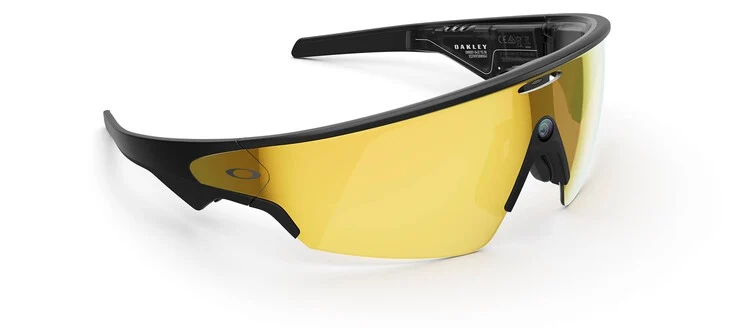
    We have previously shared news about the Oakley Meta Vanguard, and now it is finally for sale in stores and is listed as available at several retailers, including Amazon, with prices beginning at $499. You can also find these glasses at some opticians. Moreover, Garmin has released detailed information about the features of the Oakley Meta Vanguard as it becomes more widely accessible. These smart glasses are a collaboration between Garmin and Oakley Meta, specifically designed for athletes.

    Voice Commands for Convenience

    Users can take advantage of voice commands to access various details, such as their current pace, speed, or heart rate. The company highlights the automatic recording feature that activates with smart triggers, particularly during peak workout moments or when achieving a new personal best. Although the Oakley Meta Vanguard lacks a traditional display, they are still capable of delivering visual information. There is a status LED that uses light to signal whether users are within their target zone, like the desired heart rate.

    Augmented Reality Features

    By certain definitions, the Oakley Meta Vanguard could be considered AR glasses since they enhance the perception of reality, mainly through sound without interacting with the surroundings. However, it is important to note that the Vanguard does not provide a visual overlay for displaying information.

    Specifications and Performance

    The Oakley Meta Vanguard comes equipped with a 12MP camera that has a 122-degree field of view, and the glasses are fairly resistant to sweat and water. Additionally, the open-ear speakers can be utilized for voice output as well as music playback. There’s also a touchpad and an action button included. The manufacturer claims a battery life of 9 hours, and the charging case offers an extra 36 hours of use.


  • Meta Ray-Ban Smart Glasses Teardown: Innovative AR Display Insights

    Meta Ray-Ban Smart Glasses Teardown: Innovative AR Display Insights

    Key Takeaways

    1. Meta Ray-Ban Display features a built-in screen that shows messages, AI responses, and navigation help directly in the user’s sight.
    2. Repairing the glasses is extremely difficult due to a glued plastic exterior and complex internal components.
    3. Disassembling the glasses can cause damage, making repairs like changing the camera or display nearly impossible without expertise.
    4. The glasses utilize a unique projection system with a tiny projector and partially transparent mirrors for clear images visible only to the wearer.
    5. The internal components include a Qualcomm Snapdragon AR1 Gen 1 chip and 32 GB of flash storage, highlighting their advanced technology.


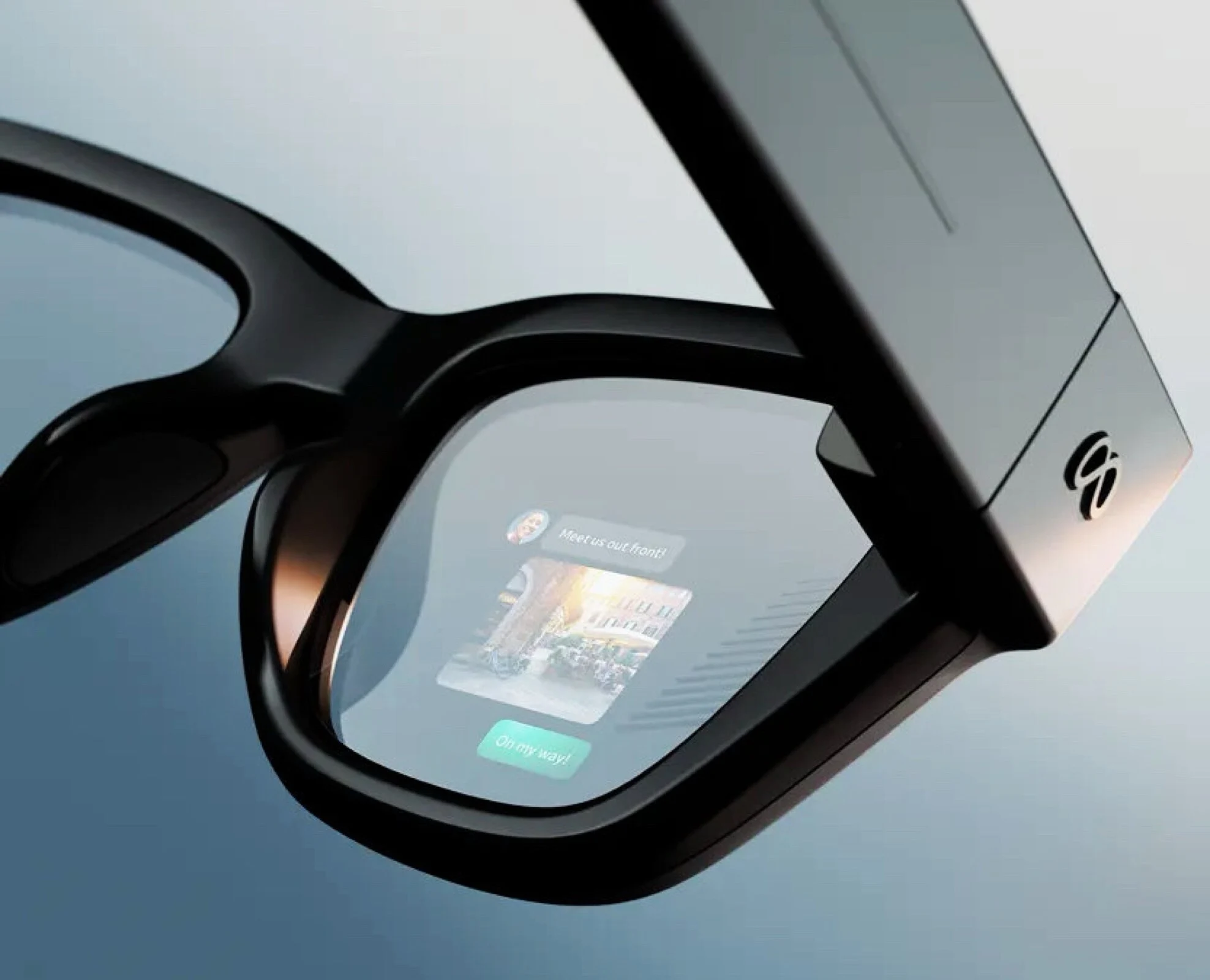
    Meta Ray-Ban Display is likely the most fascinating smart glasses on the market today. Unlike many other brands, Meta has added not just speakers and microphones, but also a display that projects directly into the user’s sight. This screen can show new messages, display answers from an AI chatbot, or help with navigation in real life.

    Repair Challenges

    iFixit has taken apart the glasses, and they discovered that fixing them is nearly impossible. The plastic exterior is glued together, making it hard to replace the 960 mWh battery without causing damage, although changing the battery isn’t completely out of the question. One side of the arms contains just the battery, a speaker, and a microphone, while the other side holds the motherboard, which includes the Qualcomm Snapdragon AR1 Gen 1 ARM chip and 32 GB of flash storage.

    Difficult Disassembly

    Opening the frame of the glasses is likely to result in damage, and swapping out a broken camera or display is almost impossible without expert knowledge and special tools. The teardown video is intriguing, especially because it shows the AR display up close. A tiny projector with a resolution of 600 x 600 is situated in the right arm of the glasses.

    Unique Projection System

    Three LEDs act as the light source. The most notable characteristic isn’t just the projector, but the lens that contains a set of partially transparent mirrors, reflecting the projector’s light exactly where it needs to go. This lens enables Meta to create an image that is clear for the user but invisible to anyone looking from the outside.

    Source:
    Link


  • Ray-Ban Meta Gen 2 Smart Glasses: Better Battery and Camera

    Ray-Ban Meta Gen 2 Smart Glasses: Better Battery and Camera

    Key Takeaways

    1. Stylish Options and Lens Choices: The Ray-Ban Meta (Gen 2) comes in three styles (Wayfarer, Skyler, Headliner) with various colors and lens options, including clear, transition, and prescription lenses.

    2. Enhanced Battery Life and Charging: The new glasses offer up to 8 hours of battery life, doubling the previous model’s 4 hours, and the charging case provides an additional 48 hours of battery life.

    3. Camera and Software Updates: The glasses feature a 12MP ultra-wide camera that records in 3K Ultra HD at 60fps, and upcoming software updates will add new recording features and live translation capabilities.

    4. Pricing and Availability: The Ray-Ban Meta (Gen 2) starts at $379 in the U.S., with availability expanding to new regions including Switzerland and the Netherlands.

    5. New Features: A new “Conversation Focus” feature enhances voice clarity during conversations, improving overall user experience.


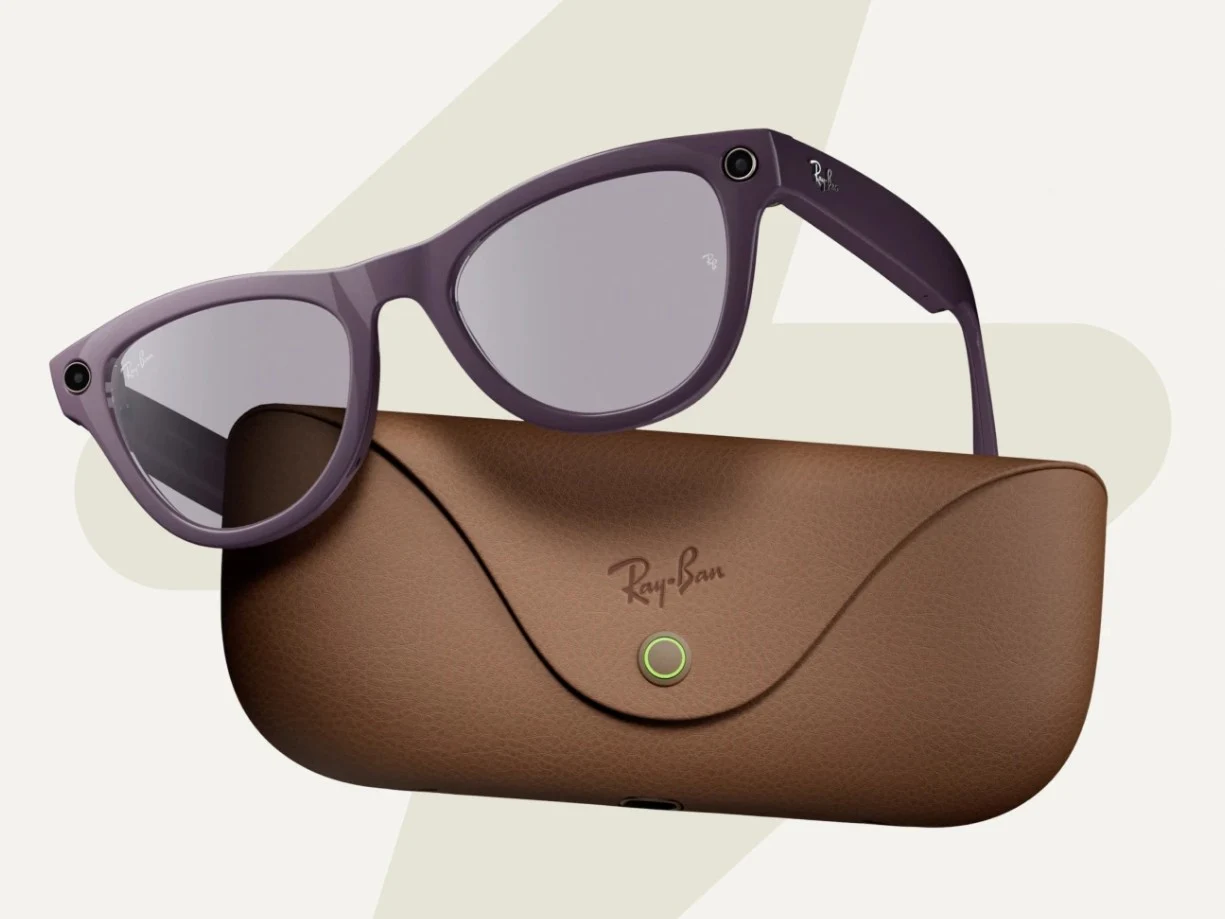
    Meta recently revealed the successor to its Ray-Ban Meta Smart Glasses. The revamped product is known as the Ray-Ban Meta (Gen 2), featuring numerous improvements compared to its predecessor.

    Stylish Options and Lens Choices

    The latest Ray-Ban Meta (Gen 2) glasses are available in three styles: Wayfarer, Skyler, and Headliner. They come in various color options, including three seasonal colors available for a limited time. Users can select between clear and transition lenses, which adjust to be completely clear indoors and darken outdoors. Similar to the last version, these glasses also accommodate prescription lenses.

    Enhanced Battery Life and Charging

    When it comes to hardware, the Ray-Ban Meta (Gen 2) boasts a much-improved battery life. Meta claims these new glasses can last up to 8 hours under normal use, doubling the 4-hour lifespan of the original Ray-Ban Meta (Gen 1), which is currently priced at $299 on Amazon.

    Moreover, the charging case has also seen improvements, offering an additional 48 hours of battery life compared to the previous model’s 36 hours. Now, a quick 20-minute charge can power the glasses from zero to 50%.

    Camera and Software Updates

    While the Ray-Ban Meta (Gen 2) retains the 12MP ultra-wide camera from the previous model, it now supports recording in 3K Ultra HD at 60fps, ensuring sharper video quality. Unfortunately, the storage capacity remains at 32GB. Meta has announced that upcoming updates for these glasses—and its other models, like the Oakley Meta HSTN—will introduce features like hyperlapse and slow-motion video recording this fall.

    An exciting new feature, “Conversation Focus,” will enhance user experience by amplifying the voice of the person the user is speaking with, utilizing the built-in speakers on the glasses. Additionally, a recent update has introduced live translation capabilities for German and Portuguese.

    Pricing and Availability

    The Ray-Ban Meta (Gen 2) smart glasses are now available for purchase, starting at $379 in the United States, £379 in the UK, and €419 in Europe. Meta is also broadening the availability of these glasses to additional regions, beginning with Switzerland and the Netherlands, followed by Brazil soon. The earlier generation glasses remain for sale, starting at $299.

    Source:
    Link


  • Leaked Clip Reveals Meta Ray-Ban Glasses and sEMG Wristband Features

    Leaked Clip Reveals Meta Ray-Ban Glasses and sEMG Wristband Features

    Key Takeaways

    1. Meta is set to showcase new “smart glasses” called the Meta Ray-Ban Display at Connect 2025, featuring a heads-up display (HUD) for the first time.
    2. The glasses will include a camera on the right frame and will be controlled using a paired sEMG wristband, allowing users to interact with the display through physical gestures.
    3. These smart glasses fall under the AR (augmented reality) category, rather than VR (virtual reality) or MR (mixed reality).
    4. The anticipated retail price for the Meta Ray-Ban Display is around $800, following earlier announcements and leaks about the product.
    5. Meta Connect 2025 is scheduled for September 17, coinciding with potential announcements from Valve regarding their new Steam Frame VR headset.


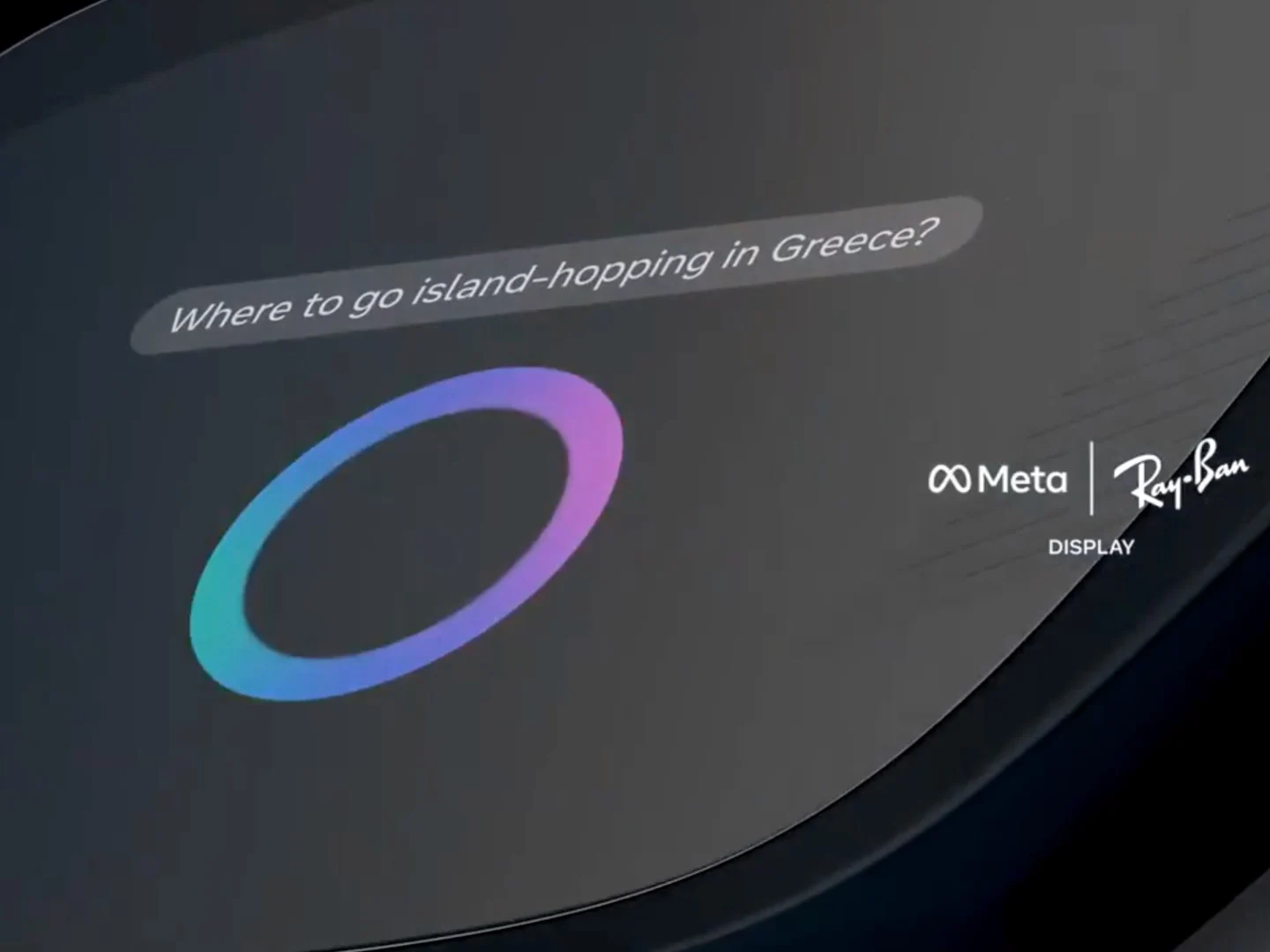
    Meta is preparing for Connect 2025, and it’s anticipated that they will showcase new “smart glasses” at the event. These glasses will expand their collaboration with Ray-Ban and introduce a heads-up display (HUD), marking a first for Meta. Before the conference, a promotional video has leaked, revealing the design, HUD features, and functionality enabled by a paired sEMG wristband.

    Details on the Meta Ray-Ban Display

    Known as the Meta Ray-Ban Display, these glasses are not classified as VR or MR; instead, they fit into the AR category. The brief video clip (from UploadVR) reveals a camera located on the frame of the right eye and a HUD positioned at the center, which appears to stay in that spot. Users will control the display with an sEMG wristband, which stands for surface electromyography. In the video, users can swipe on a physical surface to reply to messages. Additionally, the glasses are seen using Meta AI to assist in navigation and to provide contextual information based on what the user is viewing.

    Previous Announcements and Pricing

    This isn’t the first time these glasses have been mentioned. A report from December last year indicated that Meta was considering adding a display to its Ray-Ban smart glasses. In July 2025, images of the glasses and the wristband were also released. Recent reports suggest that the glasses are expected to retail for around $800.

    Upcoming Events

    Notably, Meta Connect 2025 is set for tomorrow, September 17. It’s also been reported that Valve may reveal its Steam Frame VR headset this week, possibly coinciding with the same date. Although Valve hasn’t disclosed any details about the new headset, they surprised everyone by launching the Valve Index headset in 2019 during Meta’s F8 event, which also saw the pre-orders for the Oculus Quest and Oculus Rift S.

    Source:
    Link


  • Affordable Rollme Smart Glasses Launch for Real-Time Translation

    Affordable Rollme Smart Glasses Launch for Real-Time Translation

    Key Takeaways

    1. NeoView smart glasses are an upgrade from the AirView model, priced at $79.99 and available in clear and tinted lenses.
    2. They feature an 8-megapixel camera for smooth photo and video capture, along with a dual-microphone system to reduce background noise.
    3. The glasses offer real-time connectivity through Wi-Fi and Bluetooth, enabling hands-free calling and media sharing.
    4. A built-in AI voice assistant helps with tasks like reminders, music control, and weather updates via voice commands.
    5. Unique functions include real-time translation and advanced object recognition technology, making them useful for travelers and professionals.


    Rollme has recently revealed its latest smart glasses called the NeoView, which come as an upgrade to the newly released AirView smart glasses. They share a similar look with their earlier models and are designed for everyday use. With a price tag of $79.99, the NeoView offers options for both clear and tinted lenses, packing a variety of useful features into a comfortable design.

    Features and Functionality

    Equipped with an 8-megapixel camera, the NeoView allows users to capture photos and record videos without the shake, ensuring smooth visuals while on the move. For communication purposes, it boasts a dual-microphone system that reduces background noise.

    Real-time connectivity is made possible through Wi-Fi and Bluetooth, enabling quick syncing and sharing of media. Users can also enjoy hands-free Bluetooth calling, while an integrated AI voice assistant takes care of tasks such as setting reminders, controlling music, and providing weather updates, all through simple voice commands.

    A Unique Advantage

    One of the most notable features is its ability to perform real-time translation, which can greatly assist in conversations that span different languages. This makes it a valuable gadget for travelers and professionals. While similar features can be found in pricier smart glasses like the Ray-Ban Meta glasses (currently $329 on Amazon), the NeoView’s affordable price point makes it more accessible for many. Additionally, these glasses include advanced object recognition technology to offer contextual details about the wearer’s environment.

    Source:
    Link


  • Rollme Launches $79.99 Smart Camera Glasses with Translation Features

    Rollme Launches $79.99 Smart Camera Glasses with Translation Features

    Key Takeaways

    1. Smart Features: AirView smart glasses have an 8MP anti-shake camera, dual microphones for clearer voice capture, and Bluetooth call capabilities.

    2. Voice-First Design: The glasses emphasize voice functionality with a built-in assistant for hands-free tasks, real-time speech translation, and object recognition.

    3. Lens Variations and Pricing: Available in clear and tinted lenses, AirView starts at $79.99, making it more affordable than other smart glasses like Ray-Ban Meta.

    4. Connectivity: Users can sync photos, videos, and data via Wi-Fi and Bluetooth for easy transfer to paired devices.

    5. Considerations for Buyers: Important factors to consider before purchasing include battery life, privacy settings, and the effectiveness of the assistant and microphone in various environments.


    Rollme has recently unveiled AirView, a new pair of smart glasses that feature built-in cameras and voice functionality, as well as wireless connectivity. These glasses are equipped with an 8MP “anti-shake” camera that can take pictures and record HD videos. They also include a dual-microphone setup designed to reduce noise, ensuring clearer voice capture during calls and recordings. Users can make or receive Bluetooth calls when the glasses are connected to a smartphone.

    A Focus on Voice Features

    AirView is primarily designed as a voice-first device. It includes a built-in assistant capable of performing hands-free tasks, like making calls, setting reminders, checking the weather, and controlling music just by speaking. Additionally, these glasses provide real-time speech translation and can recognize objects in the environment around the wearer. Rollme mentions that photos, videos, and other data can be synced via Wi-Fi and Bluetooth, allowing for instant transfer to paired devices.

    Lens Options and Pricing

    At launch, the company offers two lens variations: clear and tinted. The starting price on Rollme’s official site is $79.99. However, details regarding battery capacity, estimated runtime, storage specifications, and water resistance ratings were not shared in the initial announcement. Rollme also hasn’t revealed information about the processor or specific AI features of the device.

    In terms of pricing, AirView is more affordable compared to camera-focused smart glasses from bigger brands, like the Ray-Ban Meta glasses, which currently retail for $329 on Amazon. However, the long-term value will depend heavily on factors such as image quality, microphone effectiveness in noisy settings, accuracy of translations, and the assistant’s dependability in offline situations or with unreliable connections. Potential buyers should consider key questions before purchasing, such as battery life, privacy settings for the camera and microphones, and the necessary companion apps for transferring and updating data. AirView is currently available through Rollme’s online store with the two lens options previously mentioned at the launch price.

    Source:
    Link


  • HTC Vive Eagle Smart Glasses: Zeiss Lenses, 12MP Camera, ChatGPT

    HTC Vive Eagle Smart Glasses: Zeiss Lenses, 12MP Camera, ChatGPT

    Key Takeaways

    1. HTC Vive Eagle is a new competitor to Ray-Ban Meta Smart Glasses, featuring a semi-transparent frame in four colors.
    2. The smart glasses have built-in speakers, four microphones, and a 12-MP ultra-wide-angle camera for communication, music, and photo/video capture.
    3. The device runs on Qualcomm Snapdragon AR1 Gen 1, with 4 GB RAM, 32 GB storage, and supports Wi-Fi 6E and Bluetooth 5.3.
    4. Battery life is approximately three hours for calls, 4.5 hours for video, and up to 36 hours on standby, with an IP54 rating for water resistance.
    5. Priced at 15,600 TWD (about $520) in Taiwan, availability details for international markets are still pending.


    The HTC Vive Eagle: A New Player in Smart Glasses

    HTC has recently introduced the Vive Eagle, challenging the popular Ray-Ban Meta Smart Glasses. This new pair of smart glasses features a semi-transparent plastic frame that comes in four colors: red, brown, gray, and black. The lenses are made by Zeiss, but at first, the Vive Eagle will only be offered as sunglasses with UV protection. Other models with optical lenses are expected to arrive in the future.

    Communication and Features

    Equipped with four microphones and built-in speakers, these glasses allow users to communicate seamlessly. They can connect to Google Gemini or ChatGPT as an option. Users can listen to music and capture photos and videos with the 12-MP ultra-wide-angle camera. Notably, the camera is designed to help the AI chatbot engage with the real world, enabling text translations and providing information about visible objects. Besides using voice commands, there’s also a physical shutter button to take photos.

    Specifications and Battery Life

    The Vive Eagle runs on a Qualcomm Snapdragon AR1 Gen 1 processor, with 4 GB of RAM and 32 GB of flash storage. It supports Wi-Fi 6E and Bluetooth 5.3. Thanks to its energy-efficient AR chip and a 235 mAh battery, it boasts a battery life of three hours for calls, 4.5 hours for video viewing, and up to 36 hours while in standby. With an IP54 rating, the glasses are safeguarded against light rain. Weighing only 48.8 grams, they are designed for comfort during use.

    The HTC Vive Eagle AR headset will be priced at 15,600 TWD (about $520) in Taiwan. Information on when it will be available internationally is still awaited. More details can be found on the official product website.

    Source:
    Link