Tag: AirPods

  • Future AirPods-Style Buds Verify Users via Unique Heartbeat Signals

    Future AirPods-Style Buds Verify Users via Unique Heartbeat Signals

    Key Takeaway

    – AccLock proposes passive in-ear biometric authentication using heartbeat- or in-ear BCG signals from earbud accelerometers, aiming for unobtrusive verification with zero user involvement.
    – Early tests reported average FAR of 3.13% and FRR of 2.99% (33 participants), indicating feasibility but not yet reliable enough for broad deployment.
    – Current tech is experimental: performance varies with activity (better for music listening, worse while walking/jaw movement) and differs between 3D-printed buds and real AirPods; no commercial products yet.


    Intro to Ear ID and biometrics After Touch ID and Face ID, we might get Ear ID next. Apple introduced Touch ID on the iPhone 5S as the first reliable iPhone security feature. It was discontinued in 2025 with the end of the iPhone SE (3rd generation) and has now been largely replaced by Face ID, which launched on the iPhone X in 2017 and has become the go-to facial security authentication system. However, that might change with AccLock’s AirPods-style earbuds, which authenticate users based on their unique heart rhythms.

    Heartbeat based security concept

    In this paragraph, the idea of heartbeat authentication is presented as a future security feature, as electrical impulses from a person’s heart and cardiac patterns create unique heartbeat rhythms for each individual (via ScienceDirect). The writing style shifts here to a more explanatory tone, while still keeping the idea of personalized heart rhythms and their potential use in security, and the sentence structure is varied to meet the requirement of a different style per section.

    AccLock earbud system overview

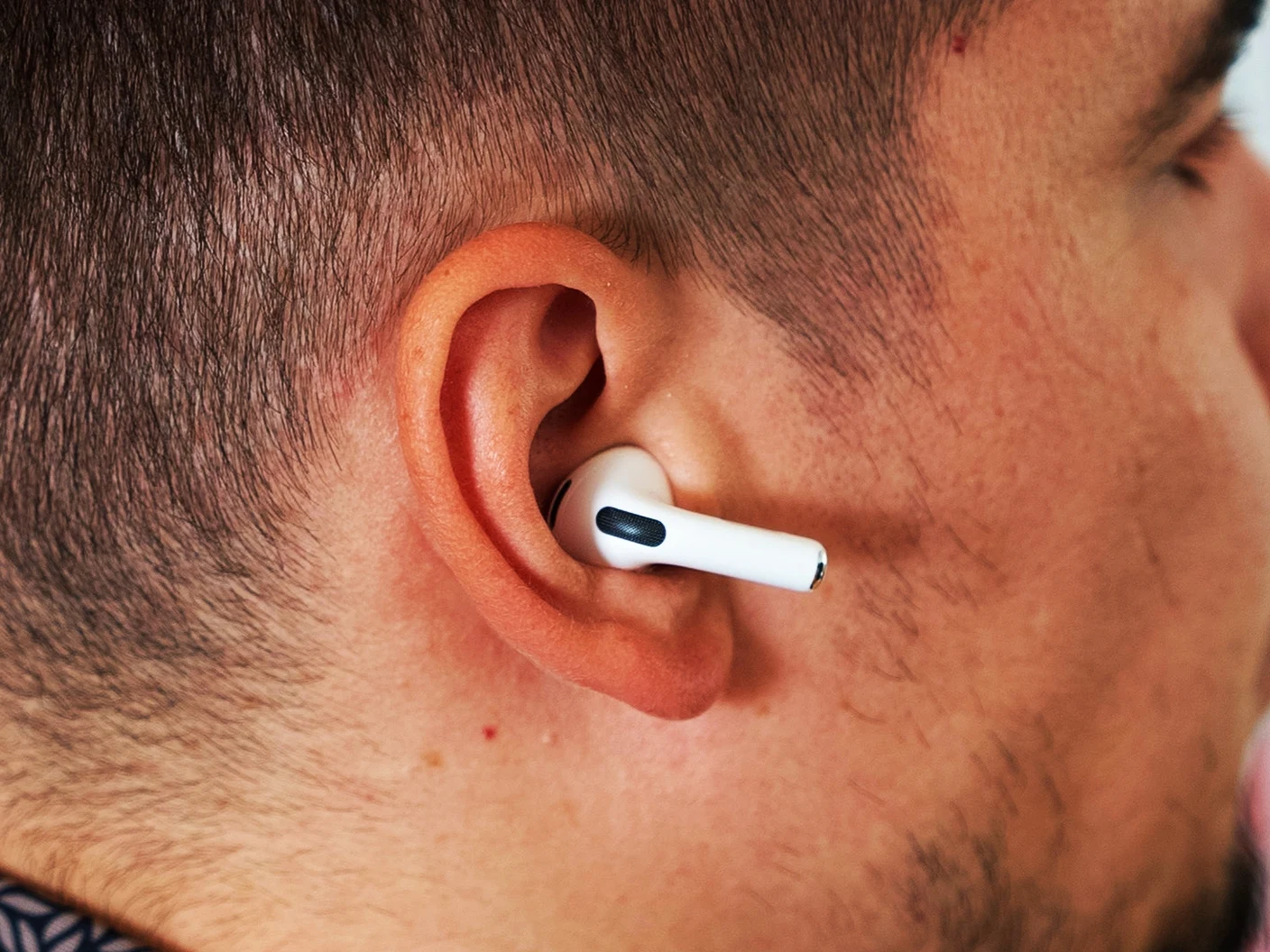
    Now, a research project based in China is developing an earbud system called AccLock that uses a tiny accelerometer found in most earbuds, such as AirPods. In their preprint paper, accessible via Cornell University’s arXiv, the researchers explained why this could be a game-changer, stating: “In this paper, we propose a passive authentication system called AccLock, which leverages distinctive features extracted from in-ear BCG signals to enable secure and unobtrusive user verification. Our system offers several advantages over previous systems, including zero involvement for both the device and the user, ubiquity, and resilience to environmental noise.”

    The description continues in a slightly more casual cadence, noting that real-world testing backs up their statements: “We conducted extensive experiments with 33 participants, achieving an average FAR (False Acceptance Rate) of 3.13% and an FRR (False Rejection Rate) of 2.99%, which demonstrates the practical feasibility of AccLock.”

    Current performance and caveats

    To put it simply, AccLock, while still in its initial stages of research testing, falsely allowed 3.13% of unauthorized users to bypass biometric verification. Likewise, 2.99% of participants were unable to access their devices using AccLock’s heartbeat-based biometric verification. However, the sample size is too small to draw broader conclusions. Despite this, AccLock could become a viable alternative for biometric verification as it matures and undergoes further testing.

    Apple, on the other hand, claims that Face ID has a FAR of one in one million, suggesting a highly secure system. However, no official peer-reviewed research documents are available to support Apple’s claims.

    Prototype testing and limitations

    The research team tested the technology on both 3D-printed earbuds and actual Apple AirPods. The prototype ran at a higher sampling rate and was more accurate when people listened to music, moved their heads around, or shifted their posture. Meanwhile, performance on the AirPods dipped slightly due to data quality issues. After a bit of retraining, the buds learned each user’s pattern after some idle sitting.

    Still, other movements, such as walking, jogging, or moving your jaw, introduce vibrations that reduce accuracy. Currently, AccLock is just a proof-of-concept research trial, and no products are shipping with the technology. However, with a growing number of biometric verification methods, privacy could become an even bigger concern than it already is.
    Sources
  • CheckMag: My AirPods and Their Impact on Creative Productivity

    CheckMag: My AirPods and Their Impact on Creative Productivity

    Key Takeaways

    1. Panic of Silence: Being without earbuds can initially cause anxiety but can lead to unexpected creativity and inspiration.
    2. Embracing the Noise: Open yourself to the world around you; it can spark ideas and creativity that you might miss when distracted.
    3. Cost of Constant Distraction: Relying on podcasts and music can hinder deep thinking and true intellectual growth, leading to superficial consumption of information.
    4. Role of Podcasts and Music: While they have value, they can also prevent boredom from inspiring new ideas and creativity.
    5. Finding Freedom in Silence: Allowing yourself to experience silence can enhance your connection to the world and foster creativity.


    I make my living through creativity. Whether I’m writing a tech article, creating funny captions for jokes, or composing new tunes and lyrics, being creative is not just a pastime for me; it’s the lens through which I view the world. I noticed something odd on the rare occasions I left my AirPods at home or when they ran out of battery.

    The Panic of Silence

    When I reach into my pocket and find my earbuds missing or out of juice, my first reaction is a slight panic about having to listen to my own thoughts for the next few hours. There’s no carefully selected playlist, no self-help podcast playing in the background, and no way to drown out the unpleasant noises of the city.

    However, it didn’t take long for me to figure out that being without my earbuds was actually the break I needed.

    Embracing the Noise

    Without my AirPods, the world became louder, and so did my thoughts. I ended up writing a full five-minute comedy set on the train after overhearing something funny. While standing in line for coffee, I noticed the rhythm of the espresso machine and began crafting a beat for an average pop song.

    You get what I mean—if you enjoy photography, your inspiration might come from how the light hits a building. The key point is that unexpected inspiration only strikes if you’re open to surprises. You’d be amazed at how much this depends on using noise-cancelling headphones to block out sounds.

    The Cost of Constant Distraction

    Productivity suffers too when we constantly seek distractions—unless the aim is to drown out noise to finish something, of course.

    Many of us think that listening to podcasts means we’re gaining some kind of educational or spiritual insight, but we consume so many different mental snacks that it’s hard for anything to really stick. Jumping from one podcast episode to another often shows boredom. And it’s perfectly fine to be bored. Do you think Steve Jobs would have invented the iPhone if he already had… an iPhone with TikTok? No way—he’d probably be watching Punch, that baby macaque with a toy monkey for a “mom.” It’s a touching story, by the way.

    What if you called a friend instead of tuning in to another person chatting? People claim they “don’t have time to think,” but we’ve gradually swapped thinking time for listening time, confusing information intake with real intellectual progress.

    The Role of Podcasts and Music

    Don’t misunderstand me; podcasts and music aren’t bad. But for creative types, they can become a quick fix—a way to avoid boredom before it has a chance to inspire change or new ideas.

    If you don’t let your brain have that random celebrity chat or a two-hour exploration on the history of the umbrella (which actually sounds intriguing), your mind will start to create its own material to fill the void. And you may even remember to take your umbrella.

    When we made noise cancellation the norm, silence and the surrounding reality became things to get rid of. Sure, earbuds like my AirPods Pro are amazing pieces of technology, and active noise cancellation (ANC) is a lifesaver on flights with a crying baby. But why should I have to listen to my wife’s crying baby?! They shouldn’t be sitting next to me anyway.

    Unnatural Escapism

    Aside from those ANC-required moments, noise-cancelling feels like an odd form of escapism that I’m learning to break free from. Sometimes, I even run back to grab my AirPods when I realize I left them behind.

    I’m hoping it’s not just me, but when someone’s wearing earbuds, there’s a hesitation before approaching them. Conversely, if you’re wearing earbuds, people assume you’re listening to Joe Rogan while asking for directions to the library. But why go to the library if you’re already tuned into Joe Rogan?

    The irony is hard to overlook—blocking out the sounds of the world feels just like putting on an AR or VR headset, except it appears more socially acceptable.

    Finding Freedom in Silence

    Now, I try not to grab my AirPods as soon as I step outside. It doesn’t happen every time, but when it does, I allow the walk to just be a walk. And guess what? I feel more connected to my humanity!

    I can’t wait to switch to a Nokia and find a cozy cave.

  • Apple’s AI Wearables: New AirPods, AirTag Charm, and Smart Glasses

    Apple’s AI Wearables: New AirPods, AirTag Charm, and Smart Glasses

    Key Takeaways

    1. Apple is accelerating the release of AI-focused wearables, including AirPods with cameras and smart glasses, to stay ahead of competitors.
    2. The new AirPods will incorporate low-resolution cameras for environmental perception, shifting from their initial audio-focused design.
    3. A charm wearable is also in development, resembling a pendant, featuring two low-resolution cameras and functioning as an AI interface with the iPhone.
    4. Apple’s smart glasses are expected to have high-resolution cameras and advanced features like voice commands, music playback, and navigation assistance, all in a stylish design.
    5. Mass production of the smart glasses is set to begin in December 2026, with a potential market release in early 2027.


    The whispers about Apple working on various AI-focused wearables have recently gained momentum, with new information suggesting that their release dates are being moved up to stay ahead of competitors.

    AirPods Release and Features

    The initial release is expected to include AirPods with cameras, which might launch around the same time as the anticipated Google Gemini-enhanced Siri assistant in iOS 27. Following this, Apple plans to unveil its smart glasses in early 2027, along with a wearable charm device.

    Interestingly, while earlier discussions hinted at the AirPods having a camera solely for audio purposes, they are now envisioned as vision-oriented gadgets, similar to the smart glasses and brooch. Previous Apple analysts had indicated that the AirPods would include infrared cameras for spatial audio, but the shift towards AI seems to have altered these initial designs.

    Camera Capabilities

    It will be fascinating to discover how Apple incorporates a camera into such a small device like an AirPod. However, the report notes that these cameras will be of low resolution, primarily designed to allow the AI assistant to perceive its environment rather than for taking high-quality photos. They may resemble the 6.5 MP 3D camera system found in the Vision Pro, aimed at capturing spatial images and videos.

    On the other hand, the charm wearable will take the form of a pendant that can be worn on a necklace or clipped to clothing like a brooch. It will be compact, similar to an AirTag, but it is expected to feature two low-resolution cameras, microphones, and potentially a speaker, functioning as the iPhone’s eyes and ears, with the AI processing handled by the phone.

    Smart Glasses Features and Expectations

    Apple’s smart glasses are anticipated to be the most sophisticated in terms of hardware among the new AI-focused wearables, which is predictable given their size. These glasses are rumored to have high-resolution cameras that can record videos, take pictures, or assist with computer vision tasks. They will also enable calls, respond to voice commands, play music, offer navigation assistance, and provide translation on the move.

    Apple aims to distinguish its AI glasses with a stylish design that integrates microphones, speakers, batteries, and cameras, available in various sizes and colors to match individual preferences. It is yet unclear whether they will be priced higher than Meta’s similar product, the fashionable Oakley AI glasses, which are listed at $479 on Amazon and come in multiple styles for those keen on fashion.

    Mass production for Apple’s first AI-powered smart glasses is reportedly slated to begin in December 2026, suggesting they could hit the market by the first quarter of 2027.

    Source:
    Link


  • Apple Watch to Feature Cameras for AI Visual Intelligence

    Apple Watch to Feature Cameras for AI Visual Intelligence

    Key Takeaways

    1. Apple is developing new Apple Watch models with built-in cameras, expected to launch by 2027.
    2. The cameras will enhance Visual Intelligence, providing contextual data from the user’s environment.
    3. Regular Apple Watch versions may feature an under-display camera, while the Apple Watch Ultra is likely to have a visible camera module.
    4. The cameras are not intended for selfies or video calls, focusing instead on delivering AI-generated insights.
    5. Apple is also working on AirPods with infrared cameras to improve spatial audio and enable gesture-based controls.


    Apple’s plans for wearable AI are getting a serious upgrade in hardware. Mark Gurman from Bloomberg shared that the tech giant is working on new Apple Watch models that will include built-in cameras, signaling a major change in how the device connects with its environment. These upcoming Apple Watches, which are expected to launch by 2027, will utilize cameras to analyze surroundings, offering contextual data directly from your wrist.

    Cameras on Apple Watches — Not for Selfies

    For the regular Apple Watch versions, it appears that Apple is looking into integrating a camera within the display. However, it’s not yet clear if this will be achieved with an under-display sensor or an obvious cutout. On the more robust Apple Watch Ultra, the approach seems more feasible: a visible camera module situated next to the Digital Crown, allowing users to easily point their wrist and quickly scan items.

    These cameras won’t be designed for taking selfies or making FaceTime calls—those concepts are still too ambitious for such a small screen. Instead, the emphasis is on enhancing Visual Intelligence, a feature introduced with the iPhone 16 that enables users to aim their device at an object or text to receive immediate AI-generated insights. Imagine something similar to Google Lens, but more seamlessly integrated into Apple’s ecosystem, and soon available on your wrist.

    Apple Is Expanding Its Vision

    But that’s not all. The company is also reportedly developing AirPods that come with built-in infrared cameras. Though specifics are limited, the aim seems to be improving spatial audio features and possibly gesture-based controls that could interact with augmented reality settings. Picture turning your head or waving your hand in the air, and having your devices respond naturally.

    All of this will depend on Apple transitioning Visual Intelligence from depending on external AI models like ChatGPT to utilizing its own internal systems. That’s a significant challenge, but if Apple manages to succeed, the wearable tech landscape could be transformed dramatically by the end of this decade.

    Source:
    Link

  • Best Apple AirPods Deals: Save Big Now!

    Best Apple AirPods Deals: Save Big Now!

    Some enticing discounts are currently being offered on Apple AirPods, presenting a great opportunity for potential buyers to acquire them at reduced prices. Specifically, the Apple AirPods (2nd Gen) are now available for $89, the Apple AirPods (3rd Gen) for $162, and the Apple AirPods Pro (2nd Gen) for $189.

    Apple AirPods Deals

    Product Name Discount Final Price
    AirPods (2nd-Gen) 31% $89 (Amazon, Walmart)
    Apple AirPods (3rd-Gen) 4% $162 (Amazon, Walmart)
    Apple AirPods Pro (2nd-Gen) 24% $189 (Amazon, Walmart)
    Apple AirPods Max 5% $519 (Amazon, Walmart)

    Discounts Overview

    There is a significant 31% discount on the 2nd-gen Apple AirPods, a 24% discount on the 2nd-gen Apple AirPods Pro, and a modest 4% off on the 3rd-gen Apple AirPods.

    Apple AirPods (2nd Gen)

    Apple unveiled the AirPods (2nd Gen) in 2029, introducing several new features. Equipped with Bluetooth 5.0 and an H1 chip, this model ensures stable wireless connections while enhancing the speed of pairing and device switching. Users can enjoy up to 5 hours of listening time on a single charge, thanks to an improved battery life.

    Apple AirPods (3rd Gen)

    The 3rd generation of Apple AirPods, launched in 2021, boasts support for spatial audio and provides up to 6 hours of battery life. With IPX4 protection against sweat and water, it also features adaptive EQ, adjusting settings based on individual ear shapes.

    Apple AirPods Pro (2nd Gen)

    The premium Apple AirPods Pro (2nd Gen) comes with a USB Type-C charging case featuring Magsafe support. Offering IP54 protection and lossless audio support with Apple Vision Pro, this model showcases reduced latency levels with new hardware and software enhancements.

    It was just a week ago that a similar discount was available for Apple AirPods 2, priced at $89. Besides AirPods, significant discounts have also been observed on the MacBook Air M2, as the demand for the MacBook M3 rises. To clear existing stocks, Apple and other retailers are offering generous discounts on the MacBook M2.

    Rumors suggest the imminent release of more affordable AirPods later this year, likely to meet the anticipated demand for upcoming models like the AirPods 4. In anticipation, Apple has already ramped up production targets for the new AirPods.

  • Apple to introduce new affordable AirPods model and updated AirPods Max

    Apple to introduce new affordable AirPods model and updated AirPods Max

    Apple is reportedly planning to make changes to its AirPods lineup by introducing a more affordable model. Analyst Jeff Pu has suggested that production will involve a Foxconn subsidiary and is expected to ramp up at a factory in India by late 2024.

    Potential Updates to AirPods Lineup

    These speculations support previous forecasts by Bloomberg’s Mark Gurman, who hinted at two updated versions of the standard AirPods set for release in September or October. These models are codenamed B768E and B768M, with the former likely being an 'entry' model and the latter possibly a 'mid-tier' option.

    Enhancements and Features

    Gurman has mentioned that these new AirPods models will come with design enhancements for better comfort, improved audio quality, and a charging case that supports USB-C. The higher-end models could include features like active noise cancellation (ANC) and a speaker in the charging case to aid in Find My Location tracking.

    Launch Details and Updates

    While it remains uncertain if the more budget-friendly model aligns with Gurman’s prediction for the entry-level 4th generation AirPods, the prospect of a more accessible price point in Apple’s audio range seems likely. Gurman also disclosed that mass production of the AirPods 4 will commence in May through partners GoerTek and LuxShare Precision, with a probable launch alongside the iPhone 16 series.

    Updates on AirPods Max

    Furthermore, rumors suggest an update to the premium AirPods Max in late 2024, with anticipated minor changes. Gurman mentioned a USB-C charging port as the primary update, as well as the possibility of new color options. Current color choices include Green, Pink, Silver, Sky Blue, and Space Gray.

  • 50% Off on AirPods with Purchase of iPhone 14, iPhone 14 Plus – Apple Diwali Promotion

    50% Off on AirPods with Purchase of iPhone 14, iPhone 14 Plus – Apple Diwali Promotion

    Last month, Apple announced the Festive Season sale in India with an instant discount of up to Rs 10,000 on various products purchased through the company’s official channels in the country. Now, the Cupertino-based tech giant is conducting a Diwali Sale with an offer that can only be availed on the purchase of the iPhone 14 and 14 Plus. It is valid across Apple’s official website and retail stores in BKC, Mumbai and Saket, Delhi in the country. Read on to know the details below.

    Apple Diwali Sale: offers

    Apple’s Diwali Sale is currently live and it will run till November 14. During the offer period, customers who purchase the iPhone 14 or iPhone 14 Plus will be eligible for AirPods at 50 percent off compared to their original price. This includes the AirPods (3rd Generation) with Lightning Case as well as the variant with MagSafe charging and the AirPods Pro (2nd Gen) with MagSafe charging case. These three AirPods carry a regular price tag of Rs 19,900, Rs 20,900, and Rs 24,900 respectively. iPhone 14 or 14 Plus customers can pick it up at a 50 percent off price meaning Rs 9,950, Rs 10,950, and Rs 14,950 respectively.

    Additionally, Apple is also offering 6 months of Apple Music subscription for free. It’s worth noting that the AirPods promotional offer cannot be clubbed with other offers like instant cashback, education, or corporate purchase plan. It will also be available till stocks last.

    The iPhone 14 starts at Rs 69,900 whereas the iPhone 14 Plus is available from Rs 79,900 for the base configuration. Additionally, Apple is also offering a trade-in value on old smartphones that can reduce the purchase price of the iPhone 14 and 14 Plus. Hence, the AirPods promotional offer seems attractive for interested customers looking to purchase these two devices.