Tag: smart glasses

  • Brilliant Labs Launches Halo AI Smart Glasses: Lightweight & 14hr Battery

    Brilliant Labs Launches Halo AI Smart Glasses: Lightweight & 14hr Battery

    Key Takeaways

    1. The Halo AI glasses are the thinnest open-source smart glasses, featuring advanced capabilities like the Vibe mode coding assistant.
    2. They include Brilliant Labs’ Noa AI agent for real-time interaction and have a long-term memory function called Narrative.
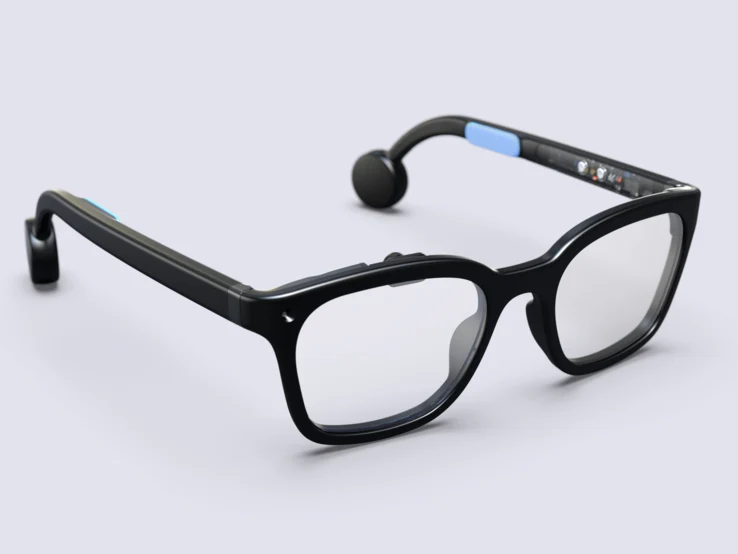
    3. The glasses have a unique design with a 0.2-inch full-color micro-OLED display and can fit prescription lenses, weighing only 40 grams.
    4. They offer impressive battery life of up to 14 hours on a single charge, surpassing competitors like the Xiaomi AI glasses.
    5. The Halo AI glasses are priced at $299 and are available for preorder, with global shipping expected to start in November 2025.


    Brilliant Labs has introduced their newest Halo AI glasses to markets around the world. Touted as the thinnest open-source glasses globally, the Halo incorporates many advanced capabilities typical of smart eyewear. Notably, Brilliant Labs includes a feature called Vibe mode, which acts as a coding assistant. This experimental tool allows users to develop custom applications using straightforward voice commands in natural language.

    Advanced AI Features

    The Halo AI glasses also emphasize artificial intelligence, featuring Brilliant Labs’ Noa AI agent. This agent provides real-time interaction and includes a long-term memory function known as Narrative. Additionally, the glasses can perform various actions. Users are able to control system settings, including the microphone and camera, all through a single voice command.

    Unique Design Elements

    Unlike other smart glasses like the Xiaomi AI glasses or Ray-Ban Meta AI, which are currently priced at $299 on Amazon, the Halo stands out with both a display and a camera. The display itself is a minuscule 0.2-inch full-color micro-OLED heads-up screen that presents a retro arcade-like interface for the user and accommodates a variety of interpupillary distances.

    Moreover, the design of the Halo is similar to regular glasses and can fit prescription lenses thanks to a collaboration with SmartBuyGlasses. Weighing only 40 grams (0.08 lbs), these AI glasses utilize the latest B1 chip from Alif Semiconductor, which is an ultra-low-power microcontroller equipped with an integrated NPU for on-device AI and sensor fusion.

    Impressive Battery Life

    Additionally, Brilliant Labs has cleverly integrated an optical sensor, an IMU, a microphone array, and bone conduction speakers into the slim design of the Halo. According to the company, these glasses can provide up to 14 hours of battery life on one charge, while the Xiaomi AI glasses only offer around 8.6 hours.

    The Brilliant Labs Halo is sold in a single black color option and retails for $299. It is available for preorder on the official Brilliant Labs website, with global shipping expected to begin in November 2025. For more details regarding the new Halo AI glasses, please check out the company’s website.

    Source:
    Link

  • Smart Glasses with Camera, Audio, and Video Recording Features

    Smart Glasses with Camera, Audio, and Video Recording Features

    Key Takeaways

    1. Rogbid’s VisionAI smart glasses are priced at $100 and do not include shipping fees.
    2. The glasses do not feature augmented reality (AR) capabilities; they rely solely on audio output for functionality.
    3. Key features include voice assistant integration, voice memo recording, language translation, and photo/video capture.
    4. Connectivity options include Wi-Fi and Bluetooth 5.4, with features like wear detection for automatic music pause/resume.
    5. Battery life offers 3-6 hours of talk time and up to 168 hours of standby time, with two model options available.


    Rogbid has launched its VisionAI smart glasses, which are now available for purchase directly from the manufacturer at a price of $100, not counting shipping fees. It’s important for potential customers to understand that these glasses aren’t an augmented reality (AR) system with a display, meaning they can’t show navigation directions or other visual information. Because of this limitation, the system relies solely on audio output. However, it can still be very helpful in daily activities, such as recognizing objects and translating text documents through the integrated camera.

    Features and Functionality

    These glasses come equipped with two speakers and a microphone, which means you can use voice assistants through your smartphone. Users can also record voice memos, and the glasses can translate speeches in different languages during meetings. Additionally, they have the capability to take videos and photos, providing an immersive filming experience. They offer connectivity options via Wi-Fi and Bluetooth 5.4. Another handy feature is wear detection, which allows music to automatically pause and resume based on whether the glasses are being worn. The specified talk time is between three to six hours, while the standby time can last up to an impressive 168 hours. There are two models available, one with gradient lenses and another with tinted sunglasses lenses.

    Source:
    Link


  • Affordable AI Smart Glasses with Camera and Speaker Alternative to Ray-Ban

    Affordable AI Smart Glasses with Camera and Speaker Alternative to Ray-Ban

    Key Takeaways

    1. Zeblaze offers budget-friendly wearable devices, including newly launched AI Shooting Glasses priced around $78 on Aliexpress.
    2. The AI Shooting Glasses feature a 5-megapixel camera capable of shooting 1080p videos, but have limited recording time and no live streaming functionality.
    3. They come with 32GB of storage, support Wi-Fi and Bluetooth, and include AI-enhanced functions with integrated speakers and a microphone for voice commands.
    4. The glasses can also function as a headset, allowing users to manage calls and music with a touch-sensitive area.
    5. With an IPX4 rating and a 230mAh battery, they offer up to 14 hours of standby time, although there are some noted flaws in practical usage.


    Zeblaze has a range of wearable devices that are typically budget-friendly. This includes their newly launched AI Shooting Glasses, which can be ordered through Aliexpress starting at about $78. Keep in mind that this price might not cover any extra import charges.

    Competing Features

    The latest product from Zeblaze could serve as an alternative to similar offerings from Meta and Ray-Ban. These smart glasses have the ability to capture both photos and videos. They come with a 5-megapixel camera and can shoot videos in 1080p, as stated by the company. However, it should be noted that the recording duration is restricted, and these glasses do not support live streaming. There is a built-in flash for use in dim lighting.

    Storage and Connectivity

    When it comes to storage, the AI Shooting Glasses boast a capacity of 32GB. They also have support for Wi-Fi and Bluetooth, along with a variety of AI-enhanced functions. Additionally, there are integrated speakers and a microphone that allow users to engage with AI assistants using voice commands.

    Usability and Battery Life

    The wearable can double as a headset, thanks to a touch-sensitive area that lets users answer or reject calls and manage music playback. The Zeblaze AI Shooting Glasses have an IPX4 rating and come with a 230mAh battery, providing a standby time of up to 14 hours. A practical video review of these glasses has already been released on YouTube, indicating that they have some flaws.

    Source:
    Link


  • First Look: New Smart Glasses Leak in Meta Hypernova Reveal

    First Look: New Smart Glasses Leak in Meta Hypernova Reveal

    Key Takeaways

    1. Meta’s Hypernova smart glasses will feature a display, allowing users to see information directly in front of them, unlike the Meta Ray-Ban Smart Glasses which only have cameras, microphones, and speakers.

    2. The expected launch date for the Meta Hypernova is before the end of the year, with an initial image leaked showing a design similar to the Ray-Ban Wayfarer but with thicker temples for added technology.

    3. Pricing for the Hypernova smart glasses is speculated to range from $1,000 to $1,400, primarily due to the inclusion of the display.

    4. The smart glasses will support various applications, including navigation and camera functionalities, and can display notifications from a paired smartphone.

    5. Users will have multiple ways to control the glasses, including touch-sensitive temples, a remote control wristband, and voice commands.


    Back in April, a report by Bloomberg shared some early insights about Meta’s upcoming “Hypernova.” This is a new set of smart glasses that includes a display, which sets it apart from the Meta Ray-Ban Smart Glasses (starting at $299 on Amazon). The Ray-Ban versions only have cameras, microphones, and speakers. The display in the Hypernova will allow users to see information directly in front of them.

    Release Date Expectations

    The Meta Hypernova is expected to launch before the year concludes. The trustworthy leaker @MysteryLupin has recently shared an initial image of these smart glasses, along with the wristband that will function as a remote control for many of their features. It seems that Meta has decided to keep a design that closely resembles the Meta Ray-Ban Wayfarer; however, the temples are slightly thicker to accommodate the extra technology. Reportedly, the wristband will come with a variety of sensors and a design that can be adjusted.

    Pricing Speculations

    Bloomberg mentions that the smart glasses will likely be quite pricey. Allegedly, Meta is having internal talks about a price range from $1,000 to $1,400. This high suggested retail price is mainly due to the display, which is positioned in the lower right corner of the right lens. A successor model is anticipated to arrive in 2027, featuring displays in both lenses. Additionally, these glasses are rumored to support a variety of applications, ranging from navigation to camera functionalities, and they will also be able to show notifications from a paired smartphone. Users will have the ability to manage their glasses through touch-sensitive temples, the wristband, or through voice commands.

    Source:
    Link


  • Affordable Rogbid GS380 Smart Glasses: Camera, Bluetooth, Translation Under $100

    Affordable Rogbid GS380 Smart Glasses: Camera, Bluetooth, Translation Under $100

    Key Takeaways

    1. Rogbid launched its first smart glasses, the GS380, priced at $99.99, featuring Bluetooth calling, audio playback, and fitness tracking.
    2. The glasses come with a built-in HD camera, LED flash, stereo speakers, and a microphone array for hands-free calls and voice controls.
    3. Users can track fitness activities through a companion app that monitors steps, distance, and calories burned.
    4. The dynamic lens technology allows photochromic lenses to automatically adjust to lighting conditions for improved visibility.
    5. The GS380 is currently available only in black through Rogbid’s official website, targeting the AI-driven wearable market to compete with brands like Xiaomi and Meta.


    Rogbid has just launched its first pair of smart glasses called the GS380, which are now available worldwide on the brand’s official website. These glasses are designed with practical features for daily use, including Bluetooth calling, audio playback, and fitness tracking. They are lightweight and come with interchangeable photochromic lenses, all for the price of $99.99.

    Camera and Audio Features

    These glasses include a built-in HD camera along with a dedicated LED flash, making it easy to take quick photos and short videos. They also have stereo speakers in each arm, allowing users to enjoy music or make calls without using their hands. Additionally, a microphone array enables voice controls and real-time language translation. The camera is capable of recognizing objects and landmarks, which is particularly useful for travelers and students alike.

    Fitness Tracking and App Integration

    For those who want to monitor their physical activity, the GS380 can connect to a companion app. This allows users to track their steps, distance traveled, and calories burned. The device is said to have a battery life that can support daily activities, as noted by Rogbid.

    Dynamic Lens Technology

    One interesting feature is the dynamic lens system: the photochromic lenses automatically adjust to the lighting conditions, becoming darker or lighter based on the surrounding light. This ensures better visibility whether you’re indoors or outdoors. Furthermore, the glasses have a frame that makes it easy to replace the lenses.

    The GS380 is currently available only in black and can only be purchased through Rogbid’s official website. This release is part of Rogbid’s strategy to enter the AI-driven wearable market, aiming to compete with similar products from brands like Xiaomi, RayNeo, and the well-known Meta Ray-Ban Meta glasses, which are currently priced at $329 on Amazon.

    Source:
    Link


  • Oakley Launches Smart Glasses with 3K Camera and AI Assistant

    Oakley Launches Smart Glasses with 3K Camera and AI Assistant

    Key Takeaways

    1. Meta is launching new smart glasses in collaboration with Oakley, featuring five unique designs and technical upgrades from the previous Ray-Ban model.
    2. The glasses are available as sunglasses or prescription lenses, with built-in microphones and speakers for AI interaction and audio playback.
    3. The front-facing camera can record videos in 3K resolution and responds to real-world questions and text translation.
    4. The glasses have an IPX4 certification for water resistance and boast a battery life of up to eight hours, extendable to 48 hours with a charging case.
    5. The Oakley Meta HSTN model will be released on July 11, priced at $499, with additional models expected later this summer starting at $399.


    Following a fruitful partnership with Ray-Ban, Meta is broadening its lineup of smart glasses by introducing a new model created in collaboration with Oakley. This new smart glasses come in five unique designs and boast several technical enhancements compared to the previous Ray-Ban version.

    Versatile Options

    The glasses can be purchased as either sunglasses or prescription lenses, with Oakley charging an extra fee for the latter. They are equipped with built-in microphones and speakers. When paired with a smartphone via Bluetooth, users can interact with an AI voice assistant or listen to music and podcasts through the speakers located at the temples. Additionally, the front-facing camera enables the glasses to respond to questions about real-world objects or to translate printed text.

    Enhanced Features

    One notable upgrade is the camera’s ability to record videos in 3K resolution instead of just 1,080p. These glasses also hold an IPX4 certification, which means they should resist rain, but they are not entirely waterproof. Meta has managed to double the battery life, offering up to eight hours of use; when utilized with the provided charging case, users can expect a total runtime of up to 48 hours.

    Pricing and Release Date

    The initial model, named the Oakley Meta HSTN, is slated for release on July 11, priced at $499. Additional models are anticipated to launch later this summer, starting at a price of $399.

    Source:
    Link


  • TCL RayNeo X3 Pro: Next-Gen MicroLED AR Glasses Launch

    TCL RayNeo X3 Pro: Next-Gen MicroLED AR Glasses Launch

    Key Takeaways

    1. The TCL X3 Pro features advanced microLED technology for a high-quality AR experience, comparable to the Apple Vision Pro.

    2. Weighing only 76 grams and offering peak brightness of 6,000 nits, these lightweight glasses are designed for daily use and quick charging.

    3. Powered by Qualcomm’s Snapdragon AR1 platform, the X3 Pro includes dual cameras and multiple microphones and speakers for enhanced AI functionalities.

    4. The device operates on Android, ensuring compatibility with popular apps like Douyin and Bilibili, addressing AR software fragmentation.

    5. Currently available only in China, the X3 Pro retails for approximately $1,250, with potential subsidies lowering the price to about $1,063.


    The newest member of TCL’s RayNeo series, also referred to as ‘Thunderbird’ in China, is being promoted as the epitome of high-end smart glasses.

    Advanced Technology

    This device features lenses built on cutting-edge microLED tech that TCL created in-house, aiming to offer a “full-color” AR experience that rivals the quality, immersion, and usability seen in the Apple Vision Pro. The display visible through the glasses is designed to replicate the feel of using a real monitor as closely as possible through TCL’s innovative waveguide.

    Bright and Lightweight

    The X3 Pro is said to deliver a peak brightness of 6,000 nits, with an average of 3,500 nits. With a weight of only 76 grams, these IP52-rated glasses are made for daily wear, and they come with a 245mAh battery that charges fully in just 40 minutes. The glasses provide a 30° field of view and feature 3 degrees-of-freedom (3DOF) head-tracking, contrasting to the 6DOF found in certain other devices.

    Powerful Features

    Equipped with Qualcomm’s Snapdragon AR1 platform, the X3 Pro includes dual cameras using sensors from Sony and OmniVision, which are essential for various AI functionalities like virtual assistance, real-time translation, and object identification. Additionally, they boast triple microphones and dual speakers, enhancing these capabilities. The device aims to tackle the issue of AR software fragmentation by operating on Android, making it compatible with popular apps like Douyin and Bilibili.

    However, one significant limitation of the X3 Pro is that it is currently only available for consumers in China.

    Their suggested retail price is 8,999 yuan (about $1,250), but it drops to 7,649 yuan (~$1,063) when considering available subsidies.

    There hasn’t been any announcement regarding a global version of the X3 Pro yet; however, the RayNeo Air 2s OLED glasses are available bundled with a JoyDock Nintendo Switch adapter for $417 on Amazon at this moment.

    Digital Chat Station via Weibo.

    Source:
    Link


  • Ray-Ban Smart Glasses Launching Soon in India, UAE, and Mexico

    Ray-Ban Smart Glasses Launching Soon in India, UAE, and Mexico

    Key Takeaways

    1. Meta is launching its Ray-Ban AI smart glasses in India, alongside Mexico and the UAE.
    2. The glasses feature voice-activated AI for hands-free control, allowing users to ask questions, take photos, and send messages.
    3. They include a 12-megapixel camera, open-ear speakers, and support for audio/video calls via WhatsApp, Messenger, and Instagram.
    4. A unique live translation tool can translate 32 languages and works offline with downloaded language packs.
    5. The expected price in India is between Rs. 35,000 to 40,000, with a US price of $299 (about Rs. 25,600).


    Meta is getting ready to release its new smart glasses in India, as mentioned in an official blog post. These Ray-Ban Meta glasses are created in partnership with Essilor Luxottica and run on Meta’s AI technology. They are already available in some international markets, and the blog indicates that India will be one of the next places to see their launch, alongside Mexico and the UAE.

    Features of the Meta Ray-Ban AI Smart Glasses

    The Meta Ray-Ban AI smart glasses were first introduced in September 2023, following the Ray-Ban Stories. These smart glasses combine classic design with voice-activated AI capabilities. Users can ask questions, control music, take photos and videos, and send messages—all without using their hands by simply saying “Hey Meta.” They also support audio and video calls via WhatsApp, Messenger, and Instagram, and now allow users to send direct messages on Instagram as well.

    Specifications and Capabilities

    The glasses come with a 12-megapixel camera capable of recording 1080p videos. They feature open-ear speakers and enable livestreaming on platforms like Facebook or Instagram. One of the standout features is the innovative live translation tool, which can translate 32 languages, such as English, French, Italian, and Spanish. This tool can work offline if users download the necessary language packs beforehand. In regions where the glasses are available, users are trying out a new “see-what-you-see” mode, an AI vision feature that adapts to the environment.

    Anticipation for the Indian Market

    Though Meta hasn’t disclosed the specific launch date or pricing for India, the glasses are priced at $299 (about Rs. 25,600) in the US. It’s anticipated that the Indian price could range from Rs. 35,000 to 40,000. The glasses are set to come equipped with exciting new features like offline translation, voice assistance, and support for popular music streaming services such as Spotify, Amazon Music, and Apple Music.

    Source:


  • BleeqUp Ranger Smart Glasses for Athletes Now Crowdfunding Discount

    BleeqUp Ranger Smart Glasses for Athletes Now Crowdfunding Discount

    Key Takeaways

    1. High-Quality Capture: The BleeqUp Ranger smart glasses feature a 16-megapixel camera with a 120° field of view and image stabilization for high-quality videos and photos.

    2. AI Capabilities: They include AI features that enhance image quality in low light and can automatically save footage during sudden stops or accidents.

    3. Battery Life: The glasses have a 5-hour battery life for video recording, extendable to 9 hours with an attachable battery pack.

    4. Convenient Design: Weighing only 1.7 oz, they offer touch controls, built-in speakers for voice calls, and compatibility with various applications like Strava.

    5. Crowdfunding Details: The glasses are currently available for backing on Kickstarter for $300, with delivery expected in June 2025, along with typical crowdfunding risks.


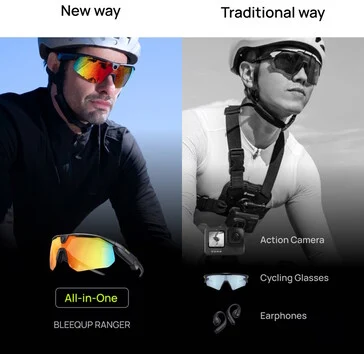
    The BleeqUp Ranger is a pair of innovative smart glasses currently seeking funding on Kickstarter. They are tailored for athletes and cyclists eager to capture high-quality videos and photos during their activities, featuring a camera capable of taking pictures at a resolution of 16 megapixels.

    Advanced Features for Athletes

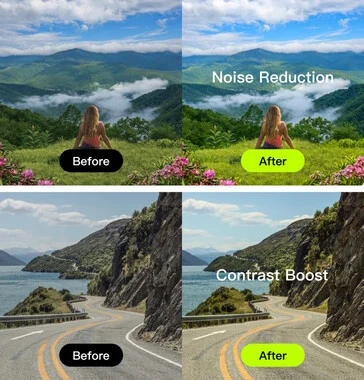
    These glasses come equipped with several AI capabilities that enhance image quality, especially in dim lighting. Additionally, they can recognize sudden stops or accidents, automatically preserving the last recorded footage. The camera boasts a 120° field of view and incorporates image stabilization for smoother video recordings.

    Battery Life and Performance

    The BleeqUp Ranger offers a battery life of up to 5 hours for video recording. However, users can extend this duration by an additional 4 hours using a battery pack that can easily attach to the back of a helmet. The device captures Full-HD video at 30 frames per second.

    Convenient Design and Compatibility

    Featuring built-in speakers with two dynamic drivers, these smart glasses are suitable for making voice calls even in winds of up to 19mph. Weighing only 1.7 oz, they can be operated using touch controls or a separate controller that can be fixed to handlebars.

    The manufacturer also highlights compatibility with various applications, including Strava. Users can receive audio feedback regarding their routes by uploading GPX files. Powered by the Qualcomm Snapdragon W5, the BleeqUp Ranger includes 32GB of internal storage and supports both WiFi and Bluetooth connectivity. Currently, these smart glasses can be backed on Kickstarter for a pledge of $300, and delivery is anticipated for June 2025. It’s important to note the typical financial risks associated with crowdfunding initiatives.

    Source:
    Link


  • Meta Hypernova Launching This Year: Google Glass Dream Continues

    Meta Hypernova Launching This Year: Google Glass Dream Continues

    Key Takeaways

    1. The Ray-Ban Meta Glasses cost around $329 and feature a 12 MP camera, five microphones, and speakers for multimedia functions.
    2. Meta plans to release a more advanced model called Hypernova, priced between $1,000 and $1,400, by the end of the year.
    3. The Hypernova will include a display on the right lens, allowing users to view apps and notifications directly in their line of sight.
    4. Control will be via a touch-sensitive area on the glasses, with a wristband planned for gesture control.
    5. The Hypernova will have a smartphone-like user interface, launching with several apps, including camera, navigation, and an app store.


    The Ray-Ban Meta Glasses, priced around $329 on Amazon, are equipped with a 12 MP camera, five microphones, and speakers. This allows the glasses to take photos and videos, play music, and listen to voice commands. As reported by Bloomberg, Meta is gearing up to introduce a more advanced model, known as Hypernova, before the year ends.

    New Features and Pricing

    The expected price of the Hypernova is between $1,000 and $1,400. To explain the steep price tag, Meta plans to add a display at the bottom right corner of the right lens. There are also whispers of a Hypernova 2 set to be unveiled in 2027, which may include displays for both lenses. The integrated display is anticipated to enhance the functionality of the Hypernova compared to the Meta Ray-Ban Glasses since users will be able to project apps directly into their line of sight. This means, similar to Google Glass, users could see navigation apps or new messages without needing to check their phone or smartwatch.

    Control and User Interface

    Sources indicate that the glasses will be controllable via a touch-sensitive area on the side, with plans for a wristband to allow gesture control. The Hypernova is said to include a user interface similar to a smartphone, featuring a homepage for app selection, and is expected to launch with at least a camera app, a navigation app, a gallery app, and an app store for additional software. Notifications from a connected smartphone will also be visible on the screen.

    Source:
    Link