Tag: Samsung

  • Samsung Increases DRAM and Flash Memory Prices by Up to 30%

    Samsung Increases DRAM and Flash Memory Prices by Up to 30%

    Key Takeaways

    1. Price Increases: Samsung has raised prices for LPDDR4X, LPDDR5X chips, and UFS/eMMC storage, with increases up to 30% for LPDDR5X.

    2. Market Drivers: The price hikes are driven by the upcoming launch of new mobile devices and increased demand for data centers, particularly for AI applications.

    3. Shifts in Memory Usage: There is a growing demand for GPU memory chips as more companies are investing in AI, redirecting graphics DRAM from traditional uses.

    4. Anticipated Price Surge: The memory price rise was expected due to prior inventory drops and companies stockpiling chips to avoid tariffs.

    5. Future Trends: Analysts predict that the current demand will continue to outstrip supply, leading to higher prices for smartphones, laptops, and SSDs into next year.


    After SanDisk and Micron, Samsung, a major player in mobile device memory, has informed OEMs of a price hike for its LPDDR4X and LPDDR5X chips, along with UFS and eMMC flash storage products.

    Price Increases Across the Board

    SanDisk has announced a 10% increase in MSRP for its memory products, while Samsung’s price adjustments mimic this starting point and can escalate up to 30% for the LPDDR5X memory chips. These chips are integral to high-end flagship devices such as the Galaxy Z Fold 7, which is currently offered at a $300 discount on Amazon, as well as tablets and laptops.

    Reasons Behind the Move

    This bold decision is believed to be driven by the upcoming launch of sought-after mobile devices and the rising demand for data centers that support the AI boom. Furthermore, the demand for GPU memory chips is growing. Graphics DRAM, once primarily used in gaming consoles or graphics cards, is increasingly being redirected to server GPUs executing machine learning tasks, fueled by substantial investments in AI features from nearly all leading tech firms.

    Market Trends and Predictions

    The memory price surge from Samsung, SanDisk, Micron, and others has been anticipated since spring, despite a temporary price drop caused by excess inventory. In subsequent quarters, some companies began stockpiling chips to avoid potential tariffs during a 90-day grace period, while simultaneously depleting inventories due to a quicker rollout of new products. This has set the stage for the recent announcements regarding memory price increases.

    The decline in DDR4 memory inventory, combined with the fast-paced construction or upgrading of AI data centers—which require numerous enterprise-grade SSDs—has led to the current price hikes, as demand now surpasses supply, industry analysts say. This trend is expected to persist into next year, possibly leading to higher prices for smartphones, laptops, and SSDs to match the growing demand.

    Source:
    Link
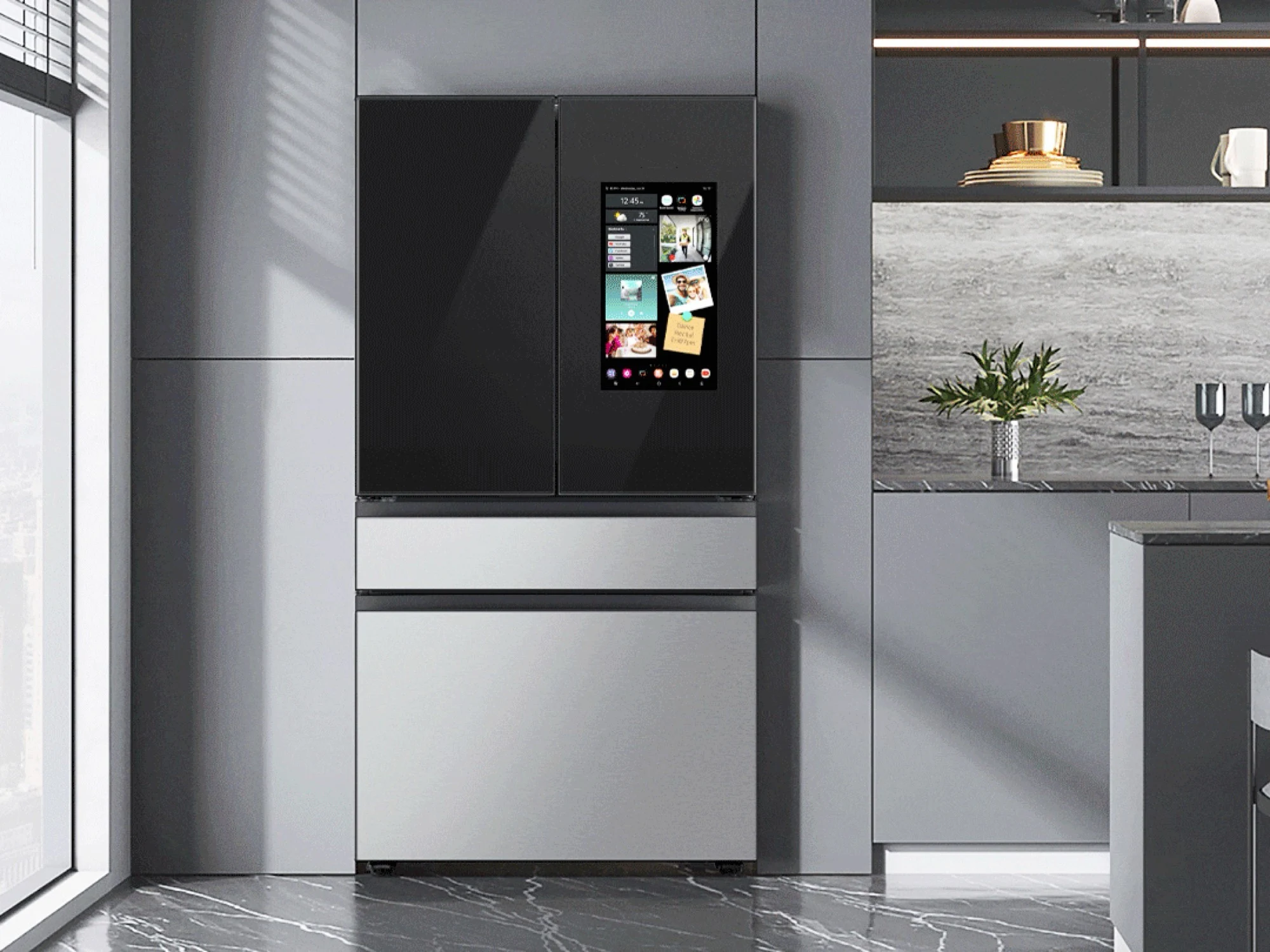


  • Samsung Ads Now on $3,000 Smart Refrigerators

    Samsung Ads Now on $3,000 Smart Refrigerators

    Key Takeaways

    1. Samsung is introducing ads on their Family Hub smart fridges during a trial phase in the U.S.
    2. Ads will appear on the fridge’s touchscreen when not in use, except in “Art Mode.”
    3. Users can remove individual ads, but cannot completely disable the advertising feature.
    4. Customers should be cautious when purchasing Samsung products with touchscreens due to this advertising.
    5. Samsung’s product range includes many appliances with large touchscreens, limiting options without ads.


    For quite a while, Samsung has been marketing fridges that come with big touchscreens, like the Samsung Bespoke 29, which costs over $3,000 at Best Buy. These screens are handy for showing things like the weather, calendars, or pictures of family, among other things. However, folks who have these Samsung fridges might soon find advertisements popping up on their screens.

    Ads on Family Hub Fridges

    Some owners of Samsung refrigerators have shared on Reddit that the company has started updating certain models to include ads. Samsung confirmed to Android Authority that they are currently testing this feature, which will appear on their so-called “Family Hub” smart fridges in the U.S. It remains unclear when or if customers in other regions will also see ads on their fridge displays. During this trial phase, ads will show up when the display is not in use, except when “Art Mode” is turned on, which shows pictures or artwork.

    Limitations on Ad Control

    While individual ads can be removed so they don’t show up again, there is no way to completely turn off the advertising feature. Given that Samsung is placing ads on these large smart devices after people buy them, it’s wise to be careful when choosing Samsung products. The tech giant’s range of appliances includes very few items that don’t come with a large touchscreen, encompassing items like washing machines and ovens as well.

    Reddit | Samsung, via Android Authority

    Source:
    Link


  • Galaxy Tab S10 Lite Launches in India Amid Tough Competition

    Galaxy Tab S10 Lite Launches in India Amid Tough Competition

    Key Takeaways

    1. The Galaxy Tab S10 Lite is a budget-friendly option in the Galaxy Tab S10 series, launched in India after its European release.
    2. It offers two configurations: 6GB RAM with 128GB storage and 8GB RAM with 256GB storage, available in Gray, Silver, and Coral Red.
    3. The tablet features a 10.9-inch TFT LCD display with a 90Hz refresh rate, powered by the Exynos 1380 processor, and includes an 8MP rear camera and a 5MP front camera.
    4. It has an 8,000mAh battery with 25W charging, runs on Android 15, and promises updates until August 31, 2032, but does not come with a charger.
    5. Pricing starts at ₹30,999 for the Wi-Fi model, with competition from the iPad 11th generation and Galaxy Tab S10 FE.


    Samsung has just revealed the Galaxy Tab S10 Lite for the Indian market after its launch in Europe last month. This new addition to the Galaxy Tab S10 series is the budget-friendly option.

    Available Configurations

    In India, the Galaxy Tab S10 Lite comes in two options: 6GB RAM with 128GB storage and 8GB RAM with 256GB storage. Consumers can choose from colors like Gray, Silver, and Coral Red. The tablet is also offered in both Wi-Fi only and 5G+Wi-Fi versions.

    Display and Performance

    The device is equipped with a 10.9-inch TFT LCD display boasting a 90Hz refresh rate and somewhat thick but uniform bezels. However, Samsung hasn’t specified what type of display protection is used. The tablet runs on the Exynos 1380 processor, which is also found in the Galaxy A35 (you can check out our review).

    Camera and Features

    On the back, there’s an 8MP camera, while the front features a 5MP sensor. The Galaxy Tab S10 Lite supports microSD cards for additional storage, Bluetooth 5.3, Wi-Fi 6, and has a USB 2.0 Type-C port. It does not include an audio jack, but it does come with stereo speakers.

    One of the highlights of this tablet is its S Pen compatibility, and a stylus is included in the packaging. Users can easily refine handwritten notes, adjust spacing between words, and modify the shape of letters with just one tap. There’s also a handy “Solve Math” feature in the Samsung Notes app that assists in resolving math queries—just write out the question neatly, and it will give the solution.

    Battery and Software

    Similar to the Galaxy Tab S10 FE, the S10 Lite is powered by an 8,000mAh battery, yet it charges at a slower rate of 25W. It’s worth noting that it doesn’t come with a charger, but a USB-C to USB-C cable is included. The tablet runs on Android 15 and is promised to receive updates until August 31, 2032, ensuring 7 years of operating system upgrades and security patches.

    Pricing Details

    The starting price for the Galaxy Tab S10 Lite is ₹30,999 (~$352/€299) for the basic Wi-Fi model, rising to ₹35,999 (~$408/€347) for the 5G variant. The 8GB RAM version is priced at ₹40,999 (~$465/€395) for the Wi-Fi model and ₹45,999 (~$522/€444) for the 5G option. Customers can purchase it now through Samsung’s official site or on Amazon India.

    Competitive Landscape

    Samsung’s latest tablet will have to contend with tough competitors like the iPad 11th generation, which retails for ₹33,999 for the 128GB model on Amazon. Additionally, the Galaxy Tab S10 FE (8+128GB) is available for ₹42,504 on Amazon, boasting a more powerful processor, faster 45W charging, and superior camera features.

    Source:
    Link


  • Samsung Galaxy S26 Accessories Reveal Camera Design Features

    Samsung Galaxy S26 Accessories Reveal Camera Design Features

    Key Takeaways

    1. New flagship smartphones with Qualcomm and MediaTek chipsets will be unveiled in China soon, but high-end models typically reach Europe and the US in January.
    2. The design for the Galaxy S26 series has been finalized, with slight changes expected compared to the Galaxy S25 models.
    3. The Galaxy S26 Edge features a wide camera bump and is rumored to have improved charging and a better 3x telephoto lens, though these claims are not yet verified.
    4. Initial protective case designs for the Galaxy S26 Edge have been revealed, showcasing various colors and built-in magnetic rings.
    5. There is speculation that the Galaxy S26 series may not support magnetic wireless charging, similar to the Pixel 10 generation.


    Summer is winding down, and the new year is coming up fast. In just a few days, we can expect the first flagship smartphones with the latest chipsets from Qualcomm and MediaTek to be unveiled in China. However, high-end phones of the next generation typically don’t reach Europe and the US until January. It remains to be seen if Samsung will once again kick off the new smartphone year in 2026 with its Galaxy S26 series, or if brands like Vivo and Oppo will take the spotlight with global launches of the Find X9 Pro and Vivo X300 Pro, as some rumors suggest.

    Design Finalization

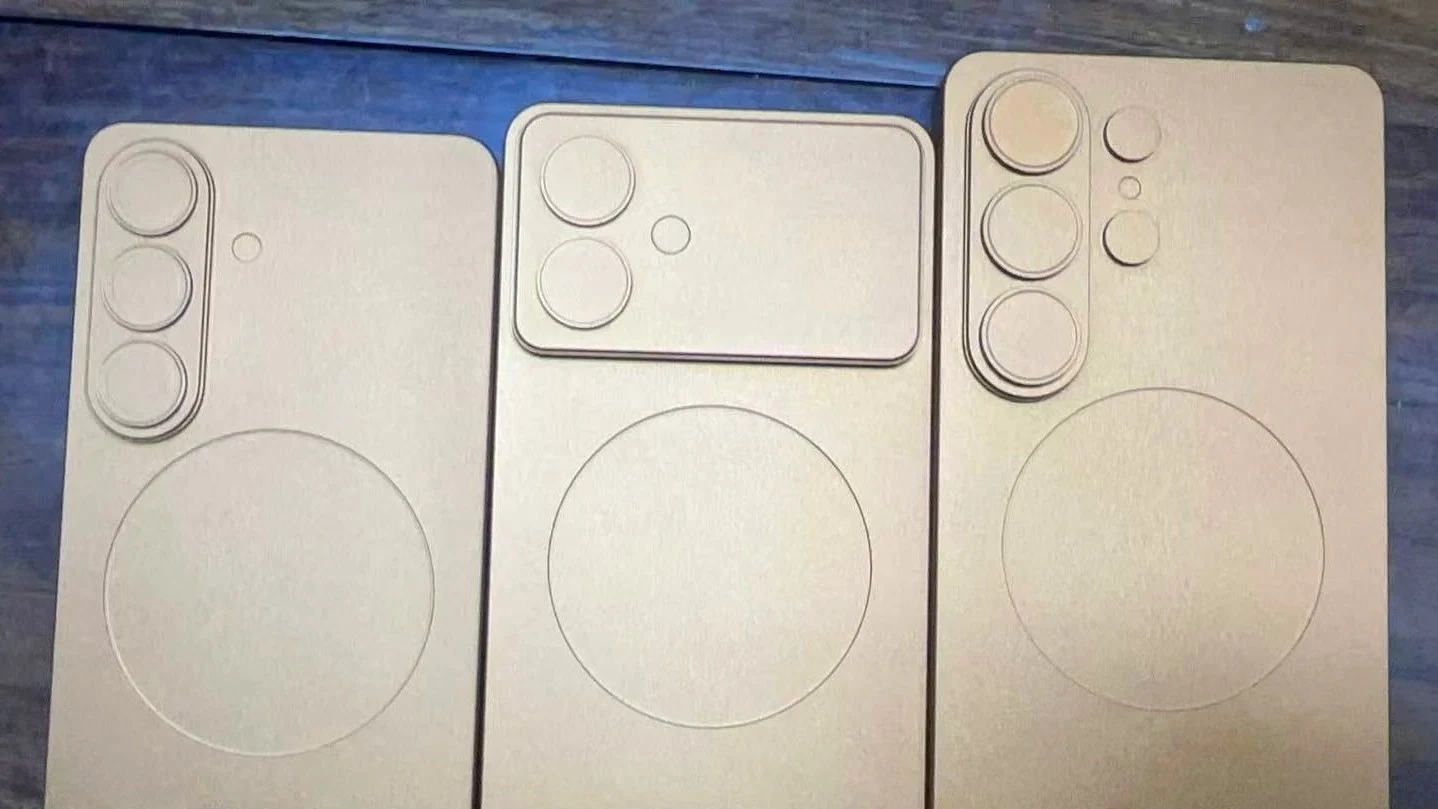
    Since the start of September, it seems like the design for the Galaxy S26 trio has been finalized. Dummy models and CAD-based images give us a clear idea of what to expect in January 2025. The successors to the Galaxy S25 and Galaxy S25 Ultra are likely to resemble their predecessors, aside from a slight camera bump akin to the Galaxy Z Fold 7. However, the new version of the Galaxy S25+ and Galaxy S25 Edge appears to be breaking away from tradition entirely.

    Camera Features

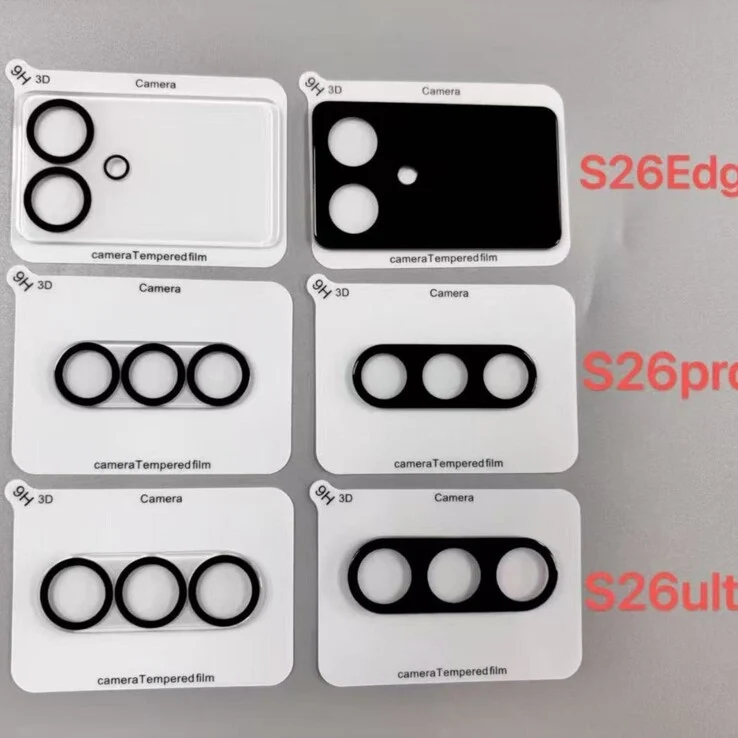
    A camera bump that stretches across the entire width of the back of the Galaxy S26 Edge, also known as the Galaxy S26 Air, is now visible in the first accessories for the Galaxy S26 series. Protective camera films made from tempered glass have been shown off recently by Ice Universe on X. While there are whispers of quicker charging and a notably enhanced 3x telephoto lens, these have not been verified by certifications or recent leaks. Still, the three protective films align with the anticipated camera designs for the Galaxy S26 lineup.

    Case Designs

    Ice Universe has also shared the initial protective case designs for the Galaxy S26 Edge on his Weibo profile, showcasing several color options. Each case appears to include built-in magnetic rings, which might suggest that the Galaxy S26 series will not support magnetic wireless charging, similar to the Pixel 10 generation. It’s debatable whether these designs are final, especially since part of the case obscures the Samsung logo.

    Source:
    Link


  • Samsung Producing Continuous Zoom Camera Sensors for Other Devices

    Samsung Producing Continuous Zoom Camera Sensors for Other Devices

    Key Takeaways

    1. The Galaxy S26 series may not feature significant camera upgrades despite high expectations.
    2. Samsung is mass-producing a new continuous zoom camera technology, but it won’t be available in their Galaxy phones soon.
    3. This continuous zoom technology will likely debut in high-end Chinese smartphones instead of Samsung’s own devices.
    4. Unlike current fixed optical zoom cameras, the continuous zoom lens provides sharp clarity across various magnifications.
    5. Samsung’s strategy includes selling advanced technology to competitors and using them as testing grounds before applying them to their own products.


    Perhaps you’ve been eagerly awaiting major upgrades to the cameras on Galaxy flagship phones for quite some time. However, recent leaks indicate that the Galaxy S26 series may not introduce any significant changes in this department. To make matters worse, Samsung has started mass-producing a remarkable new continuous zoom camera technology that, unfortunately, we won’t be seeing in Galaxy phones in the near future.

    Future Prospects for Camera Technology

    As per Digital Chat Station, Samsung’s continuous zoom camera tech is expected to debut in the next generation of high-end Chinese smartphones. This technology is likely to be incorporated into the camera setups of future “Ultra” mobile devices, but—ironically—these won’t include Samsung’s own Ultra models.

    This new camera represents a major advancement from the current standards we are familiar with. Most smartphone cameras available today, even on premium devices, utilize a fixed optical zoom. This means you will get clear images at certain zoom levels, like 3x or 5x, but any zoom levels in between are achieved via digital cropping, which might lead to blurry and lower-quality images.

    The Advantage of Continuous Zoom

    The continuous zoom lens, however, operates differently. It behaves like a professional camera, adjusting its internal components to ensure sharp optical clarity across a broad spectrum of magnifications.

    This isn’t the first instance of Samsung sharing its latest technologies with competing brands rather than using them in its own products first. This trend extends beyond just camera sensors. Recently, Samsung has provided new display technologies to companies such as Apple and Google before implementing them in its own Galaxy devices, for instance.

    Samsung’s Strategy Explained

    Samsung’s approach appears to serve two primary objectives. Firstly, as a massive conglomerate with various divisions, Samsung can generate considerable profits by selling its cutting-edge technologies to other brands. Secondly, the South Korean giant might utilize these external brands as a “testing ground” to assess whether its new technologies are sufficiently developed, ensuring that widespread implementation won’t be counterproductive due to potential future problems.

    That being said, let’s remain optimistic about the arrival of Samsung’s continuous zoom camera technology on Galaxy phones in the near future.

    Source:
    Link


  • Samsung Galaxy S26 Ultra: No Faster Charging in Certification

    Samsung Galaxy S26 Ultra: No Faster Charging in Certification

    Key Takeaways

    1. Samsung maintains a conservative approach with its Galaxy flagship phones compared to competitors like Xiaomi, Oppo, and Vivo.
    2. None of the Galaxy S26 models have received certification for charging over 45W, countering earlier expectations for the Ultra model.
    3. The Galaxy S26 series shows no significant improvements in charging capabilities compared to the previous Galaxy S25 models.
    4. The current certification details are specific to China, with little chance of faster-charging variants being released in other markets.
    5. Reliable sources like One UI code previously suggested higher charging speeds, but these have not been confirmed by the CQC database.


    It’s common knowledge that Samsung tends to stick to a more conservative approach with its Galaxy flagship phones compared to Xiaomi, Oppo, and Vivo, who have been making waves with their innovative smartphones. It’s not uncommon to see Samsung using the same camera sensor or battery across multiple generations, and we’re seeing this pattern again with the recent certification of the Galaxy S26 series in China.

    Charging Spec Surprises

    Despite previous rumors suggesting otherwise, none of the Galaxy S26 models have received certification from the Chinese CQC for charging over 45W, including the Galaxy S26 Ultra, which was expected to support 60W fast charging. This was based on credible leaks and analysis of One UI code. Typically, this code is a reliable source of information, but it contradicts the current details found in the CQC database regarding Samsung’s upcoming flagship models.

    Similarities to Previous Models

    The screenshot below highlights that no Galaxy S26 models surpass the charging capabilities of the Galaxy S25, Galaxy S25 Edge, and Galaxy S25 Ultra:

    This certification is currently specific to China. However, it would be quite rare for Samsung to release faster-charging variants of the Galaxy S26 exclusively for markets like Europe or the US.

    Source:
    Link


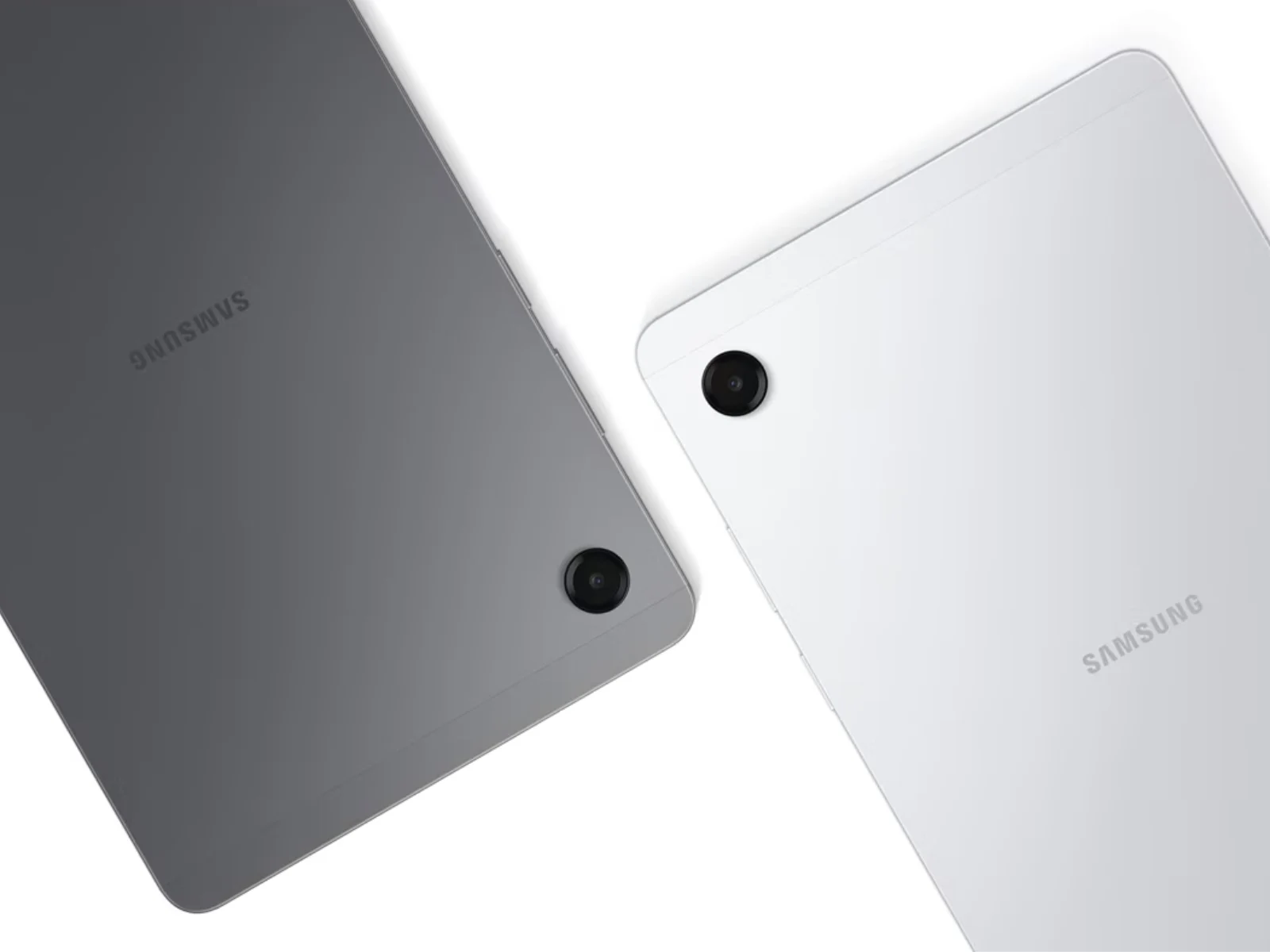
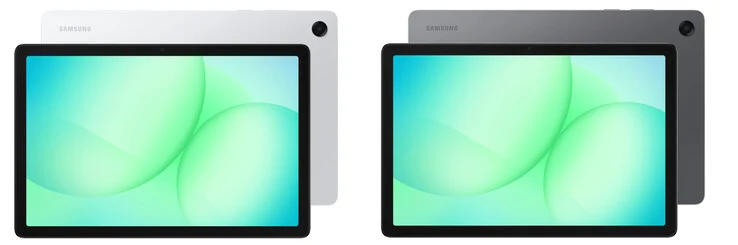
  • Samsung Galaxy Tab A11 and A11 Plus Officially Unveiled

    Samsung Galaxy Tab A11 and A11 Plus Officially Unveiled

    Key Takeaways

    1. The Galaxy Tab A11 and Galaxy Tab A11 Plus have surfaced on Geekbench, suggesting upcoming launches.
    2. The Galaxy Tab A11 is listed on Samsung’s UAE website, featuring an 8.7-inch display, MediaTek Helio G99 chipset, 4 GB RAM, and a 5,100 mAh battery.
    3. The Galaxy Tab A11 offers storage options of 64 GB or 128 GB and has a slim design, weighing 335 g.
    4. Details for the Galaxy Tab A11 Plus are emerging, including an 11-inch display and potential MediaTek Dimensity 7300 or 7300X chipset.
    5. The starting price for the Galaxy Tab A series is expected to be around €199.99, with no confirmed launch date yet.


    Just yesterday, fresh details regarding the Galaxy Tab A11 and Galaxy Tab A11 Plus came to light from several sources. To summarize, the Galaxy Tab A11 Plus appeared on Geekbench shortly after the Galaxy Tab A11 was listed on the same benchmarking site. Additionally, a well-known source revealed an image of what seems to be a prototype of the Galaxy Tab A11.

    Discovery of Listings

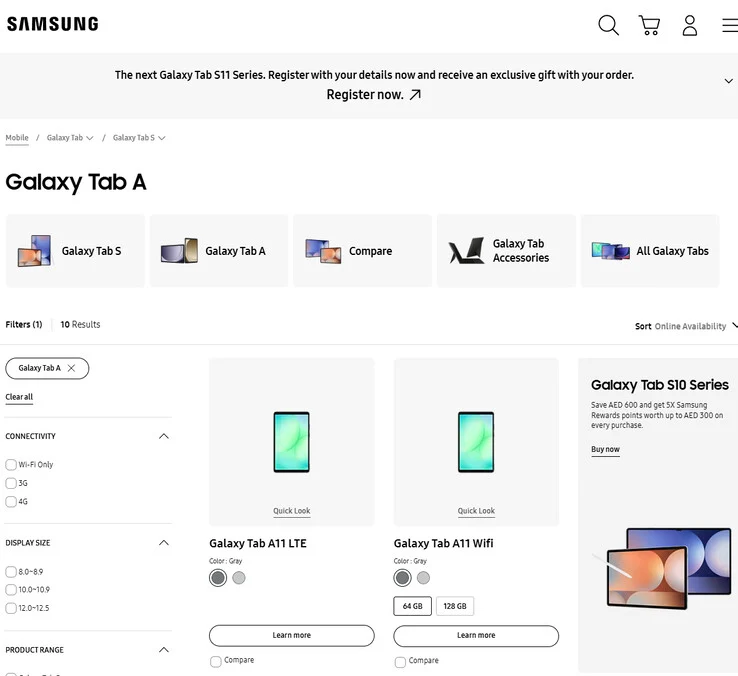
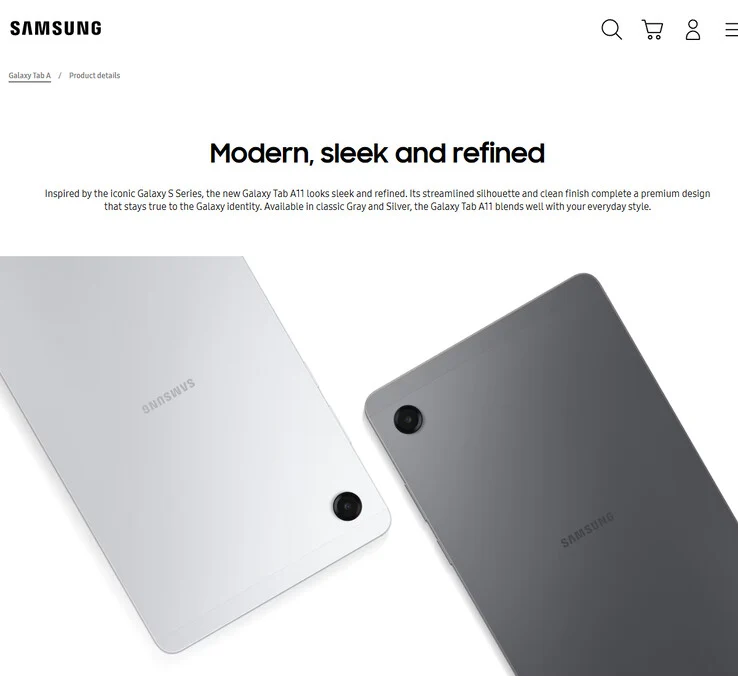
    Roland Quandt has found that Samsung has already posted the Galaxy Tab A11 on its UAE website, offering both LTE and non-LTE versions. Although we anticipate that Samsung will quickly take these down, we managed to capture images and product details before they do.

    Specifications Overview

    According to the information from Samsung’s preliminary listings, the Galaxy Tab A11 features an 8.7-inch display with a refresh rate of 90 Hz, powered by a MediaTek Helio G99 chipset and equipped with 4 GB of RAM. Furthermore, this compact tablet is available with either 64 GB or 128 GB of storage and houses a 5,100 mAh battery in a slim 8 mm frame that weighs just 335 g.

    Details on the A11 Plus

    In the meantime, Quandt claims to have spotted listings for the Galaxy Tab A11 Plus. Even though we can’t find these on Samsung’s UAE site, we have no reason to question the validity of the images shared by Quandt. The Galaxy Tab A11 Plus resembles its predecessor, the Galaxy Tab A9 Plus, which is currently priced at $209 on Amazon, featuring an 11-inch display.

    There’s still limited information on the Galaxy Tab A11 Plus, but the recent leak from Geekbench indicates that Samsung may have equipped this tablet with a MediaTek Dimensity 7300 or Dimensity 7300X chipset to set it apart from the smaller Galaxy Tab A11. Additionally, other leaks suggest that the series will kick off at €199.99. However, it’s still uncertain when Samsung will unveil its two new affordable tablets at this point.

    Source:
    Link


  • Replace Samsung SK Hynix China Fab VEUs with Annual Licenses

    Replace Samsung SK Hynix China Fab VEUs with Annual Licenses

    Key Takeaways

    1. The U.S. is replacing VEU permissions with annual “site licenses” for Samsung and SK Hynix’s factories in China to limit upgrades and expansions.
    2. The new licenses will outline approved amounts of restricted tools, parts, and materials, adding more regulatory requirements.
    3. The shift aims to enhance U.S. oversight but complicates planning for companies due to unpredictable equipment needs.
    4. The change is part of the Trump administration’s effort to close perceived loopholes from the Biden era, emphasizing a stricter regulatory approach.
    5. Industry concerns include potential supply instability for DRAM and NAND, risking global shortages for smartphones and data centers.


    The U.S. is getting ready to switch from the current VEU permissions for Samsung and SK Hynix’s factories in China to annual “site licenses.” These licenses will outline approved yearly amounts of restricted tools, parts, and materials. The goal is to maintain the operation of existing factories while preventing any upgrades or expansions. The current VEUs will expire at the end of the year. South Korean officials see this new regulation as manageable but worry about the extra red tape it brings.

    Background of Export Restrictions

    The roots of these export restrictions can be traced back to 2022, when initial controls focused on advanced logic (about 16nm FinFET), DRAMs (18nm half-pitch), and 3D NAND (128 layers or more). During that time, the VEU system allowed Samsung and SK Hynix continuous approvals, as long as they adhered to certain monitoring and security requirements.

    Changes in Administration

    After these controls were put in place, waivers were granted during the Biden administration to facilitate operations. Now, the new Trump administration is working to eliminate what it believes are “loopholes” from the Biden era by cancelling VEUs and introducing annual site licenses.

    With the suggested new system, companies would only need to submit one application per year, detailing specific items and their amounts. This adjustment gives the U.S. more notice before shipments occur, yet it complicates planning for companies since they can’t predict when equipment might fail and require replacement parts. U.S. officials mention that urgent licenses can be processed quickly, but many industry players are skeptical of this.

    Industry Concerns

    These alterations bring up worries about the stability of DRAM and NAND supplies. If equipment breaks down during the year or new shipments are postponed, it could impact parts for smartphones and data centers, potentially causing global shortages. This policy once again places Seoul in a tricky position between its key ally and its largest trading partner.

    Source:
    Link


  • Samsung Galaxy S26 Ultra: No 3x Camera Upgrade News Revealed

    Samsung Galaxy S26 Ultra: No 3x Camera Upgrade News Revealed

    Key Takeaways

    1. Samsung typically introduces only one camera upgrade with each new Galaxy S Ultra model.
    2. The Galaxy S25 Ultra retains camera specs from the Galaxy S24 Ultra, except for the 5x telephoto camera.
    3. The upcoming Galaxy S26 Ultra may feature a new 10 MP telephoto camera setup, moving away from the existing specifications.
    4. The new camera sensor for the S26 Ultra reportedly has a 12 MP capability but will not be fully utilized.
    5. Previous transitions, such as from the Galaxy S21 Ultra to the S22 Ultra, show Samsung’s history of altering camera components, but the impact on image quality remains uncertain.


    Samsung often sets apart its Galaxy S Ultra flagship models with slight upgrades to their cameras. For example, the Galaxy S25 Ultra (currently priced at $1,049 on Amazon) was released in January featuring the same main, telephoto, and selfie cameras as the previous model. Likewise, the Galaxy S24 Ultra retains all the camera specs from the Galaxy S23 Ultra, except for the 5x telephoto camera.

    Camera Upgrades and Patterns

    To put it simply, Samsung usually adds just one camera improvement with each new Galaxy S Ultra release. However, according to the tipster Ice Universe, this pattern might change in the upcoming Galaxy S26 Ultra. In a post on X, the leaker suggests that Samsung is ready to move away from the 10 MP, 1/3.52-inch, 1.12 µm, and 3x (70 mm) telephoto camera that has been in use since the Galaxy S22 Ultra.

    Potential Changes for the S26 Ultra

    Ice Universe also claims that the Galaxy S26 Ultra might debut with a 3x telephoto solution that is technically less advanced. Reportedly, Samsung is switching to a new 10 MP camera setup, which is said to be a 12 MP sensor that the company won’t be using in full. Supposedly, this new sensor features an optical format of 1/3.94-inch, an f/2.4 aperture, and 1.0 µm pixels.

    Comparative Analysis of Camera Quality

    Though this might seem unusual, Samsung has done something similar when transitioning from the Galaxy S21 Ultra to the Galaxy S22 Ultra, switching from a 1/3.24-inch and 1.22 µm 3x camera to the Sony IMX754 that is currently in use. It is yet unclear how this latest alteration will influence image quality when comparing the Galaxy S25 Ultra and the Galaxy S26 Ultra, especially at the 3x zoom setting.

    Source:
    Link


  • Samsung Galaxy S26 Ultra & Pro: New Design Renders Revealed

    Samsung Galaxy S26 Ultra & Pro: New Design Renders Revealed

    Key Takeaways

    1. Major updates to the Galaxy lineup are expected in 2026, with leaks suggesting a potential renaming of the Galaxy S26 to Galaxy S26 Pro.
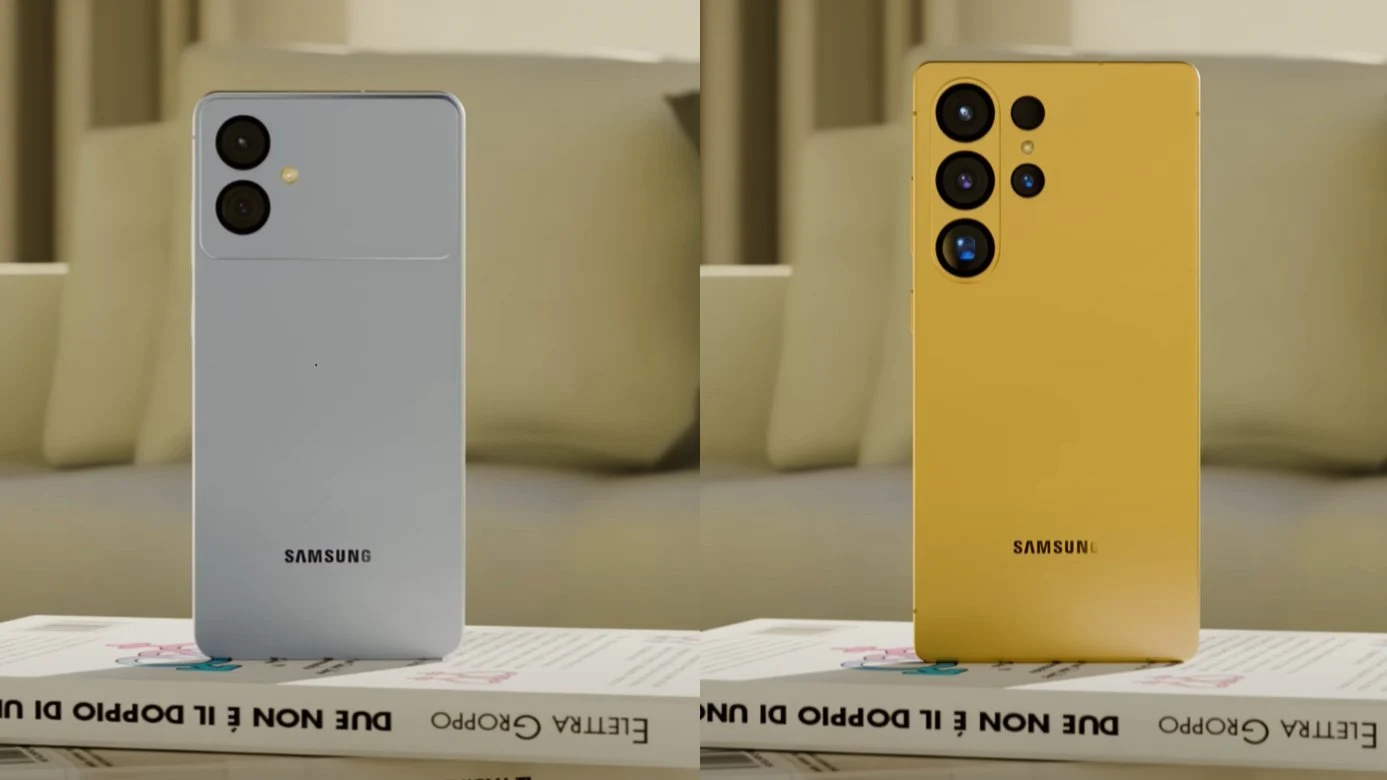
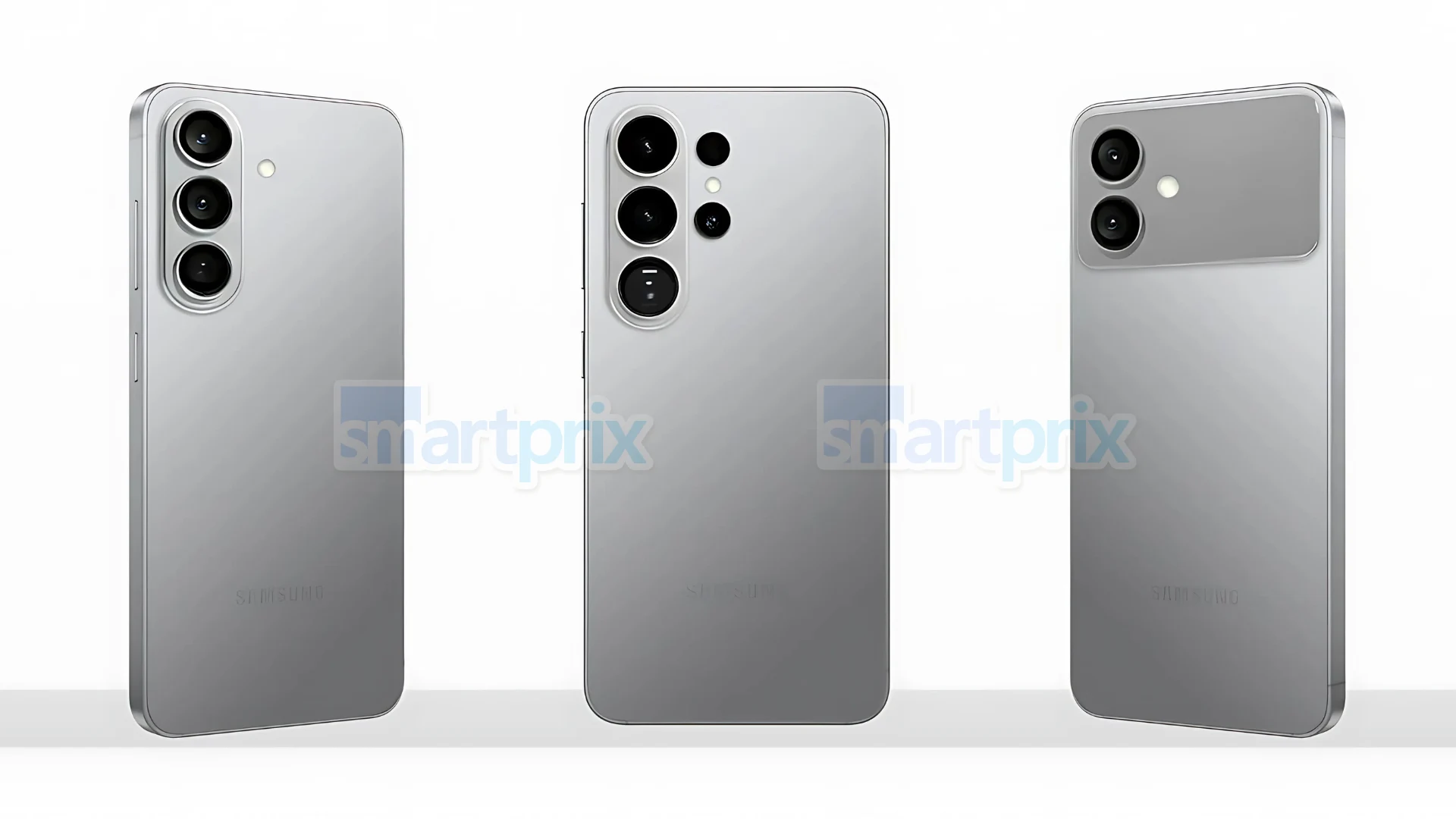
    2. The Galaxy S26 series will maintain a similar look to previous models but will reintroduce a camera bump, while the Galaxy S26 Edge will have a significantly different design.
    3. The Galaxy S26 series is moving towards slimmer profiles, with the Galaxy S26 Edge measuring 5.5 mm, S26 Pro at 6.7 mm, and S26 Ultra at 7.8 mm.
    4. Design elements may be influenced by competitors, with the Galaxy S26 Air potentially reflecting features from the iPhone 17 Pro or Xiaomi’s Poco series.
    5. Leaked CAD designs indicate a more rounded front display for the Galaxy S26 Ultra, and a dual-tone color option may be considered for the Galaxy S26 Edge.


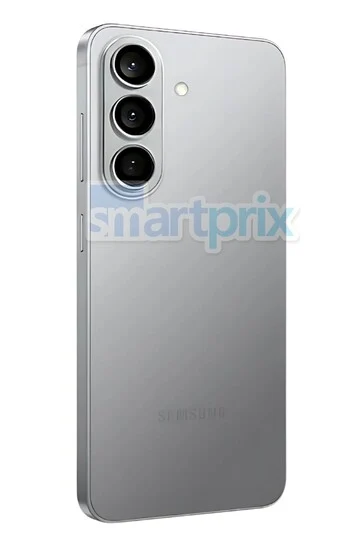
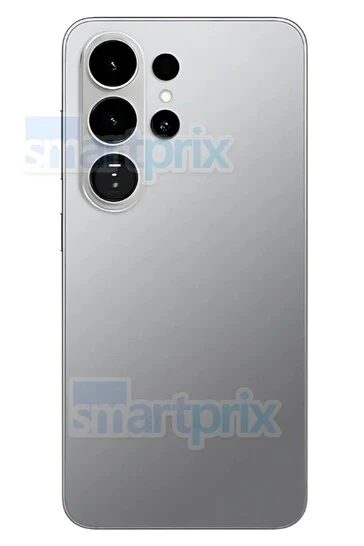
    Major updates to the Galaxy lineup are anticipated for 2026, as per previous Galaxy S26 leaks. Several of these updates have been circulating for a number of days, initially appearing as dummy models derived from CAD projections. Soon after, specific measurements leaked out, and more dummy models were observed. All of this indicates that while the compact Galaxy S26 flagship, which may be renamed to Galaxy S26 Pro, along with the Galaxy S26 Ultra, are likely to retain a similar appearance to their earlier versions—with the notable exception of a returning camera bump—the new model replacing the Galaxy S25 Edge is set to be quite different.

    Design Inspirations

    It’s unclear whether Samsung drew inspiration from the rumored iPhone 17 Pro design or from Xiaomi’s Poco series. Regardless, the next version of the Galaxy S25+, possibly named Galaxy S26 Air, appears to diverge from the current Galaxy aesthetic. This might indicate a move towards innovation or a strategy to mirror Apple’s designs. A recent leak reveals that the Galaxy S26 Edge will be a tad slimmer than its predecessor, measuring 5.5 mm instead of 5.8 mm. The Galaxy S26 Pro is expected to be even more streamlined, reducing from 7.2 mm to 6.7 mm, while the Galaxy S26 Ultra is set to decrease in thickness from 8.2 mm to 7.8 mm.

    Front Design Features

    In the meantime, Ice Universe has shared insights into what the front of the Galaxy S26 Ultra may resemble, based on the leaked CAD designs. In comparison to the Galaxy S25 Ultra, the most noticeable change is the more rounded design of the display corners, although this is only a relative change. For instance, you can see how the Galaxy S26 Ultra’s front design stacks up against the even more curved appearance of the anticipated Xiaomi 16 model.

    High-definition render images of the Galaxy S26 Edge illustrate the probable design for Samsung’s slimmest flagship device. However, since these images are based on CAD models, it remains uncertain which color options Samsung will ultimately select. A dual-tone design could be a possibility, which Ice Universe has depicted in a shared post (see below). These inquiries will finally be clarified through official renderings or actual images of a Galaxy S26 Edge.

    Source:
    Link