Tag: OLED display

  • RedMagic Legion Tab Gen 5 Rival: Updated Release Timeline

    RedMagic Legion Tab Gen 5 Rival: Updated Release Timeline

    Key Takeaway

    – RedMagic Gaming Tablet 5 Pro is officially slated to launch in June, with a specific date TBD.
    – It will feature an OLED display with ultra-high refresh rate, a premium chipset, PC-grade thermal management, advanced heat dissipation, and a flat, transparent design.
    – The tablet will introduce a new user interface and a PC games emulator, plus an international/global release alongside the China launch.


    Back in early April, a RedMagic executive provided a timeframe for when its next gaming tablet would be released. Considering that timeframe has almost passed, no thanks to a delay, RedMagic has now revealed a specific launch month for the upcoming tablet which will arrive as the RedMagic Gaming Tablet 5 Pro.

    Launch Timeline and Confirmation

    According to a poster shared on the RedMagic Weibo page, the new tablet will be released in June, although the specific date has not yet been revealed. The post also mentions that the RedMagic Gaming Tablet 5 Pro will have 10 cutting-edge features.

    What to Expect in Features

    Among the features it will have according to ITHome are an OLED display with an ultra-high refresh rate, a premium chipset, PC-grade thermal management materials, advanced heat dissipation, and a flat and transparent design. It will also launch with a new user interface and a PC games emulator.

    International Availability and Timing

    Previously, it was reported that the RedMagic Gaming Tablet 5 Pro will get an international release. That hasn’t changed, but its launch date hasn’t yet been revealed. However, with the China launch happening later than originally planned, there’s a chance the global launch has also been pushed back.

    Competitive Landscape

    When RedMagic’s new tablet launches, it will be going against rivals such as the Lenovo Legion Y700 (Gen 5) a.k.a. the Legion Tab Gen 5 (available on Lenovo US for $849.99).

    RedMagic on Weibo, ITHome

    Sources
  • Lenovo 14-inch Laptop Snapdragon X2 with 50% Longer Battery Life

    Lenovo 14-inch Laptop Snapdragon X2 with 50% Longer Battery Life

    Key Takeaway

    – New IdeaPad 5 2-in-1 14Q8Y11 uses Snapdragon X2 Plus X2P-42-100 with longer cited battery life (~33+ hours in a 1080p video test) thanks to a 60 Wh battery.
    – Available in 16 GB or 32 GB LPDDR5X RAM, 512 GB or 1 TB M.2 2242 PCIe 4.0 storage, and Wi-Fi 7; two 14″ display options: OLED (600 nits, 100% DCI-P3) or IPS (400 nits, 45% NTSC).
    – Starts at £1,110 (UK) / €1,159–€1,350 (Eurozone); AUD 2,199 in Australia with a free Linear Pen included.

    Lenovo has rolled out several Snapdragon X2 powered devices this year, and the latest addition takes form as a new IdeaPad 5 2-in-1. The 14Q8Y11 variant updates the earlier 14Q8X9, which was available in September 2024 with X1P-42-100 and X1P-26-100 chipsets, up to 24 GB of LPDDR5X-8448 RAM, and a 57 Wh battery rated for about 21.5 hours in a 1080p local video test at 150 nits. The newer model shifts to the Snapdragon X2 Plus X2P-42-100 and promises a longer endurance thanks to a larger 60 Wh pack, setting expectations higher for battery life.

    Design and performance vary by configuration

    In its current 14Q8Y11 iteration, Lenovo offers the IdeaPad 5 2-in-1 with choices of 16 GB or 32 GB LPDDR5X-9523 RAM and storage options of 512 GB or 1 TB M.2 2242 PCIe 4.0. The display choices remain a pair of 14-inch 1200p 60 Hz touchscreens, with an OLED variant reaching up to 600 nits peak brightness and supporting full 100% DCI-P3 color coverage, while the IPS option provides 400 nits max brightness and a more limited color gamut of about 45% NTSC. These specs underline a split between vivid visuals and more conventional accuracy, catering to different user needs and environments.

    Battery life and connectivity

    The updated model is expected to last beyond 33 hours in a standard test scenario using its 60 Wh battery, a notable improvement over the previous generation. Connectivity remains robust with Wi-Fi 7, delivering faster wireless performance, and the laptop continues to be offered with flexible RAM and storage configurations to suit varying workloads from casual browsing to more demanding multitasking. The inclusion of a free Linear Pen in some regions adds value for note takers and artists, though availability may vary by market.

    Pricing and regional availability

    When the IdeaPad 5 2-in-1 14Q8Y11 hits different markets, the base prices reflect regional pricing strategies. In the UK, the entry point begins around £1,110, while in the Eurozone prices range approximately from €1,159 to €1,350. In Australia, the model is listed at AUD 2,199. Across all regions, configurations start with 16 GB of RAM, a 512 GB SSD, and an IPS display, but buyers can opt for higher RAM and larger storage. The presence of a free stylus in Australia is a regional perk that isn’t guaranteed in every market.

    Lenovo is actively distributing this line across multiple regions including Australia, France, Germany, Ireland, and the UK, with variations in included accessories and exact options depending on the country. Users looking for a premium display experience may favor the OLED variant, while those prioritizing battery longevity and cost efficiency might prefer the IPS option with the longer endurance and still-competitive performance.


  • Alienware 16X Aurora RTX 5070 Ti Shipping: Configs Frustrating

    Alienware 16X Aurora RTX 5070 Ti Shipping: Configs Frustrating

    Key Takeaway

    – The 2026 Aurora 16X adds new high-end options (Core Ultra 9 290HX Plus, RTX 5070 Ti, OLED) that surpass the 2025 model’s IPS/RTX 5070 configuration.
    – The RTX 5070 Ti delivers a solid performance upgrade over the RTX 5070.
    – Configuration rigidity limits value: the 5070 Ti can only pair with the 290HX Plus, with no option to use the 275HX.
    – OLED offers a meaningful upgrade over IPS, but more flexible configurations would help reach more buyers in a high-price market.

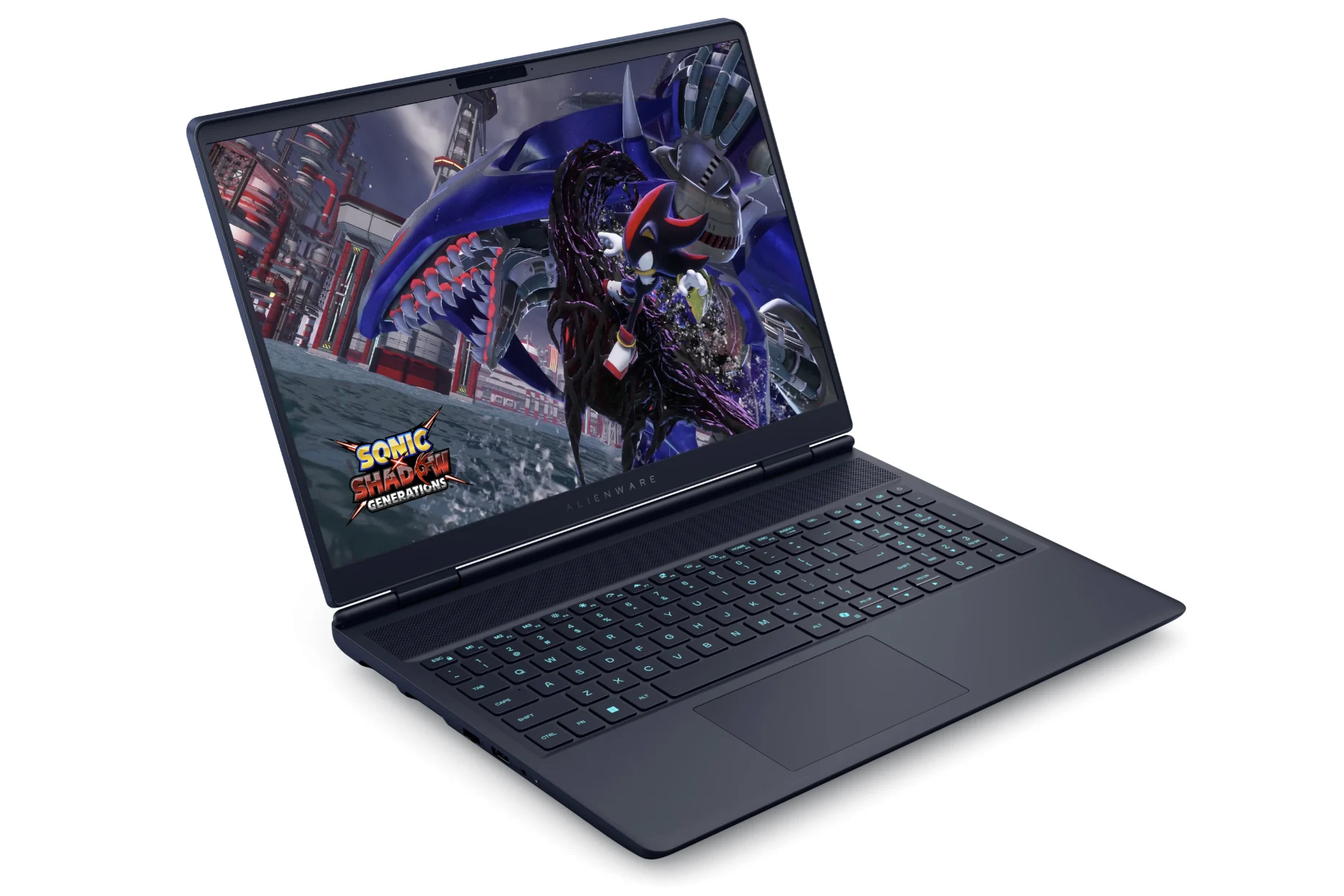
    The 2026 Dell Alienware 16X Aurora is shipping with more configurable options than the 2025 version. It can be configured with the Core Ultra 9 290HX Plus CPU, GeForce RTX 5070 Ti GPU, and OLED display, while last year’s model topped out at the Core Ultra 9 275HX, RTX 5070, and IPS display. The GPU upgrade alone is a meaningful performance boost over the RTX 5070.

    Config options vs last year

    Unfortunately, trying to buy the 2026 16X Aurora is a completely different story. The problem is that the RTX 5070 Ti can only be paired with the new Core Ultra 9 290HX Plus, even though our review showed the new CPU is barely an improvement over the already excellent Core Ultra 9 275HX. The option to pair the RTX 5070 Ti with the Core Ultra 9 275HX instead could have saved buyers a few hundred dollars without sacrificing gaming performance.

    OLED vs IPS and price considerations

    The issue extends to the new OLED display as well since the RTX 5070 Ti cannot be configured with IPS. Yet OLED is a much more noticeable upgrade over IPS when compared to the modest performance jump from the Core Ultra 9 275HX to the Core Ultra 9 290HX Plus, so the extra cost is more easily justified. Nonetheless, Dell should should allow for more freedom in configurations to reach more potential customers especially at a time when laptop prices are higher than ever.

    Sources
    • Dell Debuts 14-Inch Laptop With 120Hz Display, Arc B390 GPU

      Dell Debuts 14-Inch Laptop With 120Hz Display, Arc B390 GPU

      Key Takeaway

      – The Dell 14S reintroduces an XPS 14 with Panther Lake CPUs; Europe offers Core Ultra 5/322 and 7/355, while North America can also get Core Ultra 9/386H or X7 358H (60 Hz OLED on those high-end models).
      – 70 Wh battery with 65 W charging; RAM options of 16 or 32 GB LPDDR5x-7467 and PCIe storage of 512 GB / 1 TB / 2 TB.
      – Display choices are 1200p OLED or 1600p IPS; OLED tops at 60 Hz, IPS up to 120 Hz, none are touchscreen.
      – Pricing varies by region, starting around £1,149 / €1,299 / $1,319 for base config, with X7 358H configurations climbing up to about $2,169.

      Dell did come back to the XPS line this year with the XPS 14. For reference, we’ve already checked two versions, one with the Core Ultra 7 355 and the other with the more powerful Core Ultra X7 358H. Now, it has packed Intel’s Panther Lake platform into another 14-inch consumer laptop called the Dell 14S.

      Specs and positioning

      Effectively, the Dell 14S replaces the Dell 14 Plus (curr. $959). In North America it can be configured with the Core Ultra 5 322, Core Ultra 7 355, Core Ultra 9 386H and the Core Ultra X7 358H. In Europe, Dell limits it to the Core Ultra 5 322 and Core Ultra 7 355. All configurations ship with a 70 Wh battery that supports 65 W charging, though.

      Config options and display choices

      Additionally, the Dell 14S comes with a choice between 16 GB or 32 GB of LPDDR5x-7467 RAM and 512 GB, 1 TB or 2 TB of PCIe storage in some markets. Moreover, Dell offers the laptop with 1200p OLED or 1600p IPS panels. Not only is the latter brighter at 500 nits vs 300 nits, the latter also supports a 48-120 Hz refresh rate. In comparison, Dell’s OLED panel peaks at 60 Hz; neither supports touchscreen inputs, though.

      Performance limits and pricing by region

      Unfortunately, configuring the Core Ultra 9 386H or Core Ultra X7 358H limits the laptop to a 60 Hz OLED display. The Dell 14S starts at £1,149 in the UK and €1,299 in the Eurozone with a Core Ultra 5 322, 16 GB of RAM, a 512 GB SSD and an OLED display. Meanwhile, Dell charges $1,319 for the same configuration in the US. However, the laptop runs to $2,169 when configured with a Core Ultra X7 358H.


    • Lenovo Launches New 16-Inch Laptop with LPCAMM2 RAM and Intel Panther Lake in North America

      Lenovo Launches New 16-Inch Laptop with LPCAMM2 RAM and Intel Panther Lake in North America

      Key Takeaway

      1. The ThinkPad T16 Gen 5 is launched globally with AMD and Intel options in Europe, but only Intel models are available in North America and Australia.
      2. North American models feature Intel’s Panther Lake processors, with options for up to 64 GB of RAM and a 2.8K OLED display.
      3. The device offers optional 5G connectivity, multiple battery sizes, and starts at $1,628 USD in the US.

      Just last week, Lenovo launched the ThinkPad T16 Gen 4 around the world, mainly with Intel Lunar Lake CPUs, as an alternative to the models with Arrow Lake chips, which are currently priced at around $1,199. But now, they are back at it with the ThinkPad T16 series, releasing the new T16 Gen 5 in North America and Australia. The release notices came quite close to each other, signaling that Lenovo moving quickly on this newer model.

      Global Announcement and Regional Restrictions

      In early March, the company announced the ThinkPad T16 Gen 5 during MWC 2026, but wasn’t quick to make it available everywhere. It wasn’t until late April that Europe got the chance to buy one. Interestingly, the rollout process differed across regions, as Lenovo initially pushed AMD and Intel versions simultaneously on a global scale, but North America doesn’t follow this same pattern at all.

      North America Gets Focused on Intel

      In North America, the release was limited to four Intel Panther Lake chips only. The lineup includes from the Core Ultra 5 325 to the Core Ultra 7 365 vPro, with options for 16 GB, 32 GB, or 64 GB of LPDDR5 RAM that runs at 8,533 MT/s. This means customers have a variety of configurations, but no AMD options are available in this region currently.

      Display, Battery, and Pricing

      As for screens, the laptop can be equipped with up to a 2.8K OLED model that offers anti-glare coating and peaks at 600 nits brightness when HDR is on. The display supports a variable refresh rate between 30 to 120 Hz, making it quite adaptable for different uses. Battery options include 60 Wh and 75 Wh capacities, giving users flexibility based on their power needs. Price-wise, it starts at $1,628 in the US, CAD 2,344 in Canada, and AUD 2,520 in Australia.


    • MSI Prestige 16 2026 Updates You Didn’t Know About

      MSI Prestige 16 2026 Updates You Didn’t Know About

      Key Takeaway

      1. The Prestige 16 (2025) has been redesigned with a sleeker, thinner chassis and improved performance due to the Panther Lake CPU.
      2. The newer model upgrades to an OLED display, enhancing image quality and resolution, despite a potential reduction in battery life.
      3. Key features like a wider range of ports, support for more storage drives, an integrated numpad, and larger battery are present in the older model, which may be preferable for certain users.

      Recent Prestige 16 Model: What’s New and What’s Gone

      The newest Prestige 16 has switch some things up from the 2025 version, making it look and feel quite different. Many users will find the new design and features quite appealing, but unfortunately, several old features have been sacrificed during the upgrade. To give a clear picture, here’s a quick comparison showing the main differences, with some highlighted for emphasis.

      Older Model: A Closer Look

      Last year’s Prestige 16 was known for its wide range of ports, allowing users to connect multiple devices easily. It also supported a larger variety of storage drives, giving more flexibility for upgrades and expansion. Plus, it had an integrated numpad, which many users find handy, and its bigger battery meant longer usage times without needing a recharge. These features made the older model quite a favorite among many.

      New Design: Sleek and Performance Drive

      On the flip side, the newest version sports a design that is thinner and more elegant. The chassis has been revamped to look much more modern and sleek, which is a big plus for those who are keen on aesthetics. Under the hood, the new Panther Lake CPU delivers on performance, especially when it comes to power efficiency, which is a big step up from older CPUs. Moving from an IPS display to OLED tech, while risking some battery life reduction, greatly enhances the user experience with brighter colors and sharper images. This makes the visuals far more appealing, especially for media consumption.

      Performance Data and Final Thoughts

      More detailed benchmarks and comparison graphs can be found in discussions about the Prestige 16 AI+ C3MTG, showcasing how these models perform side by side. Overall, the new model offers a promising balance of style and power, although some might miss the older ports, storage support, and extra features. Nonetheless, it’s safe to say the upgrades are generally for the better for most users.

      Sources
      • Lenovo Yoga Laptop with 24GB RAM – $390 Off Limited Deal

        Lenovo Yoga Laptop with 24GB RAM – $390 Off Limited Deal

        Key Takeaway

        1. The Lenovo Yoga 7a 2-in-1 is available at a significant $390 discount, priced at $1,209.99, offering high-end specs like 24 GB RAM, 1 TB SSD, and an OLED display.
        2. Powered by the AMD Ryzen AI 7 445 “Gorgon” APU, it provides decent multi-core performance, though it lags behind the last-gen Ryzen AI 7 350 and Apple M5 in speed.
        3. The OLED display offers excellent color accuracy and coverage but suffers from low peak brightness (~290 nits), limiting outdoor usability.
        4. The machine features non-upgradable RAM and limited upgradable storage (smaller M.2 2242 SSDs), with no discrete GPU option, making it less suitable for high-end gaming or heavy workloads.

        Current Market Challenges and Price Adjustments

        The ongoing crisis surrounding RAM and storage prices has hits the laptop industry especially hard. Manufacturers, including Lenovo, have been forced to increase their prices in order to stay afloat with rising costs. Despite this, shoppers still find some golden deals showing up periodically, making it worth keeping an eye out.

        Special Offer on the Lenovo Yoga 7a 2-in-1

        Recently, Lenovo launched a 14-inch Yoga 7a 2-in-1 that now is available with a massive $390 discount on their official online platform. This slashes the price to a surprisingly low $1,209.99. The specific variant includes 24 GB of LPDDR5X RAM, a 1 TB SSD, and an OLED display, making it a pretty attractive option for many users.

        Coupon Codes for Extra Savings

        To make sure you get the most out of this deal, it’s advised to use coupons such as BUYMORELENOVO and USFRESHYOGA1 during purchase. These codes can add extra savings and ensure you get this powerful machine for the lowest possible price.

        Performance and Display Insights

        The core of this Yoga 7a 2-in-1 is powered by AMD’s Ryzen AI 7 445 “Gorgon” APU. This six-core processor is quite capable, often holding its own against the Intel Core Ultra 7 355 in multi-core testing. However, it falls a little behind the previous-generation Ryzen AI 7 350, which is about 20% faster, and even Apple’s M5 chips, which are nearly 40% more performant in similar benchmarks.

        Display Quality and Usage Experience

        • The 16-inch review shows that its OLED screen is really stunning, with vibrant colors. It covers 100% of sRGB and 99.9% of P3 color gamut, which is excellent for multimedia tasks.
        • Color calibration is quite impressive after adjustment, making it suitable for creative work. But, at only around 290 nits peak brightness, it is not very bright and difficult to use outdoors.

        Graphics and Upgradeability

        There’s no discrete GPU option available, which aligns with expectations for this model. The AMD Radeon 840M integrated GPU handles very light tasks well enough, but anything demanding like high-end gaming will struggle. For example, in a Cyberpunk 2077 test, the Intel Arc 140V was over 50% faster than the 840M.

        Memory and Storage Considerations

        The RAM is soldered on the motherboard, which means it can’t be upgraded later. Storage, however, can be replaced but only supports smaller M.2 2242 SSDs—limiting options for expansion.

        Port Selection and Overall Verdict

        The available ports are decent, providing a good array of connectivity options, although specifics are not listed here. Buyers searching for a powerful, well-rounded device with a decent display and plenty of memory might be happy with the Lenovo Yoga 7a 2-in-1, provided they are okay with the screens’ brightness and fixed memory configuration.

        Important Notices

        Note that prices and deals are subject to change, and the given discounts were valid at the time of writing. Not all units may be available for long or in large quantities. Always double-check before buying.


        Sources

        • LG UltraGear 32GX850B Gaming Monitor: Major Upgrades from Older Model

          LG UltraGear 32GX850B Gaming Monitor: Major Upgrades from Older Model

          Key Takeaway

          1. LG announced the release date for the UltraGear 32GX870B, with pre-orders starting in Japan and shipping beginning June 11.
          2. The monitor is priced at JPY 169,800 (~$1,081), which is lower than its predecessor, the 32GX870A.
          3. The 32GX870B offers significant brightness improvements, reaching 335 nits in SDR and 1,500 nits in HDR.
          4. It features a 4K native resolution with 240 Hz/480 Hz dual-mode refresh rates.

          LG has finally announced when they are going to be start selling the UltraGear 32GX870B monitor, in some kind of way. The company first show off the monitor in December 2025 and shortly after that, they revealed it again during CES 2026 in Las Vegas, just a few days apart. Fans of gaming gear are eagerly waiting for it to hit the market. But, there is still no official word about the global price or when it might be available outside Japan.

          Availability and Pre-order Details

          Right now, LG has opened pre-orders only in Japan. They have also confirmed that the pre-orders will start shipping on June 11. Because of this, it looks like it will take a little longer before we see this monitor in other parts of the world, probably not before the summer. This sort of staggered release means international gamers might have to wait to get their hands on this device.

          Pricing Info and Market Position

          LG has set the price of the 32GX870B at JPY 169,800, which is approximately $1,081. Compare this to the older model, the 32GX870A, which is priced around $1,029 on Amazon — so, it’s about an 18% increase in Japan. In the US, this could translate to about $1,230 based on the previous model’s MSRP, which means it’s a premium product in the gaming monitor segment. It seems LG is positioning this as a high-end choice for serious gamers looking for premium features.

          Technical Improvements and Features

          The new 32GX870B is noticeably brighter than the previous version, reaching 335 nits in SDR mode, which is an increase of 20%. This brightness boost is possible because of LG’s 4th-Generation Primary RGB Tandem OLED panel, making colors more vivid and images sharper, especially in well-lit rooms. Additionally, in HDR mode, this monitor reaches up to 1,500 nits, a 15% bump over the older model, delivering better contrast and more dynamic visual effects. The monitor maintains a native 4K resolution and offers dual refresh rate options of 240Hz and 480Hz, making it highly suitable for fast-paced gaming. For more info, check LG’s official website.


        • RedMagic OLED Gaming Tablet with 185Hz Display Launching Soon

          RedMagic OLED Gaming Tablet with 185Hz Display Launching Soon

          Key Takeaway

          1. The RedMagic Gaming Tablet 3 Pro is expected to launch in May 2026 with a 9-inch OLED display and a 185Hz refresh rate, offering a notable upgrade over previous models and competitors.
          2. It will feature advanced cooling and specifications such as up to 24GB RAM, 1TB storage, and the Snapdragon 8 Elite Gen 5 chip for sustained gaming performance.
          3. The tablet’s battery capacity is rumored to be 8,300mAh, slightly smaller than the Legion Tablet Gen 5’s 9,000mAh, which could impact battery life.
          4. The launch will likely coincide with the introduction of the RedMagic 11S Pro+ gaming phone series.

          Upcoming RedMagic Gaming Tablet 3 Pro Details

          RedMagic is soon going to unviel their next gen gaming tablet, which they originally launched as the Astra around early 2026. The company has said that the new model is coming but haven’t announced an official release date yet. Still, rumors from trusted sources are saying that it might hit the shelves pretty soon, perhaps by May 2026, especially since they tend to release globally shortly after their launch in China.

          Highlight Features and Specifications

          This new tablet looks like it will directly compete with Lenovo’s Legion Tablet Gen 5. The Legion has a small 8.8-inch LCD display, but the RedMagic model might have an edge with its 9-inch OLED screen, delivering better color and contrast. Leakers have also mentioned that this OLED display will have a fast refresh rate of 185Hz, which is a significant increase from the 165Hz on its predecessor and also the Legion Tablet. Additionally, it is to come with a cooling system that is more advanced, ensuring the Snapdragon 8 Elite Gen 5 chip stays cool and perform consistently during long gaming sessions.

          Battery and Storage Details

          According to early reports, this upcoming tablet could pack an 8,300mAh battery, which might be slightly less than the 9,000mAh of the Legion Tablet Gen 5. This could impact its longevity slightly, especially during gaming marathons. It’s also expected to be configurable with up to 24GB of RAM and 1TB of storage, making it a very powerful device. Pricing in China for similar specs saw the Legion Tablet go for around CNY 3,999, or about $585, so expectations are that the RedMagic might be similarly priced, offering good value for gamers.

          Complementary Launches and Additional Insights

          Alongside the new gaming tablet, the company might also unveil its RedMagic 11S Pro+ series which could sport an overclocked Snapdragon 8 Elite Gen 5 SoC, targeting performance enthusiasts. Basically, the upcoming lineup seems geared towards delivering high-end gaming performance with lots of options to customize and choose from. The excitement is building, and there’s quite a bit of anticipation for how these devices will perform once released to the market.


          Sources

        • Honor unveils new 165Hz OLED tablet with flagship specs and large battery

          Honor unveils new 165Hz OLED tablet with flagship specs and large battery

          Key Takeaway

          1. The MagicPad 3 Pro 12.3 features a smaller 12.3-inch OLED display with a high 165Hz refresh rate, peak brightness of 3,000 nits, and advanced viewing technologies, offering improved display quality over the previous 13.3-inch model.
          2. It is powered by the Snapdragon 8 Gen 5 SoC, slightly lower than the Elite version, and has a reduced battery capacity of 10,100 mAh for a thinner, lighter design (450 grams, 4.8mm thick).
          3. The tablet supports PC-like productivity with dedicated PC mode, external display output, and a keyboard folio accessory, targeting both gaming and productivity users.
          4. Prices in China start at CNY 3,999 ($586) for the entry model, with higher configurations costing up to CNY 5,699 ($835); globally, an almost identical MagicPad 4 is available with slightly lower peak brightness.

          New Honor MagicPad 3 Pro: Compact Yet Powerful

          Honor is back with a fresh version of their MagicPad 3 Pro, now smaller and possibly more portable. The upgraded model now sports a 12.3-inch screen, a switch from the previous 13.3-inch display. But it’s not just about size, there’s a lot more to this new tablet. The specs vary across the board making it an interesting choice for users who likes a sleek design but also want good features.

          Performance and Battery Life

          The MagicPad 3 Pro 12.3 is equipped with the Snapdragon 8 Gen 5 chipset, a powerful flagship processor. Yet, it’s a step down from the Elite Gen 5 chipset found in the larger 13.3-inch version. The smaller size makes it lighter and easier to carry, but this comes with a trade-off, particularly with battery size. The smaller tablet features a 10,100 mAh battery, in comparison to the 12,450 mAh in the larger model. However, the design improvements include a thinner body at just 4.8mm and less weight — only 450 grams—making it quite portable overall.

          Display Technology and Gaming Features

          The main highlight remains the display upgrade. The MagicPad 3 Pro 12.3 has a vibrant 165Hz OLED panel, offering peak brightness up to 3,000 nits, making it quite bright especially outdoors. The bezels are kept minimal at 3.9mm for an immersive experience. The display incorporates cutting-edge technologies like 5,280Hz PWM dimming to reduce flickering, enhancing viewing comfort. Additionally, gaming features like super-resolution are integrated, which can help boost gaming visuals on the OLED screen, catering to gamers who demands sharp graphics.

          Multitasking and Global Launch

          For productivity lovers, the MagicPad 3 Pro 12.3 supports a dedicated PC mode, including external display output and a keyboard folio. This transforms the tablet into a lean, mean work machine, bridging the gap between tablet and laptop. In China, the starting price is set at CNY 3,999 (~$586) for the 8GB RAM and 256GB storage version. The top-tier configuration with 16GB RAM and 512GB storage costs CNY 5,699 (~$835). In the international market, the MagicPad 4 with similar specs is already available, although it bumps the peak brightness rating to 2,400 nits compared to this model’s 3,000 nits.


          Sources