
Key Takeaways
1. Google Pixel phones face tough competition due to the cheaper “a” versions, which offer similar specs at lower prices.
2. The Pixel 10 series shows diminished appeal for the Pro model, with minimal differences compared to the standard version.
3. Camera features between the standard and Pro models are confusing, as both now include a telephoto lens, making the Pro less enticing.
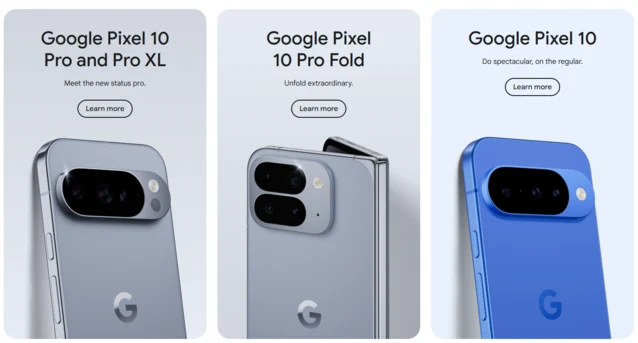
4. The standard Pixel 10’s camera setup is nearly identical to the Pixel 10 Fold, raising questions about the Pro’s value.
5. Google’s addition of a telephoto lens to the standard Pixel 10 is a smart move, providing good features at a $200 savings compared to the Pro.
The regular Google Pixel has always been a bit tricky to sell since Google tends to launch an “a” version of their new phones a few months after the main release. While the “a” versions usually come with a slightly lesser screen and a not-so-great camera, they still have the same processor and often a larger battery. When looking at the launch prices, the Pixel 9a was $300 less, offering nearly identical specs. Even though Pixels don’t keep their launch prices for long, as of now, there’s still a $302 gap when buying the Pixel 9 or Pixel 9A on Amazon.
Pixel 10 Range Changes Everything
With the new Pixel 10 series, it seems that Google has made its smaller “Pro” model less appealing right from the start.
When you look at the specs on paper, the differences between the standard and Pro models are pretty minimal. The regular Pixel 10 features a screen that’s a bit less impressive (mainly in resolution, refresh rate, and brightness, though it still boasts a 120 Hz rate), has slightly less RAM (12 GB compared to 16 GB), and a camera system that isn’t as strong, but it sports a better battery and the same quality in build.
Camera Confusion
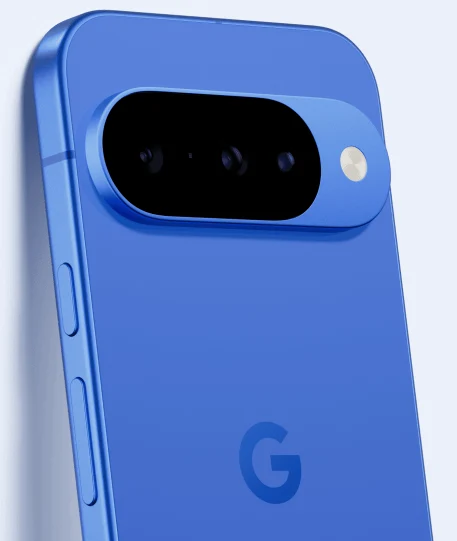
Where things get really confusing is with the camera setup. The 5x telephoto lens used to be the main feature that set the Pro models apart, but now that the standard model has this telephoto as well, it becomes hard to see why anyone would want to pay an additional $200 for the Pro version unless they’re really into the technical details.
The main lens on the regular version has a slightly larger aperture of ƒ/1.70 compared to ƒ/1.68, along with slightly fewer megapixels. The ultrawide lens on the regular model has fewer megapixels, a smaller aperture, and a narrower field of view. Sure, it’s not as good, but who really zooms in from an ultrawide lens anyway?
The 5x zoom also has fewer megapixels, a smaller aperture, and a little less field of view. Cropping from a 10-megapixel sensor instead of a 40-megapixel sensor won’t yield great results, and let’s be honest, cropping to increase zoom is often a poor substitute for good optics. Google’s “Pro Res” zoom has not received great reviews for delivering high-quality images. On the Pixel 9 Pro, anything over 10x zoom ends up looking like an oil painting, while shots without cropping tend to look much better. Plus, it’s worth mentioning that the camera setup on the standard Pixel 10 is nearly identical to that of the Pixel 10 Fold, which is also labeled as “Pro.”
A Smart Move by Google
Google adding a telephoto lens to the standard Pixel 10 is a smart choice. It’s high time that more brands understood that not everyone wants just wide and ultrawide lenses, a feature that was already seen in the midrange Nothing 3a back in March. However, with the standard Pixel 10 offering a $200 saving and only very slight compromises, it becomes a lot harder to justify going for the Pixel 10 Pro.
Leave a Reply