

Key Takeaways
1. NASA’s Psyche spacecraft is on a mission to study asteroid Psyche, which may contain a mix of rock and metal similar to Earth’s composition.
2. Calibration of the spacecraft’s imaging instrument is essential for mission success, requiring tests with objects that reflect sunlight.
3. Psyche has successfully captured images of Jupiter and Mars to test its imaging capabilities.
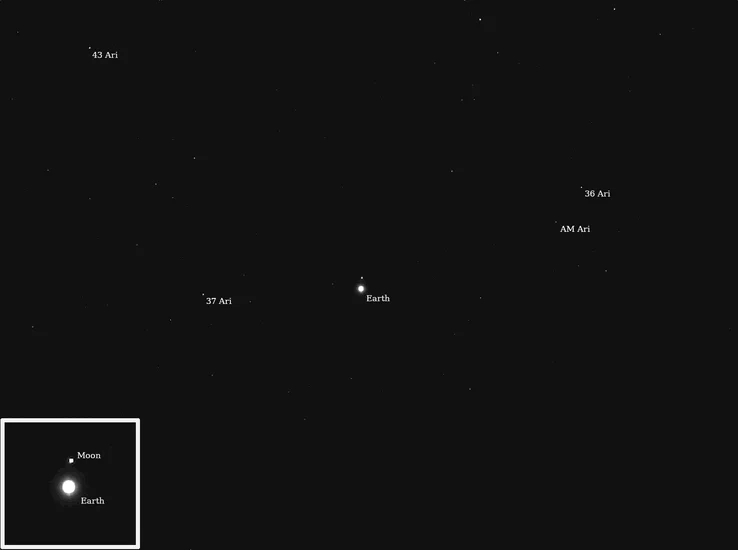
4. Recent imaging tests included capturing images of Earth and its moon using twin cameras with advanced filters and lenses.
5. The spacecraft plans a flyby of Mars next year to gain speed for its journey to asteroid Psyche, expected to arrive by 2029.
Since its debut in October 2023, NASA’s Psyche spacecraft has been heading towards asteroid Psyche. This asteroid is believed to consist of a blend of rock and metal, closely resembling Earth’s composition. By examining this asteroid, researchers aim to gain insights into the formation of planets like Earth.
Importance of Calibration
For the success of the Psyche mission, it is vital to test and calibrate its imaging instrument. Since asteroid Psyche reflects sunlight, the spacecraft needed to capture images of another object that also reflects the Sun’s rays. Previously, Psyche had successfully taken pictures of Jupiter and Mars, both appearing redder than Earth.
Recent Imaging Tests
On July 20 and 23, Psyche tested its imaging instrument by capturing images of Earth and its moon. The imager on the spacecraft features twin cameras equipped with filters and telescopic lenses, enabling it to capture images of faraway objects in various light spectra.
The team will keep on testing the imagers, with Saturn or Vesta likely being the next targets. However, the significant milestone for the Psyche mission is the planned flyby of Mars next year. The gravity of Mars will serve as a slingshot, giving the spacecraft the necessary boost to reach asteroid Psyche by 2029.
Source:
Link
Leave a Reply