Key Takeaways
1. NASA is focused on improving data transfer for future Mars landings and Moon missions, with the help of the DSOC project.
2. DSOC uses laser technology to transmit data via laser beams, launched with the Psyche spacecraft in October 2023.
3. The system includes a flight laser transceiver on Psyche and two ground stations for sending and receiving signals.
4. DSOC achieved significant milestones, including transmitting data over 19 million miles and sending ultra-high-definition video at 267 megabits per second.
5. The project completed its 65th and final pass, sending signals from 218 million miles away, paving the way for better communication in future deep space missions.
NASA is currently focused on making sure that humans can land on Mars and return to the Moon. To achieve this, there must be improved and quicker ways to transfer large amounts of data to and from Earth. That’s where DSOC comes into play.
Laser Technology in Action
This tech demo sends data using laser beams. It was launched in October 2023 with the Psyche spacecraft. DSOC is made up of a flight laser transceiver mounted on Psyche, along with two ground stations for support.
One of these stations sends a laser signal from the Jet Propulsion Laboratory’s Table Mountain Facility to Psyche. This signal helps the spacecraft’s transceiver to accurately target its downlink laser. The second ground station is the 200-inch Hale Telescope located at Caltech’s Palomar Observatory in San Diego County. This telescope captures the weak laser signal from Psyche and translates it into useful information.
Milestones Achieved
DSOC has successfully completed several passes since its launch. One month in, it transmitted data encoded in laser beams from a distance of nearly 10 million miles. By December 2023, it made a groundbreaking achievement by sending an ultra-high-definition video to Earth from over 19 million miles away, reaching a speed of 267 megabits per second.
A year later, it broke records in optical communications by sending data from a staggering 307 million miles away. This distance is actually greater than the average space between Earth and Mars.
Final Pass and Future Prospects
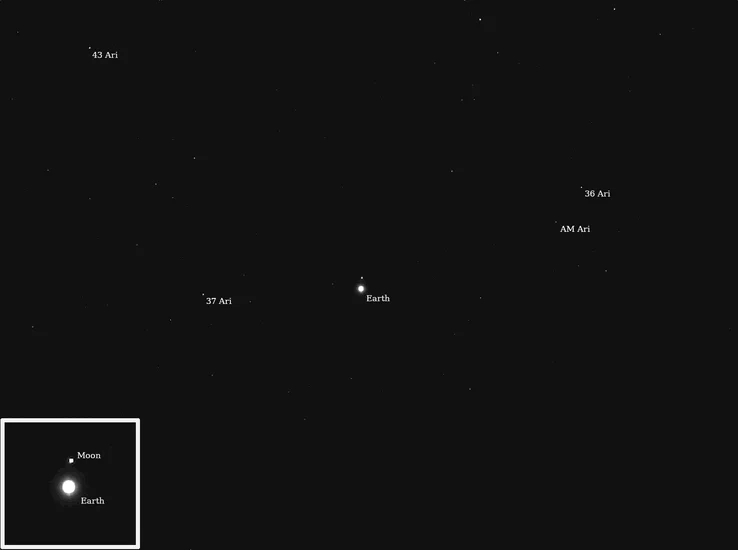
Recently, DSOC wrapped up its 65th and final pass. It sent a laser signal to Psyche and got the return signal from a distance of 218 million miles. DSOC is setting the stage for upcoming deep space missions that will take scientists to both the Moon and Mars, by allowing for quicker and better-quality communications.
Source:
Link