
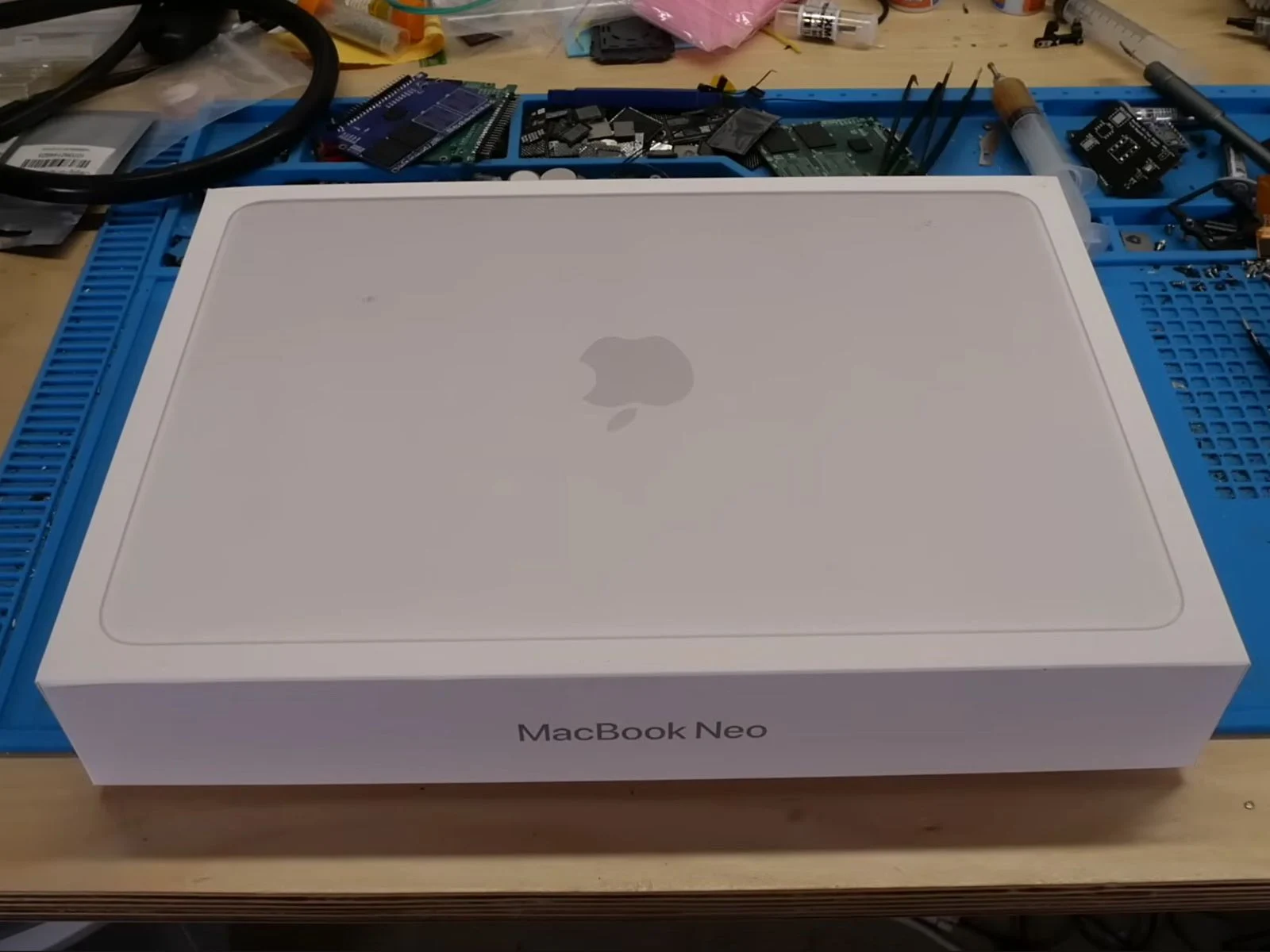
1. The MacBook Neo, powered by the A18 Pro chip, is capable of supporting 1 TB of storage by replacing the original NAND chip.
2. Upgrading the SSD involved soldering a blank 1 TB NAND chip designed for an iPhone 16 Pro onto the logic board, which successfully recognized and formatted the new storage.
3. The device uses a NAND-only boot chain, allowing stability and automatic recovery mode even when the NAND is replaced with a blank chip.
4. Upgrading RAM is impossible due to the PoP design, which stacks RAM on top of the SoC, and no alternative RAM packages are available for this layout.
Introduction to the MacBook Neo and Its Capabilities
The MacBook Neo has been a big hit for apple. Even though it is a passively cooled device, it packs the A18 Pro chip that is still very capable for everyday work. When apple introduced the entry-level Neo, the company brought the amazing power efficiency of the A18 Pro SoC into a wallet-friendly laptop. But, it had a strict storage limit of 512 GB officially.
Shared Components and Storage Potential
Since the Neo and the iPhone 16 Pro share the same A18 Pro silicon, and the iPhone supports up to 1 TB storage, some question if the Neo could be upgraded too. To find out, the youtuber dosdude1 took a 1 TB NAND chip meant for iPhone 16 Pro and soldered it onto the Neo’s mainboard.
Testing the Hardware and Initial Results
Before starting with soldering and risking the warranty, the YouTuber checked how the Neo performs straight from the box. With a fresh install of macOS 26, it runs just as you’d expected for a machine with Apple Silicon.
The RAM Limitation and Why It Can’t be Upgraded
If you’re asking why the 8 GB RAM isn’t getting an upgrade, it’s because of the design of the A18 Pro. It uses a PoP setup, meaning the RAM is stacked right on top of the processor. And with no alternative packs available in this specific layout, RAM upgrades are practically impossible, even with soldering skills.
Soldering the 1 TB NAND and Final Tests
The YouTuber also explains that a used NAND from an old iPhone can’t be used, because the new NAND must be blank. Using a JC P15 programmer, they checked the chip and confirmed it was empty and ready to work with macOS.
After soldering and reassembling, it was found that Neo’s A18 Pro uses a NAND-only boot process. Unlike older Macs that often get stuck with a blank NAND, the Neo stayed stable and quickly entered DFU mode, similar to an iPhone or iPad.
Successful Upgrade and Performance
Using Apple’s Configurator with a macOS IPSW file, the YouTuber saw the system detect the new 1 TB drive, format it, and complete the restore without any problem. When checked in macOS, the storage shows 1 TB and speeds in Disk Utility showed around 1700 MB/s — about 200 MB/s faster than the original 256 GB drive.
Conclusion and Economic Factors
While the upgrade was successful, the cost is high. Due to the ongoing shortage caused by AI component demands, buying a blank 1 TB NAND chip is very costly now, often over $200, compared to under $100 previously.
The entire process is shown in the video linked below, where the YouTuber demonstrates the storage upgrade on the MacBook Neo.

Leave a Reply