
Key Takeaways
1. Major companies like CATL, Toyota, Samsung, BYD, and Mercedes aim to launch electric vehicles with solid-state batteries by 2027.
2. Solid-state batteries use a solid electrolyte, offering up to 400 Wh/kg energy density, with potential to reach 500 Wh/kg, significantly higher than current LFP batteries.
3. These batteries promise greater range and enhanced safety due to fewer reactive components, despite high production costs and challenges with layer connections.
4. Researchers have developed a flexible polymer electrolyte that improves energy density by 86% and allows for bending, enhancing safety and durability.
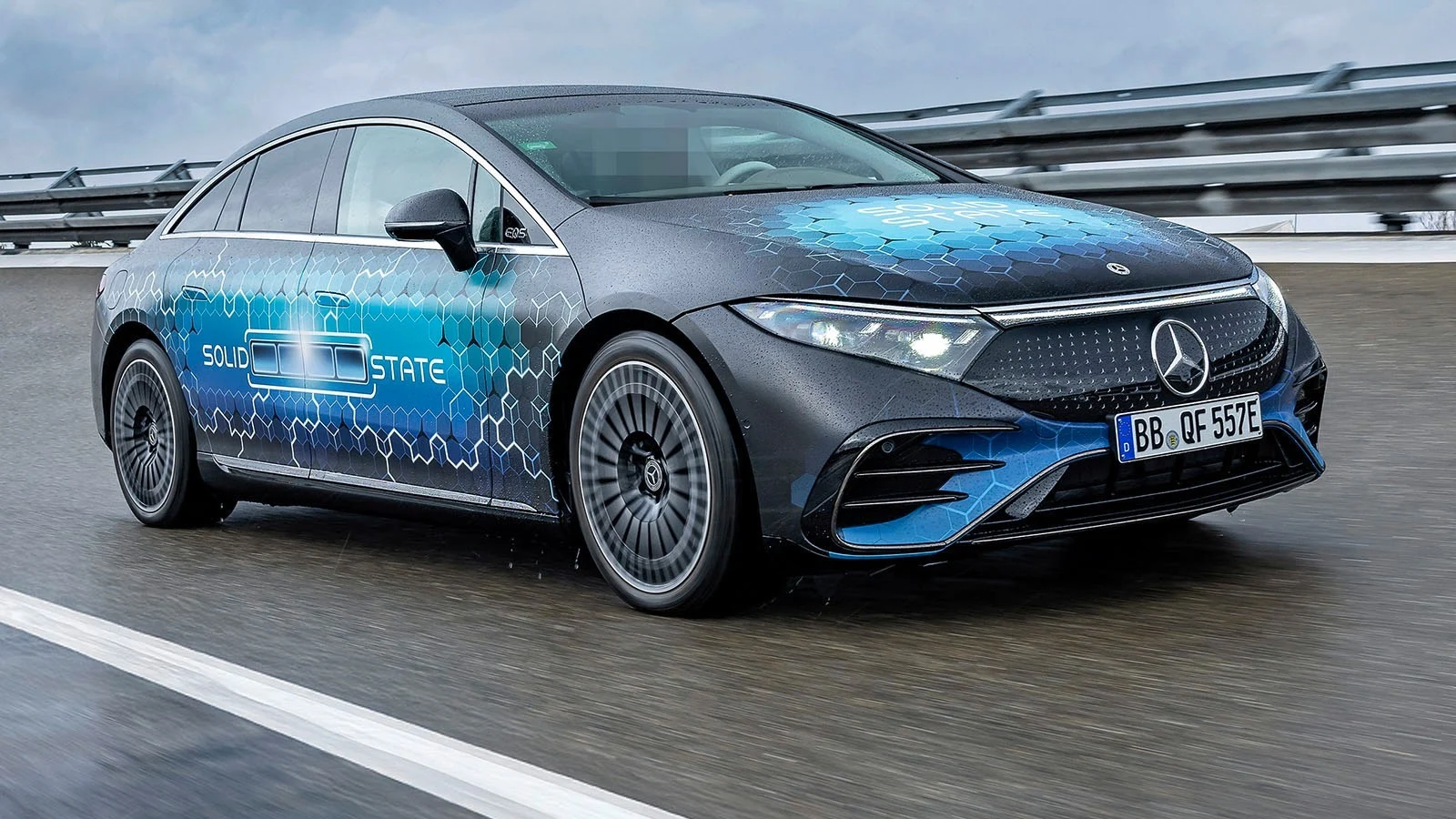
5. The advancements in solid-state battery technology could enable electric vehicles like the Mercedes EQB prototype to achieve over 1,300 miles on a single charge if production costs become competitive.
Solid-state batteries are moving beyond research and entering the stage of prototypes and small-scale production.
Several major firms, including CATL, Toyota, Samsung, BYD, and Mercedes, have set their sights on 2027 as the critical year for launching their first electric vehicles equipped with genuine solid-state batteries.
Distinction in Technology
These batteries utilize a solid electrolyte, which is different from the hybrid semi solid-state systems found in models like the NIO ET7, which consists of 95% solid and 5% liquid electrolyte. The solid-state batteries revealed so far boast an energy density of around 400 Wh/kg, with the theoretical capability to reach 500 Wh/kg. This is more than double the density of widely used LFP batteries that power everything from mainstream electric vehicles to the well-known Anker Solix power station, which is currently available at a significant discount of over 50% on the Amazon Prime Big Deal list.
Advantages of Solid-State Batteries
In addition to potentially doubling the range on a single charge within the same size, solid-state batteries are also considered safer due to their reduced number of reactive components when compared to those utilizing flammable liquid electrolytes. However, true solid-state batteries come at a high cost, as the process requires fusing the electrolyte with the electrode at elevated pressures and temperatures, leading to weaker connections between the layers and a decrease in lithium-ion transport efficiency.
Breakthrough Innovations
This limitation hampers solid-state batteries from achieving their full capabilities. To address this issue, researchers from the Chinese Academy of Sciences have created an innovative solid-state battery electrolyte solution.
They removed the “solid” aspect from the solid-state electrolyte by developing a flexible polymer incorporating ethoxy groups and short sulfur chains, which are intended to enhance ion conductivity and bond with the cathode on a molecular level.
The new polymer electrolyte within a composite cathode not only improved the energy density of the solid-state cell by a remarkable 86% due to reduced transfer resistance, but it is also capable of bending. Indeed, this flexible solid-state battery system can endure 20,000 bending cycles, further improving its impact resistance and safety compared to traditional sulfide solid-state batteries that companies like Samsung and Toyota are set to launch in 2027.
Future Implications
Such a significant increase in energy density could allow the Mercedes EQB prototype, equipped with a genuine solid-state battery currently undergoing range testing, to potentially travel over 1,300 miles on just one charge. Furthermore, a solid-state battery featuring a flexible polymer electrolyte would enhance the longevity and safety of electric vehicles, provided it can be manufactured at a scale that reduces production costs to a competitive level.


Leave a Reply