Category: Video / Photo

  • DJI Mini 5 Pro Leaked Images Surface After Teaser Delay

    DJI Mini 5 Pro Leaked Images Surface After Teaser Delay

    Key Takeaways

    1. DJI’s rumored launch of the Mini 5 Pro did not happen as expected, with no confirmed announcement date.
    2. The Mini 5 Pro was anticipated to be revealed on September 16, but its release date remains uncertain.
    3. Promotional images of the Mini 5 Pro show new features, including twist on/off propellers and a replacement Quick-Release Propeller Guard.
    4. The Mini 5 Pro will have a noise level rating of 81 dB, similar to the Mini 4 Pro, adhering to EU drone regulations.
    5. Independent tests suggest that the Mini 4 Pro operates quieter than its official noise rating.


    Yesterday’s rumors about DJI teasing its next consumer drone didn’t turn out to be true. For some background, the company usually announces the launch date of its new products about a week in advance. For instance, DJI hinted at the arrival of the Mic 3 exactly one week prior to its official announcement of the wireless microphone, which currently costs $329 on Amazon.

    Anticipation of the Mini 5 Pro

    Until now, it was generally accepted that DJI would reveal the Mini 5 Pro on September 16. Thus, it seemed likely that the company had planned a launch event for September 9. However, we still don’t know where the Mini 5 Pro is or if it will actually be released on September 18. In the meantime, Roland Quandt has shared several promotional images of the upcoming drone on Bluesky.

    Detailed Insights on the Mini 5 Pro

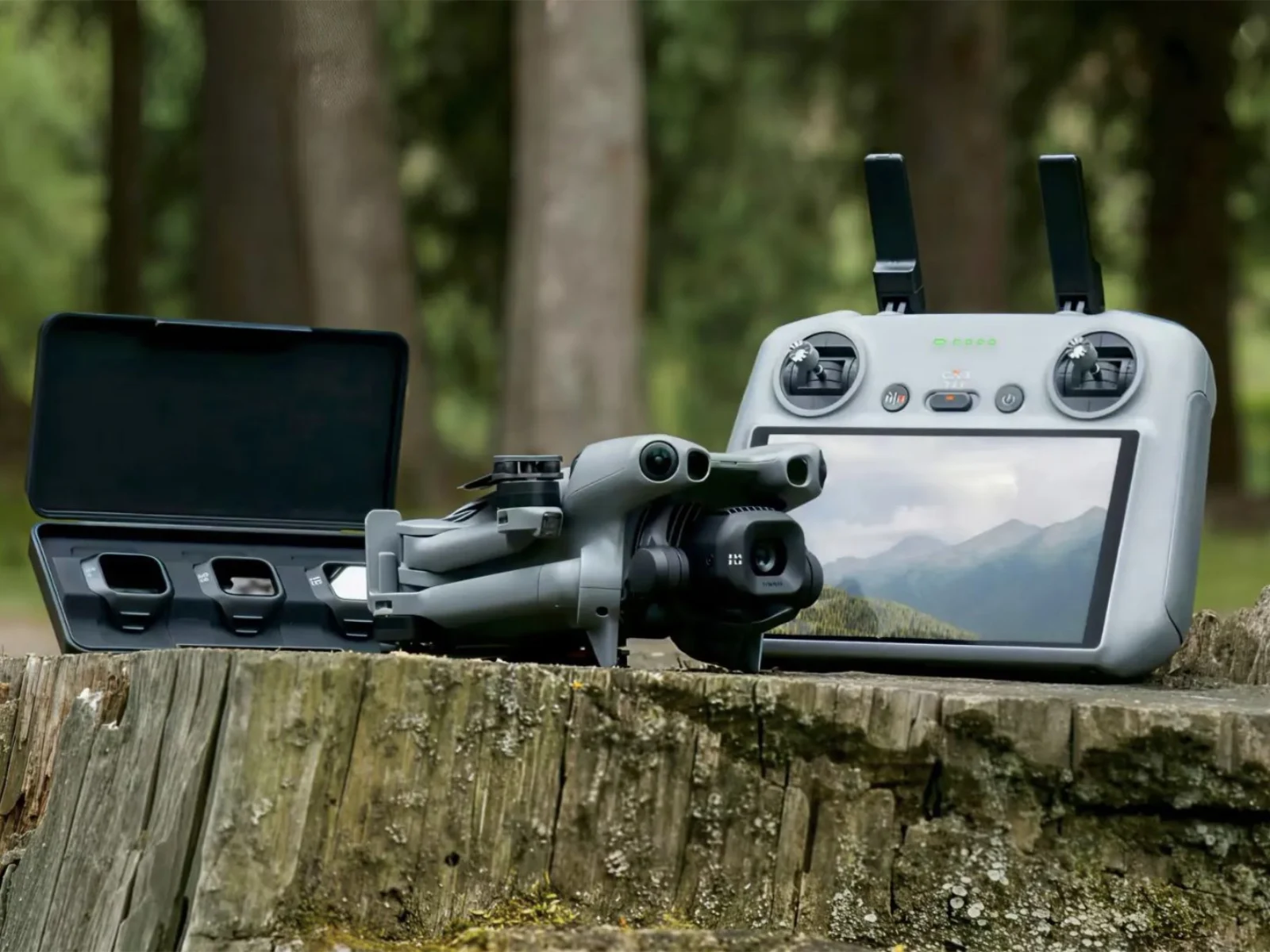
    The images provide what might be the clearest view so far of the Mini 4 Pro’s successor. This allows us to see the new twist on/off propellers for the Mini 5 Pro, which are expected to be priced at $19. There’s also a replacement Quick-Release Propeller Guard available with propellers included for $69.

    Additionally, DJI has added a noise level rating on the bottom of this Mini drone. This indicates that the Mini 5 Pro will operate at 81 dB, which matches its predecessor, ensuring it stays within the EU’s drone regulations. Interestingly, independent tests show that the Mini 4 Pro is significantly quieter than its official rating. For further details, check out the images included.

    Conclusion

    Roland Quandt has been instrumental in shedding light on these new developments.

    Source:
    Link


  • Sony 200 MP Camera Specs Leaked for Oppo Find X9 Ultra, Xiaomi 16 Ultra

    Sony 200 MP Camera Specs Leaked for Oppo Find X9 Ultra, Xiaomi 16 Ultra

    Key Takeaways

    1. Sony is developing a new 200 MP camera sensor called IMX09E, which aims to compete with Samsung’s ISOCELL HP2 sensor.
    2. The IMX09E is positioned higher than the LYT-900 sensor found in devices like the Find X8 Ultra and Xiaomi 15 Ultra.
    3. The sensor features pixels measuring 0.7 μm and has an optical format of 1/1.12 inches, making it smaller than the LYT-900.
    4. It is expected to deliver over 100 dB of dynamic range using Sony’s Hybrid-Frame HDR technology.
    5. The IMX09E will offer a 4x lossless zoom experience and will be compatible with Qualcomm’s upcoming Snapdragon 8 Elite chipset.


    Digital Chat Station has revealed additional insights about a new 200 MP camera sensor that has been talked about multiple times in recent weeks. To summarize, the same leaker had previously hinted that Sony may have developed an alternative to Samsung’s rumored ISOCELL S5KHPE sensor.

    New Developments

    A few days back, they asserted that Sony is working on the previously undisclosed 200 MP sensor, which is reportedly called IMX09E. Now, Digital Chat Station claims to have more details regarding the IMX09E, stating that Sony is ‘positioning it higher’ than the LYT-900 that can be found in devices like the Find X8 Ultra and Xiaomi 15 Ultra, among others. This suggests that the Sony IMX09E could directly compete with the ISOCELL HP2 found in Samsung’s latest flagship models, such as the Galaxy S25 Ultra (currently priced at $1,048 on Amazon).

    Specifications and Features

    It seems that the Sony IMX09E comes with pixels measuring 0.7 μm and has an optical format of 1/1.12 inches. This means that the sensor would be smaller compared to the LYT-900. To compensate for this size difference, Digital Chat Station is of the opinion that the IMX09E will deliver more than 100 dB of dynamic range thanks to Sony’s Hybrid-Frame HDR technology. Additionally, the IMX09E is expected to provide a 4x lossless zoom experience, which will work seamlessly with Qualcomm’s upcoming Snapdragon 8 Elite chipset.

    Digital Chat Station has been keeping a close eye on these developments, and it remains to be seen how the new Sony sensor will perform against its competitors.

    Source:
    Link


  • YouTube’s Video Player Redesign: Controversial Yet Appealing

    YouTube’s Video Player Redesign: Controversial Yet Appealing

    Key Takeaways

    1. YouTube is testing a major redesign of its web video player after receiving user feedback on earlier changes.
    2. The new layout features a cleaner and more unified design, with familiar controls returned to their original positions.
    3. Key features like the volume slider are back next to the play/pause button, while other controls are grouped in a pill-shaped container.
    4. Some elements, such as the skip button and mini player toggle, have been removed in this redesign.
    5. The new design is currently not widely available, as it is still in testing, and there is no guarantee it will be fully rolled out.


    YouTube is once again changing the way its web video player looks. Since April, the company has been working on a major redesign, and after making several adjustments, the new version is now appearing for some users. The good news is that it seems YouTube has taken some of the early criticism to heart. I saw the new design on my main YouTube account this past weekend, and here’s how it appears.

    A Better Layout

    The previous redesign moved around familiar controls and placed them in floating bubbles. Users were not happy about this, especially with the volume slider being pushed to the far right corner. Now, five months later, YouTube is testing a more polished design that feels cleaner and more unified, giving it a distinct Apple Liquid Glass appearance. Here’s how it stacks up against the old user interface.

    Returning Features

    The volume slider is back in its rightful place—right next to the play/pause button, and you can still use the up and down keys to change the volume. Other UI components, like timestamps and chapter markers, remain on the left in their designated bubbles. Meanwhile, autoplay, subtitles/captions, settings, theatre mode, and fullscreen controls are now bundled together in a pill-shaped container on the bottom right. I didn’t get to try the previous UI myself, but from what I’ve seen in pictures, the new interface appears to be slightly more see-through. The pills also display a thin black outline when you hover over them, which helps indicate where you’re clicking.

    Missing Elements

    However, not everything made it through this second round. The skip button is no longer available, and the mini player toggle on the right side has vanished as well. While I hardly ever used the skip button, it’s clear that some users will have strong feelings about its removal.

    I noticed the redesigned video player on my main account, but it’s absent on my secondary account and when I access YouTube in incognito mode. Some Reddit users have mentioned they can see it too, but it doesn’t seem to be widely available at this point. Google is well-known for A/B testing UI updates and features that might never be fully released, and there’s no certainty that this YouTube UI redesign will avoid the same fate (remember the “Related Videos” redesign that got scrapped after backlash?). Still, considering it has been under testing for nearly a year and Google is clearly acting on early feedback, there’s a decent chance this UI could get a wider rollout.

    YouTube faced a lot of criticism when it first revealed this redesign back in April, but I genuinely appreciate this more polished version. It feels more modern and cleaner, and I honestly wouldn’t mind if YouTube rolled this design out to everyone. The desktop player has remained largely unchanged for years, so it’s about time it got a refresh.

    Source:
    Link


  • Webb Captures Stunning Super-Hot Stars in the Lobster Nebula

    Webb Captures Stunning Super-Hot Stars in the Lobster Nebula

    Key Takeaways

    1. The Webb space telescope is examining star-forming regions to understand young stars and their environments.
    2. Webb captured an image of the star cluster Pismis 24 in the Lobster Nebula, containing hundreds to thousands of stars.
    3. Pismis 24-1, at the cluster’s center, consists of at least two of the largest and brightest known stars.
    4. Intense winds and radiation from young stars shape surrounding gas clouds into denser structures called spires, where new stars can form.
    5. The image reveals dust particles and heated hydrogen gas, providing insights into the behavior and evolution of hot young stars.


    Scientists are utilizing the Webb space telescope to examine areas where stars are born. Their goal is to better understand the development of these young stars and their interactions with the surrounding environment. Recently, Webb has recorded another one of these fascinating regions.

    Capturing Pismis 24

    With its Near-Infrared Camera (NIRCam), Webb has taken a stunning image of a star cluster named Pismis 24, which is found in the Lobster Nebula. This cluster is packed with hundreds to thousands of stars, and the larger, more luminous ones display a six-point diffraction pattern.

    The Mystery of Pismis 24-1

    At the heart of this cluster lies a group of stars known as Pismis 24-1. Although it may appear to be a single bright star, research has indicated that it actually consists of at least two stars. These stars are among the largest and brightest ever discovered.

    Intense winds and radiation emitted by the young stars in this cluster push away the less dense portions of the surrounding gas cloud. This process leaves behind denser structures known as spires. The fierce winds compress these spires, eventually leading to the formation of new stars within them. The tallest of these spires has a broad tip that measures approximately 0.14 light-years across, which is more than 200 times wider than our solar system out to Neptune.

    Insights from the Image

    The image also showcases dust particles, depicted as orange structures resembling smoke. The massive young stars within the cluster heat hydrogen gas, which is illustrated in cyan. This stunning image from Webb not only offers a visual treat but may also provide valuable insights into the behavior and evolution of these hot young stars.


    Source:
    Link


  • Insta360 Ace Pro 2: Upgraded Action Camera After Go Ultra Release

    Insta360 Ace Pro 2: Upgraded Action Camera After Go Ultra Release

    Key Takeaways

    1. Insta360 launched the Ace Pro 2 Arctic White Limited Edition, priced at $539, to complement the existing Midnight Black version.
    2. The Ace Pro 2 features a 1/1.3-inch sensor with video recording capabilities of up to 4K/60 FPS or 8K/30 FPS and a 50 MP photo option.
    3. The Arctic White Limited Edition is compatible with existing Ace Pro 2 accessories but comes with only a Single Battery, unlike the Midnight Black version which offers an extra battery option.
    4. The Ace Pro 2 Arctic White Limited Edition is currently unavailable in the U.S., but it can be purchased in Canada, the UK, and the Eurozone at varying prices.
    5. The Arctic White Limited Edition shares the same core hardware components as other Ace Pro 2 models.


    Hardly any time has gone by since Insta360 launched the Go Ultra to replace the Go 3S and compete with the soon-to-be-released DJI Osmo Nano. Despite this, the company has chosen to unveil a fresh version of the Ace Pro 2, which they began selling in October 2024 (currently priced at $539 on Amazon). Similar to the previous X5 model, Insta360 has revamped the Ace Pro 2 with a white finish that complements the existing Midnight Black option.

    Hardware Similarities

    At its core, the Arctic White Limited Edition features the same components as other Ace Pro 2 models. This includes a 1/1.3-inch sensor capable of recording video at up to 4K/60 FPS or 8K/30 FPS with a 13 mm equivalent focal length and an aperture of f/2.6. Additionally, the Ace Pro 2 can take 50 MP photos and is powered by a 1,800 mAh battery that lasts up to 180 minutes.

    Accessories and Bundles

    The Arctic White Limited Edition is also compatible with existing Ace Pro 2 accessories, such as Insta360’s Cold Shoe Shutter Button, Utility Frame, and Wrist Strap. Furthermore, this updated version is available in various bundles suited for different activities, like the Bike Bundle or Winter Bundle. Interestingly, Insta360 is only providing the Arctic White Limited Edition with a Single Battery. In contrast, the regular Midnight Black version can be purchased with an extra battery.

    Availability in Markets

    As of now, Insta360 is not selling its latest action camera update in the United States. Instead, the Ace Pro 2 Arctic White Limited Edition is available in other regions, such as Canada and the UK, starting at CA$629.99 and £449.99, respectively. Meanwhile, in the Eurozone, the same update is priced at €529.99 but is referred to as the Ace Pro 2 Polar White edition in some countries. For further information, please visit Insta360’s official website.

    Source:
    Link


  • Get Exciting Camera Accessories for iPhone 17 Pro Before Launch

    Get Exciting Camera Accessories for iPhone 17 Pro Before Launch

    Key Takeaways

    1. The Apple iPhone 17 will be revealed on September 9, featuring new photography accessories from Moment.
    2. Moment offers nine lenses in the T series that enhance the iPhone 17’s camera capabilities, including telephoto and macro options.
    3. Unique filters for iPhone 17 Pro models include a polarizing filter and a variable ND filter for improved video shooting.
    4. Moment accessories are available for pre-order with a 25% discount until September 9.
    5. Prices for Moment’s accessories include the Camera Case and QuickLink adapters at $41.25, with various filters priced between $30 and $67.50.


    The Apple iPhone 17 is set to be revealed on Tuesday, September 9. Moment has already introduced a selection of unique accessories designed for those who love photography and videography. The Moment Camera Case, compatible with all four iPhone 17 models, enables the use of various accessories.

    Diverse Lens Options

    Among these are the nine lenses from the Moment T series, which can change the main camera of the iPhone 17 (Pro) into a telephoto or macro camera, among others. There are also optional QuickLink adapters that let users attach a wrist or shoulder strap to the bottom of the phone, allowing it to be carried like a camera, similar to Apple’s own crossbody strap.

    Exciting Filters for Pro Models

    What’s particularly intriguing are the filters that work only with the iPhone 17 Pro and iPhone 17 Pro Max. Moment provides a polarizing filter that eliminates reflections from non-metal surfaces, and a variable ND filter that decreases incoming light by two to seven f-stops, helping to find the perfect shutter speed for video capturing. An adapter is available for standard 67mm filters, like those typically used with regular camera lenses.

    Pre-order Opportunities

    Moment’s latest accessories can be pre-ordered from the company’s website. They are currently offering a 25% discount until Tuesday, September 9. With this deal, the Camera Case and QuickLink adapters are priced at $41.25 each, while the 67mm filter adapter and UV filter are each $30. The polarizing filter is priced at $56.25, and the variable ND filter costs $67.50. These prices do not include shipping fees.

    Source:
    Link


  • TCL PlayCube: Portable Cube Projector with Google TV and 66 Wh Battery

    TCL PlayCube: Portable Cube Projector with Google TV and 66 Wh Battery

    Key Takeaways

    1. Compact and Portable: Weighs 1.3 kg and measures 15 x 9.7 x 9.7 cm, easy to carry.
    2. Automatic Adjustments: Features auto focus and keystone correction with a quiet fan (26 dB).
    3. Battery Life: 66 Wh battery lasts up to three hours, but charges via barrel connector, not USB-C.
    4. Streaming Capabilities: Runs Google TV for popular streaming services and supports wireless streaming via Google Cast.
    5. Pricing: Available in the U.S. for $799; European launch details are pending.


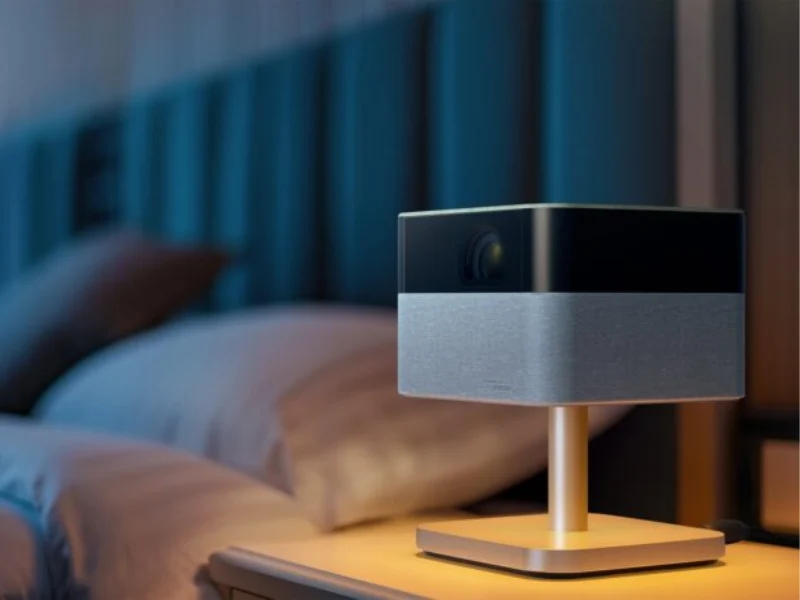
    The TCL PlayCube is a compact projector, weighing just 1.3 kilograms and measuring 15 x 9.7 x 9.7 centimeters, making it quite easy to carry around. Its innovative design allows it to rotate as much as 90 degrees, which helps in aligning the projector perfectly with the display surface.

    Automatic Adjustments

    This device automatically adjusts focus and keystone correction. The built-in fan runs very quietly, reaching sound levels of up to 26 dB. TCL has included a 66 Wh battery, which reportedly lasts for three hours, perfect for watching longer films. However, it is unfortunate that the battery charges through a barrel connector rather than USB-C, which complicates the use of a power bank for extended viewing.

    Streaming and Sound Features

    With Google TV, users can access several popular streaming services, and Google Cast enables wireless streaming from Android devices. The sound quality from the built-in 5-watt speakers can be fine-tuned using an equalizer. The DLP technology delivers a native resolution of 1,920 x 1,080 and a brightness level of 750 ISO lumens, allowing the TCL PlayCube to project images ranging from 30 to 150 inches diagonally. Additionally, the MediaTek MT9630 SoC is capable of decoding 4K content, featuring four efficient ARM Cortex-A53 cores and 2 GB of RAM.

    Pricing and Availability

    Currently, the TCL PlayCube projector is on sale in the United States for $799, while details regarding its launch in Europe are still awaited. For more information on the projector’s capabilities, you can visit the TCL website.

    Source:
    Link


  • DJI Mini 5 Pro: Official Images of Fly More Combo Contents

    DJI Mini 5 Pro: Official Images of Fly More Combo Contents

    Key Takeaways

    1. The new DJI Mini 5 Pro is expected to be revealed on September 16, 2025, coinciding with the iPhone 17 launch event.
    2. The drone features a 1-inch camera and LiDAR sensors, appealing to new enthusiasts.
    3. Two main drone packages are available: the standard Fly More Combo and optional Plus packages with larger batteries.
    4. The standard package includes smaller batteries for 36 minutes of flight time, while Plus packages allow for 52 minutes with larger batteries.
    5. Budget-friendly options include a basic controller without a display, while a pricier package features a controller with a built-in monitor.


    If the new DJI mini drone is really set to be revealed on September 16, 2025, we can expect the official teaser to drop on the same day as the iPhone 17 launch event, which is next Tuesday. For those who enjoy sneak peeks, there has been quite a bit of info circulating for weeks now. Just yesterday, tipsters like Igor Bogdanov shared some official renderings of the DJI Mini 5 Pro, featuring a 1-inch camera and LiDAR sensors that are bound to attract a lot of new enthusiasts.

    Details on Drone Packages

    The images released today come from his collection, but some were also spotted on Reddit. They showcase the key items in the two main drone packages for the successor of the DJI Mini 4 Pro, which DJI typically names the Fly More Combo. Earlier leaks suggest that these packages include smaller 2,785mAh batteries, which provide 36 minutes of flight time per charge while keeping the weight under the 250-gram limit needed for recreational drone flying in many places. In certain areas, there are also optional Plus packages that come with larger 3,350mAh batteries, enabling 52 minutes of uninterrupted flight time, though they do add extra weight.

    Affordable Package Options

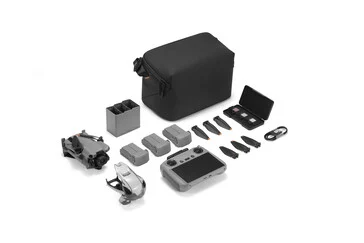
    The budget-friendly drone package features the combo with the DJI RC-N3 controller, which does not have a display. Along with the mini drone and remote control, this package includes a gimbal protector, three Intelligent Flight Batteries, six sets of propellers, a filter kit, a charging cable, a carrying case, and a battery charger.

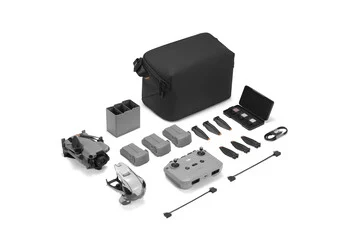
    You can see the Fly More Combo contents with the DJI RC2 from a different angle below. This remote control is pricier but comes with a built-in control monitor. Other than that, the package contains the same items as the one with the less expensive controller.

    Source:
    Link


  • Xiaomi 16 Ultra vs Oppo Find X9 Ultra vs Vivo X300 Ultra Comparison

    Xiaomi 16 Ultra vs Oppo Find X9 Ultra vs Vivo X300 Ultra Comparison

    Key Takeaways

    1. Clip-on lenses for smartphones are expected to gain popularity in 2026, with growing interest observed at the Mobile World Congress in spring 2025.
    2. Vivo’s X200 Ultra is currently the most viable smartphone with clip-on lens capabilities, enhancing zoom quality but adding weight and bulk.
    3. The future of interchangeable lenses remains uncertain, as they increase the cost of flagship smartphones.
    4. More smartphone models, including the Vivo X300 Ultra, Oppo Find X9 Ultra, and Xiaomi 16 Ultra, are anticipated to offer unique camera solutions in 2026.
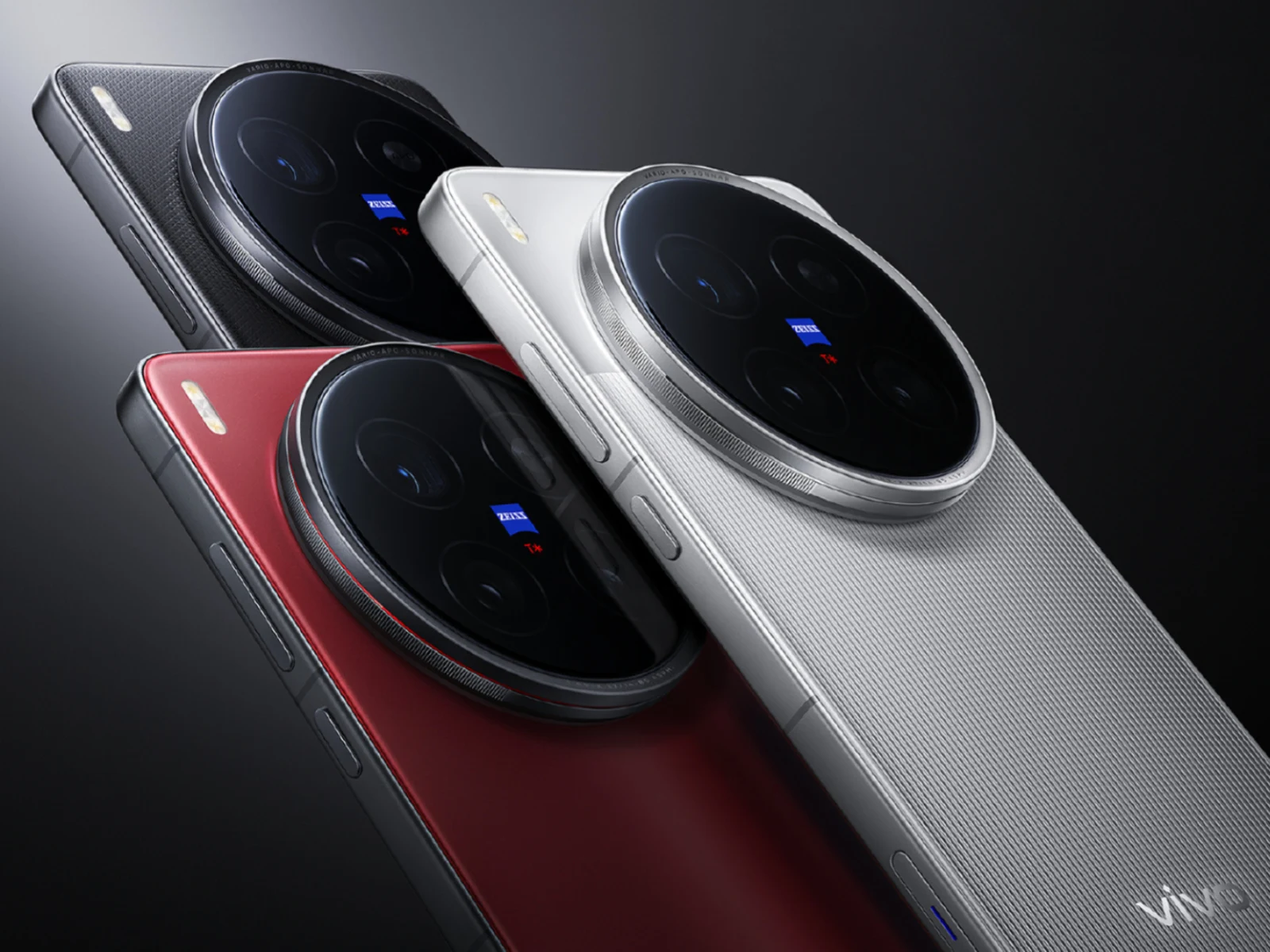
    5. The Xiaomi 16 Ultra will be available globally for the first time, with potential collaborations with Zeiss or Hasselblad for enhanced camera features.


    2026 is expected to be the year when clip-on lenses for smartphones gain traction, based on a recent tease from a leaker on social media (see below). It’s still uncertain how well this enhancement in camera quality will catch on, but early signs of growing interest in add-on options were already noticeable during the Mobile World Congress in spring 2025. At the event, Oppo’s subsidiary Realme presented a related idea for an “ultra flagship,” while Xiaomi made waves with its rather advanced magnetic clip-on camera, although it’s still in the conceptual stage.

    Vivo’s Current Offering

    The most commercially viable product so far is the Vivo X200 Ultra, which regrettably is only available in China. This smartphone features an additional camera grip with a clip-on lens that transforms the 85mm telephoto lens into a 200mm optical telephoto lens, enhancing the quality of long-distance zoom shots, a feature we’ve already reviewed. Our findings? The improvement in quality is undeniable, but users must be ready to carry around the camera gear and teleconverter, which adds both weight and bulk and demands additional time for setup.

    Future Prospects

    It’s uncertain if these interchangeable lenses and camera kits will become mainstream, particularly because they also hike up the price of already pricey flagship cameras. Regardless, a broader array of these solutions is expected to emerge in 2026, not just for the Vivo X300 Ultra but also for the Oppo Find X9 Ultra and the Xiaomi 16 Ultra, each likely to take unique routes in the quest for the “best smartphone camera” next year. For the first time, the successor to the Xiaomi 15 Ultra will be available globally; a leak suggests that the next flagship from Zeiss or Hasselblad might also see a worldwide release.

    Source:
    Link


  • DJI Mini 5 Pro: Release Date, Press Images, and First Poster

    DJI Mini 5 Pro: Release Date, Press Images, and First Poster

    Key Takeaways

    1. Four promotional images of the DJI Mini 4 Pro successor have been released, showcasing its design and features.
    2. The drone has a noise rating of 81 dB, which is the same as its predecessor.
    3. New LiDAR sensors are included for improved obstacle detection during nighttime.
    4. There is uncertainty about the authenticity of a promotional poster shared on X due to its low resolution.
    5. The launch date may have changed from September 16, 2025, to potentially September 18, 2025, based on retailer information.


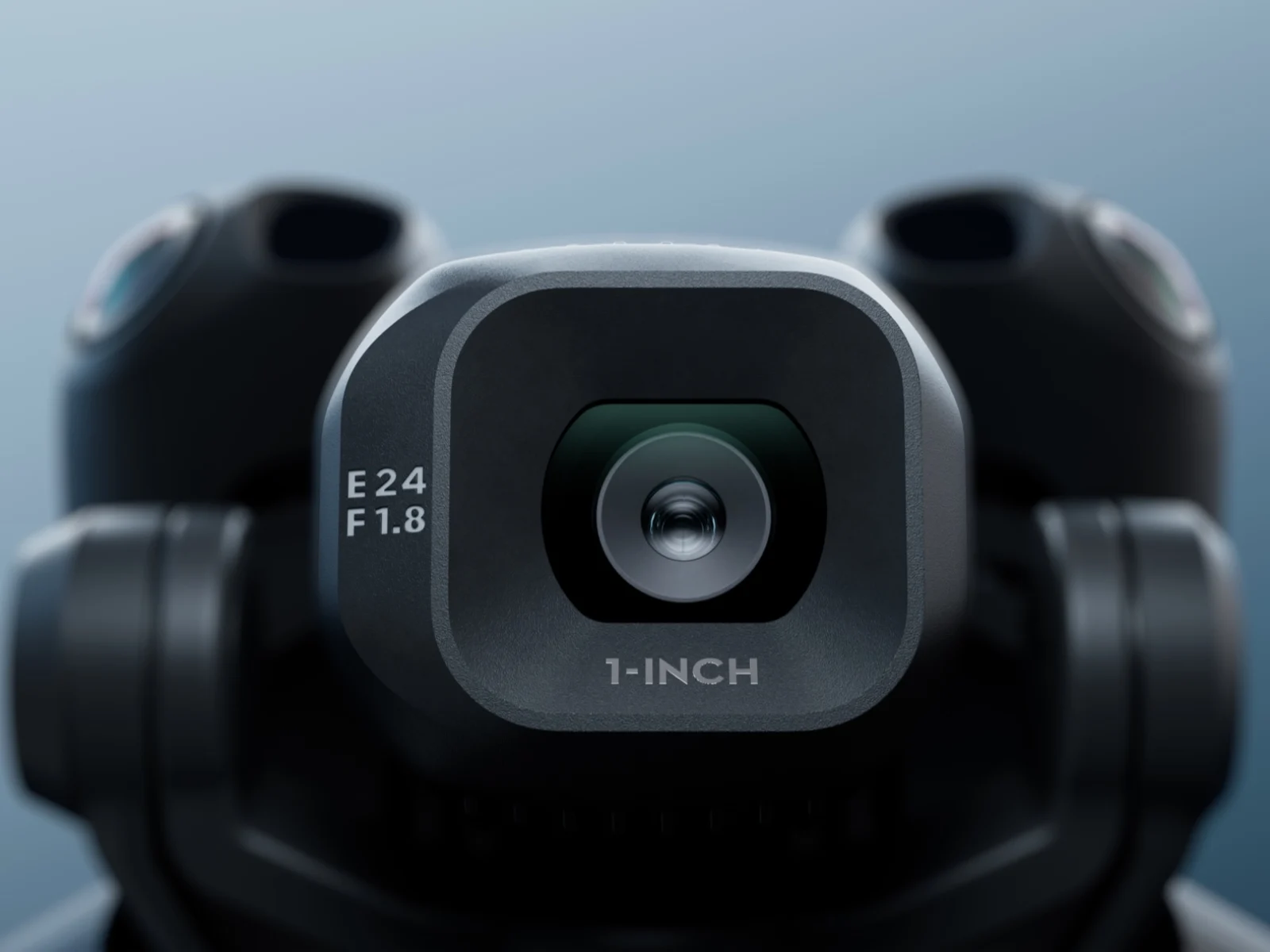
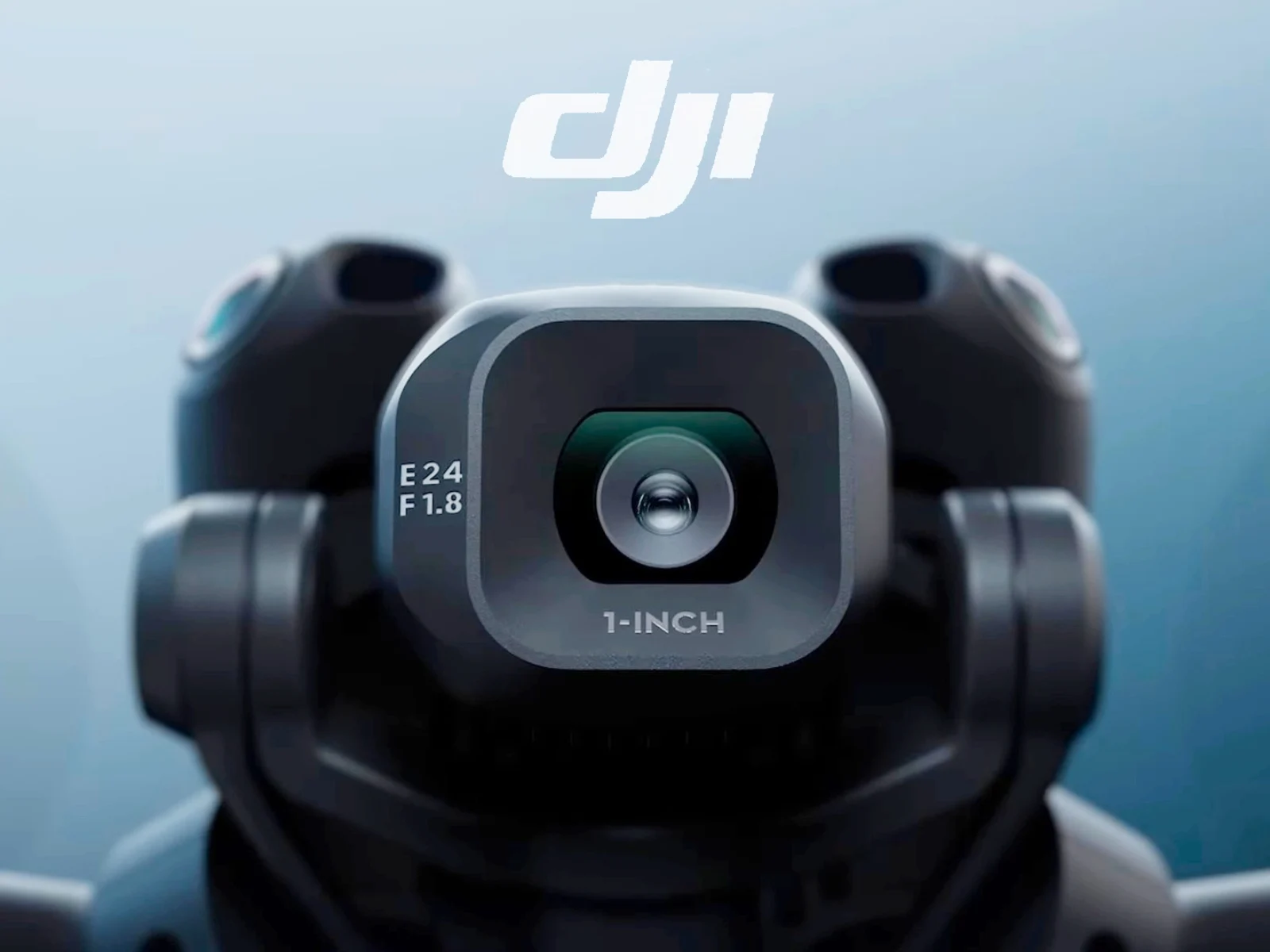
    What the upcoming DJI Mini 4 Pro successor looks like has been known for several weeks. However, there have been few official render images until now. Thanks to a recent post on X by Igor Bogdanov, we can now check that off our list. Four promotional images of the new DJI mini drone show the camera from underneath, where the official noise rating of 81 dB is also visible, matching its predecessor. The sensors located on the bottom and front are clearly shown, including new LiDAR sensors that enhance obstacle detection during nighttime.

    Uncertainty About Official Images

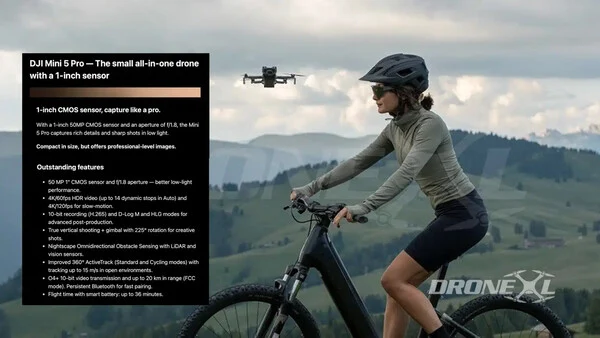
    While we are quite sure that these press photos are authentic, we can’t confirm with absolute certainty whether the promotional poster seen on X is also genuine. This poster is meant to depict the new DJI mini drone in action but is only available in a rather low resolution, making it difficult to assess its quality.

    Possible Launch Date Changes

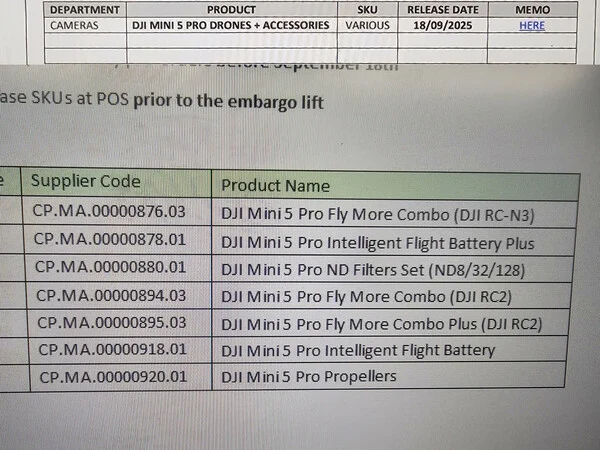
    The original launch date was set for September 16, 2025, but it’s possible that the 1-inch camera drone could actually launch two days later or might only be available starting September 18, 2025, according to a date found in a retailer’s database. Of course, this could just be a mistake.

    Source:
    Link