Category: Video / Photo

  • Hisense C2 4K Laser Projector: 2000 Lumens, 120Hz, JBL Sound

    Hisense C2 4K Laser Projector: 2000 Lumens, 120Hz, JBL Sound

    The C2 serves as the starting point for the C2 series, which also features the notably brighter C2 Ultra. Both models share the same technology, utilizing a light system made up of three lasers. This setup is designed to cover the entire BT.2020 color gamut and ensures impressive color accuracy. With a brightness level of 2,000 ANSI lumens, this laser projector boasts a commendable performance, even though traditional models can often reach higher brightness levels. It advertises a contrast ratio of 1,700:1.

    Fixed Projection Ratio

    Unlike the C2 Ultra, the C2 lacks a zoom lens, which means the projection ratio remains constant at 1.2:1. This allows for image sizes ranging from 65 to 300 inches. The focus adjustment is motorized, and the keystone correction is automatic—features that are quite standard for this price point. The projector achieves 4K resolution through pixel shifting, a method involving the rapid movement of pixels. How this affects the viewing experience will largely depend on the content being viewed and the habits of the viewer. Pixel shifting is a common technology these days, yet it does create a compromise between resolution and refresh rate, which can reach up to 120 Hz at a 2K resolution. One of the HDMI inputs supports ALLM, making it suitable for gaming consoles. Additionally, there are two USB 3.0 ports, Ethernet, and a headphone jack, while the integrated JBL sound system delivers 20 watts of power.

    Operating System and Connectivity

    The C2 runs on the VIDAA U7.6 operating system and allows for wireless streaming from various service providers via WiFi. An upcoming update will add support for 3D and AirPlay. Currently, the C2 is priced at 1,999 euros (US$2206), making it significantly more affordable compared to the C2 Ultra, which boasts a brightness of 3,000 ANSI lumens.


  • Fujifilm Rumors: Full-Frame, Micro Four Thirds, or 1-Inch Sensor?

    Fujifilm Rumors: Full-Frame, Micro Four Thirds, or 1-Inch Sensor?

    When it was announced that Fujifilm is creating a new camera sensor for its future camera range, there was speculation that it could be an X-Trans-based GFX sensor intended for a fixed lens medium-format camera. However, a recent update from Fuji Rumors has clarified this uncertainty.

    New Sensor Size Speculation

    The latest information from a reliable Fujifilm insider suggests that the new sensor will be of a “sensor size never used by Fujifilm so far.” This has sparked fresh discussions among fans about the possibility of a full-frame Fujifilm camera. It’s important to note that in a 2018 interview with DPReview, Fujifilm firmly stated its intention to avoid entering the full-frame market.

    In that interview, a Fujifilm representative said, “No, never. Because we don’t have that legacy – luckily or unluckily. We don’t see any point in Fujifilm entering that market, particularly since we have good APS-C and medium format systems. If we entered full-frame [our systems] would just start cannibalizing each other. We’re happy to stay with two completely independent systems.”

    Limited Future Options

    Unless Fujifilm has changed its strategy, which appears unlikely since the company continues to prioritize the APS-C segment, the options for future Fujifilm cameras seem limited. The most logical and popular predictions suggest that the new format could be Micro Four Thirds or a 1-inch sensor. While both possibilities exist, a 1-inch sensor seems to be the more sensible choice.

    Fujifilm has justified its avoidance of the full-frame market by expressing a desire to protect its existing medium-format GFX series, and a Micro Four Thirds camera could similarly affect the APS-C lineup. The difference in surface area between a full-frame sensor and a GFX sensor is not vastly different from that between Micro Four Thirds and APS-C.

    Production Cost Considerations

    Moreover, while a Micro Four Thirds sensor could potentially reduce body size and lower production and retail costs, a 1-inch sensor would offer more significant advantages in terms of size and production expenses, making it a more likely option. Additionally, it would be distinct enough from the X-T and upcoming X-M series, minimizing the risk of competing with those models.

    It appears improbable that Fujifilm is developing anything smaller than the 1-inch sensors typically found in models like the Canon PowerShot G7X series and the Sony RX100VII (currently priced at $1,298 on Amazon). However, there is a possibility that Fujifilm could be exploring a more unique sensor, as Fuji Rumors has hinted in its report.

  • BenQ TK710STi 4K Laser Projector Launch in India for Rs. 3,59,000

    BenQ TK710STi 4K Laser Projector Launch in India for Rs. 3,59,000

    BenQ has introduced its newest product in home entertainment and gaming: the TK710STi 4K Smart Short Throw Laser Projector. This cutting-edge projector is tailored for those living in smaller spaces and features authentic 4K UHD resolution, HDR10 support, and an impressive brightness of 3,200 ANSI lumens. These specifications allow for breathtaking visuals, even in brightly lit rooms. Below are the details regarding the specifications, features, and price of the BenQ TK710STi.

    Specifications and Features of BenQ TK710STi

    The BenQ TK710STi 4K Smart Short Throw Laser Projector provides true 4K UHD resolution, HDR10 support, and a brightness level of 3,200 ANSI lumens. This ensures clear and vibrant images, even in well-lit conditions. Utilizing BenQ’s sophisticated laser light technology, the projector achieves an outstanding contrast ratio of 600,000:1 and covers 95% of the Rec.709 wide color gamut. This results in remarkable image depth, clarity, and color precision.

    Ideal for Gamers

    For gaming fans, the TK710STi is particularly impressive with an input lag as low as 4.16ms, making it perfect for an engaging gaming experience. It supports high frame rates like 4K at 60Hz, 1440p at 120Hz, and 1080p at 240Hz, ensuring smooth gameplay across various resolutions. Furthermore, it includes dedicated HDR game modes that are optimized for RPG and FPS games, enhancing immersion and responsiveness on a large 4K HDR screen.

    Short Throw and Smart Features

    The projector is built for compact living spaces, able to project a large 100-inch image from just 5.5 feet away. Its short throw ability is enhanced by features like 4-corner correction, 3D keystone correction, and a 1.2x zoom, making installation flexible and straightforward for different room layouts.

    Additionally, the integrated Android TV system, which includes access to Netflix, allows users to enjoy a broad selection of streaming content seamlessly. The HDR10 support, high contrast ratio, and extensive color gamut work together to create a cinematic viewing experience.

    Pricing and Availability in India

    The BenQ TK710STi is priced at Rs. 3,59,000 and is available through leading home AV integration and smart home automation partners in India. This pricing strategy makes the TK710STi an attractive option for consumers seeking a high-performance projector that combines advanced features with user-friendly installation in smaller spaces.

  • Revolutionary Portable Disease Scanner Detects 1,000 Times Faster

    Revolutionary Portable Disease Scanner Detects 1,000 Times Faster

    UCL (University College London) researchers have created a portable scanner that generates detailed 3D images in just seconds, potentially enabling earlier diagnosis of diseases. This device has been tested on patients at University College London Hospitals (UCLH) and employs photoacoustic tomography (PAT) to visualize blood vessels as deep as 15mm in real-time. The scanner offers intricate images, representing a significant advancement over older models, which could take five minutes or more to produce a scan.

    Speed and Quality

    This new technology operates 100 to 1,000 times faster than previous PAT scanners without sacrificing image quality. It produces high-resolution images without any motion blur. Initial clinical trials involving patients with diabetes, breast cancer, and rheumatoid arthritis highlighted the scanner’s ability to identify subtle changes in blood vessels that standard imaging methods often overlook.

    Clinical Insights

    Andrew Plumb, a consultant radiologist at UCLH, elaborated on the scanner’s potential for diagnosing conditions such as diabetes, where recognizing blood vessel damage can be quite challenging. He noted a specific case where one patient exhibited smooth, uniform blood vessels in the left foot, but the right foot showed twisted, irregular vessels. This discrepancy points to possible issues that could lead to tissue damage in the future. The use of photoacoustic imaging may provide far more detailed insights, aiding in early diagnosis and enhancing our understanding of disease progression overall.

    Potential Applications

    The scanner’s rapid speed and accuracy make it particularly useful in clinical settings, especially for vulnerable patients, and could help in diagnosing diseases such as cancer and cardiovascular conditions. Further trials are currently being conducted to validate these findings and to investigate additional medical applications.

    University College London Hospitals via ScienceDaily

  • Fujifilm GFX Camera Launches New Medium Format Sensor Series

    Fujifilm GFX Camera Launches New Medium Format Sensor Series

    Fujifilm has achieved significant success recently, primarily due to its film simulations and the popularity of its compact rangefinder-style cameras on social media. However, they appear to be continuing their innovation, as reported by Fujirumors. The well-known leaker previously disclosed that Fujifilm plans to introduce a fixed-lens GFX camera in 2025.

    New Sensor Details

    A more recent update from Fujirumors indicates that this upcoming fixed-lens GFX camera will feature an entirely new sensor. While Fujifilm is recognized for its X-Trans sensors, the GFX series does not utilize these; instead, it employs conventional CMOS technology with a Bayer layout for its medium-format cameras.

    Future Possibilities

    Though specific details about the fixed-lens GFX camera and its new sensor remain scarce, there’s a chance that Fujifilm could integrate the GFX line with the X-Trans technology by 2025. Fujifilm claims that the X-Trans filter layout is more effective than traditional CMOS Bayer configurations, as it helps minimize moiré effects on patterned surfaces.

    Speculation on Sensor Technology

    There is also speculation that Fujifilm might be developing a BSI (backside illuminated) medium-format sensor for this new fixed-lens GFX camera. However, this remains uncertain, and more leaks and rumors regarding the upcoming camera are expected soon. Additionally, Fujifilm is rumored to be planning an updated X-Pro camera and an affordable X-E model in 2025, suggesting a busy year ahead for Fujifilm product releases.

    Interestingly, Fujifilm often uses the same hardware setup across different models, meaning it’s likely that other GFX cameras will soon adopt the new sensor following the launch of this fixed-lens model.

  • Insta360 Ace Pro 2 Specs Leaked: 50MP, 5nm AI Chip, 2x Zoom

    Insta360 Ace Pro 2 Specs Leaked: 50MP, 5nm AI Chip, 2x Zoom

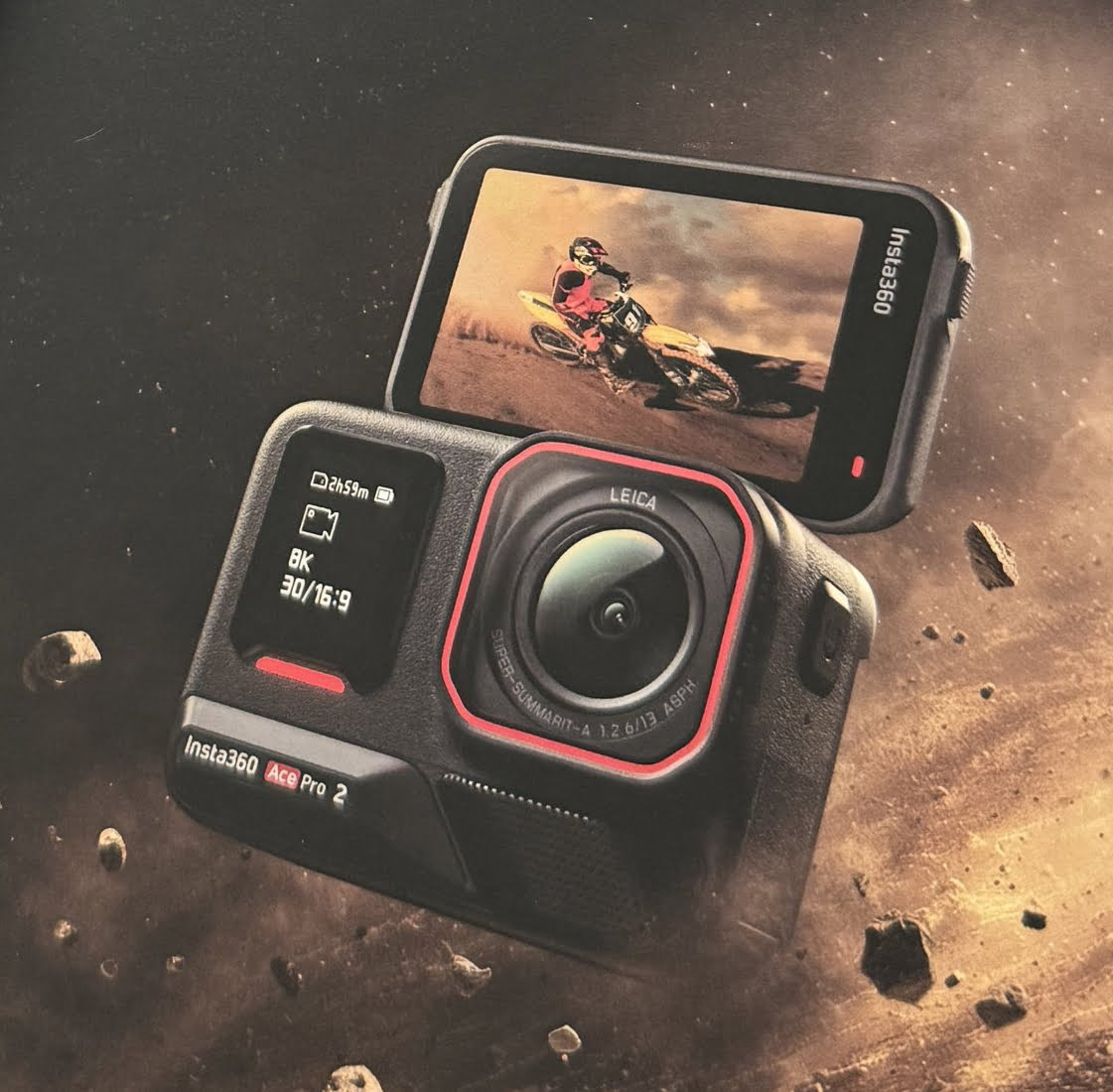
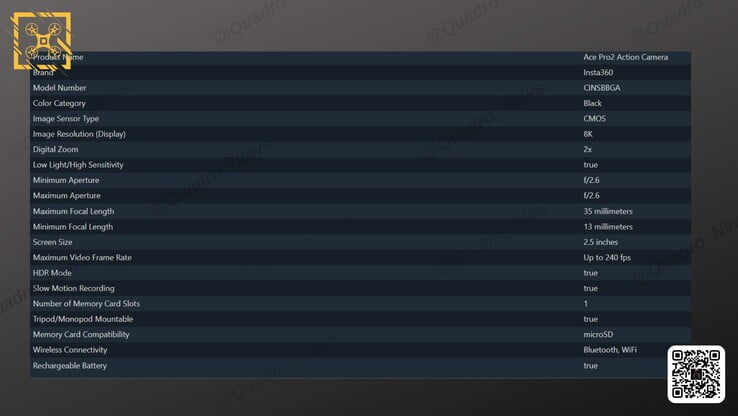
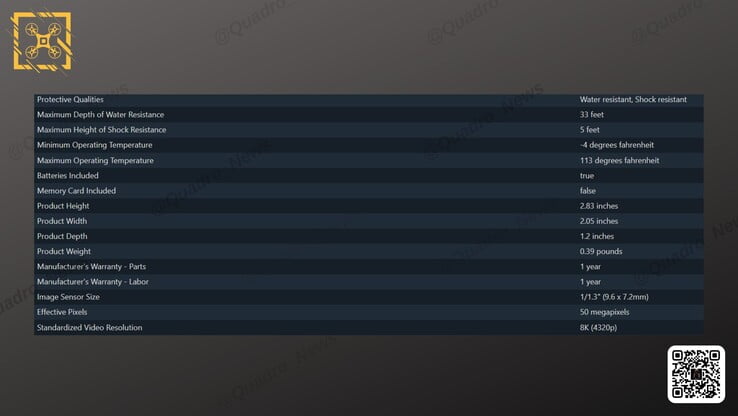
    Newly uncovered details from @Quadro_News provide a comprehensive look at the upcoming Insta360 Ace Pro 2 action camera. These details build on prior leaks, confirming standout features such as 8K video recording, a sensor developed in partnership with Leica, and the inclusion of dual AI chips. This camera is expected to be water-resistant up to 33 feet and shock-resistant from a height of 5 feet. It is designed to operate in a wide temperature range from -4°F to 113°F, allowing it to be used in both chilly and hot conditions. Below are the leaked specifications:

    Camera Specifications

    The device boasts a 50-megapixel sensor and can record video in 8K resolution (4320p). According to @Quadro_News, the Ace Pro 2 will utilize a 5nm AI chip, which aims to enhance image processing, camera performance, system operations, and firmware functions. It features a 1/1.3” (9.6 x 7.2mm) image sensor, with 2x digital zoom and an f/2.6 aperture, providing more versatility for various shooting scenarios. Additionally, its focal length ranges from 13mm to 35mm, making it suitable for both wide-angle and zoom shots.

    Additional Features

    In addition to its core capabilities, the Ace Pro 2 supports slow-motion recording at up to 240fps and includes an HDR mode for improved dynamic range. Weighing just 0.39 pounds, it is only slightly heavier than the GoPro Hero 13 Black, which is currently priced at $399 on Amazon. The camera also features Bluetooth and Wi-Fi for wireless connectivity, and includes a microSD slot for storage, although it does not come with a memory card.

    Design and Pricing

    The specifications also indicate that the Ace Pro 2 has a tripod-mountable design and measures 2.8 x 2.0 x 1.2 inches. Recent leaks have suggested potential pricing for the action camera, as well as a significantly larger rear panel compared to its predecessor. On paper, this combination of features positions the Insta360 Ace Pro 2 as a strong competitor against newly launched models from GoPro and DJI, especially with its impressive 8K recording capability. With many details now revealed, an official launch date is expected to be announced soon.

    @Quadro_News via X/Twitter (1) (2) (3)


    Image 1
    Image 1
    Image 1
  • Insta360 Ace Pro 2 Leaks: Upgrades Rival GoPro Hero 13 & DJI Osmo 5

    Insta360 Ace Pro 2 Leaks: Upgrades Rival GoPro Hero 13 & DJI Osmo 5

    Both DJI and GoPro have introduced new action cameras this month. DJI has launched the Osmo Action 5 Pro, while GoPro has unveiled the Hero 13 Black and the more affordable Hero, which is currently priced at $199.99 on Amazon. Reports suggest that Insta360 is also preparing to announce a new model soon.

    Early Details on the Ace Pro 2

    At the beginning of the month, initial information regarding the Ace Pro 2 surfaced through hands-on leaks. Recently, multiple sources have provided a first glimpse of the retail packaging, which we have included below. It appears that Insta360 is focusing significantly on the camera’s ability to record in 8K video resolution, a feature that both the Hero 13 Black and Osmo Action 5 Pro do not possess.

    Key Features and Performance

    The leaked retail packaging indicates that the Ace Pro 2 will support a maximum of 30 FPS when recording in 8K at a 16:9 aspect ratio. Additionally, the same image suggests that the camera can operate for over 3 hours on a single charge while capturing 8K/30 FPS footage. To achieve smoother 60 FPS video, however, it may need to lower its resolution.

    Currently, it is uncertain if the Action Pro 2 will be able to deliver this at 4K like its predecessor or offer a higher resolution, such as 5.3K. The label of the Action Pro 2 as an "AI-Powered Action Cam" hints that Insta360 could be incorporating certain algorithmic techniques to improve image quality in various ways. Unfortunately, the release date and pricing details for the Ace Pro 2 remain unknown.


    Image 1
    Image 1
    Image 1
    Image 1
  • Cillian Murphy’s 28 Years Later Filmed on iPhone 15 Pro Max

    Cillian Murphy’s 28 Years Later Filmed on iPhone 15 Pro Max

    Apple’s top iPhones have consistently been praised for their videography capabilities by both users and experts. In its latest review, DxOMark ranked the iPhone 16 Pro Max as the best smartphone for video recording, highlighting it as the leading video camera option available.

    iPhone 15 Pro Max in Action

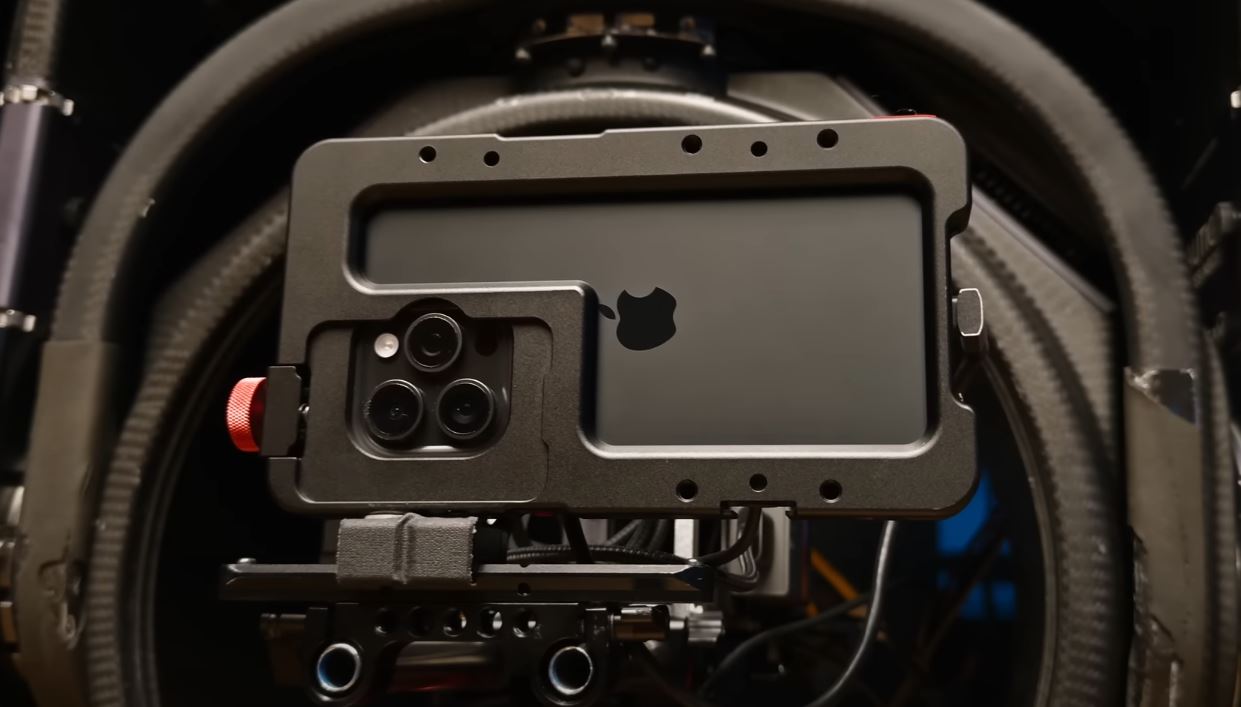
    A recent article from WIRED has revealed that the upcoming film ’28 Years Later’, a sequel to the well-received ’28 Weeks Later’, was primarily filmed using the iPhone 15 Pro Max, alongside some additional gear and accessories. This is a notable use of the iPhone for a high-profile movie expected to release next year.

    A New Era for Filmmaking

    In previous instances, the iPhone has proven its worth in capturing significant events, like Apple’s ‘Scary Fast’ Mac event last October. Nonetheless, filming a complete Hollywood movie using the iPhone 15 Pro Max marks a significant achievement for the device.

    Interestingly, the original ’28 Days Later’, released in 2002, was shot with portable camcorders instead of traditional cinema cameras due to limitations in time and space. Therefore, using the iPhone for the next installment of this series serves as a fitting homage to the original film’s approach.

    Star-Studded Production

    Directed by Oscar-winner Danny Boyle, ’28 Years Later’ is set to premiere on June 20, 2025. Cillian Murphy, an acclaimed Oscar-winning actor, is anticipated to reprise his role in the series, while the film’s cinematography will be handled by Anthony Dod Mantle, also an Oscar winner.

    Buy the AirPods 2nd Gen on Amazon.


    Image 1
  • iPhone 16 Pro Max vs Pixel 9 Pro XL: Photography Ratings Showdown

    iPhone 16 Pro Max vs Pixel 9 Pro XL: Photography Ratings Showdown

    DxOMark has released its comprehensive camera review for the iPhone 16 Pro Max, and the findings are quite revealing. For Apple enthusiasts anticipating a significant leap in camera capabilities, the results provide a mix of commendation and a reality check.

    Positive Highlights

    To begin with, there is good news. The iPhone 16 Pro Max achieved an unprecedented score for video recording quality, surpassing all competitors in the market. While this is an impressive feat, it’s not entirely surprising, as the iPhone has consistently garnered acclaim for its video capabilities with each release.

    Photography Results

    However, the situation becomes less favorable when examining the photography scores for the iPhone 16 Pro Max. Unlike its predecessor, the iPhone 15 Pro Max, which secured second place in DxOMark’s evaluations, this year’s model has fallen to fourth place with a score of 157 points.

    The newly launched Google Pixel 9 Pro XL, currently priced at $1,099 on Amazon, narrowly outperformed the iPhone 16 Pro Max, earning 158 points to share second place with the Honor Magic6 Pro. At the top of the rankings is Huawei’s Pura 70 Ultra, boasting an impressive 163 points.

    In-Depth Analysis

    DxOMark’s detailed analysis, which can be found here, explores the iPhone 16 Pro Max’s camera features extensively. Among the praised elements are its remarkable color accuracy, sharp detail in bright conditions, and quick autofocus. Conversely, some shortcomings noted by DxOMark include the presence of unwanted artifacts, noticeable flaring, and inconsistencies in ultra-wide shots, despite the enhancements in hardware.


    Image 1
  • Fujifilm X-M5 Launch Date Teased Amid Build Quality Issues

    Fujifilm X-M5 Launch Date Teased Amid Build Quality Issues

    Rumors about the Fujifilm X-M5 have been circulating for some time. This camera is expected to be a more budget-friendly and somewhat simplified version of the Fujifilm X-S20 (currently priced at $1,299 on Amazon), which is a hybrid APS-C camera.

    Launch Details

    Recent leaks suggest that the Fujifilm X-M5 is set to be unveiled in October, although no specific date has been provided. A post from the Federation of Independent Photographers on Weibo, who claims to have tested the new camera, raised some concerns regarding its build quality.

    "I just saw Fuji’s new XM5 real machine. It is estimated that it is still made in Thailand. I feel that the workmanship is not very good. It will be released next month. Update: It is an engineering machine model. No wonder it feels a bit loose. There are unusual color matching, which is quite coquettish." – via Weibo (machine translated)

    Build Quality Concerns

    It is important to note that the unit seen by the leaker was a pre-production engineering sample, indicating that there may still be issues to resolve before the camera is fully produced. Nonetheless, there seems to be a general agreement in the photography community that Fujifilm cameras made in Thailand may not be assembled as well as those manufactured in Japan. The true build quality will become clearer when the final version is launched in October.