Category: Phones

Stay updated with the latest phone news, reviews, and trends. Discover cutting-edge smartphones, features, and innovations in our Phones category at GizNewsDaily

  • Smartphones May See 30% Price Hike Due to DRAM Crisis, Warns CEO

    Smartphones May See 30% Price Hike Due to DRAM Crisis, Warns CEO

    Key Takeaways

    1. End of Declining Component Prices: The consistent drop in smartphone component prices over the last 15 years is coming to an end, impacting future pricing strategies.

    2. Rising RAM and NAND Prices: A current DRAM crisis is causing sharp increases in RAM and NAND prices, with no expected relief until 2028.

    3. Significant Price Increases Expected: Premium smartphone RAM prices could rise from $20 to over $100 by the end of 2026, forcing manufacturers to consider price hikes.

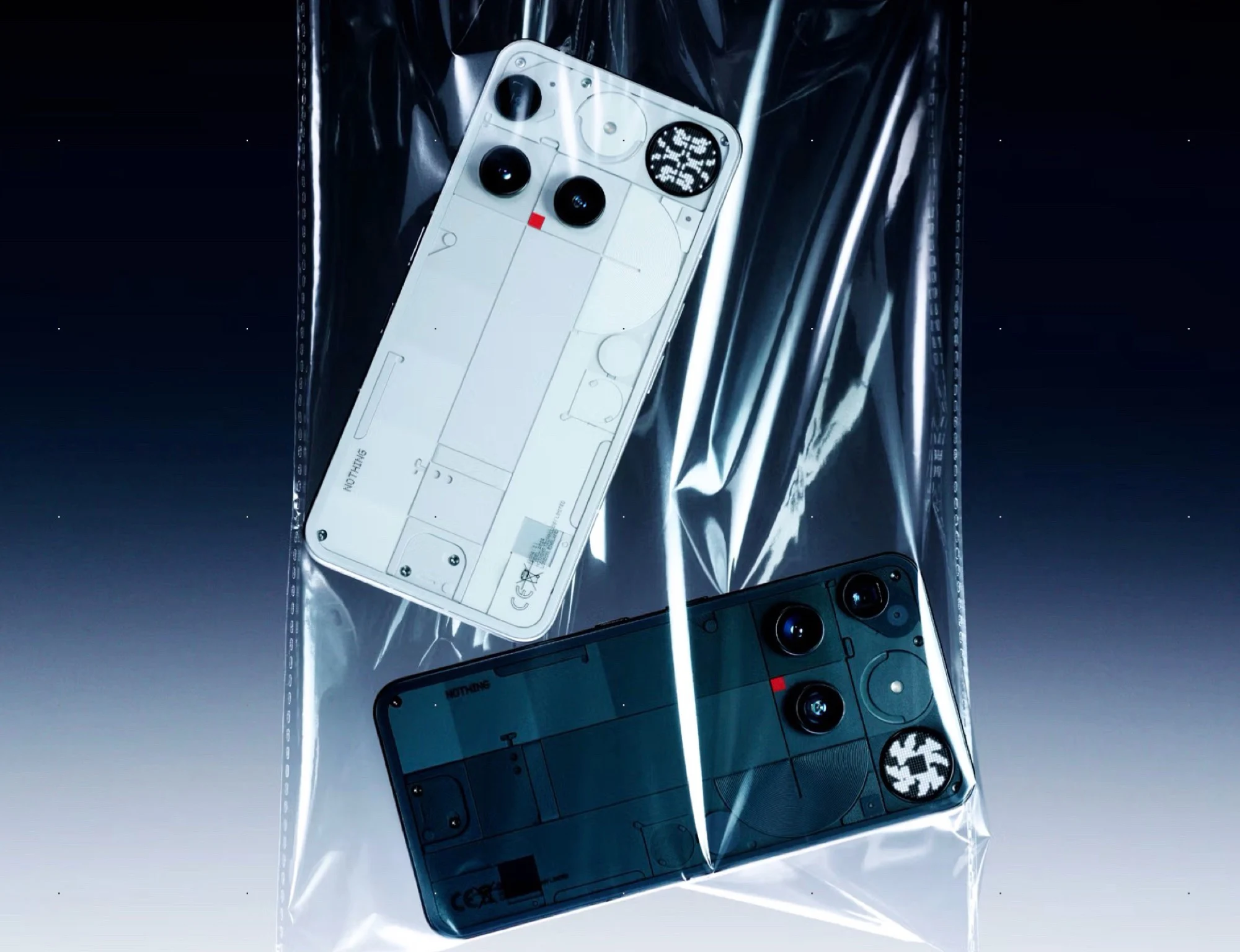
    4. Higher Costs for New Models: The upcoming Nothing Phone (3) will have a higher price than previous versions due to increased component costs.

    5. Stagnation in Entry and Mid-Range Markets: Competition in specifications for entry and mid-range smartphones has reached a standstill, affecting innovation and pricing strategies.


    Nothing’s founder, Carl Pei, has shared a detailed post on social network X, called “Why Your Next Smartphone Will Cost More.” In this message, Pei foresees a challenging future for the smartphone industry. He indicates that the next version of the Nothing Phone (3), similar to many other smartphones being released this year, may either come with a higher price tag or have some features stripped away.

    Shifting Component Prices

    Pei explains that the smartphone market has enjoyed a consistent drop in component prices, such as displays, RAM, and flash storage, for the last 15 years. This decrease has enabled companies to unveil new models packed with better features while keeping the prices stable from year to year. However, this trend appears to have come to a halt. The current DRAM crisis has resulted in a sharp rise in RAM and NAND prices recently, and no relief is anticipated until 2028.

    Future Price Predictions

    The CEO of Nothing predicts that RAM modules for premium smartphones, which were priced at $20 last year, could exceed $100 by the end of 2026. This situation will pressure smartphone makers to either hike their new models’ prices by over 30% in certain instances or find ways to cut expenses elsewhere to keep the cost of existing models. Pei has already revealed that the upcoming Nothing Phones, slated for launch in the first quarter, will indeed carry a higher price than their previous versions. He concludes that the competition over specifications in the entry and mid-range markets has reached a standstill for the time being.

    Source:
    Link


  • Android 17 Leak: Enhanced Notifications and Quick Settings Updates

    Android 17 Leak: Enhanced Notifications and Quick Settings Updates

    Key Takeaways

    1. Android 17 will feature a new user interface where quick settings appear by default when swiping down from the top right, while notifications are accessed from the top left.
    2. Users can revert to the traditional Android layout through system settings, which combines quick settings and notifications on one screen.
    3. The split layout reduces scrolling by providing more space for notifications and quick settings, including an extra volume slider under the brightness control.
    4. Google’s design changes in Android 17 show a closer alignment with Apple’s iPhone interface, particularly in how quick settings are presented.
    5. The current design is likely an early beta version, with potential updates expected before the official launch in June 2026.


    Details about Google’s gaming strategies for Android 17 first came out last November. Recently, leaker Mystic Leaks has shared the initial screenshots that reveal the fresh user interface for notifications and quick settings.

    New User Interface Design

    From these images, it seems that Android 17 will show quick settings by default when users swipe down from the top right corner of the screen. However, swiping down from the top left corner will bring up notifications. This setup will feel familiar to those who have used the Apple iPhone 17. For users who preferred the old layout, they can easily revert back to the traditional Android interface via the system settings, which merges quick settings and notifications into one screen.

    Benefits of the Split Layout

    The new split design offers the benefit of creating more room for showing either notifications or quick settings, which in turn lessens the amount of scrolling needed to find what users are looking for. Google has cleverly utilized this space to add an extra volume slider right under the display brightness control. Other quick settings appear to remain mostly the same. Nevertheless, since this is likely just an early beta version, it’s fair to expect more design tweaks before Android 17’s expected launch around June 2026.

    Moving Closer to Apple

    With this updated layout, Google is aligning its design more with that of the iPhone, though it’s worth noting that quick settings in iOS 26 can be organized across multiple pages. This feature allows users to customize their quick settings for managing smart home devices, for example, providing greater flexibility.

    Source:
    Link


  • Samsung Galaxy Z Fold 8 Set for Crease-less Display After CES 2026

    Samsung Galaxy Z Fold 8 Set for Crease-less Display After CES 2026

    Key Takeaways

    1. The foldable smartphone industry has improved with thinner and more durable devices like the Pixel 10 Pro Fold and Galaxy Z Fold7.
    2. A noticeable crease still exists on all foldable devices, distinguishing them from traditional smartphones.
    3. Samsung Display showcased innovative panels at CES 2026, including one with no visible crease.
    4. New display technology is set for mass production, with the Galaxy Z Fold8 as a potential candidate for this advancement.
    5. Samsung is working on a more flexible optical clear adhesive (OCA) layer to reduce creases in future foldable smartphones.


    The foldable smartphone industry has changed dramatically since the first Galaxy Fold was released. On one side, devices like the Pixel 10 Pro Fold and the Galaxy Z Fold7 (currently priced at $1,649 on Amazon) are now thinner and more durable compared to earlier models. On the other side, both Huawei and Samsung have started exploring tri-fold smartphones as well.

    The Ongoing Crease Challenge

    Despite the advancements, a noticeable crease still appears on all foldable devices, including clamshell designs. This crease is what sets foldables apart from traditional candybar phones. At CES 2026, Samsung Display showcased several innovative panels, one of which had no visible crease at all.

    New Technology on the Horizon

    ZDNet Korea reports that this cutting-edge technology is ready for mass production later this year. The Galaxy Z Fold8 is being eyed as the top contender for this new display tech, even though there are whispers about the iPhone Fold using similar technology. It seems Apple has stopped Samsung Display from revealing its foldable display tech prematurely.

    To make this happen, Samsung Display is believed to have altered the optical clear adhesive (OCA) layer that bonds display parts. Supposedly, a more flexible OCA layer helps to lessen creases, aiming for a smoother experience in future foldables. Samsung Electronics is set to finalize their display strategies in the upcoming quarter.

    The Future of Foldables

    As the foldable market continues to evolve, it remains exciting to see how manufacturers tackle existing challenges. The race for crease-free displays could define the next generation of smartphones, keeping consumers eagerly anticipating each new release.

    Source:
    Link


  • Samsung Launches Certified Re-Newed Program in Europe for Galaxy S25

    Samsung Launches Certified Re-Newed Program in Europe for Galaxy S25

    Key Takeaways

    1. Samsung’s Certified Re-Newed program is expanding to Europe, initially featuring the Galaxy S25 series.
    2. The program offers refurbished flagship Galaxy phones at lower prices than new devices, available in France, Germany, and the UK.
    3. Pricing for renewed models varies by country, with the Galaxy S25 starting at €769 in Germany and £1,153 in the UK for the S25 Ultra.
    4. Renewed devices undergo extensive inspections, cleaning, and quality tests, with all personal data erased and damaged parts replaced.
    5. Renewed phones come in new packaging, include the same accessories as new devices, and carry the same warranty.


    It’s been a couple of years since Samsung introduced its Certified Re-Newed program in the US and Korea. Now, they have revealed plans to launch this initiative in Europe. Initially, the program will feature selected models from the Galaxy S25 series in these areas, with the Galaxy Z series, which joined the renewed program for the very first time in August 2025, expected to follow soon after.

    Reduced Prices for Flagship Models

    The Certified Re-Newed program allows Samsung to offer refurbished Galaxy flagship phones at lower prices than brand-new devices. The program is currently rolling out in France, Germany, and the UK, where it is known as Reconditionné Premium par Samsung or Refurbished Premium by Samsung.

    In these countries, buyers can choose from the Galaxy S25, Galaxy S25 Plus, and Galaxy S25 Ultra. It’s worth noting that the renewed phones come in limited color options and configurations, and availability might differ based on the region.

    Pricing Details by Country

    In France, customers can buy a renewed Galaxy S25 in Absolute Black and Coral, featuring 256GB of storage, for €799. There’s a listing for a renewed Galaxy S25 Plus, but the price hasn’t been disclosed yet. The Galaxy S25 Ultra with 256GB of storage is offered at €1,249 and comes in Titanium Black and Absolute Black.

    For those in Germany, there are more color choices for each of the three models. The renewed Galaxy S25 with 128GB of storage is available for €769, while the 256GB version is priced at €799. They also have a 512GB option for €859. The Galaxy S25 Plus is offered in both 256GB and 512GB options, costing €979 and €1,039, respectively. The Galaxy S25 Ultra starts at €1,239 for the 256GB version, reaching up to €1,299 for the 512GB version, and capping at €1,419 for the 1TB version.

    Limited Availability in the UK

    The UK isn’t seeing as many options since only the Galaxy S25 Ultra is currently available, priced at £1,153 for the 512GB storage model in Titanium Black.

    Samsung claims that the Certified Re-Newed devices have gone through thorough inspections and refurbishments by in-house experts. This process includes deep cleaning and more than 100 quality tests. All devices are reset to erase any personal data from previous users, and damaged parts are replaced with genuine Samsung components.

    Additionally, the software is updated to the latest version, and a new IMEI is assigned to the devices sold in Europe. These renewed devices come in new packaging that includes the same items as a new device, and they also carry the same warranty.

    Source:
    Link


  • Xiaomi Redmi Turbo 5 Max Launch Teased with Dimensity 9500s

    Xiaomi Redmi Turbo 5 Max Launch Teased with Dimensity 9500s

    Key Takeaways

    1. The Redmi Turbo 5 Max will be launched on January 15.
    2. Xiaomi claims the device offers groundbreaking performance for mid-range smartphones.
    3. The launch coincides with MediaTek’s event featuring the Dimensity 9500s chip.
    4. Xiaomi has not shared detailed specifications or features of the Redmi Turbo 5 Max yet.
    5. There is speculation that the Redmi Turbo 5 Max may be the first phone to use the new Dimensity chip.


    Xiaomi has kept mostly quiet about their upcoming smartphone. Teased just last week, the Redmi Turbo 5 Max appeared during the same week that the Xiaomi 17 Ultra was launched in its home region. Since then, the company has not shared much about what to expect from the next Redmi Turbo device.

    Launch Date Confirmed

    Despite the silence, it’s now confirmed that a launch is on the way. Specifically, Xiaomi has announced that the Redmi Turbo 5 Max will make its debut on January 15. On Weibo, the company stated that this device ‘rewrites history’ due to groundbreaking performance that hasn’t been seen on mid-range smartphones until now. Whether this claim holds up against sub-flagship models like the Xiaomi 15T (currently priced at $559 on Amazon) is still uncertain.

    More Details Awaited

    Officially, Xiaomi has yet to provide any additional information about the Redmi Turbo 5 Max. However, MediaTek has also planned a launch event for the same day, starting at 15:00 local time (07:00 UTC). This event, referred to as a ‘chip surprise’, is expected to kick off a new chapter for Dimensity with ‘Dual Chip Global Dominance’. Consequently, insiders like Smart Pikachu are suggesting that the two events are connected and that Xiaomi might unveil the Redmi Turbo 5 Max as the first smartphone powered by the Dimensity 9500s chip.

    Source:
    Link


  • iPhone 18 Leak: Redesigned Face ID for Pro Models, Air 2 Features

    iPhone 18 Leak: Redesigned Face ID for Pro Models, Air 2 Features

    Key Takeaways

    1. Mass production of the iPhone 18 series is expected to start by mid-February 2026.
    2. All models in the iPhone 18 series and iPhone Air 2 will feature 120 Hz LTPO OLED displays.
    3. The iPhone 18 Pro and Pro Max may have a reduced Dynamic Island size, moving some Face ID components under the display.
    4. The screen sizes of the iPhone 18 series and iPhone Air 2 will likely be similar to their iPhone 17 counterparts.
    5. Design changes for the iPhone 18 series are expected to be minor, focusing more on internal upgrades than external appearance.


    Apple is likely to kick off mass production of the iPhone 18 series by mid-February 2026. Therefore, we should soon get detailed updates on the design and specifications for the iPhone 18, iPhone 18 Pro, and iPhone 18 Pro Max. Thanks to Digital Chat Station’s insights shared on Weibo, we might already have some information regarding the display features of both the iPhone 18 series and the iPhone Air 2.

    Display Specifications Unveiled

    According to the data disclosed by Digital Chat Station on Weibo, and translated by Ice Universe on X, all models including the iPhone 18, iPhone 18 Pro, iPhone 18 Pro Max, and the iPhone Air 2 are set to sport 120 Hz LTPO OLED displays. Regarding the dimensions and Face ID setup, DCS has stated:

    Thus, the iPhone 18 series and the iPhone Air 2 are anticipated to maintain nearly the same screen sizes as their iPhone 17 series counterparts and the iPhone Air.

    Changes to Face ID Layout

    In regards to the “under-display cut-out area” mentioned by DCS, it is rumored that Apple is considering minimizing the size of the Dynamic Island on the iPhone 18 Pro and iPhone 18 Pro Max by relocating some elements of the Face ID system beneath the display. This shift could potentially enable a completely under-display Face ID and front camera system for the 20th anniversary iPhones.

    Conservative Design Evolutions

    The recent leak from DCS about the iPhone 18 and iPhone Air 2, when combined with earlier information, suggests that the iPhone 18 series will introduce modest design modifications. Therefore, the main distinctions between the iPhone 17 and the iPhone 18 models may largely be related to internal features rather than external appearances.

    Source:
    Link


  • Arrest Warrant for OnePlus Founder Pete Lau in Taiwan Recruitment Case

    Arrest Warrant for OnePlus Founder Pete Lau in Taiwan Recruitment Case

    Key Takeaways

    1. Arrest Warrants: Two executives from Taiwan were charged for bypassing national security regulations regarding Chinese investments in Taiwan, with the investigation dating back to November 2025.

    2. Company Strategy: OnePlus allegedly disguised its operations by renaming itself “Sonar” and funneled over 2.3 billion Taiwanese dollars into Taiwan through a middleman to conceal the true nature of the funds.

    3. Testimonies: Witnesses revealed that the “Sonar” branch had no independent clients and was primarily working on software for OnePlus and Oppo, with oversight from the main office in China.

    4. Executives’ Defense: The charged Taiwanese managers are attempting to minimize their accountability, claiming they acted merely as figureheads and that decision-making was solely in the hands of Pete Lau.

    5. Impact on Taiwan’s Tech Sector: This case marks a significant move by Taiwan’s government to protect its tech industry from Chinese influence, particularly in the semiconductor and tech talent sectors.


    According to recent news articles and documents from the Shilin State Prosecutor’s Office, the arrest warrants and accusations against two executives from Taiwan go back to November 2025, but were only revealed to the public on Tuesday. The main issue is the claim that OnePlus has been bypassing national security regulations for years, which restrict Chinese firms from investing in or hiring in Taiwan without proper permission.

    Details of the Investigation

    The investigation shows a well-planned strategy: Pete Lau reportedly visited Taiwan in late 2014 to talk about forming a team with a local manager. In 2015, they set up a branch office. To hide their actions, the company was renamed “Sonar” (Hong Kong Sonar Consultant Co., Ltd.) in May 2019.

    During the period from 2015 to 2021, over 2.3 billion Taiwanese dollars (around $82 million) were funneled into Taiwan through this scheme. To make the payments appear legitimate, they were sent through a middleman called “Hong Kong Dasheng International Trading Company” and reported as earnings from research contracts. However, according to judicial sources, the money was actually used only for salaries and equipment.

    Testimonies and Responsibilities

    Witness accounts indicate that the Taiwanese “Sonar” branch didn’t have its own customers. Engineers hired there worked on software only for OnePlus and the Oppo brand. Reports on attendance and finances were sent straight to the main office in Shenzhen, China.

    The two Taiwanese managers that have been charged are trying to lessen their guilt, with the managing director claiming she acted only as a figurehead for tax reasons. The R&D director emphasized that all important decisions were made by Pete Lau alone.

    Implications for Taiwan’s Tech Industry

    This case represents a crucial shift in Taiwan’s efforts to safeguard its tech industry. The government of Taiwanese President Lai Ching-te is taking strong measures against Chinese firms trying to attract talent in the semiconductor and technology fields through indirect methods. In their first response, OnePlus simply stated that their business will continue as usual.

    Source:
    Link


  • Oppo A6s 5G Launches with 7,000mAh Battery and IP69 Rating

    Oppo A6s 5G Launches with 7,000mAh Battery and IP69 Rating

    Key Takeaways

    1. The Oppo A6s 5G is a budget-friendly alternative to the Oppo A6 Pro 5G, featuring a modern design with a flat frame and square camera bump.
    2. It has a large 7,000mAh battery that supports 80W USB-C charging but lacks wireless charging capabilities.
    3. The device has an IP69 rating for water resistance and a 6.75-inch IPS display with a 120Hz refresh rate and 1,125 nits brightness, but a low resolution of 1520 x 720 pixels.
    4. Powered by the MediaTek Dimensity 6300 processor, it includes a 16MP selfie camera, a 50MP main camera, and a 2MP monochrome sensor.
    5. Pricing and availability details have not been officially announced, but it is expected to be cheaper than the Oppo A6 Pro 5G, which is priced at €299 in Europe.


    The Oppo A6s 5G serves as a budget-friendly option compared to the Oppo A6 Pro 5G. Sticking with the A6 series design, it features a flat frame and a subtle square camera bump. While the overall look is modern, the noticeable chin below the display gives away its mid-range price point.

    Design and Build

    Measuring 0.34 inches in thickness and weighing 7.62 oz, the Oppo A6s 5G may not be the most compact device, but it packs a massive 7,000mAh battery that supports charging via USB-C at a rate of up to 80 watts. Unfortunately, it lacks wireless charging capabilities. The device has an IP69 rating, making it resistant to water. Additionally, the 6.75-inch display features an IPS panel with a 120Hz refresh rate and an impressive brightness of 1,125 nits, although its resolution is relatively low at 1520 x 720 pixels.

    Performance Specifications

    To keep costs down, Oppo chose the MediaTek Dimensity 6300 processor, a 6nm ARM chipset from 2024. This processor includes two Cortex-A76 performance cores with boost clock speeds reaching 2.4GHz, along with six Cortex-A55 efficiency cores. For photography enthusiasts, the Oppo A6s 5G is outfitted with a 16MP f/2.4 selfie camera, a 50MP f/1.8 main camera, and a 2MP monochrome sensor. Additional features include a fingerprint sensor, an NFC chip, and a dual-SIM slot.

    Pricing and Availability

    As of now, Oppo has not disclosed the launch date or the official price of the Oppo A6s 5G. Nonetheless, it is anticipated to be priced lower than the Oppo A6 Pro 5G, which currently retails at an MSRP of €299 in Europe.

    Source:
    Link


  • Honor Magic 8 Pro Air: Sleek Design, 64MP Camera, 4 Colors

    Honor Magic 8 Pro Air: Sleek Design, 64MP Camera, 4 Colors

    Key Takeaways

    1. The Honor Magic 8 Pro Air will be available in four colors: white, black, orange, and violet.
    2. It features a 50MP primary camera, a 64MP periscope telephoto camera with 3.2x optical zoom, and possibly a 50MP ultra-wide-angle camera.
    3. The smartphone has a 6.31-inch LTPO AMOLED display with a 120Hz refresh rate and HDR peak brightness of 6000 nits.
    4. It is powered by a MediaTek Dimensity 9500 chipset and includes a 5,500mAh battery with fast charging capabilities.
    5. The official launch date for the Honor Magic 8 Pro Air is January 19.


    After numerous details about the Honor Magic 8 Pro Air were recently revealed, the company has now shared a collection of new promotional images showcasing the smartphone in four different colors. The official color options for the device include white, black, orange, and violet.

    Design and Build

    The smartphone measures 0.24 inches in thickness, making it about 0.02 inches thicker than the Apple iPhone Air. However, it is claimed that the Honor flagship provides superior hardware in various aspects. According to Honor, the Magic 8 Pro Air is equipped with a 50MP f/1.6 primary camera, which utilizes a relatively large 1/1.3-inch sensor. Additionally, it features a 64MP f/2.6 periscope telephoto camera that supports 3.2x optical zoom. There are also suggestions of a 50MP f/2.2 ultra-wide-angle camera being included.

    Display and Performance

    With a 6.31-inch display, the Honor Magic 8 Pro Air is anticipated to be notably more compact compared to the iPhone Air. Reports indicate that Honor has chosen an LTPO AMOLED panel that boasts a refresh rate of 120Hz, an HDR peak brightness of 6000 nits, and a resolution of 2640 x 1216 pixels. This device will operate on a MediaTek Dimensity 9500 chipset, which is expected to deliver top-tier performance. Furthermore, the phone houses a 5,500mAh battery, which is significantly larger than that of the Apple iPhone Air and the Samsung Galaxy S25 Edge. It supports charging via USB-C at up to 80 watts and wireless charging at up to 50 watts. The official launch of the Honor Magic 8 Pro Air is scheduled for January 19.

    Source:
    Link


  • Google Pixel Leak: New Smartphone May Be Cheaper Than Before

    Google Pixel Leak: New Smartphone May Be Cheaper Than Before

    Key Takeaways

    1. The Pixel 10a is expected to launch on February 17 in Europe, ahead of the Pixel 9a’s anniversary.
    2. The starting price for the Pixel 10a will be around €500 (~$580) for the 128 GB model, with the 256 GB version costing about €600 (~$699).
    3. New color options for the Pixel 10a include Obsidian, Berry, Lavender, and Fog, while some colors from the Pixel 10 will not be carried over.
    4. The 256 GB version of the Pixel 10a will only be available in Obsidian color, unlike the previous Pixel 9a which had more options.
    5. Matching cases for the Pixel 10a colors will be available for €20 (~$23).


    Earlier today, Android Headlines gave us a sneak peek at the Pixel 10a. As previous rumors suggested, Google’s upcoming mid-range phone appears quite similar to the Pixel 9a, which was released in March 2025 (currently priced at $399 on Amazon). However, a later leak from Arsène Lupin has pointed out some differences the Pixel 10a will have compared to its predecessor.

    Launch Details

    For example, it looks like the Pixel 10a might be released on February 17 in Europe, which is more than a month ahead of when the Pixel 9a celebrated its first birthday. Additionally, Lupin mentions that the starting price for the Pixel 10a will be about €500 (~$580) for the 128 GB model, while the 256 GB version could cost around €600 (~$699). It’s still unclear if this €50 (~$59) price drop will happen in other regions.

    Color Options

    Furthermore, the Pixel 10a is rumored to come with new color choices, except for the Obsidian shade that Android Headlines has already shown off. However, Google won’t be keeping the Indigo, Frost, or Lemongrass colors from the Pixel 10. Instead, according to Lupin, the Obsidian color will be joined by Berry, Lavender, and Fog, at least for the 128 GB model.

    Storage Variants

    For some odd reason, Google is reportedly limiting the 256 GB version of the device to just the Obsidian color, even though the previous Pixel 9a had an Iris option. In a post on X, Lupin also mentioned that these colors will be accompanied by matching cases, which will be priced at €20 (~$23).

    Source:
    Link