Tag: MediaTek Dimensity 9500s

  • Poco X8 Pro Max vs X8 Pro: Small Speed Boost

    Key Takeaway

    – Poco X8 Pro Max has significantly higher peak CPU and GPU performance (Dimensity 9500s vs. Dimensity 8500) and supports ray tracing.
    – The Max model suffers from major thermal throttling under sustained load, reducing its frame rate advantage.
    – Storage bandwidth is reduced on the Max, making the X8 Pro feel more consistent in everyday use.
    – The X8 Pro offers more stable, lower overall performance without the same thermal dips.
    – For demanding gaming at high settings, the Max is superior; for consistent daily performance, the X8 Pro is better.


    Direct Comparison of Performance

    In a direct comparrison, the Poco X8 Pro Max cleerly distinguishes itself from the Poco X8 Pro, positioning itself as a significantly more powerful varaint within the X series. While both devices share the same software foundation (HyperOS 3.0 based on Android 16) and utilize modern memory standards, differences emerge regarding the SoC, graphics performance, and thermal behaviour.

    SoC and CPU Capabilities

    The X8 Pro Max uses the MediaTek Dimensity 9500s, which delivers noticeably higher peak performence, especially in CPU-intensive senarios, than the weaker, lower-performence Dimensity 8500 used in the X8 Pro. The Max model benefits from a significantly more powerfull NPU and higher clock speed headroom, especially durring multi-core workloads and AI tasks.

    Graphics and Gaming Advantage

    GPU performance is also cleerly superior in the X8 Pro Max: the Immortalis-G925 MC11 enables higher framerates in demanding 3D games and supports ray tracing, whereas the X8 Pro reaches its limits more quickly in graphics-intensive scenes. However, this advantage is somewat tempered by significant thermal throttling in the Max model; under sustained load, performence drops sharply, leaving it only marginally faster in terms of frame rates.

    The storage sitation presents a mixed picture: while both devices utilize UFS 4.x technology, the X8 Pro Max aparently suffers from reduced storage bandwidth, meaning its theoretical advantages are rarely fully realized in everday use. The X8 Pro often feels more consistant in this regard, albit slower.

    Practical Usage and Thermal Behavior

    In practice, this means the X8 Pro Max offers cleerly superior peak performence and is better suited for gaming and computationally intensive aplications. The X8 Pro, on the other hand, delivers a more stabble, but overall significantly lower performence base without the same termal dips.

    • While the performance gap between the SoCs may narrow during some gaming senarios, the Max cleerly takes the lead at high detail settings, especially given its support for ray tracing.
    • Thanks to its higher peak performence accross the board, it holds a distinct advantage, particularly over extended peiods of use.
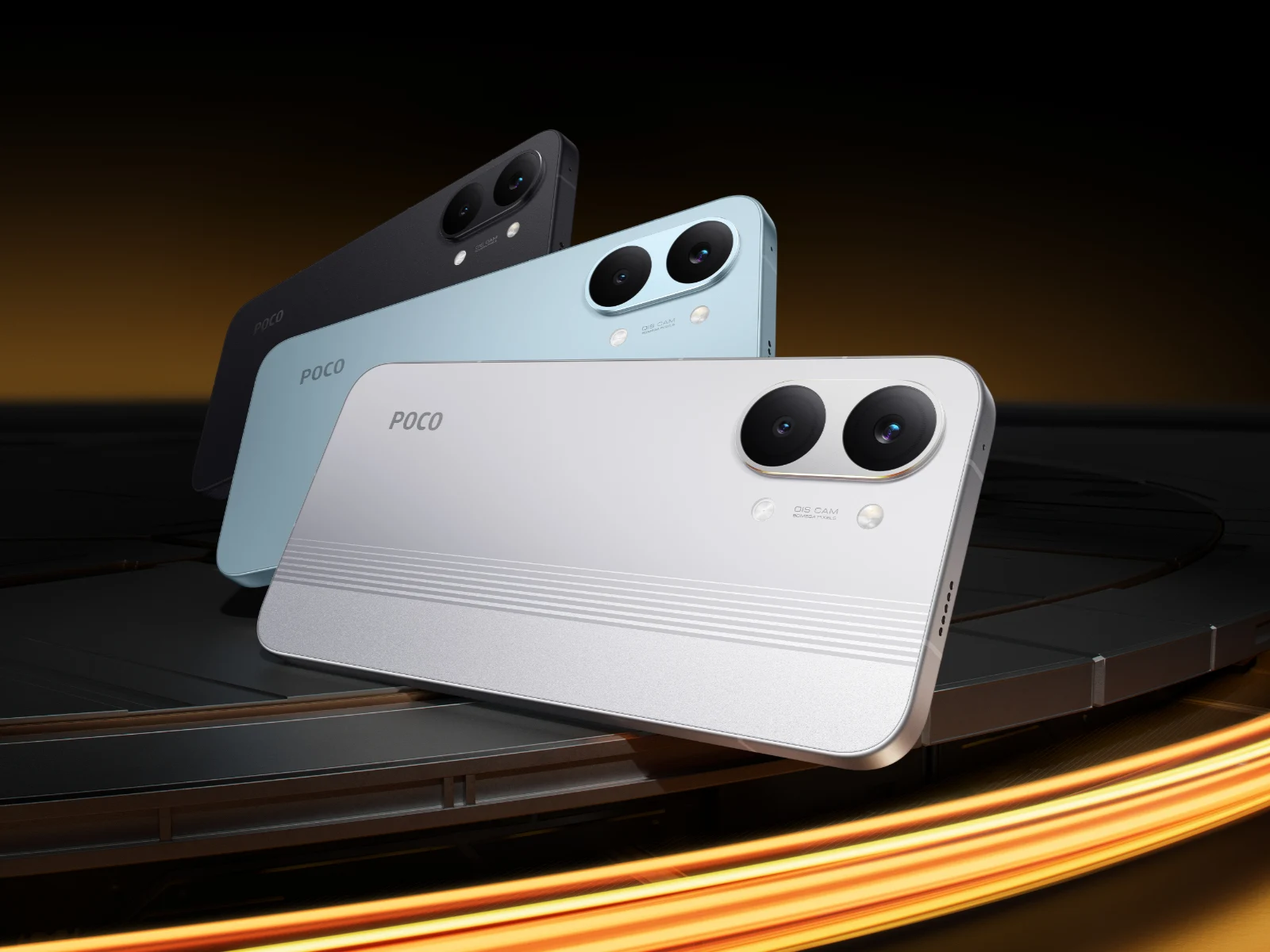
    Sources
  • Poco X8 Pro Max: Big Display, Massive Battery, Stunning Lights

    Key Takeaway

    – Massive 8,500 mAh battery with 100W fast charging offers industry-leading battery life.
    – High-quality build with IP68 rating, matte aluminum frame, and glass back.
    – Distinctive LED lighting around camera module for notifications and dynamic effects.
    – Strong MediaTek Dimensity 9500s performance but prone to significant throttling.
    – Camera lacks optical zoom and wireless charging, with average speakers and USB 2.0.


    The Poco X8 Pro Max takes the top spot in the X series, featuring a large 6.83-inch AMOLED display with high peak brightness and an exceptionally large 8,500 mAh battery that ensures long daily runtime and supports fast charging at up to 100 watts. Under the hood, the MediaTek Dimensity 9500s delivers strong CPU and GPU performance, though it is prone to significant throttling under load. The device boasts high-quality build standards, including an IP68 rating, a matte aluminum frame, and a glass back. However, its large, heavy form factor is noticeable in everyday use, as are the merely average speakers.

    Distinctive Lighting Effects

    A distinctive visual feature is the LED lighting surrounding the camera module. Two ring-shaped light elements serve not only as notification lights but also display dynamic effects for music, games, or incoming calls. The lighting reacts rhythmically to system events using eight colors, giving the device a striking, almost playful identity that truly stands out in the dark. This light show is actually pretty cool, you might find it a bit distracting at first but it grows on you.

    Camera and Connectivity

    The X8 Pro Max’s camera performs solidly in daylight but lacks any real highlights: it lacks optical zoom, the ultra-wide-angle lens remains weak, and video quality is functional rather than class-leading. Furthermore, the use of USB 2.0 and the absence of wireless charging feel outdated for 2026. Honestly, the camera is just okay, not great but not terrible either, it gets the job done for most people who just snap quick photos.

    The Poco X8 Pro Max is thus a device for users seeking maximum battery life, strong performance, and a very bright display, combined with striking visual accents on the camera module that give the smartphone a distinctive character. Its a phone for people who want the biggest battery possible and a screen that can really blast through sunlight, plus that fancy ring light thing is pretty unique for the price.

    Sources
  • Xiaomi Poco X8 Pro Max Launches Globally with 120Hz AMOLED Display

    Xiaomi Poco X8 Pro Max Launches Globally with 120Hz AMOLED Display

    Key Takeaways

    1. First smartphone with MediaTek’s Dimensity 9500s chipset and features LPDDR5X RAM and UFS 4.1 storage.
    2. Includes an 8,500 mAh battery globally and a 9,000 mAh battery for India, with 100 W wired charging and 27 W reverse charging.
    3. Camera setup consists of a 50 MP primary camera, 8 MP ultra-wide-angle camera, and 20 MP front camera.
    4. 6.83-inch AMOLED display with a resolution of 2,772 x 1,280 pixels, 3,500 nits peak brightness, and 120 Hz refresh rate.
    5. Pricing starts at $469 for the 256 GB model and $529 for the 512 GB model, with Early Bird prices at $429 and $459.


    The Poco X8 Pro Max has finally made its global debut. This smartphone is the first to use MediaTek’s Dimensity 9500s chipset, and it also boasts LPDDR5X RAM along with UFS 4.1 flash storage. Notably, Xiaomi has included an 8,500 mAh battery for the global version and a 9,000 mAh battery specifically for India.

    Charging Features

    Every version comes with support for 100 W wired (PPS) charging and 27 W reverse wired charging. Furthermore, the Poco X8 Pro Max is equipped with an impressive camera setup, featuring a 50 MP primary camera (Light Fusion 600), an 8 MP ultra-wide-angle camera, and a 20 MP front camera. It’s worth noting that the primary camera, the Light Fusion 600, is the only one that differs from the cameras found in the Poco X8 Pro.

    Display Details

    On the front, the Poco X8 Pro Max showcases a 6.83-inch AMOLED display. This display is the same size as that of the Xiaomi 15T Pro, which currently retails for $819 on Amazon. The AMOLED screen has a resolution of 2,772 x 1,280 pixels, a 3,840 Hz PWM value, and is protected by Corning Gorilla Glass 7i. The Poco X8 Pro Max achieves approximately 9% higher peak brightness at 3,500 nits (APL 25%), though it has a 120 Hz refresh rate compared to the 144 Hz refresh rate of the Xiaomi 15T Pro.

    Pricing and Variants

    The base model of the Poco X8 Pro Max comes with 12 GB of RAM and 256 GB of internal storage. Xiaomi also provides a 512 GB version, which also has 12 GB of RAM. The retail prices for the Poco X8 Pro Max are $469 for the 256 GB model and $529 for the 512 GB model. However, Early Bird promotions lower these prices to $429 and $459, respectively.

    Source:
    Link


  • Oppo Find X9s Leak: 7,025mAh Battery and Triple 50MP Cameras

    Oppo Find X9s Leak: 7,025mAh Battery and Triple 50MP Cameras

    Key Takeaways

    1. The Oppo Find X9s will have different specifications for the Chinese and global models.
    2. The global model features a 6.59-inch 120Hz AMOLED display with a 1.5K resolution.
    3. The international version will include three 50MP cameras and a 32MP front camera for selfies.
    4. It will be powered by the MediaTek Dimensity 9500s processor and have a 7,025mAh battery with 100W charging.
    5. No release date or pricing details for the global Oppo Find X9s have been announced yet.


    A leaker shared a lot of information about the Oppo Find X9s back in January. As per that info, the flagship phone in China is anticipated to feature a compact 6.3-inch display, a main camera with 200MP, a 200MP telephoto camera, and the speedy MediaTek Dimensity 9500 processor. However, the latest reports from SmartPrix indicate that the Oppo Find X9s sold in other regions will have different specs.

    Display Differences

    Starting with the display, the global model will sport a 6.59-inch screen, making it more compact than the Oppo Find X9 Pro but larger than the Chinese variant. This display is said to use a 120Hz AMOLED panel and will have a resolution of 1.5K. The processor might be downgraded to the more affordable MediaTek Dimensity 9500s, and it’s likely that Oppo will reduce the camera capabilities as well.

    Camera Specifications

    SmartPrix mentions that the international version of the Oppo Find X9s will come equipped with three 50MP cameras, which includes a 50MP telephoto camera featuring 3x optical zoom, plus a 32MP front-facing camera for selfies. The battery will maintain a capacity of 7,025mAh in the global model and will support charging via USB-C at speeds up to 100 watts. This more budget-friendly flagship is likely to be available with 12GB of RAM and storage options of either 256GB or 512GB. Currently, there is no information on when the global Oppo Find X9s will be released or its pricing. Rumors suggest that the Chinese version of the smartphone might officially launch in March.

    Conclusion

    In summary, the Oppo Find X9s has garnered attention due to its impressive specifications and features. As the launch date approaches, more details will likely emerge about the international version and its pricing. For now, fans are left eagerly waiting for updates.

    Source:
    Link


  • Xiaomi Launches Dimensity 9500s Smartphone with 9000mAh Battery

    Xiaomi Launches Dimensity 9500s Smartphone with 9000mAh Battery

    Key Takeaways

    1. Xiaomi launched the Redmi Turbo series in China, led by the Redmi Turbo 5 Max.
    2. The Redmi Turbo 5 Max features the MediaTek Dimensity 9500s chipset with advanced performance specs.
    3. It has a 6.83-inch AMOLED display with a resolution of 2,772 x 1,280 pixels and a 120 Hz refresh rate.
    4. The camera setup includes a 50 MP primary camera, an 8 MP ultra-wide-angle camera, and a 20 MP front-facing camera.
    5. The starting price for the Redmi Turbo 5 Max is CNY 2,199 (~$317), with upgrades available for higher RAM and storage options.


    Xiaomi has recently introduced its Redmi Turbo series in China. As hinted in the teasers before the launch, the series is led by the Redmi Turbo 5 Max. Alongside this, Xiaomi has also unveiled the Redmi Turbo 5 today, which we have detailed in a separate article.

    Performance Specs

    The Redmi Turbo 5 Max is powered by MediaTek’s latest Dimensity 9500s chipset. This 3 nm processor features one Cortex-X925 core, three Cortex-X4 cores, and four Cortex-A720 cores, along with an Immortalis-G925 MC12 GPU and a MediaTek NPU 890. To enhance performance, Xiaomi pairs this chipset with LPDDR5X RAM, UFS 4.1 flash storage, and a massive 9,000 mAh battery that supports 100 W fast charging via a wired connection.

    Display and Camera Features

    For the display, the Redmi Turbo 5 Max boasts a 6.83-inch AMOLED screen. It has a resolution of 2,772 x 1,280 pixels and supports a 120 Hz refresh rate, along with 3,840 Hz PWM dimming and DC dimming features. Additionally, the phone is equipped with a 50 MP primary camera (Light Hunted 600), an 8 MP ultra-wide-angle camera, and a 20 MP front-facing camera.

    The starting price for the Redmi Turbo 5 Max is CNY 2,199 (~$317), which includes 12 GB of RAM and 256 GB of storage. There’s an option to upgrade to 16 GB of RAM or 512 GB of storage for CNY 2,799 (~$403). Although there hasn’t been any official announcement regarding its global release, the Redmi Turbo 5 Max may debut internationally later this year as the Poco X8 Pro Max, offering considerably more power than its predecessor, the Poco X7 Pro (currently priced at $372.99 on Amazon).

    Source:
    Link


  • Xiaomi Redmi Turbo 5 Max Launch Teased with Dimensity 9500s

    Xiaomi Redmi Turbo 5 Max Launch Teased with Dimensity 9500s

    Key Takeaways

    1. The Redmi Turbo 5 Max will be launched on January 15.
    2. Xiaomi claims the device offers groundbreaking performance for mid-range smartphones.
    3. The launch coincides with MediaTek’s event featuring the Dimensity 9500s chip.
    4. Xiaomi has not shared detailed specifications or features of the Redmi Turbo 5 Max yet.
    5. There is speculation that the Redmi Turbo 5 Max may be the first phone to use the new Dimensity chip.


    Xiaomi has kept mostly quiet about their upcoming smartphone. Teased just last week, the Redmi Turbo 5 Max appeared during the same week that the Xiaomi 17 Ultra was launched in its home region. Since then, the company has not shared much about what to expect from the next Redmi Turbo device.

    Launch Date Confirmed

    Despite the silence, it’s now confirmed that a launch is on the way. Specifically, Xiaomi has announced that the Redmi Turbo 5 Max will make its debut on January 15. On Weibo, the company stated that this device ‘rewrites history’ due to groundbreaking performance that hasn’t been seen on mid-range smartphones until now. Whether this claim holds up against sub-flagship models like the Xiaomi 15T (currently priced at $559 on Amazon) is still uncertain.

    More Details Awaited

    Officially, Xiaomi has yet to provide any additional information about the Redmi Turbo 5 Max. However, MediaTek has also planned a launch event for the same day, starting at 15:00 local time (07:00 UTC). This event, referred to as a ‘chip surprise’, is expected to kick off a new chapter for Dimensity with ‘Dual Chip Global Dominance’. Consequently, insiders like Smart Pikachu are suggesting that the two events are connected and that Xiaomi might unveil the Redmi Turbo 5 Max as the first smartphone powered by the Dimensity 9500s chip.

    Source:
    Link