Key Takeaways
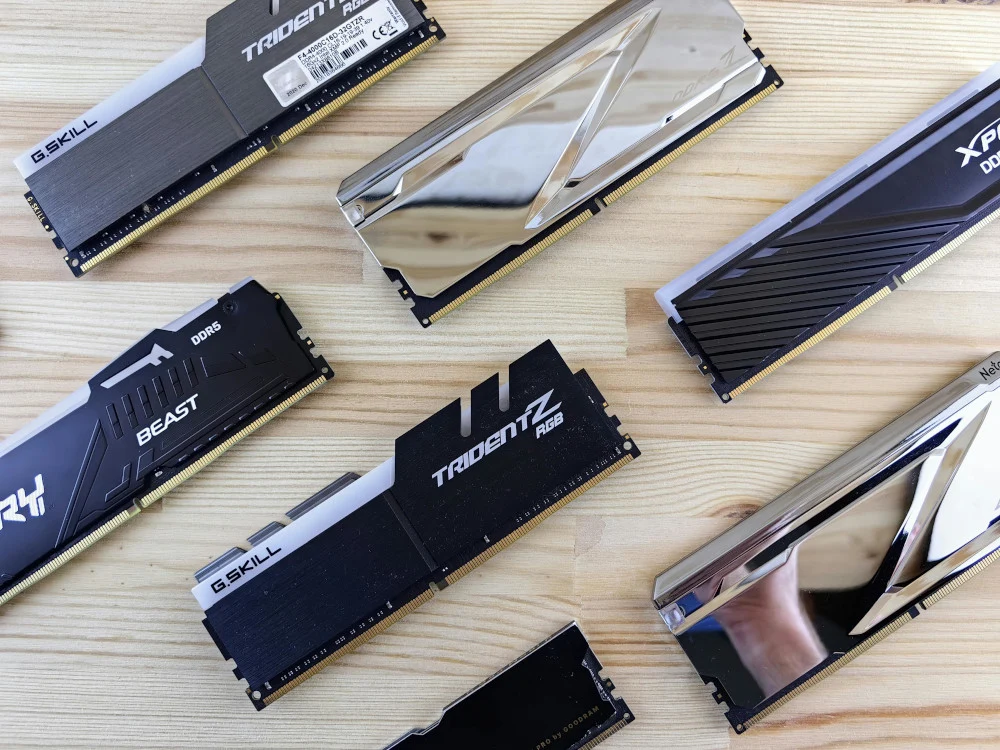
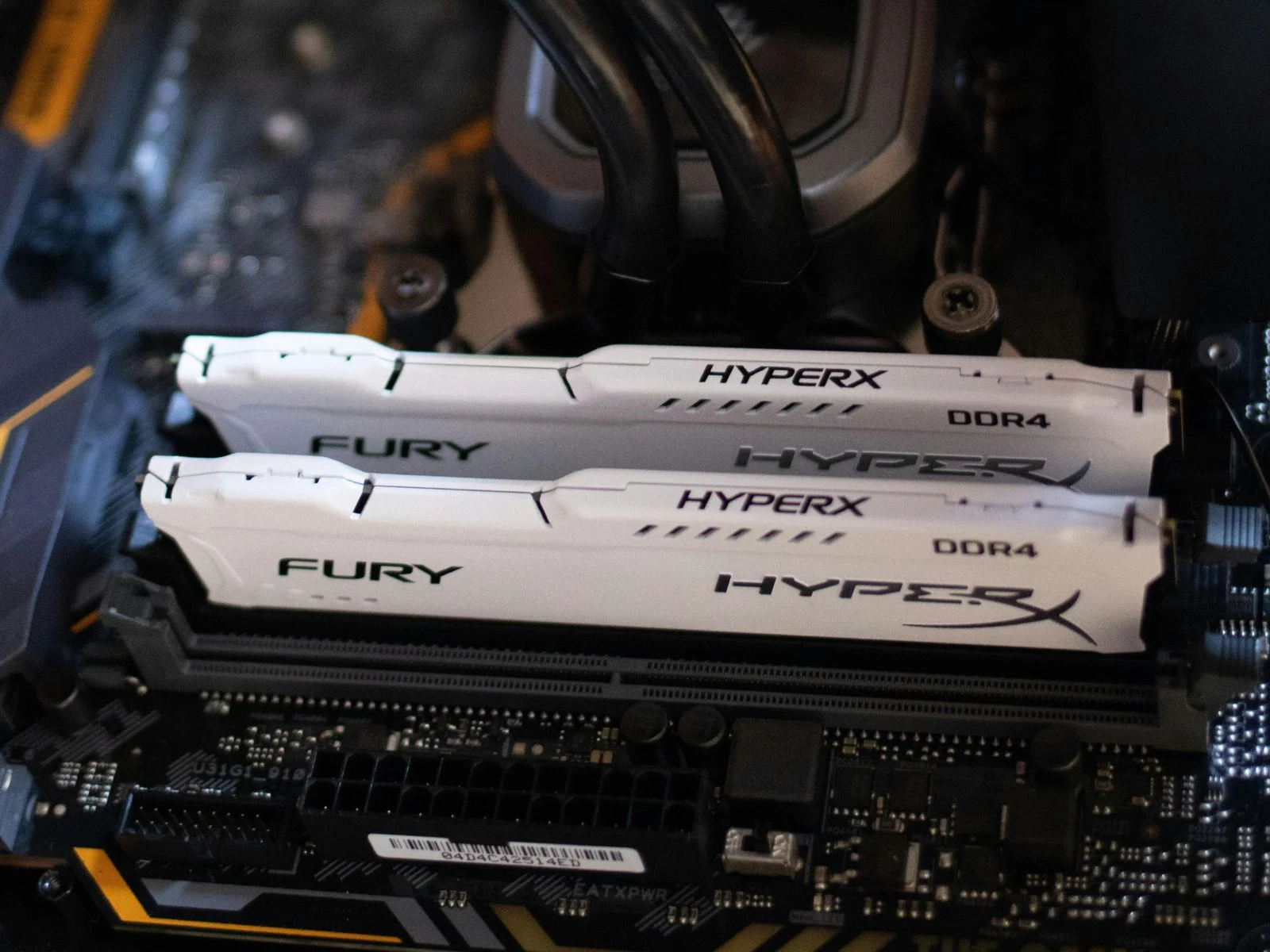
1. The current RAM crisis is driven by high demand for High Bandwidth Memory (HBM) from AI companies, leading to reduced production of standard consumer RAM.
2. Many gamers are misplacing blame on the wrong companies, as major memory manufacturers prioritize HBM production over traditional RAM due to its higher profitability.
3. OpenAI’s claims about securing a large portion of the global HBM supply are viewed skeptically, as long-term DRAM agreements often change and are not as solid as announced.
4. Panic ordering by companies during shortages contributes to market instability, obscuring visibility for DRAM manufacturers and exacerbating supply issues.
5. While the RAM shortage may persist through 2025, major hardware launches in 2027, like the PS6 and next-gen Xbox, are unlikely to be significantly impacted.
The recent installment of the Broken Silicon Podcast from the YouTube channel Moore’s Law Is Dead, hosted by Tom, delves deep into the current RAM crisis. A notable highlight of this episode is the presence of industry veteran Dave Eggleston, who has a rich history as a Product Engineer at SanDisk and a Director of Systems Engineering at Micron, a key player in the ongoing memory situation.
Insights on the RAM Crisis
Dave offers valuable perspectives during a time when the PC hardware sector is racing to find reasonably priced RAM. He sheds light on various crucial aspects such as how contracts typically function between major players like OpenAI and DRAM manufacturers, the operations within memory production companies, and the potential duration of the current memory crisis. Additionally, he discusses whether new hardware like the PS6 and the next Xbox might be impacted, along with what gamers can expect as we approach 2026.
Dave points out that historically, PCs, mobile devices, and data centers have relied on similar generations of DRAM. Over time, mobile devices transitioned to LPDDR, while data centers have expanded to depend on HBM (High Bandwidth Memory). HBM is vital for AI and GPUs, leading manufacturers like Micron, Samsung, and SK Hynix to prioritize it over DDR4 and DDR5. While it’s more lucrative, it occupies more wafer space and is trickier to produce, which tightens the global supply and exacerbates RAM shortages.
Misplaced Blame
Interestingly, many gamers are directing their frustrations at the wrong companies, according to Dave. The core issue lies in the structure: major memory manufacturers are allocating resources to HBM due to the high demand from companies like Nvidia for AI accelerators. Since HBM requires significantly more silicon and intricate logic layers, diverting resources to HBM diminishes the production of standard consumer RAM, tightening availability for PCs, consoles, and other devices.
Dave also touches on the recent news regarding OpenAI securing substantial RAM and HBM supply agreements with Samsung and SK Hynix, expressing skepticism about the authenticity and significance of these deals. He questions claims that OpenAI acquired 40% of the global HBM supply, wondering how such large agreements could be made without the companies being aware of each other’s commitments. While he acknowledges that OpenAI excels at public relations and making impressive announcements, he believes that long-term contracts in the DRAM industry rarely remain intact.
He elaborates that the DRAM business is cyclical, and typically, companies avoid locking themselves into multi-year contracts. They usually sign long-term agreements only during periods of desperation and then renegotiate or abandon them when the market stabilizes. He compares this situation to Pat Gelsinger’s ambitious announcements about Intel’s global fabs, where press releases are easy to produce but actual execution often falls short. Thus, he views OpenAI’s claims of securing “40% of the global supply” as largely driven by panic rather than solid, enforceable agreements.
A Cycle of Panic
When Tom suggests that the entire scenario is largely fueled by panic, Dave concurs, indicating that long-term DRAM agreements seldom hold as stated and that memory manufacturers are quick to shift their supply strategies if circumstances change.
They also examine a key point: OpenAI didn’t purchase finished HBM modules but rather wafers, which can be preserved in nitrogen-purged “wafer banks.” This is a common practice in semiconductor logistics, allowing OpenAI to later decide how to package the wafers, contract another firm to create HBM modules, or resell the wafers if the AI market cools down and they find themselves with excess.
Tom inquires whether OpenAI could leverage its accumulated HBM wafers against Nvidia. Dave quickly dismisses this notion, explaining that Samsung and SK Hynix would never allow a customer to use their supply as leverage against Nvidia, a vital partner with strong engineering and executive connections. If OpenAI attempted such a move, the memory producers would swiftly renegotiate or halt deliveries.
Dave explains that during shortages, RAM lead times invariably extend, but the extreme durations being reported—ranging from 13 to 24 months—aren’t entirely accurate. Typically, DRAM lead times are around 3–6 months, and even during a crunch, they might only double or triple. When suppliers mention timelines like 52 weeks, it often serves as a polite way of indicating they can’t prioritize smaller customers. Thus, when retailers hear of year-long timelines, it reflects both uncertainty and suppliers looking to protect themselves. The larger issue, Dave notes, is panic ordering: companies place multiple orders, hoard whatever they receive, and then cancel the extra. This behavior obscures visibility for DRAM manufacturers, and since the market is sensitive to even slight supply changes, these actions rapidly exacerbate shortages.
Hardware Release Predictions
So, will the PS6 or the next-gen Xbox face delays? Probably not. Tom mentions that internal documents suggest PS6 production is planned for mid-2027, and Dave agrees that no one can accurately predict shortages that far in advance. Any dates you hear regarding consoles, GPUs, or significant upcoming hardware are essentially placeholders. The market lacks genuine visibility beyond a few quarters.
Dave believes that although the RAM shortage will be tough through 2025, major consumer hardware launches in 2027 likely won’t be impacted, especially since Sony and Microsoft will secure supplies well before production ramps up.
Tom also highlights that Nvidia’s guidance for the upcoming RTX 5000 Super series GPUs has shifted repeatedly, moving from late 2024 to early 2025, and now tentatively to Q3 2026. Dave clarifies that this isn’t a sure sign of a delay, but merely another example of placeholder timelines. Nvidia may be adjusting its schedules, but these dates do not guarantee RAM shortages will occur years in advance.
According to Dave, it’s quite likely that between 2026 and 2030, Samsung, Micron, and SK Hynix are developing 8–10 significant DRAM fabs. Unlike the hypothetical “announcement fabs” seen elsewhere, these projects are genuinely happening. However, the ramp-up will be gradual because fabs take years to achieve full capacity, equipment from ASML, Tokyo Electron, and Applied Materials is limited, and DRAM scaling has slowed from 30% annually to about 10%.
He stresses that real relief will emerge with the transition to 3D DRAM, which increases density by stacking vertically, similar to how NAND operates. While it won’t instantly boost bandwidth, it will introduce more affordable, high-capacity RAM into laptops and budget devices, freeing up 2D DRAM for higher-performance applications. Dave anticipates that once new fabs and 3D DRAM become operational, the shortage will ease well before mid-2027.
Source:
Link