Category: Phones

Stay updated with the latest phone news, reviews, and trends. Discover cutting-edge smartphones, features, and innovations in our Phones category at GizNewsDaily

  • OnePlus Phones Get System-Wide Bypass Charging in New Update

    OnePlus Phones Get System-Wide Bypass Charging in New Update

    Key Takeaways

    1. OnePlus has introduced bypass charging to the OnePlus 13R, 13s, 12, and OnePlus Pad Go 2, expanding its battery protection features.
    2. Bypass charging allows devices to draw power directly from the charger, reducing heat and battery wear during intensive tasks.
    3. The latest OxygenOS update includes the January 2026 Android security patch and several quality-of-life improvements.
    4. Users can now edit full-resolution 50MP images directly in the Photos app on the OnePlus 13s without losing quality.
    5. Updates also feature a revamped app drawer with new “Office” and “Finance” categories for easier app access.


    Hot on the heels of the recent introduction of system-wide bypass charging on the OnePlus 13, OnePlus is now extending this innovative battery protection feature to four additional devices: the OnePlus 13R, OnePlus 13s, OnePlus 12, and the OnePlus Pad Go 2.

    Bypass Charging Feature Explained

    Though bypass charging is not entirely new for OnePlus devices, it has been mainly reserved for gaming purposes. This feature allows a device to utilize power directly from the charger rather than passing it through the battery first. This method helps to minimize heat generation and battery degradation during intensive activities. The newest update of OxygenOS brings this bypass charging capability to the OnePlus 13R, 13s, 12, and OnePlus Pad Go 2. Now, your device (OnePlus 15 curr. $899) can operate on direct power from the charger, not just when playing high-demand games like Call of Duty or Genshin Impact, but also while engaging in other resource-heavy tasks, such as using Android Auto for navigation or streaming videos at maximum brightness while connected to power.

    Update Features and Improvements

    In addition to the highly-anticipated bypass charging feature, the update also brings the January 2026 Android security patch along with several quality-of-life enhancements. For instance, the OnePlus 13s now allows users to edit full-resolution 50MP images straight in the Photos app without losing any image quality. Furthermore, three smartphones are receiving updates to the app drawer, which includes the addition of new “Office” and “Finance” categories to simplify the process of locating apps you need.

    The latest updates are being distributed widely across variants in India, Europe/Global, and North America.

    Source:
    Link


  • FuriLabs Convergence Hub: Transform Smartphones into PC with 8 Ports

    FuriLabs Convergence Hub: Transform Smartphones into PC with 8 Ports

    Key Takeaways

    1. The FuriPhone FLX1 operates on Linux and can transform into a Linux desktop PC with the Convergence Hub.
    2. The Convergence Hub features an adjustable design for easy viewing and connects via a short USB-C cable.
    3. It offers multiple connectivity options, including USB-C, USB-A, Ethernet, HDMI, and supports 4K monitors at 60Hz.
    4. The Convergence Hub is priced at $89, with special offers for FuriPhone FLX1 owners to get it for free or at a 50% discount.
    5. The product is available for purchase from the manufacturer’s online shop, with potential shipping and import duties for international customers.


    The FuriLabs FuriPhone FLX1 is a unique smartphone that operates on Linux rather than the typical Android system. When paired with the innovative Convergence Hub, this phone can transform into a Linux desktop PC. The docking station is also designed to work with Android phones that have USB-C support for external monitors.

    Design and Functionality

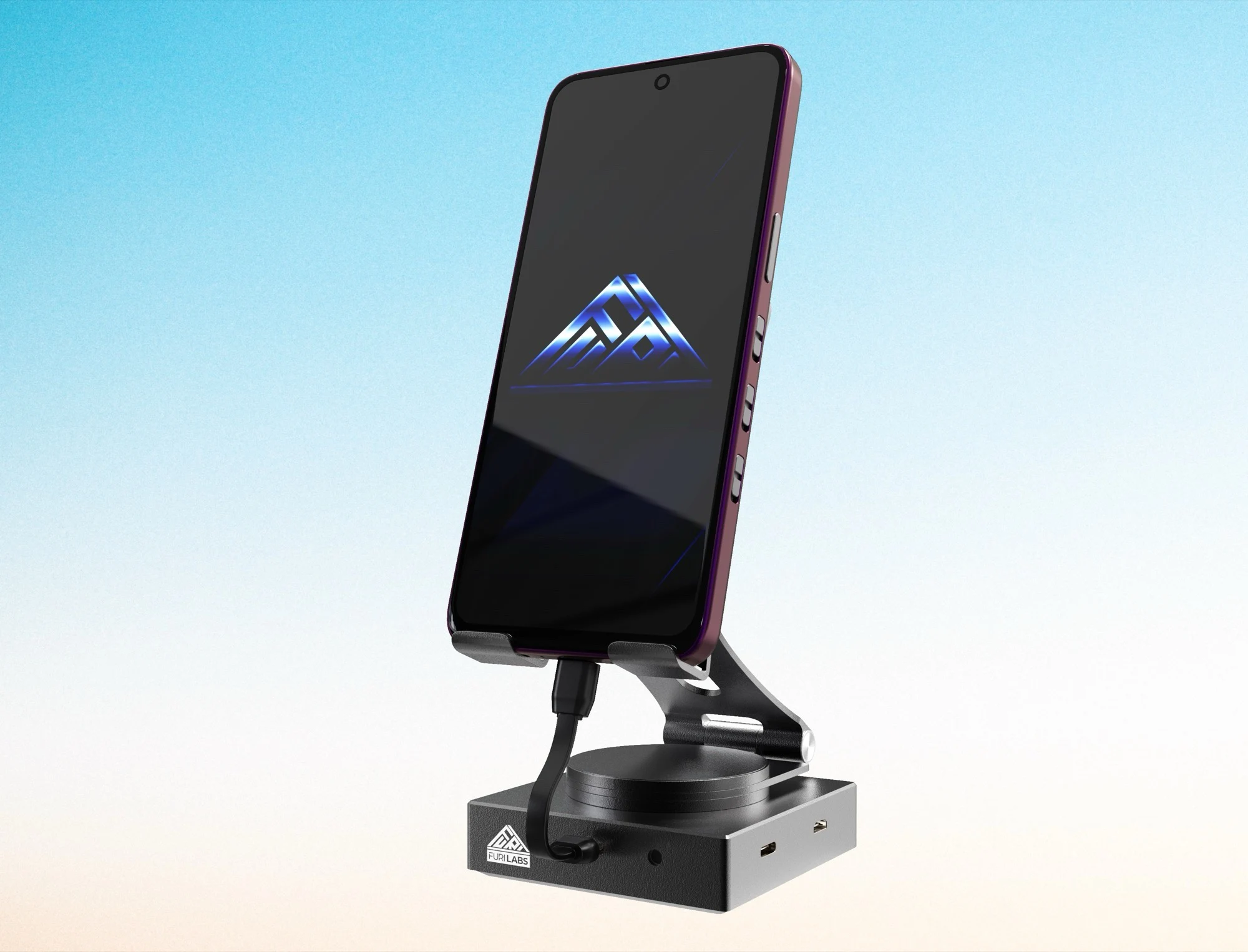
    The Convergence Hub features a square base and a stand that can be adjusted for tilting and rotating 360 degrees. This design ensures that the smartphone screen is easily viewable when sitting at a desk, making it convenient for checking messages. It connects to the phone using a short USB-C cable that’s included, and it adds eight extra ports for enhanced connectivity.

    Connectivity Options

    On the front, there’s a 3.5mm headphone jack, while the right edge has a USB-C port that supports Power Delivery. The Convergence Hub also includes two more USB-C ports and one USB-A port for connecting various accessories, alongside an Ethernet port for wired internet access. Additional external monitors can be connected using HDMI and mini-HDMI ports. The Synaptics DL-6950 DisplayLink chipset is capable of handling 4K monitors at up to 60Hz.

    Availability and Pricing

    The FuriLabs Convergence Hub can be purchased from the manufacturer’s online shop. It retails for $89, not including shipping and any possible import duties for customers outside the country. Owners of the FuriPhone FLX1 who share a review on social media can get the dock for free by reaching out to the manufacturer’s support team. Additionally, users of the FuriPhone FLX1 can enjoy a 50% discount.

    FuriLabs’

    Source:
    Link


  • Samsung Galaxy S26 Ultra Qi2 Charger Leak Reveals Major Limitations

    Samsung Galaxy S26 Ultra Qi2 Charger Leak Reveals Major Limitations

    Key Takeaways

    1. Samsung’s new Magnetic Wireless Charger (EP-P2900) resembles Apple’s MagSafe but features a sleek black design.
    2. The charger supports the Qi2 standard, allowing wireless charging speeds of up to 25 watts.
    3. Compatibility with Samsung Galaxy smartphones requires a Qi2-compatible case with magnets.
    4. The upcoming Galaxy S26 series may lack built-in magnets, limiting functionality with magnetic accessories.
    5. Samsung plans to offer a variety of magnetic protective cases for the Galaxy S26 models.


    Shortly after news broke about Samsung’s magnetic Qi2 power bank for the Galaxy S26, S26 Plus, and S26 Ultra, SamMobile shared four images of the new Samsung Magnetic Wireless Charger (EP-P2900). It appears that Samsung has chosen a design reminiscent of Apple’s MagSafe charger (starting at $37 on Amazon), but unlike Apple’s version, Samsung’s charger features a sleek black finish on both the housing and the cable.

    Features and Compatibility

    The USB-C connector displays the “Qi2 25W” emblem, and the packaging verifies that the charger is compatible with the latest Qi2 standard. This means it can wirelessly charge compatible devices at speeds of up to 25 watts. For instance, the Apple iPhone 17 can utilize this charging speed, while the Galaxy S25 is limited to 15 watts, which is due to the phone’s own restrictions, not the charger’s capabilities. Additionally, the back of the box emphasizes that for charging Samsung Galaxy smartphones, a Qi2-compatible case with magnets is necessary.

    Potential Limitations

    This could suggest that the upcoming Samsung Galaxy S26 series may lack built-in magnets and can only work with magnetic accessories or Qi2 chargers if a matching case is utilized. Previous rumors hinted that Samsung is poised to provide a variety of magnetic protective cases for all three models of the Galaxy S26. If Samsung does indeed leave out magnets, the range of Android smartphones that fully support Qi2, aside from the HMD Skyline, could remain quite narrow.

    Source:
    Link


  • Samsung Tests Exynos 2700 for Galaxy S26 Successor

    Samsung Tests Exynos 2700 for Galaxy S26 Successor

    Key Takeaways

    1. Skepticism Over Legitimacy: The initial Geekbench test results for the Exynos 2700 raise doubts about their authenticity despite being listed in the Geekbench database.

    2. Underwhelming GPU Performance: The Exynos 2700’s GPU, using a Samsung Xclipse 970, shows significantly lower performance compared to its predecessor, the Exynos 2600.

    3. Distinctive CPU Configuration: The Exynos 2700 features an unusual deca-core CPU setup with a 1-4-1-4 cluster arrangement and relatively low clock speeds.

    4. Awaiting ARM Core Details: The specific ARM cores for the Exynos 2700 are yet to be confirmed, but it is expected to use an updated version of the ARM Lumex architecture.

    5. Targeted Devices: The Exynos 2700 may be designed for the Galaxy S27 and Galaxy S27+ models, continuing the trend of using a 2nm process similar to the Exynos 2600.


    The initial response to a Geekbench test of the Exynos 2700 in early 2026 may trigger skepticism about its legitimacy. The screenshot showcasing a purported Samsung Exynos 2700 test device, first posted by Abhishek Yadav on X, seems to be genuine, or at least not obviously fake. This test is officially listed in the Geekbench database, showing no irregularities. Still, based on past incidents, this doesn’t guarantee authenticity; it’s possible that it could be a modified smartphone with altered configuration files.

    Performance Assessment

    If the device labeled S5E9975 ERD is indeed a Samsung test unit for the successor to the Exynos 2600, its performance is currently lacking. The GPU performance was evaluated, revealing that it uses a Samsung Xclipse 970, which, according to Geekbench, consists of 4 compute units running at 555 MHz. This is roughly half the capability and speed of the Exynos 2600 test unit, which has previously achieved notable results on Geekbench. Given that the GPU’s power is significantly reduced, the OpenCL score of 15,618 points is not entirely disappointing, but it still falls short compared to the Exynos 2600 test results.

    Unusual Configuration

    Not only does this potential Exynos 2700 prototype feature an atypical GPU setup, but its CPU configuration is also distinctive. It is a deca-core design, yet it has a rare 1-4-1-4 cluster arrangement. The clock speeds of 2.3 GHz, 2.4 GHz, 2.78 GHz, and 2.88 GHz seem rather preliminary and relatively low. In contrast, the Exynos 2600’s prime core operates at 3.8 GHz (with the aforementioned test device running at 3.55 GHz). We still await clarity on which ARM cores will be incorporated; it is likely that it will utilize an updated version of the ARM Lumex architecture launched last year, which is currently implemented in the Exynos 2600 for the Galaxy S26 and Galaxy S26+. Similar to the Exynos 2600, the Exynos 2700 is likely to be built on a 2nm process and may be aimed at the Galaxy S27 and Galaxy S27+ in select markets.


  • New Pricing Details Leaked for Samsung Galaxy S26 Series

    New Pricing Details Leaked for Samsung Galaxy S26 Series

    Key Takeaways

    1. The Galaxy S26 series will officially launch by the end of next month, phasing out the Galaxy S25 lineup.
    2. The Galaxy S25 Edge will remain available, despite having older hardware.
    3. The Galaxy S26 Ultra is expected to be priced around €100 less than its predecessor, starting at approximately €1,349.
    4. Storage prices for the 1 TB versions will likely remain the same as last year, with the Galaxy S26 starting at around $799.
    5. Samsung is likely absorbing increased manufacturing costs for its top-tier Galaxy S smartphones this year.


    The Galaxy S26 series is set to make its official appearance by the end of next month. Currently, Samsung is thought to be phasing out the Galaxy S25 lineup, which includes the Galaxy S25, Galaxy S25 Plus, and Galaxy S25 Ultra. Interestingly, the Galaxy S25 Edge (currently priced at $819.99 on Amazon) is likely to stay on the market, even though it has older hardware.

    Pricing Insights

    The price of the Galaxy S25 Edge might be more aligned with the Galaxy S26 Ultra rather than last year’s model. As per Roland Quandt, the Galaxy S26 Ultra is expected to be priced around €100 less for its 256 GB and 512 GB versions. This means the starting price could be around €1,349, increasing to €1,469 for the 512 GB model.

    Storage Options

    In terms of storage, the 1 TB versions are rumored to retain their prices from last year. Quandt also mentions that the pricing for the Galaxy S26 and Galaxy S26 Plus will likely stay similar to their previous generations. Therefore, it can be estimated that the Galaxy S26 will arrive in the US at about $799, with the Galaxy S26 Plus and Galaxy S26 Ultra priced at $999.99 and $1,199.99, respectively. In summary, Samsung seems to be absorbing the increased manufacturing costs this year, at least for its top-tier Galaxy S smartphones.

    Roland Quandt’s insights are quite valuable in understanding the upcoming Galaxy S26 series and its positioning in the market.

    Source:
    Link


  • Xiaomi 17 Pro Max Camera Analysis Reveals Two Key Drawbacks

    Xiaomi 17 Pro Max Camera Analysis Reveals Two Key Drawbacks

    Key Takeaways

    1. The Xiaomi 17 Pro Max features a triple camera system with three 50MP lenses: a main camera, an ultrawide lens, and a periscope telephoto lens with 5x optical zoom.
    2. Despite good image quality, the Xiaomi 17 Pro Max ranks 13th in DxOMark’s evaluations with a score of 159, lower than competitors like the iPhone 17 Pro and Vivo X300 Pro.
    3. Significant weaknesses include a narrower ultrawide lens field of view (17mm) compared to competitors and video quality issues such as noise and shaky stabilization.
    4. Minor issues were noted, such as imperfect bokeh effects in portrait mode, particularly with thin objects.
    5. Overall, the Xiaomi 17 Pro Max performs well in photo mode, delivering detailed images with excellent color accuracy and minimal noise.


    Despite being marketed as a top-tier camera phone, the Xiaomi 17 Pro Max has a spec list that resembles that of many other similar devices. It features a 50MP f/1.7 main camera with a 1/1.28-inch sensor, a 50MP f/2.4 ultrawide lens with a 1/2.88-inch sensor, and a 50MP f/2.6 periscope telephoto lens that has a 1/1.95-inch sensor, offering 5x optical zoom and macro capabilities.

    Performance Analysis

    The camera system generally provided good image quality during DxOMark’s thorough evaluation, but a few issues led to some point losses. The Xiaomi 17 Pro Max ended up ranking 13th in DxOMark’s list with a total score of 159, which is significantly lower than the Apple iPhone 17 Pro at 168 points, the Vivo X300 Pro at 171 points, and the Huawei Pura 80 Ultra at 175 points.

    Weaknesses Identified

    DxOMark pointed out two significant flaws of the Xiaomi 17 Pro Max when compared to its better-rated competitors. Firstly, the ultrawide camera has an equivalent focal length of just 17mm. In contrast, the iPhone 17 boasts a 13mm ultrawide camera, which allows it to capture a broader field of view. Secondly, the video function is plagued by noisy images, inconsistent white balance and exposure, along with shaky image stabilization, even if the user is holding the Xiaomi 17 Pro Max steadily.

    Additional Issues

    The review also found a few minor problems, like imperfect bokeh effects in portrait mode. Very thin objects, such as single hair strands, were sometimes not isolated correctly. However, the Xiaomi 17 Pro Max largely performed well in photo mode, creating detailed images with excellent color accuracy and minimal noise. For more details, check our comprehensive review on the Xiaomi 17 Pro Max.

    Source:
    Link


  • Oppo’s Dual 200 MP Flagship Smartphone Leaked in Spy Shots

    Oppo’s Dual 200 MP Flagship Smartphone Leaked in Spy Shots

    Key Takeaways

    1. Images of the Find X9 Ultra and a new teleconverter accessory were leaked on Chinese social media.
    2. The Find X9s Pro is positioned between the Find X9 and Find X9 Pro, currently in public testing.
    3. The Find X9s Pro will feature dual 200 MP cameras, potentially ahead of Xiaomi’s upcoming models.
    4. Rumored specifications include a 7,000 mAh battery, Dimensity 9500 chipset, and a 6.3-inch screen.
    5. No release date or information on global availability for the Find X9s Pro has been announced.


    A few days ago, images from Chinese social media leaked revealing the Find X9 Ultra. These images also showed a new teleconverter accessory, which is different from the one Oppo provides for the Find X9 Pro. Now, it’s the Find X9s Pro’s moment in the spotlight, which has been previously called the Find X9s.

    Public Testing Insights

    The Find X9s Pro has been seen during its public testing phase. From what we gather, this device appears to be placed between the Find X9 and the Find X9 Pro that Oppo released late last year. Interestingly, an iPhone 17 Pro Max (currently priced at $1,349 for a refurbished model on Amazon) can be seen, which is more noticeable than the smaller iPhone 17 Pro due to its wider size in comparison to the Find X9 Pro.

    Exciting Features Ahead

    Oppo is gearing up to launch the Find X9s Pro as the first smartphone featuring dual 200 MP cameras. However, Xiaomi might not be lagging too far behind with its own competitors, based on recent leaks. It seems that the Find X9s Pro could have a sizable camera housing, although the leak-proof case might make it look larger than it actually is.

    Speculation on Hardware

    Among the other rumored specifications are a massive 7,000 mAh battery, a Dimensity 9500 chipset, and a 6.3-inch screen. As of now, there’s no information regarding the release date, nor whether Oppo plans to make the Find X9s Pro available globally.

    via Experience More & Xiaoyu

    Source:
    Link


  • Moto G77: 108MP Camera, 120Hz AMOLED, IP64 Rating

    Moto G77: 108MP Camera, 120Hz AMOLED, IP64 Rating

    Key Takeaways

    1. Stunning Display: The Moto G77 features a 6.78-inch 120Hz Extreme AMOLED display, claimed to be the brightest in a Moto G smartphone, with 17% sharper resolution and 5 times the brightness of the Moto G56.

    2. Powerful Performance: It is powered by a MediaTek Dimensity 6400 processor, with options for 8GB or 12GB RAM and 256GB or 512GB storage, plus a microSD card slot for additional storage.

    3. Impressive Camera Features: The device includes dual rear cameras with a 108MP sensor offering 3x lossless zoom and an 8MP ultrawide sensor, along with a 32MP front camera and various photography modes.

    4. Connectivity and Battery Life: The Moto G77 supports Bluetooth 5.4, dual-band Wi-Fi, NFC, dual-SIM, and includes a 5200mAh battery with 30W fast charging, running on Android 16 with Motorola’s Hello UX.

    5. Availability and Colors: The Moto G77 is available in Europe in Pantone Black Olive and Pantone Shaded Spruce, with potential inclusion of a case and charger depending on the region.


    If the new Moto G67 isn’t quite what you’re looking for, perhaps the Moto G77 might be more to your liking. This model shares a similar design and many specs with the G67 but offers slight improvements that make it a better choice.

    Stunning Display

    The Moto G77 features a 6.78-inch 120Hz screen, which Motorola labels as an Extreme AMOLED display and claims is the brightest ever used in a Moto G smartphone. According to Motorola, this screen boasts a 17% sharper resolution and 5 times the brightness compared to the Moto G56’s display (priced at $200 on Amazon). Just like the G67, it also comes with Gorilla Glass 7i protection.

    Powerful Performance

    At the heart of the Moto G77 is the MediaTek Dimensity 6400 processor. Customers can choose from 8GB and 12GB RAM options, along with either 256GB or 512GB of internal storage. Additionally, there’s a microSD card slot for those who need extra storage space.

    Impressive Camera Features

    The Moto G77 is equipped with dual rear cameras — one being a 108MP sensor that offers 3x lossless zoom, a first for Moto G devices. The second is an 8MP ultrawide angle sensor, while the front camera features a 32MP sensor. It includes various camera functions like Dual Capture, Timelapse, Night Vision, and a Pro mode for photography enthusiasts.

    Connectivity and Battery Life

    For connectivity options, the Moto G77 includes Bluetooth 5.4, dual-band Wi-Fi, NFC, dual-SIM capability, and a USB-C port. It also has stereo speakers with Dolby Atmos, an audio jack, dual microphones, and is rated IP64 for dust and water resistance. The device runs on Android 16 with Motorola’s Hello UX interface and is powered by a 5200mAh battery that supports 30W fast wired charging.

    Availability and Colors

    The Moto G77 is currently available in Europe in two colors: Pantone Black Olive and Pantone Shaded Spruce. Depending on the region, a case and charger may be included in the package.


  • Motorola Moto G67: Weaker Processor & Smaller Battery than G64

    Motorola Moto G67: Weaker Processor & Smaller Battery than G64

    Key Takeaways

    1. Display: The Moto G67 features a 6.78-inch FHD+ AMOLED display with a 120Hz refresh rate, protected by Gorilla Glass 7i, unlike the Moto G67 Power, which has a 6.7-inch LCD display.

    2. Performance: Powered by a MediaTek Dimensity 6300 processor, the Moto G67 offers options of 4GB or 8GB of RAM, with RAM boost options up to 12GB or 24GB, and storage options of 128GB or 256GB plus a MicroSD slot for up to 2TB.

    3. Camera: The Moto G67 has a dual-camera system with a 50MP main sensor and an 8MP ultrawide camera, a 32MP front camera, and features like dual capture mode for simultaneous recording.

    4. Battery and Charging: It includes a 5,200mAh battery with 30W wired charging, which is smaller than the 6,000mAh battery in the Moto G64, released in 2024.

    5. Additional Features: The device offers stereo speakers with Dolby Atmos, a headphone jack, IP64 dust and water resistance, and runs on Motorola’s Hello UX on Android 16.


    Motorola has unveiled several new smartphones in the Moto g series, including the Moto G67. This device shares its looks with the Moto G67 Power that was launched in November 2025, but the specifications are quite distinct.

    Display and Design

    The Moto G67 features a 6.78-inch FHD+ AMOLED display that boasts a 120Hz refresh rate and is protected by Gorilla Glass 7i. In contrast, the Moto G67 Power has a slightly smaller 6.7-inch FHD+ display that also refreshes at 120Hz, but it uses an LCD screen instead.

    Performance and Storage

    Under the hood, the Moto G67 is powered by a MediaTek Dimensity 6300 processor, which comes with choices of 4GB or 8GB of RAM. Depending on the model selected, users can activate RAM boost to achieve up to 12GB or 24GB of RAM. Storage options include 128GB and 256GB, along with a MicroSD card slot that can support an extra 2TB of storage.

    Camera Features

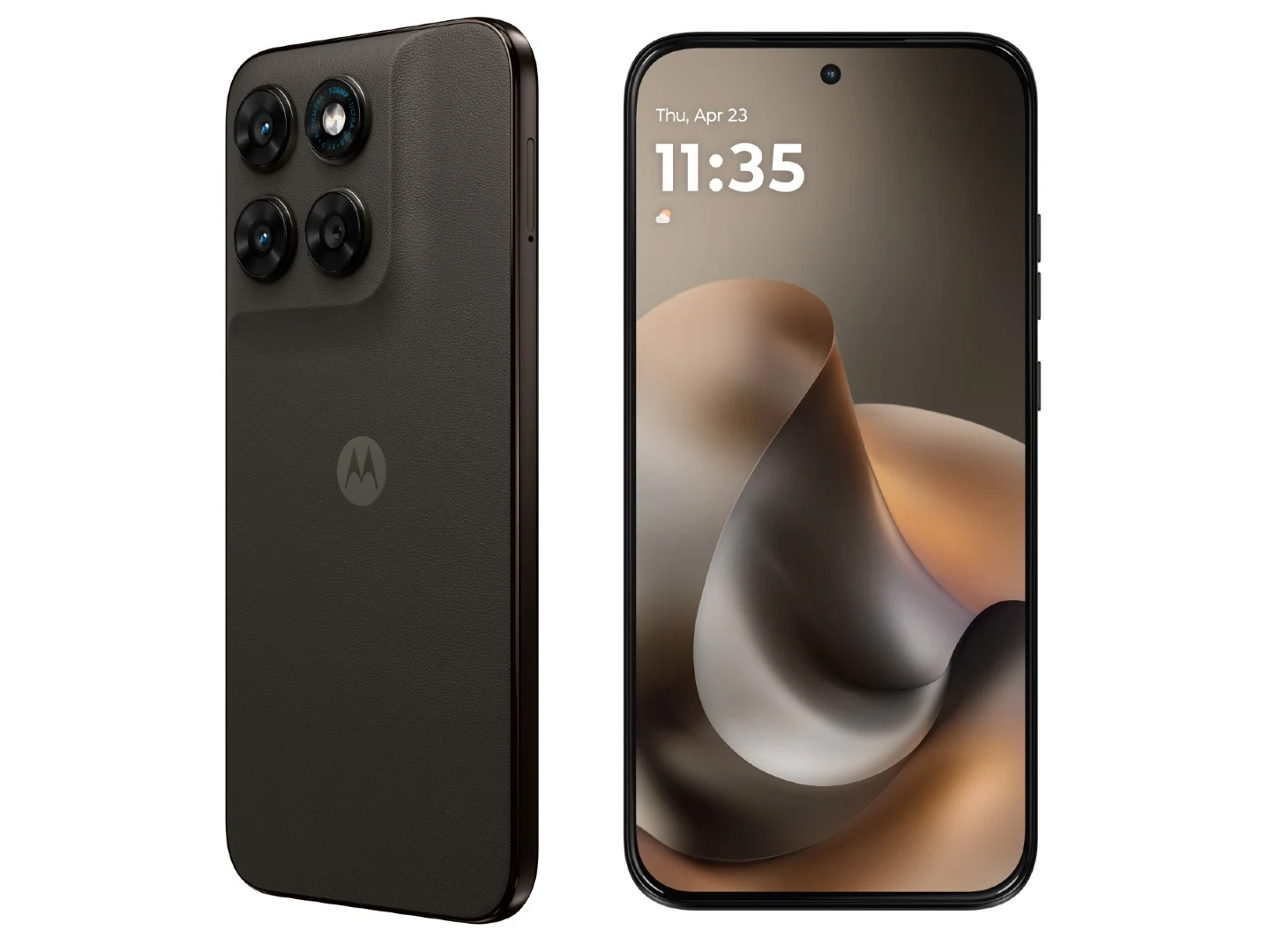
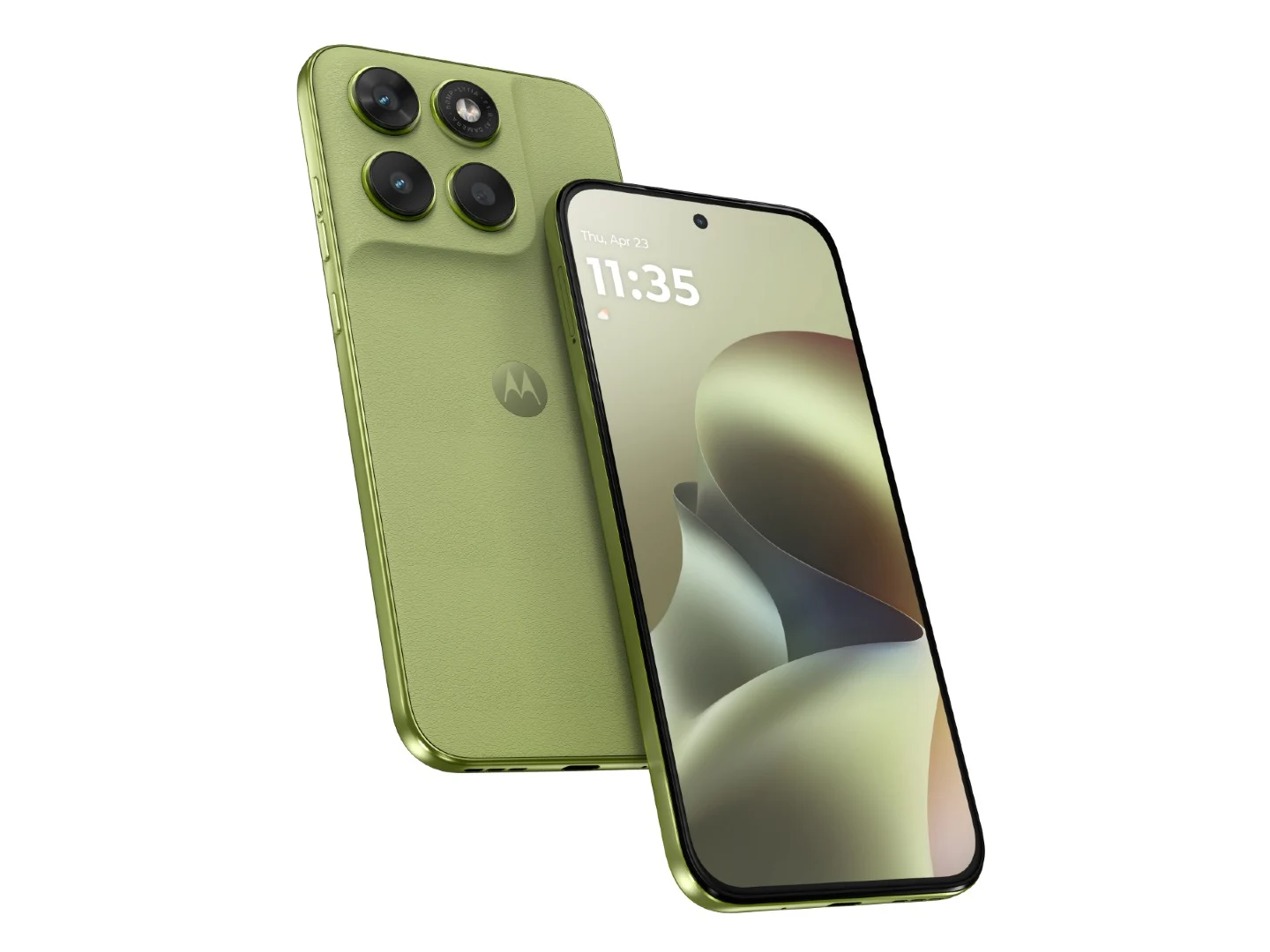
    The Moto G67 is equipped with a camera design reminiscent of a gas stove, similar to other Motorola models. Despite having four circles, it only features two actual cameras; the remaining holes are for an ambient light sensor and an LED flash. The main camera is a 50MP Sony LYTIA 600 sensor with an f/1.8 aperture, accompanied by an 8MP ultrawide angle camera.

    Moreover, there’s a 32MP front camera. All three cameras can record video in 1080p at 30 frames per second, while the main rear camera can support 60fps recording. The device also includes a dual capture mode, enabling users to take pictures and record videos using both the front and rear cameras simultaneously.

    Additional Features

    Among the Moto G67’s features are stereo speakers with Dolby Atmos, dual microphones, a headphone jack, a fingerprint scanner, Bluetooth 5.4, NFC, dual SIM capabilities, and an IP64 rating for dust and water resistance. The device packs a 5,200mAh battery that supports 30W wired charging. It’s worth mentioning that this battery is smaller than the 6000mAh battery found in the Moto G64 that was released in 2024. The Moto G67 runs Motorola’s Hello UX on top of Android 16.

    The Moto G67 is available starting today in Europe, with color options including Pantone Arctic Seal and Pantone Nile.


  • Motorola Unveils Two Affordable Smartphones with Helio G81 Chipset

    Motorola Unveils Two Affordable Smartphones with Helio G81 Chipset

    Key Takeaways

    1. Motorola has launched four new smartphones in its G-series: Moto G17, Moto G17 Power, Moto G67, and G77.
    2. The Moto G17 and G17 Power share similar specifications, including the MediaTek Helio G81 Extreme chipset, up to 8 GB of RAM, and expandable storage up to 1 TB.
    3. Both models feature a triple rear camera setup with a 50 MP primary sensor, a 5 MP ultrawide lens, and a 32 MP front camera for selfies.
    4. The G17 Power has a larger 6,000 mAh battery with 30 W charging, while the G17 has a 5,200 mAh battery with 18 W charging and is lighter.
    5. Both smartphones run on Android 15 with Hello UX, have IP64 water resistance, and include features like a headphone jack and stereo speakers with Dolby Atmos.


    Motorola has broadened its G-series range by introducing several new smartphones, including two entry-level and two mid-range models. Specifically, the company has launched the Moto G17, Moto G17 Power, Moto G67, and the G77 in the global marketplace. We have previously discussed the last two devices, and you can check that out here.

    Specs and Features

    The Moto G17 and Moto G17 Power are designed with budget-conscious consumers in mind, and they feature very alike specifications, with just a few differences. Both models are equipped with the MediaTek Helio G81 Extreme chipset, along with options for up to 8 GB of RAM and up to 256 GB of internal storage. This storage can be expanded further up to 1 TB using a microSD card.

    Design Similarities

    In terms of design, both smartphones appear nearly identical, showcasing a triple rear camera configuration. This camera setup includes a 50 MP Sony LYTIA 600 primary sensor, a 5 MP ultrawide lens, and a flicker reduction sensor. On the front, you will find a 32 MP camera for selfies and video calls. Additionally, both models feature the same display specifications, with a 6.72-inch screen that offers FHD+ resolution and a refresh rate of 60 Hz. They are also protected by Corning Gorilla Glass 3, which is intended to safeguard against unintentional drops and scratches.

    Battery Differences

    The main distinction between the two models lies in their battery capacities. The G17 Power comes with a robust 6,000 mAh battery that supports 30 W wired charging. Conversely, the G17 is equipped with a somewhat smaller 5,200 mAh battery and supports 18 W wired charging. Another key difference is that the G17 Power weighs 201.5 grams (0.44 lbs), while the G17 is lighter at 189.9 grams (0.41 lbs).

    Both smartphones operate on Android 15 with the Hello UX interface from the start, but there has been no announcement regarding future software updates from Motorola. These devices are the successors to the Moto G15 and G15 Power (currently priced at $128.57 on Amazon) and are available in Pantone Bordeaux, Pantone Alaskan Blue, and Pantone Evening Blue color variants. Additional features include an IP64 water resistance rating, a 3.5 mm headphone jack, stereo speakers with Dolby Atmos, and NFC support. As of now, there is no information about the pricing or availability.