Category: Phones

Stay updated with the latest phone news, reviews, and trends. Discover cutting-edge smartphones, features, and innovations in our Phones category at GizNewsDaily

  • Transform Nubia Z80 Ultra into a Retro Camera with Photography Kit

    Transform Nubia Z80 Ultra into a Retro Camera with Photography Kit

    Key Takeaways

    1. Nubia is set to launch the Z80 Ultra smartphone with the Snapdragon 8 Elite Gen 5 processor and innovative camera features.
    2. The new camera kit transforms the Z80 Ultra into a retro-style camera, similar to a previous accessory for the Z70S Ultra.
    3. The kit includes a dedicated shutter button, physical buttons, and a quick-release handle for easy setup and takedown.
    4. It supports interchangeable lenses and filters, enhancing photography capabilities for macro, telephoto, and ultrawide shots.
    5. The Photography Kit will be unveiled at the Z80 Ultra launch event on October 22, 2025, in China.


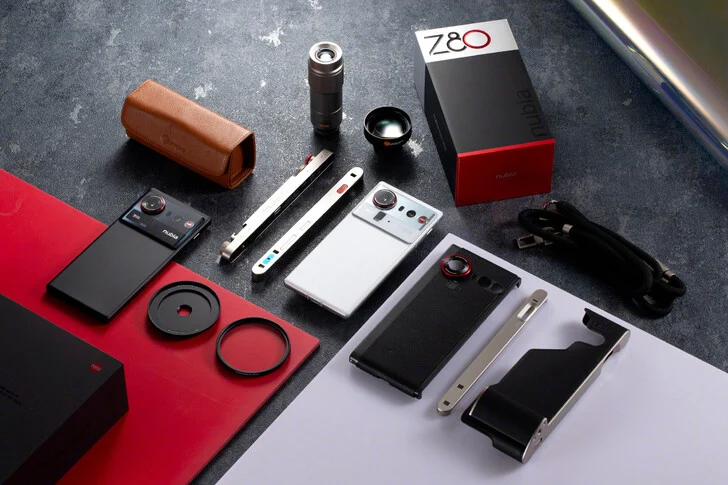
    Nubia is gearing up to introduce a few flagship smartphones, one of which is the Z80 Ultra, powered by the Snapdragon 8 Elite Gen 5. The company has already teased the camera features of this phone, and now, they’ve revealed a camera kit that transforms the phone into a retro-style camera with interchangeable lenses.

    Similarity to Previous Models

    This isn’t the first time Nubia has done something like this; they previously launched a similar accessory for the Z70S Ultra. In fact, the fundamental design of this new kit appears to be quite similar to that of its predecessor.

    Functional Features of the Kit

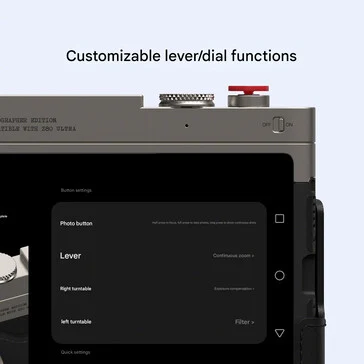
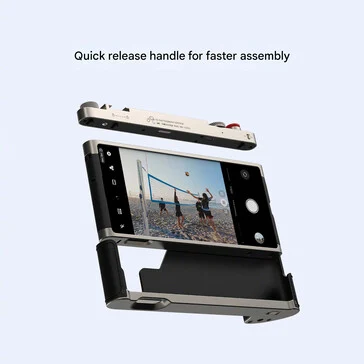
    With the accessory attached, the Nubia Z80 Ultra gains a dedicated shutter button located on the kit’s top plate. There are also additional physical buttons and dials on the top, and Nubia emphasizes that it features a quick-release handle for simple setup and takedown.

    Lens and Filter Options

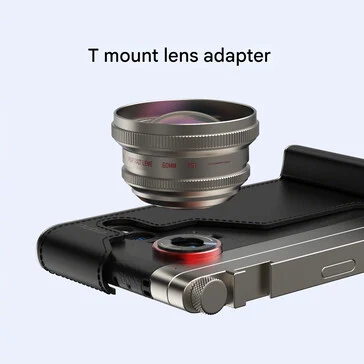
    The most intriguing aspect of the kit is its capability to accommodate various lenses and filters. Promotional images indicate that the kit will include two lenses that can be attached to the main camera of the Z80 Ultra. Nubia suggests that these interchangeable lenses could improve portrait photography by offering a longer equivalent focal length, enhancing macro and telephoto images, or turning the primary camera into an ultrawide lens.

    Moreover, Nubia provides a filter that fits onto the same mount, and it’s possible that they will introduce additional filters in the future to further enhance the phone’s photography capabilities (DJI Osmo Mobile SE gimbal curr. $58 on Amazon).

    Upcoming Launch Event

    As for the release, the Photography Kit for the Nubia Z80 Ultra will be presented during the phone’s launch event. For anyone who hasn’t seen our earlier reports, this event is scheduled for October 22, 2025, in China.

    Source:
    Link


  • Vivo X300 Pro: Battery Specs & Zeiss Camera vs. Vivo X200 Ultra

    Vivo X300 Pro: Battery Specs & Zeiss Camera vs. Vivo X200 Ultra

    Key Takeaways

    1. The Vivo X300 Pro and Vivo X300 will have a quicker global launch, available as soon as next month.
    2. More global influencers and journalists attended the launch event, indicating increased international interest.
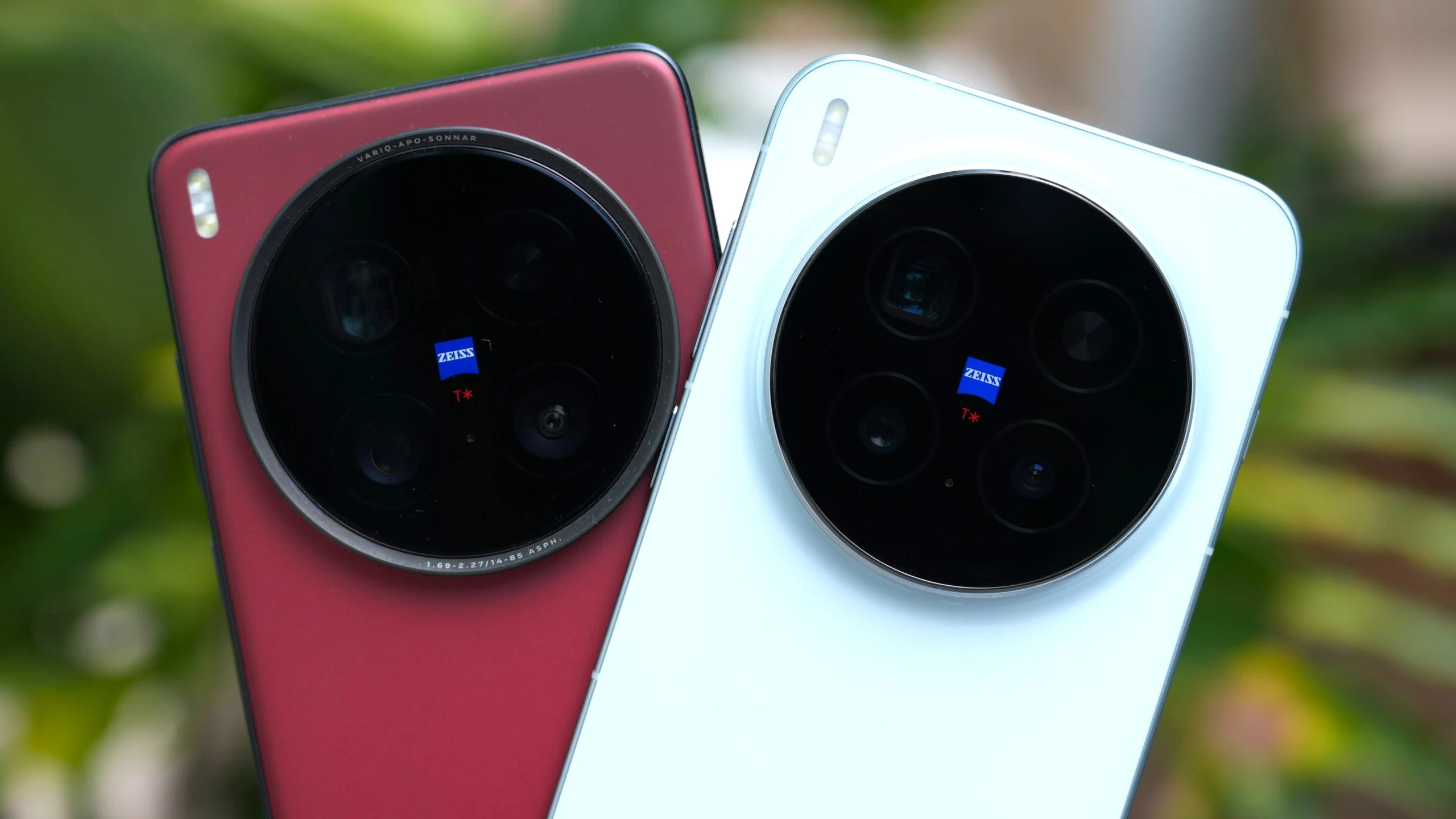
    3. A hands-on review video highlights the camera kit and compares the Vivo X300 Pro with previous models.
    4. The European version of the Vivo X300 Pro has a smaller battery (5,440mAh) compared to the Chinese version (6,510mAh) due to transport regulations.
    5. Vivo faces challenges with battery sizes in Europe, which could be addressed by adopting a thicker two-cell battery if regulations change.


    The Vivo X300 Pro and its smaller sibling, the Vivo X300, have recently been introduced in China. However, this time, the global launch is set to occur much sooner. Unlike previous years when fans had to wait until January 2026 for the global edition, Vivo has confirmed that users can purchase the new device as early as next month.

    Quick Launch for International Market

    There’s a clear sign of a quicker international release since more global influencers and journalists attended the launch event in Shanghai than ever before. Some have even received global review units already. For instance, Ben Sin from Ben’s Gadget Reviews Channel has shared a hands-on video, which you can find embedded below.

    In-Depth Review Insights

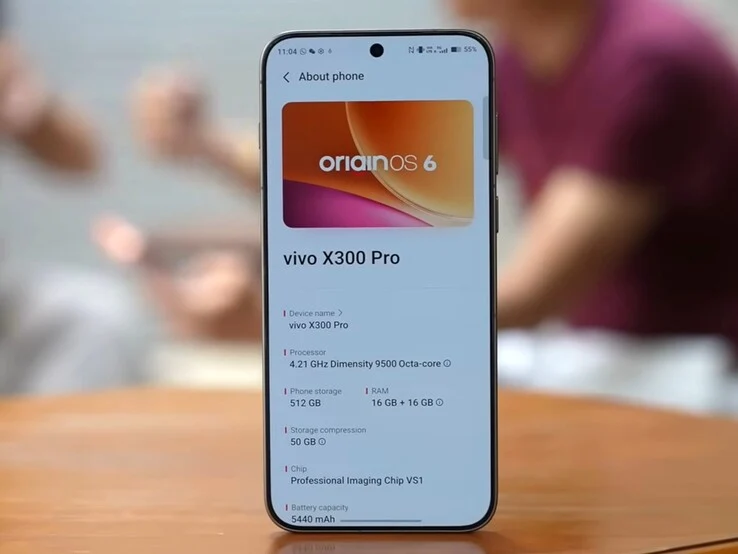
    His video, which lasts nearly 12 minutes, starts with an unboxing of the Vivo X300 Pro, featuring the camera kit and teleconverter. He goes on to compare some technical specifications with the Vivo X200 Pro and the Vivo X200 Ultra, showcasing photos he took for reference. The excitement for global Vivo admirers kicks in around the 8:15 mark, as he delves into the operating system, which now carries the same OriginOS 6 name as in China.

    Battery Capacity Discrepancies

    The screenshot above highlights a notable issue with the European Vivo X300 Pro, which Ben discusses starting at the 9:50 mark. Unlike the Chinese version with a robust 6,510mAh battery, the EU version offers only 5,440mAh, a significant reduction. This change is largely due to European transport regulations that limit single-cell batteries to a maximum of 20Wh, similar to the rules in the United States.

    In comparison, the Vivo X200 Pro has a battery size of 5,200mAh in Europe versus 6,000mAh in China. The mere increase of 240mAh in the Vivo X300 Pro is rather disappointing for European users. However, Vivo isn’t the only company facing this hurdle and could only find a way around it by opting for a thicker two-cell battery, should there be no alterations in the law.


    Source:
    Link


  • Vivo Unveils 3-Port 120W Charger with Folding Pins

    Vivo Unveils 3-Port 120W Charger with Folding Pins

    Key Takeaways

    1. The vivo 120W multi-port flash charging kit features a three-port charger with two USB-C ports and one USB-A port, allowing simultaneous charging of three devices.
    2. It supports multiple fast charging protocols, enabling quick charging for devices like the vivo X300 and iQOO 15, reaching 56% and 59% charge in just 30 minutes, respectively.
    3. Power distribution can be adjusted between 40W:40W:40W or 100W:10W:10W based on device needs, with a safety system to protect against overvoltage and overcurrent.
    4. The charger uses GaN technology for efficient charging and heat reduction, and has compact dimensions of 61 x 61 x 30 mm with folding pins for storage.
    5. Priced at CNY 199 (around $28), the product is currently available in China, with no information on international availability yet.


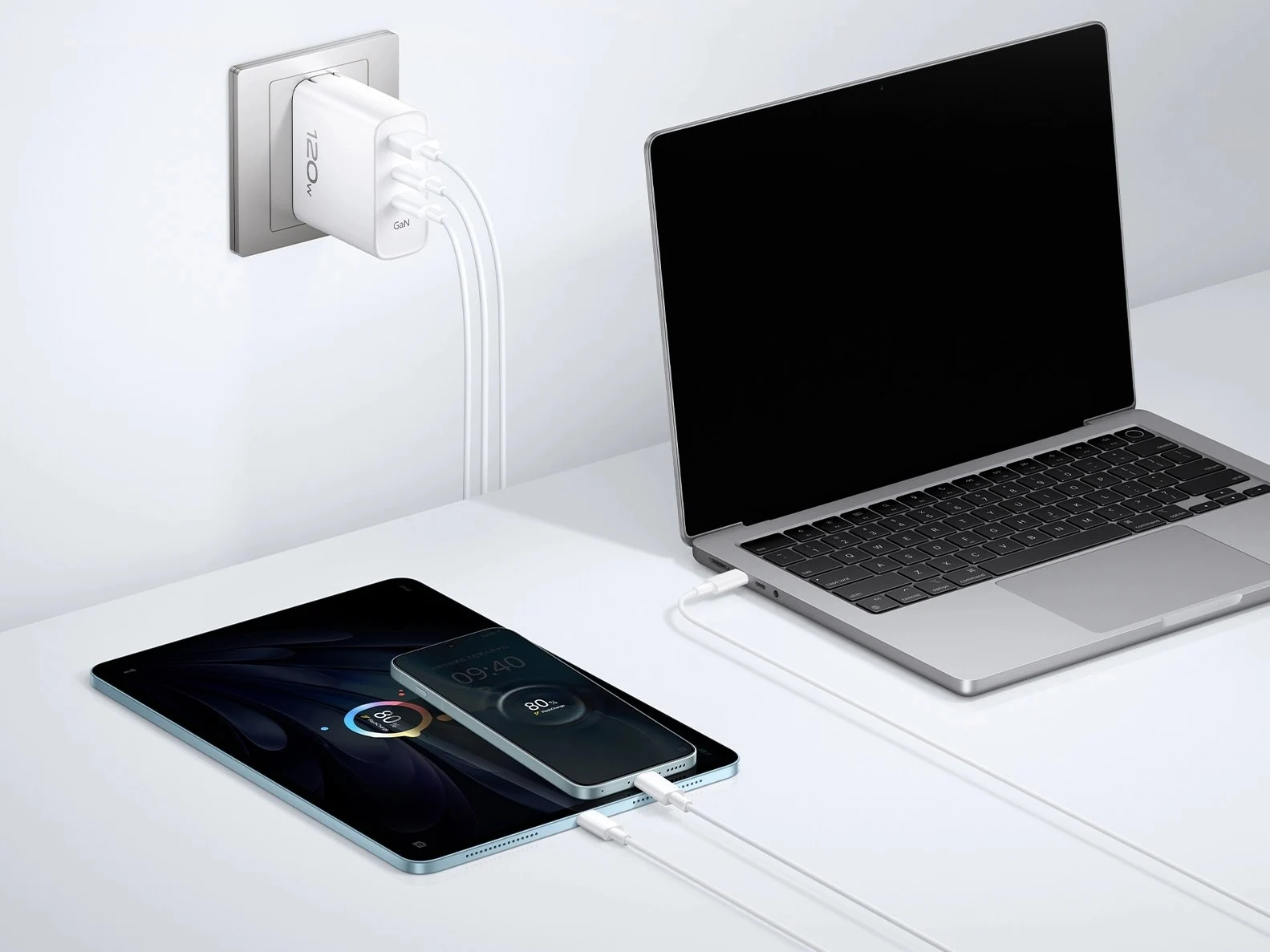
    The vivo 120W multi-port flash charging kit 1 m has just been launched in China. This new product features a three-port charging plug paired with a 9.2A USB-C to USB-C cable that is 1 meter (3.3 feet) long. It comes out at the same time as other vivo gadgets such as the X300 series smartphones, the Watch GT 2, and the TWS 5 earbuds.

    Charging Capabilities

    The vivo 120W charger includes two USB-C ports and one USB-A port, allowing for the charging of up to three devices at once. It supports various fast charging protocols like VFCP, PPS, PD 3.0, and QC 2.0. Vivo claims that users can charge the vivo X300 to 56% in just 30 minutes, and the iQOO 15 can reach 59% in the same time.

    Power Distribution

    When all three outputs are engaged on the vivo charger, power can be distributed in a 40W:40W:40W format or alternatively in a 100W:10W:10W configuration. Furthermore, once a device is fully charged, the power distribution adjusts itself accordingly. The use of GaN technology aids in efficient charging while minimizing heat production. Additionally, the product is equipped with a nine-layer safety system designed to protect against problems like overvoltage and overcurrent. This white accessory has dimensions of 61 x 61 x 30 mm (approximately 2.4 x 2.4 x 1.2 inches) and includes folding pins for easy storage when not in use.

    Availability and Pricing

    In China, the vivo 120W multi-port flash charging kit 1 m is available for CNY 199 (around $28). It remains uncertain whether or when this product will be available in other regions.

    Source:
    Link


  • Honor vs. iPhone 17 Pro: Night Photography Test in Helicopter

    Honor vs. iPhone 17 Pro: Night Photography Test in Helicopter

    Key Takeaways

    1. Honor will launch the Magic 8 and Magic 8 Pro on October 15, 2025, in China.
    2. A promotional video compares the night photography of the Magic 8 Pro and iPhone 17 Pro, showing both devices performing adequately in low-light conditions.
    3. Honor claims the Magic 8 Pro captures more detail and superior color quality than the iPhone 17 Pro, aided by AI-driven image enhancement.
    4. The Magic 8 Pro is expected to feature a 200 MP periscope telephoto lens, a 50 MP primary camera, and a 50 MP ultra-wide camera, though specifications are not officially confirmed.
    5. The Magic 8 Pro will likely have a 7,200 mAh battery with support for 120 W fast charging.


    Honor is set to unveil the Magic 8 and Magic 8 Pro on October 15, 2025, in China. Before this unveiling, the company has released a promotional video that compares its Snapdragon 8 Elite Gen 5 flagship with the iPhone 17 Pro in a night photography challenge.

    Testing Conditions

    In the video, a representative from Honor conducted tests on both flagship devices while flying in a helicopter at high altitudes, capturing various parts of the city under low-light conditions. Despite some shakiness in the footage, both the Magic 8 Pro and iPhone 17 Pro managed to capture the scenes adequately.

    Image Quality Comparison

    According to Honor, the images taken by the Magic 8 Pro offer more detail than those from the iPhone 17 Pro. The company also claims that the photos from its new phone, powered by the Snapdragon 8 Elite Gen 5, exhibit superior color quality, which can be improved even further thanks to an AI-driven image enhancement feature.

    Camera Specifications and Features

    Although Honor has not officially disclosed the camera specifications for the Magic 8 Pro, it has hinted at a 200 MP periscope telephoto lens. This is expected to feature a 1/1.4-inch sensor with an f/2.6 aperture, alongside a 50 MP primary camera with an f/1.6 lens and another 50 MP ultra-wide camera.

    The latest teasers have indicated that the Magic 8 Pro will come equipped with a substantial 7,200 mAh battery, believed to support 120 W fast charging (with the 160 W Anker Prime charger currently priced at $115.99 on Amazon). More information regarding the Snapdragon 8 Elite Gen 5 flagship will be disclosed at the upcoming launch event in China.

    Source:
    Link


  • Oscal Tank 1: 20,000mAh Battery, Night Vision, Dual Flashlight

    Oscal Tank 1: 20,000mAh Battery, Night Vision, Dual Flashlight

    Key Takeaways

    1. The Oscal Tank 1 is available for $429 (12 GB RAM) and $468 (16 GB RAM) directly from the manufacturer’s website, with prices set to increase after the launch phase.
    2. The phone is thick (29.5mm) and heavy (640 grams), comparable to four stacked Apple iPhone 17s.
    3. It features a massive 20,000 mAh battery, providing 20 hours of gaming and 45 days on standby, with 55W USB-C charging.
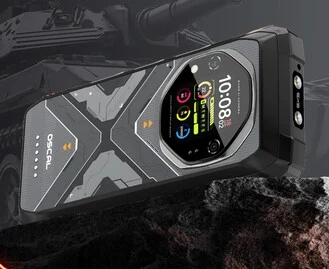
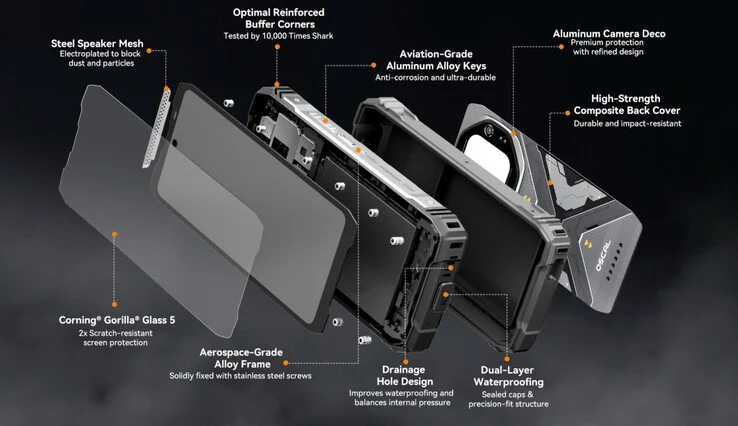
    4. The device has an IP69K-rated waterproof casing, dual LED flashlights, a customizable button, and a secondary display for selfies.
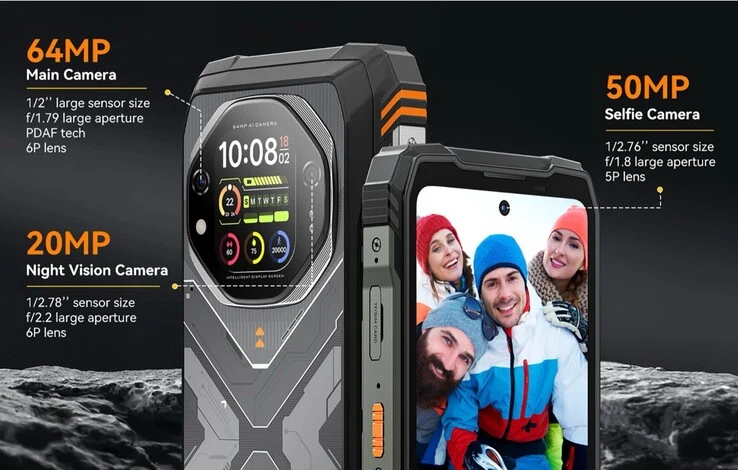
    5. The camera setup includes a 64 MP primary camera, a 20 MP night vision camera, and a 50 MP front-facing camera, with a 6.78-inch display offering 1080p+ resolution and 120 Hz refresh rate.


    The Oscal Tank 1 has been introduced to the public just recently and can be purchased straight from the manufacturer’s website. The phone comes with 12 GB of RAM and 512 GB of storage priced at $429, while the variant with 16 GB of RAM is available for $468. After the initial launch phase, the prices will increase to $520 and $559, respectively.

    Size and Weight

    Measuring 29.5 millimeters in thickness and weighing 640 grams, the Tank 1 is roughly as thick and heavy as four Apple iPhone 17s stacked together.

    Battery and Durability

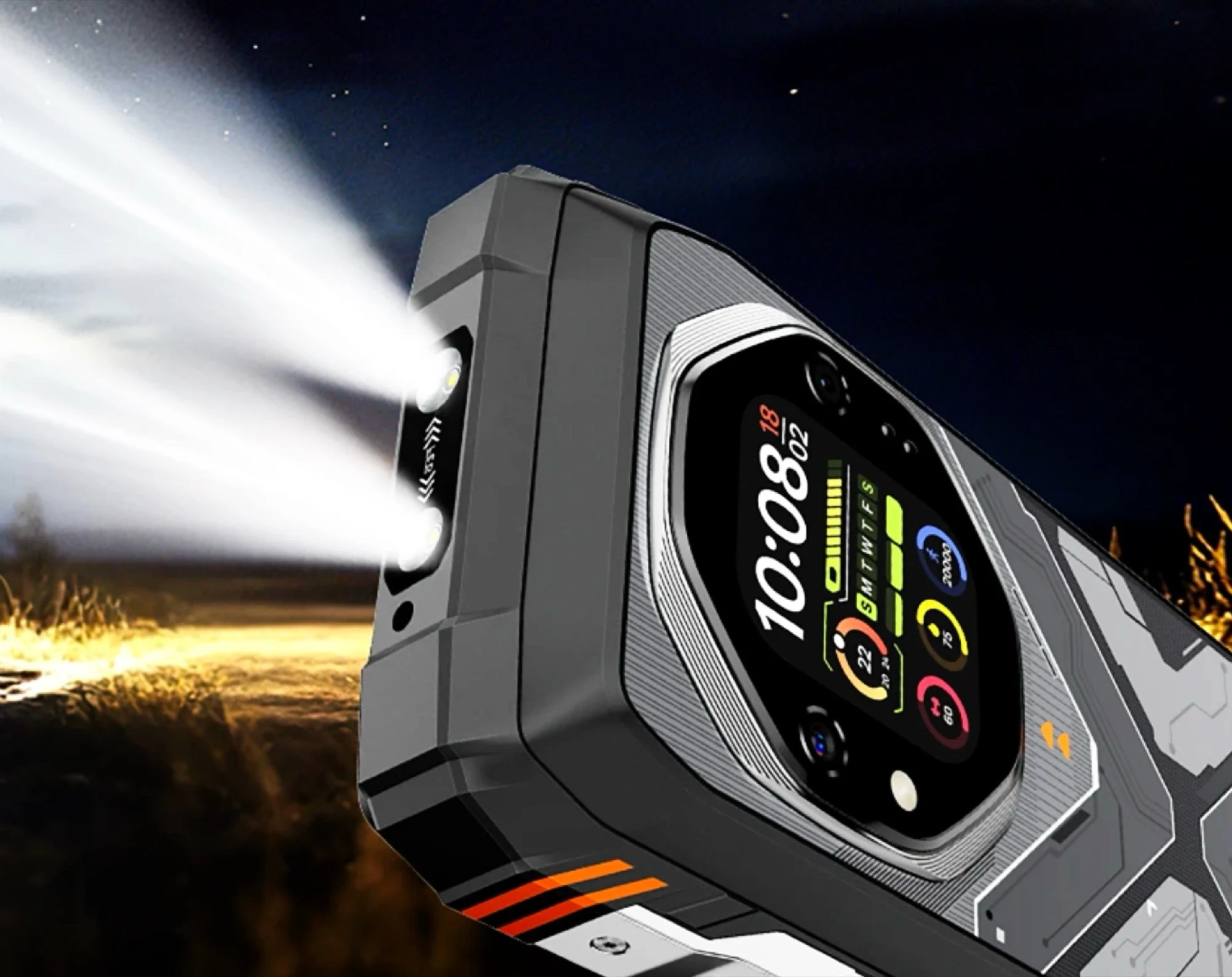
    For those who don’t mind carrying such a hefty smartphone, they will benefit from an enormous battery capacity of 20,000 mAh, which offers an impressive runtime of 20 hours for gaming and up to 45 days on standby. The device can be charged through a USB-C port at speeds of up to 55 watts. Its IP69K-rated waterproof casing also features two LED flashlights on the top, which can reach a brightness of 170 lumens, alongside a customizable button on the left and a camera setup that includes a 2-inch secondary display for taking selfies with the main camera.

    Camera and Display

    The Oscal boasts a 64 MP f/1.8 primary camera equipped with a 1/2-inch sensor, a 20 MP f/2.2 night vision camera with a 1/2.78-inch sensor, and a 50 MP front-facing camera. The 6.78-inch primary display offers a resolution of 1,080p+, a refresh rate of 120 Hz, and a brightness level of 700 nits. Powering the smartphone is a MediaTek Dimensity 7050 chipset.

    Source:
    Link


  • Google Pixel 10 Pro Users Report App Crashes After October Update

    Google Pixel 10 Pro Users Report App Crashes After October Update

    Key Takeaways

    1. The Google Pixel 10 and Pixel 10 Pro have a display issue that was expected to be fixed with the October update.
    2. Many users report that the October update causes applications to hang or crash, especially on the Pixel 10 Pro and Pro XL.
    3. Restarting the phone does not resolve the crashing problem for most users.
    4. A temporary workaround involves uninstalling the October updates for Google Play Services and the Google Play Store, but this logs users out of their Google accounts.
    5. Clearing the cache for Google Play Services may fix the issue for some devices, but Google has not yet addressed the problem officially.


    The Google Pixel 10 and Pixel 10 Pro have faced a significant problem since they were released, making the display temporarily unusable. This display issue was expected to be resolved with the October update that Google has been distributing to the Pixel 10 series since last week. However, many user reports on Reddit indicate that this update has brought along a new problem.

    New Problems Arise

    Users who have been impacted say that following the update, all applications either hang on startup or crash soon after they open. The problem seems to mainly affect the Pixel 10 Pro and the Pixel 10 Pro XL, but several users of the standard model are also experiencing crashes. Restarting the phone does not seem to fix the problem. One individual claims to have discovered a temporary workaround – by uninstalling the October updates for Google Play Services and the Google Play Store, they were able to stop the crashing.

    Workarounds and Concerns

    Nevertheless, this method logs users out of their Google account, so it’s important to ensure that a passkey is saved on a backup device for re-login purposes. At least one user has mentioned that simply clearing the cache for Google Play services in the system settings under Apps → Google Play Services fixed the problem quickly, at least for some devices. Google has not yet made an official statement regarding this issue. Anyone who has not yet applied the October update is advised to hold off until Google addresses this new problem.

    Source:
    Link


  • Vivo X300 vs X300 Pro: Specs Comparison of Display, Performance, Cameras, Battery

    Vivo X300 vs X300 Pro: Specs Comparison of Display, Performance, Cameras, Battery

    Key Takeaways

    1. Design and Size: The Vivo X300 is smaller and lighter (150.57 × 71.92 × 7.95 mm, 190 g) compared to the larger and heavier X300 Pro (161.98 × 75.48 × 7.99 mm, 226 g).

    2. Display Differences: The X300 features a 6.31-inch AMOLED display with a resolution of 2640 × 1216, while the X300 Pro has a larger 6.78-inch display with a resolution of 2800 × 1260 and a slightly better screen-to-body ratio.

    3. Camera Specifications: The X300 has a 200 MP primary camera, while the X300 Pro offers a 50 MP gimbal-stabilized main camera and a 200 MP Zeiss telephoto lens, supporting 8K video versus the X300’s 4K.

    4. Battery Capacity: The X300 Pro has a larger 6,510 mAh battery, offering longer standby (20.9 days) and talk times (28.1 hours) compared to the X300’s 6,040 mAh battery (19 days standby, 23.4 hours talk).

    5. Unique Features: The X300 Pro Photographer Edition supports Beidou satellite messaging for communication, which is not available on the X300, and includes a multi-spectral sensor for enhanced color and ambient light data collection.


    The Vivo X300 series showcases the brand’s newest flagship offering, combining Zeiss lenses, cutting-edge AI processing, and the MediaTek 3 nm Dimensity 9500 chip. Although both devices share the same foundational hardware, the X300 and X300 Pro vary in their camera features, build, and several important aspects. Let’s take a deeper dive into their standout specifications and distinctions.

    Size and Design Differences

    The Vivo X300 is designed to be smaller and lighter, whereas the X300 Pro is bigger and more robust. The dimensions for the X300 are 150.57 × 71.92 × 7.95 mm with a weight of 190 g, in contrast to the X300 Pro’s 161.98 × 75.48 × 7.99 mm and a heftier weight of 226 g.

    Display Features

    In terms of screens, the X300 has a 6.31-inch AMOLED display boasting a resolution of 2640 × 1216 and a 19.54:9 aspect ratio. The X300 Pro, on the other hand, upgrades to a 6.78-inch display with a resolution of 2800 × 1260 and a 20:9 aspect ratio. The Pro also achieves a slightly enhanced screen-to-body ratio of 94.85%, compared to 94.66% for the standard model.

    Both devices utilize the same MediaTek Dimensity 9500 processor, which is built on a 3 nm architecture, featuring an 8-core setup (1×4.21 GHz, 3×3.5 GHz, and 4×2.7 GHz), along with a Mali-G1 Ultra GPU.

    Memory and Connectivity

    The only slight difference in specifications is seen outside the CPU and GPU — the Vivo X300 Pro 1TB Photographer Edition comes with LPDDR5X Ultra Pro four-channel RAM and includes satellite communication support, offering marginally improved memory bandwidth and extra connectivity options. That said, the core performance remains identical across both devices.

    The X300 has a 200 MP primary camera with typical OIS, while the X300 Pro features a 50 MP gimbal-stabilized main camera aimed at enhanced motion and low-light capture. The telephoto lens varies as well — the X300 includes a 50 MP sensor with 3× optical zoom, while the X300 Pro upgrades to a 200 MP Zeiss APO lens with 3.5× optical zoom. The Pro model also supports 8K video recording, unlike the X300 which has a 4K restriction.

    Battery Life Comparison

    When it comes to battery life, the difference between the two models is in capacity and longevity. The Vivo X300 Pro is equipped with a larger 6,510 mAh battery compared to the X300’s 6,040 mAh, leading to longer standby times (20.9 days against 19 days) and talk times (28.1 hours vs. 23.4 hours).

    Both smartphones run on OriginOS 6, which is based on Android 16, and they support dual 5G connectivity over major global bands. Furthermore, they come with Wi-Fi 7 (2.4 GHz, 5.1 GHz, and 5.8 GHz) featuring 2×2 MIMO and MU-MIMO, Bluetooth 5.4 supporting various codecs such as SBC, AAC, aptX, aptX HD, LDAC, and LHDC 5.0, NFC, and a USB 3.2 Gen1 Type-C interface that allows for DP projection and OTG reverse charging.

    Unique Features of the Pro Model

    A key distinction is that the Vivo X300 Pro Photographer Edition provides support for Beidou satellite messaging, enabling short-message communication through satellite networks, which isn’t available on the standard X300.

    Both models, the Vivo X300 and X300 Pro, are equipped with an extensive array of sensors, including an accelerometer, ambient light sensor, proximity sensor, gyroscope, and electronic compass. They also feature front and rear color temperature sensors, a 3D ultrasonic single-point fingerprint sensor, a laser focus sensor, infrared remote control, a Flicker sensor, and an X-axis linear motor.

    The only significant difference is that the X300 Pro is fitted with a multi-spectral sensor, which Vivo claims is utilized for gathering color and ambient light data. In contrast, the X300 has a Hall sensor for detecting magnetic accessories.

    If you’re interested in the variants and pricing options for the Vivo X300 series, you can check them out here — one for the X300 Pro and another for the X300.

    Source:
    Link



  • WP58 Pro Smartphone: 512GB Storage, Night Vision, 10,000mAh Battery

    WP58 Pro Smartphone: 512GB Storage, Night Vision, 10,000mAh Battery

    Key Takeaways

    1. The Oukitel WP58 Pro is priced at $289 and has important shipping and warranty details to consider before purchase.
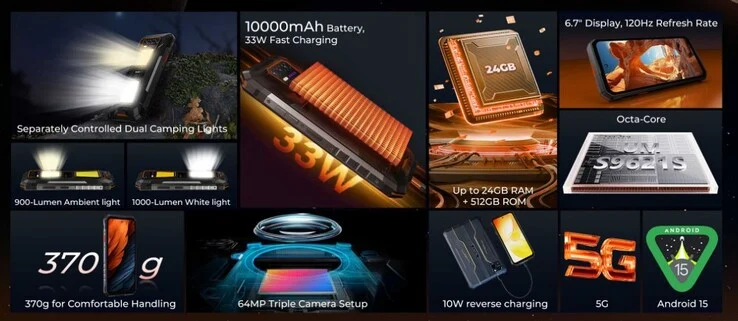
    2. The smartphone features a robust design with IP68, IP69K, and MIL-STD-810H certifications, weighing 370 grams and equipped with two powerful flashlights.
    3. It includes a massive 10,000mAh battery that supports 33W fast charging and 10W reverse charging, allowing it to act as a power bank.
    4. The WP58 Pro is powered by an eight-core SoC with 5G support, 8GB of RAM, and 512GB of internal storage, expandable via microSD with a trade-off on SIM slots.
    5. Camera features include a 64MP main camera, a 2MP macro camera, an 8MP night vision camera, and a 6.7-inch display with a 120Hz refresh rate.


    Oukitel is once more broadening its range of smartphones. The WP58 Pro can be purchased directly from the maker for $289. However, it’s essential for potential customers to carefully review the shipping terms and warranty details before making a purchase.

    Robust Design and Features

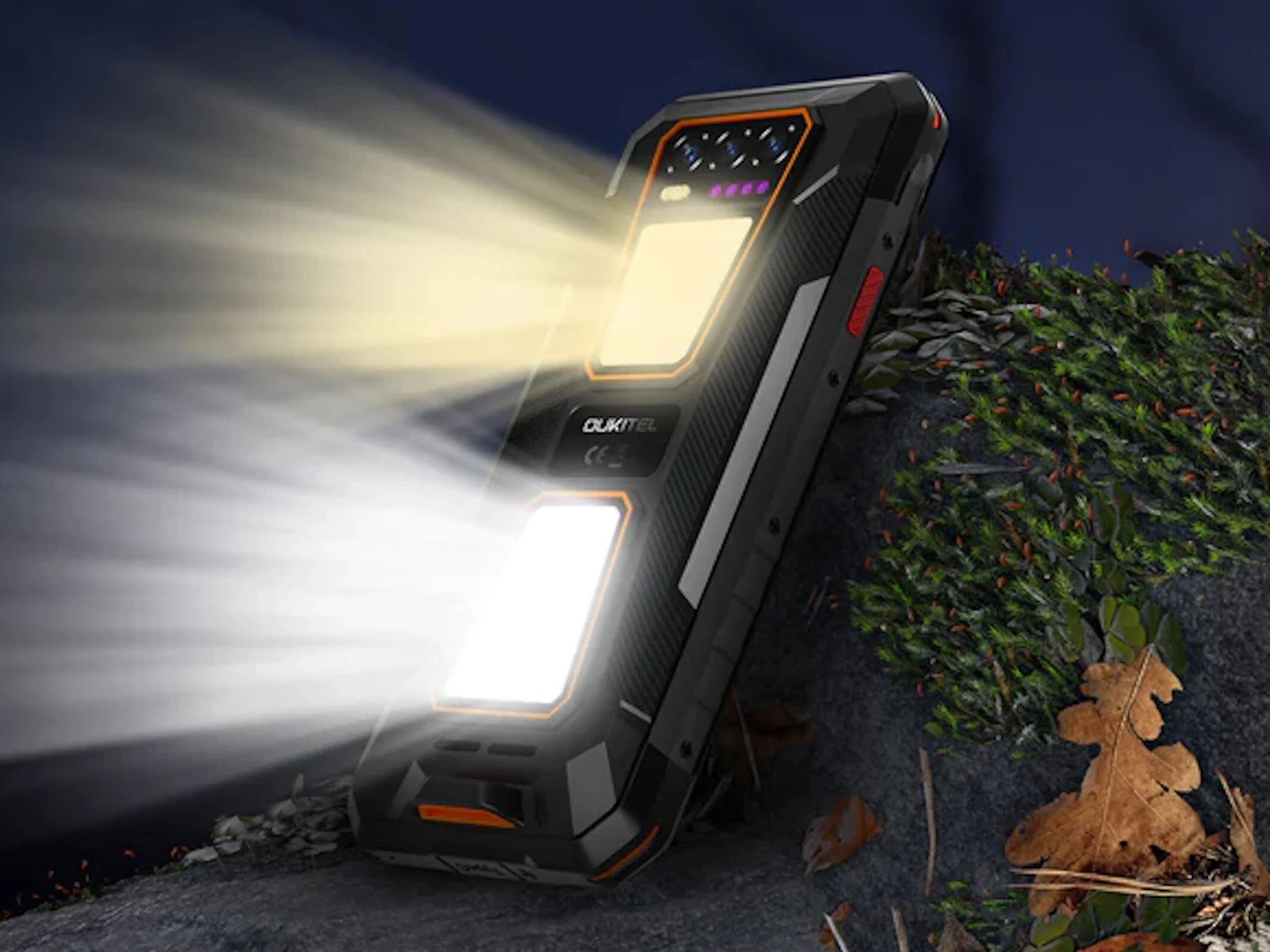
    The WP58 Pro is designed to be tough, weighing in at 370 grams, which isn’t exactly lightweight. The manufacturer from China boasts that it has IP68, IP69K, and MIL-STD-810H certifications. On the rear, there are two distinct flashlights that produce 1,000 and 900 lumens, respectively. These flashlights have different color temperatures; one emits a cooler white light and the other gives off a warmer tone.

    Impressive Battery and Performance

    The Oukitel smartphone comes with a massive 10,000mAh battery that can be charged at a speed of up to 33 watts. It also features 10W reverse charging, allowing it to function as a power bank. Furthermore, the WP58 Pro is driven by an eight-core SoC with 5G capabilities, making it superior to some budget rugged smartphones that only support 4G LTE. Other specifications include 8GB of RAM and a fairly generous 512GB of internal storage. The phone operates on Android 15 right out of the box, and users can expand the storage with a microSD card, although this will require giving up one of the dual SIM slots.

    Camera and Display Features

    Oukitel has also incorporated a side-mounted fingerprint scanner, a 64MP main camera, and a 2MP macro camera, though the latter might not be very useful in practical situations. In addition, there is an 8MP night vision camera and a 6.7-inch screen that boasts a refresh rate of 120Hz.

    Source:
    Link


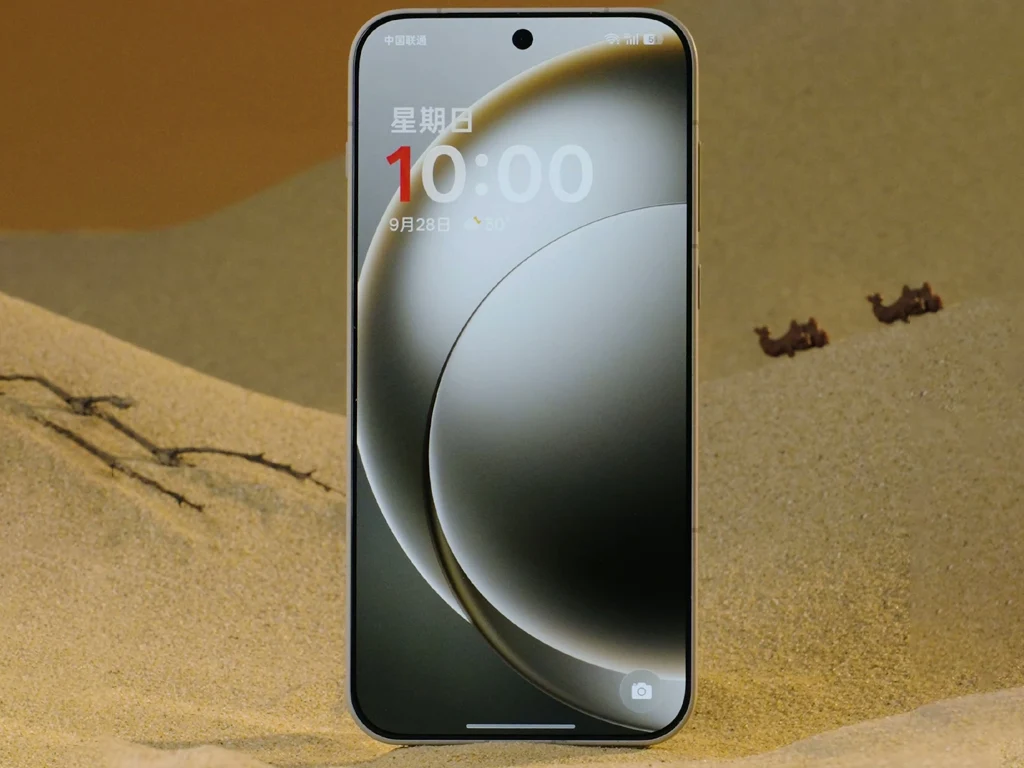
  • OnePlus 15 BOE X3 Display Details Before Upcoming Launch

    OnePlus 15 BOE X3 Display Details Before Upcoming Launch

    Key Takeaways

    1. OnePlus is launching its Snapdragon 8 Elite Gen 5 flagship smartphone, the OnePlus 15, in late October 2025.
    2. The OnePlus 15 features ultra-slim bezels measuring just 1.15 mm, enhancing the immersive viewing experience.
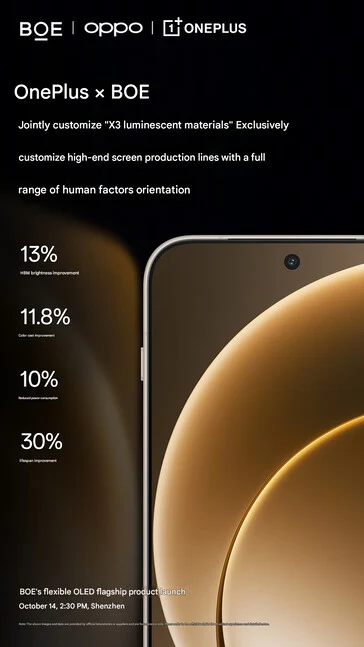
    3. The display uses a custom BOE X3, offering a 30% longer lifespan and 10% reduction in power usage compared to its predecessor.
    4. The in-house Display P3 chipset ensures stable brightness, with levels as low as 1-nit for comfortable viewing in low light.
    5. The OnePlus 15 will have an upgraded refresh rate of 165 Hz, improving from the previous model’s 120 Hz display.


    OnePlus is gearing up to introduce its new Snapdragon 8 Elite Gen 5 flagship in China shortly. Specifically, the launch event is scheduled for late October 2025. Just days before this event, the company has revealed some exciting details about the display of its high-end smartphone.

    Slim Bezels for Immersive Viewing

    One of the teasers emphasizes the very slim bezels of the OnePlus 15, which measure just 1.15 mm thick. This is thinner than those on the Xiaomi 17, and the ultra-slim bezels should provide an immersive viewing experience for users of the flagship device.

    Enhanced Display Features

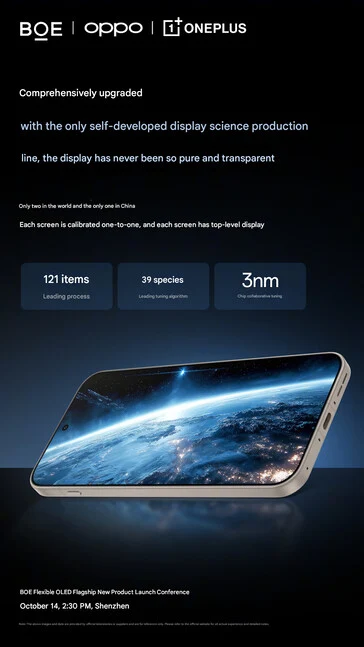
    The display on the OnePlus 15 is built with a custom BOE X3 that was developed in collaboration. When compared to its predecessor, this screen is said to exhibit a 30% longer lifespan, a 10% reduction in power usage, a 13% increase in HBM brightness, and an 11.8% enhancement in color coverage.

    Stable Brightness Management

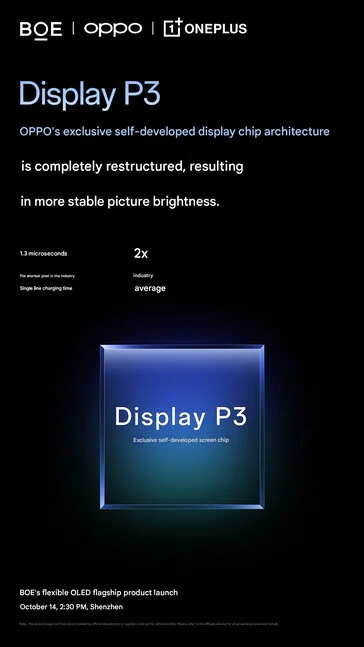
    Another teaser reveals that the screen is managed by the in-house Display P3 chipset, which supposedly guarantees stable brightness levels. It can reportedly go as low as 1-nit, allowing for a comfortable viewing experience in dimly lit conditions.

    In addition, OnePlus has previously announced that the display of the upcoming flagship will feature a refresh rate of 165 Hz. This is a significant upgrade from the previous model (512 GB curr. $849.99 on Amazon), which had a 120 Hz display. More information is expected to be unveiled at the BOE X3 event, happening on October 14, 2025, in China.

    Source:
    Link



  • Vivo X300 Pro Launch: New Camera Flagship Priced from $939

    Vivo X300 Pro Launch: New Camera Flagship Priced from $939

    Key Takeaways

    1. The Vivo X300 Pro is priced at $934.99 and competes with the iPhone 17 Pro Max and Galaxy S25 Ultra.
    2. It features MediaTek’s Dimensity 9500 chip and offers significant improvements over the standard X300 model.
    3. The smartphone has a large 6,510 mAh battery with 40 W wireless and 90 W wired charging, and a 6.78-inch LTPO AMOLED display.
    4. Pricing for the X300 Pro starts at CNY 5,299 ($743) for the base model and goes up to CNY 8,299 ($1,164) for the highest variant with satellite connectivity.
    5. A global launch is expected next month, with some retailers already selling the Vivo X300 Pro internationally, albeit with potential limitations on software compatibility.


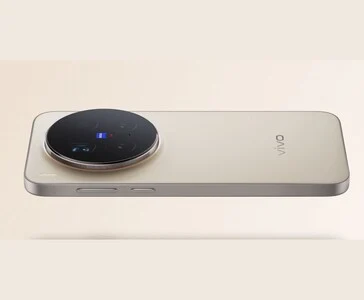
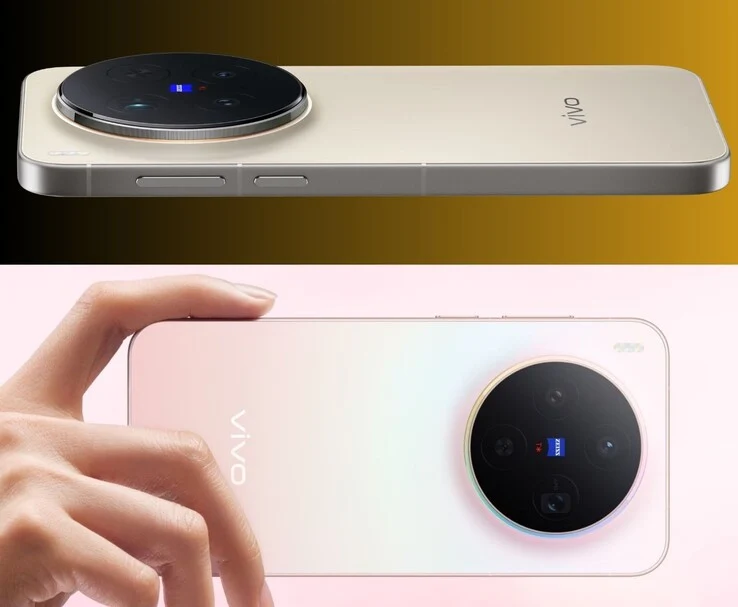
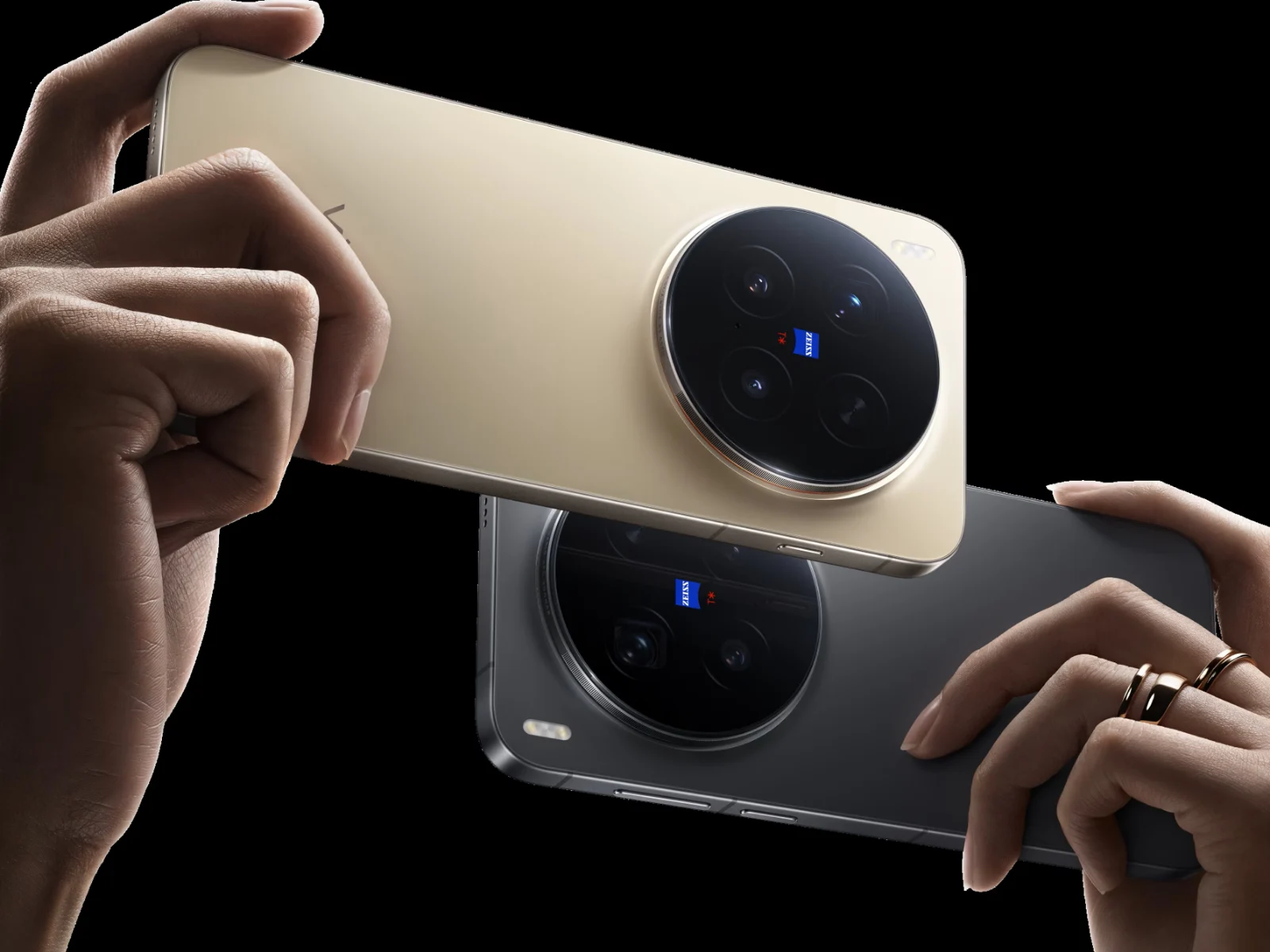
    The Vivo X300 Pro has been officially launched as the latest competitor to the iPhone 17 Pro Max and Galaxy S25 Ultra, which is currently priced at $934.99 on Amazon. This release comes ahead of the anticipated X300 Ultra expected next year. As anticipated, the X300 Pro is among the first smartphones to utilize MediaTek’s Dimensity 9500, which was revealed last month. For comparison, the regular X300 also features this chip, and we have previously discussed its launch details.

    Enhanced Features

    As expected, the X300 Pro offers several improvements over its non-Pro version. Vivo has equipped the Pro with a substantial 6,510 mAh battery that supports both 40 W wireless and 90 W wired charging. Additionally, it sports a 6.78-inch LTPO AMOLED display with a resolution of 1,260 x 2,800 pixels, which provides a variable refresh rate ranging between 1-120 Hz, and boasts an impressive 94.85% screen-to-body ratio.

    Camera and Dimensions

    The smartphone is packed with advanced camera technology and is housed in a sleek design weighing 226 g with dimensions of 161.98 x 75.48 x 7.9 mm.

    The base model of the Vivo X300 Pro starts at CNY 5,299 (approximately $743) and comes with 12 GB of RAM and 256 GB of storage. The price increases to CNY 6,699 (around $939) for the 16 GB RAM and 1 TB storage variant. For those interested in additional features, Vivo also offers a version priced at CNY 8,299 (about $1,164) that includes satellite connectivity and a Photographer Kit.

    Global Launch and Availability

    Interestingly, Vivo has hinted that the X300 Pro will be introduced globally next month alongside the X300 during a special launch event. However, detailed information about the event is still pending. Meanwhile, retailers like Giztop and Wondamobile are already selling the Vivo X300 Pro internationally as an imported device, starting at $939 and $949, respectively. It’s important to note that this model runs on the Chinese version of OriginOS 6, meaning it may have limitations, such as not being able to connect with a Wear OS smartwatch. However, it does support Google Play and Google Mobile Services, along with various global banking applications.

    Source:
    Link