Tag: Google Pixel 10

  • Apple aims to restrict Android to iPhone file transfer amid regulation fears

    Apple aims to restrict Android to iPhone file transfer amid regulation fears

    Key Takeaways

    1. Google introduced a new feature allowing file transfers between Android and iPhone using Quick Share and AirDrop, starting with the Pixel 10 series.
    2. This move has created tension between Google and Apple, with Apple reportedly unhappy about the situation.
    3. Apple risks public relations backlash if it reacts too quickly to Google’s feature, especially after its past resistance to RCS messaging.
    4. Regulatory scrutiny, particularly from the European Union, influences Apple’s potential responses to maintain compliance and avoid fines.
    5. Google’s successful launch of this feature puts pressure on Apple to respond cautiously, as the tech community watches closely.


    Yesterday, Google unveiled a surprising new feature: it will now allow smooth file transfers between Android and iPhone devices through Quick Share and AirDrop. Currently, this functionality is only available for the new Google Pixel 10 series, but it paves the way for broader adoption across other Android brands. The noteworthy part? Google managed to create this connection without any help from Apple.

    Tension Between Tech Giants

    This independent action has naturally stirred some tension. Although Apple hasn’t released an official statement, reliable insiders like Bloomberg’s Mark Gurman indicate that the company is not happy about the situation. Gurman mentioned that Apple is eager “to kill this [AirDrop-Quick Share link] ASAP.”

    Caution Is Key

    Yet, if Apple reacts too quickly, it could face a significant public relations blowback. Gurman points out that Apple is “backed into a corner here,” as they want to avoid “another RCS-level PR and regulatory war” that could harm their image.

    For many years, Google has been urging Apple to embrace the modern RCS standard for texting on iMessage through its “#GetTheMessage” campaign, which made Apple seem resistant to enhancing cross-platform user experiences. Apple did finally implement RCS, but only after heavy public and media pressure.

    Regulatory Challenges Ahead

    Apart from public sentiment, Apple also has to think about its response due to growing regulatory scrutiny, especially from the European Union. The European Commission has been quite active, pushing Apple into choices it wouldn’t normally make. Examples of this include adopting the USB-C charging standard and making third-party app stores available on iPhones and iPads.

    Ignoring the EU’s digital rules could lead to hefty fines. By creating a unilateral AirDrop link, Google has introduced a feature that regulators might see as essential for fair interoperability.

    At this moment, Google seems to have pulled off this strategic move successfully. The tech community is now on high alert for Apple’s response, which is expected to be one of the most cautious and measured strategies the company will undertake this year.


    Source:
    Link


  • Best Android Games for Smartphones and Tablets in 2025

    Best Android Games for Smartphones and Tablets in 2025

    Key Takeaways

    1. The Google Play Store has selected its top Android games for 2025, focusing on developer performance and user experience.
    2. Pokémon TCG Pocket has been named the best game of 2025, offering a digital version of the classic trading card game.
    3. Pokémon TCG Pocket is also a finalist for the best iOS game in Apple’s App Store.
    4. Disney Speedstorm won the title for “best game across devices,” praised for its performance and responsive controls.
    5. Disney Speedstorm features cross-play and cross-progression, allowing seamless gameplay across different devices.


    The Google Play Store has revealed its top picks for the best Android games of 2025. This list was curated by Google’s editors, who concentrated on how well developers performed, the new ideas in games, and the overall experience for users. Among the featured games for devices like the Google Pixel 10 (available from $785 on Amazon), there’s also a title that can be played on the Google Play Store for Windows.

    Top Honors for Pokémon TCG Pocket

    In a nutshell, Pokémon TCG Pocket has been awarded the title of best game for 2025. This game is also a finalist in Apple’s App Store for iOS games. The editors highlight that this game provides a genuine digital version of the classic trading card game, combining the joy of collecting cards with the thrill of opening booster packs. It uses its digital nature to create a more accessible experience for Pokémon enthusiasts.

    Best Game Across Devices

    For the category of “best game across devices,” Disney Speedstorm took the lead. The racing game impressed the judges with its strong performance and responsive controls on various platforms. The game’s features allowing players to enjoy cross-play and cross-progression have also been commended, making it easy for gamers to switch between devices without losing their progress.

    Source:
    Link


  • Google Pixel 10 Pro Users Report App Crashes After October Update

    Google Pixel 10 Pro Users Report App Crashes After October Update

    Key Takeaways

    1. The Google Pixel 10 and Pixel 10 Pro have a display issue that was expected to be fixed with the October update.
    2. Many users report that the October update causes applications to hang or crash, especially on the Pixel 10 Pro and Pro XL.
    3. Restarting the phone does not resolve the crashing problem for most users.
    4. A temporary workaround involves uninstalling the October updates for Google Play Services and the Google Play Store, but this logs users out of their Google accounts.
    5. Clearing the cache for Google Play Services may fix the issue for some devices, but Google has not yet addressed the problem officially.


    The Google Pixel 10 and Pixel 10 Pro have faced a significant problem since they were released, making the display temporarily unusable. This display issue was expected to be resolved with the October update that Google has been distributing to the Pixel 10 series since last week. However, many user reports on Reddit indicate that this update has brought along a new problem.

    New Problems Arise

    Users who have been impacted say that following the update, all applications either hang on startup or crash soon after they open. The problem seems to mainly affect the Pixel 10 Pro and the Pixel 10 Pro XL, but several users of the standard model are also experiencing crashes. Restarting the phone does not seem to fix the problem. One individual claims to have discovered a temporary workaround – by uninstalling the October updates for Google Play Services and the Google Play Store, they were able to stop the crashing.

    Workarounds and Concerns

    Nevertheless, this method logs users out of their Google account, so it’s important to ensure that a passkey is saved on a backup device for re-login purposes. At least one user has mentioned that simply clearing the cache for Google Play services in the system settings under Apps → Google Play Services fixed the problem quickly, at least for some devices. Google has not yet made an official statement regarding this issue. Anyone who has not yet applied the October update is advised to hold off until Google addresses this new problem.

    Source:
    Link


  • T-Mobile Offers Starlink Internet for Older Phones and Video Apps

    T-Mobile Offers Starlink Internet for Older Phones and Video Apps

    Key Takeaways

    1. T-Mobile’s T-Satellite Starlink data service is launching on phones in October, expanding support for more device models.
    2. Initial support includes Google Pixel 10, Samsung Z Fold 7, and Z Flip 7, with plans to add more iPhones, Samsung Galaxy, and Motorola models.
    3. Upcoming compatibility includes Google Pixel 9, Moto Razr 2025, and older Samsung Galaxy models like S22 and S23.
    4. T-Mobile collaborates with app developers to enhance T-Satellite apps, expanding beyond just Google applications.
    5. SpaceX is seeking FCC approval for up to 15,000 satellites, promising improved speeds and coverage for T-Mobile’s Starlink service.


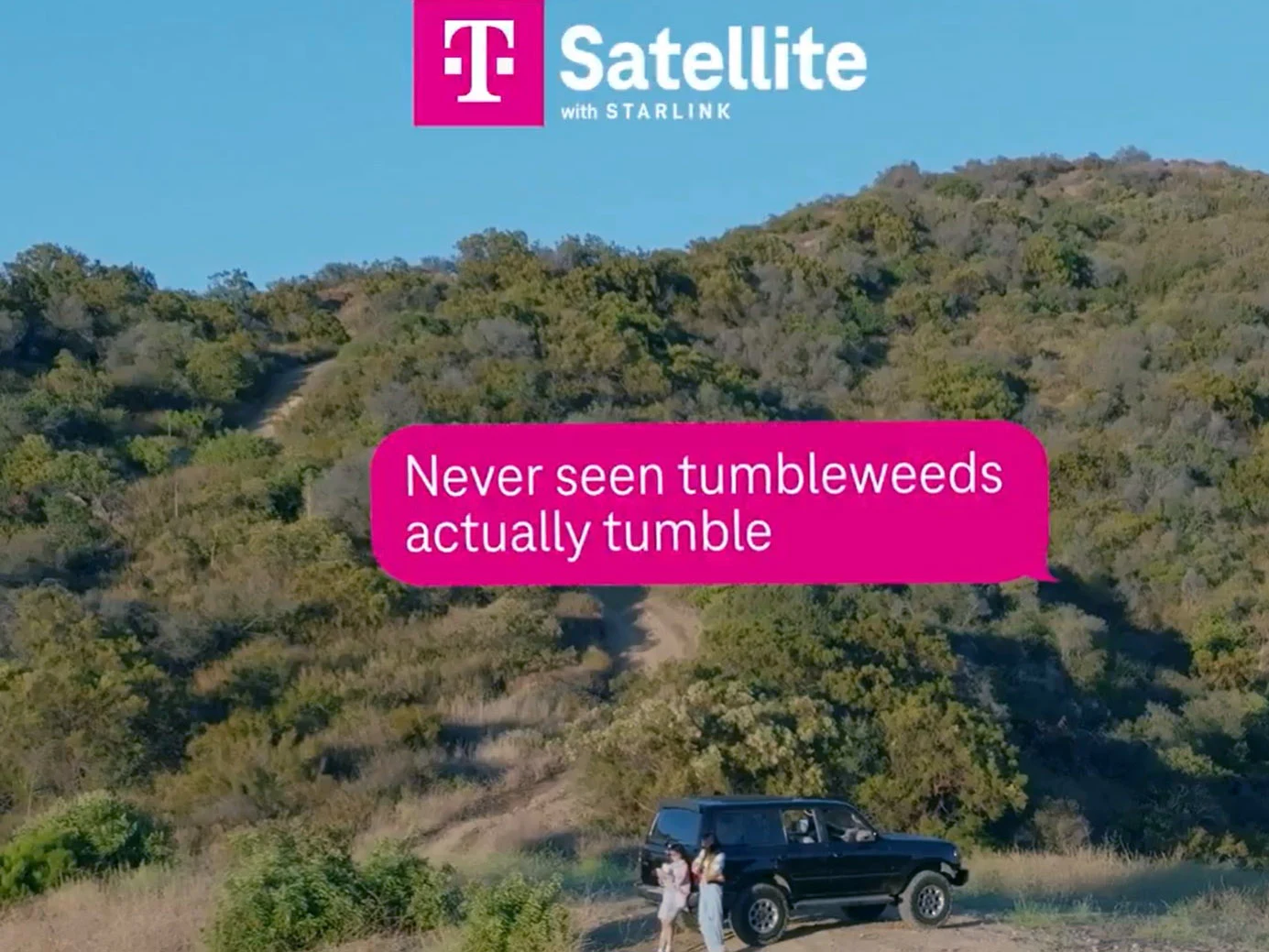
    T-Mobile has announced that its T-Satellite Starlink data service will be available on phones starting in October, and they have fulfilled that commitment with a significant increase in supported phone models.

    Expanded Support for More Devices

    The T-Satellite data service was launched earlier than expected for specific devices, including the Google Pixel 10 series and the Samsung Z Fold 7 and Z Flip 7, which is currently offered at a reduced price on Amazon. Now, the service is broadening its reach to include a variety of compatible iPhones, Samsung Galaxy models, and Motorola smartphones.

    Upcoming Compatibility for More Phones

    In addition, Starlink satellite data connectivity will soon be available on the Google Pixel 9 and Moto Razr 2025 series. It will also extend to several older Samsung Galaxy devices like the S22 and S23 series, as well as budget-friendly models ranging from the Galaxy A15 to the A56.

    Collaboration with App Developers

    Starlink has teamed up with app developers to enhance its initial lineup of T-Satellite apps that are tailored for data received from its direct-to-cell satellite network. When the T-Satellite data service was first introduced for Pixel 10 phones, the optimized apps were limited to Google applications, such as Maps. Now, T-Mobile has provided a complete list of all apps that are ready for T-Satellite:

    While it may not be the 5G carrier service that Elon Musk has imagined, the expansion of T-Satellite data options on T-Mobile offers basic media messaging and outdoor applications for all popular phone models, included in their premium plans.

    Future Growth in Satellite Connectivity

    SpaceX has sought approval from the FCC to deploy up to 15,000 direct-to-cell satellites, indicating that T-Mobile’s Starlink data speeds and coverage will continue to improve in the future.

    Source:
    Link


  • Google Pixel 10 Teardown Reveals Major Repair Enhancements

    Google Pixel 10 Teardown Reveals Major Repair Enhancements

    Key Takeaways

    1. The Google Pixel 10 has reduced camera quality compared to the Pixel 9 but improved repairability.
    2. The back cover can be removed easily without heat or special tools, allowing for straightforward access to internal parts.
    3. The battery is simpler to replace, requiring only a few screws and cables to be detached.
    4. Key components like the speaker and USB-C port are individually replaceable, but the three rear cameras are a single module.
    5. The Pixel 10 has a repairability rating of 6 out of 10, highlighting its easier maintenance despite some challenges with the display.


    The Google Pixel 10 may have seen significant reductions in camera quality when compared to its predecessor, the Pixel 9, but it has certainly compensated for this with various enhancements in repairability. The teardown video from iFixit, which is included below, reveals that getting the back cover off the Pixel 10 to access its internal parts is quite straightforward.

    Easy Access to Components

    Although the back cover is typically glued to the body, the adhesive can be taken off without needing heat or special tools. Once the adhesive is loosened, only a single cable has to be disconnected, allowing for the back cover and Qi charging coil to be swapped out easily. Also, there’s good news regarding the battery, which is now simpler to replace than it was in previous models. Just by taking out a few screws and detaching two more cables, you can extract the battery using a large, green tab. The battery does have glue holding it in, but the adhesive is less strong compared to what is found in many other smartphones.

    Replaceable Parts

    Additionally, parts like the speaker, USB-C port, and mmWave antenna can be replaced one by one. However, the three rear cameras come as a single module, meaning if one camera fails, you’ll likely have to change the whole module. Changing the display remains a challenge because the screen is firmly attached to the frame with tough adhesive, increasing the risk of causing damage when trying to take it off. According to iFixit, the Google Pixel 10 scores a repairability rating of 6 out of 10.

    Final Thoughts

    Overall, while there are some setbacks with the camera, the improvements in repairability could be a strong point for users looking to maintain their devices longer. The video from iFixit provides useful insights for those interested in DIY repairs.

    Source:
    Link


  • First Starlink Tweets from Space Now on Google Pixel 10 & Samsung Z Flip 7

    First Starlink Tweets from Space Now on Google Pixel 10 & Samsung Z Flip 7

    Key Takeaways

    1. SpaceX successfully tweeted from space using its Starlink direct-to-cell satellite network with a Samsung Galaxy S21 phone in February 2024.
    2. KDDI launched the Starlink-optimized X app in Japan, making it the first carrier to offer satellite communication for third-party apps when cellular networks are unavailable.
    3. T-Mobile’s Pixel 10 is the first US smartphone to enable Starlink data communication, but initially, access is limited to Google applications only.
    4. KDDI offers a wide range of satellite-ready apps, including social media, navigation, and weather, with plans to expand support to more devices soon.
    5. T-Mobile’s Starlink data service will launch in October, allowing broader device compatibility and access to more chat and social media applications.


    SpaceX has made headlines by tweeting from space for the first time, utilizing Starlink’s direct-to-cell (DTC) satellite network in a test conducted with a standard Samsung Galaxy S21 phone from Verizon back in February 2024.

    New App Launches with Pixel 10

    In a move that seems perfectly timed with the arrival of the Google Pixel 10, KDDI in Japan has now launched the commercial version of the Starlink-optimized X app. The 2025 models of Pixel and the Samsung Galaxy Z series will be the initial devices compatible with this service.

    Given that Starlink’s DTC satellites are consistently visible over Japan, KDDI was able to secure the privilege of being the first carrier to introduce a third-party app tailored for satellite communication when cellular networks are unavailable.

    T-Mobile’s Surprising First

    Surprisingly, the Pixel 10 for T-Mobile has emerged as the first smartphone in the US to enable Starlink data communication; however, its initial access is restricted to Google applications, which include Maps and Messages.

    On the other hand, KDDI’s Starlink service offers a range of third-party applications such as X for social media and messaging, Google Maps for navigation, Weathernews for essential weather updates, the NERV Disaster Prevention app for emergency alerts, and YAMAP for hiking trail maps.

    A Suite of Satellite-Ready Apps

    This collection of satellite Internet-ready applications is the most comprehensive available anywhere, and KDDI assures that support for the Google Pixel 10 and Samsung Galaxy Z Fold 7 or Flip 7 will soon be expanded to additional devices.

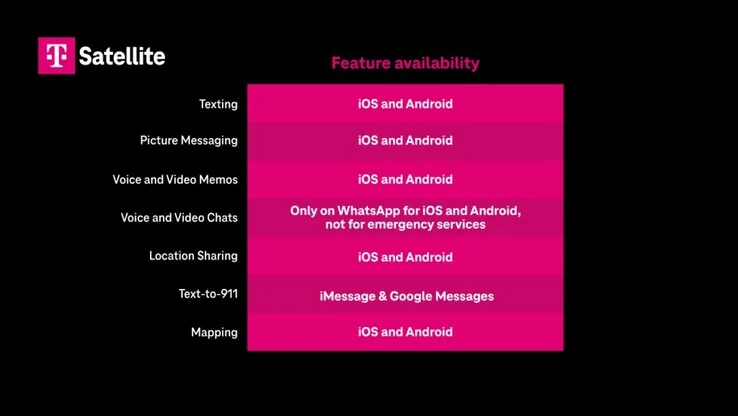
    Currently, T-Mobile’s T-Satellite service, developed in collaboration with Starlink, provides capabilities for text and picture messaging, along with limited data access on three Google apps specifically for the Pixel 10 series. When T-Mobile’s Starlink data service is widely launched in October, it will encompass a broader range of devices, including Samsung, Motorola, and Apple iPhone 13 and newer models, along with an expanded selection of chat and social media applications.

    As things stand, KDDI is enjoying the advantage of being the first carrier to commercially launch X posts and direct messaging from space in areas lacking cellular coverage. They are also providing vital maps, navigation, and weather or emergency notifications that could prove essential for those exploring the great outdoors.

    Source:
    Link


  • T-Mobile Reveals Starlink-Compatible Phones and Apps Before Pixel 10

    T-Mobile Reveals Starlink-Compatible Phones and Apps Before Pixel 10

    Key Takeaways

    1. The new Google Pixel 10 series will be the first phones to use Starlink satellite Internet data, available from August 28.
    2. The Pixel 9a supports only satellite messaging, without the capability to send pictures or use app data through Starlink.
    3. T-Mobile has a list of compatible phones and apps for Starlink data, including certain Google Pixel models, Apple’s iPhone 13-16 series, and select older Samsung models.
    4. Users of the Galaxy S21 series and Galaxy Z Fold/Flip models will not have access to Starlink data, despite their high price points.
    5. New apps optimized for the limited bandwidth of T-Satellite data include Google Maps, Google Messages, and Find Hub.


    Google and T-Mobile surprised everyone with the announcement of a new phone that can use Starlink’s data capabilities during the launch event for the Pixel 10 series.

    Exciting New Features

    According to Big Magenta, the latest Google Pixel phones will be the first to tap into Starlink satellite Internet data after the Pixel 10 series is released on August 28. However, the previously launched Pixel 9a, which is currently on sale at Amazon, only allows for satellite messaging and lacks the ability to send pictures or use app data through Starlink’s connection.

    The Latest Updates

    T-Mobile has revealed a list of phones and applications that are ready for Starlink data, just ahead of the general release of the T-Satellite data service in October. Other Google Pixel models from the 9 series and later are either already supporting Starlink data or will receive support soon.

    In addition, Apple’s iPhone 13, 14, 15, and 16 series will also be compatible with Starlink’s satellite Internet service on T-Mobile. Some older Samsung models are included too, but not all. For example, the Samsung Galaxy A14 won’t have access to Starlink data, which makes sense considering its lower price point.

    Disappointing News for Some Users

    It may frustrate users of the Galaxy S21 series that they will not be able to use Starlink’s data service on T-Mobile. Those who invested in the Galaxy Z Fold 3 and Flip 3, and their successors, Z Fold 5 and Z Flip 5, are also left out, even though these foldable phones are priced quite high.

    This situation is particularly surprising because some of T-Mobile’s budget-friendly options, like the Revvl 7, 7 Pro, and Revvl 8, are marked as “coming soon” for Starlink data support. To top it off, no Motorola phone scheduled for release in 2024 will offer Starlink data support, adding to the growing list of 14 incompatible devices.

    T-Mobile advocated for the inclusion of older phones for Starlink satellite Internet service compatibility and successfully secured exemptions for many. However, the new Starlink data connectivity won’t be available for all of the older models.

    New Apps for Limited Bandwidth

    The first apps designed to work with the limited bandwidth of the T-Satellite data option are now confirmed. Not surprisingly, all of these apps are from Google, including essential tools like Google Maps, Google Messages, and the Find Hub service for tracking down lost devices linked to your Google account.

    Source:
    Link


  • Google Pixel 10: Leaked Affordable Qi2 Stand and 67W Charger

    Google Pixel 10: Leaked Affordable Qi2 Stand and 67W Charger

    Key Takeaways

    1. The Google Pixel 10 and Pixel 10 Pro will be revealed on August 20.
    2. A new 67-watt charger will be introduced, upgraded from the previous 45-watt version.
    3. The charger supports simultaneous charging for the Pixel 10 and Pixel Buds and is priced at C$79.
    4. A protective case for the Pixel 10 is available for C$69, featuring a magnetic ring for Qi2 accessories.
    5. The new Google Qi2 Wireless Charger + Stand is priced at C$99 and offers improved alignment for faster charging.


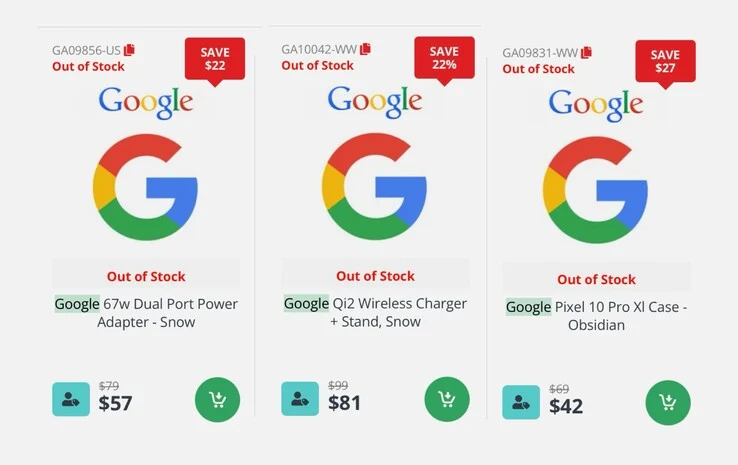
    The Google Pixel 10 and Pixel 10 Pro are set to be revealed on Wednesday, August 20. Just ahead of the launch, Canadian retailer DirectDial has started showcasing new accessories that seem to be designed by Google. It looks like Google is introducing a new 67-watt charger, which is an upgrade from their existing 45-watt USB-C charger.

    Charger Power Details

    Previous leaks suggest that the Pixel 10 Pro XL can only handle a maximum charging power of 39 watts. With the new higher wattage, the charger can also support charging for more energy-efficient laptops. Moreover, it includes a second USB-C port, allowing users to charge their Pixel 10 and Pixel Buds simultaneously. This charger is priced at C$79. The official protective case for the Pixel 10 is available for C$69, which is C$20 more than the Pixel 9’s case. It reportedly features a magnetic ring designed for Qi2 accessories, as indicated by an earlier leak.

    New Wireless Charging Stand

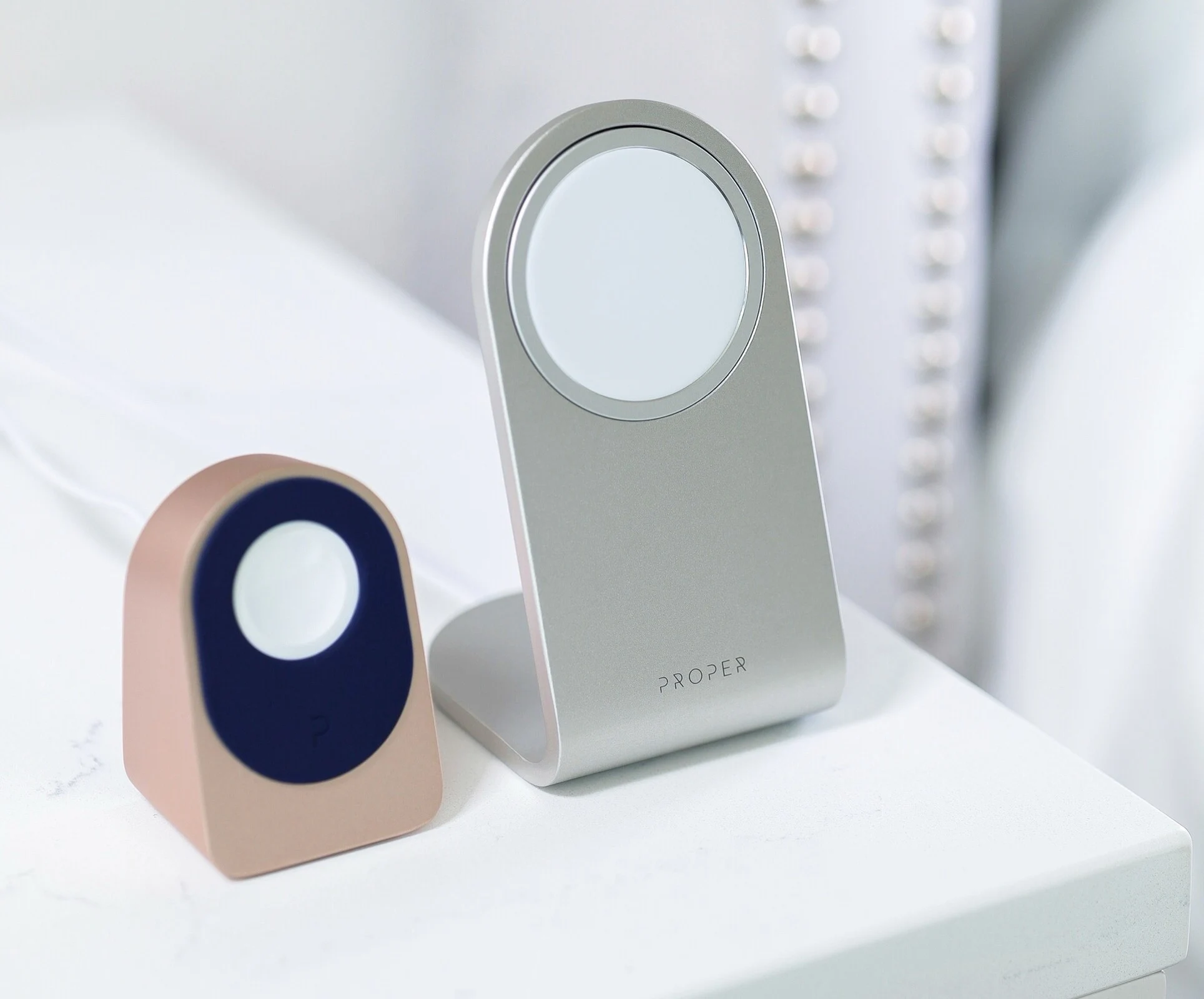
    One of the most notable accessories highlighted by DirectDial is the Google Qi2 Wireless Charger + Stand. This product seems to be the successor to the Pixel Stand 2 and uses magnets to securely hold the smartphone in place, ensuring optimal alignment with the charging coil for faster and more effective charging. The stand is priced at C$99, making it more affordable than the Pixel Stand 2, which was launched in Canada at C$109.

    Source:
    Link


  • Google Pixel 10 Pro Cases with Qi2 Magnets Leak in 7 Colors

    Google Pixel 10 Pro Cases with Qi2 Magnets Leak in 7 Colors

    Key Takeaways

    1. The Google Pixel 10 and Pixel 10 Pro will be officially revealed on August 20.
    2. The protective cases for the phones are made of silicone and come in various color options.
    3. Color options for the Pixel 10 Pro include Moonstone, Jade, and Porcelain, while the Pixel 10 has Obsidian, Lemongrass, Frost, and Indigo.
    4. The cases feature camera protection, metal buttons, and a new interior circle for integrated Qi2 magnets.
    5. The Pixel 10 series may support magnetic accessories and wireless chargers, with potential price increases for the new cases.


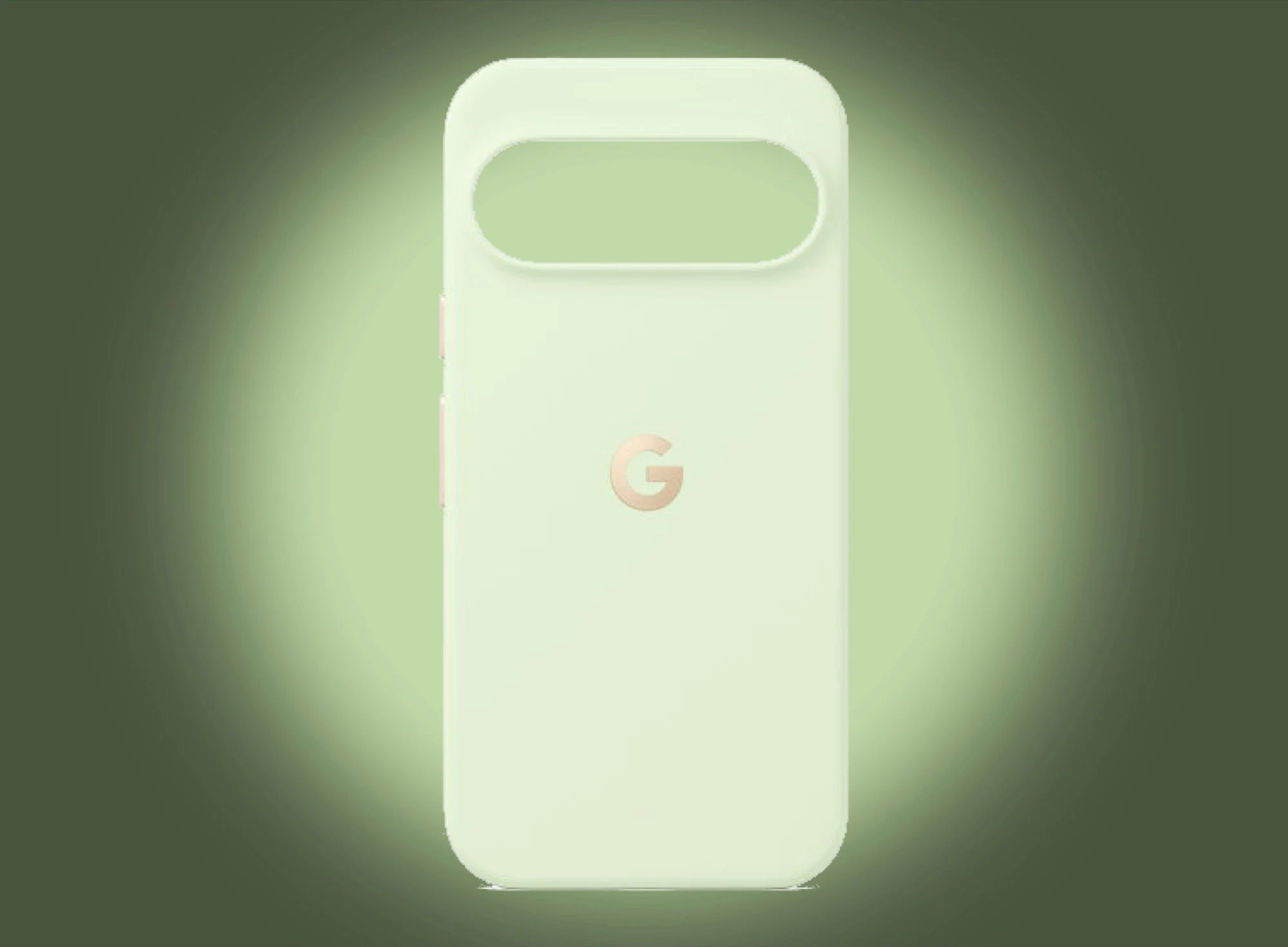
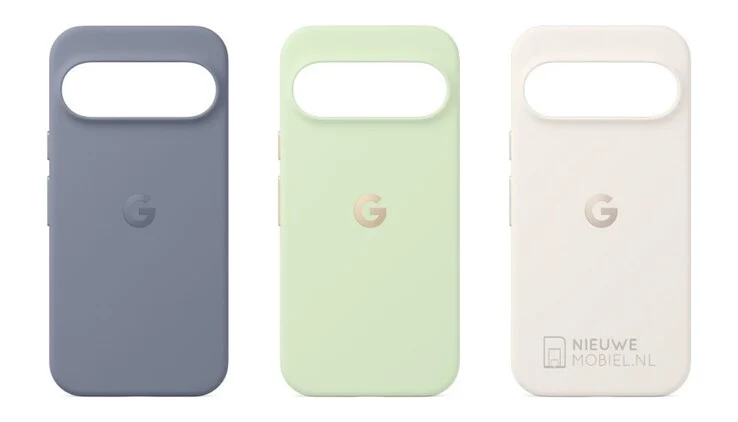
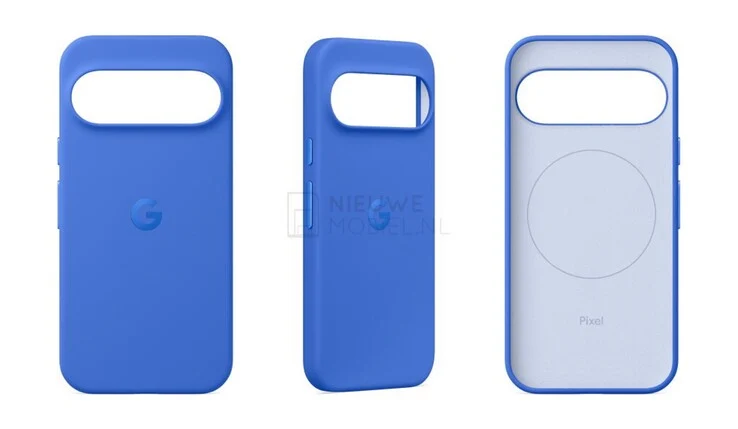
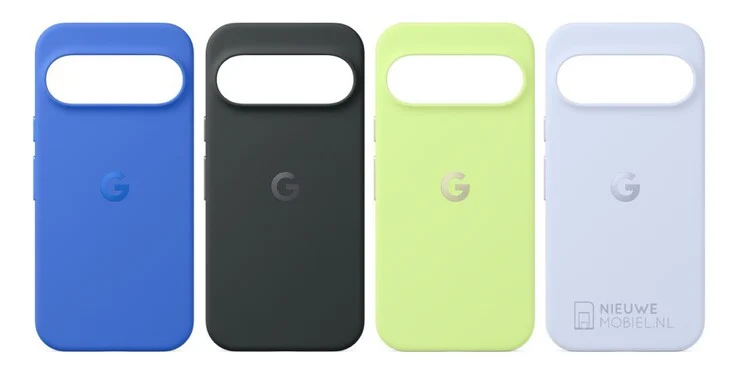
    The Google Pixel 10 and Pixel 10 Pro are set to be officially revealed on Wednesday, August 20. NieuweMobiel has shared the first visuals of the official protective cases for these upcoming smartphones. From these photos, it seems that Google has chosen a silicone material for the cases, which will likely match the colors of the phones themselves.

    Case Color Options

    It appears that Google might take a more traditional approach with the color options for the Pixel 10 Pro and Pixel 10 Pro XL. The cases are shown in shades like Moonstone (which is a dark blue), Jade (a green hue), and Porcelain (a beige tone). In contrast, the cases for the budget-friendly Pixel 10 come in Obsidian (black), Lemongrass (green), Frost (a light blue), and Indigo (blue). These official cases are crafted from silicone with a soft microfiber lining on the interior to help avoid any scratches.

    Features and Specifications

    Just like the cases for the Pixel 9 and Pixel 9 Pro (starting at $599 on Amazon), the Pixel 10 cases also offer camera protection. The buttons on these cases are presumably made of metal again, giving a more upscale appearance. An intriguing new addition on the inside is a circle that likely signifies the presence of integrated Qi2 magnets.

    Magnetic Accessories

    The Pixel 10 series is rumored to be compatible with magnetic accessories and wireless chargers. Previous leaks suggest that Google plans to launch a full line of magnetic accessories under the “PixelSnap” branding. The protective case for the Pixel 9 series is priced at $34.99, but because of the mentioned magnets, it’s possible that the case for the new Pixel 10 could be a bit pricier.

    Source:
    Link


  • Google Pixel 10 Leak: Rumored Periscope Camera & Tensor G5

    Google Pixel 10 Leak: Rumored Periscope Camera & Tensor G5

    Key Takeaways

    1. Google is experiencing significant leaks about the Pixel 10 smartphone series, similar to Samsung’s situation with its Galaxy Z Fold and Flip models.
    2. The Pixel 10 is expected to have three rear cameras, including a periscope telephoto lens, and may feature a 48 MP main camera and a 12 MP ultra-wide camera.
    3. The design of the Pixel 10 will maintain a flat look and slim bezels from the previous Pixel 9.
    4. It will utilize the Tensor G5 chipset, as indicated by recent leaks.
    5. The Pixel 10 series is anticipated to launch on August 20, alongside new smartwatches and Pixel Buds 2a.


    Google has faced yet another major leak regarding its upcoming Pixel 10 smartphone series. In fact, Google often finds itself alongside Samsung as one of the companies that struggle the most with keeping smartphone leaks under control. In a similar vein, Samsung has been seen releasing promotional content for the Galaxy Z Fold7, Galaxy Z Flip7, and Galaxy Z Flip7 FE ahead of their official announcements.

    Specs and Features

    For instance, Google appears to be working on its entry-level flagship that will include three rear cameras, one of which seems to be a periscope telephoto lens. This could possibly be the 1/3.2-inch and 5x sensor found in the Pixel 9 Pro Fold. However, there are hints that the Pixel 10 might incorporate the 48 MP main camera and the 12 MP ultra-wide camera that are featured in the more affordable Pixel 9a.

    Design and Chipset

    The design of the Pixel 10 continues the flat look and slim display bezels from last year’s Pixel 9. The leak also reveals that Google has opted for a Tensor G5 chipset, which is shown in the close-up image we embedded above. At present, the Pixel 10 is anticipated to make its debut on August 20, alongside the Pixel 10 Pro, Pixel 10 Pro XL, and the Pixel 10 Pro Fold. It’s likely that new smartwatches and earbuds will also be introduced, including the Pixel Buds 2a.

    Source:
    Link