Category: Home

  • Ultrasonic System Increases Atmospheric Water Harvesting by 45x

    Ultrasonic System Increases Atmospheric Water Harvesting by 45x

    Key Takeaways

    1. Atmospheric water harvesting has great potential to address global water shortages, but current methods are energy inefficient.
    2. MIT engineers have developed a new technique using ultrasonic waves instead of heat for water extraction, overcoming the energy inefficiency challenge.
    3. This new method is 45 times more energy-efficient than existing thermal systems and can extract water in minutes compared to hours.
    4. The ultrasonic water extraction system could be powered by small solar panels, enabling decentralized water generation in dry areas and emergencies.
    5. This innovation offers a quick and effective way to collect water from the air, particularly beneficial in arid regions.


    Atmospheric water harvesting shows a lot of potential to help with global water shortages, but there’s a big challenge — energy inefficiency. Current methods depend on heat to evaporate moisture, making it a slow process that uses a lot of energy. MIT engineers have now found a way to break through this “thermal limit” by using ultrasonic waves for water extraction.

    A New Approach to Water Extraction

    The technique, explained in the journal Nature Communications, swaps heat for mechanical vibrations. Led by Ikra Iftekhar Shuvo, the research team created a piezoelectric actuator that works at high frequencies. When a water-saturated hydrogel is placed on this device, ultrasonic waves disrupt the weak connections between water molecules and the hydrogel. This disturbance generates momentum that allows the water to be released in liquid form instead of vapor.

    Efficiency Gains in Water Harvesting

    The findings are groundbreaking for atmospheric water harvesting. The researchers claim that this vibrational method is 45 times more energy-efficient than the best thermal systems available today. In their tests, the device was able to extract water in just a few minutes, while traditional thermal desorption methods usually take hours.

    This innovation addresses the high energy expenses and slow speeds that have limited the use of atmospheric water harvesting. The team believes that these actuators could be powered by small solar panels, allowing for steady, decentralized water generation in dry areas and emergency situations.

    A Step Forward in Sustainable Water Solutions

    People have been searching for methods to collect water from the air, which could be a significant water source, especially in desert areas and regions without even saltwater to desalinate. Now, we have discovered a way to gather water both quickly and effectively, says Svetlana Boriskina, the lead author of the research paper.

    Nature via MIT News

    Source:
    Link


  • New Bluetti Elite 10 Portable Power Station Launch Discount Available

    New Bluetti Elite 10 Portable Power Station Launch Discount Available

    Key Takeaways

    1. Pricing and Launch Promotion: The Bluetti Elite 10 is priced at $239 but is currently available for a promotional price of $139, a discount of $100 or 42%.

    2. Compact Design: The Elite 10 is small enough to fit in the palm of your hand, with dimensions of 200 x 146 x 110 mm and a weight of approximately 1.8 kg.

    3. Power Specifications: It features a 128 Wh (40,000 mAh) LiFePO₄ battery, providing a power output of 200 W, and can reach up to 400 W in power lifting mode.

    4. Multiple Charging Options: The power station can be charged via 150 W AC input, solar power, or a combination of car and AC + solar.

    5. Smart Features: It includes app-based controls, a 10 ms UPS switch, a built-in 3-mode LED light, and a smart Battery Management System (BMS).


    Bluetti has unveiled its new Elite 10 portable power station in the second week of November, along with the Elite 400 power station and the B500K expansion battery. The company has now disclosed the price and availability for this compact power solution.

    Pricing and Availability

    The Elite 10 is available for $239. However, as part of the launch promotion, Bluetti is providing a discount of $100 or 42% off the standard price, reducing the cost from $239 to an attractive $139 for a limited time. Those interested can buy the Elite 10 portable power station from Bluetti’s official online store and Amazon.

    Specifications and Features

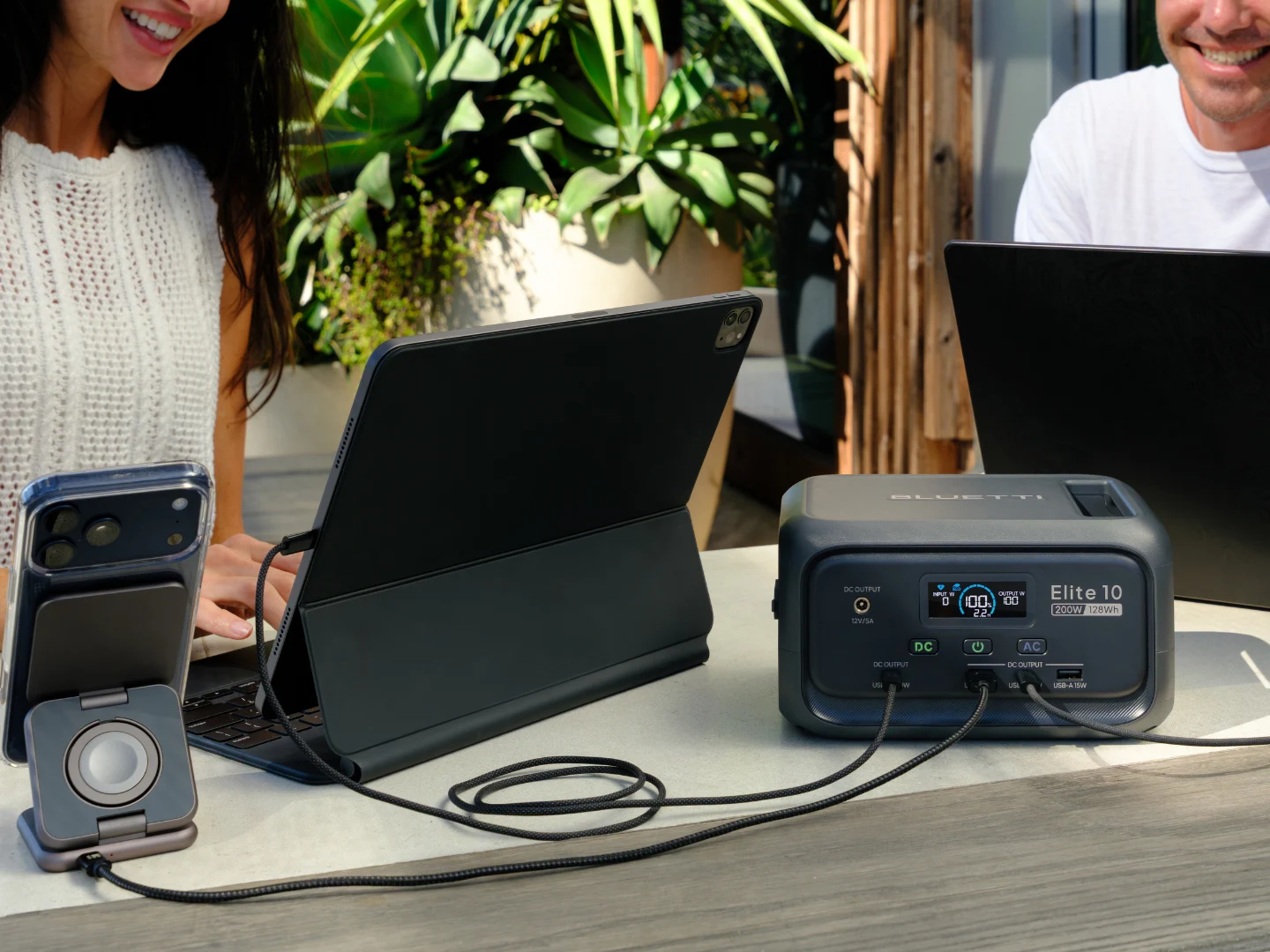
    Let’s dive into its dimensions. Touted as a power station that fits in the palm of your hand, the Bluetti Elite 10 has measurements of 200 x 146 x 110 mm (7.87 x 5.75 x 4.33 inches) and has a weight of approximately 1.8 kg (3.97 lbs). This device is powered by a 128 Wh (40,000 mAh) LiFePO₄ battery, offering a power output of 200 W, and can reach 400 W in power lifting mode. Similar to the Elite 400, the Elite 10 supports turbo charging, with Bluetti claiming it can go from 0 to 80% charged in only 45 minutes.

    Charging Options and Connectivity

    There are three methods to charge the power station: through a 150 W AC input, solar power, or a combination of car and AC + solar. Additionally, it features six output ports, which include 1 x AC (200 W), 2 x USB-A (with a total of 15 W), 1 x USB-C (15 W), 1 x USB-C (100 W), and 1 x 12 V DC5521 (with a maximum of 60 W). The power station can also be controlled remotely using the Bluetti companion app. It is equipped with an LED display that provides vital information like input/output power, battery level, active mode, and more.

    Additional Features

    Among the other key features of the Elite 10 are a 10 ms UPS switch, app-based controls, a built-in 3-mode LED light (warm, cool, and SOS), and a smart Battery Management System (BMS). For this release, Bluetti is offering two color options: buyers can select from meadow green or classic black.

    Source:
    Link


  • Epson Expands Lifestudio Grand 4K Laser Projector Availability

    Epson Expands Lifestudio Grand 4K Laser Projector Availability

    Key Takeaways

    1. The Epson Lifestudio Grand EH-LS670 projector is available in Australia for A$4,199 and in New Zealand for NZ$4,499, following its launch in Europe and the US.
    2. It features a smart home theater design, capable of projecting images up to 120 inches wide, with a throw ratio of 0.25 to 0.62:1.
    3. The projector utilizes a laser light source and 3LCD technology, offering a brightness of up to 3,600 lumens and a lifespan of approximately 20,000 hours.
    4. It includes a Google TV interface for streaming services like Netflix and YouTube, supports Google Assistant, and has a built-in 20W audio system enhanced by Sound by Bose.
    5. Connectivity options include Bluetooth and ports like HDMI (eARC), USB-A, and S/PDIF, with dimensions of 400 x 467 x 133 mm.


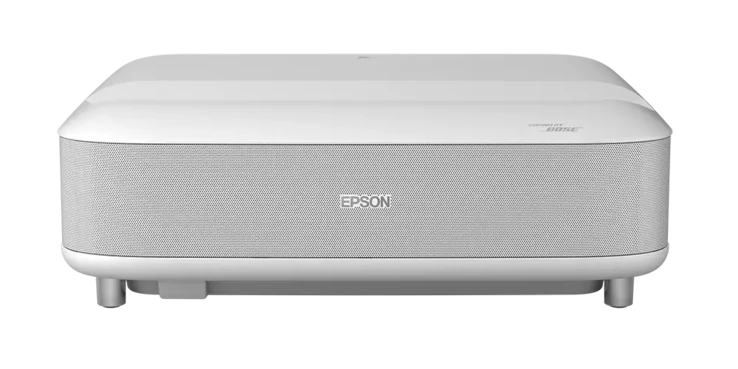
    The Epson Lifestudio Grand 4K Pro-UHD Ultra Short Throw Laser Projector has officially launched in Australia and New Zealand. This model, known as EH-LS670W in white and EH-LS670B in black, made its first appearance in Europe back in September 2025. It has since also hit the shelves in the US, where it is currently priced at $2,199.99 on Amazon.

    Pricing Details in Australia and New Zealand

    In Australia, the Epson Lifestudio Grand EH-LS670 projector can be purchased for A$4,199 through the Epson online store. Meanwhile, customers in New Zealand will find it available for NZ$4,499. Additionally, this projector will be offered by various third-party retailers, including Amazon.

    Features of the EH-LS670 Projector

    The EH-LS670 from Epson is designed as a smart home theater projector, capable of projecting images that can reach up to 120 inches wide, with a throw ratio ranging from 0.25 to 0.62:1. Utilizing a laser light source along with 3LCD technology, it boasts a brightness of up to 3,600 lumens (with color IDMS ratings and white ISO ratings), and is expected to have a lifespan of about 20,000 hours. This model supports HDR and HLG, and is advertised with a dynamic contrast ratio of over 5,000,000:1.

    Streaming and Sound Capabilities

    The Lifestudio Grand features a Google TV interface, which gives users access to popular streaming services such as Netflix, YouTube, and Disney+. It also includes support for Google Assistant voice commands. The projector is equipped with a built-in 20W 2.1 channel audio system, enhanced by Sound by Bose, and is compatible with Dolby Audio. Users can connect devices wirelessly via Bluetooth, or use physical connections through ports like HDMI (eARC), USB-A, and S/PDIF. The dimensions of the Epson EH-LS670 projector are 400 x 467 x 133 mm (approximately 15.7 x 18.4 x 5.2 inches).


    Source:
    Link


  • Zigbee 4.0 and Suzi: Competing with Matter or a Helpful Addition?

    Zigbee 4.0 and Suzi: Competing with Matter or a Helpful Addition?

    Key Takeaways

    1. Zigbee 4.0 introduces significant upgrades, including Zigbee Direct for direct device configuration via Bluetooth Low Energy (BLE) and batch commissioning for adding multiple devices simultaneously.

    2. The new Suzi branding utilizes lower frequencies (around 800MHz in Europe and 900MHz in North America) for better range and penetration through walls, offering a viable alternative to 2.4GHz technologies.

    3. Enhanced security features are prioritized in Zigbee 4.0 while ensuring compatibility with Zigbee 3.0 and Smart Energy devices.

    4. Certification for Zigbee 4.0 and Suzi is expected to begin in the first half of 2026, indicating a delay before products are available on the market.

    5. Zigbee 4.0 and Matter are designed to work together in the smart home ecosystem, with Zigbee remaining a power-efficient option that can integrate into the Matter framework through bridges.


    The Connectivity Standards Alliance (CSA) is widely recognized for its smart home protocol known as Matter. However, the older wireless standard Zigbee is also set to receive a significant upgrade. Along with Zigbee 4.0, the CSA debuted Suzi, a new label for the sub-GHz version that offers extended range.

    Enhancements in Zigbee 4.0

    The transition to version 4.0 includes substantial modifications to the mesh network’s core framework, featuring the addition of Zigbee Direct. This new function enables users to configure Zigbee devices directly using Bluetooth Low Energy (BLE), eliminating the need for a dedicated hub. Furthermore, there is a new capability that allows users to add multiple devices at once, referred to as batch commissioning.

    Additionally, this updated standard prioritizes enhanced security features while maintaining full compatibility with Zigbee 3.0 and Smart Energy. The CSA aims to make sure that various generations of devices can operate collaboratively.

    Introduction of Suzi Branding

    In conjunction with Zigbee 4.0, the CSA revealed the new Suzi branding. While Zigbee continues to work within the familiar 2.4GHz frequency band, Suzi utilizes lower frequencies, around 800MHz in Europe and 900MHz in North America. These lower frequencies are more effective at penetrating walls and ceilings compared to higher frequencies, resulting in an extended range.

    Moreover, since technologies like WiFi already utilize the 2.4GHz band, it becomes susceptible to interference, especially in urban settings. Thus, Suzi could serve as a viable alternative to other long-range technologies like LoRaWAN and Z-Wave Long Range.

    Certification and Market Readiness

    It remains uncertain whether this wireless standard will be an essential component of Zigbee 4.0 or if it will require an independent certification. The CSA has stated that certifications are anticipated to begin in the first half of 2026, indicating that it will take some time before the initial products become available.

    With all this in mind, one might wonder if Zigbee 4.0 is even necessary with Matter in existence. Matter was created to unify various smart home protocols and is being regularly updated, as shown by the latest 1.4.2 update. Conversely, Zigbee is likely to remain a power-efficient option that can be incorporated into the Matter ecosystem through bridges. Hence, the two technologies do not truly compete but rather collaborate to provide a strong foundation for communication between devices in smart home environments.

    Source:
    Link


  • Fenix E06R Pro: New EDC Flashlight with Laser & Multiple LEDs

    Fenix E06R Pro: New EDC Flashlight with Laser & Multiple LEDs

    Key Takeaways

    1. The Fenix E06R Pro is designed as a standard everyday carry (EDC) flashlight, differing from its keychain predecessor, the E06R.
    2. It features a 4-in-1 design that includes a Class 1 or Class 3R laser, a floodlight, a directed beam, and potentially a UV light.
    3. The E06R Pro aligns with current EDC market trends, competing with models like Acebeam K1, Olight ArkPro series, and Nitecore EDC17.
    4. The flashlight includes multiple switches for functionality, along with an illuminated ring and two LEDs for signaling or battery indication.
    5. The official launch is set for November 25, with pricing details to be announced at that time.


    Fenix has revealed the Pro variant of the E06R. Unlike the E06R, which was introduced in February as a keychain flashlight, the E06R Pro is designed to be more like a standard everyday carry (EDC) flashlight. Currently, this new model is only being promoted on Fenix’s official Instagram page.

    Exciting Features

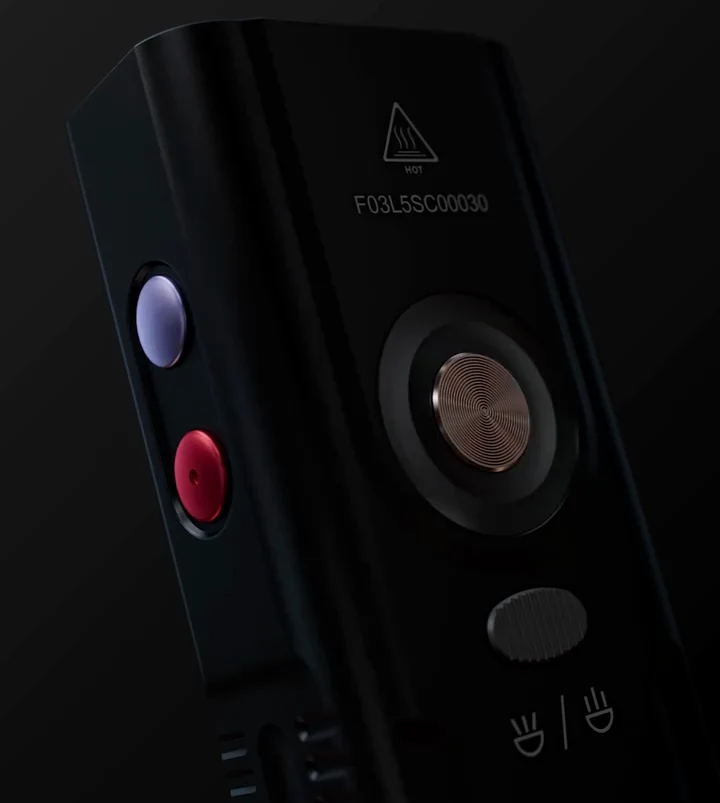
    The brief teaser clip clearly shows the direction this flashlight is heading. It looks to be a 4-in-1 device that includes a laser, which is expected to be a Class 1 laser in Europe and a Class 3R laser in other areas. Besides the laser, the flashlight likely features a floodlight and a more directed beam, suggested by the selector switch visible in the video. The fourth light source isn’t immediately clear but could potentially be a UV light.

    Following Trends

    This indicates that the Fenix E06R Pro aligns with the latest trends in the EDC market. Some comparable flashlights are the Acebeam K1, Olight’s new ArkPro series, and the Nitecore EDC17. With the exception of Acebeam, these competing models all have a flat design and come with an integrated, non-removable battery, similar to the E06R Pro.

    Design Details

    Another fascinating feature is the abundance of switches on the flashlight. While this should simplify its use, it also introduces some complexity. Additionally, the illuminated ring surrounding one of the switches, which is also present on the smaller E06R, stands out. Moreover, two LEDs on the back seem to function as either signal lights or battery indicators.

    The new Fenix flashlight is set to be officially launched on November 25, when the company is also expected to announce the official pricing details.


    Source:
    Link


  • Ziron Tactical Replaceable Battery Power Bank Now on Crowdfunding

    Ziron Tactical Replaceable Battery Power Bank Now on Crowdfunding

    Key Takeaways

    1. Ziron’s Tactical Power Bank has a crowdfunding goal of $513 and has already surpassed this target with around 30 supporters.
    2. The power bank features replaceable batteries, allowing users to enhance its capacity with compatible batteries (21700, 20700, or 18650).
    3. It offers a single USB-C output with fast charging capabilities up to 30W and has an IPX6 waterproof rating.
    4. Backers can pledge $29 for the power bank and accessories, with global shipping planned for December 2025.
    5. As Ziron’s first Kickstarter project, there is a risk that backers may not receive their product on time or at all.


    Ziron has launched a crowdfunding initiative for its Tactical Power Bank on Kickstarter. As of now, the project has exceeded its funding target of $513, with approximately 30 supporters.

    Unique Features of the Power Bank

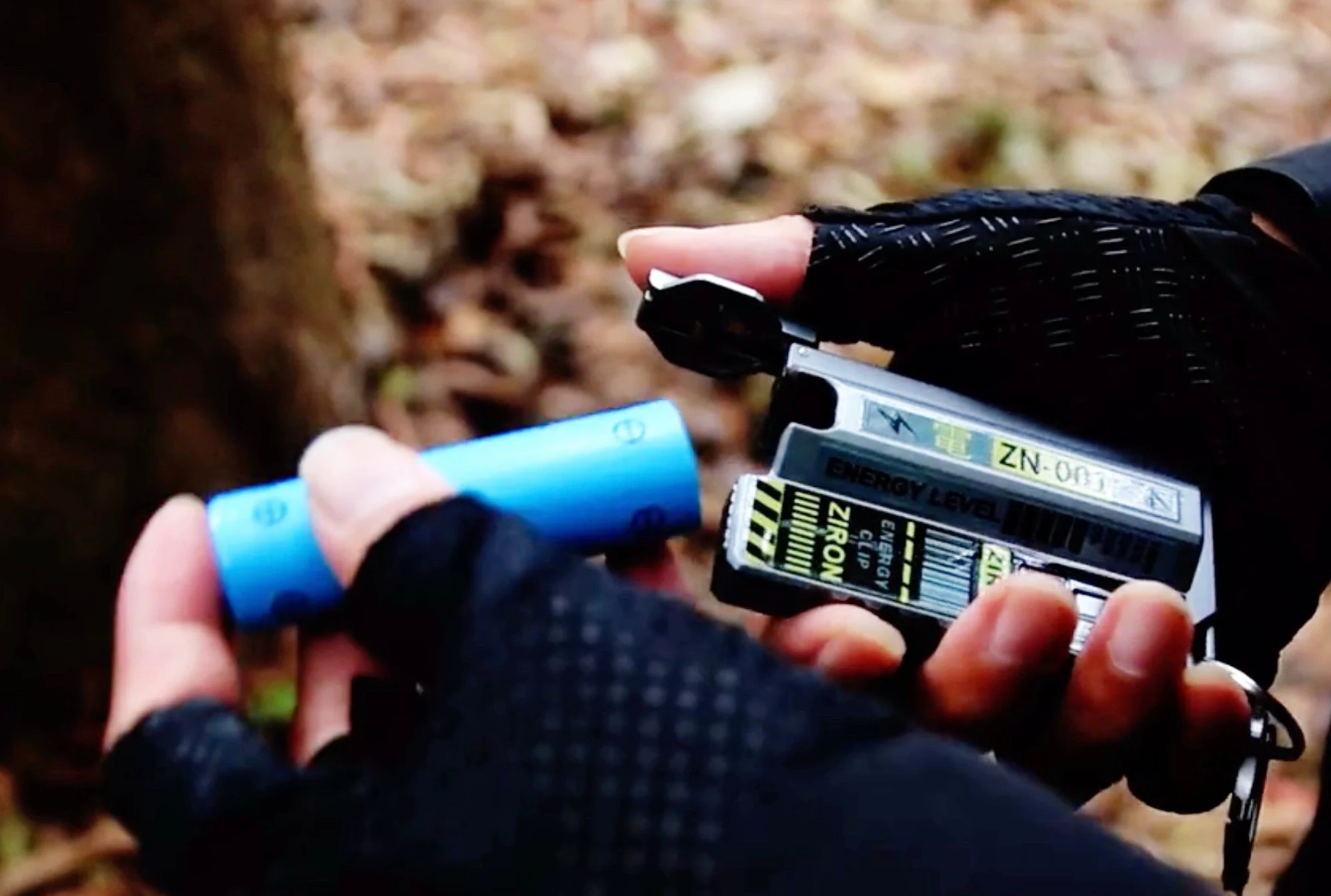
    The Ziron Tactical Power Bank’s standout feature is its replaceable batteries, which enables users to boost its capacity. It can accommodate one 21700, 20700, or 18650 battery with a 5A discharge and a 2A charge. To give some perspective, a pack of four 5,000 mAh 21700 rechargeable batteries typically ranges from $20 to $30 (the Jesspow brand is currently priced at $23.77 on Amazon). The remaining battery life is shown through built-in lights, and the battery itself is secured with a snap-lock cap.

    Design and Specifications

    This Tactical Power Bank from Ziron offers a single USB-C output that supports fast charging up to 30W. It features a casing made from aluminum alloy and has an IPX6 waterproof rating. The dimensions are 8.5 x 5.5 cm (approximately 3.34 x 2.16 inches), weighing in at around 105 g (about 3.7 oz), making it quite lightweight. Additionally, its keychain-friendly design makes it simple to attach to a clip or carabiner.

    Pledge and Shipping Details

    Backers can currently support the Kickstarter campaign with a pledge of $29 to receive the Ziron modular power bank along with several accessories. The company plans to ship globally, with estimated delivery set for December 2025. However, it’s important to remember that, like all crowdfunding campaigns, there’s no assurance that backers will get their product within the promised timeframe, or at all. As this is Ziron’s debut Kickstarter project, it adds an element of risk for potential backers.

    Kickstarter

    Source:
    Link


  • New Companion Disrupts Evolution of Red Giant Star

    New Companion Disrupts Evolution of Red Giant Star

    Key Takeaways

    1. Astronomers discovered a new companion to the red giant star Pi1 Gruis, located 590 light-years from Earth.
    2. The discovery was made using the ALMA radio telescope array, confirming the star’s companion through data comparison.
    3. The companion star exhibits unusual orbital behavior, having a circular orbit rather than an elliptical one.
    4. This atypical orbit may disrupt the evolution of Pi1 Gruis, potentially leading to the companion being engulfed or torn apart.
    5. Understanding these dynamics can help predict the future of our sun and the fate of planets in our solar system as it evolves into a red giant.


    The universe is full of mysteries, and each year brings new findings. A recent discovery by a group of astronomers has revealed a new companion to a red giant star. While this is exciting news for the scientific community, it may lead to significant disruptions.

    Discovery of Pi1 Gruis

    To understand this, we look at Pi1 Gruis, a semiregular variable star found in 1756, positioned in the Grus constellation, approximately 590 light-years away from Earth. This star is quite fascinating; if it matches the sun’s mass, it’s around 350 to 400 times bigger than the sun.

    The Role of ALMA

    Astronomers were curious if this red giant had a partner. They utilized an array of 66 radio telescopes known as ALMA. By comparing data from Pi1 Gruis and ALMA with various research models, they concluded, based on findings published in the journal Nature Astronomy, that this star does indeed have a companion.

    Unusual Orbital Behavior

    Nevertheless, this companion does not behave in a typical manner. Its orbit around the red giant is not elliptical. Scientists suggest that it has a circular orbit, which might disturb the star’s evolution in the future. Essentially, this could lead to the companion being engulfed or torn apart by the red giant.

    This finding may provide insights into the future of our sun and the planets in our solar system, as noted by Mats Esseldeurs:

    “Understanding how close companions behave under these conditions helps us better predict what will happen to the planets around the sun, and how the companion influences the evolution of the giant star itself.”

    Implications for the Future

    It’s worth remembering that in five billion years, the sun will deplete its energy reserves and become a red giant, consuming the nearby planets. Therefore, it’s crucial to conduct further studies to enhance our understanding of such stars.


    Source:
    Link


  • NASA’s Perseverance Discovers Exotic Rock on Mars

    NASA’s Perseverance Discovers Exotic Rock on Mars

    Key Takeaways

    1. Iron-nickel meteorites have been found on Mars, particularly in Gale Crater, but none have been discovered in Jezero Crater by Perseverance yet.
    2. Perseverance discovered a uniquely shaped rock named “Phippsaksla” while studying the bedrock at a site called “Vernodden.”
    3. Phippsaksla is distinct from surrounding rocks, featuring a prominent, elevated structure and a weathered surface with cavern-like formations.
    4. The rock was photographed using Perseverance’s Left Mastcam-Z camera and analyzed with the SuperCam tool.
    5. The presence of iron and nickel in Phippsaksla suggests it could be a meteorite, pending further investigation.


    Iron-nickel meteorites have been discovered on Mars for some time. Rovers, including Curiosity, have located numerous examples in Gale Crater. However, Perseverance has yet to find any in Jezero Crater, despite the crater’s characteristics indicating that meteorites may have landed there.

    Discovery of Phippsaksla

    Recently, Perseverance discovered a uniquely shaped rock, measuring about 80 centimeters (31 inches) across, dubbed “Phippsaksla.” This rock was uncovered while examining the bedrock at a site named “Vernodden.”

    Unique Characteristics

    Phippsaksla is distinct from the nearby rocks, which are generally flat, low, and broken apart. In contrast, Phippsaksla has a prominent, elevated structure. A detailed look at the rock showed its weathered surface with cavern-like formations.

    Perseverance captured an image of this rock with its Left Mastcam-Z camera, one of the two cameras mounted high on the rover’s mast. After the initial sighting of Phippsaksla, Perseverance utilized its SuperCam tool to conduct a more in-depth analysis of the rock, discovering it consists of iron and nickel.

    Potential Meteorite

    The presence of iron and nickel in Phippsaksla suggests it could potentially be a meteorite. More investigations will be conducted to verify this hypothesis.


    Source:
    Link


  • Smart Energy-Saving Control with Aqara W600 Thermostat for €49.99

    Smart Energy-Saving Control with Aqara W600 Thermostat for €49.99

    Key Takeaways

    1. Aqara’s Radiator Thermostat W600 enhances energy efficiency and is priced at €49.99, compatible with various radiator valve standards.
    2. The W600 features smart heating management, allowing users to set schedules, use occupancy sensors, and control the device remotely via an app or voice commands.
    3. It supports both Thread and Zigbee protocols, making it compatible with major Matter-compatible smart home systems for easy upgrades.
    4. The thermostat can manage multiple heating periods daily, modify temperatures in 0.5°C steps, and operates locally without internet access, ensuring continuous automation.
    5. Additional features include frost protection, a reversible LED display, a battery life of up to two years, and compatibility with leading smart home platforms like Apple Home and Google Home.


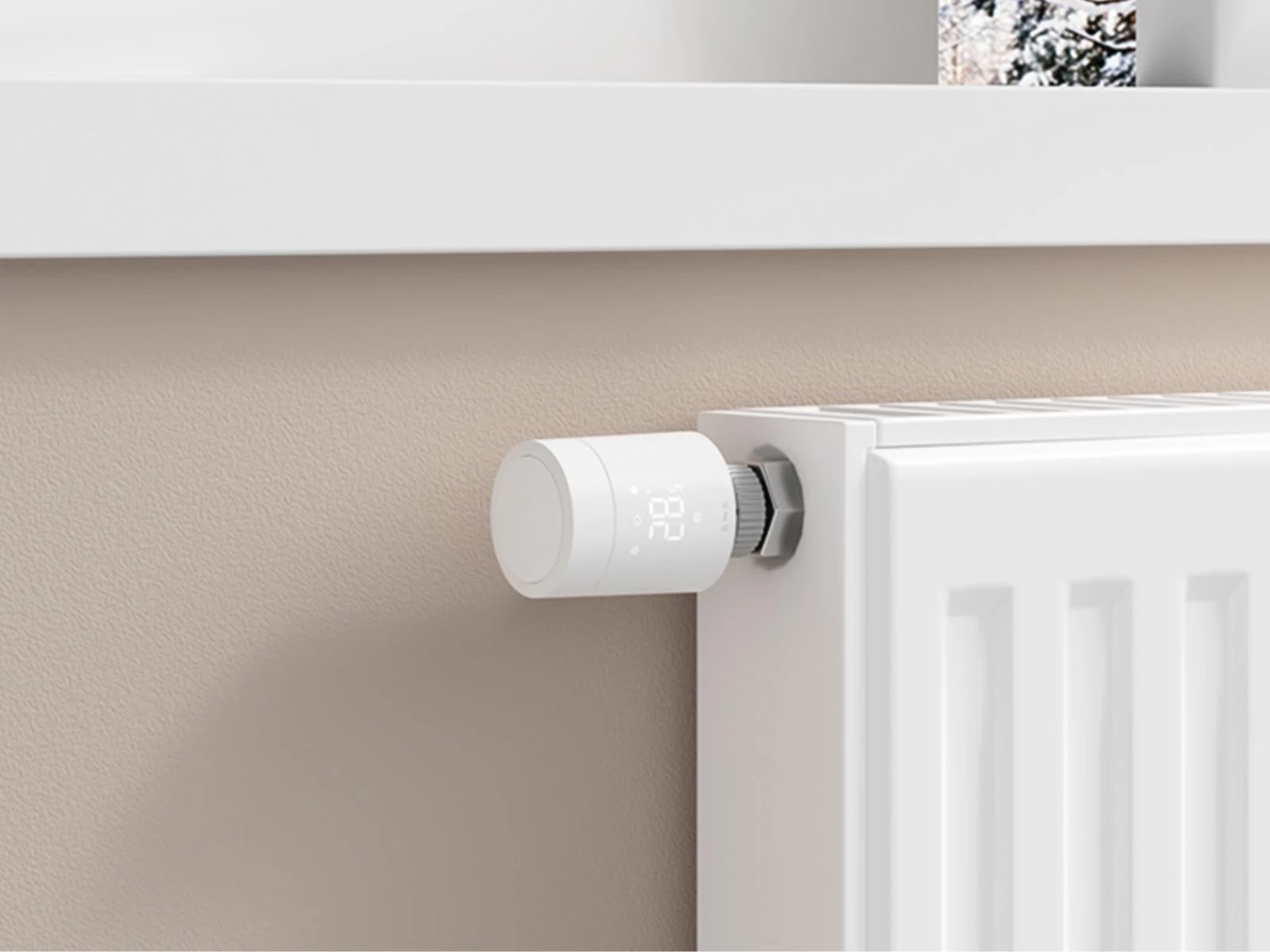
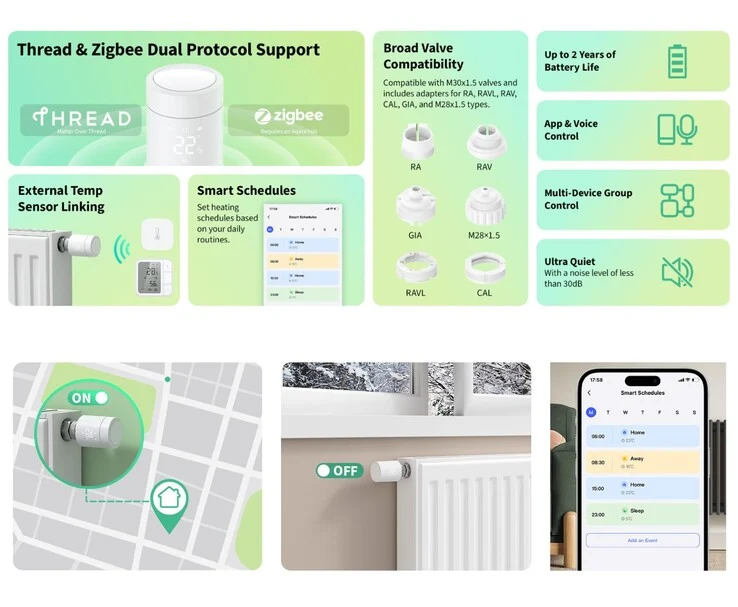
    Aqara has launched its latest Radiator Thermostat W600, a smart device aimed at enhancing energy efficiency in homes across Europe. It is currently available for €49.99 on Amazon DE and is compatible with various valve standards, such as RA, RAV, RAVL, Caleffi, Giacomini, and M28×1.5, making it a good fit for most conventional radiator setups.

    Smart Heating Features

    The W600 is designed to manage heating more effectively by making sure radiators only work when they are actually needed. Users can set up heating schedules for different rooms, use occupancy sensors, or even set geofencing rules. Additionally, the thermostat can be controlled remotely through Aqara’s mobile app, voice commands, or in combination with the Aqara Climate Sensor W100.

    Compatibility and Integration

    Supporting both Thread and Zigbee, the W600 can easily fit into major Matter-compatible smart home systems. Aqara promotes it as an easy upgrade for anyone wanting to modernize their heating without having to change their existing radiators.

    Advanced Features and User Control

    Aqara mentions that the W600 can manage up to seven heating periods each day, offering five preset modes and quick scheduling options. It allows routines to run locally through Zigbee in the Aqara Home app, ensuring automation continues even without internet access. The thermostat can modify temperature in 0.5°C steps, features calibration settings, and is compatible with external Aqara temperature sensors like the Climate Sensor W100 or FP300 for better room measurement. It also has geofencing capabilities to heat up rooms as users get closer to home and can stop heating when a sudden temperature drop is detected by connected sensors on doors or windows. Multiple units can be grouped to coordinate heating throughout different spaces, and it operates quietly at less than 30 dB.

    Safety and Power Supply

    The W600 includes additional features such as frost protection, which turns on heating if the temperature drops below 5°C. It is powered by two AA batteries, which are expected to last up to two years. First revealed at IFA 2025, the W600 comes with a reversible LED display, enhanced valve compatibility compared to its earlier models, and a dual-protocol setup that allows integration with Matter through Thread without needing a special hub, while Zigbee mode provides advanced automation options in the Aqara Home app. This thermostat is compatible with leading Matter-enabled platforms like Apple Home, Google Home, Amazon Alexa, Home Assistant, and SmartThings.

    Aqara states that the Radiator Thermostat W600 is now accessible via the company’s official site, authorized retailers, and major online marketplaces. It is also listed on Amazon in multiple European countries like France, Germany, Italy, the Netherlands, Poland, and Spain, ensuring wide availability at launch.

    Source:
    Link


  • Galaxy 13 Billion Light-Years Away Creates Stars 180 Times Faster

    Galaxy 13 Billion Light-Years Away Creates Stars 180 Times Faster

    Key Takeaways

    1. The Y1 galaxy, located over 13 billion light-years away, offers insights into the early universe and its star formation rates.

    2. A study published in the Monthly Notices of the Royal Astronomical Society revealed the temperature of dust in the Y1 galaxy to be around -356 °F (-180 °C).

    3. Despite its cold temperature, the Y1 galaxy’s dust is warmer compared to other similar galaxies, indicating it is an extreme star factory.

    4. The Y1 galaxy produces stars at a rate 180 times faster than the Milky Way, suggesting that such galaxies were common in the universe’s early days.

    5. Further studies are needed to better understand the characteristics and significance of the Y1 galaxy and similar star-producing galaxies.


    Although the universe is frequently observed and analyzed, each year brings new findings. This has recently happened when astronomers found a galaxy from the early cosmos that can create stars faster than the Milky Way.

    Discovering Y1 Galaxy

    Situated over 13 billion light-years away from Earth, the Y1 galaxy gives us a glimpse into the very early universe. Interestingly, this was also a time when stars formed at a rate much higher than what we see today.

    A study detailing this discovery was published in the Monthly Notices of the Royal Astronomical Society. With the help of the ALMA (Atacama Large Millimeter/submillimeter Array) in Chile, scientists managed to measure the temperature of dust within this galaxy. The result is quite astonishing, showing a temperature of around -356 °F (-180 °C).

    The Surprising Temperature

    However, if you think that’s really cold, you might be surprised. Yoichi Tamura, a researcher from Nagoya University in Japan, highlights:

    “While the temperature is definitely cooler than the dust found in homes on Earth, it’s actually much warmer than any other similar galaxies we’ve observed. This confirms that it is indeed an extreme star factory. Even though it’s the first time we’ve encountered a galaxy like this, we believe many more could exist. Star factories like Y1 might have been quite common in the universe’s early days.”

    Y1’s Star Production Rate

    In terms of star-making ability, the Y1 galaxy produces stars at a rate 180 times greater than the Milky Way. Researchers suggest that such galaxies were prevalent during the universe’s formative years. Nevertheless, further studies need to be conducted in the near future to gain a better understanding of this fascinating galaxy.

    Source:
    Link