Category: Gaming

  • Nintendo Switch 2 Specs Improved, But Video Captures Limited

    Nintendo Switch 2 Specs Improved, But Video Captures Limited

    Key Takeaways

    1. The Nintendo Switch 2 has improved specs, including 12 GB of LPDDR5 memory, enhancing game performance.
    2. Video capture is still limited to 30 seconds, making it difficult for players to create gameplay guides.
    3. The process for taking screenshots and videos remains the same as the original Switch, using the Joy-Con capture button.
    4. A significant portion of the Switch 2’s memory is allocated to the OS, which may affect video recording capabilities.
    5. The quality of screenshots and videos on the Switch 2 is still uncertain, especially in comparison to the original’s 720p limit.


    Bolstered Nintendo Switch 2 specs should lead to improved performance in games. Unfortunately, some capabilities hasn’t matured since the original handheld. A new Nintendo Today video revealed that video captures are still limited to 30 seconds. Among other drawbacks, the restriction makes creating gameplay guides for fellow players difficult.

    Home Menu Sound Effects

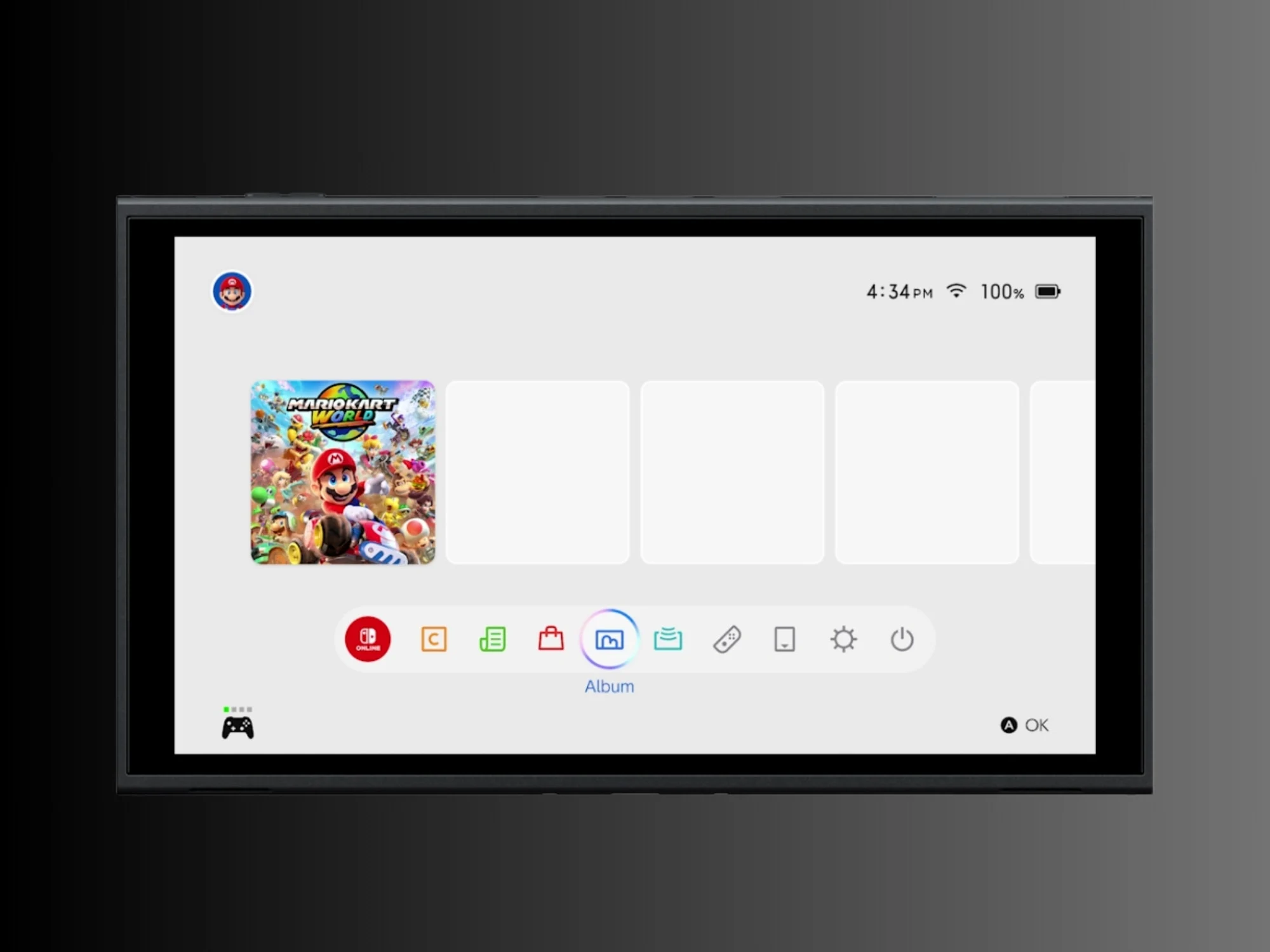
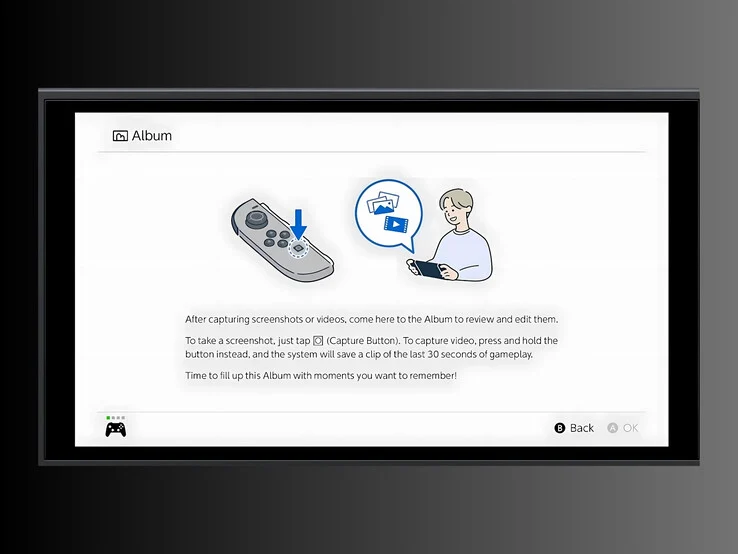
    The latest clip in the Nintendo Today app focused on Home Menu sound effects. However, viewers also caught a glimpse of how gamers will capture screenshots and videos. From the brief help menu, it appears that the process is virtually identical to the experience on the Switch. To take a screenshot, gamers press the capture button on the Joy-Con. Holding the same button saves a clip of the last 30 seconds of gameplay. Then, players can shorten the video further before saving it in the Nintendo Switch Album.

    Video Recording Limitations

    Nintendo’s previous console continuously stores 30 seconds of video in the background. The process uses a ring buffer, which holds the data in the console’s RAM. Content creators would often turn to a Switch capture card to create longer videos. The length of the recordings was partially due to how Nintendo divided system resources. With the Switch 2 specs including a faster processor and more RAM/storage, some gamers hoped to avoid additional costs.

    Recently, buyers learned that the Switch 2 would ship with 12 GB of LPDDR5 memory. That’s a massive improvement from the 4 GB of RAM the original handheld offers. On the other hand, the latest console devotes 3 GB of its memory to its OS. The obvious culprit is GameChat, which may take up much of the remaining memory. Video recording, another helpful feature for sharing gameplay experiences, will also have to compete for resources.

    Quality of Screenshots and Videos

    What’s unclear is the quality of the Switch 2 screenshots and video clips. It would lessen some disappointment if it’s higher than the first console’s 720p limit.

    Source:
    Link


  • Microsoft Tests Steam Integration in Its Store, Leak Suggests

    Microsoft Tests Steam Integration in Its Store, Leak Suggests

    Key Takeaways

    1. Microsoft is testing the integration of Steam into the Microsoft Store, aiming to bridge the gap between Xbox and Steam.
    2. This integration may allow for syncing libraries, shared achievements, and improved cross-platform multiplayer, but does not mean a full Steam client on Xbox.
    3. Concerns arise that this could deter third-party developers from using the Xbox Store.
    4. The move may reflect Microsoft’s strategy for a more open gaming ecosystem, possibly linked to a new Xbox handheld device.
    5. If successful, this integration could challenge Sony and Nintendo’s exclusivity, leading to potential demands for access to games across platforms.


    The long-standing divide between Microsoft’s Xbox ecosystem and Valve’s Steam store may be on the verge of disappearing. A recent leak from gaming insider @eXtas1stv suggests that internal trials are currently taking place to integrate Steam into the Microsoft Store. Reactions have varied from confusion to a cautious sense of hope, alongside some wild theories about what this could mean for the future of platform exclusivity.

    Clarifying the Situation

    To clear things up, this doesn’t imply that you will simply start your Xbox and access the Steam client directly. Most analyses indicate that Steam games might be offered in the Microsoft Store through backend connections, not by fully integrating the client. This could lead to numerous opportunities, like syncing libraries, shared achievements, and potentially more seamless cross-platform multiplayer. However, it also brings up several concerns.

    Potential Impacts on Developers

    Some users on Reddit have noted that this might push third-party developers away from the Xbox Store entirely. Others speculate that this could be part of a bigger strategy: Microsoft’s aim for a more open and platform-independent future, especially with the buzz around a possible upcoming Xbox handheld device.

    The Bigger Picture

    But let’s not forget about the big question: if Xbox embraces Steam, how can Sony or Nintendo prevent access to games purchased on their systems? Just as Nvidia had to comply when Sony requested them to block GeForce Now for PlayStation titles, Valve might face similar demands. Should this leak prove accurate, we can expect official confirmation in the near future.

    Source:
    Link

  • Nvidia’s Media Tactics: Fallout from Gamers Nexus Exposé

    Nvidia’s Media Tactics: Fallout from Gamers Nexus Exposé

    Key Takeaways

    1. Nvidia’s Pressure Tactics: Gamers Nexus (GN) alleges that Nvidia has pressured them to include specific performance metrics (MFG4X) in GPU reviews, even for unsupported models, claiming this is misleading and unethical.

    2. Control Over Media Access: Nvidia reportedly threatened to restrict access to key engineers if GN did not comply with their editorial demands, indicating a desire to control media coverage rather than simply influence it.

    3. Erosion of Trust: GN argues that Nvidia’s tactics have eroded trust in media coverage of their products, making it difficult for audiences to discern whether metrics were included voluntarily or under pressure.

    4. Manipulative Corporate Culture: The article highlights concerns over Nvidia’s corporate culture, where executives may shift blame and use access to engineers as leverage against media outlets, impacting editorial independence.

    5. Commitment to Integrity: Gamers Nexus emphasizes their commitment to maintaining editorial independence, even at the risk of losing future access to Nvidia products, urging other media outlets to resist similar pressures.


    As Nvidia CEO Jensen Huang shares news about artificial intelligence, Gamers Nexus has taken this opportunity to reveal what it calls Nvidia’s growing manipulative behavior towards the media. In an editorial characterized by Steve Burke’s distinctive tone, the piece highlights a troubling trend of editorial pressure, coercive tactics based on access, and retaliatory measures that the outlet claims exceed standard industry practices.

    Nvidia’s Demands

    Gamers Nexus alleges that for the past six months, Nvidia has pressured its team to include Multi-Frame Generation 4X (MFG4X) performance metrics in GPU reviews, even in cases where the graphics cards tested do not support this feature. GN refused, asserting that such inclusion would be misleading, unethical, and fundamentally dishonest.

    Threats and Access Control

    Instead of relenting, Nvidia reportedly intensified its approach by threatening to deny access to key internal engineers — notably thermal engineer Malcolm and latency expert Gamm0 — both of whom resonate well with GN’s audience. Even though these engineers have no direct link to MFG technology, their availability was allegedly made contingent on GN agreeing to Nvidia’s editorial stipulations.

    The main allegation from GN is that Nvidia is not just trying to influence coverage but is actively seeking to control it. This includes urging reviewers to depict the RTX 5070 as comparable to the significantly more powerful RTX 4090 by highlighting synthetic MFG-enhanced figures. Such comparisons risk misleading consumers by stripping away essential context.

    The Nature of Communication

    Burke argues that this behavior shifts Nvidia’s once-open communication with the media towards manipulation. While Nvidia has historically provided technical insights and briefings, GN contends that this access is now being leveraged to enforce compliance with corporate messaging. Once viewed as a hallmark of transparency, access to Nvidia’s engineers is increasingly seen as conditional and transactional.

    Gamers Nexus is not isolated in voicing concerns. Burke mentions that the outlet contacted other reviewers and media representatives globally, revealing a pattern of behind-the-scenes pressure to influence editorial content. This includes explicit or implied expectations regarding how products should be framed and which benchmarks should be highlighted. According to GN, these strategies indicate a broader company-wide approach that goes beyond regional public relations teams.

    Nvidia’s History of Controversy

    Nvidia has faced its share of media influence controversies. In 2020, it temporarily cut off Hardware Unboxed’s GPU sampling access due to the outlet’s unwillingness to emphasize ray tracing metrics. A similar situation reportedly surfaced again, with Nvidia pressuring GN to modify its editorial stance on MFG and DLSS coverage.

    Burke claims that Nvidia informed Gamers Nexus that integrating MFG into reviews was necessary to “secure budget” for interviews with engineers, even though GN incurs costs for traveling, filming, and editing those interviews without any financial compensation from Nvidia. This framing implies that Nvidia perceives all media interactions as fundamentally transactional, regardless of financial exchanges.

    The Ripple Effect on Media

    This framing also casts a shadow over other media organizations. Once Nvidia establishes precedent for linking access to editorial direction, every interview, performance graph, or editorial decision becomes questionable. GN argues that this not only undermines their credibility but also that of any reviewer discussing MFG or DLSS without full transparency regarding the nature of those discussions.

    Gamers Nexus emphasizes that their frustration is not aimed at Nvidia’s engineers. On the contrary, they regard professionals like Malcolm and Gamm0 as knowledgeable and trustworthy, conveying insights born from experience rather than marketing agendas. These individuals have cultivated genuine connections with GN and its audience. However, GN now believes that Nvidia is intentionally using that rapport to enforce compliance.

    Emotional Pressure Tactics

    Burke notes that Nvidia often references these engineers when discussing coverage requirements. This tactic seems designed to apply emotional pressure, knowing that GN values these relationships. GN describes this as a form of manipulation, suggesting that if restricting access to GPUs fails, perhaps restricting access to respected engineers will succeed.

    Despite producing over an hour of independent content on MFG and DLSS, including detailed analyses, GN states that Nvidia was still dissatisfied because the coverage was not integrated into review articles. The demand was explicit: include MFG4X in the charts or lose access.

    Erosion of Trust

    GN contends that this insistence has tainted any MFG or DLSS coverage presented by any outlet. Even if another reviewer includes those metrics out of genuine curiosity, audiences may question whether they did so voluntarily or under undue pressure. This erosion of trust harms both independent media and Nvidia’s own credibility.

    Gamers Nexus has a history of engaging with major companies. They have previously confronted Intel and AMD over similar matters, emphasizing that this isn’t personal. However, the outlet feels that Nvidia’s tactics have crossed a new line that now encompasses not just hardware access, but access to personnel and potential internal reprisal.

    Concerns Over Corporate Culture

    Burke cites prior reports from former Nvidia employees who described a corporate culture where executives frequently shift blame downwards. GN worries that by going public with these claims, they might inadvertently harm the engineers and PR contacts who have no influence over high-level policies. Nonetheless, the outlet believes that transparency is essential for progress.

    The article also recalls Nvidia’s contentious GeForce Partner Program (GPP) from 2018, which effectively required board partners to align their gaming brands exclusively with GeForce to retain Nvidia support. This program, widely criticized for being anti-competitive, was eventually withdrawn under public pressure and investigative scrutiny.

    A Call for Integrity

    In GN’s perspective, the current situation mirrors GPP in both approach and execution. The company is allegedly attempting to shape perception and limit coverage by using access and relationships as pressure points rather than relying on product quality and transparency. The message seems to be: adhere to the script, or risk exclusion.

    GN concludes with a firm statement: they will not yield. Even if it means sacrificing future review samples, interviews, or relationships, they are committed to maintaining editorial independence. They also urge other outlets to take a stand. “If you give Nvidia an inch, they’ll take a mile,” warns Burke.

    The piece finishes not by calling for a boycott, but by acknowledging that Nvidia produces remarkable products and its engineers offer valuable insights. However, both consumers and reviewers must be able to trust that coverage is accurate, independent, and not subject to corporate pressure.

    At the heart of this conflict lies more than just performance metrics or technologies; it concerns the role of the press in an industry where access has become a bargaining tool and transparency comes with strings attached.

    We will keep tracking this situation and provide updates as new information comes to light.

    Source:
    Link

  • RedMagic 10S Pro Series Launching Soon with New Gaming Tablet

    RedMagic 10S Pro Series Launching Soon with New Gaming Tablet

    Key Takeaways

    1. RedMagic will unveil the new 10S Pro series smartphones on May 26, 2025, featuring an improved Snapdragon 8 Elite processor.
    2. The previous RedMagic 9S Pro series was launched with the Snapdragon 8 Gen 3 Leading Version, which was an overclocked chip.
    3. A compact gaming tablet is also expected to be revealed, featuring a 9-inch OLED display and resolution of 2400×1504 pixels.
    4. The gaming tablet is likely to be powered by the standard Snapdragon 8 Elite, with a maximum clock speed of 4.32 GHz and an 8,240 mAh battery.
    5. The May 26 event may also showcase new gaming accessories from RedMagic, with additional teasers to be released soon.


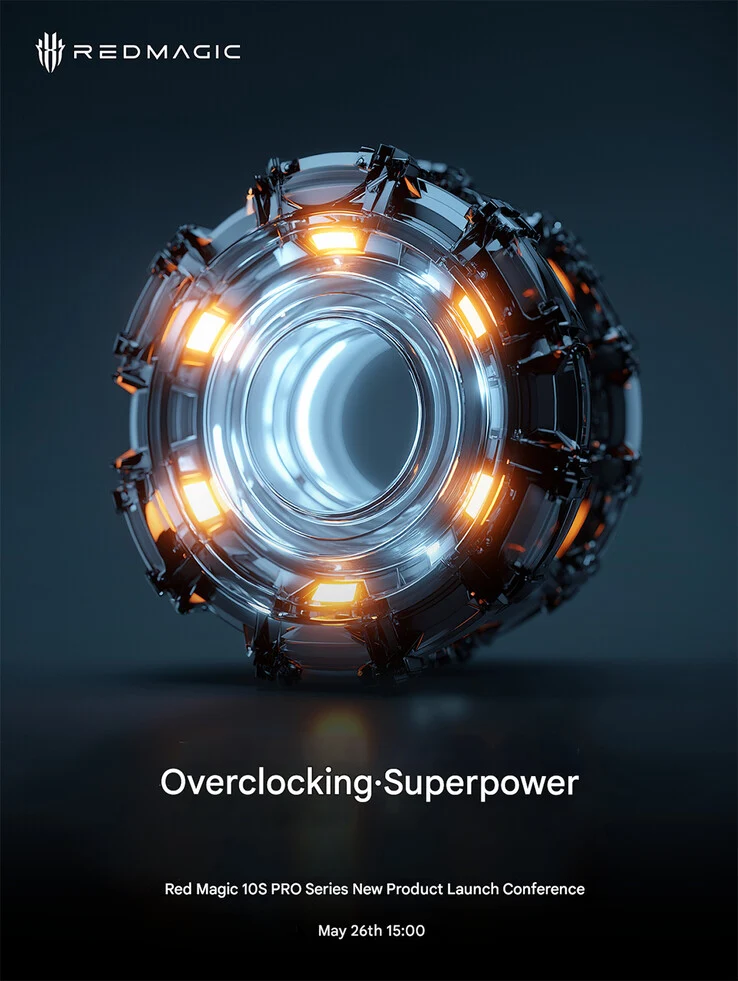
    RedMagic is gearing up for a big event on May 26, 2025. During this occasion, they will officially present a fresh collection of smartphones that belong to the 10S Pro series. Although the company hasn’t revealed too much information yet, it seems this latest gaming phone series may come equipped with an improved version of the Snapdragon 8 Elite.

    Past Performance of RedMagic

    Looking back, the RedMagic 9S Pro series was launched with the Snapdragon 8 Gen 3 Leading Version. This was actually an overclocked version of the standard SoC, and prior to the introduction of the Snapdragon 8 Elite, it frequently dominated the benchmark charts.

    Upcoming Tablet Features

    In addition to the new gaming phone series, RedMagic might also present the highly anticipated compact gaming tablet. According to recent reports, this tablet is expected to come with a 9-inch OLED display, going head-to-head with the newly released Lenovo Legion Y700 Gen 4 tablet. Its display is said to have a resolution of 2400×1504 pixels, which is lower than what Lenovo offers.

    This RedMagic gaming tablet, however, is likely to be powered by the standard version of the Snapdragon 8 Elite, boasting a maximum clock speed of 4.32 GHz. Additionally, recent reports indicate that the tablet will have a sizable battery, likely with a capacity of 8,240 mAh (20K Anker Zolo power bank curr. $32.99 on Amazon).

    Accessories and More

    Besides the new phone and tablet, the launch event on May 26 could also present new gaming accessories from RedMagic. The company is anticipated to provide more information about these upcoming products through teasers in the near future.


  • Asus ROG Falcata Keyboard & Harpe 2 Ace Mouse Launch Details

    Asus ROG Falcata Keyboard & Harpe 2 Ace Mouse Launch Details

    Key Takeaways

    1. Asus launched the ROG Harpe 2 gaming mouse Ace and ROG Falcata keyboard at Computex 2025, with availability set for July 2025.
    2. The ROG Falcata keyboard features second-generation HFX V2 magnetic switches, offering low click latency and a quieter operation with a four-layer dampening system.
    3. The ROG Falcata includes a detachable wrist rest, a multi-function button and wheel, and impressive battery life of up to 102 hours with RGB lighting on.
    4. The ROG Harpe 2 Ace mouse has a high-resolution Aimpoint Pro sensor (42,000 DPI) and is designed for competitive gaming, weighing only 48 grams.
    5. The mouse supports tri-mode connectivity, features ‘Zone Mode’ for enhanced polling rates, and includes two programmable buttons specifically for right-handed users.


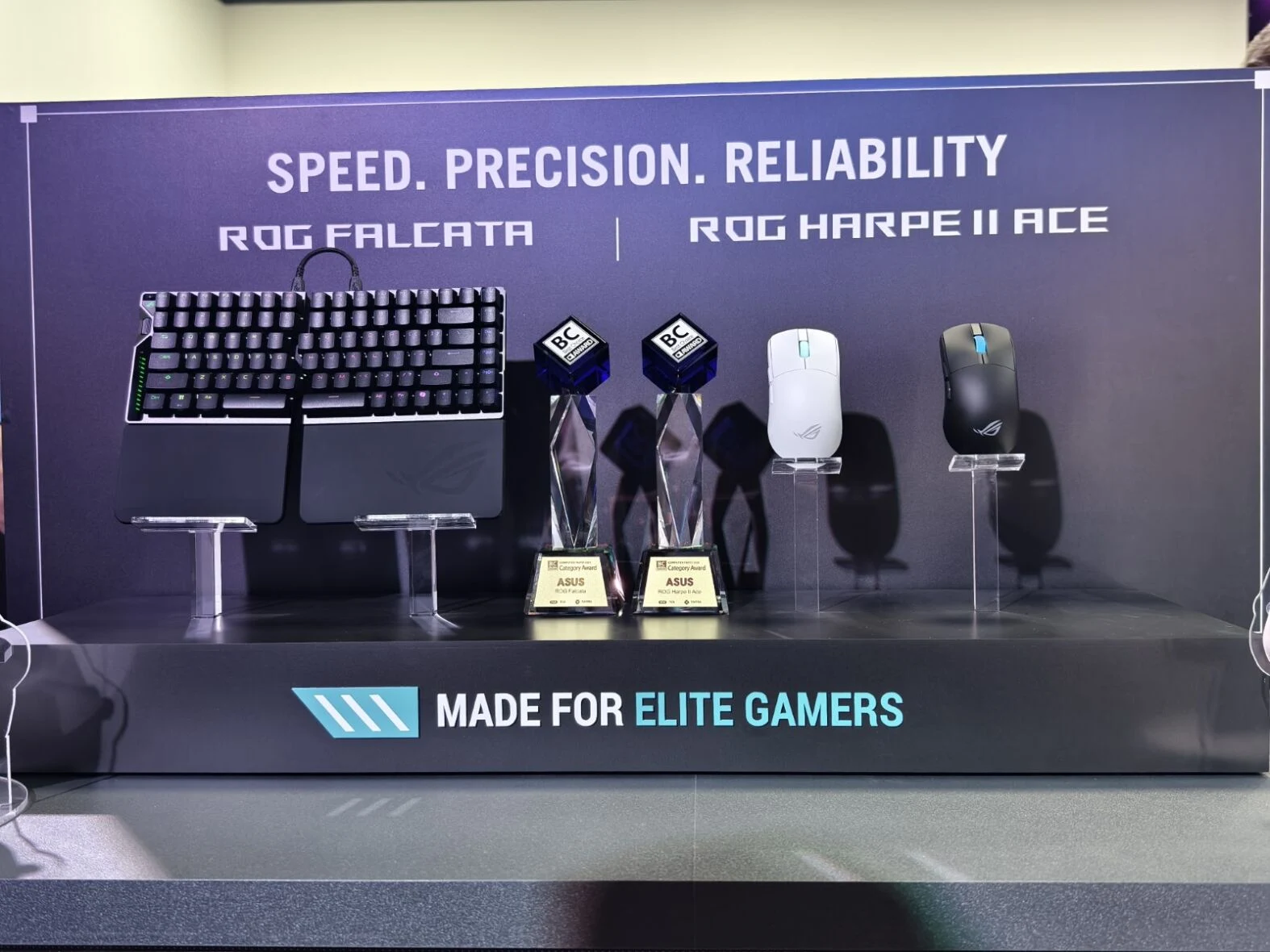
    Asus has unveiled a brand new keyboard and mouse at Computex 2025. The ROG Harpe 2 gaming mouse Ace is the successor to the ROG Harpe Ace. Meanwhile, the Falacta represents Asus’ interpretation of the trendy 75% split keyboard design. Both the keyboard and mouse are set to be available for sale in July 2025, with pricing details to be announced as the launch date approaches.

    Innovative Features of the ROG Falcata

    The ROG Falcata boasts Asus’ second-generation HFX V2 magnetic switches and ROG Hall Effect sensors. According to Asus, these switches have a click latency of just 1 ms in wired mode and 3.5 ms when in wireless mode. Thanks to its four-layer dampening systems, the keyboard operates quieter than its rivals. The ROG Falcata connects to a PC using USB or a 2.4 GHz dongle that utilizes Asus’ ROG Lightspeed technology.

    Additional Functionality

    This keyboard also features a detachable silicone wrist rest along with a multi-function button and wheel. Asus claims that the ROG Falcata can operate for up to 102 hours with RGB lighting turned on, and an impressive 122 hours without it.

    The Advanced ROG Harpe 2 Ace Experience

    Shifting focus to the ROG Harpe 2 Ace, it is equipped with Asus’ Aimpoint Pro sensor that has a resolution of 42,000 DPI and glass tracking capabilities. This mouse has been developed in collaboration with a top Valorant player, ensuring it’s fine-tuned for competitive gaming. Weighing in at 48 grams, it supports both Claw and Fingertip grips. It also features two programmable buttons on the left side, targeting right-handed users specifically.

    Moreover, there’s a feature called ‘Zone Mode’ that elevates the polling rate from 1 kHz to either 4 or 8 kHz, while disabling RGB lighting and power-saving options. This mode is designed for those ‘intense’ situations where frame-perfect inputs are essential. Additional features include tri-mode connectivity (Bluetooth, 2.4 GHz, wired) and ROG optical switches rated for an impressive 100k clicks.

  • Asus ROG Strix Ace Gaming Monitor: 610 Hz Refresh Rate Unveiled

    Asus ROG Strix Ace Gaming Monitor: 610 Hz Refresh Rate Unveiled

    Key Takeaways

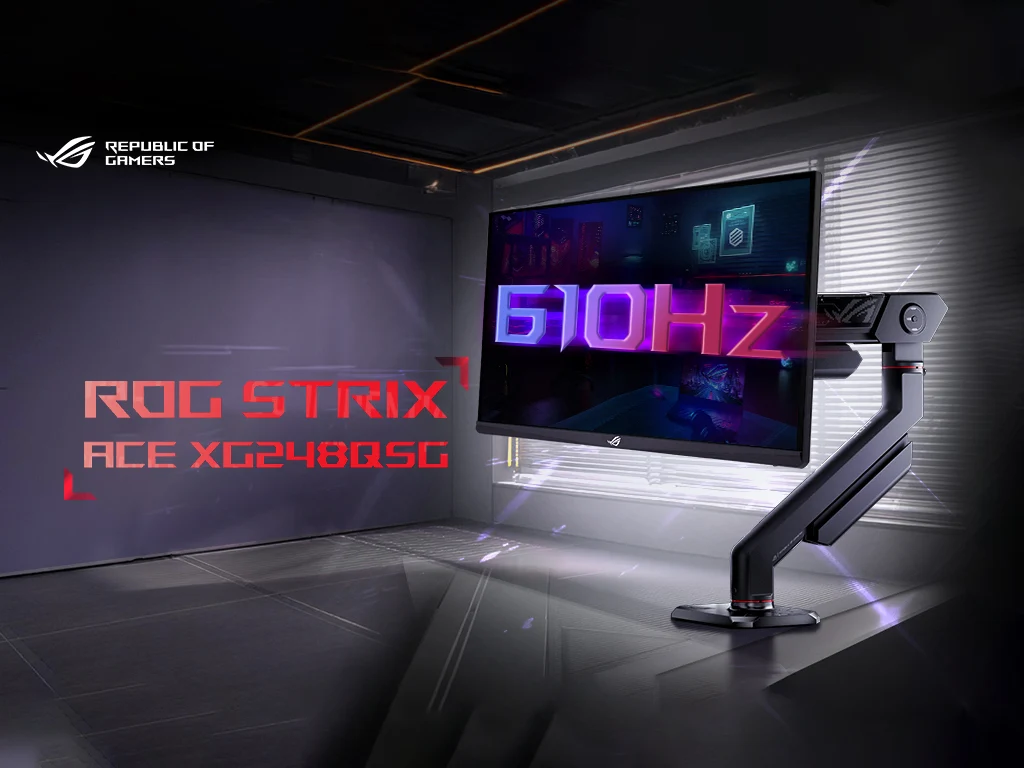
    1. The Asus ROG Strix Ace XG248QSG features an impressive refresh rate of up to 610 Hz and a response time of just 0.1 ms, making it ideal for serious gamers.

    2. The monitor utilizes Super TN technology, offering 90% DCI-P3 color coverage, though it may lack the color accuracy of IPS screens.

    3. It supports Extreme Low Motion Blur 2 (ELMB 2) with 65% greater brightness compared to rival monitors, enhancing visual clarity for gamers.

    4. The design includes a new Ergo Stand that is 30% more compact than previous models, along with I/O ports like DisplayPort 1.4, HDMI 2.1, and a 3.5 mm audio jack.

    5. Additional specs include modes for 240 Hz and 480 Hz, a resolution of 1080p, and a display size of 24.1 inches; pricing and global release date are not yet available.


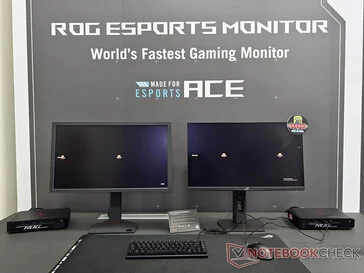
    The Asus ROG Strix Ace XG248QSG has officially launched worldwide. Initially revealed in China in early April, this gaming monitor boasts an impressive refresh rate of up to 610 Hz. The manufacturer also states that it has a response time of just 0.1 ms, making it an ideal choice for serious gamers.

    Panel Features

    Regarding the panel, it utilizes Super TN technology, recognized for its quick performance but often critiqued for its color accuracy when compared to IPS screens. Nonetheless, Asus asserts that the Strix Ace XG248QSG achieves 90% DCI-P3 color coverage.

    Enhanced Clarity

    Another standout feature of this new ROG gaming monitor is its support for Extreme Low Motion Blur 2 (ELMB 2). According to Asus, the brightness is 65% greater relative to rival monitors, which should enhance visual clarity. Additionally, there are AI-driven features included that the company claims will provide gamers with a competitive advantage.

    Design and Connectivity

    On the design front, Asus points out that the ROG Strix Ace XG248QSG is equipped with a new Ergo Stand. This stand is reported to be 30% more compact than the ones bundled with the XGS models (like the Huano 32-inch gas monitor arm, currently priced at $34.92 on Amazon). The monitor’s I/O ports feature a DisplayPort 1.4, HDMI 2.1, and a 3.5 mm audio jack.

    Additional Specs

    Other important characteristics of this gaming monitor include modes for 240 Hz and 480 Hz, a resolution of 1080p, and a display size of 24.1 inches. As of now, there is no information available regarding the global price or release date for the Asus ROG Strix Ace XG248QSG.


  • Asus TUF Gaming F16 Upgraded with Intel Arrow Lake-HX and RTX 50

    Asus TUF Gaming F16 Upgraded with Intel Arrow Lake-HX and RTX 50

    Key Takeaways

    1. The Asus TUF Gaming F16 features the latest Intel Raptor Lake-HX processor and Nvidia RTX 4060 GPU, offering performance that can compete with ROG models.

    2. It can be configured with an Intel Core Ultra 9 275HX CPU, Nvidia GeForce RTX 5070 GPU, up to 32 GB of DDR5-5600 RAM, and a 2 TB PCIe Gen 4 NVMe SSD.

    3. The laptop includes a 90 Wh battery with USB-C charging up to 100 Watts and a 16-inch 2.5K IPS LCD display with a 165 Hz refresh rate and 400 nits peak brightness.

    4. Additional features include a Thunderbolt 4.0 port, Wi-Fi 6E, a full-sized keyboard with a Windows Copilot key, and a 1080p webcam supporting Windows Hello.

    5. The laptop’s chassis measures 17.9 mm in thickness, but pricing and availability details have not yet been announced.


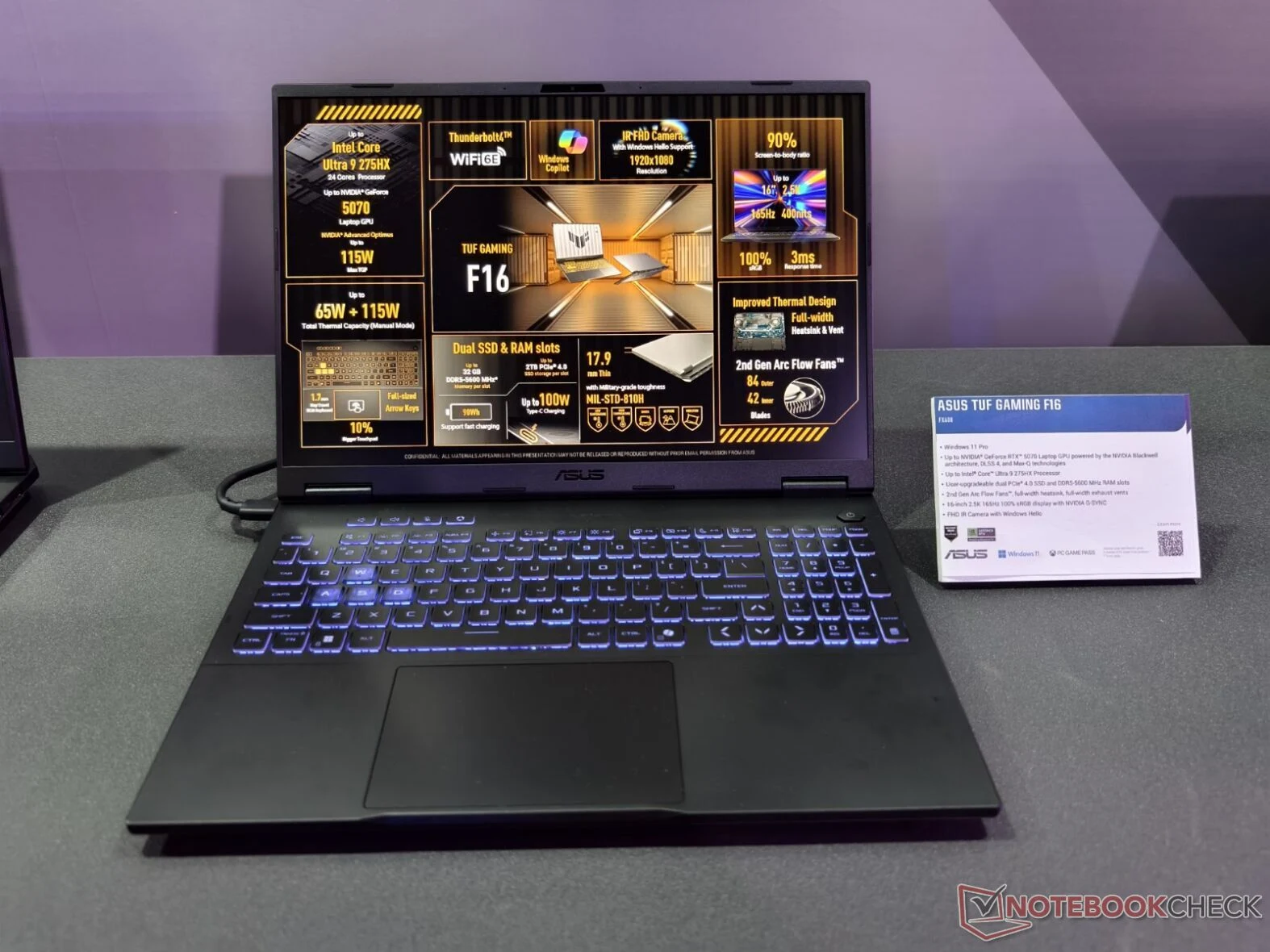
    At CES 2024, Asus unveiled the TUF Gaming F16, featuring the Intel Raptor Lake-HX processor and Nvidia’s RTX 4060 GPU. After a year and a half, the laptop has now been updated with the newest hardware from both companies. The refreshed models, especially the high-end ones, are capable of rivaling their similarly equipped ROG counterparts.

    Impressive Hardware Options

    The Asus TUF Gaming F16 can be equipped with a powerful Intel Core Ultra 9 275HX Arrow Lake-HX CPU, paired with an Nvidia GeForce RTX 5070 GPU that has a maximum TGP of 115 Watts. For memory, it can support up to 32 GB of DDR5-5600 RAM along with a spacious 2 TB PCIe Gen 4 NVMe SSD. To manage cooling, Asus has included second-generation Arc Flow fans.

    Battery and Display Features

    This laptop is powered by a 90 Wh battery, which can be charged using USB-C at speeds of up to 100 Watts. The display on the Asus TUF Gaming F16 is a 16-inch 2.5K (2,560 x 1,440) IPS LCD with a refresh rate of 165 Hz, similar to its predecessor. It achieves a peak brightness of 400 nits, covers 100% of the sRGB color gamut, and is compatible with Nvidia G-Sync.

    Additional Specifications

    Other notable features include a Thunderbolt 4.0 port, Wi-Fi 6E connectivity, a full-sized keyboard that has a dedicated Windows Copilot key, and a 1080p webcam that supports Windows Hello. The laptop’s chassis is a sleek 17.9 mm thick. Asus has yet to announce the pricing and availability for the TUF Gaming F16.

  • A1X: Handheld with AMD Ryzen AI 9 HX 370 Competes with ROG Ally

    A1X: Handheld with AMD Ryzen AI 9 HX 370 Competes with ROG Ally

    Key Takeaways

    1. The Aokzoe A1X launched on Kickstarter on April 17, with official release set for June 17, and pre-orders available now.
    2. It features four variants, all equipped with 7,500 MT/s LPDDR5X RAM and an M.2 2280 SSD.
    3. The device includes an OCuLink port for high-speed connections to external GPUs, enhancing graphics performance.
    4. The 8-inch touchscreen offers a resolution of 1920 x 1200, 10-point multi-touch, and adaptive refresh rates from 60 to 120 Hz.
    5. Connectivity options include two USB 4.0 ports, a USB 3.2 Gen 2 port, a Micro SD card slot, and a 72.7 Wh battery with 100-watt charging support.


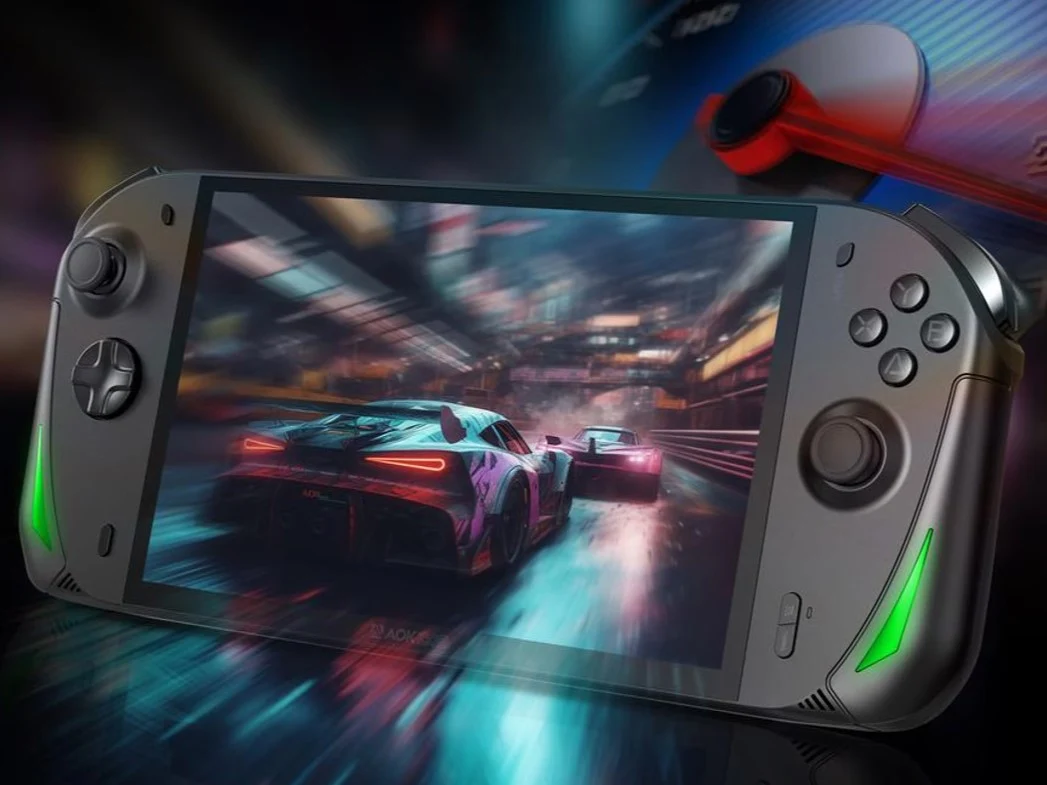
    Handheld gaming fans might already know about the Aokzoe A1X, which began its crowdfunding journey on Kickstarter on April 17. The company has now revealed that the official launch will take place on June 17, but eager customers can already place pre-orders straight from the manufacturer’s site. It’s wise for potential buyers to check the shipping terms in advance.

    Variants and Specs

    The Aokzoe A1X is available in four different variants, each featuring 7,500 MT/s LPDDR5X RAM and an M.2 2280 SSD. The distinctions among the models are noteworthy:

    This handheld device includes an OCuLink port that enables connections to external gadgets, particularly GPUs, which can achieve data transfer speeds of up to 64 Gbps. This should significantly enhance the graphics performance of the device. The 8-inch landscape touchscreen offers a resolution of 1920 x 1200, supports 10-point multi-touch, reaches a brightness of 500 nits, and can intelligently adjust its refresh rate between 60 and 120 Hz with the help of VRR technology. Additional features consist of complete sRGB color space coverage, scratch-resistant glass, and DC dimming capabilities.

    Connectivity and Battery

    In addition to the OCuLink port, the device also boasts two USB 4.0 ports (40 Gbps), one USB 3.2 Gen 2 port (10 Gbps), a Micro SD 4.0 card slot (300 MB/s), and an audio jack. The battery, with a capacity of 72.7 Wh, supports charging at up to 100 watts. More information about the Aokzoe A1X, including its capacitive joysticks and 3-axis gyroscope, is available on the pre-order site.

    Source:
    Link

  • Steam’s Schedule I Restrictions in Australia Explained

    Steam’s Schedule I Restrictions in Australia Explained

    Key Takeaways

    1. Game Removal: The indie game Schedule I was taken down from the Australian Steam store due to a lack of classification by the Australian Classification Board, which is legally required for all games sold in Australia.

    2. Developer’s Clarification: Tyler, the developer, indicated that the game is not banned but is awaiting classification, as he assumed the classification law only applied to console or physical copies.

    3. Legal Compliance: All video games, including those on digital platforms, must be classified under Australia’s National Classification Scheme before being distributed, which highlights the importance of legal compliance for developers.

    4. Challenges for Developers: The situation underscores the difficulties independent developers face in understanding and navigating international legal requirements, as seen in similar cases with other games and platforms.

    5. Comparison with Other Platforms: Unlike Steam, Google Play includes specific prompts for regional legal compliance during the app submission process, emphasizing the need for developers to be aware of local regulations.


    The indie game Schedule I, which features an open world, has been taken down from the Australian Steam store due to a problem related to its classification. Tyler, the developer from TVGS, confirmed that the game hadn’t been submitted to the Australian Classification Board, which is a legal requirement.

    Developer’s Explanation

    In a message posted on Reddit and referenced in the discussions on Steam, Tyler shared, “I just found out that all games sold in Australia need to be classified before they can be available. I thought this only applied to console or physical copies. It seems like this law is not enforced consistently since there are many unclassified games available in Australia. We are starting the classification process today and are hoping to fix this in the next few days. I apologize for the trouble! To sum it up: not banned—just waiting for classification.”

    Legal Requirements

    The Australian Classification Board states that all video games available through online stores must be classified prior to being distributed. This rule covers digital platforms on PCs, mobile gadgets, and gaming consoles as part of Australia’s National Classification Scheme.

    Current Availability

    SteamDB shows that the store package for Schedule I is labeled as “Not in AU,” which confirms that it is currently unavailable in Australia. However, the game can still be played in all other regions where it is supported.

    Schedule I was taken off sale in Australia after achieving over 459,000 simultaneous players on Steam, due to the classification compliance issue. Its removal has highlighted the ongoing difficulties independent developers face in navigating international legal requirements.

    Industry Comparisons

    Similar challenges have cropped up in other instances, like Sega pulling more than 60 classic games from various digital stores and Amazon taking down the EmulationStation app, which helps organize and launch emulated games. These cases highlight how platform compliance and local laws can influence game accessibility.

    Steam’s onboarding documentation seems to lack prompts for region-specific legal compliance, such as the necessary classification in Australia. Developers are responsible for ensuring their games meet local legislation, but it’s unclear if Steam conducts automated legal checks during the submission process.

    In contrast, Google Play includes regional compliance steps within its app submission process, requiring developers to submit documentation for legal approval in countries with strict national regulations. These prompts are visible in the Play Console and are essential for distribution in those areas.

    TVGS has stated that it is now working on getting the classification to restore access for Australian players. As of now, the game is still available in all other supported areas.

    Source:
    Link

  • Winlator: Windows Game Emulator Development Restarts After Break

    Winlator: Windows Game Emulator Development Restarts After Break

    Key Takeaways

    1. Winlator is a top emulator for running Windows games on Android, popular among users for its performance with classic AAA titles.
    2. For optimal gaming, it’s recommended to use upper-mid to high-end phones and a physical controller like the 8Bitdo Ultimate.
    3. Development was paused in April 2025 due to backlash over malware allegations, though the creator claimed all versions are clean.
    4. A hotfix was released before the pause to address false positive virus detections, but development faced challenges from user concerns.
    5. The pause announcement has been removed, indicating a potential return to development, with the community expressing optimism for future updates.


    Winlator stands out as one of the top emulators for running Windows games on Android devices. Thanks to its active user base, this emulator can effectively run a variety of classic AAA titles. For the best gaming experience, it’s often suggested to use a phone that is upper-mid to high-end, along with a physical controller like the 8Bitdo Ultimate smartphone controller, which is currently priced at $39.50 on Amazon. It’s also important to mention that the emulator is quite versatile, and the on-screen controls work decently too.

    Development Pause Announced

    However, the progress of this Windows emulator for Android took an unexpected turn in late April 2025 when its creator, BrunoSX, declared a sudden halt in development. This was mainly due to the backlash he received over allegations that the app contained malware and viruses.

    In his announcement, BrunoSX stated that all versions of Winlator were, in fact, clean, and he had released a hotfix right before the pause. According to some users on the subreddit, this hotfix eliminated the “false positive” virus detection, yet the developer reported that many users were making it difficult to continue with development.

    Positive Changes Ahead

    The good news is that the pause announcement has just been taken down from Winlator’s GitHub page. This recent update to the readme hints that BrunoSX has come back from his short break. Although the app hasn’t received any updates since the last news, the change suggests that a new version could be coming soon.

    The community’s response to this update has been largely optimistic, with many expressing hope for what’s next. Nevertheless, some individuals still worry about the previous virus alerts concerning Winlator. It remains to be seen if BrunoSX will tackle these worries in upcoming updates for the Windows emulator.

    Source:
    Link