Category: Gaming

  • Sony Unveils New Details on PS6 and Cloud Gaming Features

    Sony Unveils New Details on PS6 and Cloud Gaming Features

    Key Takeaways

    1. Sony is preparing for the future of PlayStation as the PS5 approaches its five-year mark, with the PS6 on the horizon.
    2. Cloud gaming is becoming increasingly important, but challenges such as network stability and higher costs still exist.
    3. The majority of PS5 and PS5 Pro users prefer local gameplay over cloud options, indicating a strong demand for traditional gaming experiences.
    4. Sony is exploring new ways for gamers to access their content and services, though specifics about the PS6 remain unclear.
    5. Future developments in cloud gaming may offer additional options for players, despite it not being the main focus currently.


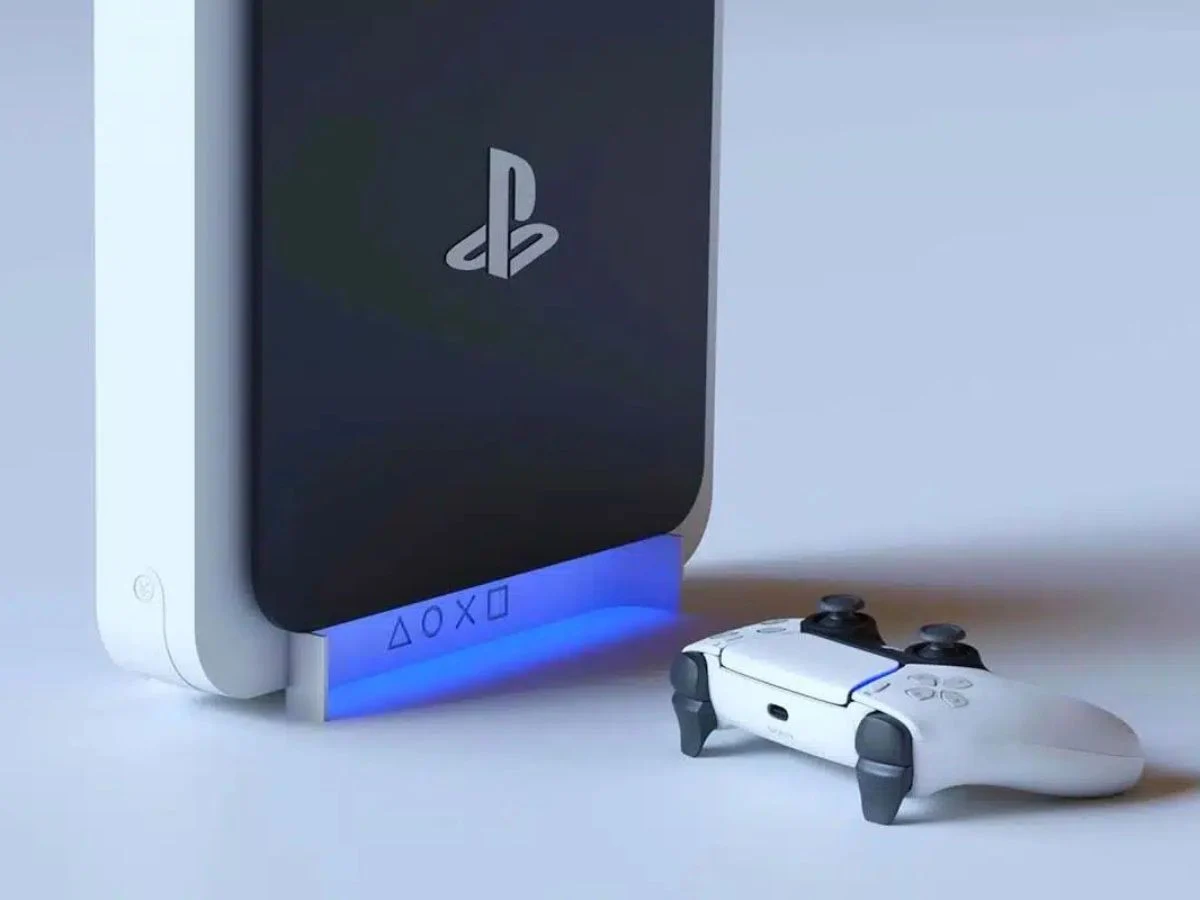
    With a large number of gamers now owning a PS5, Sony is getting ready for the ongoing success of these devices. In just a few months, this gaming console will turn five years old. Although each version typically lasts around seven to eight years, the future of PlayStation raises several questions. Recently, the Japanese company shared some insights about the PS6 that should catch the attention of many gamers.

    Insights on Cloud Gaming

    At a business meeting last week, Hideaki Nishino, the CEO of Sony Interactive Entertainment, revealed some details about the future of PlayStation. He specifically highlighted the significance of cloud gaming. This feature is quickly becoming a crucial aspect of the gaming industry, making us ponder its potential dominance on the PS6. However, Hideaki Nishino mentioned that things could shift: “Cloud streaming is advancing well from a technical perspective, as we have shown with [our] products, but the overall network stability is beyond our control. Additionally, the higher cost per gameplay compared to the traditional console model is still a hurdle.”

    Preferences of Gamers

    He also noted that the majority of PS5 and PS5 Pro users prefer local gameplay: “Cloud gaming is increasingly providing an extra option for players to access content, but we believe that most players still want to enjoy gaming through local execution without relying on network conditions. And I think PS5 and PS5 Pro have confirmed this idea.”

    Thus, he is considering a new and more effective way for gamers to utilize the services and content offered by Sony, while being vague about the future of this upcoming console: “While we can’t provide more details at this moment, the future of the platform is very important to us. We are dedicated to finding a new and improved way for players to engage with our content and services.” So, even if cloud gaming isn’t a main focus, new possibilities might be on the horizon.

    Source:
    Link

  • Reliable Gaming Laptop: User Concerns About Thermals & Longevity

    Reliable Gaming Laptop: User Concerns About Thermals & Longevity

    Key Takeaways

    1. User frustrations about gaming laptops often focus on performance issues, overheating, and warranty limitations across brands.
    2. Personal experiences shared indicate that maintenance and thermal design significantly impact laptop reliability and performance.
    3. Many users suggest that issues like clogged fans or blocked vents can contribute to diminished performance over time.
    4. Long-term reliability may depend more on user maintenance than on manufacturer specifications and support.
    5. There is a growing desire for better thermal designs, durable components, and internationally valid warranties among users seeking reliable gaming laptops.


    A recent discussion on r/GamingLaptops gained significant interest when a Reddit user named Sea_Buffalo_8558 posed the question: “What’s the most reliable gaming laptop?” This seemingly simple query sparked a variety of responses that highlighted user frustrations, mainly revolving around performance challenges, heat management issues, and perceived limitations of warranties across different brands.

    User Experiences with Laptops

    In the Reddit thread, the user mentioned upgrading from an HP Envy to a Lenovo Legion 7 (Ryzen 7 5800H, RTX 3070, 32 GB RAM), stating that the laptop began to overheat and slow down after just 18 months of use. They noted that despite performing a full thermal re-paste and cleaning the internals, the device remained slow, particularly under machine learning tasks. “I literally gave up on doing heavy stuff on my laptop,” they expressed.

    Shared Frustrations

    The post received more than twenty replies from users who shared similar experiences with other brands like MSI, Asus, and Alienware. While some people pointed to maintenance issues as the cause of the performance drops, suggesting things like using cooling pads or changing performance settings, others guessed that there might be deeper design flaws at play.

    One user commented, “It’s not the brand, it’s the build quality and thermal design that matters most,” sharing their perspective. Additionally, several respondents noted that warranty services can differ greatly by region, with claims that international purchasers often find themselves without sufficient support.

    Discussions on Reliability and Maintenance

    Among the responses, Reddit user Alternative_Yam_2642 mentioned they had faced vapor chamber failure. Another user, wiseleo, replied to the original post, hinting that clogged fans or blocked vents might be part of the reason for the laptop’s diminished performance.

    While some users reported satisfaction with newer models like the ROG Strix Scar or the Alienware m-series, others speculated that long-term reliability might hinge more on how well users maintain their devices rather than on the assurances provided by the manufacturers.

    Based on the conversation, it seems some commenters are adjusting their expectations regarding gaming laptops. Many users expressed concerns about the shortcomings of just focusing on raw specifications. Among those who use their laptops for both gaming and AI or machine learning, reliability emerged as a key consideration. Likewise, a few posts pointed out the desire for better thermal designs, more durable components, and warranties that are valid across different regions.

    Source:
    Link

  • Nintendo Switch 2 Game’s Slow Sales Highlight Game-Key Card Limits

    Nintendo Switch 2 Game’s Slow Sales Highlight Game-Key Card Limits

    Key Takeaways

    1. Disgaea 7 Complete is launching on the Switch 2, but fans are disappointed about it using a Game-Key Card.
    2. The Collector’s Edition, called Ewwdo Edition, includes the Deluxe Edition and physical collectibles but has seen sluggish pre-order sales.
    3. A Game-Key Card holds minimal data, requiring players to download most of the game, leading to criticism from fans and concerns about game preservation.
    4. Many physical third-party Switch 2 games are adopting the Game-Key Card format, but some titles like Cyberpunk 2077 are still available as traditional cartridges.
    5. The release has sparked negative feedback regarding the high cost for content already available, with fans preferring a more affordable upgrade option.


    Western fans of tactical RPGs were thrilled when they heard the news about Disgaea 7 Complete launching on the Switch 2. While a version of Disgaea 7 was released for the original Switch, it missed out on some DLC that was only available in Japan. However, the excitement faded somewhat when fans discovered that the new release would be using a Game-Key Card. This disappointment might be contributing to the sluggish sales of the Collector’s Edition pre-orders.

    Collector’s Edition Details

    The NIS Online Store is a popular place for fans to find many of the publisher’s games. Recently, they added the Disgaea 7 Complete: Ewwdo Edition to their listings. This special edition comes with the Deluxe Edition of Disgaea 7 along with various physical collectibles. A user on NeoGaf noticed that no one had bought the Switch 2 version yet, even with limited quantities typically selling out fast.

    What is a Game-Key Card?

    A Game-Key Card is basically a cartridge that holds just a tiny bit of data. Because publishers have access to only pricey 64 GB media, they see this as a cheaper option. Players must download most of the game’s files before they can start playing. While gamers can still sell the game or use it on other consoles, those who care about game preservation are critical of this format. Additionally, fans who love to fill their shelves with traditional game cards are also quite displeased.

    Market Trends

    Many physical third-party Switch 2 games are opting for the Game-Key Card method. However, there are some exceptions, including Cyberpunk 2077: Ultimate Edition and Rune Factory: Guardians of Azuma. The developers of these games have shared concerns that not every title suits this format. The strong sales of Cyberpunk 2077 could indicate that there is still a market for cartridges that do not depend on internet access.

    The comment sections are filled with negative feedback about Disgaea 7 Complete being released on a Game-Key Card. In addition to that, it’s seen as a costly investment for content that is largely already available. Owners of the Switch would have rather had a more affordable upgrade option.

    Source:
    Link


  • Final Fantasy 16 Xbox Sales Decline After Game Pass Omission

    Final Fantasy 16 Xbox Sales Decline After Game Pass Omission

    Key Takeaways

    1. Final Fantasy 16 is now available on Xbox, but its launch was not heavily promoted, leading to low traction on Xbox Series X|S.
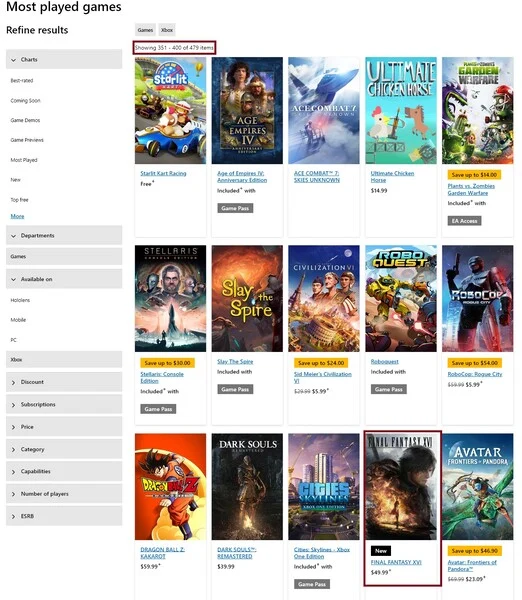
    2. The game ranks between the 350th and 400th spots for most-played games on Xbox, despite the Standard and Complete Editions performing better in sales.
    3. Community theories suggest the late Xbox release, competition from PC sales, and absence from Xbox Game Pass may contribute to its underwhelming performance.
    4. Final Fantasy 16 also struggled on PS5, with sales declining after an initial strong start, raising questions about JRPG success on Xbox.
    5. Microsoft is shifting focus towards multi-platform publishing and new handheld Windows devices, which may result in fewer Xbox-exclusive releases in the future.


    At a recent event, Microsoft revealed that the Xbox version of Final Fantasy 16 is now available. Square Enix has been making its games accessible on various platforms, but the RPG’s launch on Xbox was not heavily promoted. Two years after its release on PS5, the game is struggling to gain traction on Xbox Series X|S. In fact, it is ranking unexpectedly low on Microsoft’s lists for most-played and top-paid games.

    Game Rankings and Performance

    The situation is fluid, with data that changes regularly. Currently, Final Fantasy 16’s Xbox port sits between the 350th and 400th spots for most-played games. However, the news is a bit brighter in terms of sales; the Standard Edition is within the top 50, and the Complete Edition is in the top 30. Still, many gamers believe that the game’s performance is underwhelming for a title from a well-known company like Square Enix.

    Community Theories

    On the ResetEra forums, critics have been sharing their thoughts on why Final Fantasy 16 is struggling to attract a big audience on Xbox. One reason could be that it was a late release for a game that has been available for PS5 players since 2023 and for PC players since 2024. Many Xbox users also play on PCs due to Play Anywhere, which means some may have already bought the RPG on Steam or the Epic Games Store. Another notable point is that the absence of Final Fantasy 16 from Xbox Game Pass might be affecting player numbers.

    Broader Context

    To be fair to Microsoft, Final Fantasy 16 didn’t perform as expected on PS5 either. The publisher acknowledged that sales declined after a strong start, especially when compared to other titles from Square Enix. Other Final Fantasy games, despite being more popular on Nintendo and PlayStation, have drawn in more players on Xbox. The idea that JRPGs can’t succeed on Xbox is now being questioned. While players are divided on its subgenres, the popular game Clair Obscur: Expedition 33 clearly incorporates JRPG elements.

    Microsoft is now focusing more on publishing across multiple platforms and on new handheld Windows devices. This shift may lead to fewer Xbox Series X|S-exclusive releases in the near future.

    Source:
    Link


  • Gigabyte Unveils Affordable 240Hz 2K QD-OLED Gaming Monitor

    Gigabyte Unveils Affordable 240Hz 2K QD-OLED Gaming Monitor

    Key Takeaways

    1. Display and Performance: The MO27Q2 features a 27-inch QD-OLED display with a 2K resolution (2560×1440) and a high refresh rate of 240Hz.

    2. Color and Brightness: It offers true 10-bit color, covers 99% of DCI-P3, and can reach brightness levels of up to 1000 nits, along with VESA DisplayHDR 400 certification.

    3. Gaming Features: The monitor has a 0.03ms GtG response time, supports AMD FreeSync Premium Pro, and holds VESA ClearMR 13000 certification for excellent motion clarity.

    4. Connectivity: It includes two HDMI 2.1 ports, one DisplayPort 1.4, a USB-C port, two USB-A 3.2 ports with KVM switch capability, and a 3.5mm headphone jack.

    5. User-Friendly Features: The monitor has an AI-based OLED Care system for maintenance, customizable gaming settings, a flexible adjustable stand, and built-in dual 5W speakers.


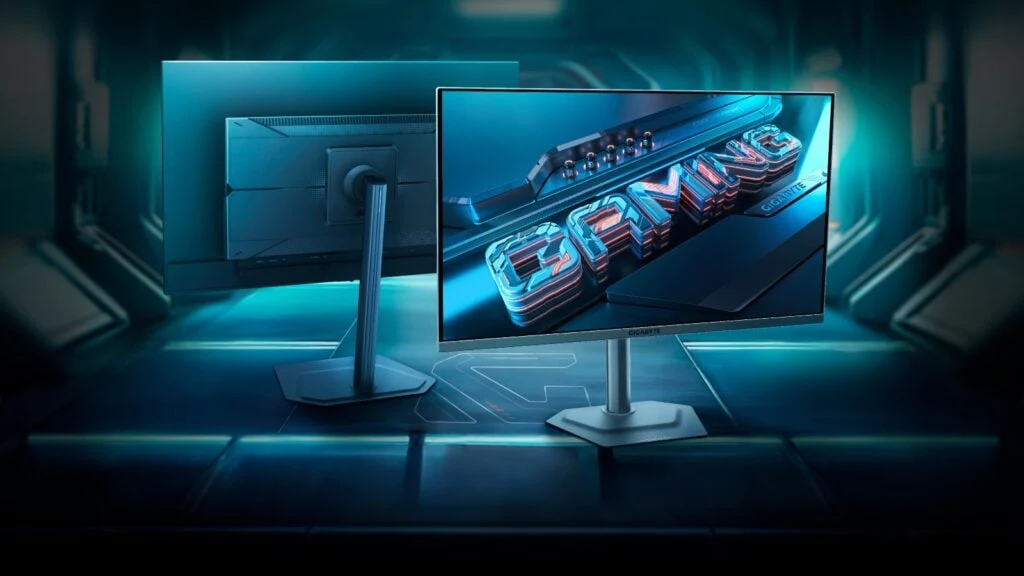
    Gigabyte has launched its new gaming monitor called the MO27Q2 in China. This monitor comes with a 27-inch QD-OLED display that has a resolution of 2K (2560×1440) and a refresh rate of 240Hz. The price is set at 2,999 yuan (around $418), and it is currently available for sale on JD.com.

    Specifications of the MO27Q2

    The MO27Q2 is aimed at serious gamers and high-end users, featuring a Samsung QD-OLED screen. It offers true 10-bit color, covers 99% of DCI-P3, and can reach brightness levels of up to 1000 nits. It also holds the VESA DisplayHDR 400 certification, which ensures better dynamic range and contrast for HDR content.

    Gaming Features and Connectivity

    This monitor boasts an impressive 0.03ms GtG response time and is compatible with AMD FreeSync Premium Pro. It also has a VESA ClearMR 13000 certification, which guarantees excellent motion clarity and less blur in fast-action games. Such specifications make it an ideal choice for esports and high-speed gaming.

    Gigabyte has provided the monitor with two HDMI 2.1 ports, a single DisplayPort 1.4, and a USB-C port that supports 18W power delivery. Additionally, it features two USB-A 3.2 ports with KVM switch capability, a USB-B upstream port, and a 3.5mm headphone jack, making it compatible with PCs, consoles like the PlayStation 5 and Xbox Series X, along with USB-C devices.

    Maintenance and User Features

    The MO27Q2 incorporates Gigabyte’s AI-based OLED Care system, which helps in managing screen maintenance to minimize burn-in risks. Users can adjust the settings manually, and the monitor is backed by a 3-year warranty that covers burn-in protection.

    The monitor is packed with gaming functionalities, such as on-screen crosshair overlays, a black equalizer (Black Equalizer 2.0), and PiP and PbP display modes. It also includes a physical Tactical Switch button for profile switching and a 24.5-inch emulation mode tailored for first-person shooter games.

    Adjustable Stand and Audio

    The stand allows height adjustments of up to 130mm, tilts from -5° to +21°, can swivel ±20°, and pivots 90° clockwise. The display also comes with dual 5W speakers and is compatible with the 100x100mm VESA wall mounting standard.

  • Razer Kishi V3 Pro vs Ultra: Key Differences of $150 Controllers

    Razer Kishi V3 Pro vs Ultra: Key Differences of $150 Controllers

    Key Takeaways

    1. Razer has launched three new Kishi V3 mobile controllers, including the Kishi V3 Pro and Kishi Ultra, both priced at $149.99.
    2. Both controllers share features like USB-C connectivity, passthrough charging, and Razer Sensa HD Haptics, but lack an internal battery.
    3. The Kishi V3 Pro features advanced TMR thumbsticks, while the Kishi Ultra has standard thumbsticks with adjustable sensitivity.
    4. The Kishi V3 Pro includes four remappable buttons, compared to the Kishi Ultra’s two, and lacks customizable RGB lighting.
    5. Compatibility differs: Kishi V3 Pro works with devices on Android 14 or higher, while Kishi Ultra supports Android 12 or higher, limiting options for older devices.


    Razer has unveiled three new Kishi V3 mobile controllers, including the Kishi V3 Pro, which is priced at $149.99. This is the same price as the Kishi Ultra that was revealed in April 2024. If you’re curious about which controller to pick, this article will guide you in making that choice.

    Similarities Between the Controllers

    The Kishi V3 Pro and Kishi Ultra have many similarities since they come with a range of shared features. Both controllers connect to compatible devices using USB-C. Unlike the Backbone Pro, which also connects via USB-C and has a built-in battery for Bluetooth use, neither the Kishi Pro nor the Ultra has an internal battery.

    They both support passthrough charging, have an audio jack, and can connect to a PC through a USB-C cable for wired use. Moreover, they share the same dimensions — 110.8 mm X 244.8 mm X 64.3 mm — and are nearly identical in weight. The Kishi V3 Pro weighs 268 grams, while the Kishi Ultra is slightly lighter at 266 grams.

    Features of Both Controllers

    Both controllers come equipped with Hall Effect trigger buttons, Mecha-Tactile action buttons, and a D-pad. They also support Razer Sensa HD Haptics, local games, cloud gaming services, remote play, and are compatible with the Razer Nexus app.

    Now that we’ve looked at their similarities, let’s dive into what sets them apart, as these differences will help potential buyers decide which one suits their needs best.

    Differences That Matter

    In terms of button layout, the Kishi Ultra and Kishi V3 Pro are identical on the front. However, the Kishi V3 Pro features TMR thumbsticks, while the Kishi Ultra has standard thumbsticks with anti-friction rings that enhance durability.

    When the Kishi Ultra was launched last year, it faced criticism for lacking Hall Effect thumbsticks, which are considered better than regular ones. With the Kishi V3 Pro now featuring the advanced TMR joysticks, which offer improved precision and reduced drifting, this difference has become even more pronounced.

    The differences don’t stop there. Both controllers have clickable thumbsticks, but only the Kishi V3 Pro’s thumbsticks come with replaceable caps. On the other hand, the sensitivity of the thumbsticks on the Kishi Ultra is adjustable, which is not the case for the V3 Pro.

    Design and Aesthetic Differences

    The Kishi Ultra has two remappable buttons, L4 and R4, located next to the shoulder and trigger buttons. In contrast, the Kishi V3 Pro has two additional back buttons, M1 and M2, bringing its total to four remappable buttons.

    In terms of design, the Kishi Ultra boasts Razer’s Chroma RGB lighting above its handles, which can be customized through the Razer Nexus app. Unfortunately, this feature is absent from both the Kishi V3 Pro and the pricier Kishi V3 Pro XL, which is priced at $199.99.

    Razer claims that both the Kishi V3 Pro and Kishi Ultra are compatible with Android, iOS/iPadOS, and Windows devices. They work not only with Android smartphones and iPhones but also with tablets that have a maximum screen size of 8 inches, like the iPad Mini. However, it’s important to note that not every Android and iOS/iPadOS device is compatible with both controllers.

    Compatibility is Key

    For the Kishi V3 Pro, it is compatible with devices running on Android 14 or higher, iOS 17 or newer, and Windows 11. Meanwhile, the Kishi Ultra works with devices on Android 12 or higher, iOS 17 or newer, and Windows 11.

    Compatibility is crucial, especially if you own an Android smartphone or tablet, as many devices still operate on Android 13 and won’t receive updates to newer versions. This means that even though the Kishi V3 Pro has appealing features like TMR joysticks and four remappable buttons, it won’t work with those older devices.

    Final Thoughts

    The Razer Kishi V3 Pro is undoubtedly the superior option between the two, thanks to its TMR thumbsticks, four remappable buttons, and a majority of the key features found in the Kishi Ultra. However, if your device runs Android 13 or lower, this controller won’t be suitable for you since its compatibility starts at Android 14. Fortunately, there are various alternatives for people in this situation.

    One such option is the Viture x 8BitDo Ultimate Mobile Controller, which works with devices running Android 13, includes Hall Effect thumbsticks, passthrough charging, and is priced at $79 on Amazon, making it almost half the cost of Razer’s controllers. This controller is also compatible with XR glasses, a first for mobile controllers. However, it’s worth noting that the Viture x 8BitDo Ultimate Mobile Controller can’t accommodate smaller tablets like the iPad Mini or Lenovo Legion Y700.

    Source:
    Link

  • New Sci-Fi Survival Game Launches on Steam with Great Reviews

    New Sci-Fi Survival Game Launches on Steam with Great Reviews

    Key Takeaways

    1. Game Release and Reception: The Alters launched on June 13 and quickly received a “Very Positive” rating from over 1,000 reviews on Steam.

    2. Gameplay Mechanics: Players control Jan Dolski, creating different versions called Alters based on past choices, each with unique traits and abilities, focusing on survival and sci-fi narratives.

    3. Community Feedback: Reactions are mixed; while some praise the emotional depth and innovative concept, others criticize the timer-based gameplay for limiting exploration.

    4. Editions and Pricing: The game is available in standard and deluxe editions, with the latter offering cosmetic extras and future DLC, but these do not affect gameplay.

    5. Platforms and Discounts: The Alters is available on PC, PS5, and Xbox Series X|S, currently offered at a 10% discount, bringing the price down to $31.49.


    11 bit studios has just launched their latest game, The Alters, on Steam. Released on June 13, it has gained traction quickly, boasting a “Very Positive” rating from over 1,000 reviews.

    Gameplay Overview

    The Alters is centered on survival mechanics and sci-fi narratives, putting you in the shoes of Jan Dolski, the lone survivor of a crashed expedition on a dangerous planet. Players are tasked with creating different versions of Jan, known as Alters, each influenced by significant choices from his past. These variations come with unique traits and abilities, leading to a makeshift crew filled with personal conflicts.

    Community Reactions

    The game blends multiple genres like base-building, resource management, and branching narratives, but the community’s response is mixed. Some players appreciate the emotional depth and uniqueness of the idea, while others express concerns about the timer-based gameplay in the Steam reviews. One user mentions it as “a survival game not need for speed racing,” suggesting that the time limit detracts from exploration. On the flip side, some argue it introduces a strategic element, even if it isn’t appealing to everyone.

    Editions and Pricing

    The game features a complete campaign and is available in both standard and deluxe editions. The deluxe edition comes with cosmetic outfits, a soundtrack, and future downloadable content, although these extras don’t seem to impact gameplay much.

    The Alters is currently accessible for PC, PS5 (currently priced at $499 on Amazon), and Xbox Series X|S at the time of its launch. As of now, there’s a 10% discount, reducing the price to $31.49. With its blend of deep storytelling and real-time survival strategy, it stands out as one of the more unconventional releases from 11 bit studios in recent memory.

    Source:
    Link

  • Switch 2 GameCube Emulator Criticized for Laggy Controls

    Switch 2 GameCube Emulator Criticized for Laggy Controls

    Key Takeaways

    1. Nintendo is adding GameCube games to the Switch 2 to attract retro gamers, but some players are dissatisfied with the emulator’s performance.
    2. Issues such as input lag and sensitive controls affect gameplay, especially in titles like F-Zero GX and The Legend of Zelda: The Wind Waker.
    3. Players are frustrated by recurring problems like graphical glitches and low performance reminiscent of the N64 experience.
    4. The Switch 2 streams emulated games rather than using local ROMs, contributing to latency issues; there are calls for Nintendo to run classic games directly.
    5. Despite criticisms, many Switch 2 owners appreciate the expanded GameCube library and the new controller enhances the retro gaming experience.


    Nintendo knows how much retro gamers love its older consoles. To encourage people to switch to the new Switch 2, the company has added GameCube games for Nintendo Switch Online + Expansion Pack subscribers. However, some players are not happy with the emulator used on the new device. Issues like input lag and overly sensitive controls have been mentioned, which can really impact games such as F-Zero GX.

    Hopes for Improvement

    Many gamers were excited that the enhanced specs of the Switch 2 would lead to better GameCube emulation. Yet, many players are reminded of their not-so-great experiences with the N64 on the original console. Besides control problems, players often faced graphical glitches and low performance. Sadly, some of these issues have returned with the Switch 2’s GameCube offerings, including titles like The Legend of Zelda: The Wind Waker and Soulcalibur 2.

    Frustrations in Gameplay

    In racing games, imprecise controls can be a real pain. Similarly, fighting in other games becomes tough when players struggle to block incoming attacks in time. The fact that the handheld streams emulated games instead of using local ROMs contributes to this latency. Ideally, the Switch 2 should run classic games directly, instead of depending on emulation. However, it would require an enormous effort from Nintendo to remaster or remake all the titles.

    Many players view the Dolphin emulator as the best way to revisit the GameCube days. The developers have worked hard to ensure a smooth experience across various platforms. Users have many more options for adjusting graphics and controls compared to what’s available on the Switch 2. With Dolphin setting the benchmark for GameCube emulation, fans are hopeful that Nintendo will enhance the gameplay.

    Overall Sentiment

    Even with some criticism, most Switch 2 owners enjoy the larger GameCube game collection. The new Switch 2 GameCube controller may not necessarily boost responsiveness. Nonetheless, it can enhance the comfort and authenticity of retro gaming experiences.

    Source:
    Link


  • John Marston Voice Actor Teases Red Dead Redemption 2 for Switch 2

    John Marston Voice Actor Teases Red Dead Redemption 2 for Switch 2

    Key Takeaways

    1. There are hints about Red Dead Redemption 2 possibly coming to the Switch 2.
    2. Voice actor Rob Wiethoff teased an exciting announcement related to the game but did not share details.
    3. A major announcement is expected between June 15 and June 20, likely about the Switch 2 version and next-gen upgrades for PS5 and Xbox Series X/S.
    4. Leaker Nate the Hate suggested the Switch 2 version could be released later this year, possibly in late summer or early fall.
    5. Rockstar has not officially confirmed any details about the Switch 2 version despite ongoing speculation.


    There have been whispers and speculation about Red Dead Redemption 2 potentially arriving on the Switch 2 for quite some time. While Rockstar has remained silent on the matter, one of the voice actors seems to be dropping hints about an announcement that might be just around the corner. Alongside the Switch 2 edition, there’s also anticipation for a next-gen upgrade for both the PS5 and Xbox Series consoles.

    Excited Voice Actor

    During a livestream dedicated to Red Dead Redemption, Rob Wiethoff, who voices John Marston, expressed his enthusiasm for a forthcoming announcement without revealing too much. He stated, “I’ve got such exciting news, I can’t share it with you right now and its absolutely killing me.” Wiethoff further mentioned, “..but I truly cannot think about anything else especially playing this game, I can’t think of anything else.”

    Major Announcement Coming Soon

    While Wiethoff did not provide specific details, he did suggest that although it might not happen on June 15, a significant announcement is expected before Friday, June 20. Many believe this will pertain to the Switch 2 version of Red Dead Redemption 2. Additionally, Rockstar may unveil the next-gen upgrade for PS5 and Xbox Series X/S.

    Earlier in May, the well-known leaker Nate the Hate also hinted at an announcement on the horizon, stating that the Nintendo Switch 2 version of the game would be released “later this year.” He speculated that the launch could fall within the late-summer to early-fall timeframe.

    Rockstar’s Silence

    As previously mentioned, Rockstar has yet to disclose any information regarding the Switch 2 version of Red Dead Redemption 2. In April, during discussions about the initial game lineup for the console, Red Dead Redemption 2 was rumored to be included in the reveal, and since then, even more rumors have emerged.

    Source:
    Link

  • Nintendo Switch 2 Dock Ethernet Port Issues: Known Problem Alert

    Nintendo Switch 2 Dock Ethernet Port Issues: Known Problem Alert

    Key Takeaways

    1. The Switch 2 features a Gigabit Ethernet port, improving wired connectivity compared to the original model, but issues persist with reliability.
    2. Users experience automatic switching from wired to wireless connections, with some needing to reboot the system for temporary fixes.
    3. The root cause of the Ethernet problems is unclear, with possibilities of software or hardware issues, and previous firmware updates have not resolved them.
    4. Nintendo support primarily offers repairs for the entire console, rather than addressing individual accessory issues, while a USB-to-Ethernet adapter serves as a potential workaround.
    5. Despite including WiFi 6 for better wireless speed, the Switch 2 may still struggle with dead zones, making wired connections more reliable for gaming setups.


    Some Nintendo enthusiasts find themselves stuck with unreliable home WiFi connections. The Switch 2 comes with a dock that has a Gigabit Ethernet port, which is a big improvement compared to the original non-OLED device. Sadly, there are growing reports of issues with these wired connections not working properly. After reaching out to Nintendo support, some representatives have indicated that the company is aware of the problem.

    Wired Connection Issues

    When using the console, it will automatically search for wireless networks as the default setting. To use the Ethernet port on the Switch 2 dock, players need to select the wired connection option. Nevertheless, some users have noticed that the console switches back to a wireless network unexpectedly. In some cases, rebooting the system fixes the issue, while other gamers still face frustration even after trying typical troubleshooting methods.

    Uncertain Origins of the Problem

    It remains unclear if the difficulties with the Ethernet port are linked to software or hardware issues. Although firmware updates might offer a fix, they have not shown any beneficial effects thus far. Some owners of the Switch 2 attribute the problems to the hurried production of the console, which may have led to faulty parts. Nintendo produced a remarkable number of units in a brief period to tackle issues from scalpers and tariffs.

    Support and Alternatives

    Many frustrated gamers report that the only solution provided by Nintendo support is to return the console and dock for repairs. Typically, the company asks for the whole system, regardless of whether just one accessory is not functioning. An alternative fix is to use a USB-to-Ethernet adapter to bypass the issue.

    Alongside the specs of the Switch 2, it includes WiFi 6, which, while not the most cutting-edge technology, is still quicker than the wireless standard of the original Switch. That said, it might not fully address problems with dead zones in homes, which could require investing in an expensive mesh network. When there’s an Ethernet cable nearby a TV, it often proves to be the more dependable option.

    With its ability to support higher resolutions and refresh rates, the Switch 2 dock enhances the handheld for contemporary setups. One can only hope that Nintendo will soon solve the puzzle of the troublesome Ethernet ports.

    Source:
    Link