Tag: Mobile Gaming Controllers

  • Razer Kishi V3 Pro vs Ultra: Key Differences of $150 Controllers

    Razer Kishi V3 Pro vs Ultra: Key Differences of $150 Controllers

    Key Takeaways

    1. Razer has launched three new Kishi V3 mobile controllers, including the Kishi V3 Pro and Kishi Ultra, both priced at $149.99.
    2. Both controllers share features like USB-C connectivity, passthrough charging, and Razer Sensa HD Haptics, but lack an internal battery.
    3. The Kishi V3 Pro features advanced TMR thumbsticks, while the Kishi Ultra has standard thumbsticks with adjustable sensitivity.
    4. The Kishi V3 Pro includes four remappable buttons, compared to the Kishi Ultra’s two, and lacks customizable RGB lighting.
    5. Compatibility differs: Kishi V3 Pro works with devices on Android 14 or higher, while Kishi Ultra supports Android 12 or higher, limiting options for older devices.


    Razer has unveiled three new Kishi V3 mobile controllers, including the Kishi V3 Pro, which is priced at $149.99. This is the same price as the Kishi Ultra that was revealed in April 2024. If you’re curious about which controller to pick, this article will guide you in making that choice.

    Similarities Between the Controllers

    The Kishi V3 Pro and Kishi Ultra have many similarities since they come with a range of shared features. Both controllers connect to compatible devices using USB-C. Unlike the Backbone Pro, which also connects via USB-C and has a built-in battery for Bluetooth use, neither the Kishi Pro nor the Ultra has an internal battery.

    They both support passthrough charging, have an audio jack, and can connect to a PC through a USB-C cable for wired use. Moreover, they share the same dimensions — 110.8 mm X 244.8 mm X 64.3 mm — and are nearly identical in weight. The Kishi V3 Pro weighs 268 grams, while the Kishi Ultra is slightly lighter at 266 grams.

    Features of Both Controllers

    Both controllers come equipped with Hall Effect trigger buttons, Mecha-Tactile action buttons, and a D-pad. They also support Razer Sensa HD Haptics, local games, cloud gaming services, remote play, and are compatible with the Razer Nexus app.

    Now that we’ve looked at their similarities, let’s dive into what sets them apart, as these differences will help potential buyers decide which one suits their needs best.

    Differences That Matter

    In terms of button layout, the Kishi Ultra and Kishi V3 Pro are identical on the front. However, the Kishi V3 Pro features TMR thumbsticks, while the Kishi Ultra has standard thumbsticks with anti-friction rings that enhance durability.

    When the Kishi Ultra was launched last year, it faced criticism for lacking Hall Effect thumbsticks, which are considered better than regular ones. With the Kishi V3 Pro now featuring the advanced TMR joysticks, which offer improved precision and reduced drifting, this difference has become even more pronounced.

    The differences don’t stop there. Both controllers have clickable thumbsticks, but only the Kishi V3 Pro’s thumbsticks come with replaceable caps. On the other hand, the sensitivity of the thumbsticks on the Kishi Ultra is adjustable, which is not the case for the V3 Pro.

    Design and Aesthetic Differences

    The Kishi Ultra has two remappable buttons, L4 and R4, located next to the shoulder and trigger buttons. In contrast, the Kishi V3 Pro has two additional back buttons, M1 and M2, bringing its total to four remappable buttons.

    In terms of design, the Kishi Ultra boasts Razer’s Chroma RGB lighting above its handles, which can be customized through the Razer Nexus app. Unfortunately, this feature is absent from both the Kishi V3 Pro and the pricier Kishi V3 Pro XL, which is priced at $199.99.

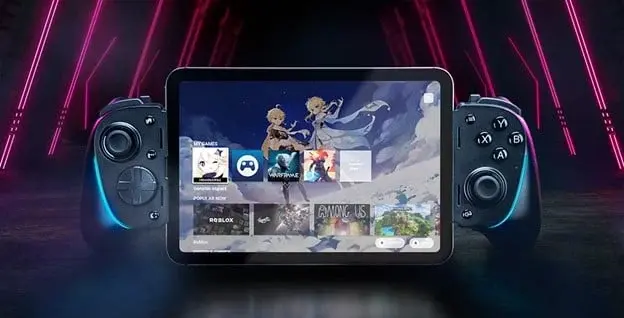
    Razer claims that both the Kishi V3 Pro and Kishi Ultra are compatible with Android, iOS/iPadOS, and Windows devices. They work not only with Android smartphones and iPhones but also with tablets that have a maximum screen size of 8 inches, like the iPad Mini. However, it’s important to note that not every Android and iOS/iPadOS device is compatible with both controllers.

    Compatibility is Key

    For the Kishi V3 Pro, it is compatible with devices running on Android 14 or higher, iOS 17 or newer, and Windows 11. Meanwhile, the Kishi Ultra works with devices on Android 12 or higher, iOS 17 or newer, and Windows 11.

    Compatibility is crucial, especially if you own an Android smartphone or tablet, as many devices still operate on Android 13 and won’t receive updates to newer versions. This means that even though the Kishi V3 Pro has appealing features like TMR joysticks and four remappable buttons, it won’t work with those older devices.

    Final Thoughts

    The Razer Kishi V3 Pro is undoubtedly the superior option between the two, thanks to its TMR thumbsticks, four remappable buttons, and a majority of the key features found in the Kishi Ultra. However, if your device runs Android 13 or lower, this controller won’t be suitable for you since its compatibility starts at Android 14. Fortunately, there are various alternatives for people in this situation.

    One such option is the Viture x 8BitDo Ultimate Mobile Controller, which works with devices running Android 13, includes Hall Effect thumbsticks, passthrough charging, and is priced at $79 on Amazon, making it almost half the cost of Razer’s controllers. This controller is also compatible with XR glasses, a first for mobile controllers. However, it’s worth noting that the Viture x 8BitDo Ultimate Mobile Controller can’t accommodate smaller tablets like the iPad Mini or Lenovo Legion Y700.

    Source:
    Link

  • Razer Kishi V3 Launches: TMR Joysticks & XL Model for Tablets

    Razer Kishi V3 Launches: TMR Joysticks & XL Model for Tablets

    Key Takeaways

    1. Razer has launched three new mobile controllers: Kishi V3, Kishi V3 Pro, and Kishi V3 Pro XL, compatible with Android, iOS, and PC devices.
    2. The Kishi V3 features a telescopic design and full-sized TMR thumbsticks, while the Pro versions have swappable caps and claw grip bumpers.
    3. The Kishi V3 Pro models include Sensa-HD haptics for enhanced feedback, which works on Windows 11 and Android 12 or newer.
    4. All controllers offer USB-C passthrough charging, a 3.5mm audio jack, and can be used as wired controllers for PCs, supporting remote play and cloud gaming.
    5. Pricing: Kishi V3 at $99, Kishi V3 Pro at $149.99, and Kishi V3 Pro XL at $199.99, with various Apple Arcade offers included.


    Razer has unveiled three fresh mobile controllers in its Kishi series. These new additions are the Kishi V3, Kishi V3 Pro, and Kishi V3 Pro XL, all designed to work with Android, iOS, and PC devices.

    Design and Features

    The Kishi V3 controllers sport a telescopic design that connects using USB-C to compatible gadgets. They come equipped with full-sized TMR thumbsticks; however, the Kishi V3 Pro and Kishi V3 Pro offer swappable caps, which the regular Kishi V3 does not have. Additionally, the standard Kishi V3 lacks the claw grip bumpers that the pro versions feature, but it does include customizable back buttons similar to its counterparts.

    Haptic Feedback Differences

    A notable distinction between the pro models and the Kishi V3 is the inclusion of Razer’s Sensa-HD haptics in the pro versions. Razer claims that this technology delivers haptics that are more powerful, detailed, and nuanced compared to standard console controller vibrations. It’s worth mentioning that the Sensa-HD haptics only function on Windows 11 and Android devices operating on Android 12 or newer.

    Additional Features

    Like many other telescopic controllers made for mobile use, the Razer Kishi V3 controllers offer USB-C passthrough charging and a 3.5mm audio jack. They can also serve as wired controllers for PCs and support remote play alongside cloud gaming.

    The Razer Kishi V3 is compatible with smartphones that have a Type-C port, whereas the Kishi V3 Pro is tailored for the iPad Mini and Android tablets with screens up to 8 inches. The Kishi V3 Pro XL raises the bar further, supporting Android tablets and iPads with screen sizes ranging from 10 to 13 inches.

    Pricing and Availability

    The Razer Kishi V3 is available for $99 and includes 3 complimentary months of Apple Arcade. The Kishi V3 Pro is priced at $149.99, which is still more affordable than the BackBone One Pro, and it also comes with 3 free months of Apple Arcade. The Kishi V3 Pro XL is priced at $199.99, and it offers 6 free months of Apple Arcade. All three controllers can be purchased now through Razer’s website and on Amazon.

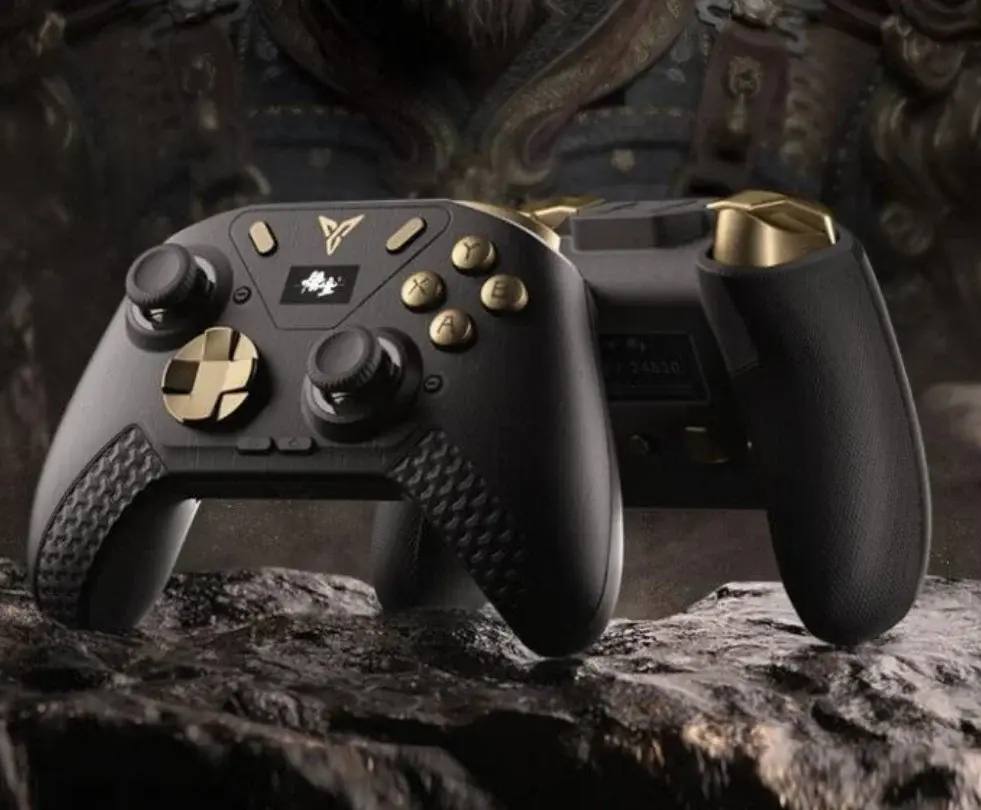
  • Flydigi Unveils Apex 4 Black Myth Wukong Controller

    Flydigi Unveils Apex 4 Black Myth Wukong Controller

    Flydigi has introduced its newest advancement in gaming devices, the Flydigi Apex 4 Black Myth Wukong Gaming Controller. Engineered for adaptability, accuracy, and high performance, this controller is poised to redefine the gaming experience.

    With features ranging from sophisticated joystick dynamics to a customizable interactive screen, the Apex 4 extends the limits of gaming controller capabilities. It is currently available for pre-sale at GeekWills for $159.99, with shipping commencing after September 5.

    Adaptive Triggers and Force-Adjustable Alloy Rocker

    A standout feature of the Flydigi Apex 4 is its pioneering force-adjustable alloy rocker, the first of its kind in gaming controllers. This inventive hub-bearing design lets users tailor the joystick’s resistance between 30-100gf, offering a personalized touch without sacrificing precision. Whether you desire minimal resistance or robust centering, this controller aligns with your gaming preferences. Paired with adaptive triggers and a 1ms response time, the Flydigi Apex 4 promises a fluid, highly responsive gaming experience.

    Superior Precision and Customization

    Precision is paramount in gaming, and the Flydigi Apex 4 excels with its low-abrasion, Hall effect sticks providing excellent return-to-center ability. The customizable joystick tension (30-100gf) and modifiable vibration triggers ensure precise inputs, diminishing errors and virtually eliminating dead zones. The S-shaped shoulder buttons, short travel mechanical face buttons (v2.0), and four customizable back buttons offer exceptional control, making this controller a versatile asset for diverse gaming styles.

    1000Hz Polling Rate and Battery Life

    The Flydigi Apex 4 boasts a rapid 1000Hz polling rate, minimizing input delay in both wired and wireless setups. Whether connecting through Bluetooth, a 2.4G wireless dongle, or USB Type-C, reliable performance is assured. A 1500mAh battery powers the controller, providing long-lasting gameplay, freeing you from the constant concern of recharging.

    Interactive Display and Personalization Options

    This controller is equipped with a full-color interactive display screen, enabling gamers to tailor their experience. From adjusting RGB lighting patterns, uploading beloved GIFs, to swiftly modifying settings, this smart screen enhances immersion and convenience. Its customization capabilities make it effortless to switch modes, set configurations, and handle burst options on the go.

    Multi-Platform Compatibility

    Designed to be compatible with multiple platforms such as PC, Android, Smart TV, Switch, and more, this controller is an adaptable choice for gamers using various devices. Although it is not yet compatible with Xbox and PlayStation consoles, it offers versatility with its wired, Bluetooth, or 2.4G wireless connectivity options, ensuring readiness for play anywhere.

    The Flydigi Apex 4 Black Myth Wukong Gaming Controller goes beyond being just a controller; it is an advanced tool that adjusts to your personal gaming style. With features like force-adjustable joysticks, intelligent triggers, an interactive display, and multi-platform compatibility, it establishes a new standard in gaming accessories.


    Flydigi Unveils Apex 4 Black Myth Wukong Controller
  • Gamesir X3 Pro Aurora Mobile Controller: Hall Joystick, Cooling Fan

    Gamesir X3 Pro Aurora Mobile Controller: Hall Joystick, Cooling Fan

    Gamesir has introduced the X3 Pro Aurora Stretch Handle mobile controller, a new offering tailored for avid mobile gamers. This controller stands out with its numerous features and an integrated cooling system.

    Priced at 469 yuan (approximately $65) on JD.com, it is currently available for pre-order with the first sale scheduled for August 19. Let’s delve into its main specifications.

    Gamesir X3 Pro Aurora Stretch Handle Specifications

    Equipped with Kailh micro-switch buttons, the X3 Pro Aurora Stretch Handle promises a sharp and responsive touch, boasting a lifespan of 3 million presses. Gamers can further tailor their experience using five “elite accessories” to customize the D-pad, joystick heads, and ABXY buttons.

    The gamepad features a custom Hall joystick with a 5 million cycle lifespan, which Gamesir asserts utilizes an electromagnetic field to prevent drift, a common issue with conventional joysticks.

    Cooling Module and Other Features

    The X3 Pro Aurora Stretch Handle includes an integrated cooling module. This detachable module has a 4000mm² heat dissipation area and a 12W fan to maintain your phone’s temperature during intense gaming sessions.

    The fan’s position can be adjusted to target specific heat zones on your phone for optimal cooling. The module can either be powered simultaneously with the gamepad or independently if only cooling is needed.

    The gamepad also comes with dual-vibration motors for immersive feedback and a six-axis gyroscope for motion control in compatible games. Additionally, it includes a 3.5mm headphone jack for connecting wired headphones while playing.

    Compatibility and Connectivity

    The X3 Pro Aurora Stretch Handle is designed to accommodate various mobile devices measuring between 97.5mm and 180mm, including phones with large camera modules. It connects via a Type-C interface and is compatible with Android, HarmonyOS, iPhone 15 series devices, and PCs (a separate cable is required for wired connection). Furthermore, Bluetooth connectivity is suggested but details have not been confirmed.


  • Arm Launches ASR Tech for Enhanced Mobile Gameplay Graphics

    Arm Launches ASR Tech for Enhanced Mobile Gameplay Graphics

    Arm has introduced a revolutionary feature for mobile gamers: Arm Accuracy Super Resolution (ASR). This upscaling technology, derived from AMD’s FSR2 but fine-tuned for mobile devices, allows for smoother gameplay on less powerful phones and tablets. Unlike FSR2, which targets PCs and high-end consoles, Arm ASR is focused on mobile applications and operates efficiently on devices with limited processing capabilities. Additionally, Arm provides ASR as an open-source solution, available to developers at no cost for integration into their games.

    Optimized for Mobile Devices

    The release of this technology is timely. As Arm processors, like Apple’s M series chips, bring more power to laptops, mobile gaming is experiencing a surge. Even high-demand 3A titles are making their way to smartphones and tablets. Arm ASR is designed to handle these trends by being optimized for the constraints of mobile devices.

    Arm’s internal tests reveal impressive outcomes. Using a specific GPU at 2x upscaling resolution, ASR shows a 53% improvement in frame rates compared to FSR2’s 36%. Tests with MediaTek’s Dimensity 9300 chip further indicate that 2x ASR reduces power consumption by over 20% compared to native 1080p rendering. This results in longer gaming sessions on battery-powered devices and helps mitigate overheating issues, a significant concern for mobile gamers.

    A Different Approach to Super-Resolution

    Arm ASR is not the first super-resolution technology for mobile devices (Qualcomm’s version focuses more on performance than image quality), but it takes a unique approach. It employs temporal super-resolution sampling technology, collaborating with the game engine to deliver superior image quality with slightly higher processing demands. This method could benefit Microsoft’s Copilot+ PC running Windows 11 on Arm, given their aim to enhance the Arm gaming experience. While Microsoft’s Auto SR technology uses AI for performance improvement, its dependency on AI processing currently limits its application to Copilot+ PCs.

    Ease of Use and Accessibility

    Arm ASR is also user-friendly. Built on AMD’s FSR2, it allows developers already familiar with the framework to easily adapt to its API and configuration options. Being open-source eliminates licensing fees, streamlining cross-platform game development and enabling seamless game progress transfer between devices, so you can continue your gameplay without interruption.


    Arm Launches ASR Tech for Enhanced Mobile Gameplay Graphics
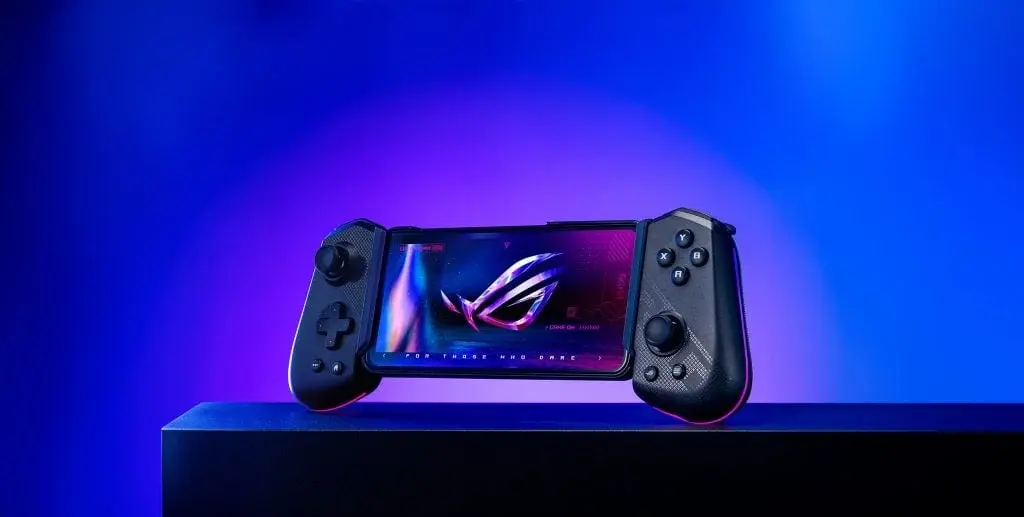
  • Asus ROG Tessen Foldable Mobile Controller Launches in China

    Asus ROG Tessen Foldable Mobile Controller Launches in China

    Asus introduced its ROG Tessen mobile controller in May, showcasing a distinctive foldable design, RGB lighting effects, and compatibility with the majority of Android phones. The controller is now available in China for 599 yuan (approximately $82). Let’s delve into its main specifications.

    Key Features of the ROG Tessen Mobile Controller

    The ROG Tessen Feng stands out with its foldable design, making it more portable compared to traditional bulky controllers. It folds neatly into a compact form that can easily fit into a bag or pocket.

    This gaming controller is equipped with rubber support pads that can adjust to different phone case thicknesses, ranging from 7mm to 14.5mm, ensuring a secure fit for most Android phones. Additionally, it supports 18W fast pass-through charging, enabling users to play and charge their phones simultaneously.

    Precision and Control

    Designed for precision, the ROG Tessen features console-grade joysticks with a 22-degree range of motion and an 18mm-tall right stick. The D-pad and face buttons utilize mechanical micro-switches, providing a tactile and responsive gaming experience.

    For enhanced functionality, the controller includes two aluminum rear paddles that can be programmed using the ROG Button or through the Armoury Crate app. These paddles can be assigned to execute complex in-game commands, giving players a competitive edge.

    The controller also boasts Asus Aura RGB lighting with seven preset effects, offering a customizable and immersive gaming environment. It features a 500 Hz polling rate for its wired USB Type-C connection, ensuring minimal input lag.

    Customization and Eco-Friendly Design

    Users can further customize the controller via the Armoury Crate app, which allows for button remapping, lighting effect configuration, and programming of custom functions such as screen capture and gameplay recording.

    Asus has also prioritized eco-friendly practices in the design of the ROG Tessen. The packaging is made from sustainable materials, and part of it can be repurposed into a stand for the controller.


    Asus ROG Tessen Foldable Mobile Controller Launches in China
  • Razers New Mobile Game Controllers: Qishi Ultra and Qishi V2 USB-C

    Razers New Mobile Game Controllers: Qishi Ultra and Qishi V2 USB-C

    Razer has recently unveiled two novel mobile game controllers designed to enhance the gaming experience while on the move: the advanced Qishi Ultra and the economical Qishi V2 USB-C.

    The Qishi Ultra: Tailored for Dedicated Mobile Gamers

    The Qishi Ultra is specifically crafted for dedicated mobile gamers, offering a full-size layout, ergonomic design, and compatibility with both Android and iOS devices (suitable for phones and tablets up to 8 inches). It comes equipped with mechanical tactile buttons, an 8-way directional pad, and full-size Hall effect triggers that provide precise control. With a 3.5mm headphone jack for audio connectivity and 15W pass-through charging, this controller ensures uninterrupted gaming sessions.

    Immersive Features of the Qishi Ultra

    Enhancing the gaming experience, the Qishi Ultra boasts dual Razer Chroma RGB lighting zones that can be personalized with millions of colors. Additionally, it introduces a virtual controller mode (currently available only for Android) that maps touchscreen controls to the controller, offering a more console-like feel. Users can further fine-tune their experience by adjusting the dead zone for optimal responsiveness. This premium controller is priced at 1,199 yuan.

    For gamers looking for a more cost-effective alternative, the Qishi V2 USB-C presents a conventional mobile gamepad design. It emphasizes compatibility with cloud or local game streaming services and supports touchscreen mapping. While it may lack the extensive features and full-size layout found in the Qishi Ultra, such as tablet compatibility, the Qishi V2 USB-C still retains the convenient 15W pass-through charging. With a more budget-friendly price of 799 yuan, it caters to those seeking a quality controller without breaking the bank.