Category: Gaming

  • PB-810 Gaming Power Bank: Play 200 Games & MagSafe Support

    PB-810 Gaming Power Bank: Play 200 Games & MagSafe Support

    Key Takeaways

    1. Game Selection: The PB-810.ips offers 200 games (150 8-bit and 50 16-bit), with a limited selection due to legal issues, unlike many cheaper alternatives with tens of thousands of games.

    2. Device Specs: The handheld measures 4.3 x 2.9 x 0.7 inches, weighs 7 oz, has a 2.8-inch IPS screen, and features a D-pad and buttons instead of joysticks.

    3. Battery Capacity: With a 10,000mAh capacity, the device provides about 24 hours of gaming time and can output up to 20W via USB-C for fast charging.

    4. Wireless Charging: The power bank supports Qi wireless charging up to 15W and is compatible with MagSafe for magnetic attachment to iPhones.

    5. Additional Features: It includes LED indicators for battery level, can act as a charging pad for other devices, and comes with a USB-C cable that doubles as a wrist strap, priced at €40 (excluding shipping).


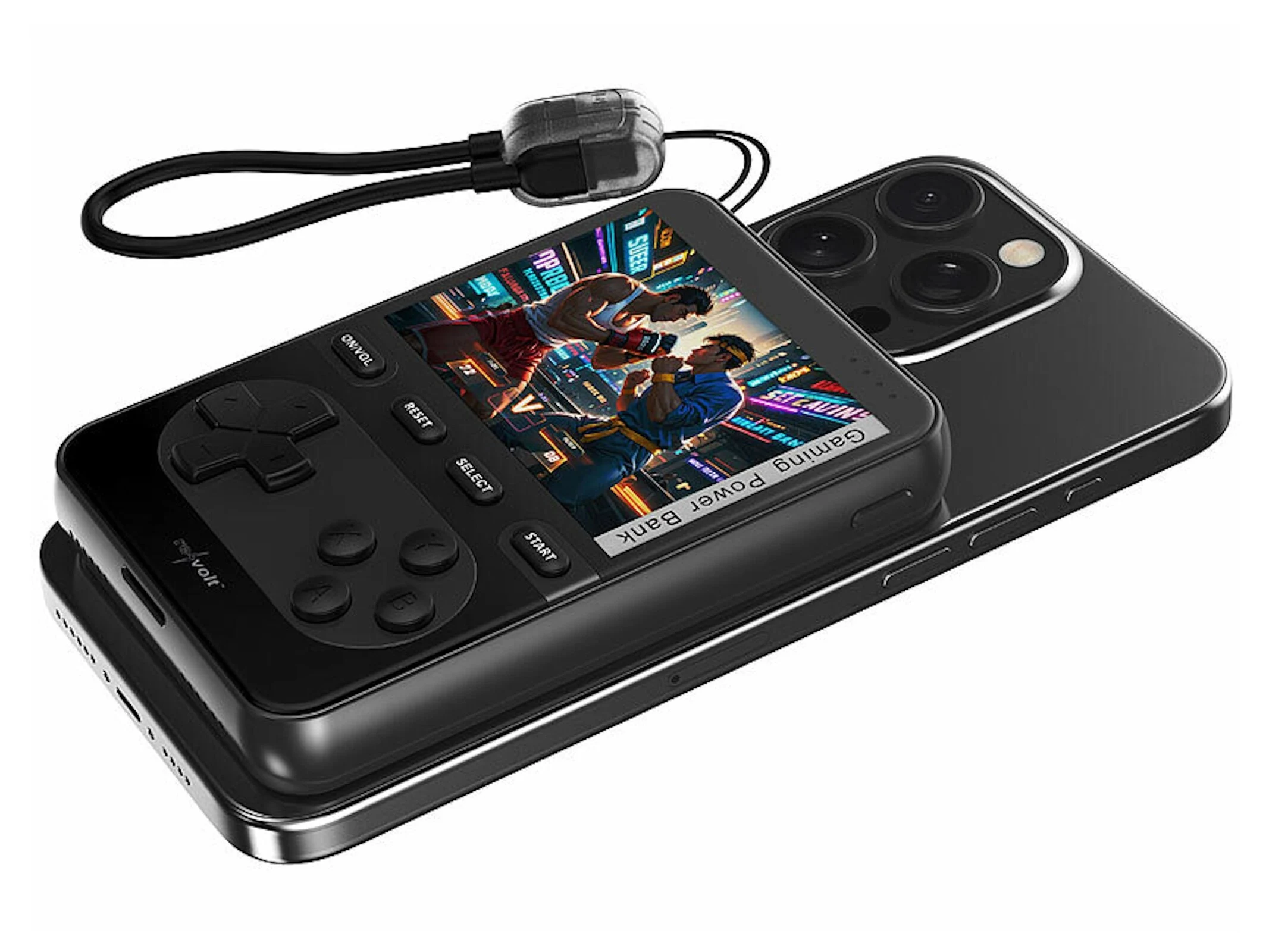
    We have previously discussed gaming handhelds that can also serve as power banks, and there are possible alternatives that you can buy on Amazon. One such device in this niche is the PB-810.ips from Pearl.

    Game Selection

    The number of games available is not very high, as the maker claims it includes 150 8-bit games and 50 16-bit ones. This limited selection is likely because of legal issues. In contrast, inexpensive retro gaming handhelds from China often come with a huge number of games, sometimes tens of thousands, which raises questions about copyright. Nevertheless, the 200 games offered by Pearl’s power bank encompass a variety of genres.

    Device Specs

    The dimensions of the power bank are roughly 4.3 x 2.9 x 0.7 inches and it weighs around 7 oz. It features a 2.8-inch IPS screen, but it doesn’t have joysticks; instead, it is equipped with a D-pad, four action buttons, along with extra buttons for accessing menus or similar functions. With a capacity of 10,000mAh, this device should provide about 24 hours of gaming time. Additionally, it can output up to 20W via USB-C, making it fast enough to charge a smartphone, though it won’t suffice for larger devices like laptops or tablets. It also supports Qi wireless charging up to 15W.

    Extra Features

    The power bank is compatible with MagSafe, allowing it to stick magnetically to iPhones. The current battery level can be checked using four LED indicators. The PB-810.ips can also act as a charging pad, providing power to another device while it charges itself. Included in the package is a USB-C cable that can also serve as a wrist strap. The suggested retail price is €40, excluding shipping costs.

    Source:
    Link


  • Abxylute Launches Snap-on Controller on Kickstarter for $39 in Orange

    Abxylute Launches Snap-on Controller on Kickstarter for $39 in Orange

    Key Takeaways

    1. The Abxylute M4 Snap-On Mobile Controller will launch soon on Kickstarter, with an early supporter price of $39.
    2. The controller attaches to smartphones using magnets and is compatible with devices featuring built-in magnets, like iPhones with MagSafe and the Pixel 10 series.
    3. It features a Nintendo-style button layout, hair triggers, two thumbsticks, and connects via Bluetooth to smartphones.
    4. The controller has a built-in battery that lasts approximately 12 to 13 hours.
    5. Abxylute is also developing two additional controllers for the Nintendo Switch 2, named the N6 Switch Deck and the N9 Switch Grip.


    Back in August, Abxylute hinted at a mobile controller that attaches to smartphones using magnets. Now, they’ve shared more details about this gaming accessory, which will be known as the Abxylute M4 Snap-On Mobile Controller.

    Launch Information

    According to a message posted on their Discord channel, the Abxylute M4 Snap-On is set to launch soon on Kickstarter. There is already a page available, but the crowdfunding campaign has not yet started. Although a specific date hasn’t been provided, Abxylute has disclosed the initial pricing for the accessory.

    Pricing Details

    When the campaign begins, early supporters can snag the Abxylute M4 Snap-On for just $39. This price is significantly lower than the MCON magnetic controller, which is currently available for pre-order at $149.99. However, the big difference in pricing may adjust once Abxylute announces the final retail costs for the M4 Snap-On controller.

    Design and Compatibility

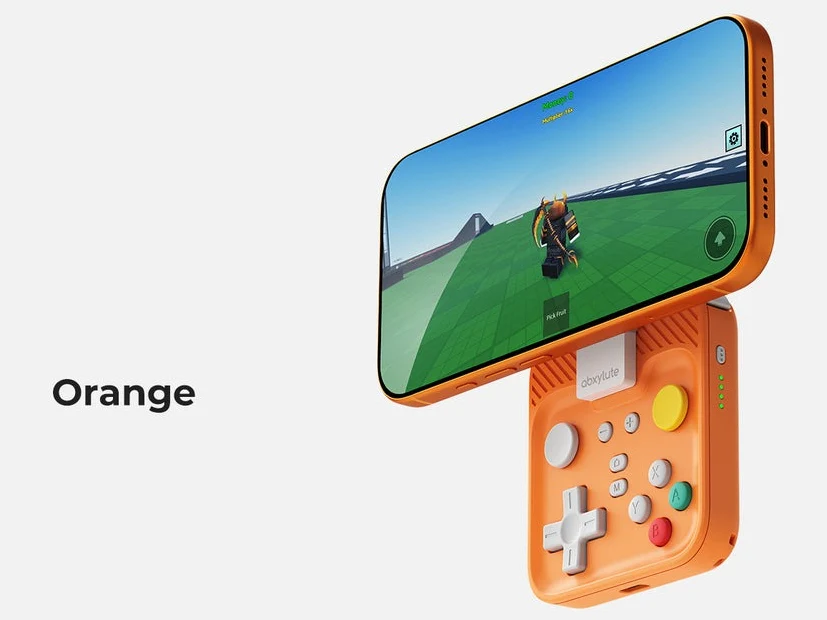
    Along with the pricing announcement, Abxylute released images of the M4 Snap-On in a vibrant Orange color, reminiscent of the classic Nintendo GameCube controller. This new hue joins the previously revealed Black Translucent and Gray options.

    The Abxylute M4 Snap-On Mobile Controller attaches to smartphones through magnets. It will work with devices that already have built-in magnets, such as iPhones with MagSafe and the Pixel 10 series. It’s also expected to function with phones that have a magnetic case. Users can easily detach the controller and use it independently.

    Features

    The controller connects via Bluetooth to smartphones and is compatible with emulators and cloud streaming services. It features ABXY buttons arranged in the Nintendo layout, hair triggers, and two thumbsticks. Abxylute claims that the M4 Snap-On includes a built-in batter that should support usage for around 12 to 13 hours.

    In addition to the M4 Snap-On Controller, Abxylute is also developing two more controllers. These are the N6 Switch Deck and the N9 Switch Grip, both designed for the Nintendo Switch 2, which is available on Amazon for $499.

    Source:
    Link


  • Resident Evil 9: The Most Realistic Game in the Franchise?

    Resident Evil 9: The Most Realistic Game in the Franchise?

    Key Takeaways

    1. Launch Date: Resident Evil 9 is set to launch on February 26, 2026, featuring a third-person perspective.
    2. Realism Focus: The game aims to enhance realism by incorporating authentic gameplay elements.
    3. Dynamic Wounds: Players will see persistent wounds and blood on the character Grace Ashcroft, evolving based on player choices.
    4. Impact on Story: Grace’s injuries will carry into cutscenes, maintaining tension related to the character’s health situation.
    5. Groundbreaking Feature: This new approach to character damage is seen as a significant advancement compared to earlier installments, enhancing player immersion.


    With a launch date set for February 26, 2026, Resident Evil 9 has fans buzzing with excitement as it will showcase a third-person perspective. Recently, a leak has surfaced, shedding light on a feature of this game that promises to enhance its realism.

    Enhancing Realism

    Even though the game is rooted in a fictional narrative, the developers are keen on infusing a sense of authenticity. As per insider Resident_bio, Resident Evil 9 will integrate realistic elements into its gameplay.

    The insider mentions that the wounds and blood on Grace Ashcroft, inflicted by various creatures, will persist throughout the game. Moreover, these marks can evolve depending on the choices players make during their journey:

    “RE9 will have Grace’s battle damage/blood carry into cutscenes. There are scenes in the demo where her shoulder can still be injured if she’s been bitten. This will keep tension high even during story bits as we’re reminded of our health situation.”

    Screenshots Reveal the Details

    This information can be supported by the screenshots shared by the source on X. They depict a scene where Grace gets bitten on her shoulder by a creature, showing how the wound progresses and blood continues to flow in the subsequent cutscenes.

    While some may view this as a minor detail, others consider it groundbreaking. In earlier installments of the series, scars and blemishes were simply present from the beginning to the end. However, in Resident Evil 9, this feature introduces a level of realism that immerses players deeper into the horrifying experience.

  • Qwertykeys Launches Retro-Style Mechanical Keyboard with Mini Games

    Qwertykeys Launches Retro-Style Mechanical Keyboard with Mini Games

    Key Takeaways

    1. The QK65 MK3 features a retro design inspired by classic gaming consoles, with a nostalgic gray and matte lilac color scheme.
    2. It includes a color screen that allows users to play embedded mini games, as well as display system status and information.
    3. The keyboard has two buttons for game control and a small speaker for enhanced functionality.
    4. It offers both wired and wireless connectivity options, but comes as a barebones kit requiring users to provide their own switches and keycaps.
    5. The QK65 MK3 is expected to be available in five initial color options, though detailed specifications and pricing have not yet been disclosed.


    There seems to be a growing trend in gaming keyboards that come with built-in screens. New arrivals such as the Asus ROG Azoth 96 HE, Chilkey ND104, and Corsair Vanguard 96 all include some form of small display. However, while most keyboards utilize the display for system info or quick settings, Qwertykeys may have discovered the most imaginative use of this feature.

    Sneak Peek of the QK65 MK3

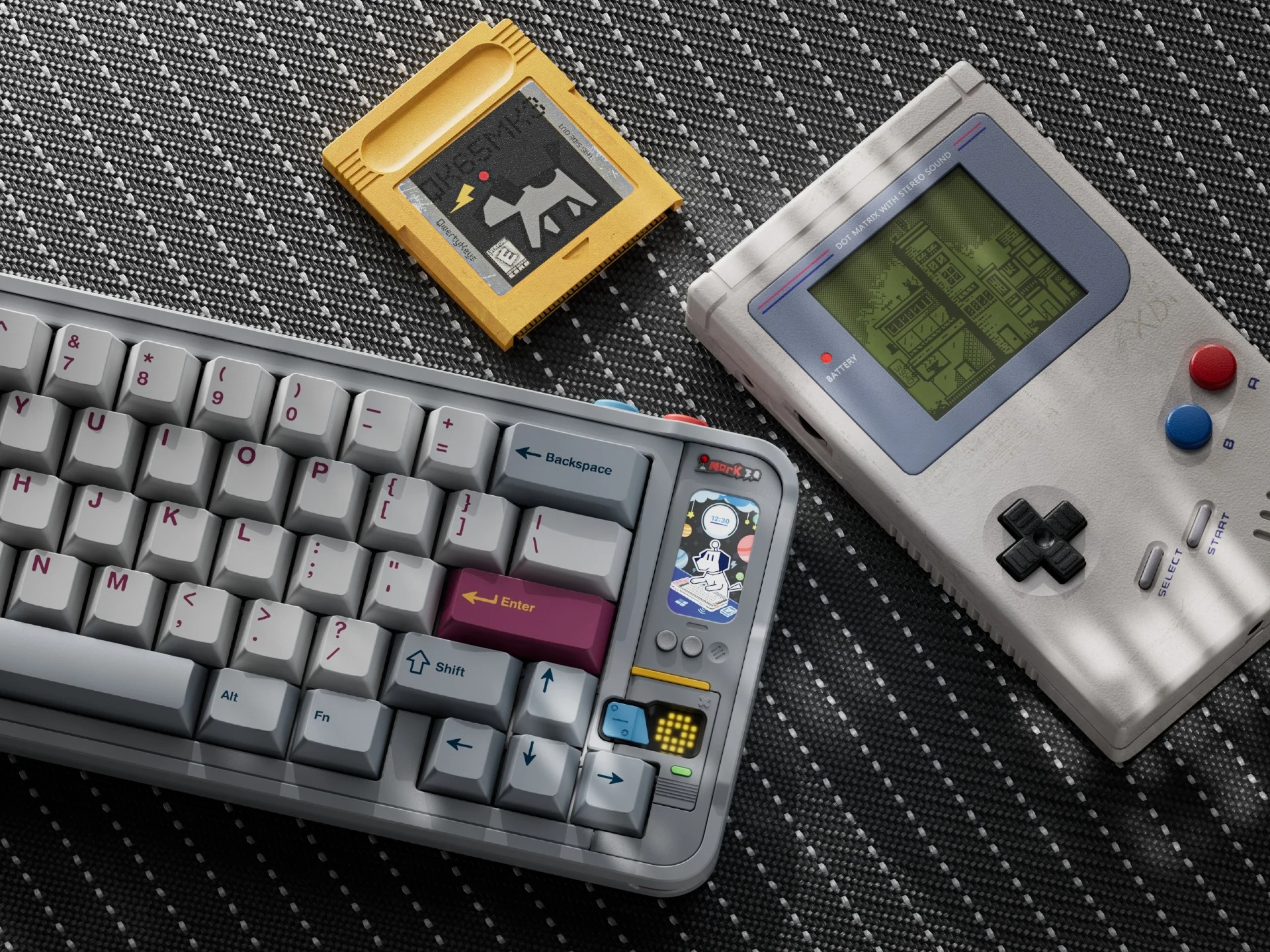
    The custom keyboard manufacturer has started to tease its new QK65 MK3 keyboard through several social media updates. Similar to the QK65 V2 and V2 Classic, it maintains a 65% layout but now showcases a design inspired by retro aesthetics, featuring a color screen that can be used to enjoy a collection of embedded mini games.

    Retro Design and Functionality

    The QK65 MK3 sports a nostalgic gray and matte lilac look that harks back to classic gaming consoles like the Super NES and Game Boy. Its color display is located on the right side of the keyboard, accompanied by two buttons underneath for game control, as well as a small speaker. Besides gaming, the screen can also display system status and various information. Additionally, it has two vintage-style knobs at the top edge allowing users to switch between different connectivity modes and operating systems.

    Connectivity and Customization

    Furthermore, this keyboard will offer both wired and wireless functionality. However, similar to most Qwertykeys products, it appears it will be available as a barebones kit, meaning users will need to provide their own switches and keycaps. Although Qwertykeys hasn’t disclosed detailed specifications, materials, or pricing yet, it is anticipated that the keyboard will be available in five initial color options.

    Source:
    Link


  • Is 8 GB VRAM Still Relevant in the Legion Pro 5 16?

    Is 8 GB VRAM Still Relevant in the Legion Pro 5 16?

    Key Takeaways

    1. Laptops with an RTX 5070 start around €1,500, but users are concerned about the adequacy of 8 GB VRAM for long-term relevance in gaming.
    2. General gaming performance shows that VRAM usage isn’t a major issue, with games like Baldur’s Gate 3 and Cyberpunk 2077 running smoothly even at 4K.
    3. Some games, like Assassin’s Creed Shadows, may exceed VRAM budgets without significant performance drops, indicating VRAM isn’t the sole factor affecting gameplay.
    4. Indiana Jones and the Great Circle demonstrates more serious VRAM issues, crashing at higher settings, but is noted for being poorly optimized.
    5. Overall, 8 GB of VRAM is generally sufficient for most current games, but certain poorly optimized titles may pose challenges, highlighting the need for future-proofing as games evolve.


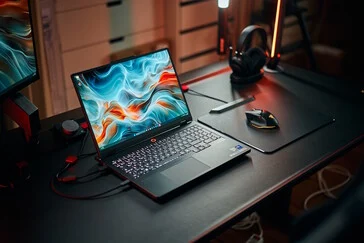
    Laptops featuring an RTX 5070 typically start at about €1,500, although many setups are priced much higher. For that kind of money, customers expect a machine that will remain relevant for a long time. However, discussions on Reddit and tech forums reveal that many users worry Nvidia’s 8 GB VRAM might be insufficient, which could lead to problems in certain games.

    VRAM Examination

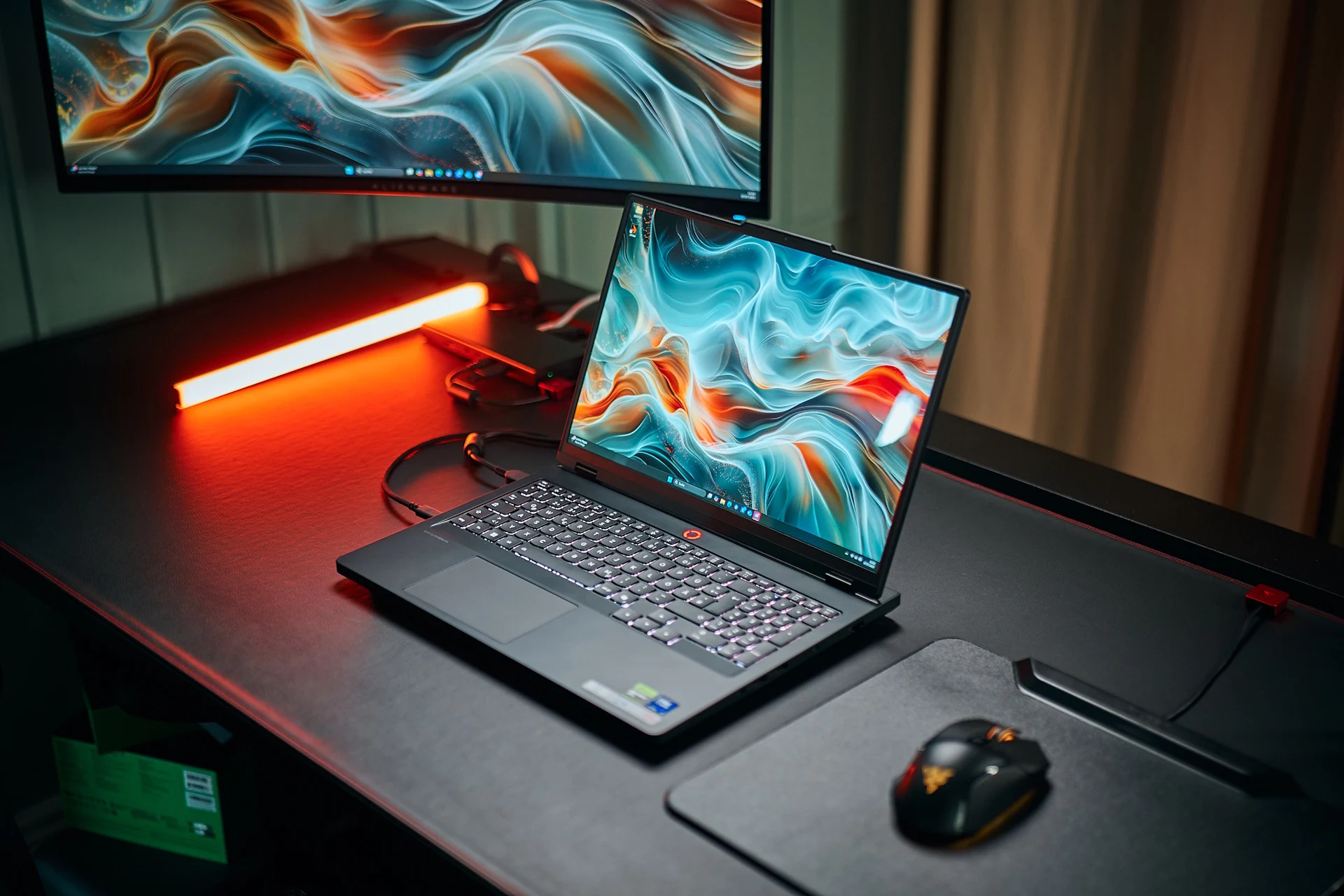
    We examined the VRAM scenario with the Lenovo Legion Pro 5 16IAX10, aiming to provide a judgment specific to this laptop and a select number of games. A more detailed article on the larger VRAM topic is on its way.

    Game Performance Analysis

    In general, VRAM usage isn’t something that stands out while gaming. There’s no visible gauge, and we could run games like Baldur’s Gate 3, GTA V, and Cyberpunk 2077 seamlessly — even at 4K — without any noticeable memory issues.

    Some games, however, do show a “VRAM budget” in their graphic settings. Depending on the resolution and detail level selected, that indicator can fill up quickly. For instance, Assassin’s Creed Shadows and Indiana Jones and the Great Circle are examples of this.

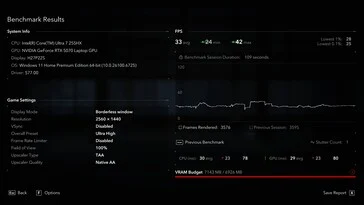
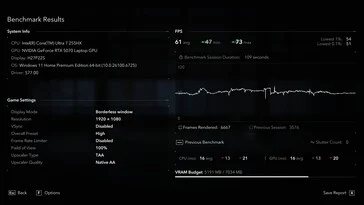
    In Assassin’s Creed Shadows at 2,560 x 1,440 (QHD), the game indicates that the VRAM budget is exceeded by around 100 MB. Nevertheless, during the benchmark, frame times remained consistent — even if the average frame rate was around 38 fps. The internal stutter count was just 1.

    Stress Testing VRAM

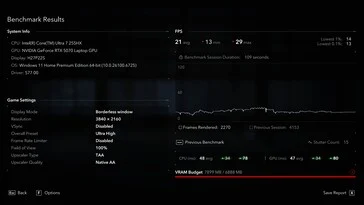
    To put more pressure on the VRAM, we switched to native 4K. Now, based on the indicator, the VRAM requirements clearly exceeded the limit — and we noted a stutter count of 15. The tricky part here is that we dropped to an average of 21 fps at native 4K, making it tough to determine whether the stuttering was truly due to VRAM limits or just the GPU struggling overall.

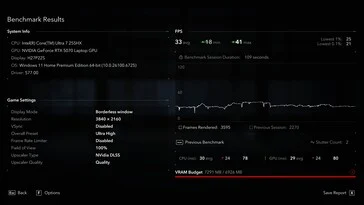
    Switching to DLSS Quality mode raised the average frame rate back above 30 fps and lowered the stutter count to 2 — even though the game still indicated an overage in VRAM. When playing in Full HD on High settings, the VRAM limit was not breached, the stutter count remained at 0, and performance averaged 61 fps. In summary, Assassin’s Creed Shadows doesn’t serve as the best test for VRAM adequacy, since performance issues happen well before memory usage becomes a real concern. So, it’s less of an issue after all.

    Indiana Jones Experience

    Moving on to Indiana Jones and the Great Circle, we noticed a more evident negative effect from the RTX 5070’s “just” 8 GB of VRAM: at a certain moment, the game simply wouldn’t start or crashed on initiation. Even at Full HD with low settings, the game claims VRAM usage surpasses the limit — though in reality, we didn’t see any issues until we increased the detail levels. Beyond that point, the game crashes each time it tries to launch (every settings change requires a restart).

    That said, Indiana Jones is somewhat of a unique case. As our colleague Florian mentioned in his benchmarking article, the game is in “a questionable technical state” and “poorly optimized, making its VRAM demands unreasonable.” Even GPUs with 16 GB of VRAM experience significant frame rate drops. However, at least you can start the game with higher resolutions and settings.

    Conclusion on VRAM Sufficiency

    Returning to our initial question — is 8 GB of VRAM inadequate? For most current games, the answer appears to be no. The few exceptions we’ve encountered seem more related to poor optimization rather than true hardware constraints. Still, those particular games do exist, and users with 8 GB GPUs may face challenges at certain resolutions and settings, while those with more VRAM can keep playing. Waiting for patches is the only solution — if they ever come. And considering that upcoming titles will likely require even more VRAM, the concerns are not entirely baseless.

    As previously stated, this conclusion specifically pertains to the Legion Pro 5 16 and should be viewed as a general indication rather than a conclusive statement. A more thorough analysis with detailed benchmarks and comparisons will be available soon.


  • MagicX Launches One Flip 50: Affordable Clamshell Gaming Handheld

    MagicX Launches One Flip 50: Affordable Clamshell Gaming Handheld

    Key Takeaways

    1. MagicX launched the One Flip 50 gaming handheld, following the recent updates to the Zero 40 and the announcement of the One Retro 45.
    2. The One Flip 50 features a MediaTek Helio G85 chipset, 4 GB of RAM, and a 5-inch 1080p display.
    3. It includes 64 GB of internal storage with an option for expansion via a microSD card slot.
    4. The design includes in-line shoulder buttons, silicone ABXY buttons, and a silicone d-pad.
    5. The expected price for the One Flip 50 is around $95, aiming to compete with the Retroid Pocket Flip 2.


    MagicX has just launched its One 35 gaming handheld after recently updating the Zero 40 with a new translucent green color at the end of September, priced currently at $89.99 on Amazon. Now, the company has introduced the One Flip 50, a clamshell-style device, marking its second gaming handheld release in a short span, following the announcement of the One Retro 45 earlier this month.

    Specs and Performance

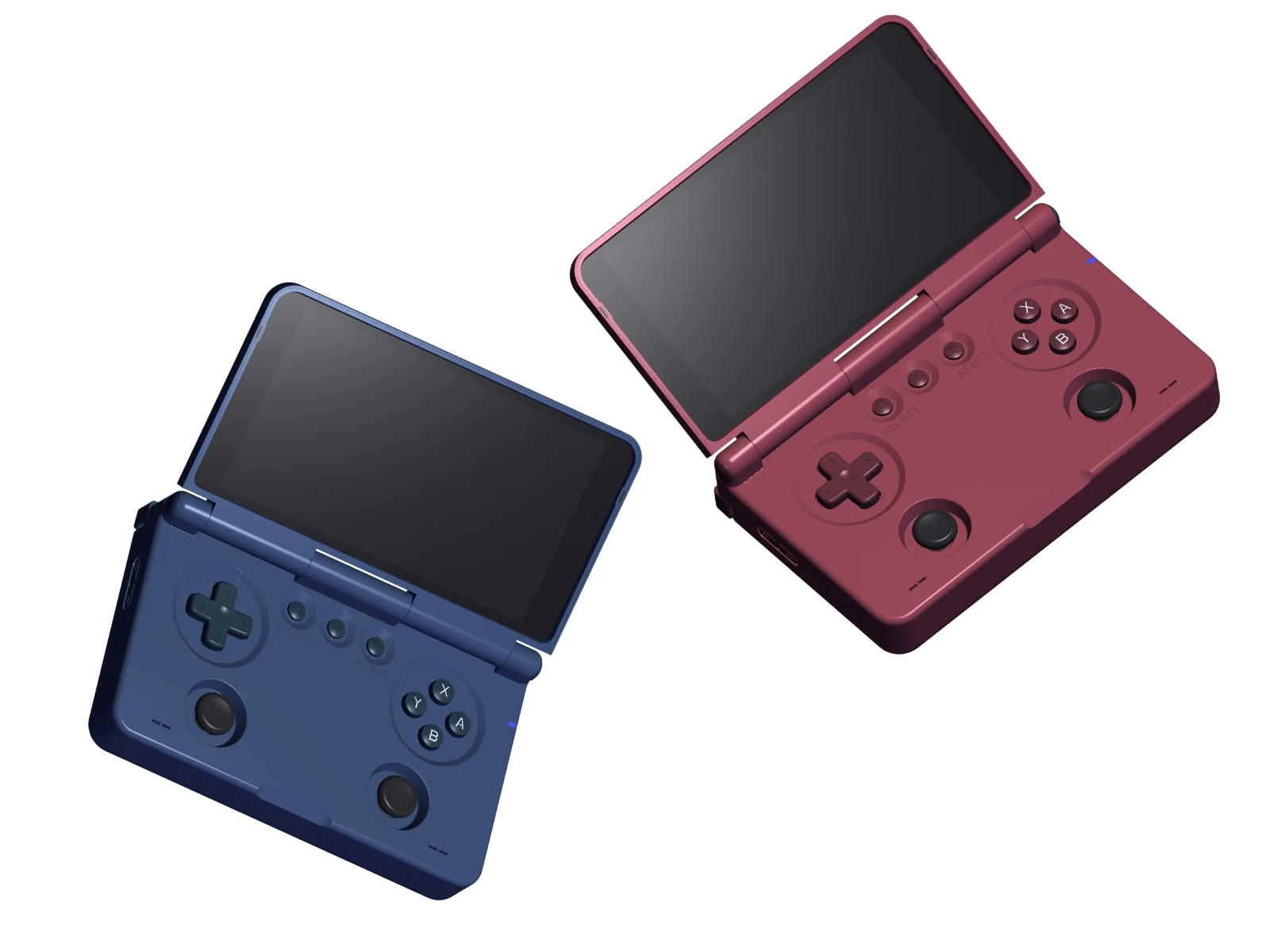
    The One Flip 50 features the same MediaTek Helio G85 chipset that powers the One 35 and One Retro 45. This chipset includes two ARM Cortex-A75 CPU cores, six Cortex-A55 CPU cores, and a Mali-G52 MP2 GPU. It will be paired with 4 GB of RAM and a 5-inch screen that offers 1080p resolution in a 16:9 aspect ratio. However, it only comes with 64 GB of internal storage. Luckily, the mock-ups shared on MagicX’s Discord indicate that it will include a microSD card slot for additional storage.

    Design and Features

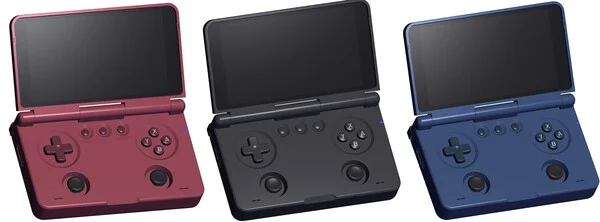
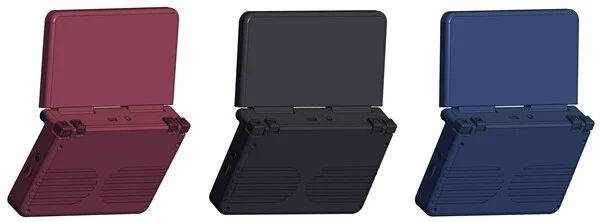
    In terms of design, the One Flip 50 boasts in-line shoulder buttons, silicone ABXY buttons, and a silicone d-pad, which some may find appealing while others may not. Although the exact release date is still not announced, MagicX plans to price the One Flip 50 around $95. This new device seems to be MagicX’s strategy to compete with the Retroid Pocket Flip 2 while taking advantage of the growing popularity of clamshell gaming handhelds.

    Source:
    Link


  • OneXFly Apex Handheld Gaming Device Launches to Compete with GPD Win 5

    OneXFly Apex Handheld Gaming Device Launches to Compete with GPD Win 5

    Key Takeaways

    1. Liquid Cooling Feature: The OneXFly Apex includes an optional external liquid cooling system, which can provide 120 W cooling power, but also supports internal cooling at 80 W.

    2. External Battery Design: Similar to the GPD Win 5, the OneXFly Apex uses a removable 85 Wh external battery that can be detached when connected to a power source.

    3. Performance Metrics: Boosting the thermal design power (TDP) from 80 W to 120 W results in only an 18% performance increase in benchmarks like 3DMark Time Spy.

    4. Pricing and Specs: The base model starts at CNY 8,599 (~$1,211) with 32 GB RAM and 1 TB storage, while higher configurations with Ryzen AI Max+ 395 range from CNY 9,999 (~$1,408) to CNY 15,999 (~$2,254).

    5. Global Release Plans: One-Netbook intends to launch the OneXFly Apex globally via Indiegogo, but specific details about the international release are still pending.


    One-Netbook has officially revealed the OneXFly Apex after hinting at its liquid cooling feature for the gaming handheld just yesterday. This new device, powered by AMD Strix Halo, shows a lot of similarities with the already existing GPD Win 5, not only in its architecture but also in several other aspects.

    Battery and Cooling Options

    For example, the OneXFly Apex uses an external battery, similar to the GPD Win 5. The battery offers a peak capacity of 85 Wh and can be completely removed when plugged into a power source, just like its counterpart. Additionally, One-Netbook has stated that the external liquid cooling system is optional. If you don’t require the 120 W cooling power, you can simply utilize the internal cooling system, which supports the Ryzen AI Max 395+ at 80 W by using two turbo fans and four heat pipes.

    Performance Insights

    Interestingly, boosting the Apex’s thermal design power (TDP) from 80 W to 120 W only provides an 18% increase in performance in the 3DMark Time Spy benchmark. The OneXFly Apex scored 4,083 points when running at 25 W, compared to the 3,816 points achieved by the AMD Ryzen AI 9 HX 370-powered OneXPlayer X1 Pro we reviewed earlier this year (currently priced at $1,599 on Amazon).

    Pricing and Availability

    Reports suggest that the OneXFly Apex outperforms Ryzen Z2 Extreme-powered handhelds, achieving over 125% higher framerates in 1080p high graphics settings. However, this enhanced performance comes with a hefty price tag. One-Netbook has stated that the OneXFly Apex will start at CNY 8,599 (~$1,211) in China, featuring 32 GB of RAM, 1 TB of storage, and the less powerful Ryzen AI Max 385 APU.

    The Ryzen AI Max+ 395 configurations will be priced between CNY 9,999 (~$1,408) and CNY 15,999 (~$2,254), offering up to 128 GB of RAM and a 2 TB SSD. Additionally, the proprietary 85 Wh external battery and the liquid cooling system will be sold for CNY 399 (~$56) and CNY 999 (~$141), respectively. One-Netbook plans to introduce the OneXFly Apex globally starting with Indiegogo. However, details regarding its international release are still unclear at this moment.

    Source:
    Link


  • HKC Launches 27-Inch 400Hz 2K Monitor for Competitive Gamers

    HKC Launches 27-Inch 400Hz 2K Monitor for Competitive Gamers

    Key Takeaways

    1. The HKC UG27EQ is a 27-inch gaming monitor with a 2560×1440 resolution, 400Hz refresh rate, and 0.5ms response time, priced at 1,999 yuan (about $281).

    2. It features an Ultrafast IPS panel with HDR400 support, achieving 400 nits brightness and covering 98% of the DCI-P3 color space, offering improved color accuracy.

    3. The monitor includes DIC 2.0 motion blur reduction technology with adjustable settings and Flash Clarity mode for enhanced visual performance in gaming.

    4. It supports AMD FreeSync Premium and Nvidia G-Sync Compatible modes to minimize screen tearing and stuttering, along with Gaming Visiondock software for customizable overlays and adjustments.

    5. Connectivity options include DisplayPort 1.4, HDMI 2.1, USB-C, and a 3.5mm audio output, with a versatile stand for height, tilt, swivel, and pivot adjustments.


    HKC recently introduced the UG27EQ, a 27-inch gaming monitor featuring a stunning 2560×1440 resolution along with an impressive 400Hz refresh rate and a rapid 0.5ms grey-to-grey response time. With a price tag of 1,999 yuan (approximately $281), it is now available in China. The UG27EQ is equipped with an Ultrafast IPS panel that incorporates a dual-direction drive circuit and a modified liquid crystal layer, which HKC claims enhances pixel transition speed to minimize motion blur.

    Enhanced Visuals and Color Accuracy

    This monitor supports HDR400, achieving a peak brightness of 400 nits and covering 98 percent of the DCI-P3 color space while reaching 130 percent of the sRGB area. It delivers 10-bit color through an 8-bit + FRC processing method, allowing for a greater color range compared to standard 8-bit monitors. HKC has also integrated its DIC 2.0 motion blur reduction technology, which provides three adjustable settings along with a Flash Clarity mode to automatically lessen glare from flashbang effects in shooting games.

    Advanced Gaming Features

    The UG27EQ includes adaptive sync support for both AMD FreeSync Premium and Nvidia G-Sync Compatible modes, aimed at reducing screen tearing and stuttering. Its Gaming Visiondock software enables users to apply crosshair overlays, adjust dark areas, and set on-screen timers directly via the monitor’s interface. Connectivity options comprise DisplayPort 1.4, HDMI 2.1, USB-C, and a 3.5mm audio output. The USB-C port supports 400Hz signal transmission, 15W reverse charging, and data transfer capabilities. Additionally, the stand allows for height, tilt, swivel, and pivot adjustments, and is compatible with a 100×100 mm VESA mount.

    Source:
    Link


  • Retroid Pocket G2 Now Available for Pre-Order in 5 Colors

    Retroid Pocket G2 Now Available for Pre-Order in 5 Colors

    Key Takeaways

    1. Retroid has begun pre-orders for the Pocket G2, shortly after its announcement.
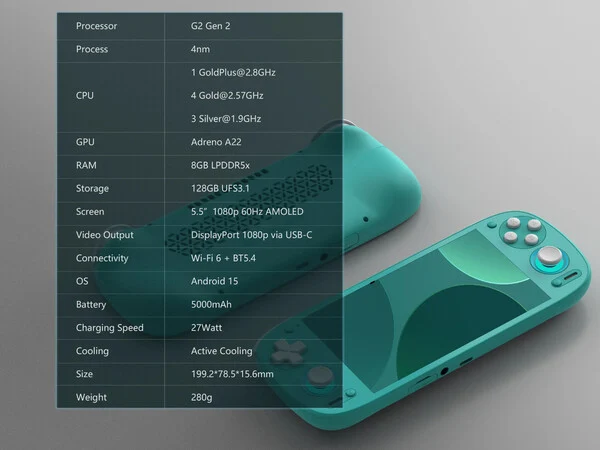
    2. The Pocket G2 runs on Android 15 and features the new Snapdragon G2 Gen 2 processor.
    3. It includes 8 GB of LPDDR5x RAM, 128 GB of UFS 3.1 storage, and a 5,000 mAh battery with 27 W charging.
    4. The device has a 5.5-inch AMOLED display with 1080p resolution and a 60 Hz refresh rate.
    5. Pre-order price is $199, with a planned retail price of $219, and shipping starts October 29, with some colors shipping later on November 5.


    Retroid has just started pre-orders for the Pocket G2, barely a day after revealing the new device. This quick turnaround is also seen with the Pocket 6, which has recently been launched. For more information about Retroid’s other latest gaming handheld, check out our article on the Pocket 6 release.

    Specifications Overview

    As mentioned previously, the Pocket G2 is built on Android 15, unlike the Android 14 version used in the Pocket Classic or the Android 13 software that comes with the Pocket Flip 2 (currently priced at $269 on Amazon). Notably, the Pocket G2 is the first to use the Snapdragon G2 Gen 2, which Qualcomm unveiled at the Game Developers Conference 2025 (GDC 2025) seven months ago. For context, the Snapdragon G2 Gen 2 brings several key hardware features to the Pocket G2.

    Hardware Details

    In addition to that, Retroid packs in 8 GB of LPDDR5x RAM, along with 128 GB of UFS 3.1 flash storage and a 5,000 mAh battery that offers 27 W wired charging support. Furthermore, the Pocket G2 showcases a 5.5-inch AMOLED display with a resolution of 1080p and a refresh rate of 60 Hz, plus an active cooling system to keep its dimensions of 199.2 x 78.5 x 15.6 mm and weight of 280 g from overheating.

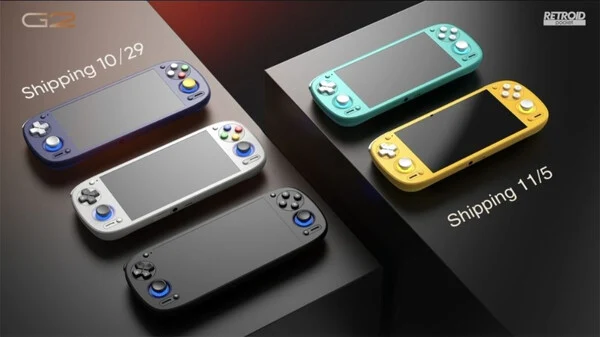
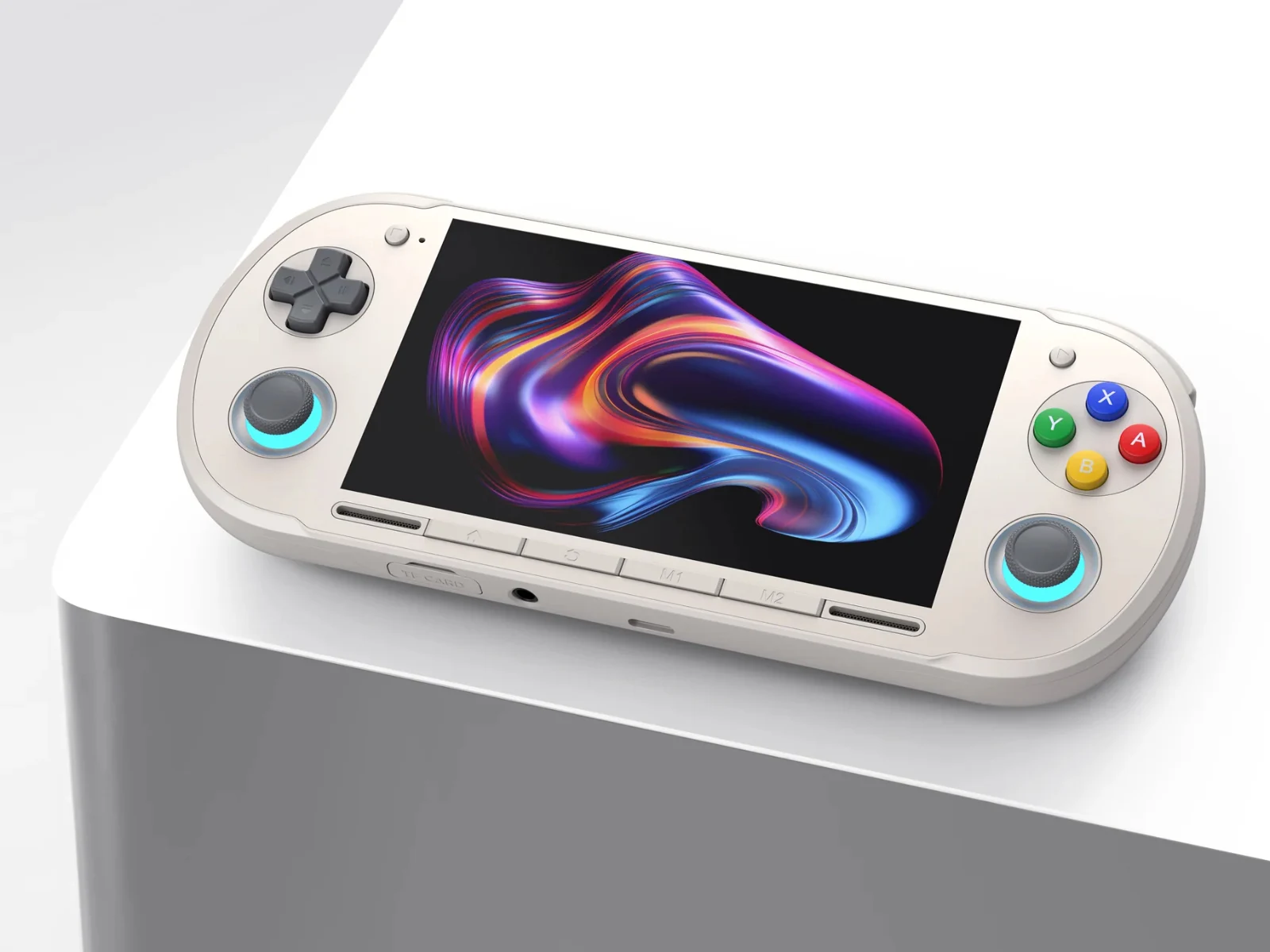
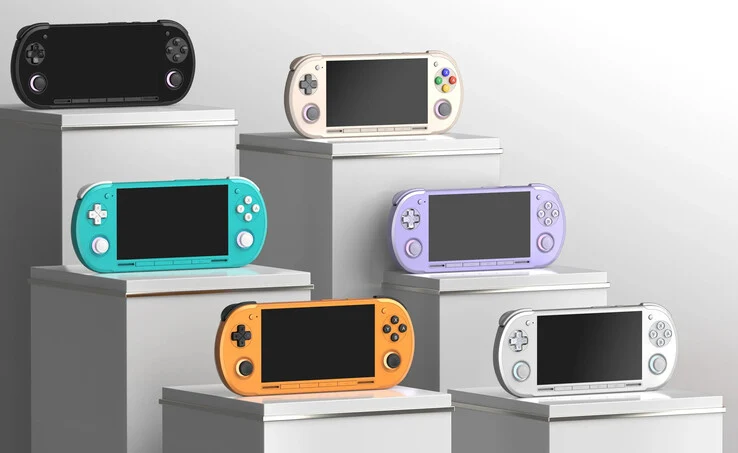
    The Pocket G2 can be pre-ordered today at a special early bird price of $199. Keep in mind, Retroid plans to eventually list the device at $219 across its 16-bit, Black, GameCube, Turquoise, and Yellow color variations. While most Pocket G2 pre-orders are expected to ship on October 29, those for the Turquoise or Yellow versions will not go out until November 5. For further details, you can visit Retroid’s official website.

    Source:
    Link


  • Retroid Pocket 6 Launches: 120Hz AMOLED & Snapdragon 8 Gen 2 Under $200

    Retroid Pocket 6 Launches: 120Hz AMOLED & Snapdragon 8 Gen 2 Under $200

    Key Takeaways

    1. Retroid launched the Pocket 6 with pre-orders now available, following the recent release of the Pocket 5.
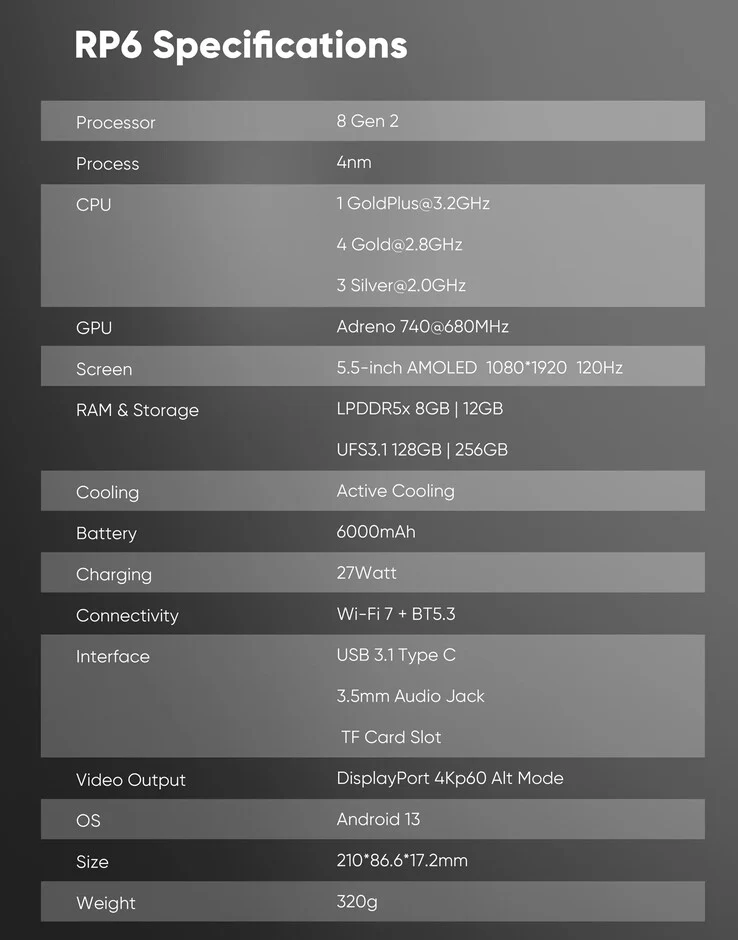
    2. The Pocket 6 features a 120 Hz AMOLED screen, a significant upgrade from the 60 Hz displays in the Pocket G2 and Pocket 5.
    3. It includes a larger 6,000 mAh battery, providing 1,000 mAh more capacity than the previous models.
    4. The device is powered by the Qualcomm Snapdragon 8 Gen 2 chipset, similar to AYN Technologies’ Odin 2 series.
    5. The Pocket 6 is priced at $209 for the Early Bird offer, with a higher-spec model available for $259, but shipping will not begin until January 2026.


    Retroid is making quick moves with the launch of the Pocket 6, which was introduced just yesterday. For some background, the company took roughly two weeks to get the Pocket 5 to consumers (currently priced at $259 on Amazon). When they launched the Pocket 5, they also showed off the Pocket Mini in late August, then kept teasing both devices until they finally arrived on September 10.

    Pre-orders and Pricing

    Now, Retroid has already started taking pre-orders for the Pocket 6. The same goes for the Pocket G2, which is priced $10 less than the Pocket 6. Despite this, the Pocket 6 offers several impressive upgrades not only compared to the Pocket G2 but also the older Pocket 5. For example, Retroid has added a 120 Hz AMOLED screen in the Pocket 6 instead of the 60 Hz displays used in both the Pocket G2 and Pocket 5.

    Display and Battery Features

    While many classic games may not take advantage of the 120 Hz refresh rate, they can still gain from a 120 Hz screen by utilizing Black Frame Insertion (BFI). This helps to lessen motion blur and enhances the look of CRT shaders. Additionally, the Pocket 6 is equipped with a 6,000 mAh battery, which is 1,000 mAh larger compared to the batteries in the Pocket G2 and Pocket 5. It also boasts the Qualcomm Snapdragon 8 Gen 2 chipset, which is the same technology AYN Technologies employs in its Odin 2 series of gaming handhelds like the Odin 2 and Odin 2 Portal.

    Dimensions and Availability

    All these components are housed in a body measuring 210 x 87 x 17 mm and weighing about 320 g, thanks to its 5.5-inch display, active cooling system, and the aforementioned battery. The Pocket 6 is available for purchase starting today, with an Early Bird price of $209. If you need more power, Retroid also offers a model with 12 GB of RAM and 256 GB of storage for $259. Keep in mind that Retroid will not start shipping any Pocket 6 pre-orders until at least January 2026.

    Source:
    Link