Tag: AMD Ryzen AI Max

  • Asus 14-inch Gaming Laptop with AMD Strix Halo and 32GB RAM Discount Deal

    Asus 14-inch Gaming Laptop with AMD Strix Halo and 32GB RAM Discount Deal

    Key Takeaway

    1. The FA401EA is a delayed release, debuting four months after its announcement, and remains one of the only Strix Halo-powered gaming laptops.
    2. It features AMD’s Ryzen AI Max+ 392 APU with Radeon 8060S iGPU and can assign up to 24 GB VRAM, distinguishing it from earlier models.
    3. The laptop is currently discounted in the UK, with a significant price increase from the 2025 edition, which is cheaper but less powerful.

    Introduction to the FA401EA Gaming Laptop

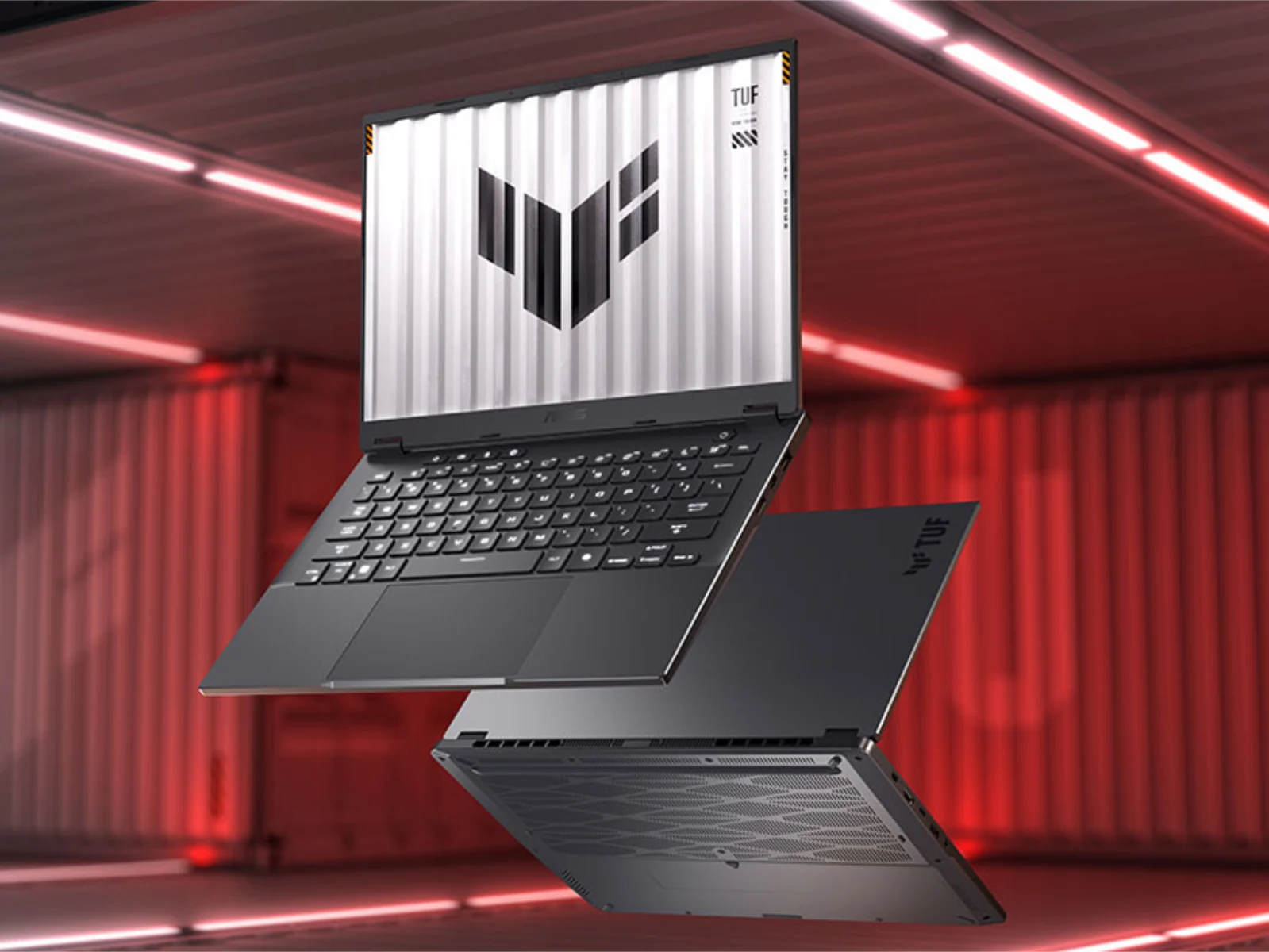
    The FA401EA took quite a good while to hit the shelves. Announced back in January, it was one of the shiny new TUF Gaming A14 laptops that showcased at CES 2026 in Las Vegas. For comparison, the FA401GM came with AMD’s Ryzen AI 9 465 and an Nvidia GeForce RTX 5060 GPU, which effectively replaced the older FA401WV that was armed with a Ryzen AI 9 HX 370 APU (costing around $1,499 in Amazon). This shows how quickly technology progresses in the gaming world.

    Specs and Design Details

    The FA401EA, on the other hand, is powered by AMD’s Ryzen AI Max+ 392 APU combined with a Radeon 8060S integrated GPU. It’s still pretty unique, because even after four months since its debut, it’s one of the only gaming laptops to feature the Strix Halo tech. Expect to see the Legion 7 15ASH11 launching later in the year, but Asus has begun to cut some prices of the FA401EA in the UK already. Currently, the retailer’s price sits at £1,599, which includes 32 GB RAM, a 1 TB SSD, and a 73 Wh battery, making it a fairly competitive deal considering its specs.

    Price Variations and Market Context

    • Initially, Asus listed this at £1,649 but later raised it to £1,799 in the UK.
    • They haven’t specified when this price cut will be over.
    • In contrast, the 2025 version of the same model was discounted to only £1,099, featuring the same display and battery but with less powerful specs like Ryzen 7 2600, 16 GB RAM, and a GeForce RTX 5050 with 8 GB VRAM.

    The 2026 version is about 45% pricier than the previous edition. Notably, the newer version can utilize up to 24 GB VRAM on its Radeon 8060S GPU, compared to just 8 GB VRAM on the older model. For more specific information and updates, you should head over to Asus’ official website.

    Conclusion

    This ASUS launching gives us a good look at how the gaming laptop market is evolving, especially with new tech like AMD’s Ryzen AI Max+ 392 APU and the Radeon 8060S GPU. Despite the delays and pricing variations, it’s clear that Asus is aiming to give gamers a powerful yet relatively affordable machine. Keep an eye out for future updates and the Legion 7 15ASH11 release for better options.


    Sources

  • Minisforum N5 Max NAS Price and Release Date Revealed

    Minisforum N5 Max NAS Price and Release Date Revealed

    Key Takeaway

    1. The Minisforum N5 Max is a high-performance NAS powered by AMD’s Strix Halo APU with 64 GB of RAM, priced at $2,899.
    2. It features extensive I/O options, including dual 10 Gb/s Ethernet, multiple USB 4 ports, and HDMI 2.1 output.
    3. The device offers up to 200 TB of storage via five SATA bays and one NVMe slot, with additional NVMe slots available for SSD expansion.
    4. Despite its advanced specs, the base model ships with only 128 GB of storage, which is relatively small for its intended use.

    Mini PC Meets High-End NAS

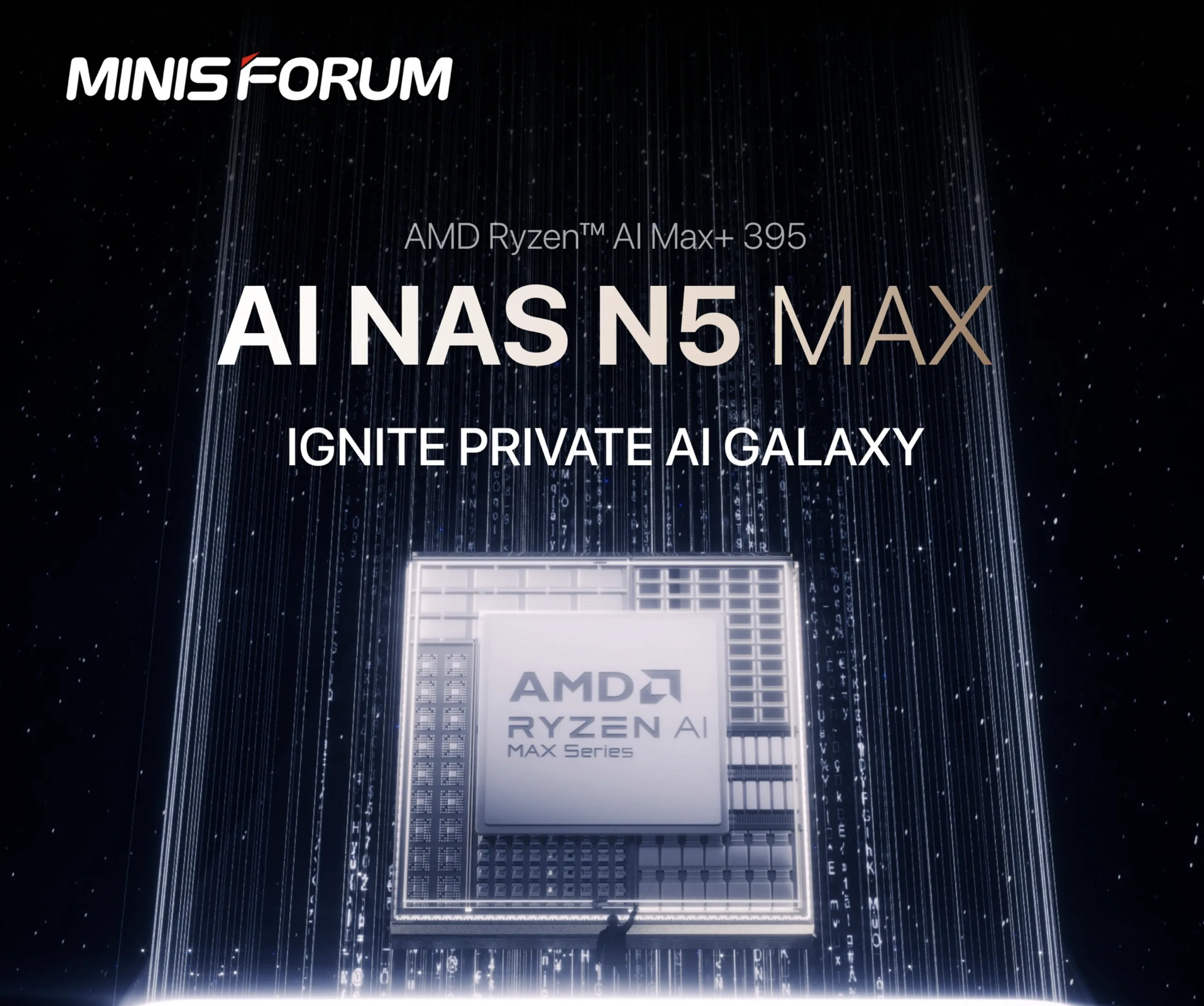
    Even tho AMD designed their Strix Halo lineup as processors for laptops, it turns out they are quite versatile and gets used in different gadgets. Minisforum decided to use one of these chips to create a very powerful Network Attached Storage (NAS), called the N5 Max. This device is not just a regular NAS, it comes packed with an AMD Ryzen AI Max+ 395 CPU and an enormous 64 GB of RAM. Many systems that use the same chip usually have 128 GB, but Minisforum probably cut corners here because, well, RAM is really rare and expensive these days.

    Pricing and Storage Options

    The N5 Max costs a jaw-dropping $2,899, which is a lot of money for a NAS. If you want to buy it, you can start placing your orders on April 23. But remember, the price only includes the basic machine – storage needs to be bought separately. The initial setup comes with a tiny 128 GB drive in one of its five NVMe slots. And for more space, it has five SATA bays, so you can expand your storage up to 200 TB if you need massive data storage.

    Connectivity and Features

    This isn’t just any NAS; it comes with a impressive array of ports. You get two 10 Gb/s Ethernet connections for fast networking, two USB 4 ports running at 80 Gb/s, another USB 4 port with 40 Gb/s, and even an HDMI 2.1 port for connecting a monitor. That’s pretty unusual on most NAS devices, which are mainly for storage and not display output. In fact, it’s really like a compact high-power mini PC that’s perfect for those who want lots of local data handling capabilities without wireless features, making it super reliable for critical tasks.

    Summary

    Overall, the Minisforum N5 Max is a beastly piece of kit, blending high performance computing with expansive storage potential, making it suitable for professional use or advanced home setups. With its hefty price tag and top-tier features, it’s clearly aimed at users who want a totally powerful and flexible NAS experience.

    Sources
  • Nvidia DGX Spark vs AMD Strix Halo: $4K AI Supercomputer Showdown

    Nvidia DGX Spark vs AMD Strix Halo: $4K AI Supercomputer Showdown

    Key Takeaways

    1. Nvidia has launched the DGX Spark, a compact AI workstation powered by the GB10 Superchip, designed for researchers and developers working with generative models.
    2. The DGX Spark is priced at $4,000, which may discourage some potential buyers due to its high cost.
    3. GMKtec’s EVO-X2 mini PC competes with the DGX Spark and has reportedly outperformed it in benchmark tests with various large language models.
    4. The EVO-X2 offers better low-latency performance for real-time tasks, thanks to its AMD Ryzen AI Max+ chip and lower price of $2,199.
    5. While Nvidia’s DGX Spark excels in high-throughput scenarios, the AMD Strix Halo provides better value for developers focused on efficient on-device AI and token workloads.


    Nvidia has introduced the DGX Spark, marking its initial venture into compact AI systems. This workstation, about the size of a desktop, is driven by the company’s GB10 Superchip and can reach up to 1 PFLOP when operating at FP4. Nvidia brands it as a “personal AI supercomputer,” aimed at assisting researchers and developers engaged with extensive generative models.

    Price Tag Dilemma

    However, the price may deter some potential buyers. The DGX Spark comes with a hefty price of $4,000, leading many enthusiasts to think twice about its cost-effectiveness.

    The Competition Emerges

    In response, GMKtec, known for its high-performance mini PCs, has brought its own EVO-X2 into the ring, pitting it against the Nvidia DGX Spark and sharing the outcomes. The EVO-X2 is powered by AMD’s Ryzen AI Max+ 395 Strix Halo APU.

    GMKtec claims that the Strix Halo outperformed the DGX Spark in benchmark tests with various open-source large language models like Llama 3.3 70B, Qwen3 Coder, GPT-OSS 20B, and Qwen3 0.6B. The AMD machine demonstrated superior performance in token generation rates and initial response times.

    Performance Insights

    According to GMKtec, the EVO-X2 mini PC shined in low-latency performance during real-time inference tasks, thanks to the Ryzen chip’s CPU + GPU + NPU configuration and the XDNA 2 AI engine. In contrast, Nvidia’s supercomputer focused more on sheer throughput.

    The highest-end model of the EVO-X2 is priced at $2,199, which is about half the cost of the DGX Spark. Although GMKtec’s findings indicate that Nvidia’s setup is still the go-to hardware for large-model, high-throughput scenarios, AMD’s Strix Halo appears to provide better value for AI developers and enthusiasts dealing with on-device AI and efficient token workloads.

    Source:
    Link


  • OneXFly Apex Handheld Gaming Device Launches to Compete with GPD Win 5

    OneXFly Apex Handheld Gaming Device Launches to Compete with GPD Win 5

    Key Takeaways

    1. Liquid Cooling Feature: The OneXFly Apex includes an optional external liquid cooling system, which can provide 120 W cooling power, but also supports internal cooling at 80 W.

    2. External Battery Design: Similar to the GPD Win 5, the OneXFly Apex uses a removable 85 Wh external battery that can be detached when connected to a power source.

    3. Performance Metrics: Boosting the thermal design power (TDP) from 80 W to 120 W results in only an 18% performance increase in benchmarks like 3DMark Time Spy.

    4. Pricing and Specs: The base model starts at CNY 8,599 (~$1,211) with 32 GB RAM and 1 TB storage, while higher configurations with Ryzen AI Max+ 395 range from CNY 9,999 (~$1,408) to CNY 15,999 (~$2,254).

    5. Global Release Plans: One-Netbook intends to launch the OneXFly Apex globally via Indiegogo, but specific details about the international release are still pending.


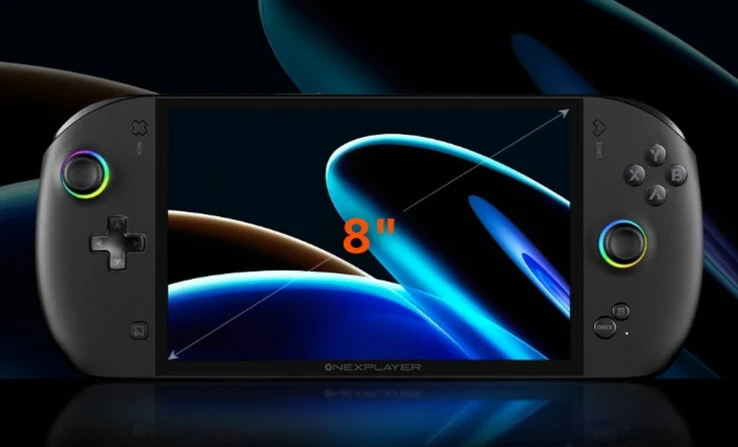
    One-Netbook has officially revealed the OneXFly Apex after hinting at its liquid cooling feature for the gaming handheld just yesterday. This new device, powered by AMD Strix Halo, shows a lot of similarities with the already existing GPD Win 5, not only in its architecture but also in several other aspects.

    Battery and Cooling Options

    For example, the OneXFly Apex uses an external battery, similar to the GPD Win 5. The battery offers a peak capacity of 85 Wh and can be completely removed when plugged into a power source, just like its counterpart. Additionally, One-Netbook has stated that the external liquid cooling system is optional. If you don’t require the 120 W cooling power, you can simply utilize the internal cooling system, which supports the Ryzen AI Max 395+ at 80 W by using two turbo fans and four heat pipes.

    Performance Insights

    Interestingly, boosting the Apex’s thermal design power (TDP) from 80 W to 120 W only provides an 18% increase in performance in the 3DMark Time Spy benchmark. The OneXFly Apex scored 4,083 points when running at 25 W, compared to the 3,816 points achieved by the AMD Ryzen AI 9 HX 370-powered OneXPlayer X1 Pro we reviewed earlier this year (currently priced at $1,599 on Amazon).

    Pricing and Availability

    Reports suggest that the OneXFly Apex outperforms Ryzen Z2 Extreme-powered handhelds, achieving over 125% higher framerates in 1080p high graphics settings. However, this enhanced performance comes with a hefty price tag. One-Netbook has stated that the OneXFly Apex will start at CNY 8,599 (~$1,211) in China, featuring 32 GB of RAM, 1 TB of storage, and the less powerful Ryzen AI Max 385 APU.

    The Ryzen AI Max+ 395 configurations will be priced between CNY 9,999 (~$1,408) and CNY 15,999 (~$2,254), offering up to 128 GB of RAM and a 2 TB SSD. Additionally, the proprietary 85 Wh external battery and the liquid cooling system will be sold for CNY 399 (~$56) and CNY 999 (~$141), respectively. One-Netbook plans to introduce the OneXFly Apex globally starting with Indiegogo. However, details regarding its international release are still unclear at this moment.

    Source:
    Link


  • AMD Strix Halo Handheld: 86 FPS in Returnal at 1080p, 42W

    AMD Strix Halo Handheld: 86 FPS in Returnal at 1080p, 42W

    Key Takeaways

    1. The GPD Win 5 features a powerful AMD Ryzen AI Max APU, enhancing its gaming performance significantly compared to previous models.
    2. The highest-spec version tested achieved impressive frame rates in GPU-intensive games, outperforming the previous AMD Strix Point Ryzen AI 9 HX 370 model.
    3. The design of the GPD Win 5 is reminiscent of the PlayStation Vita, featuring a well-thought-out control layout that combines various ergonomic influences.
    4. The external battery design improves weight distribution and is easier to replace, making it a practical choice over sealed battery systems in other devices.
    5. Initial reviews of the GPD Win 5 are positive, highlighting its performance, design, and ergonomics as key strengths.


    The GPD Win 5 is likely one of the most awaited handheld gaming devices for 2025. This excitement is well-deserved. It boasts one of the strongest APU series available, the AMD Ryzen AI Max, and its design will probably remind you of the well-liked PlayStation Vita.

    Hype vs Reality

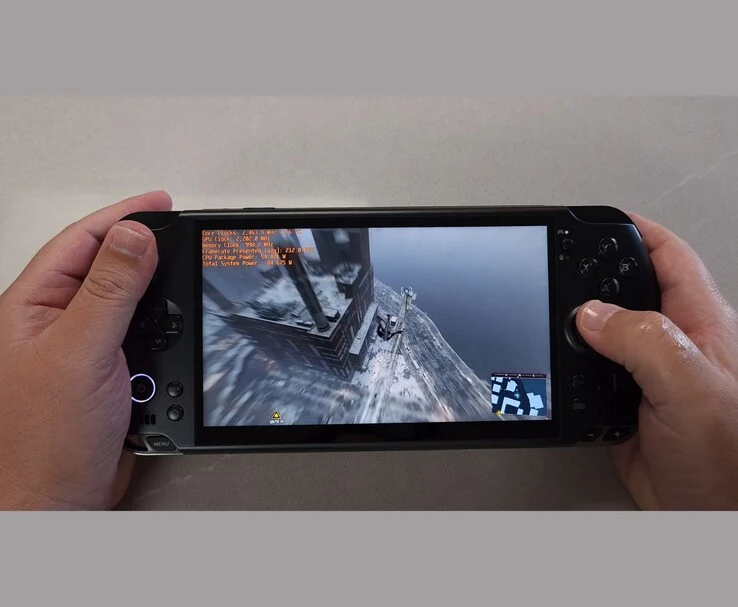
    So, how accurate is the excitement surrounding the GPD Win 5? YouTuber The Phawx recently tested the device, giving us a preview of the design and performance of the upcoming AMD Strix Halo gaming handheld.

    The version of the GPD Win 5 that The Phawx tested was the highest-spec model, featuring an AMD Ryzen AI Max+ 395, 64 GB of RAM, and a 4 TB SSD, with a price tag of $2,268. They also mentioned that they plan to evaluate the base model soon, which is powered by the AMD Ryzen AI Max 385 and retails for $1,599.

    Performance Insights

    In their tests, The Phawx showcased how significant the Strix Halo’s improvements are compared to AMD’s previous top model, the Strix Point Ryzen AI 9 HX 370. Even when both devices were limited to a similar power draw of around 42 W, the GPD Win 5 consistently outperformed in GPU-intensive games. For instance, in God of War: Ragnarok, the HX 370 device produced about 69 FPS, while the Win 5 achieved a stable 80 FPS at the same wattage.

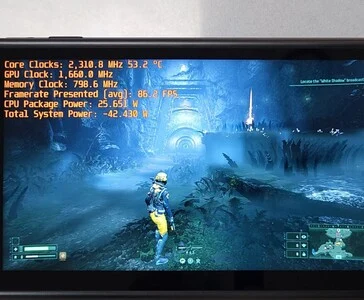
    In Space Marine 2, both devices were relatively close in performance. The HX 370 averaged around 78 FPS, whereas the Win 5 reached 90 FPS. This was one of the rare instances where the performance gap narrowed, as the game isn’t solely reliant on the GPU, but Strix Halo still managed to perform better when pressured. The most notable difference was in Returnal, where the HX 370 struggled at just 43 FPS, while the Win 5 cruised at 86 FPS, essentially doubling the performance.

    Ergonomics and Design

    When it comes to ergonomics and design, The Phawx found the GPD Win 5 reminiscent of the PS Vita. They described the controls as a blend of various influences, merging the precision of the Vita’s famed D-pad with Xbox-style face buttons and PSP-like bumpers.

    They noted that the thumbsticks are concave and textured, featuring programming that enhances precision compared to typical handhelds. The triggers were likened to an Xbox Series controller, while the bumpers clicked with the sharp feedback reminiscent of a PSP. In their opinion, this combination makes the Win 5’s control layout one of the best among handheld devices today.

    The Phawx also discussed the external battery design. While they initially thought it might feel awkward, they found it actually helps with weight distribution when attached, making the device feel balanced and less tiring to use. Without the battery, they commented that the Win 5 feels “comically light,” but they preferred to keep the battery attached at all times.

    They further pointed out that an external battery has practical benefits, being easier to replace and allowing for spare batteries compared to sealed designs found in competing devices.

    Conclusion

    Overall, initial feedback on the GPD Win 5 has been positive. For more detailed insights, the YouTuber offers an extensive review in their video, which I suggest you watch. The link is provided below.

    The Phawx via YouTube

    Source:
    Link


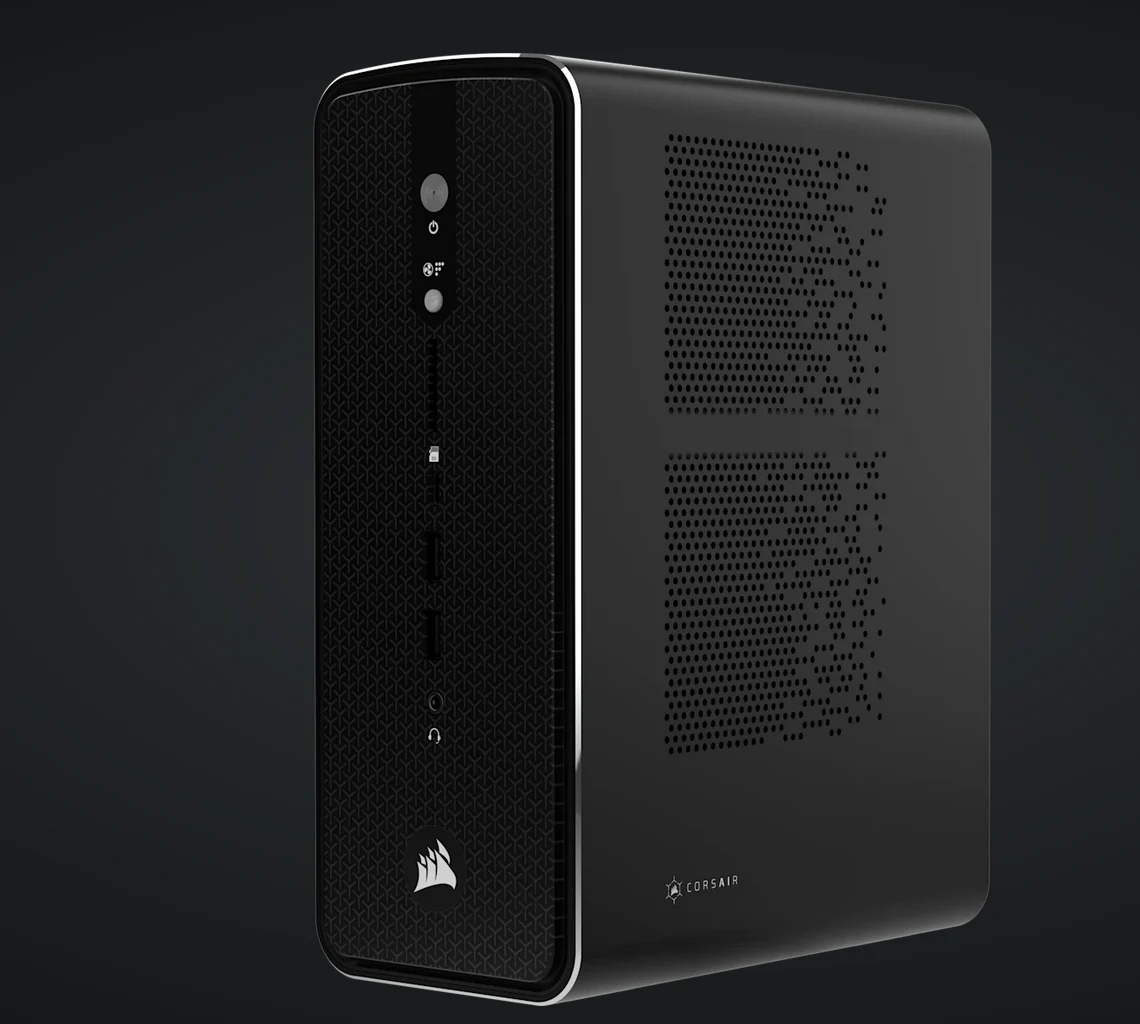
  • Corsair AI Workstation 300 Mini-PC with AMD Strix Halo Unveiled

    Corsair AI Workstation 300 Mini-PC with AMD Strix Halo Unveiled

    Key Takeaways

    1. AMD’s Strix Halo processors are gaining popularity, featured in devices from Sixunited, GPD, Ayaneo, and Corsair.
    2. The Corsair AI Workstation 300 offers two CPU options: Ryzen AI Max+ 395 (16 cores) and Ryzen AI Max 385 (8 cores), with varying RAM and storage configurations.
    3. The workstation is compact, measuring 247.5 mm x 188.4 mm x 96.5 mm and weighing 7 kg, featuring liquid cooling for CPU and GPU.
    4. Connectivity includes multiple USB ports, an SD card reader, HDMI 2.1, DisplayPort 1.4, and a 2.5 Gbps Ethernet jack.
    5. Pricing starts at $1,599 for the base model, $1,999 for the upgraded CPU, and $2,299 for additional storage options.


    AMD’s Strix Halo processors are becoming increasingly popular, appearing in various devices recently. Sixunited showcased a laptop and a bare motherboard, while GPD and Ayaneo introduced the Win 5 and Next 2, which are the first handhelds powered by Strix Halo. Now, Corsair has also entered the scene with a traditional option: a mini-PC.

    Specifications and CPU Choices

    The Corsair AI Workstation 300 has been announced with two CPU choices: the AMD Ryzen AI Max+ 395 and the less common Ryzen AI Max 385. The Ryzen AI Max 385 has eight Zen 5 CPU cores compared to the 16 cores in the 395 version. Additionally, it includes a 32 CU Radeon 8050 iGPU, while the 395 features a 40 CU Radeon 8060. The memory and storage options vary based on which CPU you choose.

    If you decide on the Ryzen AI Max 395+, you can configure it with up to 128 GB of LPDDR5X RAM and 4 TB of solid-state storage. On the other hand, the Ryzen AI Max 385 version is limited to 64 GB of RAM and a 1 TB NVMe SSD. To power the AI Workstation 300, Corsair has included a 350-Watt PSU, providing additional power capacity that may help users maximize the performance of their workstations.

    Size and Design

    The Corsair AI Workstation 300 is quite compact, with dimensions of 247.5 mm/9.7 in (height) x 188.4 mm/7.4 in (length) x 96.5 mm/3.8 in (width). It weighs 7 kg/15.4 lbs, and this extra weight is probably due to Corsair’s liquid cooling solution for both the CPU and GPU. Unfortunately, the specifics of the cooling system are unclear, as there are no images available showing the internal components.

    Connectivity Options and Pricing

    For the front I/O, you’ll find an SD card reader, a USB 4.0 Type-C port, two USB 3.2 Gen2 Type-A ports, and a 3.5 mm audio jack. The rear includes two USB 2.0 Type-A ports, one HDMI 2.1 port, one DP 1.4 port, one USB 3.2 Type-A port, one USB 4.0 port, a 2.5 Gbps RJ45 Ethernet jack, and another 3.5 mm audio jack.

    The base model of the Corsair AI Workstation 300 (with Ryzen AI Max 385) is priced at $1,599. Upgrading to the Ryzen AI Max+ 395 raises the price to $1,999, while opting for the additional 4 TB of storage brings the total to $2,299. You can purchase it directly from Corsair’s website now.

    Source:
    Link

  • Sixunited Unveils XN77-160M-CS Laptop with AMD Strix Halo and OLED

    Sixunited Unveils XN77-160M-CS Laptop with AMD Strix Halo and OLED

    Key Takeaways

    1. Sixunited has launched a new laptop model, the XN77-160M-CS, featuring Strix Halo technology and Ryzen AI Max 300 series processor compatibility.
    2. The laptop boasts a 16-inch LCD/OLED display with a resolution of 2,560 x 1,600, peak brightness of 500 nits, and a refresh rate of 165 Hz.
    3. It includes a dual-fan cooling system and offers two configurations with thermal design power (TDP) options of 120 Watts and 85 Watts.
    4. The device supports a maximum battery capacity of 99.9 Wh and includes two M.2 2280 PCIe Gen 4 NVMe SSD slots, but RAM is not upgradeable due to soldered modules.
    5. Connectivity features include multiple ports such as USB 4.0, USB 3.2, an SD card reader, Ethernet, HDMI 2.1, and a 3.5 mm audio jack; pricing details are not disclosed, and it will likely be sold through OEMs.


    Ever since AMD’s CEO Dr. Lisa Su made a promise to bring Strix Halo technology to mini-PCs, there has been a flood of new products from companies like GMKTek, BeeLink, and Minisforum. However, when it comes to laptops, options are still limited. The main choices available right now are the HP ZBook Ultra G1a 14 and the Asus ROG Flow Z13. But now, we have a new player stepping into the game with some remarkable specifications.

    New Laptop Unveiling

    Sixunited, known for previously showing off the Strix Halo-powered AXB35-02 mini-PC, has just introduced its latest laptop model, the XN77-160M-CS. This new laptop is compatible with Ryzen AI Max 300 series processors, though no specific variant has been revealed. The thermal design power (TDP) can reach up to 120 Watts, and there’s an optional configuration that limits it to 85 Watts. Both versions feature a dual-fan cooling system.

    Display and Storage Features

    The Sixunited XN77-160M-CS is equipped with a 16-inch LCD/OLED display boasting a resolution of 2,560 x 1,600, achieving a peak brightness of 500 nits and a refresh rate of 165 Hz. It can support a maximum battery capacity of 99.9 Wh, which is the highest possible for laptops. In terms of storage, the device includes two M.2 2280 PCIe Gen 4 NVMe SSD slots. Unfortunately, users won’t be able to upgrade the RAM since the Strix Halo uses soldered LPDDR5X modules.

    Connectivity Options and Pricing

    For connectivity, Sixunited provides a variety of ports including two USB 4.0 ports, two USB 3.2 Type-A ports, an SD card reader, an RJ45 Ethernet port, an HDMI 2.1 port, and a 3.5 mm audio jack. While there’s no price listed yet, it’s unlikely that this laptop will be sold directly to consumers. Sixunited mainly sells to other OEMs, who then market these products. Regardless, the specifications are impressive, and a fully equipped version of this laptop will likely demand a high price.

    Source:
    Link