Category: Computers

  • Challenges for EU Developers with Apple’s New App Store Policy

    Challenges for EU Developers with Apple’s New App Store Policy

    Apple’s Groundbreaking Decision: Allowing Third-Party App Stores on iOS

    Commencing from March this year with the rollout of iOS 17.4, Apple is introducing a groundbreaking change by permitting third-party app stores on iOS for the very first time.

    Furthermore, developers will now have the option to steer clear of Apple’s in-app payment system. This alteration signifies a significant departure from the past, as iPhone users will no longer be restricted to obtaining applications exclusively from the Apple App Store. This move by Apple is a direct response to the Digital Markets Act (DMA) enforced in the European Union.

    Apple’s New Fee Structure for Developers in the EU

    Preceding the introduction of the DMA, Apple imposed a 30 percent commission rate on most App Store transactions, such as app downloads and in-app purchases. Nonetheless, smaller developers generating less than $1 million annually were granted the liberty to pay merely 15 percent.

    Within the EU, Apple is revamping the charges applicable to iOS apps. Developers now have the liberty to select between a 17 percent commission (with an additional 3 percent if utilizing Apple’s payment system) or a 10 percent commission (plus 3 percent) designated for small businesses, a significant reduction from the earlier 30 percent.

    Structural Alterations in Core Technology Fee and Distribution

    Moreover, a new element has emerged, termed the Core Technology Fee (CTF) of €0.50 per annual installation for high-traffic apps (exceeding one million installations per annum). This charge is levied per customer account for the initial installation per year. The majority of developers will be exempt from this fee, as it pertains to a small fraction of apps.

    Despite developers now having the ability to circulate apps beyond the App Store, the CTF remains applicable once they cross the threshold of volume, irrespective of the platform. The exclusive domain over in-app acquisitions no longer stands, with a 3 percent charge in case developers opt for its utilization. Furthermore, alternative app marketplaces must also remit the CTF for downloads. Additionally, Apple will exert control over which app stores can be accessible on its App Store.

    Ramifications for Developers

    Nikita Bier, the co-founder of social-media startups Gas and tbh, emphasized that under the revamped structure, if a developer garners $10 million in revenue, Apple’s share would amount to $6.2 million annually. Factoring in presumed expenditures and taxes, the net earnings for the developer would stand at $2 million, representing a mere 20% of their overall sales.

    Bier raised a poignant concern that for numerous applications, especially those generating less than $0.57 per user, the novel fee arrangement may culminate in adverse earnings, translating to developers owing money to Apple rather than accruing profits. Consequently, Bier articulated a reluctance towards launching an app in Europe given these circumstances.

  • Unveiled: MINISFORUM Neptune HX100G Mini PC with Ryzen 7 7840HS CPU & Radeon RX 6650M DGPU

    Unveiled: MINISFORUM Neptune HX100G Mini PC with Ryzen 7 7840HS CPU & Radeon RX 6650M DGPU

    MINISFORUM Expands Neptune Series with Powerful HX100G Mini-PC

    MINISFORUM has recently introduced the HX100G mini-PC, the latest addition to its Neptune Series. This new model surpasses its predecessors, the HX77G and HX99G, in terms of processing power. The release of the HX100G follows closely after the launch of the NAB7 in the Venus Series.

    AMD Ryzen 7 7840HS Processor Takes Center Stage

    The standout feature of the HX100G is its powerful AMD Ryzen 7 7840HS processor. This high-performing mobile CPU boasts 8 Zen 4 CPU cores and is built using a 4 nm manufacturing process. It also includes an integrated Radeon 780M GPU, delivering exceptional graphics performance.

    Enhanced Graphics Capabilities with Radeon RX 6650M Discrete GPU

    MINISFORUM has equipped the HX100G with the Radeon RX 6650M discrete GPU, further enhancing its graphics capabilities. With 28 Compute Units and 8 GB of GDDR6 VRAM, this combination allows the mini-PC to handle graphic-intensive tasks such as gaming with ease.

    Comprehensive Range of Ports for Versatile Connectivity

    The HX100G offers a wide range of ports to cater to various connectivity needs. The front panel features a headphone jack, a microphone jack, and USB Type-A and Type-C ports. On the rear panel, users can find a DC-in, two DisplayPorts, two HDMI ports, an RJ45 port for 2.5 Gigabit Ethernet, and three USB 3.2 Gen2 Type-A ports.

    Various Configurations Available at Competitive Prices

    MINISFORUM offers the HX100G mini-PC in several configurations to suit different requirements. The base model, priced at $719, does not include RAM or storage. For those who prefer a pre-configured system, there are options available with a 1 TB SSD and either 32 GB or 64 GB of RAM. These configurations are priced at $905 and $995 respectively.

    With its impressive processing power, enhanced graphics capabilities, and versatile connectivity options, the HX100G mini-PC from MINISFORUM is an excellent choice for users looking for a compact yet powerful computing solution.

  • HP Star Book Pro 14 2024: Unveiling Specifications of Intel Core Ultra 5 125H, 16GB LPDDR5X RAM, Priced at 5799 Yuan (~$817)

    HP Star Book Pro 14 2024: Unveiling Specifications of Intel Core Ultra 5 125H, 16GB LPDDR5X RAM, Priced at 5799 Yuan (~$817)

    HP Unveils the Star Book Pro 14 2024 Laptop with Impressive Specifications

    HP is set to launch its latest laptop, the Star Book Pro 14 2024, today at 13:30. However, a third-party e-commerce company, JD.com, has already listed the product, revealing details about its specifications and pricing. The laptop is priced at 5799 Yuan ($817), but customers can avail of a discounted rate of 5499 Yuan ($775) with a store coupon.

    Sleek Design and Color Options

    The Star Book Pro 14 2024 boasts a sleek design, weighing just 1.52 kg and measuring a mere 17.5mm thin. It comes in three elegant colors: Night Blue, Slightly Smoked Pink, and Moonlight Silver.

    Impressive Technical Details

    The laptop features a 2.5K 120Hz IPS 16:10 matte display with a resolution of 2560 x 1600. It offers a brightness level of 300 nits and covers 100% sRGB color gamut, ensuring vibrant and accurate colors.

    Under the hood, the Star Book Pro 14 2024 is powered by a robust 14-core 18-thread Core Ultra 5 125H chip. It has a Thermal Design Power (TDP) of 45W, a maximum turbo frequency of 4.5Ghz, and an Arc core display. The device also incorporates three major AI engines (CPU+GPU+NPU) for enhanced capabilities, supporting quick local AI image generation and accelerated AI video processing.

    The laptop comes with 16GB 7467MHz LPDDR5X memory and a 1TB PCIe 4.0 SSD, ensuring smooth performance and ample storage capacity for users.

    Privacy and Security Features

    The Star Book Pro 14 2024 prioritizes privacy and security with a 5MP pixel camera that supports IR infrared face recognition. It also has a camera privacy film design, giving users peace of mind.

    Connectivity and Battery Life

    Connectivity options on the laptop include Wi-Fi 6E and Bluetooth 5.3. It is equipped with a 68Whr battery that supports 100W PD fast charging. According to HP, the laptop can achieve a 50% charge in just 30 minutes and offers a battery life of up to 12.5 hours.

    Interface Options and Additional Services

    The laptop offers a range of interface options, including 1 Thunderbolt 4 interface, 1 USB-C 3.1 interface, 1 USB-A 3.1 interface, 1 HDMI 2.1 interface, 1 USB-A 3.0 interface, and 1 3.5mm audio interface.

    In addition, HP is offering a 3-year service with the purchase of the Star Book Pro 14 2024. This service provides continuous online support for remote diagnosis, auxiliary operations, and other forms of assistance.

    In conclusion, the HP Star Book Pro 14 2024 is a highly capable laptop with impressive specifications and a sleek design. With its powerful processor, ample memory and storage, and emphasis on privacy and security, it is sure to attract tech enthusiasts and professionals alike.

  • Pre-order the Razer Blade 14 2024 Edition: Experience a 14″ QHD+ 240Hz Display, Ryzen 9 8945HS & RTX 4070 Graphics

    Pre-order the Razer Blade 14 2024 Edition: Experience a 14″ QHD+ 240Hz Display, Ryzen 9 8945HS & RTX 4070 Graphics

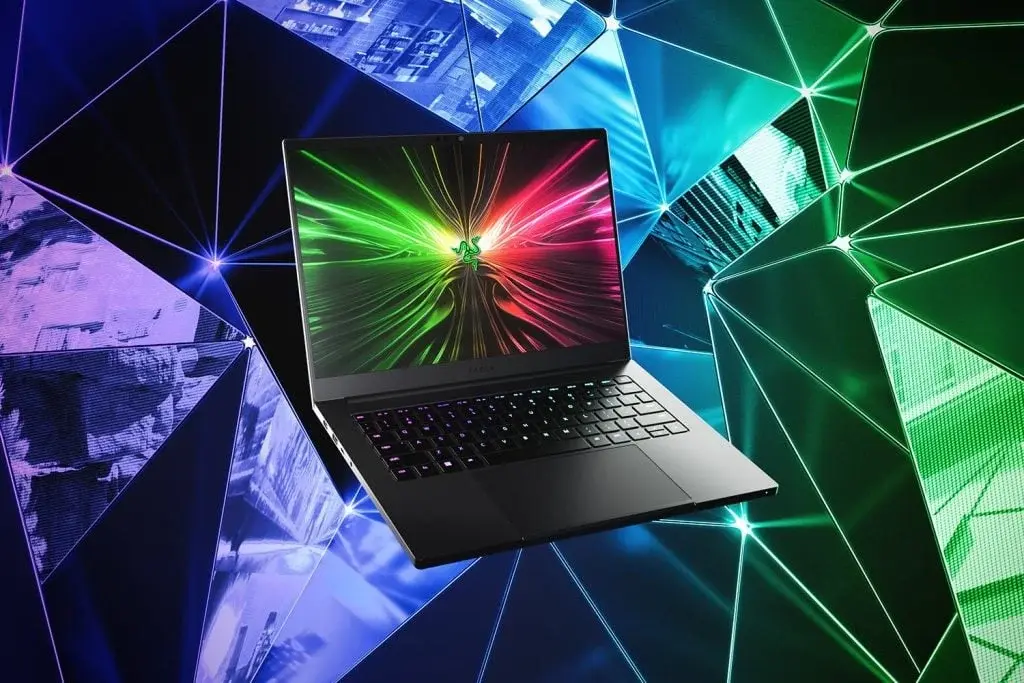
    During CES 2024, Razer unveiled the latest addition to its gaming laptop lineup, the Razer Blade 14 (2024 model). This new model is praised for its exceptional combination of high performance and portability, boasting a sleek and lightweight design. Pre-orders for the Blade 14 are now open, and shipping is set to commence on February 6.

    Razer Blade 14 (2024) Pricing and Configurations

    The base model of the Razer Blade 14 is priced at $2,199.99 in the US and €2,499 in Europe. It comes with an NVIDIA GeForce RTX 4060 graphics card, a 1TB SSD, and 16GB of DDR5-5600 MHz RAM. For those seeking even more power, an upgraded version is available. This configuration features the NVIDIA GeForce RTX 4070 graphics card and 32GB of RAM, with a price tag of $2,699.99 in the US and €2,999 in Europe.

    Razer Blade 14 (2024) Specifications

    The Razer Blade 14 is equipped with an AMD Ryzen 9 8945HS Processor, boasting 8 cores and 16 threads, capable of reaching speeds up to 5.2 GHz. Its display is a 14-inch QHD+ screen with a 240Hz refresh rate, supporting AMD FreeSync Premium. Additionally, the display features an anti-glare matte finish and covers 100% of the DCI-P3 color gamut.

    When it comes to graphics, the NVIDIA GeForce RTX 4070 option provides 8GB GDDR6 VRAM, delivering a total graphics power of up to 140W and a boost clock of up to 2175MHz. This GPU is VR-ready and incorporates advanced features such as NVIDIA Whisper Mode 2.0 and Resizable BAR.

    The Blade 14 offers a variety of connectivity options, including USB 3.2 Gen 2 Type-A ports, USB4 Type-C ports, HDMI 2.1 output, and Wi-Fi 7 support. It also boasts a per-key RGB keyboard powered by Razer Chroma and a precision glass touchpad.

    Crafted with CNC aluminum and finished in anodized black, the laptop measures approximately 17.99 mm x 228 mm x 310.7 mm and weighs about 1.84 kg. It boasts a battery life of up to 10 hours and comes with a 230W power adapter.

    With its outstanding performance and sleek design, the Razer Blade 14 (2024 model) is a compelling choice for gamers seeking a portable gaming laptop. Pre-orders are now available, and shipping will commence on February 6.

  • Report: TSMC’s 2nm technology set to be exclusively secured by Apple

    Report: TSMC’s 2nm technology set to be exclusively secured by Apple

    Apple to Utilize TSMC’s 2nm Chip Technology

    According to a report by DigiTimes, Apple may become the first company to utilize TSMC’s upcoming 2-nanometer chip technology. TSMC, a major chip manufacturer, is expected to start the production of 2nm chips in the second half of 2025. The use of this technology allows for more transistors to be packed onto a single processor, resulting in faster performance and lower power consumption.

    Apple’s History of Early Adoption

    Apple has a track record of being an early adopter of TSMC’s leading-edge chip technologies. For instance, this year, both the A17 Pro chip in the iPhone 15 Pro and the M3 series chips in Macs are built on TSMC’s 3-nanometer process. Therefore, it is not surprising that Apple is expected to be the first to try TSMC’s new 2nm process as well.

    The Advantages of the 2nm Process

    The new 2nm node will introduce a new manufacturing process called gate-all-around field-effect transistors (GAAFET) with nanosheets. This technology is expected to bring faster speeds and lower power consumption compared to the FinFET transistors used in current chips. However, the shift to GAAFET presents challenges for TSMC. They will need to build new fabs and heavily invest in adapting their production process.

    Adjustments for Apple

    As a key customer of TSMC, Apple will likely need to make adjustments to its chip designs to accommodate the new technology. This will ensure that Apple’s devices can take full advantage of the benefits offered by the 2nm chips.

    Refinement of Current 3nm Process

    In addition to the development of the 2nm process, TSMC is also refining its current 3nm process. The company has already made improvements to its fabrication process in the new N3E and N3P chips. Furthermore, TSMC is working on other chips like N3X and N3AE, which are designed for high-performance computing and automotive applications respectively.

    Exploring Even More Advanced Chips

    Looking even further ahead, rumors suggest that TSMC is already exploring the development of even more advanced 1.4-nanometer chips. These chips are expected to be available as early as 2027. Unsurprisingly, Apple is reportedly interested in securing early access to this cutting-edge technology as well.

    In conclusion, Apple is poised to be the first company to utilize TSMC’s upcoming 2nm chip technology. This technology promises faster performance and lower power consumption. While there are challenges associated with the shift to the new GAAFET process, both TSMC and Apple are expected to make the necessary adjustments to take advantage of this innovative technology. Additionally, TSMC continues to refine its current 3nm process and explore even more advanced chips for future applications.

  • Samsung Alters Strategy by Leasing Russian Factory

    Samsung Alters Strategy by Leasing Russian Factory

    Samsung’s Evolving Strategies in Russia

    Samsung’s Move to Stop Deliveries

    In March 2022, Samsung made the announcement that it had ceased shipments to Russia. This choice underscores the obstacles that global corporations encounter within complex geopolitical landscapes.

    A Vital Participant in the Shift

    The local electronics distributor VVP Group could potentially serve as a key player in the transformation of the Kaluga factory. It is anticipated that VVP Group will engage in the production of equipment under its own label and for various entities, utilizing Samsung’s existing infrastructure.

    Ramifications of the Resolution

    The prospective decision to hand over the factory to VVP Group carries substantial consequences. It may pave the way for the facility’s continued functioning and the safeguarding of employment roles in alignment with the evolving circumstances.

    Strategic Flexibility Demonstrated by Samsung

    This maneuver could signify Samsung’s strategic flexibility in preserving a foothold in the Russian market indirectly. The company effectively harmonizes its commercial concerns with geopolitical intricacies. By opting to lease the factory, Samsung establishes a model for multinational corporations navigating comparable hurdles.

  • ASML Thrives in Strong Q4 2023 Despite Export Restrictions

    ASML Thrives in Strong Q4 2023 Despite Export Restrictions

    ASML Holding NV: Analysis of Financial Performance and Market Leadership

    Financial Performance Evaluation

    During the last quarter of 2023, ASML Holding NV, a prominent provider of lithography systems for chip manufacturing worldwide, disclosed the following key financial figures:

    • A 9% rise in net profit to €2.0 billion ($2.2 billion)
    • Exceeded analyst projections by achieving sales of €7.2 billion
    • Received record orders surpassing €9 billion, with €5.6 billion dedicated to EUV machines

    Previewing the Year 2024

    ASML remains cautious about its performance in 2024, expecting:

    • Stable sales growth due to uncertainties in the semiconductor sector
    • Encouraging signals such as growing chip demand and increased factory utilization rates

    ASML’s Market Dominance and Technological Progression

    The company’s supremacy in the global lithography systems market is apparent, allaying worries about its technological advancements.

    Evaluating the Impact of Export Restrictions

    The imposition of export restrictions on sales to China in the upcoming year is a notable concern, potentially impacting up to 15% of ASML’s total sales.

    Positioning within the Semiconductor Sector

    Despite facing obstacles, ASML’s distinct status as the solitary producer of cutting-edge semiconductor manufacturing equipment positions it as a trendsetter in the industry.

    Concluding Thoughts

    The resilience displayed in ASML’s Q4 2023 results despite export restrictions is noteworthy. Analysts are keenly observing the likelihood of a revised outlook later in the year as the sector recuperates.

  • Check out the price and specifications of the ASUS Zenbook 14 OLED 2024, now available in India with Intel Core Ultra CPU.

    Check out the price and specifications of the ASUS Zenbook 14 OLED 2024, now available in India with Intel Core Ultra CPU.

    ASUS Zenbook 14 OLED 2024: Pricing and Availability Revealed

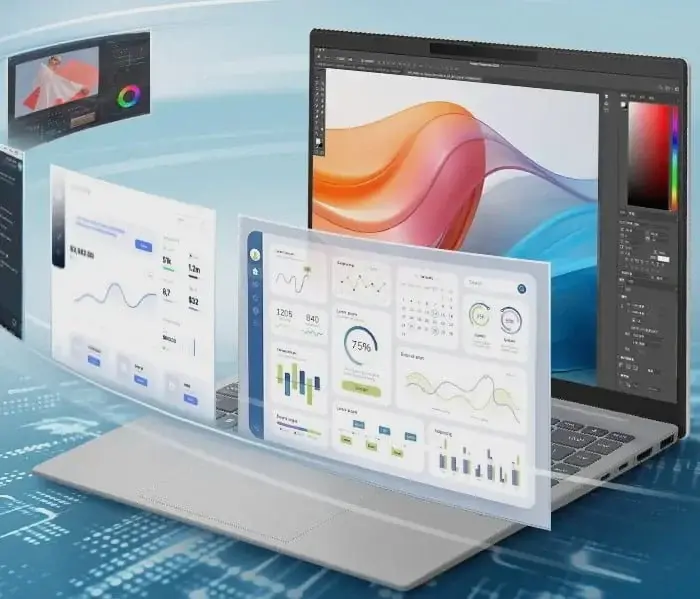
    The ASUS Zenbook 14 OLED 2024 laptops were recently introduced in the Indian market. Now, the official pricing and availability details for this notebook have finally been unveiled. Here, we provide you with all the information you need regarding its specifications, pricing, and availability.

    Pricing and Availability

    The ASUS Zenbook 14 OLED model comes in various variants, with a starting price of 99,990 INR. These devices can be purchased from Amazon, Flipkart, official ASUS online stores, Reliance Digital, and other retail partners. The first sale is scheduled to begin on January 31, 2024. Below are the prices for each configuration:

    • Zenbook 14 OLED (UX3405MA-PZ552WS) – 99,990 INR
    • Zenbook 14 OLED (UX3405MA-PZ752WS) – 114,990 INR
    • Zenbook 14 OLED (UX3405MA-PZ762WS) – 120,990 INR
    • Zenbook 14 OLED (UX3405MA-PZ551WS) – 99,990 INR
    • Zenbook 14 OLED (UX3405MA-PZ751WS) – 114,990 INR
    • Zenbook 14 OLED (UX3405MA-QD552WS) – 96,990 INR
    • Zenbook 14 OLED (UX3405MA-QD752WS) – 109,990 INR

    Specifications

    The ASUS Zenbook 14 OLED features a 14-inch OLED panel with a resolution of 3K/FHD, a refresh rate of either 120Hz or 60Hz, and a 16:10 aspect ratio. Users also have the option to choose a touch-enabled screen.

    Under the hood, the 2024 Zenbook lineup is equipped with Intel Core Ultra series processors, including Core Ultra 5, Core Ultra 7, and Core Ultra 9. These processors are coupled with up to 32GB of LPDDR5X RAM and up to 1TB of internal storage.

    The entire lineup boasts a sleek and lightweight design, with a metallic body weighing around 1.2 kilograms. Additionally, notable features include a 75Wh battery pack that supports 65W fast charging, stereo speakers with Dolby Atmos support, Windows 11 Home Edition, a 3.5mm headphone jack, and an infrared webcam.

    With its impressive specifications and attractive pricing, the ASUS Zenbook 14 OLED 2024 is set to provide an exceptional computing experience. Don't miss out on the first sale starting on January 31, 2024.

  • Improved performance and power efficiency: Samsung unveils the 990 EVO SSD

    Improved performance and power efficiency: Samsung unveils the 990 EVO SSD

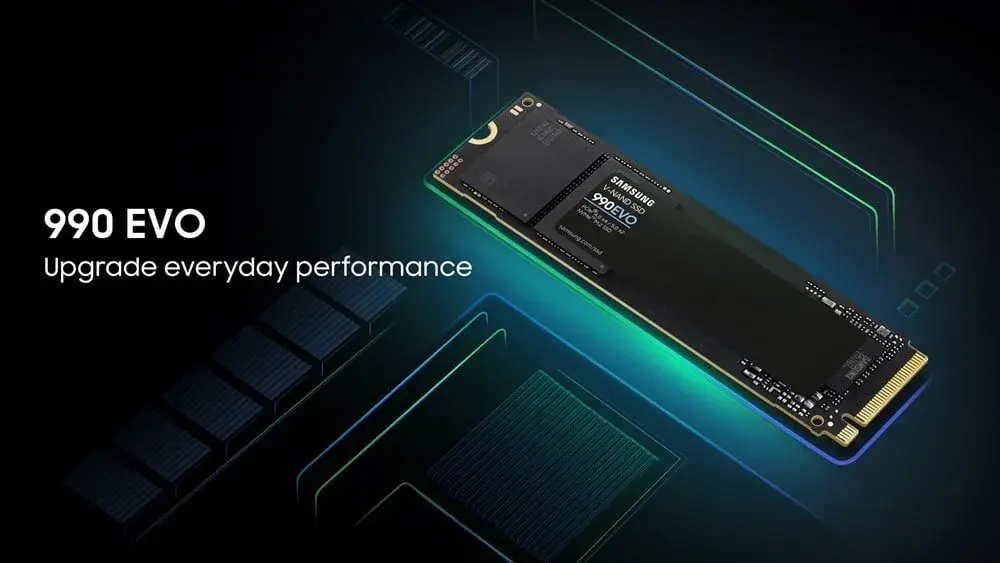
    Samsung has recently unveiled the 990 EVO SSD, a highly advanced solid-state drive that represents a significant improvement over its predecessor, the 970 EVO Plus. This new offering from Samsung boasts an impressive 43% increase in performance compared to the 970 EVO Plus, making it a versatile and efficient choice for consumers looking to enhance their computing experience.

    Technical Specifications

    The 990 EVO SSD stands out for its support of both PCIe 4.0 x4 and PCIe 5.0 x2 standards, making it compatible with current and future computing interfaces. With its M.2 2280 form factor and V-NAND TLC flash memory, this SSD delivers exceptional performance. It offers impressive sequential read and write speeds of up to 5000 MB/s and 4200 MB/s, respectively, as well as random read/write speeds of up to 700k/800k IOPS. These features ensure quick loading times and swift access to large files, significantly enhancing overall computing efficiency.

    In terms of security, the SSD is equipped with AES 256-bit encryption, guaranteeing data safety and security. Additionally, it comes with Samsung’s self-developed controller chip, the S4LY022, which not only boosts power by 70% compared to the 970 EVO Plus but also helps extend computer battery life. The SSD also supports a “new standby” feature, allowing for low-power notifications.

    Improved Power Efficiency and Thermal Solution

    One of the standout features of the Samsung 990 EVO SSD is its improved power efficiency, which is up to 70% better than its predecessor. This enhancement is particularly beneficial for users who prioritize their device’s battery life. Furthermore, the SSD incorporates a smart thermal solution to maintain optimal operating temperatures, ensuring consistent performance without compromising the drive’s integrity.

    Pricing and Availability

    The Samsung 990 EVO SSD is available in two capacities: 1TB and 2TB. In China, the 1TB variant is priced at 679 yuan, while the manufacturer’s suggested retail prices for the global market are $124.99 for the 1TB model and $209.99 for the 2TB model. Samsung also provides consumers with a comprehensive software suite called Samsung Magician, which enables data migration, drive health monitoring, and timely firmware updates. Additionally, the 990 EVO SSD comes with a five-year limited warranty, offering consumers peace of mind regarding their investment.

    In conclusion, the Samsung 990 EVO SSD is an impressive solid-state drive that offers remarkable performance improvements over its predecessor. With its support for PCIe standards, fast read and write speeds, enhanced power efficiency, and comprehensive security features, this SSD is a top choice for consumers looking to enhance their computing experience.

  • ASUS Ends Production of NUC Extreme Mini PCs

    ASUS Ends Production of NUC Extreme Mini PCs

    Conclusion of the NUC Extreme Series in the Advanced Compact PC Lineup

    ASUS has officially announced the discontinuation of the NUC Extreme Series of compact mini PCs, with the NUC 13 Extreme "Raptor Canyon" serving as the final model in this particular lineup. This resolution was validated by a representative from ASUS speaking to the Fudzilla media platform.

    ASUS’s Acquisition of Intel’s NUC Product Range

    Intel NUC, which stands for ‘Next Unit of Computing’, is a collection of small-form-factor barebone PC kits. ASUS has taken charge of the NUC product range after Intel’s determination in the prior year’s July to cease direct investment in the NUC sector. ASUS obtained non-exclusive permissions from Intel in order to continue the development of the product lineup.

    The Mighty NUC 13 Extreme

    Originally unveiled by Intel at the close of 2022, the NUC 13 Extreme is celebrated for its potent capabilities, accommodating the premium Intel Core i9-13900K processor alongside significant graphics cards. It represented a notable shift from conventional small PCs with its 14-liter size.

    ASUS’s Recent Innovations in Laptop Designs

    At CES 2024, ASUS showcased their newest laptop innovations that incorporate Intel’s 14th Gen Core processors and Meteor Lake chips. Additionally, they exhibited fresh monitors and unveiled the ASUS ROG NUC as a recent addition to their gaming-focused NUC range. The ROG NUC boasts a more compact design with a maximum volume of 2.5 liters, offering selections for the Intel Core Ultra 9185H processor and NVIDIA RTX 4070 graphics card.

    ASUS’s Independent PC Creations

    ASUS is pushing ahead with their independent PC creations, exemplified by the ROG STRIX G16CHR system and the ROG C22H, both equipped with advanced CPUs and GPUs. These designs provide conventional consumer hardware options that may be more attractive to users due to their familiar and adaptable nature.

    NUC Extreme Series Ceases Operations

    The decision to discontinue updates to the NUC Extreme series may be correlated with ASUS’s concentration on their existing and emerging product lines which present varying choices in terms of size, potency, and adaptability. While the NUC Extreme series was distinctive in its structure and capabilities, it appealed mainly to a specialized group of enthusiasts rather than a broad consumer audience.