Category: Computers

  • Bluetti Handsfree 1 & 2: Backpacks with Built-in Generators

    Bluetti Handsfree 1 & 2: Backpacks with Built-in Generators

    Key Takeaways

    1. Compact size: The Handsfree power stations are designed to fit in specially made backpacks for outdoor enthusiasts.
    2. Power capacity: The Handsfree 1 offers 268.8Wh, while the Handsfree 2 provides 512Wh of power.
    3. Versatile ports: Both models come with dual 100W USB-C ports, USB-A ports, and AC outputs for various devices.
    4. Durable technology: They feature LiFePO4 batteries that are safe and stable in extreme temperatures and can charge while in use with solar panels.
    5. Pricing and availability: The Handsfree series starts at $429 for the 1 and $599 for the 2, available in blue on Amazon.


    The compact power station is becoming a must-have for outdoor enthusiasts, especially for those who hike mountains and want to keep their devices like drones, smartphones, or laptops running while they explore.

    Concern About Size

    However, before buying such a device, potential buyers might worry about whether it will fit in their current backpack, or if they will need to purchase a new one to accommodate it.

    Introducing Handsfree Series

    Bluetti has addressed this issue with the Handsfree 1 and 2, portable generators that offer 268.8 watt-hours (Wh) and 512Wh of power respectively, designed to fit into specially made backpacks of 42 liters (l) and 60l capacity.

    Impressive Features

    Both models in the Handsfree range come equipped with dual 100W USB-C ports and USB-A ports, along with AC ports that have outputs rated at 300W for the 1 and 700W for the 2. The bags feature custom flaps for easy access to ports, and they also include organized sections for gear like cameras and drones, MOLLE hangers for sleeping bags, plus a front pouch that could fit a laptop.

    The entire Handsfree system boasts an IPX4 rating for water resistance and includes an ErgoBLUE stability system for comfortable carrying over long distances.

    Durable and Versatile

    The series utilizes LiFePO4 battery technology, which is well-known for its stability and safety even in tough hiking conditions, working well in temperatures ranging from -4°F to 104°F (-20-40°C). These power stations can also charge while in use with solar panels, though charging via car or AC might be quicker.

    Pricing and Availability

    The Handsfree backpacks are available in only one color (blue) and can be found on Amazon, starting at $429 for the 1 and $599 for the 2.

    Bluetti Press Release

    London, March 5th, 2025 – BLUETTI, a top provider of portable power stations and sustainable energy solutions, is thrilled to announce the launch of its innovative Handsfree Power Station in the UK. Perfect for hikers, photographers, campers, and adventurers, these new backpack power stations help keep devices charged without hindering progress.
  • Tecno MegaBook S14: World’s Lightest 14-Inch OLED Laptop at MWC 2025

    Tecno MegaBook S14: World’s Lightest 14-Inch OLED Laptop at MWC 2025

    Key Takeaways

    1. The MegaBook S14 is launched as Tecno’s new AI PC, featuring a 2.8K OLED screen and 120Hz refresh rate, priced similarly to the Asus Vivobook at $899.99.
    2. It is claimed to be the lightest laptop in its class at 899 grams (1.98 pounds), with a backlit keyboard, DTS:X Ultra speakers, and a 16-hour battery life.
    3. The laptop includes advanced features such as a fingerprint scanner, Wi-Fi 6E, and seamless connectivity with Tecno smartphones.
    4. Tecno has introduced an external GPU designed to enhance productivity and gaming performance on the MegaBook S14.
    5. Details about the “NVIDIA graphics” are unclear, and the GPU Dock will only be compatible with a future version of the laptop featuring Intel Arrow Lake technology.


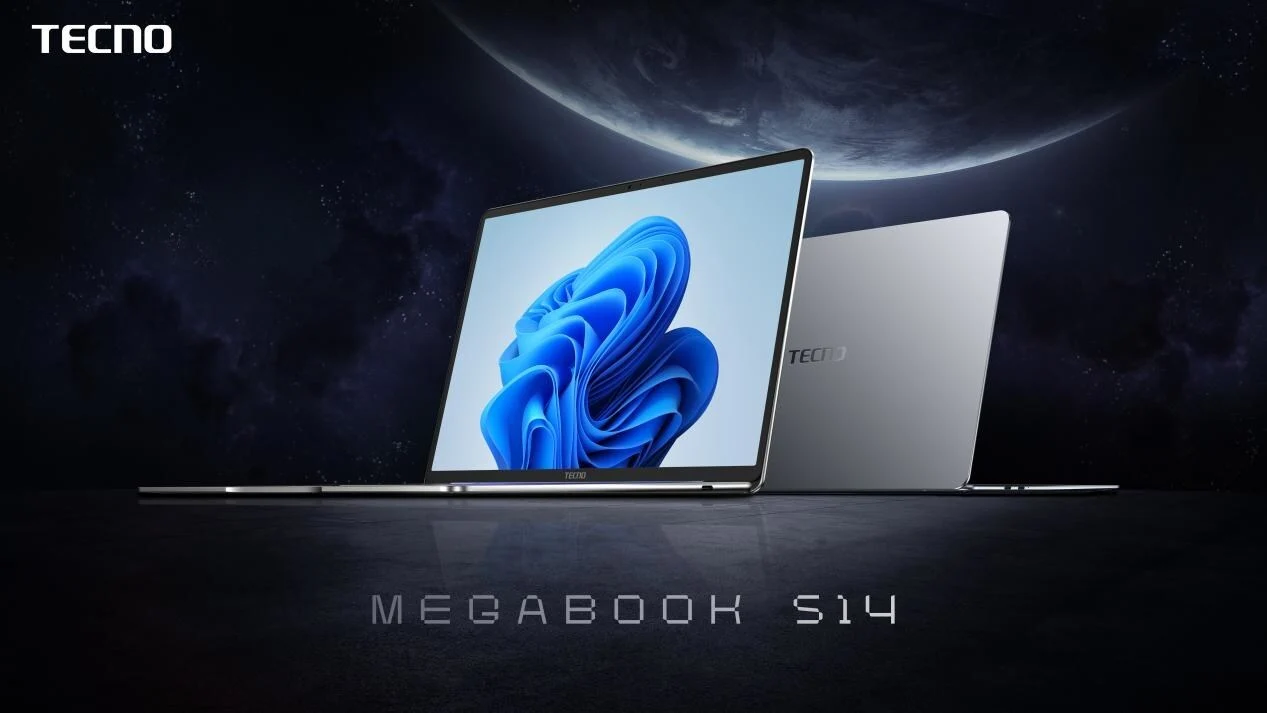
    The MegaBook S14 has been launched in Barcelona as the new Tecno AI PC. Similar to its Asus Vivobook counterpart, which is currently priced at $899.99 on Amazon, it features an OLED screen with a superior 2.8K resolution and a swift 120Hz refresh rate.

    Lightweight Yet Powerful

    Tecno claims that the S14 is the lightest in its class, weighing just 899 grams (or 1.98 pounds), while still including a backlit keyboard, dual (2W) DTS:X Ultra speakers, and a battery that can last for up to 16 hours daily.

    Advanced Features for Easy Use

    The MegaBook S14 is also equipped with a fingerprint scanner, Wi-Fi 6E, and offers “seamless” connectivity with Tecno smartphones, which could make sharing and organizing photos much more efficient.

    New GPU for Enhanced Performance

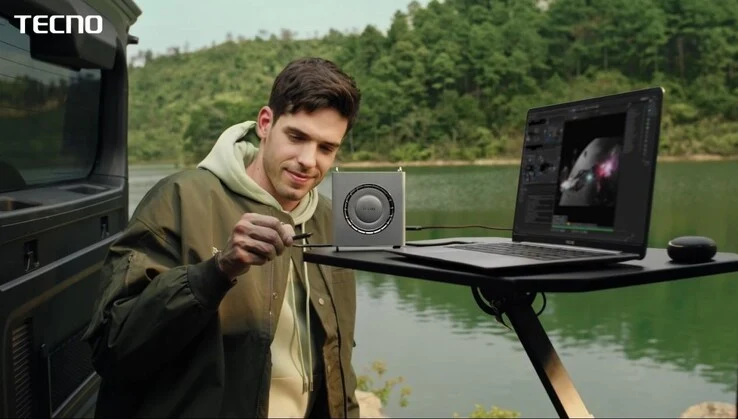
    Additionally, Tecno has introduced an external GPU that seems to be made to complement the S14, aiming for improved productivity and “3A” gaming on this compact laptop.

    However, the company was somewhat unclear about the specifics of the “NVIDIA graphics” included, and it’s been mentioned that the Dock will only work with a forthcoming second version of the laptop that will feature Intel Arrow Lake technology.

    Source:
    Link


  • Elista Launches New High-Performance SATA and M.2 NVMe SSDs

    Elista Launches New High-Performance SATA and M.2 NVMe SSDs

    Key Takeaways

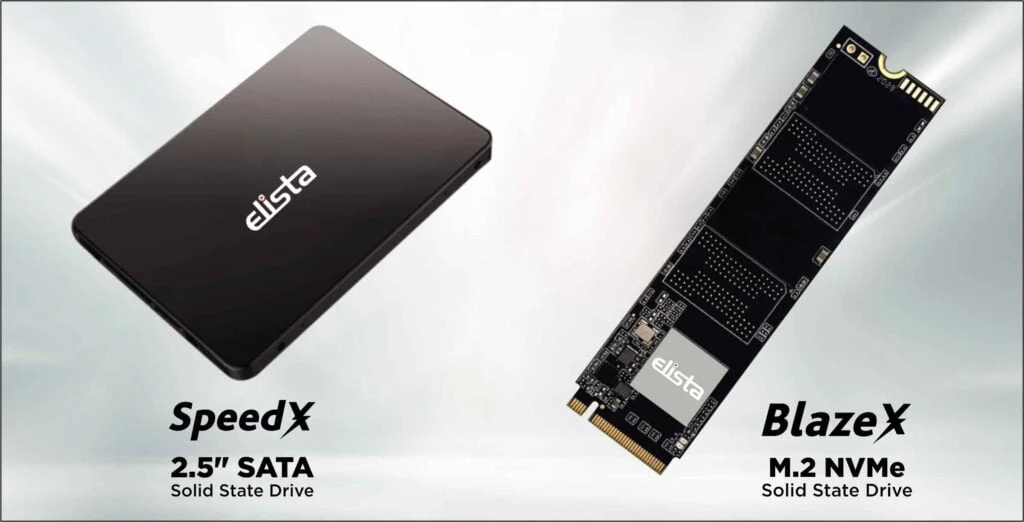
    1. Elista has launched two new SSDs in India: ELS SATA 2.5” and ELS PCIe M.2 NVMe.
    2. The ELS SATA 2.5” SSD uses 3D NAND technology for reliable and energy-efficient performance.
    3. The ELS PCIe M.2 NVMe SSD offers faster speeds with a PCIe Gen 3.0×4 interface and low power consumption.
    4. Elista’s Chairman emphasizes the importance of fast and dependable storage for work, gaming, and content creation.
    5. Both SSD models come with a 5-year warranty and will be available through authorized retail partners in India.


    Elista has recently introduced two new SSDs to the Indian market. The brand aims to deliver rapid speeds and reliable storage solutions, specifically designed for modern users who require them for gaming or professional tasks. Here’s everything you should know.

    Elista ELS SATA 2.5” and ELS PCIe M.2 NVMe SSDs

    The company has launched the Elista ELS SATA 2.5” and ELS PCIe M.2 NVMe SSDs. Elista is recognized for a range of consumer electronics, including smart TVs, air conditioners, and washing machines. Now, they are focusing on the PC market with these new SSD offerings. The ELS SATA 2.5″ SSD utilizes 3D NAND technology, ensuring reliable and energy-efficient performance. On the other hand, the ELS PCIe M.2 NVMe SSD is a quicker option that employs a PCIe Gen 3.0×4 interface along with an advanced SMI controller. It also features a low power consumption design, making it ideal for video editing, gaming, and high-performance computing.

    Insight from Elista’s Leadership

    Saket Gaurav, the Chairman and Managing Director of Elista, states, “Whether for work, gaming, or content creation, faster and more dependable storage is essential. At Elista, we are dedicated to providing advanced technology that enhances user experiences. Our latest SSD range is crafted to deliver exceptional performance, energy efficiency, and reliability—empowering customers with top-tier storage solutions at reasonable prices. With this launch, we aim to close the gap between affordability and high-performance, reinforcing our brand’s commitment to meeting the changing digital lifestyle of tech-savvy consumers in India.”

    Availability and Warranty

    Elista is preparing to launch the ELS SATA SSD and ELS PCIe NVMe SSD in India through its authorized retail partners. Both models include a 5-year warranty, ensuring long-lasting reliability. This launch also signifies Elista’s growth in the technology sector.

    For additional updates, make sure to check out our News Section.
    Stay up-to-date with the latest in tech! Join our Telegram community and subscribe to our daily newsletter featuring top stories!

    Source:


  • New Mac Studio with M3 Ultra Set to Launch with M4 MacBook Air

    New Mac Studio with M3 Ultra Set to Launch with M4 MacBook Air

    Key Takeaways

    1. Apple quietly launched the M3 iPad Air and 11th generation iPad, featuring double the base storage and an upgraded A16 chip.
    2. A new MacBook Air is expected to be released soon, alongside a new Mac Studio.
    3. The upcoming Mac Studio will use an M3 Ultra chip instead of the anticipated M4 Ultra chip, which is likely reserved for a future Mac Pro.
    4. The M3 Ultra chip is expected to provide significant performance advantages over competitors, particularly against AMD’s Ryzen AI Max 395 Plus.
    5. Mark Gurman provided insights on the competitive landscape and performance expectations of the new Apple products.


    Apple caught everyone off guard with a quiet launch of the M3 iPad Air and the 11th generation iPad yesterday. Both devices are seen as mid-cycle updates, with the iPad offering double the base storage and an upgraded A16 chip. Additionally, a new MacBook Air is expected to release this week, but there’s word of a surprise addition to the lineup.

    New Mac Studio on the Horizon

    Mark Gurman has revealed that the M4 MacBook Air is set to launch alongside a new Mac Studio. It’s been a while since we’ve seen a Mac Studio, last featuring a two-generations-old M2 Ultra chip. This sparks an interesting question: which chip will the upcoming Mac Studio be equipped with?

    Speculations on Chip Performance

    Logic would suggest that the new model might use an M4 chip, but that’s not the case. Gurman mentions that it will actually utilize an Apple M3 Ultra instead of an M4 Ultra. He notes that the M4 Ultra is likely saved for a future Mac Pro. Still, the M3 Ultra should deliver more than sufficient power for a device of the Mac Studio’s caliber. Apple generally does not mix and match chips within a single generation, but the Ultra chip stands apart.

    Apple is already significantly ahead of its rivals this generation, and the M3 Ultra will only enhance that advantage. Its nearest competitor, AMD’s Strix Halo-based Ryzen AI Max 395 Plus, may compete well with the M3 Max, but the dynamics could change when comparing it to the M3 Ultra.

    Insights from Mark Gurman

    Mark Gurman shared these insights on X, highlighting the competitive landscape and the potential performance of the new products.

    Source:
    Link

  • Intel Panther Lake Notebooks Delayed Until 2026

    Intel Panther Lake Notebooks Delayed Until 2026

    Key Takeaways

    1. Intel’s Panther Lake mobile system-on-chips (SoCs) release has been delayed until 2026 due to performance issues with the 18A semiconductor manufacturing process.
    2. Analyst Ming-Chi Kuo reports that mass production for Panther Lake has shifted from early September 2025 to late 2025.
    3. The delay could negatively impact Intel’s revenue, profits, and trust within the supply chain in the second half of 2025.
    4. The 18A manufacturing method uses RibbonFET transistors and PowerVia technology, but performance yields have been disappointing.
    5. Intel aims to compete with TSMC’s 2N process, but current results have not met expectations.


    A recent report from a well-known analyst indicates that the release of Intel’s Panther Lake mobile system-on-chips (SoCs) has been delayed until 2026. The delay is attributed to the underwhelming performance of Intel’s 18A semiconductor manufacturing process, which incorporates RibbonFET transistors and PowerVia technology. Panther Lake is expected to be the next advancement in Team Blue’s line of notebook and mobile processors, promising major performance enhancements over the existing Meteor Lake processors.

    Analyst Insights on Production Delays

    Market analyst Ming-Chi Kuo, who is recognized for his insights into Apple’s manufacturing supply chain, has provided new information from his latest review of Electronics Manufacturing Service (EMS), Original Design Manufacturing (ODM), and several brands. According to him, the mass production schedule for Intel’s Panther Lake (PTL) series has shifted from early September 2025 to the middle of the fourth quarter of 2025. Consequently, devices and notebooks powered by these Panther Lake chips might not reach consumers until 2026.

    Impact on Intel’s Revenue and Trust

    Initially, Intel had planned for production to begin in the second half of 2025, meaning this delay still falls within that timeframe. However, the inability to launch new products utilizing this new hardware could negatively affect Intel’s revenue, profits, and overall trust within the supply chain for the second half of 2025, as noted by the analyst.

    Intel is facing delays in the production of PTL chips largely due to disappointing performance yields from its 18A manufacturing method. This method employs RibbonFET technology, a Gate-all-around (GAA) transistor that aims to enhance both density and performance. It also incorporates PowerVia, which is a backside-power delivery structure designed to boost cell utilization by 5 to 10% and improve ISO-power performance by as much as 4%, as stated by Intel. With this approach, Intel hopes to rival TSMC’s 2N process, but so far, the results have not met expectations, at least for the time being.

    Source:
    Link

  • Encouraging Local Use of Open-Source RISC-V Chips in China

    Encouraging Local Use of Open-Source RISC-V Chips in China

    Key Takeaways

    1. The XiangShan project, initiated by China’s Academy of Sciences, aims to launch an open-source chip by the end of 2023.
    2. Chinese officials are developing policy guidance to promote the use of RISC-V chips, with documentation being worked on by eight government agencies.
    3. Major Chinese companies are increasingly adopting RISC-V architecture due to its cost-effectiveness and geopolitical neutrality.
    4. The chip market is dominated by American companies like Intel and AMD, which use proprietary technologies.
    5. The largest providers of RISC-V intellectual property in China include Alibaba-owned XuanTie and Nuclei System Technology, with growing demand expected for these chips.


    Back in 2019, the XiangShan project was started by China’s Academy of Sciences, aiming to introduce an open-source chip of the same name by the end of this year. A recent update has shown consistent progress, and insiders who know about local laws have reported that Chinese officials are developing policy guidance to promote the usage of RISC-V chips. Although many specifics are still vague, it appears that the draft could be wrapped up this month.

    Policy Development Details

    As reported by Reuters, two unnamed sources discussed the topic, revealing that eight government agencies are currently working on the documentation. These agencies include the Cyberspace Administration, the Ministry of Industry and Information Technology, the Ministry of Science and Technology, along with the National Intellectual Property Administration. Unfortunately, these four departments have not provided any comments about the ongoing policy discussions, but we will continue monitoring this situation closely.

    Industry Context

    The chip market is mainly controlled by American firms like Intel and AMD, both using proprietary technologies. In contrast, the open-source RISC-V chips have a geopolitically neutral stance. Furthermore, Chinese businesses have been increasingly focusing on this architecture due to its cost-effectiveness. The largest for-profit providers of RISC-V intellectual property in China are Alibaba-owned XuanTie and a startup named Nuclei System Technology. Because RISC-V chips generally require less computing power compared to alternative solutions, applications based on DeepSeek could drive higher demand for these chips both in China and internationally.

    Source:
    Link

  • Minisforum BD790i: Mobile AMD X3D Chips for Desktop Use

    Minisforum BD790i: Mobile AMD X3D Chips for Desktop Use

    Key Takeaways

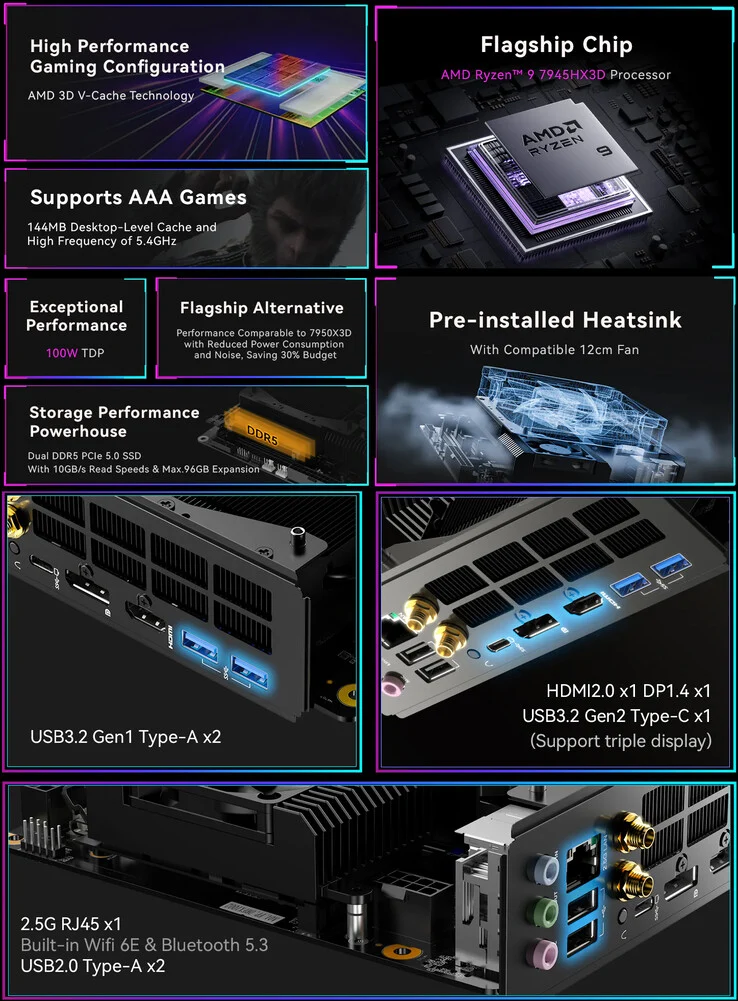
    1. Mobile AMD X3D APU: The BD790i X3D features the Ryzen 9 7945HX3D, a powerful mobile processor optimized for desktop use.

    2. Unique Cooling Solution: Unlike typical mini PC motherboards, it has a robust heatsink and supports a 12 cm active fan for improved cooling.

    3. Enhanced Thermal Management: The motherboard effectively manages heat with dedicated cooling for VRM, memory slots, and M.2 SSDs, making it suitable for NAS setups.

    4. Robust Expansion Options: It includes a full-sized PCIe 5.0 x16 slot for a discrete GPU, along with various connectivity options like HDMI 2.1, DisplayPort 1.4, and USB 3.2.

    5. Pre-order and Pricing: The BD790i X3D is available for pre-order at $599, with a $50 discount, and is expected to ship by mid-March.


    The Minisforum MoDT lineup has welcomed a fresh member: the BD790i X3D. As the name suggests, this model brings the mobile AMD X3D APU into the desktop realm, starting with the Ryzen 9 7945HX3D. If you’re not already acquainted with this platform, it’s essentially a desktop board that utilizes mobile processors.

    Unique Cooling Solution

    In contrast to standard mobile motherboards commonly found in mini PCs or laptops, the MoDT range from Minisforum does not come with a built-in heat spreader. Instead, they have combined the mobile chip with a more robust heatsink. The cooling arrangement on the new BD790i X3D even supports a 12 cm active fan, although it remains unclear if third-party coolers can also work with the motherboard.

    Enhanced Thermal Management

    The cooler that comes installed is also responsible for managing the heat produced by the VRM and memory slots. Moreover, there’s a dedicated fan and heatsink for the two M.2 slots, which makes this motherboard a great choice for a NAS setup that can truly benefit from PCIe 5.0 SSDs.

    The Ryzen 9 7945HX3D, which is soldered onto the board, ranks among the quickest mobile gaming processors currently on the market, thanks to its 3D V-Cache technology. It also includes the Radeon 610M, but since this RDNA 2 integrated GPU only has 2 compute units, it is best suited for basic rendering tasks.

    Robust Expansion Options

    On the plus side, the Minsiforum BD790i X3D features a full-sized PCIe 5.0 x16 slot that allows users to add a discrete GPU for enhanced gaming performance (PowerColor Fighter AMD Radeon RX 7600 currently priced at $249.99 on Amazon). The motherboard also boasts a solid variety of connectivity options, including one HDMI 2.1, one DisplayPort 1.4, one USB 3.2 Gen 2 Type-C, one 2.5G Ethernet, and two USB 3.2 Gen1 Type-A ports. For wireless features, it includes built-in Bluetooth 5.3 and WiFi 6E.

    Minisforum has started accepting pre-orders for the new BD790i X3D motherboard, with introductory pricing set at $599, which offers a $50 discount off the standard price. The pre-ordered products are anticipated to begin shipping in the middle of March.

    Source:
    Link


  • Raspberry Pi Compute Module 4: New Durable Upgrades Available

    Raspberry Pi Compute Module 4: New Durable Upgrades Available

    Key Takeaways

    1. The Raspberry Pi Compute Module 4 is popular in both consumer and industrial sectors, with various real-world applications showcased on the Raspberry Pi website.
    2. The newly released extended temperature range version operates from -40°C to +85°C, addressing challenges in outdoor and demanding industrial environments.
    3. Upgraded components, including SDRAM and eMMC from Samsung, enhance the performance of the extended temperature range Compute Module 4.
    4. Pricing for the extended temperature range module starts at $50, higher than the $30 standard module, with options reaching up to $80 for maximum specifications.
    5. The new Compute Module 4 is designed for specialized applications, offering innovative solutions for makers and developers.


    Since it was introduced, the Raspberry Pi Compute Module 4 has emerged as a powerhouse in the single-board computer (SBC) market, utilized in both consumer and industrial sectors. The Raspberry Pi website is filled with user stories showcasing how this SBC has integrated into various applications, such as being part of an industrial computer with Revolution Pi, an energy management system through EpiSensor, or even functioning as a point-of-sale solution with KwickPOS. Nevertheless, certain projects may struggle to conform to the current operating temperature range of -20°C (-4°F) to +85°C (185°F), particularly when deployed outdoors or in demanding industrial environments. Thankfully, the newly released extended temperature range Compute Module 4 addresses this concern.

    New Temperature Range

    The extended temperature range Compute Module 4 offers a broader operational range of -40°C (-40°F) to +85°C (185°F), designed specifically to satisfy the needs of the expanding industrial applications for the SBC. Alongside ruggedized onboard components, this new Compute Module 4 incorporates upgraded SDRAM and eMMC components from Samsung that fulfill the enhanced temperature requirements of the SBC. However, it’s important to note that this new offering comes with a higher price and minimum order stipulations.

    Pricing Details

    At present, the base model of the extended temperature range Compute Module 4 is priced at $50 compared to the $30 for the standard temperature range module. Both versions include 1 GB of RAM but lack wireless networking or eMMC storage. If you want to max out the specifications of the new Compute Module 4, it will cost you $80, as opposed to $65 for the standard version, providing 4 GB of RAM, wireless connectivity, and 16 GB of eMMC storage. Notably, the standard temperature range modules have a few higher-spec options that are not yet available for the new model.

    Unique Applications

    Although the new Compute Module 4 is somewhat specialized, it is bound to find its niche in various innovative applications. Interested makers can discover additional information regarding the new Compute Module 4 and options for purchasing in the resources provided below.

    Source:
    Link

  • Beelink Launches ME Mini PC Series for NAS Market

    Beelink Launches ME Mini PC Series for NAS Market

    Key Takeaways

    1. Beelink is entering the NAS market with the new ME series, starting with the ME mini NAS system.
    2. The ME mini features a compact design, measuring 99×99.2×98.3 mm, and includes an integrated power supply for easy setup.
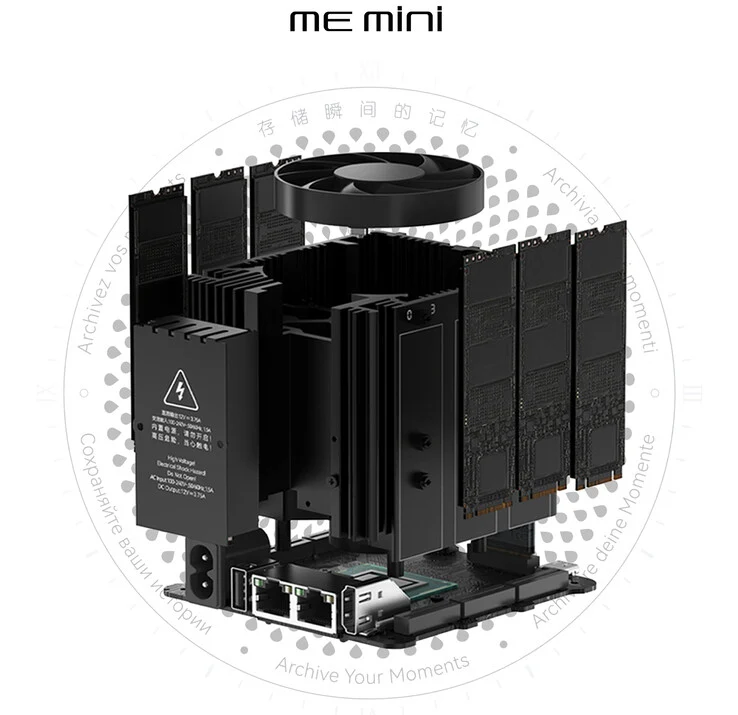
    3. It offers six M.2 slots for SSDs, allowing a maximum storage capacity of 24 TB.
    4. The NAS will use an x86 CPU and includes two 2.5 GbE LAN ports along with an efficient cooling system.
    5. No pricing or release date has been announced, and additional Pro and Max models are mentioned without further details.


    Beelink has revealed a new product series called the ME series. This signifies the company’s foray into the NAS market, and the ME mini is set to be one of the initial NAS systems launched within this new mini PC range. Not much information has been provided regarding this first product in the series.

    Compact Design

    In their official announcement, Beelink highlighted that the ME mini will have a compact size, measuring 99×99.2×98.3 mm. Despite its small dimensions, this NAS system will come equipped with an integrated power supply, allowing users to power the device using just a single cable.

    Storage Capacity

    Naturally, the petite size means the ME mini won’t accommodate a 3.5-inch drive, which is common in many NAS systems. Nevertheless, it features six M.2 slots, each capable of housing a 4 TB SSD (currently, a 2 TB Samsung 990 EVO Plus costs $129.99 on Amazon). This configuration allows the system to offer a maximum storage capacity of 24 TB.

    The exact processor that will be used in the NAS hasn’t been disclosed, but Beelink confirmed it will be an x86 CPU. Furthermore, the announcement included information about two 2.5 GbE LAN ports and an efficient cooling system designed to maintain optimal temperatures for the internal storage drives.

    Pricing and Availability

    There is currently no information regarding the pricing, and Beelink has not revealed when the ME mini will be released. The announcement also refers to a Pro and Max model, but it does not provide further details about these variants.

    Source:
    Link


  • Zen 6 Medusa Halo iGPU: 20% More CUs, 50% Wider Bus

    Zen 6 Medusa Halo iGPU: 20% More CUs, 50% Wider Bus

    Key Takeaways

    1. The Ryzen AI Max+ 395 in the Strix Halo APU features 16 Zen 5 cores and the powerful Radeon 8060S iGPU, making it the fastest x86 iGPU available today.
    2. AMD plans to release the Zen 6-based Medusa Halo APU next year, which is expected to offer significant CPU and GPU performance improvements.
    3. Medusa Halo may include up to 24 Zen 6 cores and a 50% increase in CPU performance compared to Strix Halo.
    4. The iGPU in Medusa Halo is expected to have 48 Compute Units (CUs) and a 384-bit wide bus, potentially improving performance by 30% to 50%.
    5. While exciting, the information about Zen 6 products is still speculative and should be treated with caution until more details are confirmed.


    After a lot of waiting, the first reviews of AMD’s Strix Halo came out last month. The Ryzen AI Max+ 395, which is the quickest Strix Halo APU, really impressed us with its excellent CPU abilities, featuring 16 Zen 5 cores, and the super-fast iGPU performance powered by a 40 CU Radeon 8060S. In fact, the Radeon 8060S is the fastest x86 iGPU available today and can compete with an RTX 4070 laptop GPU that has a TDP of 65-75 W.

    Performance Highlights

    So, Strix Halo is a clear victory when it comes to pure performance. Nonetheless, AMD looks to be preparing to surpass Strix Halo next year with their Zen 6-based Medusa Halo, an APU that promises to deliver extraordinary boosts in both CPU and GPU performance.

    According to Moore’s Law Is Dead, AMD is set to release the Medusa Halo APU next year featuring up to 24 Zen 6 cores thanks to two 12-core CCDs. We previously mentioned that AMD plans to use this 12-core CCD in both desktop and mobile processors. This means that the desktop Zen 6 Medusa Ridge, mobile Medusa Point, and workstation Medusa Halo will utilize either a single or multiple 12-core CCDs.

    Upcoming Enhancements

    With a 24-core Zen 6 CPU, MLID anticipates that Medusa Halo will achieve up to 50% better CPU performance compared to Strix Halo.

    What’s even more exciting is the news about Medusa Halo’s UDNA iGPU. MLID has reported that AMD will be increasing the Compute Units (CUs) from 40 to 48, which is a 20% increase. Some Medusa Halo SKUs might also feature a 384-bit wide bus, making it 50% wider than the 256-bit bus on Strix Halo. This increase in CU count and additional bandwidth should lead to a significant improvement in iGPU performance; MLID predicts the uplift could be between 30% to 50%.

    Performance Comparisons

    To give some context to this iGPU performance, a 30% increase on top of the Radeon 8060S would mean the Medusa Halo’s iGPU could match the desktop RTX 4060 Ti. If it reaches a 50% increase, Medusa Halo would easily surpass the desktop RTX 3070 Ti, based on our 3DMark Time Spy Graphics results.

    That being said, it’s still too early to make any definite claims about the specs and performance of the Zen 6 products. So, while the information from MLID is thrilling, it’s wise to take this leak with a grain of salt.

    Source:
    Link