Category: Computers

  • Ubiquiti U7 Pro XG & XGS: New Tri-Band WiFi 7 Access Points

    Ubiquiti U7 Pro XG & XGS: New Tri-Band WiFi 7 Access Points

    Key Takeaways

    1. Ubiquiti launched WiFi 7 access points: U7 Pro XG and U7 Pro XGS, with the XGS featuring enhanced capabilities like interference detection and “Zero Wait DFS.”
    2. The XGS has a 4×4 antenna setup for the 5GHz band, allowing a maximum bandwidth of 8.6Gbps, while the XG has a 2×2 setup with a maximum of 4.3Gbps.
    3. Pricing for the U7 Pro XG and XGS models is $199 and $299 respectively, while the new dual-band U7 Lite is priced at $99.
    4. The XG supports up to 300 clients, while the XGS can connect up to 500 clients, with both supporting the 6GHz frequency band.
    5. The new models feature multi-gigabit ports (5GbE and 10GbE) and require at least 22 watts of Power over Ethernet during peak usage.


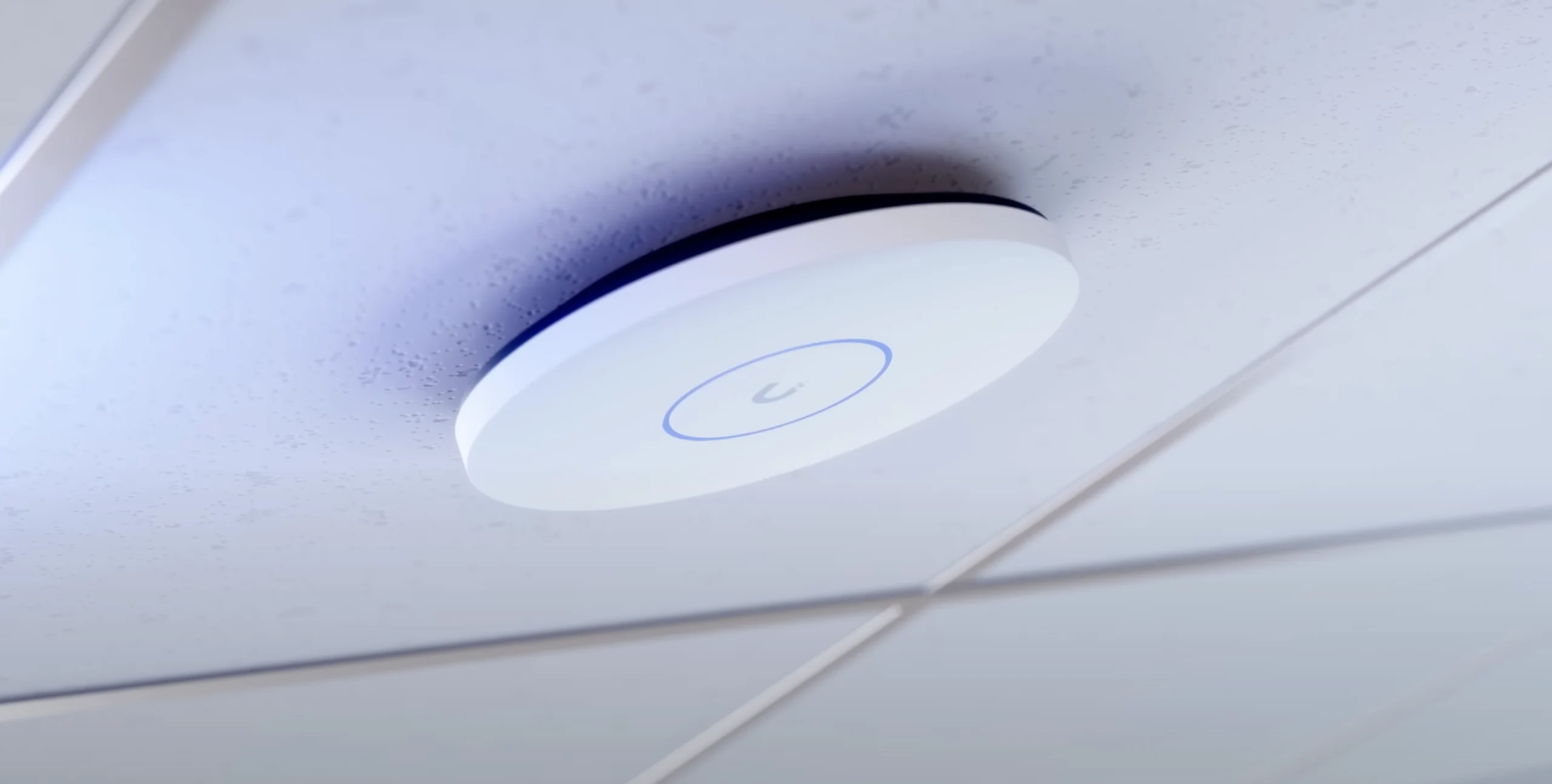
    Ubiquiti has launched its latest WiFi 7 access points, called the U7 Pro XG and U7 Pro XGS. Both models are 802.11be access points, although the XGS has some enhanced features. For example, it includes a special radio to detect interferences. Additionally, it boasts a “Zero Wait DFS” function, allowing it to quickly restart after radar detection.

    Enhanced Connectivity

    The XGS Access Point comes with a 4×4 antenna setup for the 5GHz band. This configuration allows it to connect to more devices than the XG, which has a 2×2 setup. The theoretical maximum bandwidth for the XGS is 8.6Gbps, while the XG can reach up to half of that. These specifications are based on a 240MHz wide channel.

    Pricing and Client Capacity

    In addition to the U7 Pro XG(S) models, Ubiquiti is also offering the new dual-band U7 Lite, which is priced at only $99. However, the prices for the XG and XGS models are considerably higher, at $199 and $299 respectively. The number of clients that can be connected has also increased, allowing for 300 clients on the XG and up to 500 on the XGS. Both models support the 6GHz frequency band, a feature introduced with WiFi 6E but optional in WiFi 7.

    Future of Older Models

    It remains uncertain whether these new access points will replace the existing U7 Pro and U7 Pro Max models. Currently, both older models are sold out in Ubiquiti’s official online store. The technical specs of both the Pro and XG, along with the Pro Max and XGS, are quite similar. However, the new XG(S) models come with multi-gigabit ports, offering 5GbE and 10GbE options, while the older versions only provided 2.5GbE.

    Lastly, these new Access Points utilize Power over Ethernet and need at least 22 watts or more during peak usage. Ubiquiti has already made these new access points available in its official store, including a sleek black color option, which previously required separate black covers.

    Source:
    Link


  • Apple M3 Ultra Beats Nvidia RTX 5070 Ti but Lags Behind RTX 5080

    Apple M3 Ultra Beats Nvidia RTX 5070 Ti but Lags Behind RTX 5080

    Key Takeaways

    1. The M3 Ultra features a 32-core CPU with 24 high-performance cores and an 80-core GPU, making it the fastest chip ever in a Mac.

    2. The M3 Ultra excels in GPU performance, achieving 374 FPS in the GFXBench 4K Aztec Ruins test, nearly doubling the M3 Max’s score.

    3. In the Cinebench 2024 GPU test, the M3 Ultra scored around 20,000 points, outperforming the AMD Radeon RX 7900 XTX by 25% and matching the Nvidia RTX 4070 Ti.

    4. While the M3 Ultra shows great potential, its single-threaded performance may not be as strong, and real-world use may vary across different tasks.

    5. The M3 Ultra’s efficiency and substantial VRAM capacity set it apart, with expectations for more detailed performance comparisons against competitors in the future.


    Apple has just introduced the M3 Ultra, which is, without a doubt, the fastest chip ever put into a Mac. It features an impressive 32-core CPU that includes 24 high-performance cores and an 80-core GPU. The M3 Ultra is expected to show stunning results in benchmarks, though its performance in single-threaded tasks might not be as remarkable. Recently, it appeared on Geekbench, but the results were a bit underwhelming. However, as more reviews are released, the M3 Ultra’s capabilities are becoming clearer.

    GPU Performance Takes Center Stage

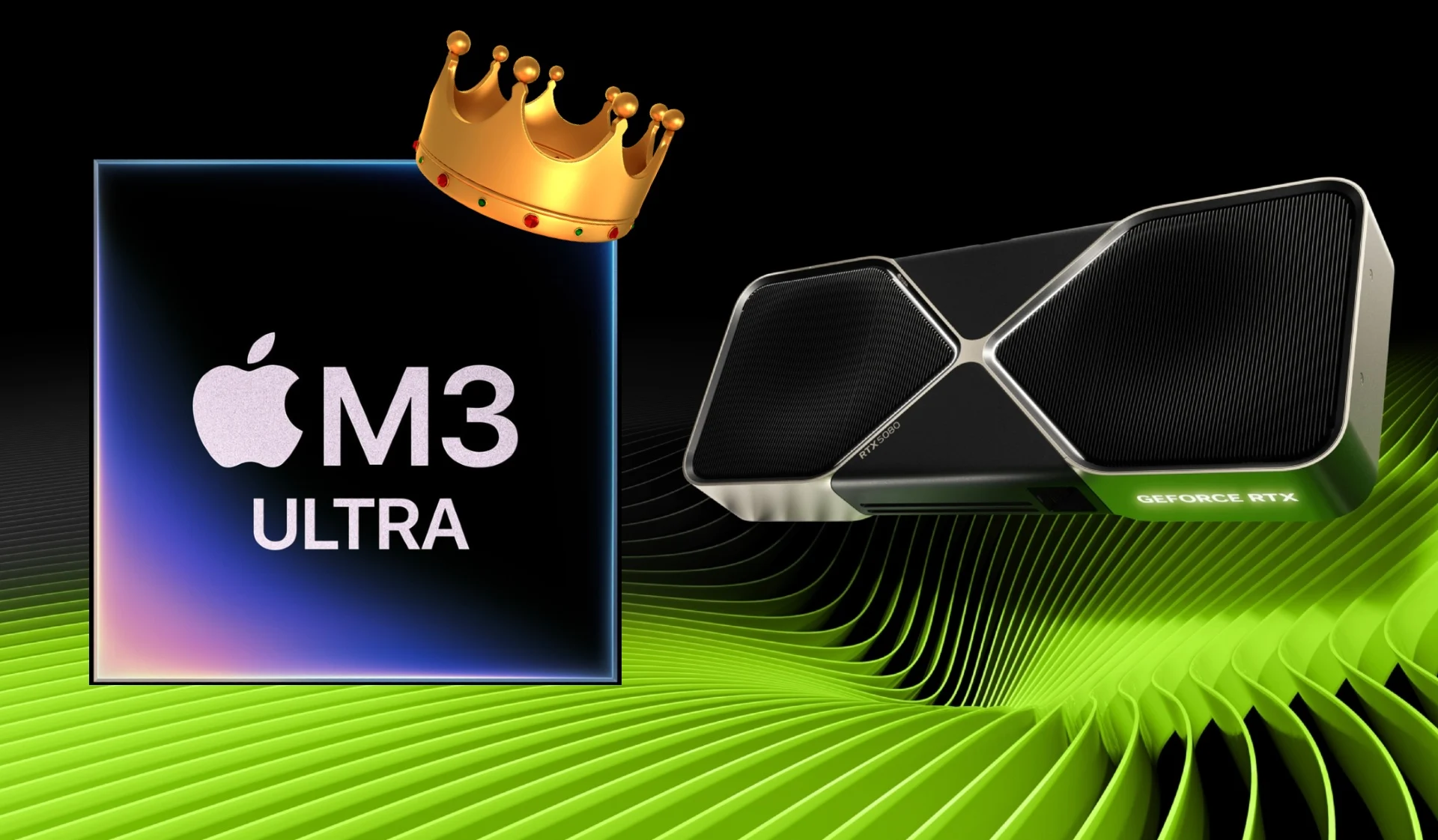
    According to a review by Dave2D and data from GFXBench, the M3 Ultra-powered Mac Studio excels in GPU tasks, which aligns with expectations since the M3 Max, which is the base for the Ultra, was a significant leap in GPU tech. In the GFXBench 4K Aztec Ruins (High Tier) test, the M3 Max scored about 200 FPS, while the M3 Ultra nearly doubled that, achieving an impressive 374 FPS. This performance puts the M3 Ultra (Metal) roughly 9% below the GeForce RTX 5080 (DirectX 12) and around 20% ahead of the RTX 5070 Ti, based on GFXBench’s findings. When compared to the M4 Max found in higher-end MacBook Pros, priced at $3,564 on Amazon, the M3 Ultra is approximately 63.6% faster.

    Cinebench Results Show Promise

    In the Cinebench 2024 GPU test, the M3 Ultra scored about ~20,000 points, as reported by The Verge. This figure puts it a staggering 25% ahead of the AMD Radeon RX 7900 XTX, which scores around ~16,000 points on the same benchmark. Interestingly, the M3 Ultra performs similarly to the Nvidia RTX 4070 Ti in this test. However, it’s worth noting that a handful of benchmark tests aren’t necessarily indicative of real-world use, especially given the variety of APIs in play.

    Furthermore, it’s likely that the M3 Ultra will excel in many tasks due to its specialized engines, although it may struggle in areas like 3D rendering when pitted against top-tier RTX cards. When it comes to efficiency and VRAM, the M3 Ultra stands out, especially since no consumer GPU gets close to delivering half a terabyte of reasonably fast VRAM. As time goes on, more practical performance comparisons between the M3 Ultra and its x86 rivals are expected, providing clearer insights for potential buyers.

    Source:
    Link

  • Orange Pi RV2: New RISC-V SBC with PCIe 2.0 and Gigabit Ethernet

    Orange Pi RV2: New RISC-V SBC with PCIe 2.0 and Gigabit Ethernet

    Key Takeaways

    1. Orange Pi has released the new Orange Pi RV2, a successor to the previous RV model.
    2. The RV2 features a new octa-core Ky X1 RISC-V chipset with an AI accelerator, improving performance.
    3. The board includes a second Gigabit Ethernet port and M.2 connectors for PCIe 2.0 x2 support.
    4. Pricing for the RV2 starts at $29.50 for the 2 GB version, with options for 4 GB and 8 GB at higher prices.
    5. Key ports on the RV2 include HDMI, USB Type-A, MIPI-CSI connectors, and a 26-pin expansion header.


    Orange Pi has had a rather subdued beginning to 2024, rolling out several single-board computers (SBCs) this year. Some of the announcements from 2024, like the RISC-V based Orange Pi RV, have yet to move into production.

    New Arrival

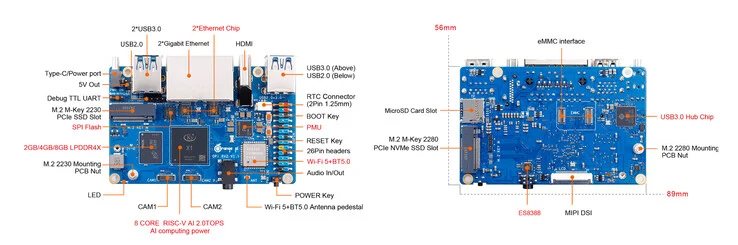
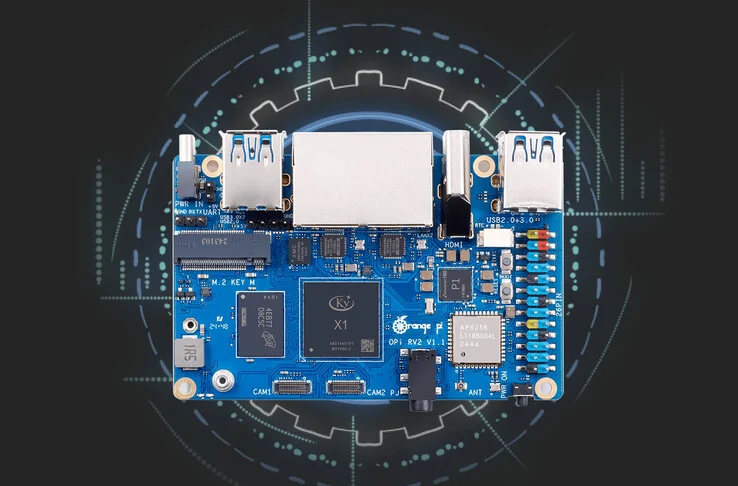
    However, the company has now launched a sort of successor that is already available worldwide. At first glance, the Orange Pi RV2 resembles last year’s Orange Pi RV quite a bit. Yet, this new SBC has a second Gigabit Ethernet port added to its compact 89 x 56 mm size, along with a couple of M.2 connectors that can support up to PCIe 2.0 x2.

    Key Features

    One of the most significant upgrades is the introduction of a new RISC-V chipset. To give some context, the original RV was announced with a quad-core StarFive JH7110. In comparison, the RV2 comes with an octa-core Ky X1 chipset, which boasts an AI accelerator capable of delivering up to 2 TOPS of theoretical performance.

    In addition, the RV2 is equipped with HDMI and USB Type-A ports, as well as MIPI-CSI connectors. Orange Pi has also added a 26-pin expansion header and a MicroSD card reader. Currently, you can order the Orange Pi RV2 for around $29.50 with 2 GB of LPDDR4X RAM on AliExpress; curiously, prices on Amazon are higher. There are also 4 GB and 8 GB versions available for $39.50 and $49.50, respectively. For more information, visit Orange Pi’s official site.

    Source:
    Link


  • Liquid-Cooled Laptop Chassis for Desktop Components on Kickstarter

    Key Takeaways

    1. UHPILCL is developing a liquid-cooled laptop similar to Acer’s Predator 21X, featuring advanced technology and a sleek design.
    2. The laptop can house high-performance desktop components, including a full ITX motherboard and powerful CPUs like the Ryzen 7 9800X3D and Intel Core Ultra 9 285K.
    3. It includes a unique cooling system using distilled water, allowing for easy maintenance and alternative power source compatibility.
    4. The laptop can support a dual-computer setup with a battery-powered laptop for backup, sharing peripherals, but can’t operate both systems simultaneously.
    5. Pricing and funding details for the UHPILCL laptop are not yet disclosed, raising some skepticism about its feasibility despite its innovative design.


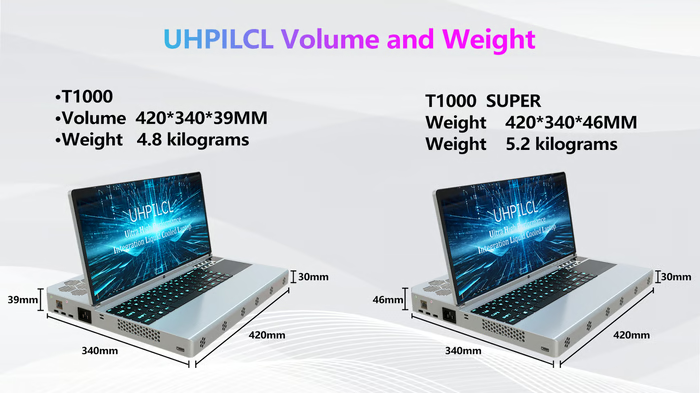
    Back in 2016, Acer introduced the Predator 21X, which featured a 21-inch display, a mechanical keyboard, a 7th-generation Intel desktop CPU, and dual GTX 1080 GPUs in SLI. With a hefty price of $9,000 and a weight of 9 kg, it didn’t really take off in the market, but that may have been Acer’s plan all along. Now, a company from Hong Kong called UHPILCL (Ultra High Performance Integration Liquid Cooled Laptop) is trying to create something similar using today’s tech. As the name suggests, this device packs a complete liquid cooling system into a chassis that is about 1.5 inches thick. There are two models available: the T1000, which weighs 4.8 kg, and the T1000 Super at 5.2 kg.

    Powerful Hardware Options

    Inside, you can install a full ITX motherboard with high-performance CPUs from Intel or AMD, like the Ryzen 7 9800X3D and the Core Ultra 9 285K. You can also integrate a full GeForce RTX 5090 dGPU that comes with 32 GB of VRAM, but this requires the T1000 Super version. Since the UHPILCL employs desktop components, it provides all the input/output and expansion capabilities that come with them.

    Portability and Features

    Naturally, the hardware and the cooling system do make it less portable, but the brand claims it is “easy to carry” in a bag designed for 17-inch laptops. The cooling system utilizes distilled water, meaning you can drain and refill it whenever needed. Moreover, if you ever forget the power cable, the manufacturer says you can use one from an electric kettle or microwave without any issues.

    Unique Dual-Computer Setup

    The UHPILCL has another interesting feature. It allows the inclusion of a battery-powered laptop for backup. Both machines can use the same keyboard, USB ports, storage, screen, and other peripherals. However, the exact method for this implementation is still unclear. This is an optional feature that must be added manually, and it’s important to note that both systems can’t operate at the same time due to compatibility reasons.

    At this stage, the company hasn’t disclosed any pricing details or funding targets on its Kickstarter page. It’s reasonable to be doubtful since this concept does seem a bit too good to be true. However, if it succeeds, it will likely be one of the most innovative laptop designs we’ve seen in recent times, especially as manufacturers are trying hard to reduce the thickness of their devices by a couple of millimeters.

    Source:
    Link

  • X-Plus Piccolo: 8-Inch Convertible with Latest Intel CPU, 700g

    X-Plus Piccolo: 8-Inch Convertible with Latest Intel CPU, 700g

    Key Takeaways

    1. The Piccolo convertible costs $374.99, with an optional carrying bag for $15.
    2. It features an Intel N150 processor, 12 GB of RAM, and a 512 GB SSD, with future upgrade options available.
    3. The device has an 8-inch 360-degree rotating touchscreen with a resolution of 1,920 x 1,200.
    4. Battery life is approximately 6 hours, and it includes various connectivity options, including USB ports and WiFi.
    5. The Piccolo has a QWERTY keyboard layout and a fingerprint scanner integrated into the power button.


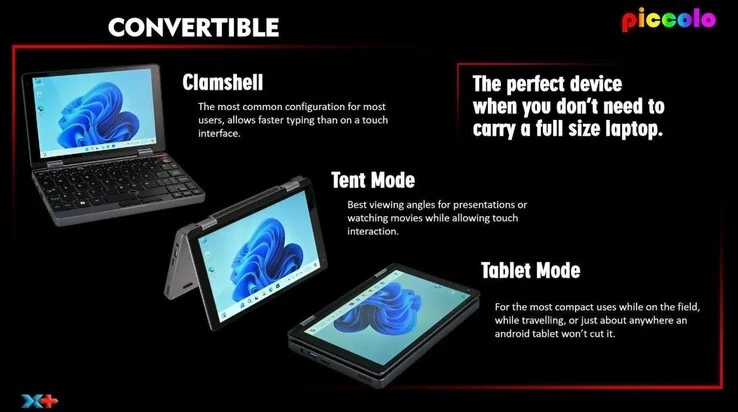
    Piccolo is a recent and notably small convertible that you can buy straight from the company, X-Plus, for the price of $374.99. If you want a carrying bag, you can get it for an extra $15. There are different shipping choices, with the least expensive option being free, but it takes the longest to arrive (18-30 days). You can opt for faster shipping for an extra fee.

    Performance and Specifications

    This convertible features an Intel N150 processor, which is modern, though not overly powerful, offering up to 3.6 GHz computing cores. In the future, users may also have the choice of upgrading to the Intel N200 or Intel i3-N300. The device has 12 GB of RAM and a 512-gigabyte SSD. The 8-inch touchscreen has a resolution of 1,920 x 1,200 and can rotate a complete 360 degrees, letting you use the Piccolo as a tablet. With dimensions of 200.6 x 130.6 x 17.9 millimeters, it is quite small and lightweight at 658 grams.

    Battery Life and Connectivity

    The 25.9 Wh battery is said to provide about 6 hours of usage. It comes with a WiFi 802.11 a/b/g/n/ac modem. For easy storage upgrades, there is a microSD card slot available. The device includes various ports, such as USB 3.0, USB 2.0, mini-HDMI, and a 3.5-millimeter jack. Additionally, it has a 2 MP webcam, and the power button also functions as a fingerprint scanner. Finally, the keyboard features a QWERTY layout, which might not work well for certain languages other than English.

    Source:
    Link


  • Nvidia RTX 6000 Pro Leaks Ahead of GTC 2025 Launch Rumors

    Nvidia RTX 6000 Pro Leaks Ahead of GTC 2025 Launch Rumors

    Key Takeaways

    1. Nvidia is expected to announce the GeForce RTX 5060 graphics cards soon, along with new workstation-grade models.
    2. The RTX 6000 Ada Generation has been in the market for over two years and is set to be replaced by new models based on the Blackwell architecture.
    3. The new workstation graphics cards will include the RTX Pro 6000 and RTX Pro 6000 X, with details on the latter still unclear.
    4. The RTX Pro 6000 will feature 24,064 CUDA cores, 752 Tensor cores, 188 RT cores, 96 GB of GDDR7 EEC VRAM, and a Total Graphics Power of 600 W.
    5. The anticipated launch for the RTX Pro 6000 Blackwell series is between March 17 and March 20 during GTC 2025 in San Jose.


    Nvidia is said to be announcing the GeForce RTX 5060 graphics cards soon. Recent leaks suggest that a new lineup of workstation-grade graphics cards might be coming as well. For some background, the RTX 6000 Ada Generation has been around for more than two years, having first launched in September 2022.

    New Graphics Cards on the Horizon

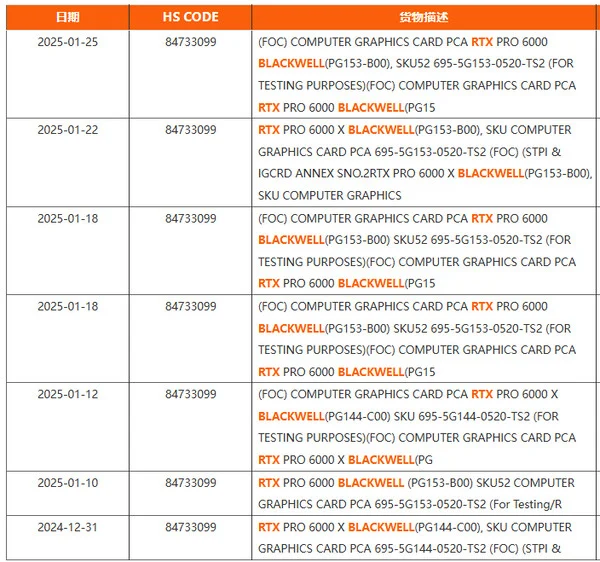
    Reports indicate that Nvidia is looking to replace the RTX 6000 Ada Generation with two new models based on the Blackwell architecture. One of these is expected to be called the RTX Pro 6000, while the other will be the RTX Pro 6000 X. Currently, details about the RTX Pro 6000 X remain unclear. However, shipping records show that it is being shipped alongside its non-X counterpart.

    Specifications Leaked

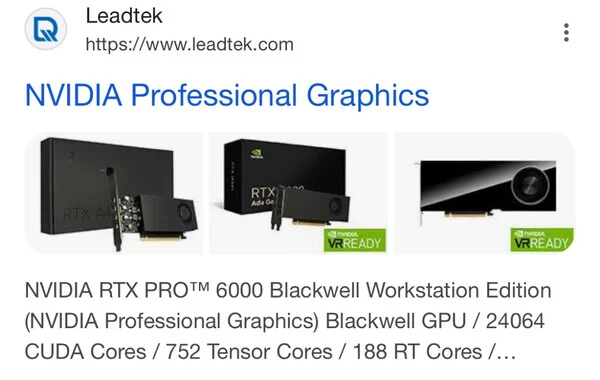
    On the other hand, Leadtek has revealed some specifications for the RTX Pro 6000, officially known as the RTX Pro 6000 Blackwell Workstation Edition. It is claimed that this card will come with a GPU featuring 24,064 CUDA cores, 752 Tensor cores, and 188 RT cores. In comparison, the GeForce RTX 5090 offers 21,760 CUDA cores, 680 Tensor cores, and 170 RT cores, which is currently priced at $4,990 on Amazon.

    Furthermore, Leadtek mentions that the RTX Pro 6000 will include 96 GB of GDDR7 EEC VRAM and have a Total Graphics Power (TGP) of 600 W. VideoCardz has also shared what appear to be images of this card, which are included above and below. The official launch for the RTX Pro 6000 Blackwell series is anticipated to take place between March 17 and March 20 during GTC 2025 in San Jose.


  • AMD Zen 6 CPUs Expected with Up to 96MB L3 Cache on Non-X3D Model

    AMD Zen 6 CPUs Expected with Up to 96MB L3 Cache on Non-X3D Model

    Key Takeaways

    1. The upcoming AMD Zen 6 processors may feature a high-end desktop variant with up to 24 CPU cores, surpassing the previous limit of 16 cores.
    2. AMD plans to increase the L3 cache per CCD to 48 MB, potentially resulting in up to 224 MB of L3 cache for a 24-core CPU with dual V-cache.
    3. A single CCD may house 16 Zen 6 cores, with configurations available for 32-core variants totaling 128 MB of L3 cache.
    4. Future laptop models might combine Zen 5 and Zen 6 CCDs, as suggested by the Strix Point development.
    5. The next-generation Epyc server processors are expected to benefit from the increased cache and new core configurations.


    Now that the AMD Zen 5 series is largely released, the whispers about the upcoming Zen 6 processors are becoming more common. Initially, it appears that the highest-end desktop variant (possibly named Ryzen 9 11,950X) will surpass the previous limit of 16 CPU cores. A previous leak hinted that this number might reach up to 24 cores. A recent report from Weibo provides further details on this topic.

    Increased Cache Capabilities

    AMD is set to boost the L3 cache per CCD to 48 MB. Therefore, a 24-core CPU utilizing 2 Zen 6 CCDs would feature a total of 96 MB of L3 cache. If a 64 MB 3D V-cache tile is added to one of the CCDs, this would result in 160 MB of L3 cache, and if both CCDs have one, that would be an impressive 224 MB. However, it’s still too early to make guesses about what the Zen 6 X3D will offer, though it would be a perfect opportunity to introduce a dual V-cache CPU for consumers.

    New Core Configurations

    Additionally, AMD intends to fit 16 Zen 6 cores within a single CCD, accompanied by 64 MB of L3 cache. There is a 32-core variant with 2 of these CCDs totaling 128 MB of L3 cache, though it remains unclear which lineup it belongs to. If Strix Point is indicative of future developments, some laptop models may feature a combination of Zen 5 and Zen 6 CCDs. Also, this configuration is expected to appear in the next-generation Epyc server processors, which will also gain from the increased cache.

    Source:
    Link


  • Compal Infinite: Concept Laptop Features 18-Inch Rollable Display

    Compal Infinite: Concept Laptop Features 18-Inch Rollable Display

    Key Takeaways

    1. Asus has updated the Zenbook Duo with dual OLED screens and Intel Arrow Lake processors, priced at $1,699.99.
    2. Lenovo introduced the ThinkBook Codename Flip at MWC 2025, featuring a foldable OLED display.
    3. Compal’s new concept laptop, the Infinite, boasts a rollable OLED screen that expands for an ultra-wide workspace.
    4. The Infinite’s design includes a rollout mechanism to minimize display creases and features LED notifications on the lid.
    5. The keyboard area of the Infinite resembles a standard 14-inch laptop, but its future beyond the concept phase is uncertain.


    In the past few years, businesses have started to embrace greater innovation in laptop designs. A notable example is Asus, which has kept developing the Zenbook Duo featuring two OLED screens and a removable keyboard. Recently, they’ve updated it with the latest Intel Arrow Lake processors, currently priced at $1,699.99 on Amazon. Lenovo also has a version similar to the Zenbook Duo, but they have introduced the exciting ThinkBook Codename Flip at MWC 2025, which has a foldable OLED display.

    A New Concept in Laptop Technology

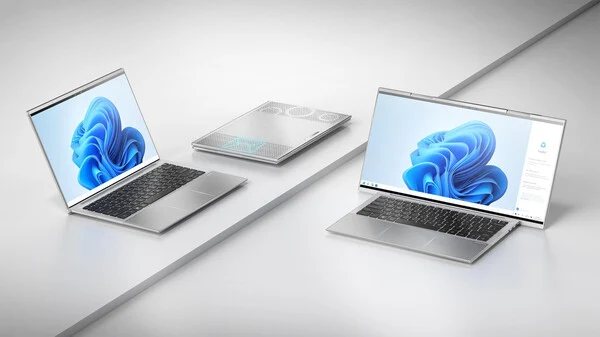
    Compal has unveiled a new concept laptop called the Infinite, which is unique because it uses a rollable OLED screen. The images below illustrate how this design can expand to the left or right when needed. This means that the Compal Infinite can offer an 18-inch ultra-wide workspace while still keeping the size of a typical 14-inch laptop when not in use.

    Features and Design

    The design includes a rollout mechanism that may help avoid the display crease that often appears in traditional foldable devices. Moreover, Compal has added a row of LEDs on the lid of the Infinite for notifications. On the other hand, the keyboard area resembles that of any standard 14-inch laptop, featuring a spacious trackpad and a 6-row chiclet-style keyboard. However, it’s still uncertain whether the Compal Infinite will progress beyond the concept phase anytime soon.

    Source:
    Link


  • Fake Ryzen 7 9800X3D Review: Received AMD FX 4100 Instead

    Fake Ryzen 7 9800X3D Review: Received AMD FX 4100 Instead

    Key Takeaways

    1. A counterfeit AMD Ryzen 7 9800X3D was delivered to a reviewer, disguised with a sticker, but was actually an outdated AMD FX 4100 CPU.
    2. The reviewer noticed significant differences in the CPU’s design compared to the genuine 9800X3D.
    3. The counterfeit product had a convincing sticker that misrepresented it as a Ryzen 7 9800X3D.
    4. The counterfeit CPU was purchased directly from Amazon, not a third-party seller, raising concerns about Amazon’s quality control.
    5. The reviewer has initiated a refund process and suggested that Amazon may need to investigate the situation with AMD.


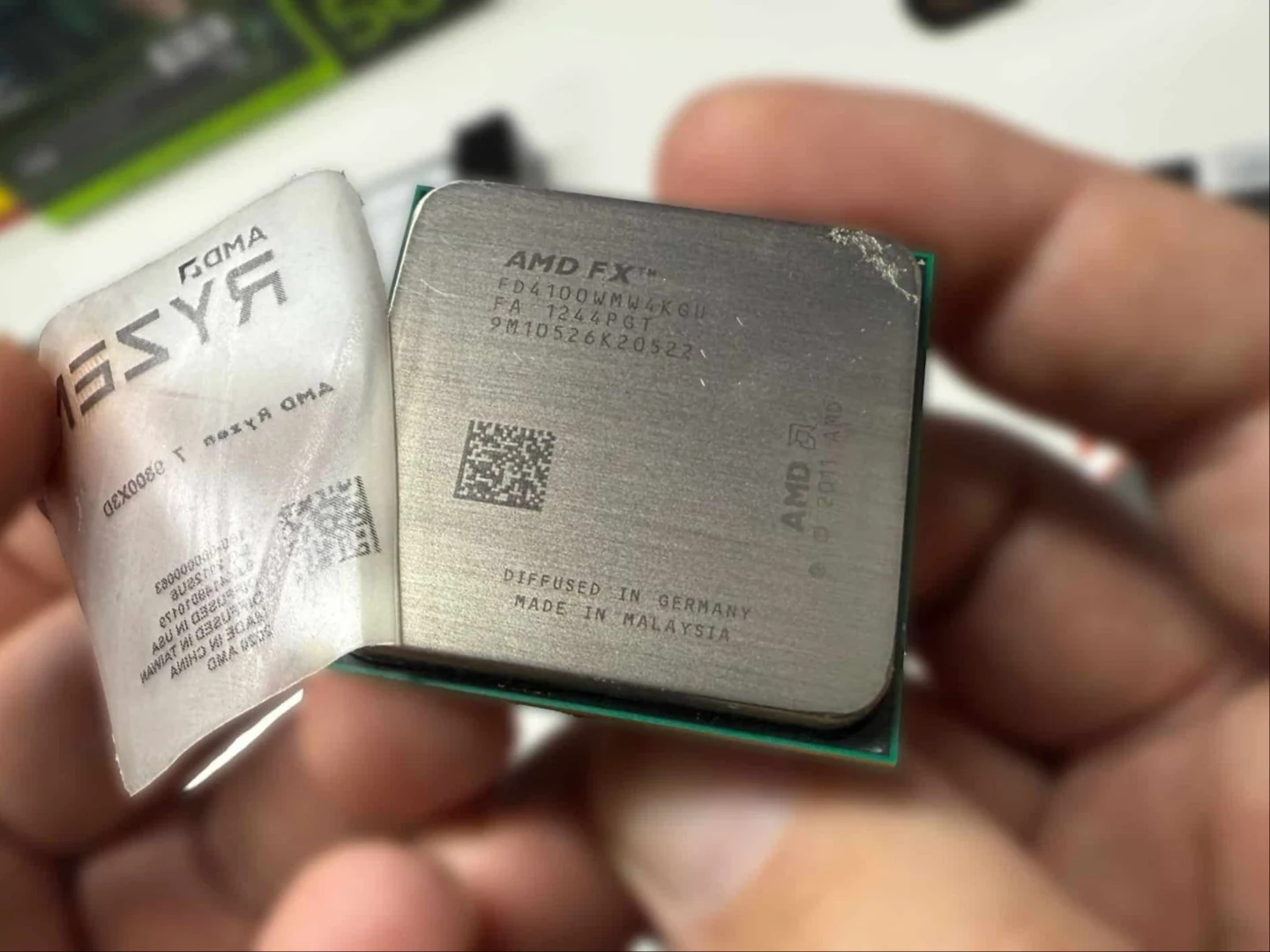
    The recent wave of PC hardware scams has brought to light a counterfeit AMD Ryzen 7 9800X3D that was delivered to a reviewer through Amazon.de. However, this item was far from being a genuine 9800X3D. A writer and reviewer from Hardware Busters recounted his experience with this AMD CPU, which turned out to be an outdated AMD FX CPU that had a sticker affixed to it. While counterfeit CPUs have been reported in the past, this particular scam appears to be a new variant, and Amazon may not bear full responsibility.

    Initial Impressions

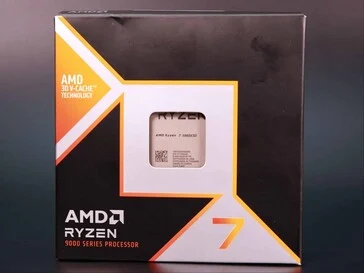
    The writer, cmaris from Hardware Busters, stated on their site that they ordered a Ryzen 7 9800X3D for their CPU testing system on February 25, and it arrived on March 4. When he opened the box on March 9, everything seemed normal, as the packaging appeared to be for the 9800X3D. However, he quickly noticed significant differences between the genuine 9800X3D and the product he received. Having previously owned a 9800X3D, he recognized the dissimilarities in the heatspreader, pins, and the underside of the CPU, which looked nothing like the authentic 9800X3D.

    Uncovering the Truth

    Upon closer examination, he discovered a sticker on top of the processor that, when removed, revealed it was actually a 2011 AMD FX 4100 CPU. The sticker claimed it was a Ryzen 7 9800X3D and included other official markings, making it appear convincingly real. While there have been instances where the integrated heat spreader (IHS) was swapped out, resulting in a faulty CPU, this seems to be an entirely new type of deception.

    Amazon’s Involvement

    Cmaris emphasized that the processor was not acquired from a third-party seller on Amazon but was directly from Amazon itself. Although the box was sealed, it’s possible it was returned by a previous customer who then placed the sticker on an older CPU to obtain a refund for the 9800X3D. If this is not the case, Amazon may need to contact AMD to investigate the situation. Cmaris has initiated the process for a refund.

    Source:
    Link


  • Banana Pi Unveils New SBC Compatible with Nvidia Jetson Nano

    Banana Pi Unveils New SBC Compatible with Nvidia Jetson Nano

    Key Takeaways

    1. The Banana Pi BPI-AIM7 is a compute module that requires a compatible carrier board for functionality.
    2. It features an RK3588 ARM chipset with 8 cores and a built-in NPU for enhanced AI performance (up to 6 TOPS).
    3. The board supports high-resolution outputs (up to 7680 x 4320 pixels at 60Hz) via DisplayPort and HDMI, and can connect cameras through MIPI-CSI.
    4. Expansion options include PCIe 3.0 and 2.1, USB ports, and the ability to connect sensors or actuators.
    5. The board dimensions are 2.7 x 1.8 inches, comes with up to 32GB LPDDR4X RAM and 128GB eMMC storage, and is compatible with Nvidia’s Jetson Nano.


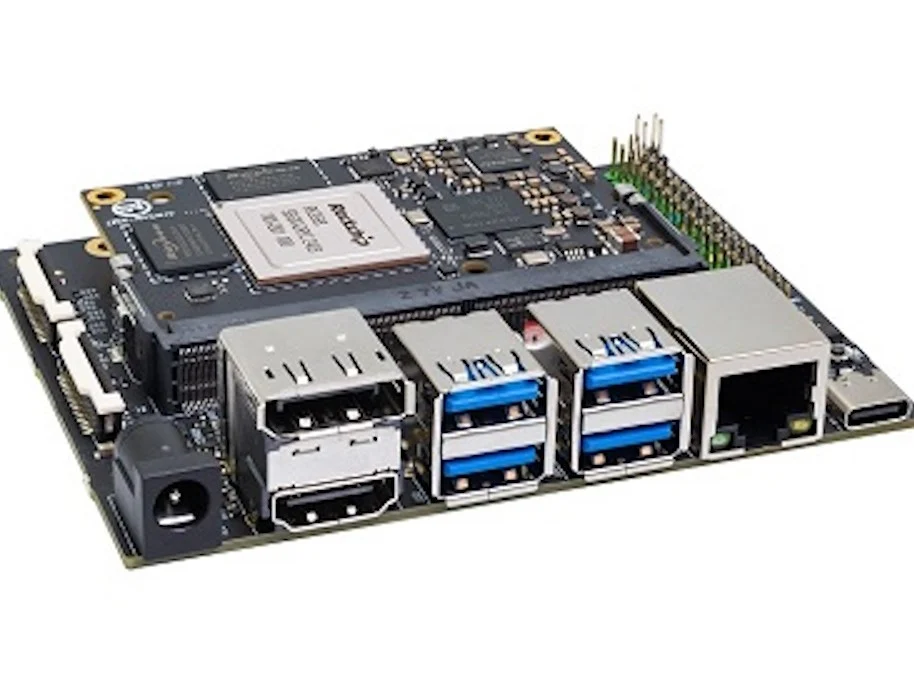
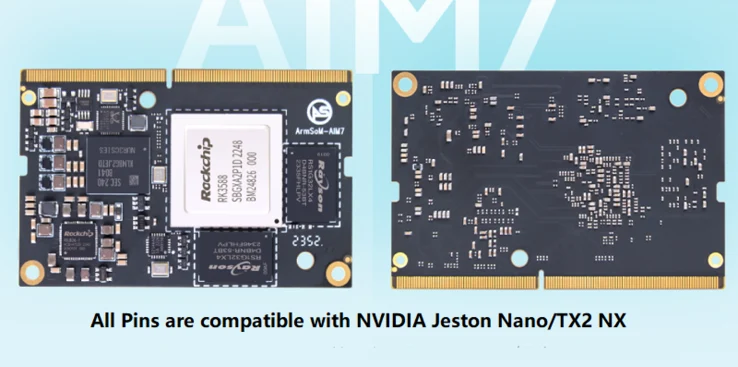
    The Banana Pi BPI-AIM7 is a fresh single-board computer, or a compute module to be more precise. This indicates that the board itself would likely be rather useless for most users, given that it lacks typical ports for image output and similar functions. Therefore, it can only be utilized with a compatible carrier board. Those who enjoy tinkering and want to create a compact and flat system may find this compute module quite useful when paired with a custom carrier board.

    Specifications and Features

    In terms of specs, the BPI-AIM7 board features an RK3588 ARM chipset, which includes four Cortex-A76 cores and four Cortex-A55 cores. The built-in NPU is designed to enhance AI applications, boasting performance of up to 6 TOPS. The board provides support for DisplayPort and HDMI, allowing resolutions up to 7680 x 4320 pixels at 60Hz. Users can also connect cameras through MIPI-CSI.

    Expansion Options

    Additionally, this SBC offers PCIe 3.0 with four lanes, which allows for the addition of M.2 slots or extra USB ports when used with a carrier board. It also supports PCIe 2.1 with one lane, along with one USB 3.0 Gen 1 and three USB 2.0 ports. As is common with SBCs, sensors and actuators, which can measure things like brightness, can be connected via a pin header or directly to the board.

    Size and Compatibility

    The Banana Pi board is about 2.7 x 1.8 inches in dimensions and comes with up to 32GB LPDDR4X RAM and 128GB eMCC storage. Importantly, the SBC is compatible with Nvidia’s Jetson Nano. An associated Crowd Supply campaign aims to not only fund the production of this new single-board computer but also to create a matching carrier board.

    Source:
    Link