Category: Computers

  • Keychron B2 Pro: Lightweight Wireless Keyboard for Apple Users

    Keychron B2 Pro: Lightweight Wireless Keyboard for Apple Users

    Key Takeaways

    1. Unique Switches and Design: The Keychron B2 Pro features scissor switches and a compact 96% layout, tailored for macOS and Windows users, with concave ABS keycaps.

    2. Dimensions and Portability: At only 14.3 mm thick and weighing 585 g, the B2 Pro is designed for portability, incorporating a storage compartment for the 2.4 GHz dongle.

    3. Connectivity Options: The keyboard supports multiple connectivity methods including USB type-C wired, 2.4 GHz dongle, and Bluetooth 5.2, allowing connections to up to three devices.

    4. Customisation and Battery Life: It offers extensive customisation through ZMK firmware and can last up to 300 hours on a single charge with its 800 mAh battery.

    5. Affordable Pricing: The Keychron B2 Pro is priced at $39.99, making it an economical option compared to other models in the Keychron lineup.


    Keychron has built a reputation for its high-quality mechanical keyboards, known for their extensive customisation options, solid build quality, and exceptional typing experience — check out our review of the Keychron Q13 Max for more insight. However, the newest addition to their lineup, the Keychron B2 Pro, deviates from their usual offerings. This newly unveiled keyboard is a sleek wireless low-profile model that seems to cater more to Mac users than PC gamers or typing aficionados.

    Unique Switches and Design

    Unlike the Gateron full-height or low-profile mechanical switches seen in models like the Keychron Q1 Max (currently priced at $195.49 on Amazon) and K15 Max, the B2 Pro opts for scissor switches. It features concave, uniform-height ABS keycaps that do not shine through, designed with a mixed layout suitable for both macOS and Windows. The B2 Pro follows a compact 96% layout, which includes a num pad that has a generous zero key, but the design lacks separation between the num pad and alpha keys, along with no navigation cluster between them.

    Dimensions and Portability

    The B2 Pro’s thickness is impressive, measuring only 14.3 mm at its thickest point, while the front height is a mere 8.4 mm. In contrast, the Lofree Flow Lite reaches 23.5 mm, and the Razer Joro stands at 16.5 mm at its thickest point, as noted in our latest review. Adding to its appealing slim profile, the Keychron B2 Pro incorporates hardware mode and OS selector switches, plus a storage compartment for the 2.4 GHz dongle. The casing, like the keycaps, is made of ABS plastic, similar to the Lofree Flow Lite, which makes the keyboard more portable at 585 g, though it might not feel as premium as the Keychron K15 Max with its aluminum top.

    Connectivity Options

    When it comes to connectivity, the B2 Pro offers a variety of choices, including USB type-C wired, 2.4 GHz through a USB type-A dongle, and Bluetooth 5.2, allowing connection to up to three devices. Both the wired and 2.4 GHz options support a polling rate of 1,000 Hz, making it suitable for gaming.

    Customisation and Battery Life

    One of the standout aspects of the B2 Pro is its integration of the efficient ZMK firmware, which provides extensive customisation capabilities, including on-board macro support and key remapping, along with impressive battery life. Keychron estimates that the B2 Pro can last up to 300 hours on a single charge, thanks to its modest 800 mAh battery. The Keychron Launcher facilitates customisation, and it has consistently been a highlight of Keychron keyboards in our past reviews, as it is a browser-based tool that is user-friendly.

    The Keychron B2 Pro is currently available through Keychron’s online store for just $39.99, and it is expected to show up on platforms like Amazon soon.

    Source:
    Link

  • Asus ProArt P16: OLED Touchscreen, 64GB RAM, RTX 5070 Specs

    Asus ProArt P16: OLED Touchscreen, 64GB RAM, RTX 5070 Specs

    Key Takeaways

    1. The Asus ProArt P16 features two models: an entry-level with Nvidia GeForce RTX 5060 (priced at €2,699) and a high-end version with RTX 5070 (priced at €3,099), both powered by an AMD Ryzen AI 9 HX 370 processor.

    2. It comes with 32GB of LPDDR5X RAM, a 1TB SSD, and has an upgradeable M.2-2280 slot with PCIe 4.0 x2 support.

    3. The laptop has a slim design (0.59 to 0.68 inches thick) and weighs 4.08 lbs, featuring a cooling system with three fans and liquid metal thermal paste for efficient cooling.

    4. Users can choose between two OLED touchscreens: one with 2880 x 1800 resolution at 120Hz and 400 nits brightness, and another with 4K resolution at 60Hz.

    5. Practical features include a “Dial Pad” on the trackpad for creative work, multiple USB ports including USB-C with USB 4 support, an HDMI 2.1 port, and an SD Express 7.0 card reader.


    The new Asus ProArt P16 has been launched in Germany and is gradually making its way into other regions. The entry-level model comes with an Nvidia GeForce RTX 5060 Laptop GPU and is priced at €2,699, which includes 19% VAT. For those looking for more power, the high-end version featuring the GeForce RTX 5070 Laptop costs €3,099. Both configurations are identical except for the GPU. The ProArt P16 is also listed on Amazon UK and Asus’ official online store in the US, which means customers in those areas should be able to order it soon.

    Specifications and Features

    In Germany, both versions of the laptop are equipped with the AMD Ryzen AI 9 HX 370 processor, 32GB of LPDDR5X RAM, and a 1TB SSD. There is an option to upgrade the storage later, but the additional M.2-2280 slot has limitations, only supporting PCIe 4.0 x2 with a bandwidth of just 4GB/s. This new 16-inch laptop from Asus features a cooling system that includes three fans and liquid metal thermal paste, which is said to provide efficient and relatively quiet cooling. Under consistent use, the laptop can use up to 120 watts of power, which is dynamically shared between the CPU and GPU.

    Design and Display

    Even with its impressive performance, the ProArt P16 is fairly slim, measuring 0.59 inches at its narrowest and 0.68 inches at its widest. It has a weight of 4.08 lbs. With a 90Wh battery and an efficient Ryzen processor, this 16-inch laptop is expected to offer good battery life, especially when the Nvidia GPU is not under heavy load. Asus has provided two different OLED touchscreens for this model. One has a resolution of 2880 x 1800 pixels, a refresh rate of 120Hz, and a peak brightness of 400 nits, while the other boasts a 4K resolution at 60Hz with similar features.

    Practical Features

    In the top left corner of the trackpad, Asus has added a feature known as the “Dial Pad,” which could be very useful for creative professionals who frequently switch between tools in Photoshop or navigate through a video editing timeline. Additionally, the laptop includes two USB-C ports—one of which supports USB 4 (with speeds of up to 40 Gbit/s)—two USB-A ports, an HDMI 2.1 port, and an SD Express 7.0 card reader capable of data transfer rates up to 985MB/s.

    Source:
    Link


  • Wire View Pro 2, Der8ench Bench Table, and Thermal Grizzly Gear

    Wire View Pro 2, Der8ench Bench Table, and Thermal Grizzly Gear

    Key Takeaways

    1. Wire View Pro 2 Features: The latest version includes per-pin current sensing, onboard logging, and a compact fan for cooling, helping diagnose and prevent GPU power connector failures.

    2. Diagnostic Capabilities: The device measures current, voltage, and temperature across the 12VHPWR pins, monitoring conditions that could lead to failures, but it cannot guarantee prevention.

    3. Der8ench Test Bench Design: This innovative test bench integrates multiple features like USB hubs, fan controls, and storage mounts, enhancing convenience for overclockers and testers.

    4. Advanced Cooling Solutions: Thermal Grizzly’s new GPU and CPU water blocks feature intricate designs for optimal thermal transfer, aimed at high-performance systems with a focus on durability and usability.

    5. Pricing and Availability: The Wire View Pro 2 is expected to cost around 100 euros, while the Der8ench test bench is projected to be around 200 euros, with production details still being finalized.


    Wire View Pro 2 is the latest version of der8auer’s in-line GPU power monitoring tool. It was first inspired by Elmor’s PMD and designed to look into problems associated with the 12VHPWR connector. Now, this new model includes per-pin current sensing and onboard logging, which helps in diagnosing failures or even preventing them through extended data evaluation.

    Functionality and Purpose

    This device is placed between the GPU and the PSU, measuring current, voltage, and temperature across each of the 12VHPWR pins. It can also monitor sensors on the connector and other external surfaces, such as the backplate or ambient temperatures of the system. The intention is to detect conditions like poor contact resistance or high temperatures before a failure happens. However, der8auer makes it clear that while it can provide diagnostic insights post-failure, it cannot ensure that connector failures will be avoided.

    Enhanced Features

    The improved version boasts onboard storage of up to 32 MB, which can log sensor data at adjustable intervals (for instance, every five seconds). This allows users to track system performance over roughly three months, helping them spot gradual issues like rising power consumption or temperature spikes. A shout-out to Nvidia here—who would’ve guessed that turning power connectors into hotplates would ignite such a wave of innovation?

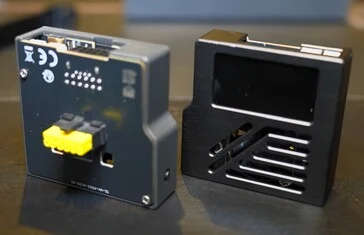
    A compact 30 mm fan helps keep the connector and PCB cool, managing up to 10 watts of thermal load. This is particularly vital in systems with low airflow, like those that use water cooling. There’s also a fail-safe connector that automatically shuts down the PC when it detects severe problems.

    Release and Pricing Information

    Although the release is set for late 2025, the pricing is still being decided, with estimates around 100 euros. Delays in production are likely due to the need for custom molds for the elongated connectors, which are costly to produce—just the tooling alone can run up to tens of thousands. We thought Nvidia would invest the right amount to get it right the first time, but apparently that wasn’t the case.

    The Wire View Pro 2 is designed for system integrators, diagnostics experts, and high-end users who are worried about the reliability of new high-power connectors. While it is not a cure-all for connector failures, it serves as an essential tool for forensic insight and preventative assessment.

    Innovative Test Bench Design

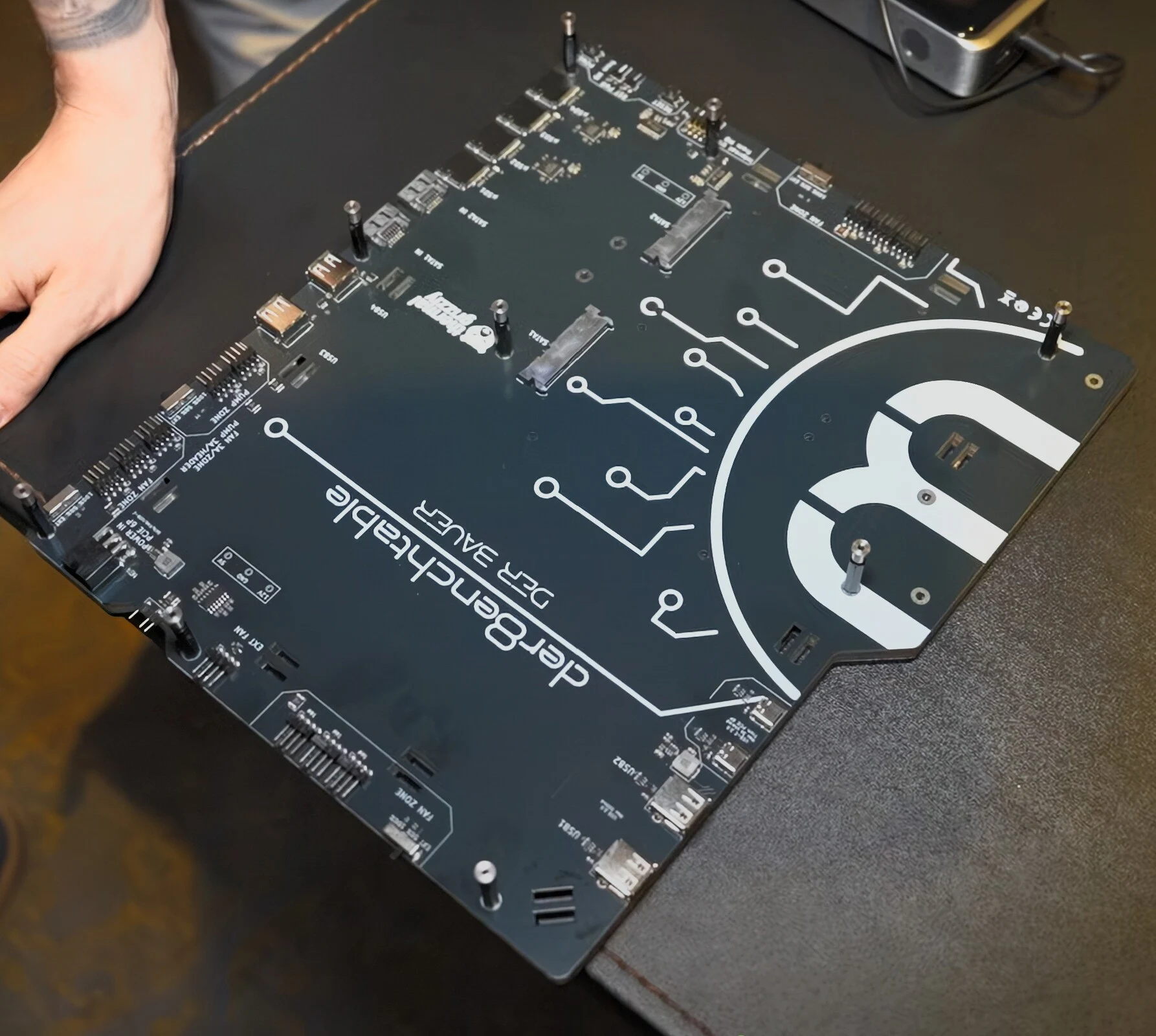
    The Der8ench table reshapes the expectations of a PC test bench. Initially created for der8auer’s own requirements, this platform merges passive motherboard mounting with active data and power support features. Unlike conventional benches that merely hold hardware, Der8ench provides a semi-integrated USB hub, fan and pump controls, microSD slots, and SATA SSD mounting points—all on a PCB base. It’s like the hardware equivalent of an everything bagel loaded with cheese—full of features, unapologetically jam-packed, yet still practical. Delicious!

    This unit connects directly to a motherboard USB header and offers four USB 2.0 ports (two on each side). It also supports up to four microSD cards, perfect for keeping OS images, drivers, or benchmarking tools. SATA SSDs can be directly mounted onto the bench for affordable, large-capacity local storage.

    Power and Connectivity

    Three fan headers and a pump header allow for controlled power delivery. Each header can be set to 100%, 50%, or respond to external input from the motherboard. Each zone is individually fused, and the table draws power from a 6-pin PCIe connector, making it compatible with standard desktop power supplies.

    Two USB Type-C ports can provide power to external devices like thermometers or chargers. Probing points on the PCB offer quick access to PSU lines for external power devices or monitoring.

    For users who frequently swap components for testing, the convenience of integrated I/O and storage is a major advantage over the minimalism found in traditional bench platforms. It’s clearly made for overclockers, system reviewers, and development labs where speed and consistency matter more than looks.

    Pricing and Availability

    The complete package, including aluminum supports and optional accessories, is projected to cost around 200 euros. While specific availability details were not set, initial production will be done in-house before possibly being outsourced.

    Advanced Cooling Solutions

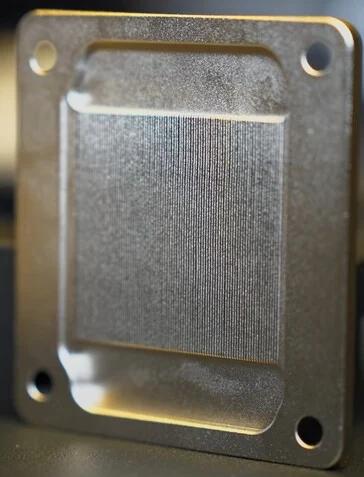
    Thermal Grizzly’s new GPU and CPU water blocks highlight sophisticated machining and fluid design to cater to high-performance systems. The Astral GPU block for Nvidia’s top-tier RTX 5090 and the new CPU block both feature dense microfin structures with 0.2 mm spacing, ensuring a high surface area for optimal thermal transfer.

    Each block goes through a detailed multi-stage CNC process, which includes machining, glass-blasting, and precision finishing. This guarantees a perfect mirror contact surface while maintaining durability and steady thermal conductivity. Joe Robey, Thermal Grizzly’s lead engineer, states that each GPU block takes approximately two hours to produce due to the complex triple-flip machining and tight tolerances.

    Design Priorities

    Key design elements focus on minimizing dead zones to stop air from building up, ensuring steady coolant paths, and enhancing the aesthetic with a clear, symmetrical coolant layout. The CPU block shares a similar look and engineering design, featuring a robust brass body for structural strength and a limited parts count to minimize potential failure points.

    The retail price for the GPU block is set at 500 euros, aimed at high-end users who want both performance and visual appeal in custom loop setups. Details for the CPU block, including its price, weren’t finalized when it was announced.

    Der8auer and Thermal Grizzly keep their focus on addressing practical issues for power users and builders. Instead of chasing trends, they emphasize usability, durability, and thoughtful design based on real-world experience.

    If you’re like me and sometimes find yourself tinkering with your system not because it needs fixing, but because it’s enjoyable—that quiet satisfaction of changing something to see how it responds—then the Der8auer bench is designed with that mindset in mind.

    Truly inspiring work, Nvidia—without your thermal failures, a good portion of this product lineup wouldn’t even be here.

    Source:
    Link



  • Thermalright to Launch Liquid-Cooled AMD Strix Halo Mini PCs

    Thermalright to Launch Liquid-Cooled AMD Strix Halo Mini PCs

    Key Takeaways

    1. Thermalright began as an air cooler company and is expanding into mini PCs, maintaining a focus on cooling solutions.
    2. The upcoming mini PCs will start at around $2,000 and feature high-performance components, including an AMD Ryzen AI MAX+ 395 and 128 GB of unified RAM.
    3. Unique design features include CNC-ed parts, compact custom liquid cooling systems, and a front display showing temperature and system information.
    4. Performance testing shows that the liquid-cooled mini PC reached 89° C under load, indicating effective cooling within thermal limits.
    5. A prototype mini PC with a distinct red and black design is showcased, featuring innovative cooling and upgradeable components, though mass production is uncertain.


    Thermalright started by selling air coolers at reasonable prices and later moved into other areas. Right now, their main focus is still on air coolers, but they also offer AIOs, PC cases, and, as seen at Computex this year, they are trying to break into the mini PC market with compact, powerful systems that feature custom liquid cooling.

    Hands-On Experience

    The team from LinusTechTips (ShortCircuit) and Gamers Nexus had a chance to check out some of the new mini PCs at Thermalright’s booth. Stephen from Gamers Nexus mentioned that Thermalright plans to launch its first mini PCs at prices that are competitive with other brands like Minisforum. LTT pointed out a starting price of around $2,000 for a model with an AMD Ryzen AI MAX+ 395, equipped with 128 GB of unified RAM, allocating 96 GB for the CPU and 32 GB for the Radeon RX 8060S dGPU.

    Unique Features

    Some may think this pricing isn’t very competitive, but Thermalright is including special features. For instance, the chassis has CNC-ed parts, such as the removable bottom plate from one of the models shown in the LTT video. More importantly, these designs come with compact custom liquid coolers. Lastly, there’s a small front display that shows temperature and other useful information.

    Performance Insights

    Are these liquid-cooled options really efficient in such tiny form-factors? The model featured in the LTT video reached 89° C when all CPU cores were pushed to their limits for an extended period, indicating some thermal constraints. However, this isn’t too bad considering TJMax is 95° C, and it remains to be seen if fan noise is lower than with standard air cooling. To improve airflow and potentially lower temperatures, Thermalright offers a longer case that accommodates a larger liquid cooler.

    Compact Options

    There was also a smaller case shown at the booth, likely set to use lower-tier processors. Other specifications seen in the LTT video include a MediaTek Wi-Fi 7 card, dual M.2 slots for SSDs, and a front panel that features a full-size SD card reader, a USB4, and two USB-A 3.2 Gen 2 ports.

    Prototype Design

    In addition, Thermalright displayed a prototype mini PC with a striking red and black frame, reminiscent of Cyberpunk 2077. This model features an innovative liquid cooling system above a Ryzen 7 8845HS, plus easily accessible SSD and SO-DIMM slots for future upgrades. While it may not go into mass production, things could shift if there’s enough interest from fans.

    Source:
    Link

  • Acer Swift Neo Premium AI Laptop Launches in India at Rs 61,990

    Acer Swift Neo Premium AI Laptop Launches in India at Rs 61,990

    Key Takeaways

    1. The Acer Swift Neo is a premium, ultra-lightweight laptop designed for professionals, students, and content creators, weighing only 1.2 kg.
    2. It features a 14-inch WUXGA OLED screen with 92% NTSC and 100% sRGB color accuracy for bright and accurate visuals.
    3. Powered by an Intel Core Ultra 5 processor and Intel Arc Graphics, it supports up to 32GB LPDDR5 RAM and up to 1TB PCIe Gen 4 SSD for efficient performance.
    4. The laptop includes advanced AI features such as Intel AI Boost, improved video calling, and enhanced security with biometric login and Secured-Core PC protection.
    5. Priced at Rs 61,990 (~$720), the Swift Neo is available in Rose Gold color on Flipkart.


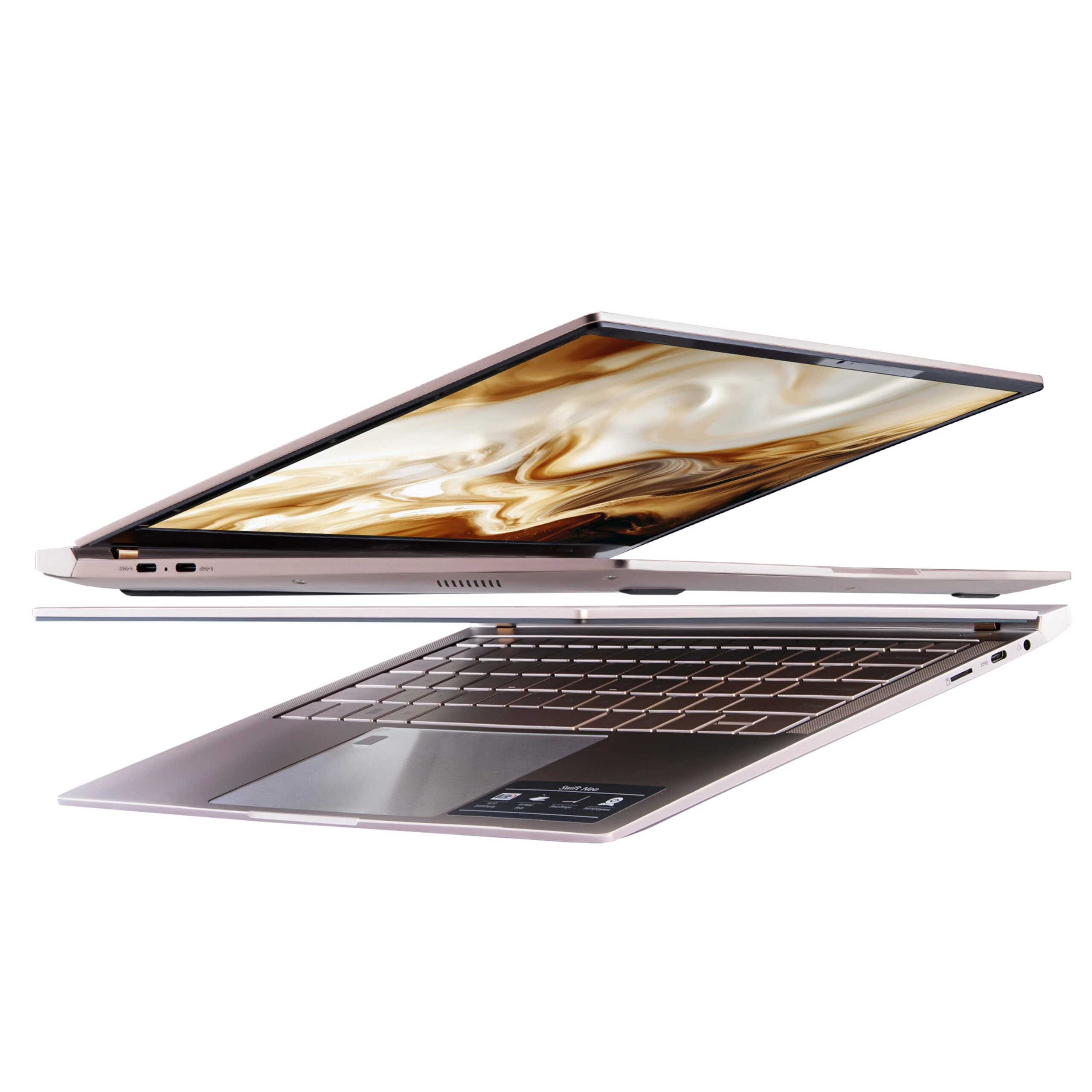
    Acer has launched a new premium laptop powered by AI in India, called the Swift Neo. This ultra-lightweight device is tailored for professionals, students, and content creators who require a stylish yet portable computing option with cutting-edge AI capabilities. Below, you can find the details on its specifications, features, and pricing.

    Specifications and Features of Acer Swift Neo

    The Acer Swift Neo boasts a 14-inch WUXGA OLED screen that delivers 92 percent NTSC and 100 percent sRGB color accuracy, ensuring bright visuals with accurate color representation. With its sleek aluminum body, the laptop is very light, weighing only 1.2 kg.

    Under the hood, it has an Intel Core Ultra 5 processor combined with Intel Arc Graphics, which allows for smooth multitasking and quick performance. It can accommodate up to 32GB LPDDR5 RAM and offers storage options of up to 1TB PCIe Gen 4 SSD for fast boot times and effective workflow management.

    AI Features and Design

    Crafted with AI functionality in mind, the Swift Neo is ready for Copilot and features Intel AI Boost for on-device AI tasks. This includes improved video calling capabilities and privacy features. The laptop is equipped with a diamond-cut touchpad, a one-hand opening hinge, a fingerprint scanner, and a backlit keyboard that includes a dedicated Copilot key. It also has a 1080p FHD webcam for video conferencing.

    Connectivity is seamless with Intel Wi-Fi 6, Bluetooth 5.2, and dual USB-C ports. Enhanced security comes from biometric login and Secured-Core PC protection. The battery life can last up to 8.5 hours.

    Pricing and Availability in India

    The Acer Swift Neo is available for Rs 61,990 (~$720) and can be found on Flipkart. It comes in a single Rose Gold color, targeting users who prioritize both style and performance in a compact device.


  • Anker Nano 6-Port Charger Leak: 100W USB-C & ActiveShield 2.0

    Anker Nano 6-Port Charger Leak: 100W USB-C & ActiveShield 2.0

    Key Takeaways

    1. Anker’s new 6-port Nano desktop charger will replace the 65W 543 PowerPort Atom III, offering a maximum power output of 130W.
    2. The charger features four USB-C ports (including one at 100W and another at 65W) and two USB-A ports (12W each), allowing for simultaneous charging of multiple devices.
    3. The design includes a metal mid-frame for durability and improved heat dissipation, while maintaining a slim profile and lightweight (320g).
    4. It incorporates ActiveShield 2.0 technology for enhanced safety, conducting 35 temperature checks per second to prevent overheating.
    5. The charger is expected to launch in late Spring or Summer 2025, priced between $50 and $80, available in Black and White colors.


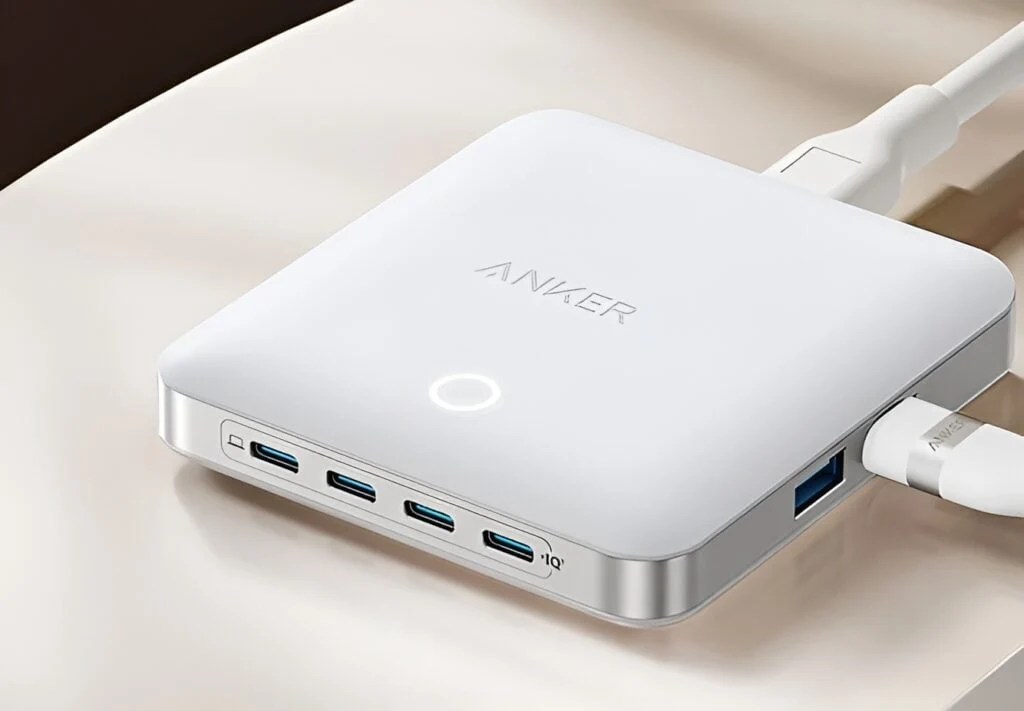
    Anker plans to introduce a new 6-port Nano desktop charger, which will take the place of the 65W 543 PowerPort Atom III. This new charger boasts a maximum power output of 130W. It includes four USB-C ports and two USB-A ports, all within a stylish metal-framed design. The launch is anticipated for late Spring or Summer 2025, with a price tag ranging from $50 to $80 in the United States.

    Charging Capability

    The charger provides a total output of 130W via its six ports: each of the two USB-A ports delivers 12W, while two USB-C ports offer 20W each. Additionally, one USB-C port is rated at 65W and the other at 100W, making it a great choice for charging multiple devices like laptops, tablets, and smartphones all at once. Thanks to GaNPrime technology, it ensures efficient power distribution, with the 100W port reportedly charging a MacBook Pro 14” to 50% in less than 30 minutes, according to Anker’s GaN benchmarks.

    Design Features

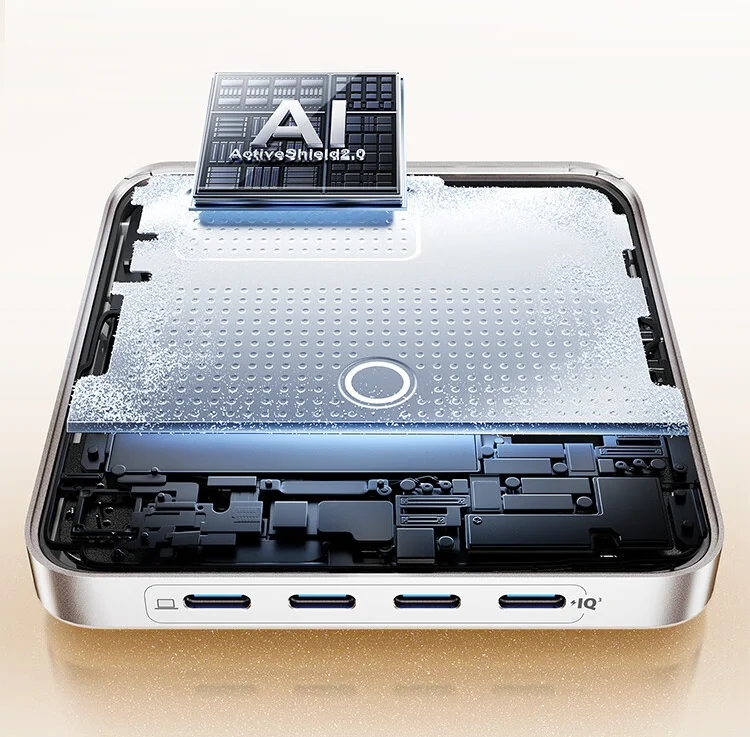
    In terms of design, the new charger keeps the slender profile of its earlier version but upgrades to a metal mid-frame instead of plastic, which enhances its strength and heat dissipation. The charger measures 9.3 × 9.8 × 1.9 cm and has a weight of 320g, making it both portable and sturdy, as noted by @AnkerInsider.

    Safety Mechanisms

    With the addition of ActiveShield 2.0 technology, the charger conducts 35 temperature checks every second to maintain safe and stable charging, helping to prevent overheating when under heavy usage. A 1.5m power cable is included for extra convenience. The pricing, now at $50-$80, is a notable increase from the previous model’s $29.99, reflecting its improved capabilities and premium design.

    The charger will be available in both Black and White colors and is expected to launch between late Spring and Summer 2025. Could this device change the way we charge multiple devices with its compact power? Keep an eye out for the official news!

    Source:
    Link


  • Unique Laptops Unveiled at Computex 2025: Top Innovations

    Unique Laptops Unveiled at Computex 2025: Top Innovations

    Key Takeaways

    1. Huawei MateBook Fold Ultimate Design: Features an 18-inch LTPO OLED screen with 3.3K resolution, ultra-thin design, and runs on HarmonyOS for device integration.

    2. Razer Blade 14: The slimmest 14-inch gaming laptop at 15.7mm thick, it includes a powerful AMD Ryzen AI 9 365 CPU and Nvidia GeForce RTX 5070 GPU, plus a 14-inch OLED display with 2.8K resolution.

    3. Lenovo Yoga Book 9i (2025): A dual-display laptop with 14-inch OLED screens and a 360-degree hinge, designed for content creators and powered by Intel Core Ultra 7 255H.

    4. MSI Prestige 13 AI+ Ukiyo-e Edition: Features Hokusai’s artwork on its lid and won the COMPUTEX Best Choice Award, combining classical art with modern technology.

    5. MSI Prestige 16 AI+ Mercedes-AMG Motorsport: A collaboration with a racing brand, featuring high-performance specifications and the iconic Mercedes AMG branding.


    The Computex 2025 event is currently happening, showcasing a variety of exciting new products. One of the standout features this year is the introduction of laptops with striking designs, innovative formats, and remarkable capabilities. These laptops are pushing the limits of portable computing, so let’s take a look at some of the most interesting models presented at this significant tech gathering.

    Huawei MateBook Fold Ultimate Design

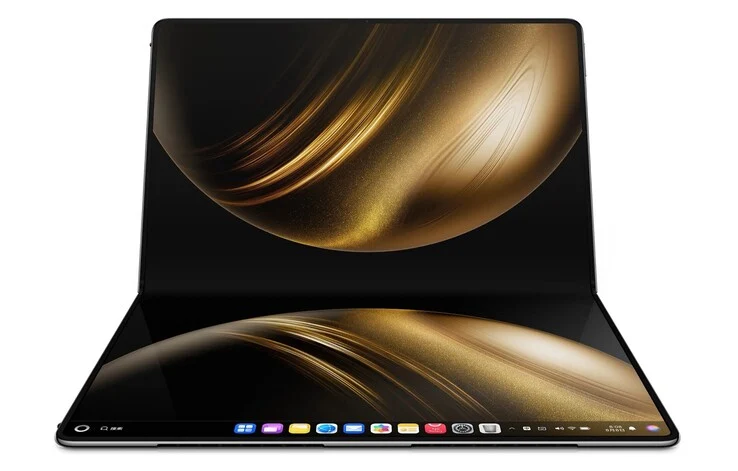
    Foldable laptops may not be entirely new, but they aren’t commonly seen everywhere. The latest entry in this category is the MateBook Fold Ultimate Design from Huawei. It features an impressive 18-inch LTPO OLED screen that delivers a 3.3K resolution and a 4:3 aspect ratio. When folded, it has a compact size similar to a 13-inch laptop. This model is ultra-thin and lightweight, measuring only 7.3mm in thickness and weighing 1.16 kilograms.

    Huawei MateBook Fold Ultimate Design

    This premium laptop flaunts a luxurious leather finish. Huawei boasts that it includes the largest folding hinge in its class, measuring 285mm. Additionally, it’s one of the first laptops to run on HarmonyOS, offering a smooth integration with other devices that use the same operating system.

    Razer Blade 14

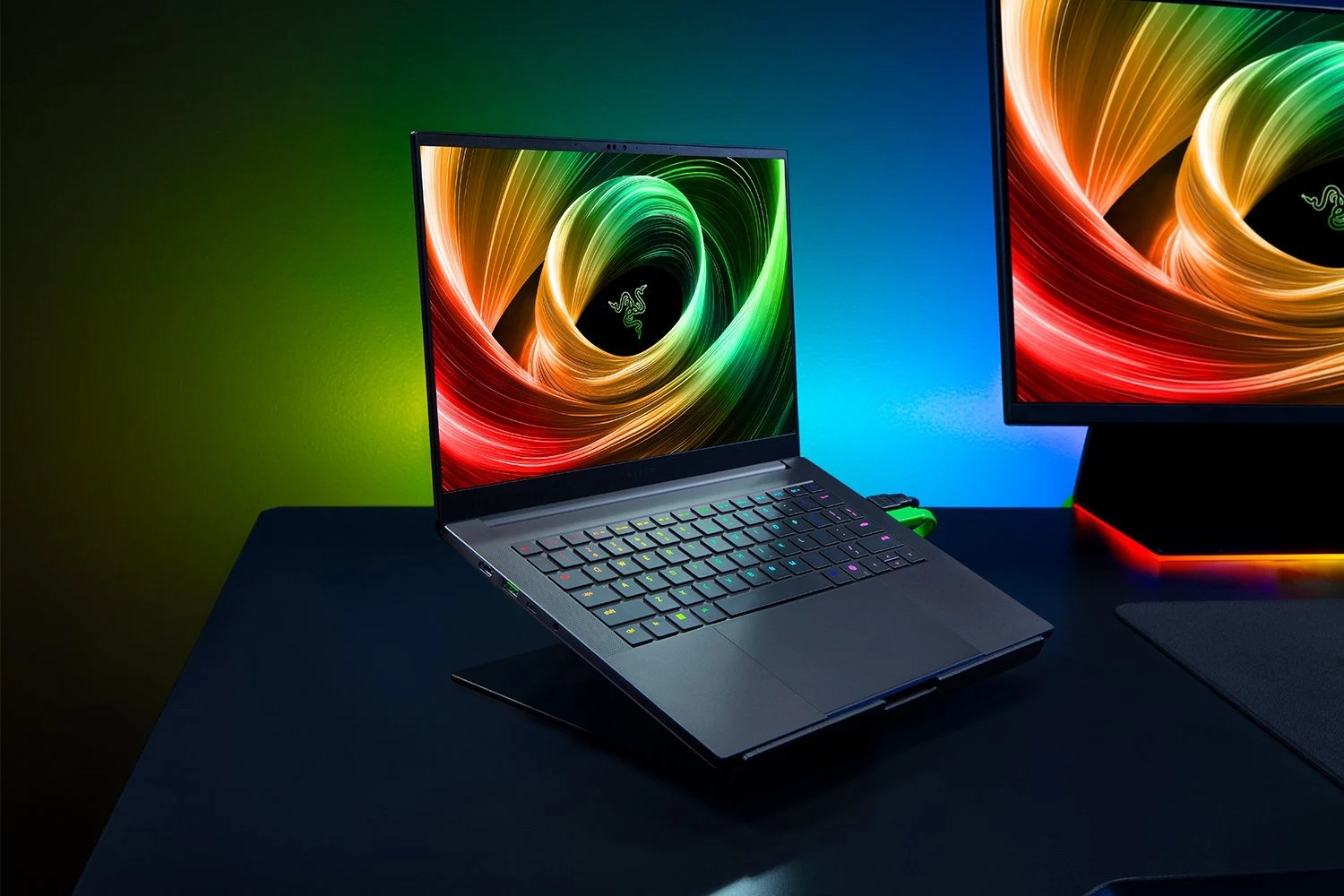
    In contrast to the MateBook Fold Ultimate Design, the Razer Blade 14 adopts a more traditional appearance. Nevertheless, its construction remains one of its most impressive features. Known for delivering powerful specifications within a compact design, the 2025 Blade 14 continues this trend. It measures just 15.7mm at its thinnest point and weighs 1.63 kilograms, making it the slimmest 14-inch gaming laptop available.

    This model showcases a 14-inch OLED display featuring a 2.8K resolution, a 120Hz refresh rate, and a full 100 percent DCI P3 color gamut. What sets it apart is its powerful internals, including an AMD Ryzen AI 9 365 CPU and an Nvidia GeForce RTX 5070 GPU. The CPU provides up to 50 TOPS of AI performance and supports up to 64GB of RAM. With the RTX 5070 being one of Nvidia’s latest graphics cards, this laptop is a powerhouse housed in a sleek package.

    Lenovo Yoga Book 9i (2025)

    The Lenovo Yoga Book 9i is a cutting-edge dual-display laptop that was introduced at the expo. The 2025 version features enhancements, including taller 14-inch dual OLED displays with support for a 120Hz variable refresh rate. With a versatile 360-degree hinge and wide color coverage, the Lenovo Yoga Book 9i (2025) is even regarded as one of the top laptops for content creators. It is equipped with an Intel Core Ultra 7 255H, delivering substantial power and AI capabilities.

    MSI Prestige 13 AI+ Ukiyo-e Edition & Prestige 16 AI+ Mercedes-AMG Motorsport

    At Computex 2025, MSI unveiled a range of new products, with a notable highlight being the MSI Claw A8 gaming handheld. The laptop lineup also had exciting announcements, particularly collaborations that stood out. One of these is the Prestige 13 AI+ Ukiyo-e Edition, which features Hokusai’s famous artwork “The Great Wave off Kanagawa” on its lid and even received the COMPUTEX Best Choice Award for merging classical art with modern technology.

    The second collaboration is with a racing brand, resulting in the Stealth A16 AI+ Mercedes-AMG Motorsport edition. This model boasts the iconic Mercedes AMG branding alongside the MSI logo. Both laptops come packed with cutting-edge specifications, such as the Intel Core Ultra 9 288V and AMD Ryzen AI 9 HX 370 processors. While the Prestige 13 is designed to be slim and lightweight, the Stealth 16 offers robust performance with options for an RTX 5070 GPU.


  • Foldable Amazon Fire Tablet Set to Launch Before MacBook Fold

    Foldable Amazon Fire Tablet Set to Launch Before MacBook Fold

    Key Takeaways

    1. Foldable notebooks and monitors, like the Lenovo ThinkPad X1 Fold and Asus ZenScreen Fold, are emerging as a new trend in mobile computing.
    2. Apple is rumored to release a MacBook Pro with a foldable 18.8-inch OLED screen by 2027 or 2028.
    3. Analyst Ming-Chi Kuo suggests Amazon may launch a foldable laptop or tablet before Apple, with production starting in late 2026 or early 2027.
    4. Amazon is likely aiming for a budget-friendly foldable device, contrasting with high-end brands like Apple, Samsung, and Huawei.
    5. Details about Amazon’s foldable device, including display technology and operating system, are currently unavailable.


    Foldable notebooks such as the Lenovo ThinkPad X1 Fold, along with portable foldable monitors like the Asus ZenScreen Fold (starting at $2,500 on Amazon), are being promoted as the next step in mobile computing. Additionally, the recently unveiled Huawei MateBook Fold showcases how a laptop featuring an 18-inch foldable screen can appear quite advanced.

    Apple’s Rumored Entry

    For several years, speculation has suggested that Apple is set to introduce its first MacBook Pro with a foldable 18.8-inch OLED screen, expected to hit the market in 2027 or 2028. When it is folded, it might be about the size of a 13-inch laptop. A new leak from the well-regarded analyst Ming-Chi Kuo indicates that Amazon might actually get there first, as they are supposedly preparing to launch a laptop or tablet with a foldable display, with mass production anticipated to begin either in late 2026 or early 2027.

    Amazon’s Plans Confirmed

    Ross Young, who is the CEO of Display Supply Chain Consultants (DSCC), has backed up Ming-Chi Kuo’s assertions. He mentions that Amazon has been in talks with suppliers for a while to obtain the necessary parts for this new gadget. Given that the Amazon Fire tablets are priced relatively low, it’s possible that Amazon is aiming for a more budget-friendly option with its foldable device. Conversely, high-end brands like Apple, Samsung, and Huawei are likely to dominate the premium foldable market. However, right now, there’s no additional information available about the display technology, panel dimensions, or operating system for Amazon’s forthcoming foldable tablet.

    Source:
    Link


  • Synology DS425+: 4 HDDs, 2 SSDs, but with an outdated processor

    Synology DS425+: 4 HDDs, 2 SSDs, but with an outdated processor

    Key Takeaways

    1. The Synology DiskStation DS425+ features an Intel Celeron J4125 processor, which is somewhat outdated.
    2. The NAS supports four hard drives and various RAID configurations for optimizing speed, storage, or data safety, but shouldn’t be the sole method for data security.
    3. It includes two M.2 slots for SSD caching to improve data transfer speeds, along with two Ethernet ports (one at 2.5Gbit/s and one at 1Gbit/s) and two USB 3.0 ports.
    4. The DS425+ has only 2GB of RAM, but memory can be upgraded easily.
    5. The NAS is priced at €450 in Germany, but may not be widely available yet; alternatives like the Ugreen NASync DXP4800 Plus are recommended.


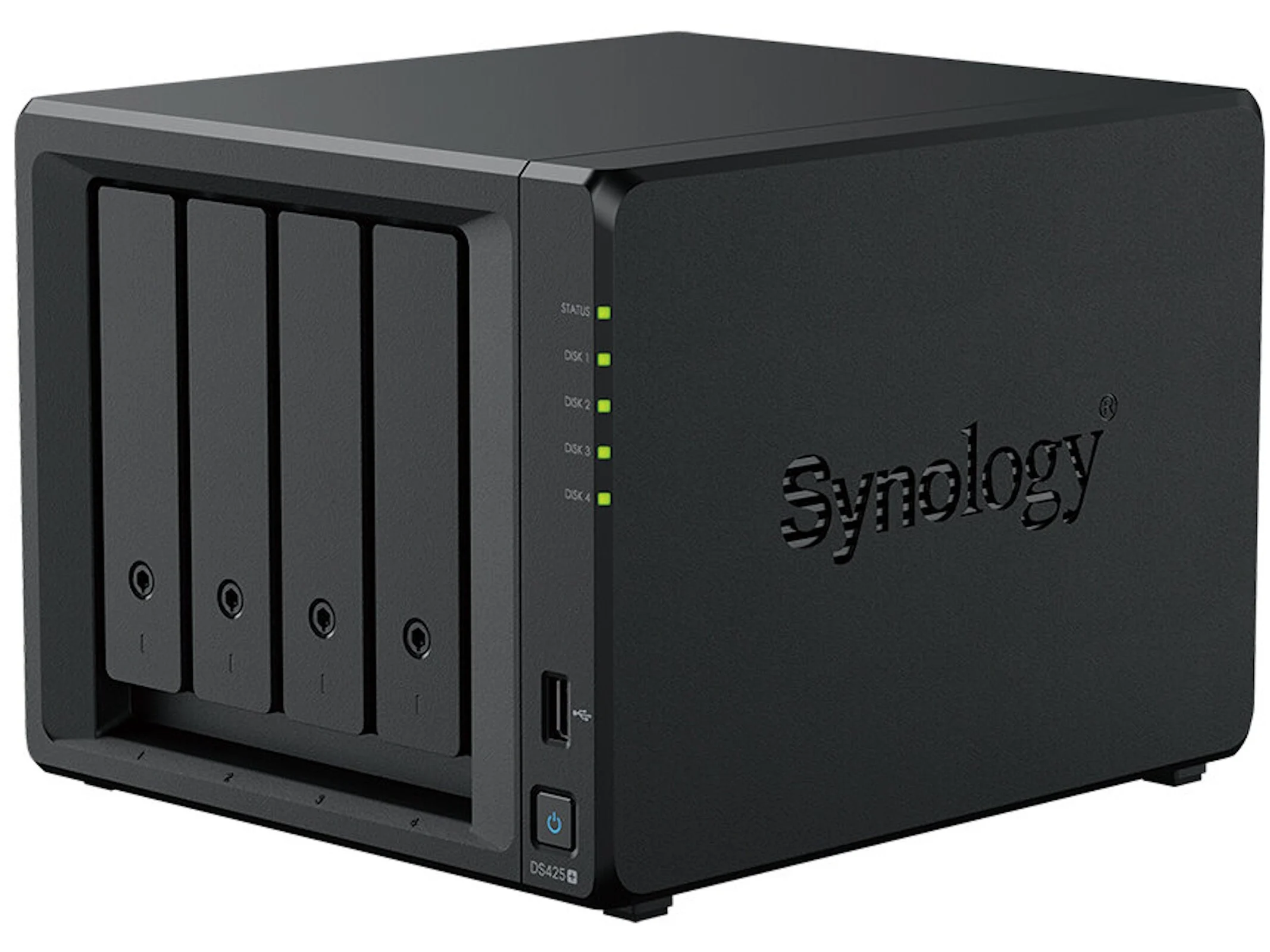
    Synology has been quite busy lately and has just introduced another new product in addition to the BeeStation Plus and the DS925+. The DiskStation DS425+ is their latest NAS offering, but its performance is not likely to raise the standards much. It features an Intel Celeron J4125, which is considered somewhat outdated. Nevertheless, how well a NAS performs really depends on the specific tasks it’s used for, and it’s not really fair to compare it with ordinary computers. Another downside is that the DS425+ has only 2GB of RAM, but the good news is that you can easily increase the memory.

    Drive Support and RAID Configurations

    As its name suggests, the new Synology NAS can handle four 2.5-inch or 3.5-inch hard drives. Like usual, it supports various RAID setups, which help in optimizing either speed, storage space, or data safety. However, one should keep in mind that a NAS alone shouldn’t be relied upon as the only method for securing data.

    Caching and Connectivity Options

    Moreover, the DS425+ features two M.2 slots for compatible SSDs that can be used for caching. This can enhance data transfer speeds by keeping frequently used files on the faster SSD. However, the speed can also be affected by the connectivity options. In this setup, there are two Ethernet ports, but only one supports a higher speed of 2.5Gbit/s, while the other is capped at 1Gbit/s. Additionally, there are two USB 3.0 ports available for connecting external drives or other USB storage devices. Finally, the new Synology NAS is priced at €450 in Germany, although it’s not yet available at many major retailers.

    Source:
    Link

  • Radxa Launches New Raspberry Pi Alternative for AI Performance

    Radxa Launches New Raspberry Pi Alternative for AI Performance

    Key Takeaways

    1. Radxa has introduced the NIO 5A, a new single-board computer powered by a MediaTek Genio 520 SoC with high AI performance.
    2. The NIO 5A features dimensions of 85 x 56 mm and is powered via USB Type-C, with storage options including UFS 3.1 and eMMC 5.1.
    3. The board supports 4K output through HDMI and offers multiple camera connectivity options, including USB 3.2 and MIPI CSI.
    4. It includes Gigabit Ethernet with optional PoE, WiFi 6E, Bluetooth 5.2, and compatibility with Raspberry Pi’s 40-pin header and PCIe Gen 2 x1 slot.
    5. Pricing and availability details for the Radxa NIO 5A have not yet been disclosed.


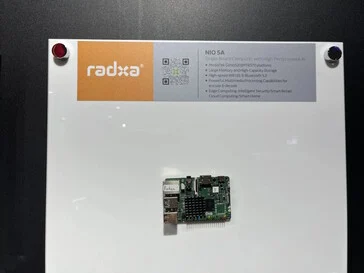
    Radxa seems to be a known brand among makers, as the company provides a range of single-board computers. With the introduction of the NIO 5A, they’ve subtly revealed a new product in this category. As reported by CNX-Software, this new device was showcased at MediaTek’s booth during Computex 2025. It’s no surprise that the Radxa NIO 5A runs on a MediaTek SoC, specifically the Genio 520. This chipset includes two Cortex-A78 cores and six Cortex-A55 cores, plus a Mali-G57 MC2 GPU and an NPU. The SBC boasts an AI performance rating of 10 TOPS, an impressive figure for a single-board computer. This level of performance is typically suitable for tasks like image recognition and sensor data analysis.

    Device Specifications

    The dimensions of the board are 85 x 56 millimeters and it is powered through USB Type-C. For storage options, it can include UFS 3.1 or eMMC 5.1, in addition to having a microSD card slot. Moreover, the HDMI port is capable of outputting a 4K signal. You can connect cameras using two USB 3.2 Gen 1 ports and two USB 2.0 ports, or via MIPI CSI, which supports cameras up to 16 megapixels. There’s also a 3.5mm audio jack included.

    Connectivity Features

    For network connectivity, the device utilizes Gigabit Ethernet, with optional support for PoE, which means the Radxa SBC can operate on power supplied through the network cable. The device also supports WiFi 6E and Bluetooth 5.2, while the 40-pin header is designed to be compatible with the Raspberry Pi’s header. The same compatibility extends to the PCIe Gen 2 x1 slot, which is structured as a single connector with tightly arranged connections. Details about pricing and availability have not been disclosed yet.

    Source:
    Link