Category: Computers

  • ASRock Addresses AMD Ryzen 9000X3D Issues, Questions Remain

    ASRock Addresses AMD Ryzen 9000X3D Issues, Questions Remain

    Key Takeaways

    1. ASRock faced increasing reports of CPU malfunctions linked to their AM5 motherboards, prompting an official response during Computex 2025.
    2. The company initially denied that BIOS issues caused motherboard failures, but later removed an earlier BIOS version without explanation and released a new version with limited transparency.
    3. ASRock acknowledged three potential causes for failures: user mishandling, memory compatibility problems, and incorrect Precision Boost Overdrive settings.
    4. The warranty policy requires customers to handle CPU replacements through AMD, while ASRock’s motherboards may still be sold with outdated firmware.
    5. Despite the official statement, many concerns remain unresolved, including reports of failures with default settings and the company’s limited investigation into other potential causes.


    Following several months of increasing reports from the community about CPU malfunctions tied to ASRock AM5 motherboards, Gamers Nexus took the initiative to question the company during Computex 2025. Their unexpected discussion with Chris Lee, ASRock’s VP of the motherboard division, provided the first official response from the company, which had previously given only ambiguous and unconvincing statements.

    Issues with BIOS Updates

    In March, ASRock stated that the returned boards with burn damage on Ryzen 9800X3D and 9950X3D CPUs did not show any fault from their end. The firm claimed that a simple cleaning of the socket could restore functionality and denied that the BIOS versions were responsible for the issues. However, shortly after this claim, BIOS version 3.20 was removed from various product pages without any explanation. A new version (3.25) was released during Computex, but again, the transparency was quite limited.

    Acknowledging the Causes

    During the interview, Lee recognized three potential reasons for the failures: user mishandling (like thermal paste contamination), memory compatibility problems that they say have now been fixed with BIOS 3.20, and incorrect Precision Boost Overdrive (PBO) settings within ASRock’s firmware. He mentioned that the 3.25 update reduces the thermal and electrical current thresholds (TDC/EDC) for PBO, which he believes should help to avoid further failures.

    Nonetheless, ASRock’s position is still troubling. The company insists that not one motherboard has been identified as defective, claiming that all failures stem from CPU issues, user mistakes, or BIOS configurations. For those customers who faced shutdowns or noticeable CPU pad damage even without activating PBO, this rationale feels unconvincing. When asked, Lee acknowledged that ASRock has not looked into other possible causes like VSOC misbehavior, nor did he offer any specific details on changes to current values for any particular board.

    Warranty and Customer Responsibility

    Lee stated that ASRock’s warranty policy includes round-trip shipping for motherboards but directs customers to AMD for CPU replacements. He also confirmed that boards currently available in retail may still have outdated firmware, which places the responsibility of performing BIOS updates on the customers themselves.

    While it is a step forward that ASRock finally provided an official statement, many crucial concerns still remain unresolved. The communication from the company up to this point has been quite lacking, and the root causes of the failures might go beyond just aggressive PBO tuning. Reports of failures occurring even with default settings, lightly scorched sockets, and inconsistencies in CPU performance all imply that ASRock’s explanations are, at best, incomplete.

    Source:
    Link

  • Anker Unveils Prime Thunderbolt 5 Cable with 240W Power Delivery

    Anker Unveils Prime Thunderbolt 5 Cable with 240W Power Delivery

    Key Takeaways

    1. Anker Prime Thunderbolt 5 Cables support high-speed data transfer of 80Gbps and 240W charging.
    2. The cables can transfer a 5 GB file in just one second and charge a MacBook Pro 16 (M3 Pro) to 50% in 26 minutes.
    3. They support 8K at 60Hz and 4K at 144Hz resolutions, with a unidirectional bandwidth of up to 120 Gbps.
    4. Available in lengths of 1.7 ft and 3.3 ft, the cables are durable, featuring a braided design and capable of withstanding 5,000 bends.
    5. The pricing is $39.99 for the 1.7 ft cable and $45.99 for the 3.3 ft version in the US, with similar pricing in Europe.


    The Anker Prime Thunderbolt 5 Cables have recently launched in the US and Germany, offering options in lengths of 1.7 ft and 3.3 ft, both supporting 80Gbps data transfer speeds and 240W charging. Anker believes these cables are well-suited for both gamers and creatives, providing a variety of uses.

    High-Speed Data Transfer

    With an impressive data transfer rate of 80 Gbps, these new cables can make transferring a 5 GB file possible in just one second. They also charge gadgets at a powerful 240W; for instance, a MacBook Pro 16 (M3 Pro) can reach a 50% charge in just 26 minutes. Furthermore, you can connect your laptop to a monitor using the Prime Thunderbolt 5 cable, which supports resolutions of 8K at 60Hz and 4K at 144Hz, along with a remarkable unidirectional bandwidth of up to 120 Gbps.

    Durable and Versatile Design

    The 1.7 ft (0.5 m) and 3.3 ft (1 m) USB-C to USB-C cables are recognized for their Thunderbolt 5 certification and compatibility with daisy chaining. Designed with durability in mind, these braided cables are claimed to endure 5,000 bends and feature a “premium connector design,” adding to their appeal.

    Pricing and Availability

    The Anker Prime Thunderbolt 5 Cable (1.7 ft, 80Gbps, 240W) is priced at $39.99, while the longer 3.3 ft version is available for $45.99 on Amazon US. Notably, the cost of the longer cable aligns with that of the comparable Anker Thunderbolt 4 cable. In Europe, particularly in Germany, the 1 m version can be purchased for €45.99.


  • Tuxedo Stellaris 16: High-Performance Notebook with RTX 5090

    Tuxedo Stellaris 16: High-Performance Notebook with RTX 5090

    Key Takeaways

    1. High-Performance Components: Features an Intel Core Ultra 9 275HX processor and options for GeForce RTX 5070 Ti, 5080, or 5090 graphics cards, with the RTX 5090 using up to 150 watts plus 25 watts from Dynamic Boost.

    2. Display Options: Offers two 16-inch display types: a mini-LED screen with 1,000 cd/m² peak HDR brightness and a conventional LED display with 500 cd/m² brightness, both at 2,560 x 1,600 resolution and up to 300 Hz refresh rate.

    3. Battery and Weight: Equipped with a 99 Wh battery providing up to 8.5 hours of browsing, weighs 2.65 kg for the LED model and 2.8 kg for the mini-LED model, and supports charging via USB-C.

    4. Memory and Storage: Supports up to 128 GB of DDR5 RAM and includes two M.2 2280 SSD slots, one with PCI Express 5.0 and the other with PCI Express 4.0.

    5. Comprehensive Connectivity: Well-equipped with multiple ports including USB-C, USB-A, Ethernet, Thunderbolt 4, HDMI 2.1, Mini DisplayPort 2.1, and an SD card reader.


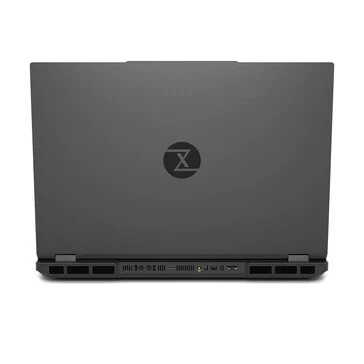
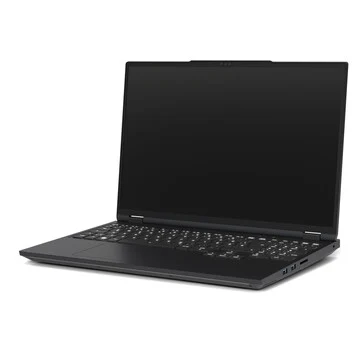
    Tuxedo is enhancing the Stellaris 16 significantly. This laptop is designed with a strong focus on performance rather than being small and light. It comes with an Intel Core Ultra 9 275HX, and users can opt for a GeForce RTX 5070 Ti, GeForce RTX 5080, or GeForce RTX 5090. The RTX 5090 has a maximum TGP of 150 watts plus an additional 25 watts from Dynamic Boost, while the processor can use up to 130 watts.

    Display Options

    Customers can select from two display types: a mini-LED screen that can reach a peak HDR brightness of 1,000 cd/m² or a conventional LED display with a brightness of up to 500 cd/m². Both displays are 16 inches in size, featuring a 16:10 aspect ratio and a resolution of 2,560 x 1,600 pixels. The maximum refresh rate is identical for both, offering up to 300 Hz. The mini-LED display reportedly covers 100% of the DCI-P3 color spectrum, while the LED version provides 100% coverage of the sRGB color space.

    Battery and Weight

    The laptop is equipped with a 99 Wh battery and comes with either a 330-watt or 420-watt power adapter depending on the model. It claims to offer up to 8.5 hours of browsing time. Users can also charge the device via USB-C with a power output of up to 140 watts. The weight of the notebook is either 2.65 kilograms for the LED variant or 2.8 kilograms for the mini-LED version. It supports two M.2 2280 SSDs, one featuring PCI Express 5.0 and the other PCI Express 4.0. Users can install up to 128 GB of DDR5 RAM in two slots.

    Connectivity Features

    When it comes to ports and connectivity, the Stellaris 16 is well-equipped. On the left side, there is a 2.5 Gbit/s Ethernet port, a USB-C 3.2 Gen2 port, a USB-A 3.2 Gen1 port, and an audio jack. The right side has two USB-A 3.2 Gen1 ports and an SD card reader. At the back, you’ll find a connector for the TUXEDO Aquaris liquid cooling system, along with a Thunderbolt 4 port, a Mini DisplayPort 2.1, and an HDMI 2.1 port. For more information about the Stellaris 16, you can check the official product page.

    Source:
    Link


  • Minix Mini PC: Silent, Dust-Free, and Anti-Static Protection

    Minix Mini PC: Silent, Dust-Free, and Anti-Static Protection

    Key Takeaways

    1. The Minix Neo Z350-0dB is a silent mini PC designed for continuous use, featuring cooling fins and minimal coil whine.
    2. It is powered by an Intel Core i3 N350 processor with eight cores, making it suitable for diverse tasks like office work, media playback, and advertising.
    3. The device comes with 16 GB of RAM and a 512 GB PCIe SSD for enhanced performance.
    4. Connectivity options include multiple USB ports, HDMI 2.0 for 4K output, a card reader, Ethernet with 2.5 Gbps speed, Wifi 6, and Bluetooth 5.2.
    5. The compact dimensions (4.84 x 4.72 x 1.69 inches) and anti-static hardware protection contribute to its durability and reduce dust accumulation.


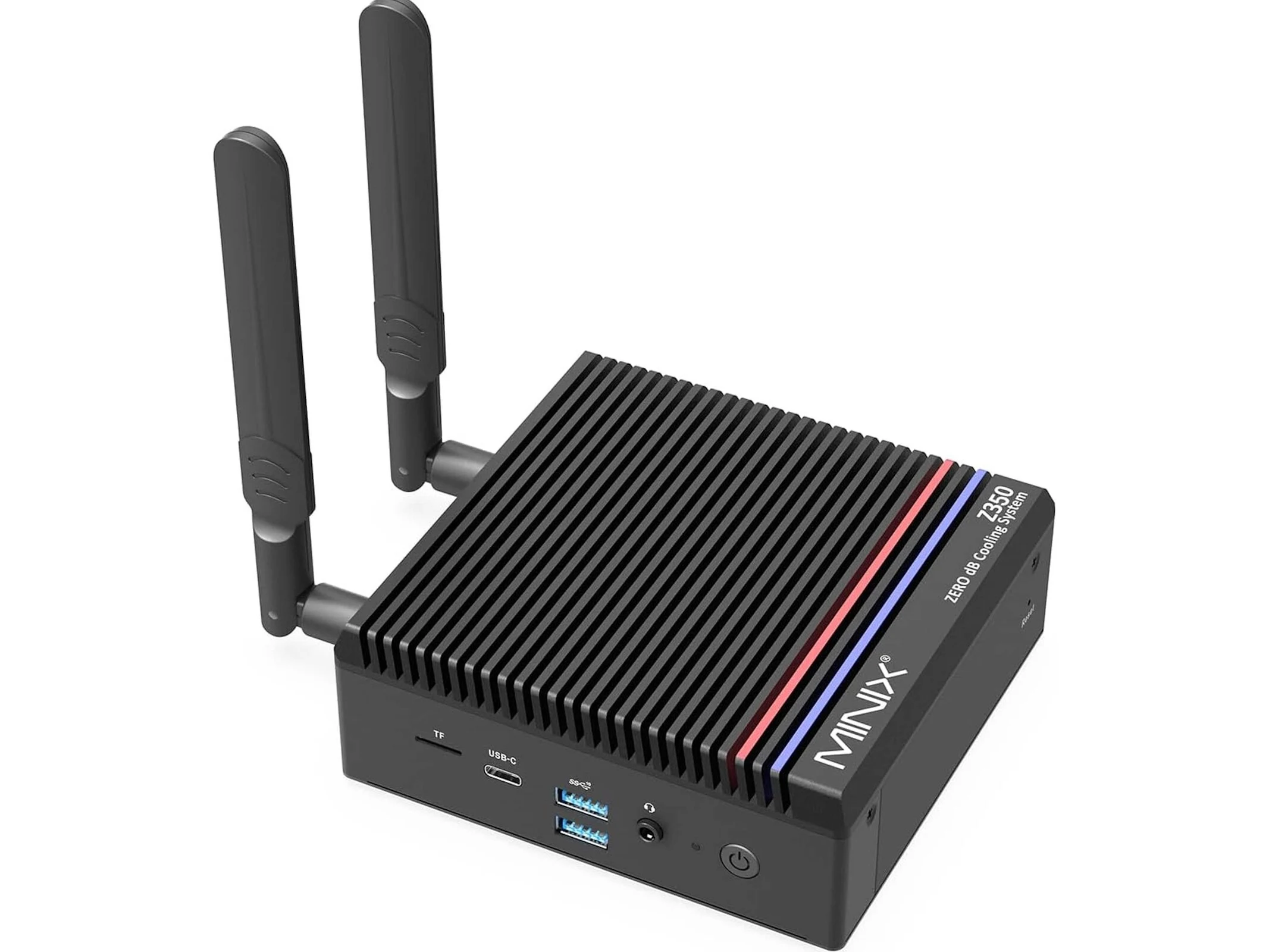
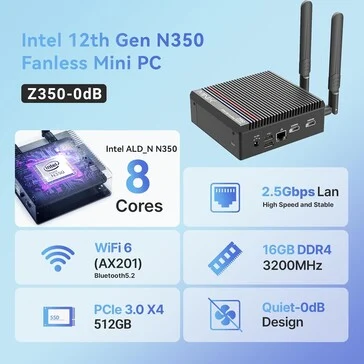
    Minix has introduced a new compact PC, the Minix Neo Z350-0dB, designed to be completely silent and suitable for continuous use due to its cooling fins (aside from any potential coil whine). This model features the Intel Core i3 N350, which, while not a top-tier processor, has eight cores instead of just the four found in the N100. It can serve various purposes, including office work, educational tasks, media playback, or even advertising on billboards.

    Specifications and Features

    The mini PC is equipped with 16 GB of RAM and a 512 GB SSD connected via PCIe, offering a performance edge over SATA, though this difference is not likely to be very noticeable in everyday tasks. For connectivity, the front panel includes a card reader, two USB 3.2 Gen 2 ports, a 3.5mm audio jack, and a USB-C port (which doesn’t handle video output). On the rear, there are two HDMI 2.0 ports that support 4K resolution at 60 Hz, along with two USB 2.0 ports. The single Ethernet port can achieve a maximum data transfer speed of 2.5 Gbps. It also supports Wifi 6 and Bluetooth 5.2.

    Dimensions and Protection Features

    In terms of size, the device measures 4.84 x 4.72 x 1.69 inches. Moreover, Minix claims their anti-static hardware protection enhances durability and reduces the chance of electrostatic discharge. The absence of a fan in this mini PC likely helps prevent dust accumulation inside, a common issue with PCs that have fans.

    Source:
    Link


  • Zotac Magnus EN75060T: Mini PC with RTX 5060 Ti & 96GB RAM

    Zotac Magnus EN75060T: Mini PC with RTX 5060 Ti & 96GB RAM

    Key Takeaways

    1. Zotac’s Magnus EN75060TC is a customizable mini PC that can be purchased as a barebone unit or with pre-installed OS and storage options.
    2. It features an Intel Core Ultra 7 255H processor with 16 cores and a full desktop Nvidia GeForce RTX 5060 Ti graphics card with 16GB of VRAM.
    3. The system supports up to 96GB of DDR5-5600 RAM and has two M.2 slots for SSD storage, with one slot also supporting SATA SSDs.
    4. Connectivity options include three USB 3.2 ports, two Ethernet ports, WiFi 7, Bluetooth 5.4, two Thunderbolt 4 ports, and the ability to connect up to four monitors.
    5. The mini PC is not yet available for purchase, and alternatives without dedicated graphics cards can be found from brands like Minisforum on Amazon.


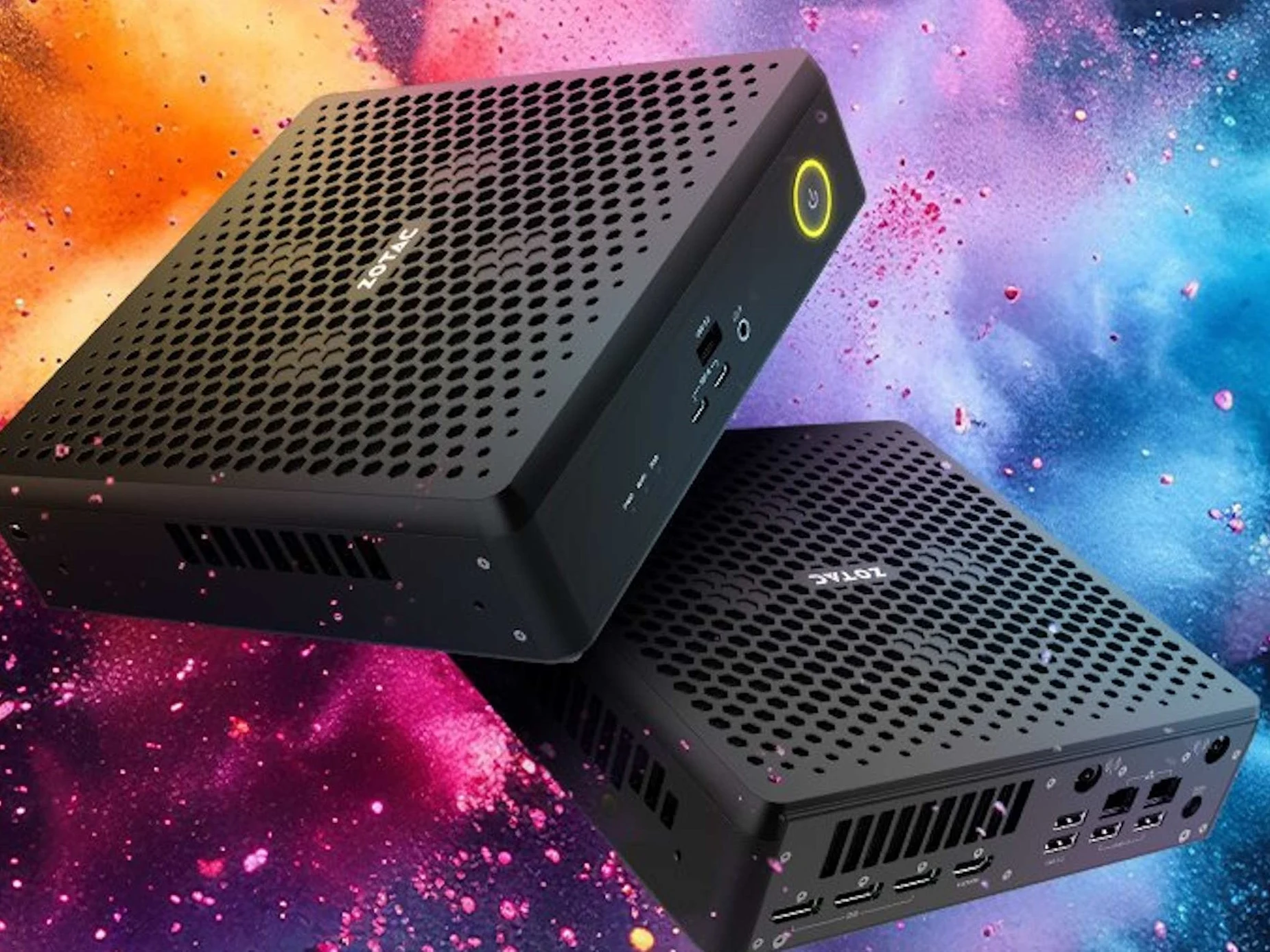
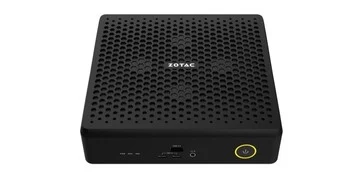
    Zotac has made an announcement about its latest mini PC, the Magnus EN75060TC, after showing it off a few weeks ago. This desktop can be customized with an OS and storage options, or it can be bought as a barebone unit. In that case, users will need to add their own RAM, SSD, and OS. The new Zotac Magnus measures 8.27 x 7.99 x 2.45 inches and is available with an Nvidia GeForce RTX 5060 Ti graphics card.

    GPU and Processor Details

    The GPU offers 16GB of VRAM and, as stated by the company, it’s the full desktop version. The mini PC is equipped with an Intel Core Ultra 7 255H processor that features 16 cores. The system has two memory slots that can hold a total of 96GB of DDR5-5600 RAM. There are also two M.2 2280 slots for SSD storage, both utilizing four PCIe 4.0 lanes, whereas the second slot also supports slower SATA SSDs.

    Connectivity and Power Supply

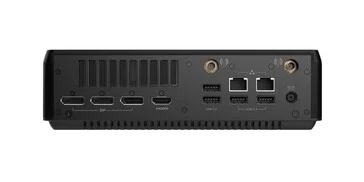
    Zotac has included a 330W power supply with the new mini PC. For connectivity, it has three USB 3.2 ports that offer speeds of 10Gbit/s. Users can connect through two Ethernet ports that provide 2.5Gbit/s speeds or use WiFi 7, with Bluetooth 5.4 also available. Additionally, it features two Thunderbolt 4 ports and one HDMI port, along with two DisplayPort 1.4a ports, allowing a connection of up to four monitors.

    Availability and Alternatives

    However, the mini PC isn’t available for purchase yet. Customers who do not require a dedicated graphics card can check out different options from Minisforum and other brands available on Amazon. The range of compact systems featuring dGPU is quite limited, but the Asus ROG 760 equipped with an RTX 4060 is currently priced above $1,000 on Amazon.

    Source:
    Link


  • Zotac Magnus One Mini PC with RTX 5070 Offers High Gaming Power

    Zotac Magnus One Mini PC with RTX 5070 Offers High Gaming Power

    Key Takeaways

    1. Compact Design: The Zotac Magnus One has dimensions of 10.7 x 5.0 x 9.8 inches with a volume of 8.5 liters, making it smaller than typical desktop PCs but larger than most mini PCs.

    2. Powerful Performance: It features an Intel Core Ultra 7 265 processor, an integrated NPU, and an Nvidia GeForce RTX 5070 graphics card with 12GB GDDR7 VRAM, suitable for gaming.

    3. Memory and Storage: Comes with 16GB of RAM and a 1TB SSD, supports up to 96GB of RAM, and has multiple M.2 slots for additional storage options.

    4. Extensive Connectivity: Offers a range of ports including four USB 3.2 Gen 2 ports, four USB 3.0 ports (including Type C), a Thunderbolt 4 port, and supports WiFi 7 and dual Ethernet ports.

    5. Efficient Power Supply: Powered by a 500W PSU with 80+ Platinum certification; cooling is achieved through standard fans and heatsinks, not water cooling.


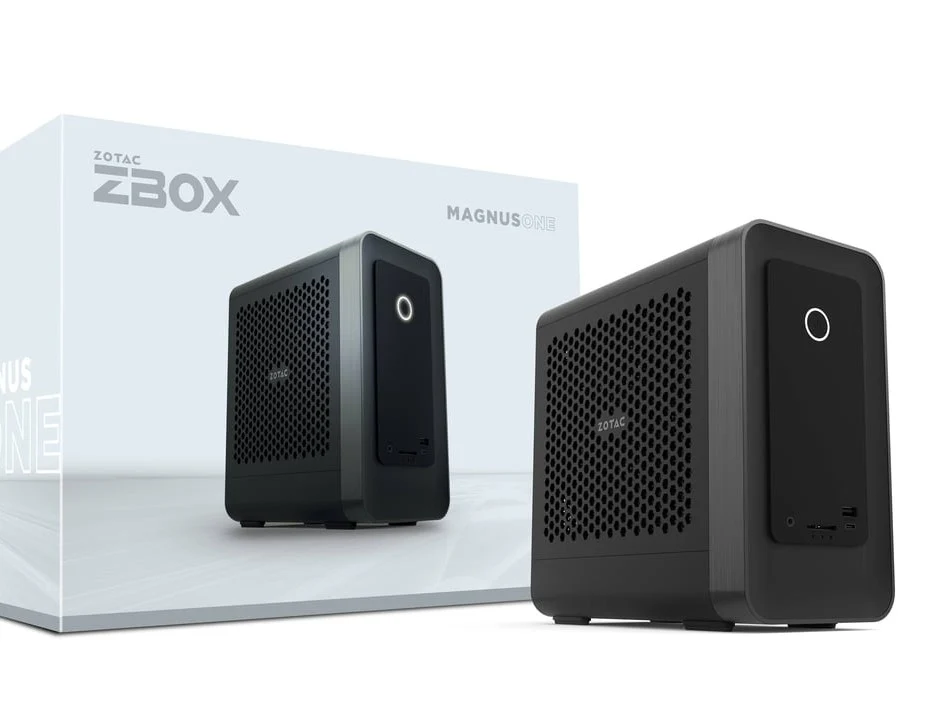
    The Zotac Magnus One is a pretty small desktop PC, but it’s not as tiny as most other mini PCs you can find today. To be more precise, the Magnus One EU275070C has dimensions of 10.7 x 5.0 x 9.8 inches and its case volume is nearly 8.5 liters. Despite its size, it packs a punch with performance, featuring an Intel Core Ultra 7 265 and an integrated NPU. For graphics, Zotac chose the Nvidia GeForce RTX 5070, which has 12GB GDDR7 VRAM, making it a good option for gaming.

    Specifications and Memory

    Moreover, this Windows-based mini PC comes with 16GB of RAM and a 1TB SSD. The device has two DDR5 slots that can support a maximum of 96GB of memory. Additionally, there is a secondary M.2 slot that has four PCIe 4.0 lanes, while the primary M.2 slot is compatible with PCIe 5.0. The Magnus One also has space for one traditional 2.5-inch SATA hard drive or SSD, which is quite nice.

    Connectivity Options

    As for other features, it includes a 3-in-1 card reader, four USB 3.2 Gen 2 ports for connecting external storage devices, and four more USB 3.0 ports, one of which is Type C. There’s also a single Thunderbolt 4 port available. The mini PC supports WiFi 7, and if that is not enough, it has two Ethernet ports, one with 5GBit/s speed and the other with 1GBit/s. Powering the device is a 500W PSU that has an 80+ Platinum certification, and it utilizes standard fans and heatsinks for cooling—no water cooling here. Sadly, the new Zotac Magnus One mini PC with RTX 5070 isn’t available for sale yet.

    Source:
    Link


  • AMD Ryzen 9 9955HX3D Beats Intel Core Ultra 9 in Multi-Core Efficiency

    AMD Ryzen 9 9955HX3D Beats Intel Core Ultra 9 in Multi-Core Efficiency

    Key Takeaways

    1. AMD’s Ryzen 9 9955HX3D shows superior performance-per-watt compared to Intel’s Ultra 9 285HX and Core i9-14900HX, especially in the 40–100W range.
    2. There are concerns about OEMs’ reluctance to integrate AMD’s latest chips into high-end gaming laptops, despite their efficiency advantages.
    3. Users worry that some laptops may reuse cooling designs from Intel models for AMD variants, potentially leading to poor thermal management.
    4. Availability of laptops with the AMD 9955HX3D is limited, with only a few models from brands like MSI, ASUS, and XMG currently offering the chip.
    5. Ongoing discussions suggest that while AMD excels in performance per watt, Intel’s stronger market presence and OEM support may hinder AMD’s broader adoption.


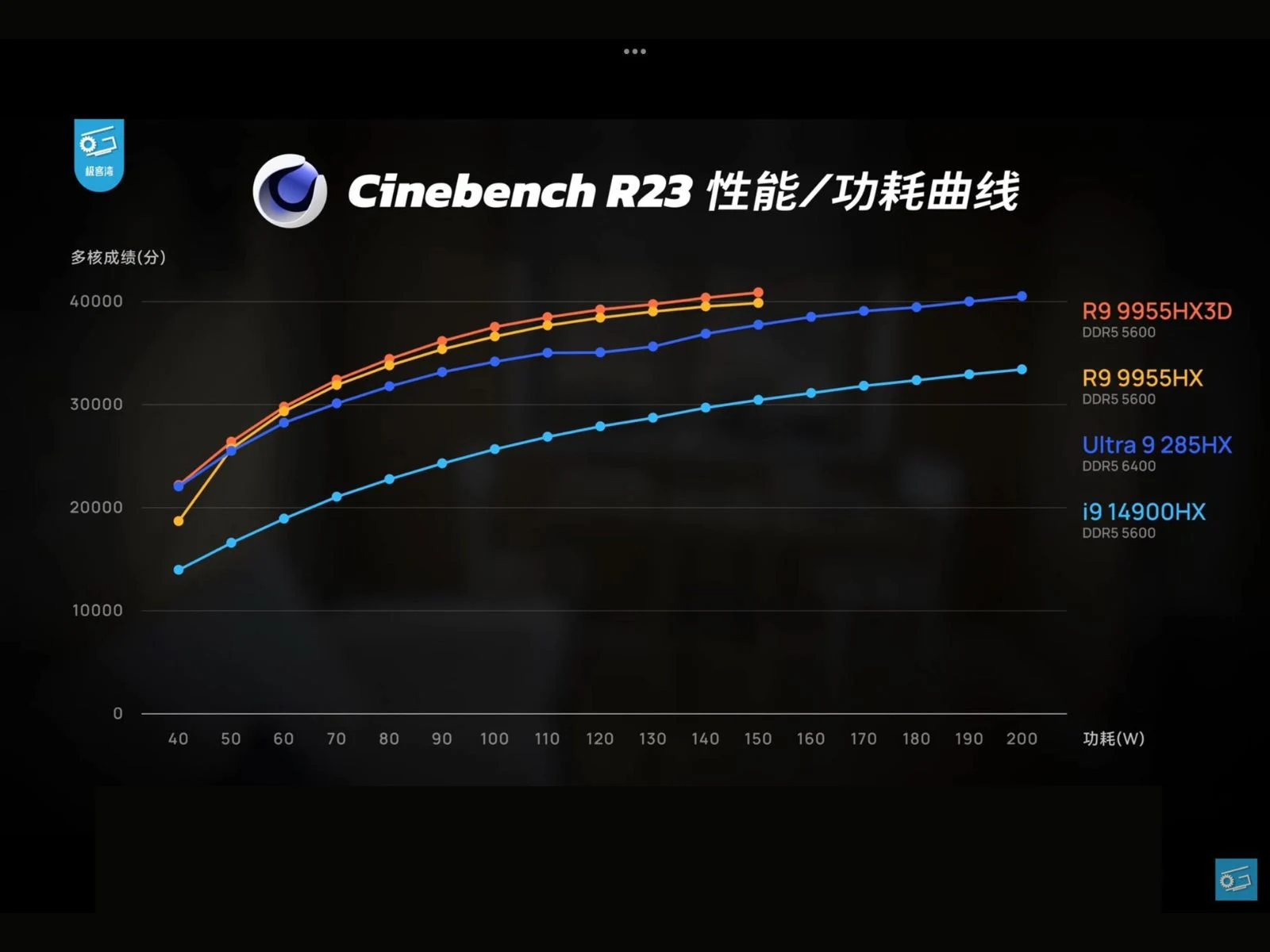
    A recent Cinebench R23 benchmark comparison shared by the Chinese YouTuber Geekerwan has caused a stir in the Reddit community r/GamingLaptops. This excitement was mainly triggered by Reddit user u/Aggravating_Match298, who posted the results, which included more than just the numbers. The comparison chart shows power consumption against multi-core performance for AMD’s Ryzen 9 9955HX3D, Ryzen 9 9955HX, Intel’s Core Ultra 9 285HX, and the older Intel Core i9-14900HX.

    Performance Insights

    In the range of 40–100W, the AMD 9955HX3D stands out with notably superior performance-per-watt, as illustrated in the graph. The regular 9955HX is not far behind, which showcases the architectural improvements AMD has achieved with its Fire Range platform. Meanwhile, Intel’s Ultra 9 285HX only starts to catch up at power levels exceeding 130W, while the 14900HX consistently lags behind.

    Real-World Concerns

    However, the conversation on Reddit has unveiled some real-world challenges. Many users pointed out that OEMs seem hesitant to integrate AMD’s latest chips into mainstream products. One user remarked, “Almost no high-end gaming laptops are using AMD despite better efficiency.”

    Additionally, some Redditors expressed worries about the thermal design choices being made. They claim that Dell might be reusing cooling designs from their Intel laptops for the AMD variants. For instance, one user mentioned that the AMD version of a Dell laptop lacked vapor chamber cooling and instead utilized a thick shim to connect with the chiplets, supposedly because the heatsink was initially made for an Intel CPU configuration.

    Potential Impacts on Performance

    This could potentially result in less effective thermal management. Nevertheless, it’s worth noting that Dell or any official channel has not confirmed these claims, and they remain largely anecdotal.

    Despite these issues, the interest in AMD’s offerings is undeniable. Geekerwan’s graph has been broadly shared across platforms like Reddit, highlighting the AMD 9955HX3D as a formidable option for gamers and creators alike who seek multi-threaded performance with fairly efficient power usage.

    Nonetheless, users quickly highlighted a significant drawback: availability. Currently, only a few high-end models from brands like MSI, ASUS, and XMG include this chip, and broader adoption by OEMs appears sluggish. Some speculate that limited supply and Intel’s stronger foothold in the OEM markets are factors contributing to this situation.

    Whether OEMs will increase their support for AMD’s Fire Range or continue to prefer Intel’s more established platforms is still uncertain. For the time being, discussions on Reddit indicate that even though AMD seems to excel in performance per watt, issues regarding availability and OEM support continue to favor Intel.

    Source:
    Link

  • Asus NUC 15 Mini PC Launches with Arrow Lake-HX and RTX 50 GPUs

    Asus NUC 15 Mini PC Launches with Arrow Lake-HX and RTX 50 GPUs

    Key Takeaways

    1. Asus has launched the NUC 15 Pro and NUC 15 Pro+, powered by Intel Arrow Lake-H CPUs, without a dedicated GPU.
    2. The Asus NUC 15 Performance can use Intel Core Ultra processors and supports Nvidia GeForce RTX 5070 or RTX 5060 graphics.
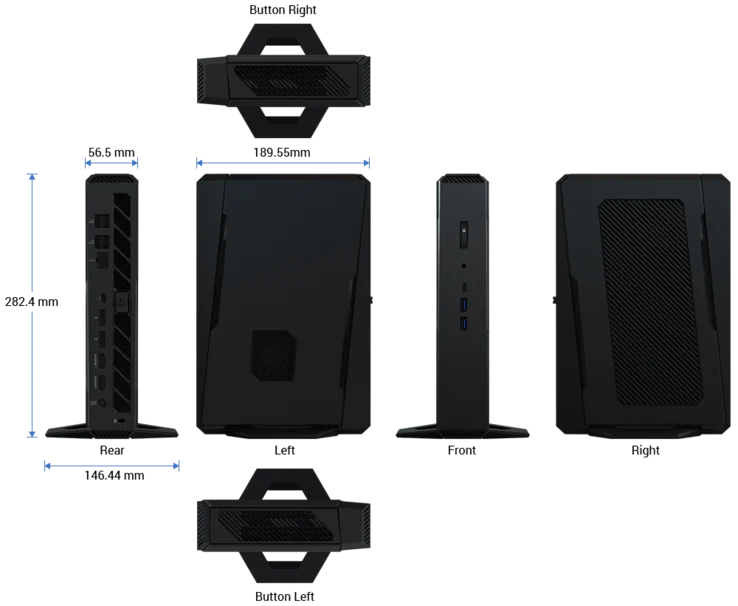
    3. The device features a triple-fan cooling system in a compact chassis, measuring 189.55 mm x 282.4 mm x 56.5 mm.
    4. It offers extensive connectivity options, including Wi-Fi 7, Thunderbolt 4.0, and support for multiple 4K video streams.
    5. The starting price is expected to be around $1,200, with memory and storage sold separately.


    Asus recently introduced a few mini PCs, specifically the NUC 15 Pro and NUC 15 Pro+. These devices are powered by Intel Arrow Lake-H CPUs and do not come with a dedicated GPU. If users are looking for a dedicated graphics card, they would need to consider the ROG NUC (2025) showcased at CES this year. Now, Asus has revamped the same setup to create a non-gaming version, which is called the Asus NUC 15 Performance.

    Performance Specifications

    This model can be equipped with either an Intel Core Ultra 9 275HX or Core Ultra 7 255HX Arrow Lake-HX processors, and it can be combined with Nvidia’s GeForce RTX 5070 or RTX 5060. The memory can be expanded up to 32 GB of DDR5-6400, while the storage capacity can reach 2 TB PCIe Gen5. However, the base Asus NUC 15 Performance unit does not include any memory, which must be purchased separately. For those needing more RAM, the NUC supports up to 96 GB, but the required two 48 GB modules have to be bought externally.

    Cooling and Design Features

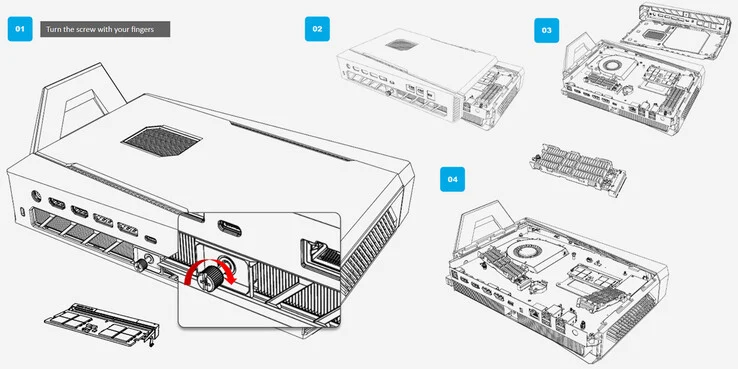
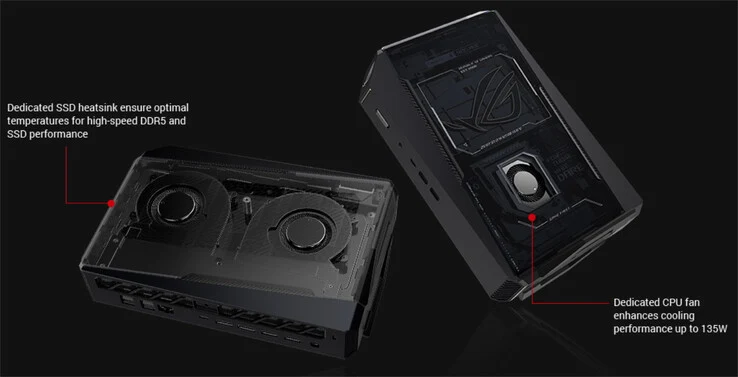
    To keep the NUC 15 Performance cool, Asus has integrated a triple-fan cooling mechanism that utilizes two vapor chambers. This is all housed in a compact chassis measuring 189.55 mm x 282.4 mm x 56.5 mm. With a volume of three liters, it is designed to fit in small places. Moreover, the chassis can be easily disassembled with just a single thumbscrew.

    Connectivity Options

    The Asus NUC 15 Performance offers a variety of connectivity features, including Wi-Fi 7, 2.5 Gbps Ethernet, a Thunderbolt 4.0 port, Bluetooth 5.2, six USB 3.2 Gen2 Type-A ports (2 in the front and 4 in the back), two HDMI ports, two DisplayPort ports, and one USB-C port. Asus claims this configuration can handle five 4K video streams simultaneously.

    While Asus hasn’t officially provided a starting price for the NUC, it is anticipated by Liliputing to be around $1,200.

    Source:
    Link


  • Asus ROG NUC 2025 Mini-PC: Intel Core Ultra 9 & RTX 5080

    Asus ROG NUC 2025 Mini-PC: Intel Core Ultra 9 & RTX 5080

    Key Takeaways

    1. Launch Details: Asus has launched the ROG NUC 2025 more than a year after the 2024 version.
    2. Enhanced Performance: The ROG NUC 2025 features an Intel Core Ultra 9 275HX, offering a 50% increase in CPU performance, and comes with an Nvidia RTX 5080 GPU.
    3. Compact Design: The mini-PC has a size of 282.4 x 187.7 x 56.5 mm and weighs 3.12 kg, making it portable.
    4. Memory and Storage: It includes two CSO-DIMM and M.2 2280 slots, with a model offering 32 GB of RAM and a 2 TB SSD.
    5. Availability: The ROG NUC 2025’s release date in North America and Europe is still unknown; it is currently available in China for CNY 24,999 (approximately $3,475).


    Asus has finally launched the ROG NUC 2025, more than a year after it began selling its 2024 version. To summarize, the first ROG NUC features up to an Intel Core Ultra 9 185H and an Nvidia GeForce RTX 4070 GPU, which is currently priced at $1,693 on Amazon. In contrast, the ROG NUC 2025 replaces these components with much more powerful options.

    Improved Performance

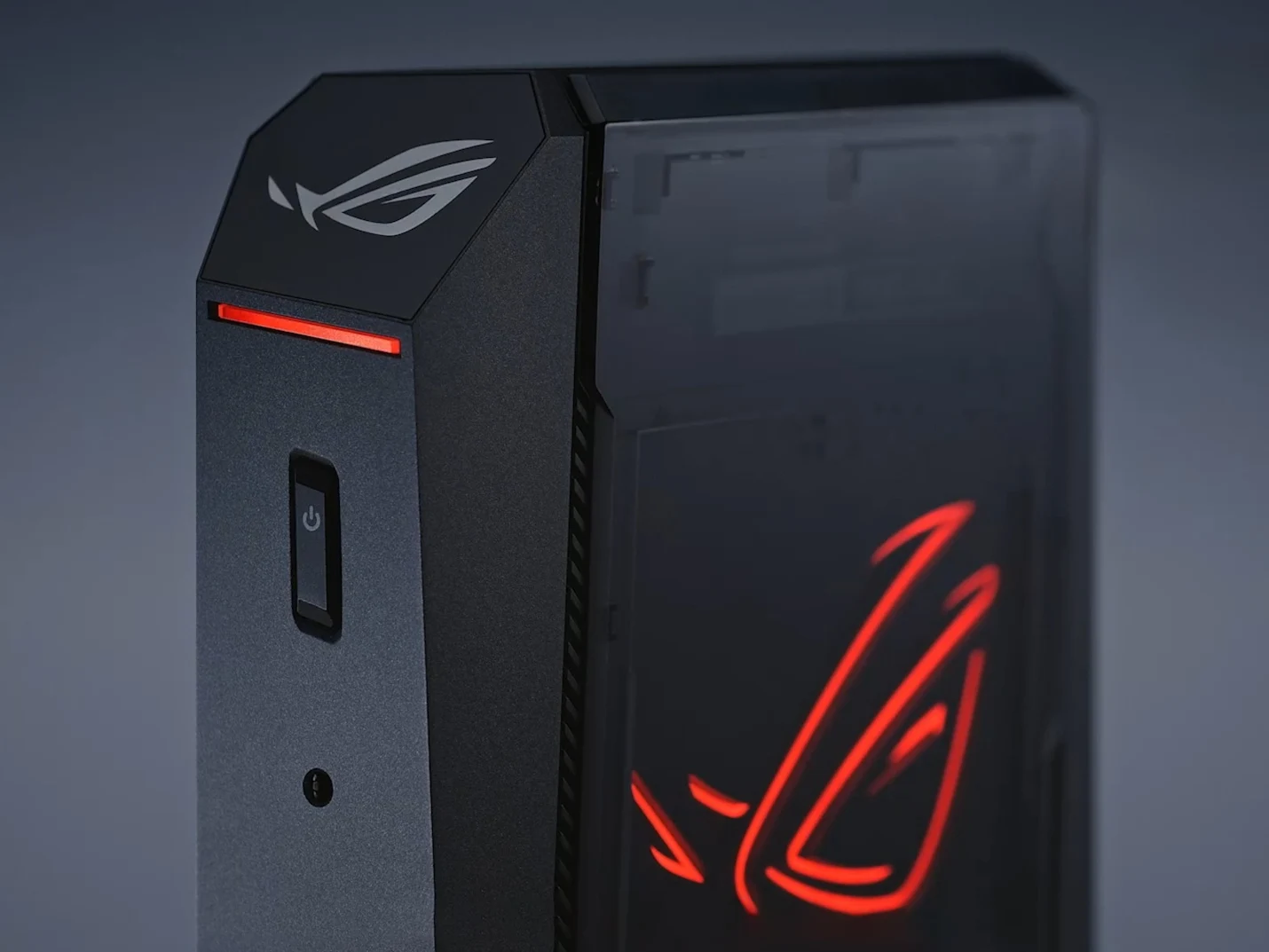
    The latest mini-PC utilizes the Core Ultra 9 275HX, providing a 50% increase in CPU performance. Additionally, the inclusion of an RTX 5080 is expected to deliver even greater enhancements in GPU performance. Furthermore, the ROG NUC 2025 comes equipped with two CSO-DIMM and M.2 2280 slots each, along with a variety of ports, all housed in a compact design measuring 282.4 x 187.7 x 56.5 mm and weighing 3.12 kg.

    Availability Issues

    Sadly, Asus has yet to announce when the ROG NUC 2025 will be available in North America, Europe, and other regions. At present, the mini-PC can only be purchased as the RNUC15JNK9X28AA6, which includes 32 GB of RAM and a 2 TB SSD for CNY 24,999 (around $3,475) on JD.com. For more information, please check Asus’ official website.

    Source:
    Link


  • Adidas Data Breach: Customer Info Compromised After Hack

    Adidas Data Breach: Customer Info Compromised After Hack

    Key Takeaways

    1. Adidas experienced a data breach involving user names, email addresses, and phone numbers from a customer support vendor, but no passwords or payment information were compromised.
    2. Following the breach announcement on May 27, 2025, Adidas implemented containment strategies and is working with cybersecurity professionals to investigate.
    3. The incident highlights vulnerabilities in third-party vendor security, with 30% of breaches involving external service providers, according to Verizon’s 2025 report.
    4. Adidas is not alone; other retailers like JD Sports and Foot Locker have faced similar breaches linked to third-party vendors, raising concerns about data handling practices.
    5. Adidas is enhancing its data security measures after previous breaches earlier in 2025, while general cybersecurity advice includes monitoring accounts for unusual activity.


    Adidas has acknowledged that user information was compromised due to a breach at one of its customer support vendors. The leaked data consists of user names, email addresses, and phone numbers from individuals who reached out to Adidas for assistance. Thankfully, the company stated that no passwords or payment information were involved in this incident.

    Response to the Breach

    After the breach was made public on May 27, 2025, Adidas implemented containment strategies and began collaborating with cybersecurity professionals to probe into the matter. The company is notifying those affected and has reported the incident to data protection authorities and law enforcement, following legal requirements.

    Wider Implications

    This breach reveals a larger issue, as third-party vendors remain a vulnerable spot in enterprise security systems. According to Verizon’s 2025 Data Breach Investigations Report, 30% of breaches last year involved external service providers, which raises ongoing worries about managing vendor risks and ensuring adequate security measures.

    Adidas isn’t alone in dealing with the consequences of vendor-related breaches. In 2023, JD Sports announced that attackers accessed information from approximately 10 million customers, including their names, contact information, and order histories. The following year, Foot Locker reported a similar breach tied to a third-party marketing partner.

    Ongoing Concerns

    These incidents intensify worries about how external vendors handle customer data and why they continue to be a significant vulnerability in retail cybersecurity.

    This isn’t the first time Adidas has encountered a data breach either. Earlier this year, customer data was also compromised in separate incidents in Turkey and South Korea. Adidas expressed regret over the situation and is actively working to enhance its data security measures. The company assures that investigations into the breach and efforts to prevent future occurrences are still in progress.

    While Adidas has not provided specific advice for affected individuals, general cybersecurity best practices recommend verifying the source of unsolicited communications and keeping an eye on accounts for any unusual activity.

    Source:
    Link