Tag: Intel Core Ultra 7 255H

  • Gaming Laptop: 300Hz QHD, 128GB DDR5, RTX 5070, Multiple Ports

    Gaming Laptop: 300Hz QHD, 128GB DDR5, RTX 5070, Multiple Ports

    Key Takeaways

    1. The Tuxedo InfinityBook Max 15 features an Intel Core Ultra 7 255H processor with 16 cores, offering strong performance for demanding tasks.
    2. It has a 15.3-inch display with a resolution of 2560 x 1600 and a high refresh rate of 300 Hz, ideal for gaming and content viewing.
    3. Graphics options include the GeForce RTX 5060 and RTX 5070 Laptop GPUs, with the RTX 5070 providing a 15% performance increase over the 5060.
    4. The laptop can be configured with up to 128 GB of RAM and 8 TB of SSD storage, along with a 99 Wh battery for extended use.
    5. The starting price for the RTX 5060 model is €1,430 before taxes, with pre-orders already available and expected shipping by the end of next month.


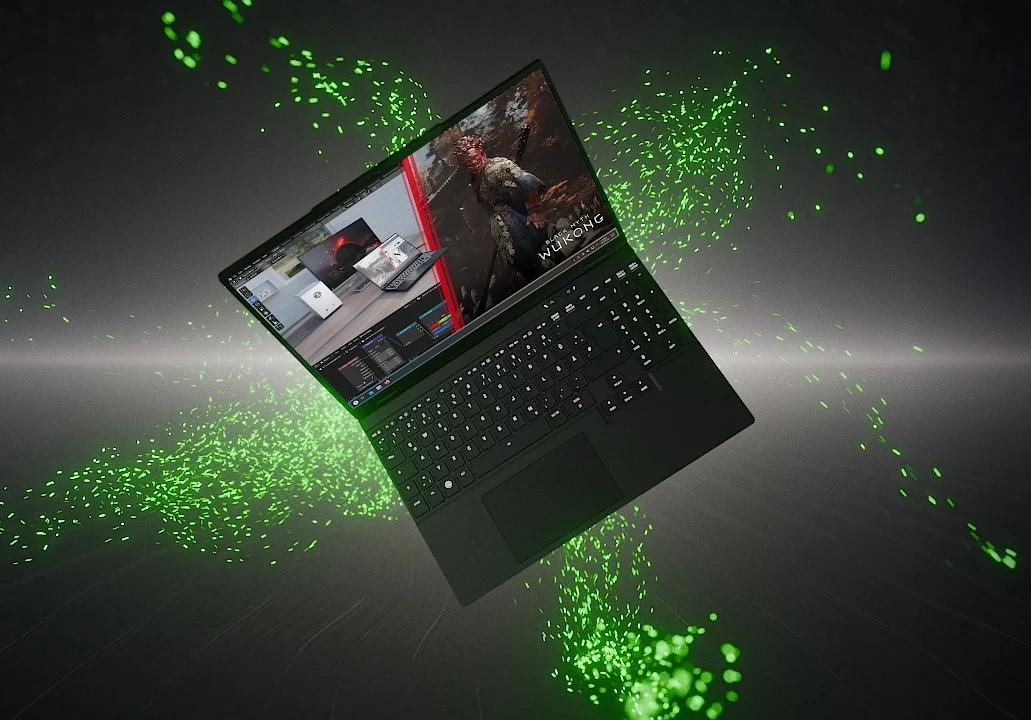
    Tuxedo has unveiled the new Intel version of its InfinityBook Max 15 laptop. This model features a Core Ultra 7 255H processor combined with up to 128 GB of RAM and an RTX 5070 Laptop GPU. The Max 15 is designed to offer solid performance in a stylish and simple case.

    Performance Specs

    The Intel Core Ultra 7 255H is a capable 16-core processor present in many high-performance laptops and mini PCs. It consists of 6 Lion Cove P-cores, 8 Skymont E-Cores, and 2 Skymont LP E-cores. In the Cinebench 2024 multithreaded test, the 255H achieves a score of about 1,000 points, which is quite impressive. In basic terms, this CPU should manage most moderately demanding tasks without any trouble.

    Display Features

    Notably, the InfinityBook Max 15 comes with a 15.3-inch screen that has a resolution of 2560 x 1600. With an astonishing 300 Hz refresh rate, this display is sure to enhance the experience for gamers who enjoy fast-paced action. Tuxedo also asserts that it provides full 100% coverage of the sRGB color spectrum, making it a pleasure to watch content on this gaming laptop. The brightness can peak at 500 nits, but it lacks any local-dimming feature.

    Graphics Options

    When it comes to GPU options, choices are limited to the GeForce RTX 5060 Laptop and RTX 5070 Laptop GPUs. Both graphics cards offer a maximum TGP of 115 watts and come with 8 GB of GDDR7 memory. The RTX 5070 has nearly 38% more CUDA cores compared to the 5060, which gives it a clear edge in performance. However, Tuxedo mentions that the 5070-equipped laptop will only be about 15% faster than the more affordable 5060 model.

    The cooling system of the InfinityBook Max 16 will play a significant role in how well the laptop performs in real-world situations. Its effectiveness under load can only be determined once independent reviewers test it. Tuxedo claims that the cooling system can support up to 165 watts, but actual performance is still uncertain.

    Memory and Storage

    As previously noted, this gaming laptop can be configured with up to 128 GB of DDR5-6400 RAM and a maximum of 8 TB of PCIe 4.0 solid-state storage. It also includes a 99 Wh battery. The available I/O options are quite good, featuring the following ports:

    The Tuxedo InfinityBook Max 16 gaming laptop equipped with the RTX 5060 will start at €1,430 before taxes. It will include the Core Ultra 7 255H CPU, 16 GB of DDR5-5600 memory, and a 1 TB SSD (the Crucial T710 is currently priced at $186 on Amazon). Pre-orders are already open, and the laptop is expected to ship to customers by the end of next month.

    Source:
    Link
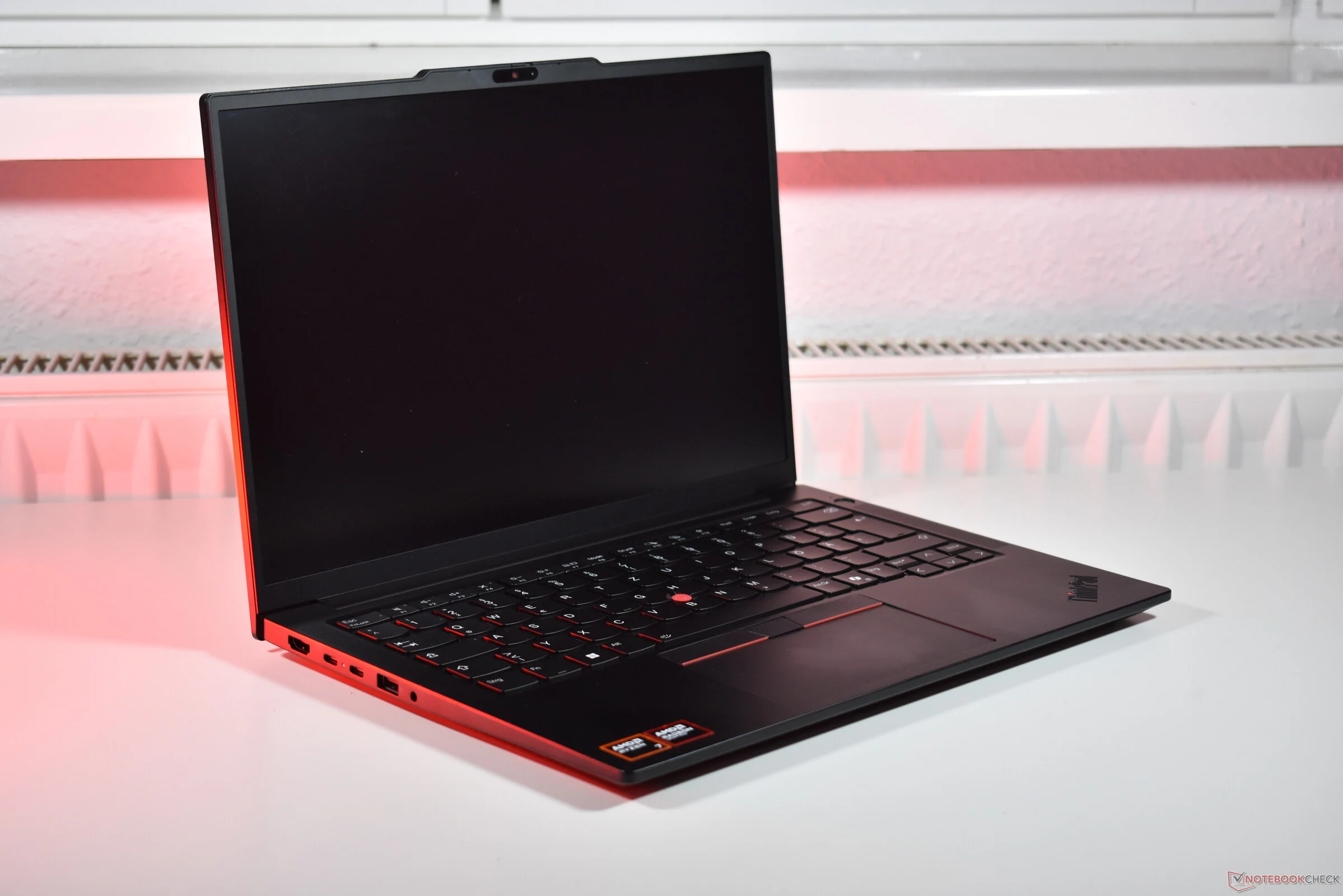


  • AMD vs Intel: Best Processor for Lenovo ThinkPad E14 Gen 7

    AMD vs Intel: Best Processor for Lenovo ThinkPad E14 Gen 7

    Key Takeaways

    1. Processor Comparison: The Intel Core Ultra 7 255H has 16 cores, outperforming the AMD Ryzen 7 250, which has 8 cores, especially in single-core performance.

    2. Display Quality: The Intel version features a superior 2.8K IPS display with a 120 Hz refresh rate, while the AMD version has a WUXGA display with a 60 Hz refresh rate.

    3. Power Consumption: The AMD model operates at a power limit of 35 W, compared to 28 W for the Intel model.

    4. Thermal Performance: The AMD variant runs cooler and quieter under stress than the Intel model.

    5. Battery Life: The Intel model has better battery efficiency, nearly matching the AMD version in Wi-Fi browsing tests despite its higher display power consumption.


    AMD or Intel? This is a question that many people ask when buying a PC, as these two brands are the leading manufacturers of processors for computers and laptops. Interestingly, some laptops are available with both types of processors. A clear example is Lenovo’s ThinkPad E14 Gen 7, which comes in both AMD and Intel options. We previously reviewed the Intel version this summer and have now published our thorough evaluation of the Lenovo ThinkPad E14 Gen 7 AMD model, so it’s time to compare the two!

    Comparing Processors

    The AMD Ryzen 7 250 is in the competition, featuring eight Zen 4 cores, whereas the Intel Core Ultra 7 255H boasts 16 cores (including 6 Lion Cove P cores, 8 Skymont E cores, and 2 Skymont LPE cores). The Intel version of the ThinkPad is equipped with a superior 2.8K (2,880 x 1,800) IPS display that supports a 120 Hz refresh rate, while the AMD variant has a simpler WUXGA (1,920 x 1,200) IPS display with a 60 Hz rate. Other essential specifications, such as battery capacity and cooling systems, remain the same. The AMD version operates at a power limit of 35 W, while the Intel model has a limit of 28 W.

    Performance Insights

    It appears that the Intel variant has the advantage overall. The screen quality is noticeably better on the Intel model, which raises the question of why Lenovo doesn’t provide the same display for the AMD version. Additionally, the Arrow Lake H processor generally outperforms the AMD CPU in most benchmark tests. While the AMD Ryzen 7 excels under continuous load, it falls short in single-core performance, with the Intel Core Ultra model being approximately 25 percent faster.

    Heat, Noise, and Battery Life

    Now let’s consider heat, noise, and battery life. The Lenovo ThinkPad E14 Gen 7 AMD runs somewhat cooler on average compared to the Intel model (which is found on lenovo.com) when under stress, and it is also a bit quieter. However, the battery life of the ThinkPad E14 Gen 7 Intel proves to be more efficient: even with the display that consumes more power, the Intel model nearly ties in our Wi-Fi browsing test. If both models had the same display, we are confident that the Intel version would outperform the AMD variant.

    In conclusion, even though AMD has had a strong performance in recent years, Intel is simply the superior choice in this instance. A significantly better display combined with a more powerful and efficient processor leads to an improved user experience, despite the AMD model being cooler and quieter.

    Source:
    Link


  • Honor MagicBook Art 14 2025 Leaks: Performance Insights Before July

    Honor MagicBook Art 14 2025 Leaks: Performance Insights Before July

    Key Takeaways

    1. Honor’s MagicBook Art 14 2025 will launch on July 2, alongside the Magic V5 and MagicPad 3.
    2. The laptop features the Core Ultra 7 255H CPU and 32 GB of RAM, an upgrade from last year’s model.
    3. Benchmark results show mixed performance, with the MagicBook Art 14 2025 not meeting expectations for Arrow Lake-powered laptops.
    4. Compared to its predecessor, the new model is reportedly underperforming in benchmark tests.
    5. There is skepticism regarding the final performance of the MagicBook Art 14 2025 when tested in real-world conditions later this year.


    The upcoming release of Honor’s premium laptop is imminent. Previously mentioned, the MagicBook Art 14 2025 is set to be launched on July 2, alongside the Magic V5 and MagicPad 3. Recently, the latest MagicBook Art 14 has been spotted on Geekbench, showcasing its performance in single-core, multi-core, and OpenCL benchmarks.

    CPU Architecture Revealed

    The well-known benchmarking site has verified the CPU design that Honor is using for its new 14-inch laptop. As indicated by the images provided, the MagicBook Art 14 2025 will include at least the Core Ultra 7 255H from Intel’s Arrow Lake-H series, alongside 32 GB of RAM. This is an upgrade from the Core Ultra 7 155H in last year’s version, and the Core Ultra 7 255H is expected to perform better than the results demonstrated.

    Performance Comparison

    When we compare, the MagicBook Art 14 2025 doesn’t quite reach the expectations set for laptops powered by Arrow Lake in these tests, especially when looking at devices like the Asus Zenbook Duo, which we reviewed a few months back (current price: $1,499.99 on Amazon). Moreover, the results indicate that this laptop is underperforming compared to its earlier model. Therefore, we are skeptical that the MagicBook Art 14 2025 will yield such disappointing results when we finally get to try it out later this year.

    Source:
    Link


  • Lenovo Yoga Book 9 14 Review: Arrow Lake CPU Throttling Issues

    Lenovo Yoga Book 9 14 Review: Arrow Lake CPU Throttling Issues

    Key Takeaways

    1. The Yoga Book 9 14 features the Intel Arrow Lake Core Ultra 7 255H processor, offering significant performance upgrades over the original Yoga Book 9 13.
    2. The new CPU can achieve speeds up to twice as fast as the Core Ultra 7 155U in the previous model, with improved graphics performance.
    3. Performance may decline by up to 25% during continuous use due to thermal limits and Turbo Boost capabilities.
    4. The Yoga Book 9 14 experiences more throttling compared to the Xiaomi RedmiBook Pro 14, which uses the same CPU.
    5. Despite throttling concerns, the Yoga Book 9 14 still greatly outperforms its predecessor, making it a notable upgrade.


    The latest Yoga Book 9 14 has started shipping, equipped with the cutting-edge Intel Arrow Lake Core Ultra 7 255H processor. This is a notable upgrade from the original Yoga Book 9 13, which was limited to Core U-series processors. The new CPU boasts speeds that can reach up to twice as fast as the Core Ultra 7 155U found in the previous 13-inch version, and the graphics performance shows even more significant improvements.

    Performance Considerations

    However, it’s important to note that “up to” is a key term here. Our review highlights that the H-series CPU might be more than what the Yoga Book 9 14 can effectively manage. For instance, while running CineBench R15 xT in a continuous loop, we observed that the processor’s performance could decline by as much as 25% over time. This is likely caused by limited Turbo Boost capabilities or thermal limits, whereas the older 13-inch Yoga Book 9 exhibited minimal throttling even under similar testing conditions. Interestingly, the Xiaomi RedmiBook Pro 14, which uses the same CPU as the Yoga Book 9 14, demonstrated less throttling compared to our model, as illustrated in the graph below.

    Throttling Insights

    The throttling observed in our Core Ultra 7 255H setup raises concerns that a similar situation might arise with the more expensive Core Ultra 9 285H variant. As such, potential buyers might want to think about avoiding the pricier Core Ultra 9 option, as the performance differences between the two CPUs are expected to be quite small. Nonetheless, it’s still worth mentioning that the Yoga Book 9 14 significantly outperforms its older versions by a wide margin, irrespective of any throttling issues encountered.

    Source:
    Link

  • Zotac Magnus EN75060T: Mini PC with RTX 5060 Ti & 96GB RAM

    Zotac Magnus EN75060T: Mini PC with RTX 5060 Ti & 96GB RAM

    Key Takeaways

    1. Zotac’s Magnus EN75060TC is a customizable mini PC that can be purchased as a barebone unit or with pre-installed OS and storage options.
    2. It features an Intel Core Ultra 7 255H processor with 16 cores and a full desktop Nvidia GeForce RTX 5060 Ti graphics card with 16GB of VRAM.
    3. The system supports up to 96GB of DDR5-5600 RAM and has two M.2 slots for SSD storage, with one slot also supporting SATA SSDs.
    4. Connectivity options include three USB 3.2 ports, two Ethernet ports, WiFi 7, Bluetooth 5.4, two Thunderbolt 4 ports, and the ability to connect up to four monitors.
    5. The mini PC is not yet available for purchase, and alternatives without dedicated graphics cards can be found from brands like Minisforum on Amazon.


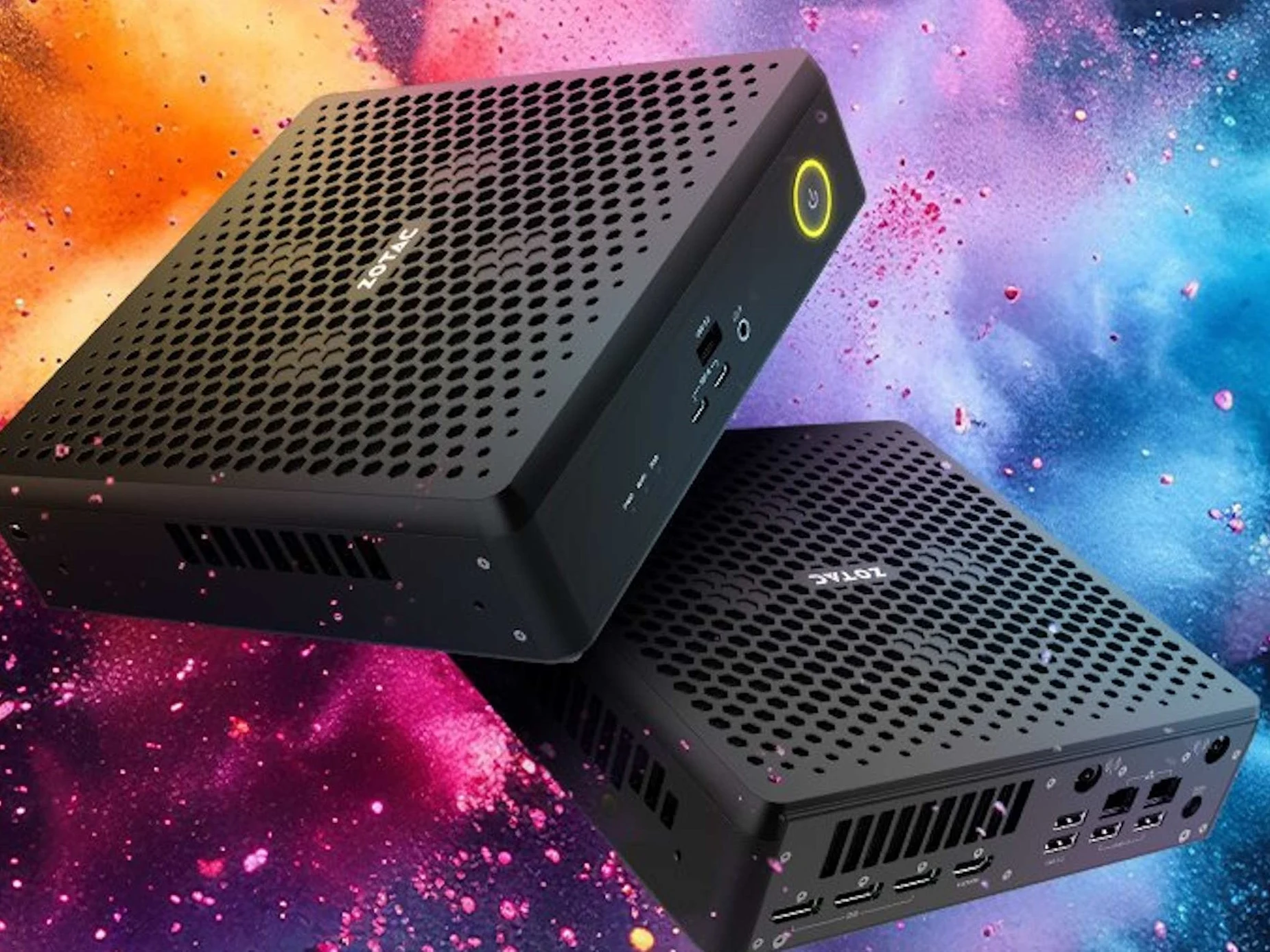
    Zotac has made an announcement about its latest mini PC, the Magnus EN75060TC, after showing it off a few weeks ago. This desktop can be customized with an OS and storage options, or it can be bought as a barebone unit. In that case, users will need to add their own RAM, SSD, and OS. The new Zotac Magnus measures 8.27 x 7.99 x 2.45 inches and is available with an Nvidia GeForce RTX 5060 Ti graphics card.

    GPU and Processor Details

    The GPU offers 16GB of VRAM and, as stated by the company, it’s the full desktop version. The mini PC is equipped with an Intel Core Ultra 7 255H processor that features 16 cores. The system has two memory slots that can hold a total of 96GB of DDR5-5600 RAM. There are also two M.2 2280 slots for SSD storage, both utilizing four PCIe 4.0 lanes, whereas the second slot also supports slower SATA SSDs.

    Connectivity and Power Supply

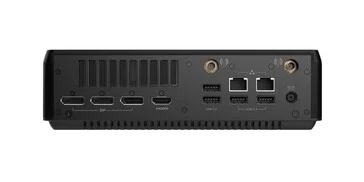
    Zotac has included a 330W power supply with the new mini PC. For connectivity, it has three USB 3.2 ports that offer speeds of 10Gbit/s. Users can connect through two Ethernet ports that provide 2.5Gbit/s speeds or use WiFi 7, with Bluetooth 5.4 also available. Additionally, it features two Thunderbolt 4 ports and one HDMI port, along with two DisplayPort 1.4a ports, allowing a connection of up to four monitors.

    Availability and Alternatives

    However, the mini PC isn’t available for purchase yet. Customers who do not require a dedicated graphics card can check out different options from Minisforum and other brands available on Amazon. The range of compact systems featuring dGPU is quite limited, but the Asus ROG 760 equipped with an RTX 4060 is currently priced above $1,000 on Amazon.

    Source:
    Link


  • OneXPlayer X1 Pro: New Intel Core Ultra 7 & 64GB RAM Limited Edition

    OneXPlayer X1 Pro: New Intel Core Ultra 7 & 64GB RAM Limited Edition

    Key Takeaways

    1. The OneXPlayer X1 has been updated with an AMD Ryzen 7 8840U and a smaller variant, the X1 Mini, is also available.
    2. The OneXPlayer X1 Pro is a more powerful version featuring the Ryzen AI 9 HX 370, priced at $1,539.99.
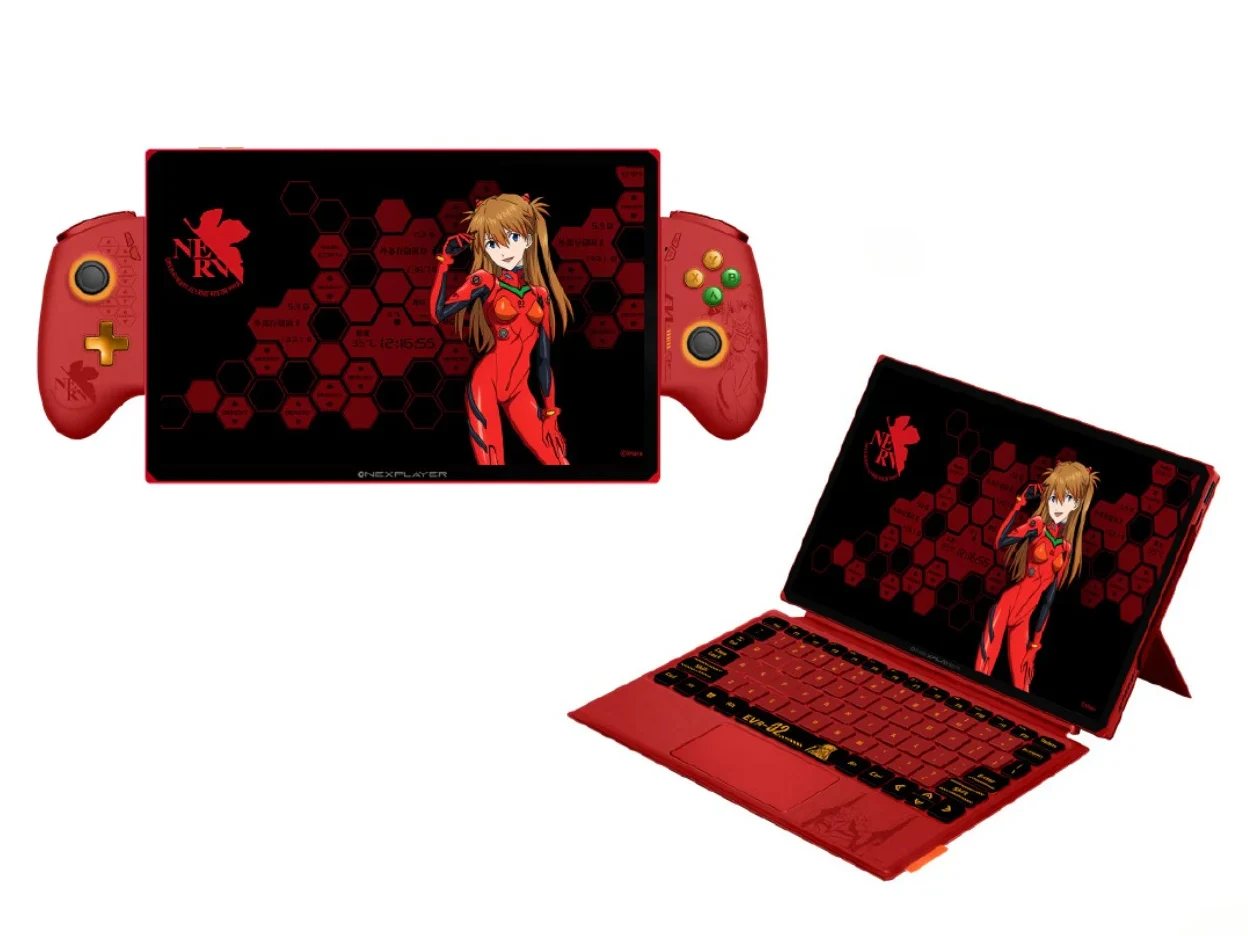
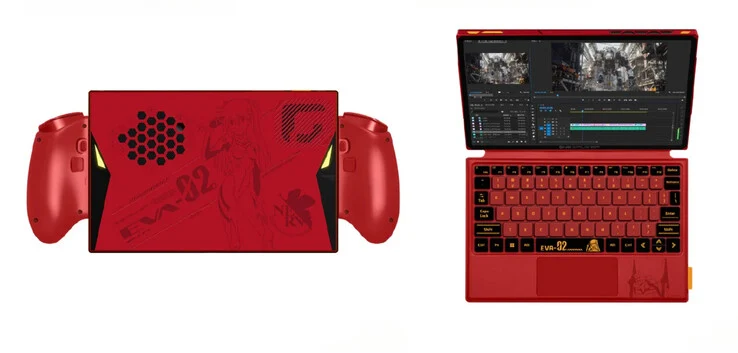
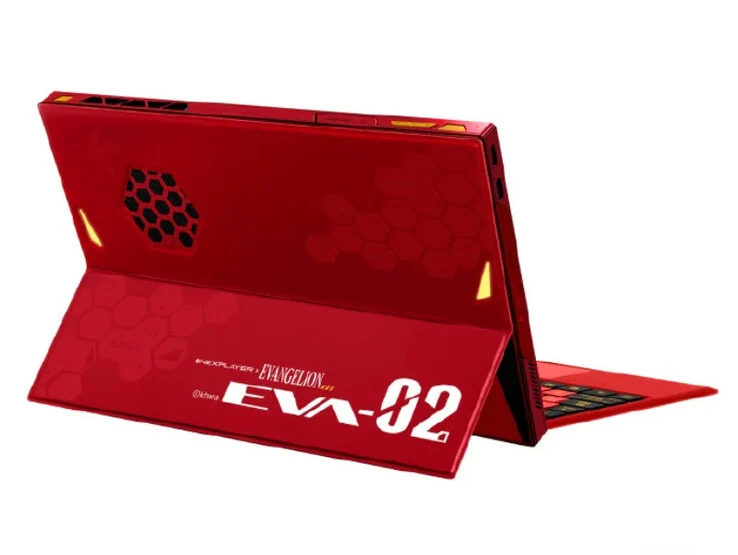
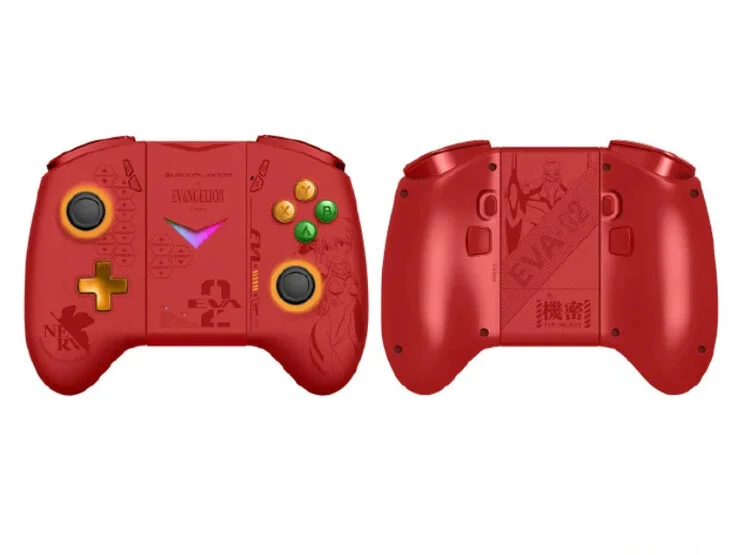
    3. A limited edition Evangelion version is now available, starting at $1,649.99, with upgraded specs including the Intel Core Ultra 7 255H.
    4. The Evangelion edition maintains all specifications of the X1 Pro but switches USB4 ports to Thunderbolt 4 ports.
    5. Benchmark tests show that the Core Ultra 7 255H and Ryzen AI 9 HX 370 offer similar CPU performance, with the Arc 140T outperforming the Radeon 890M in non-gaming benchmarks.


    The OneXPlayer X1 has been around for some time, being one of the first gaming handhelds powered by Intel’s Meteor Lake, which launched last year. Not long after its debut, One-Netbook updated this 10.95-inch device with the AMD Ryzen 7 8840U, and they also released a smaller version called the X1 Mini that features the same APU.

    Newer Variants Available

    Even though the X1 Mini is still for sale, it has been outclassed by the more robust Ryzen AI 9 HX 370, which One-Netbook additionally markets in the smaller OneXFly F1 Pro currently priced at $1,539.99 on Amazon. The device, now known as the OneXPlayer X1 Pro, received positive feedback when we reviewed it last month.

    Exclusive Evangelion Edition

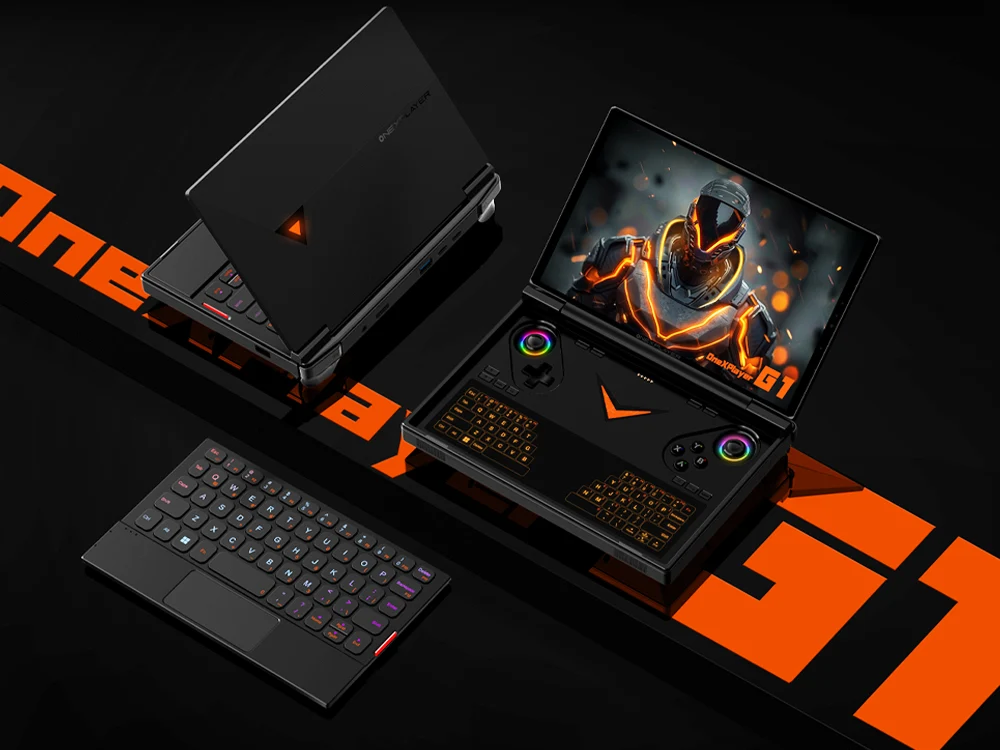
    Recently, Minixpc has begun offering a new choice that is currently only available in a limited edition red inspired by Evangelion. This special edition starts at $1,649.99 and comes with 64 GB of RAM and 2 TB of storage, not including any case or controller connectors.

    Typically, One-Netbook’s Evangelion editions feature just a custom theme or extra memory. However, this time, they have upgraded the limited edition with the Intel Core Ultra 7 255H, which can also be found in the OneXPlayer G1. It’s worth noting that all other specifications of the OneXPlayer X1 Pro remain the same, except that the USB4 ports have been changed to Thunderbolt 4 ports.

    Performance Comparison

    Our benchmarks indicate that the Core Ultra 7 255H and Ryzen AI 9 HX 370 offer similar performance in CPU tasks. The same can be said for the Arc 140T and the Radeon 890M, although results can vary based on the game being played. In contrast, the Arc 140T outperforms the Radeon 890M in benchmarks that don’t involve gaming. The OneXPlayer X1 Pro Eva Asuka Edition is expected to start shipping between April 15 and April 30 at the latest.

    Minixpc’s new offering continues to expand the options for gamers looking for portable devices with high specifications.

    Source:
    Link


  • OneXPlayer G1 Price Cut: Save Up to $220 on 64GB RAM Model

    OneXPlayer G1 Price Cut: Save Up to $220 on 64GB RAM Model

    The OneXPlayer G1 has been available for purchase for a week, following a teaser about a month ago. In an interesting move, One-Netbook has introduced two new configurations for its latest gaming handheld. This means that the GPD Win Mini (currently priced at $1,079.95 on Amazon) now offers a total of seven different options.

    Starting Price and Specifications

    The new 8.8-inch gaming device still has a starting price of $899, which includes an AMD Ryzen 7 8840U, along with 32 GB of RAM and a 1 TB SSD. On the higher end, the OneXPlayer G1 can be equipped with a Ryzen AI 9 HX 370 APU, 64 GB of RAM, and a massive 4 TB SSD. For context, all available models come with additional hardware as well:

    Price Drop for Higher Specs

    One-Netbook has significantly lowered the entry price for the model that features a Ryzen AI 9 HX 370 along with 64 GB of RAM, which used to cost $1,539 before import taxes. Now, this configuration is available for $1,399, and it includes 2 TB of storage. It’s worth mentioning that all OneXPlayer G1 units come with an M.2 2280 slot, allowing users to upgrade to a larger SSD in the future.

    Alternative Configuration Options

    Alternatively, you can choose the same memory specs paired with an Intel Core Ultra 7 255H for $80 less, bringing the price down to $1,319. The Core Ultra 7 255H remains a bit of a mystery at this juncture. Its Arc 140T iGPU might actually exceed the performance of the Radeon 890M found in the Ryzen AI 9 HX 370. We suggest holding off until independent reviews emerge to form an opinion on Intel’s mobile Arrow Lake-H architecture. One-Netbook anticipates starting to ship its new OneXPlayer G1 configurations come March.

    Source:
    Link


  • Khadas Mind 2s: Intel Arrow Lake-H Mini PC with Stylish Design

    Khadas Mind 2s: Intel Arrow Lake-H Mini PC with Stylish Design

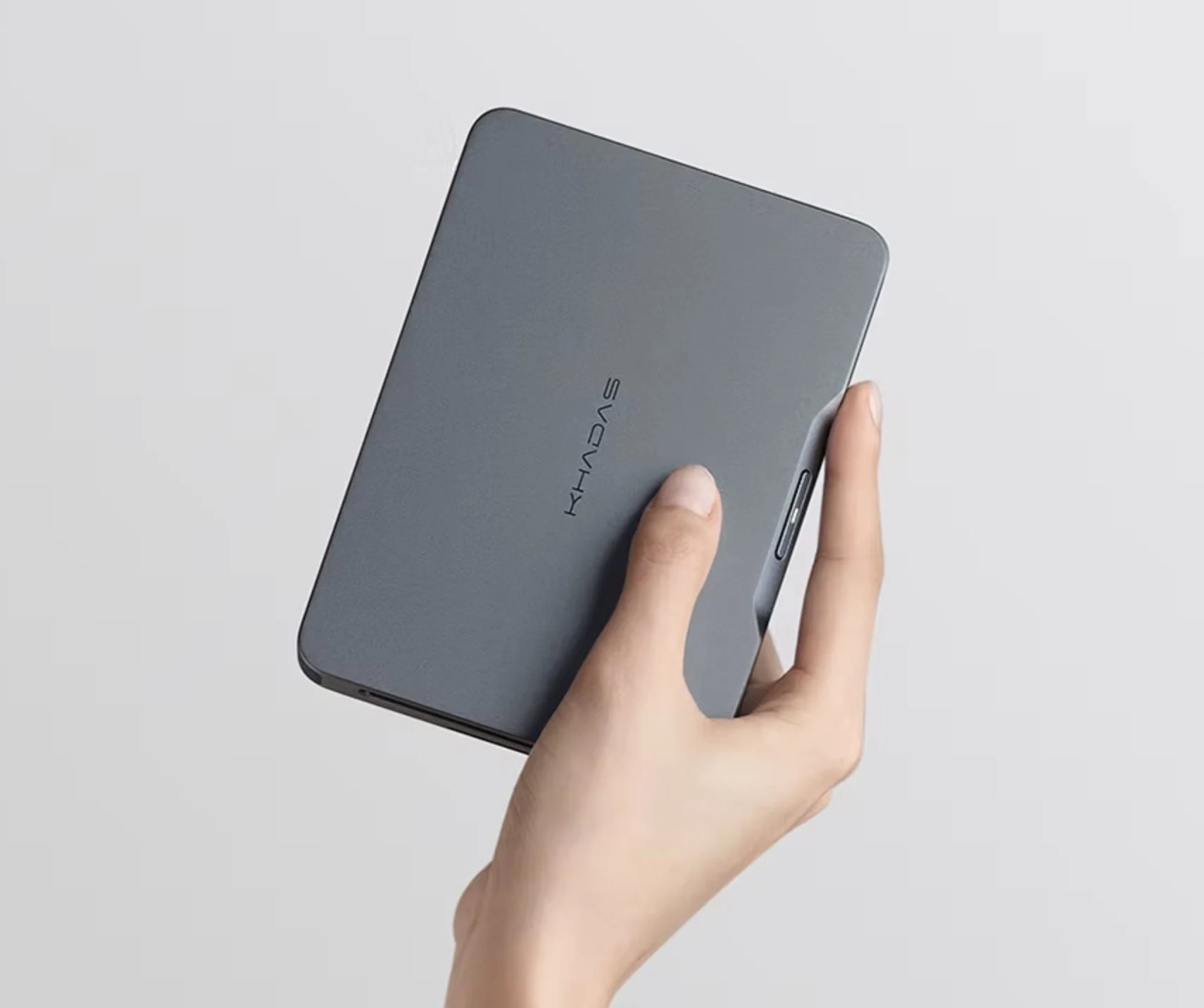
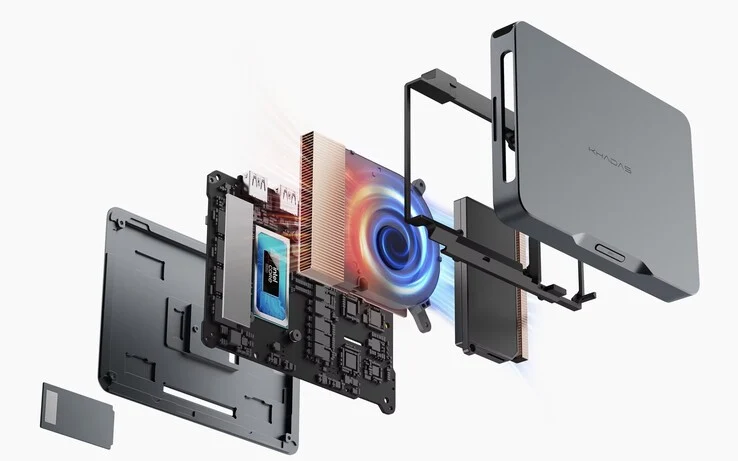
    The Khadas Mind 2s is an elegantly designed mini PC that features a remarkably slim chassis with various options for expansion. Originally launched last year, the Mind 2 came equipped with robust Intel Core Ultra 100H processors, and now it has been updated to include Arrow Lake-H chips.

    Enhanced Performance

    With this upgrade, the Mind 2s can be outfitted with the Core Ultra 7 255H CPU, which promises significant boosts in performance. This particular processor has a 16-core configuration, including 6 high-performance Lion Cove cores, 8 high-efficiency Skymont cores, and 2 additional low-power Skymont cores that operate at lower clock frequencies. In terms of performance, the Core Ultra 7 255H is comparable to the Ryzen AI 9 HX 370 “Strix Point” APU for single-core tasks and the Ryzen 9 7940HX “Dragon Range” chip for multi-core performance. The system can also support up to 64 GB of LPDDR5X-8400 memory and 2 TB of PCIe storage via its M.2 2230 slot. Plus, there’s another M.2 2230 slot for future upgrades.

    Connectivity Options

    While it does not come with dedicated graphics support, users can enhance their graphics capabilities by using the 256 GT/s Mind Link interface along with the separately available RTX 4060 Ti-equipped Mind Graphics eGPU. Weighing in at only 435 grams and measuring just 20 mm in thickness, the Mind 2s is among the most compact mini PCs on the current market. It also offers a good range of ports, including HDMI 2.1, Thunderbolt 4, USB4, and dual USB-A 3.2 Gen2 ports. For wireless connectivity, it supports Bluetooth 5.3 and WiFi 6E. Additionally, it features a built-in 5.55 Wh battery, which allows for up to 25 hours of standby time.

    Pricing Information

    The Khadas Mind 2s mini PC is set to launch next month, although specific pricing details are not yet available. For reference, the Mind 2 mini PC, which is powered by the Core Ultra 7 155H, is priced at $1,099, suggesting that the Mind 2s will likely be priced at a higher level.

    Source:
    Link


    Image 1