
Key Takeaways
1. Processor Comparison: The Intel Core Ultra 7 255H has 16 cores, outperforming the AMD Ryzen 7 250, which has 8 cores, especially in single-core performance.
2. Display Quality: The Intel version features a superior 2.8K IPS display with a 120 Hz refresh rate, while the AMD version has a WUXGA display with a 60 Hz refresh rate.
3. Power Consumption: The AMD model operates at a power limit of 35 W, compared to 28 W for the Intel model.
4. Thermal Performance: The AMD variant runs cooler and quieter under stress than the Intel model.
5. Battery Life: The Intel model has better battery efficiency, nearly matching the AMD version in Wi-Fi browsing tests despite its higher display power consumption.
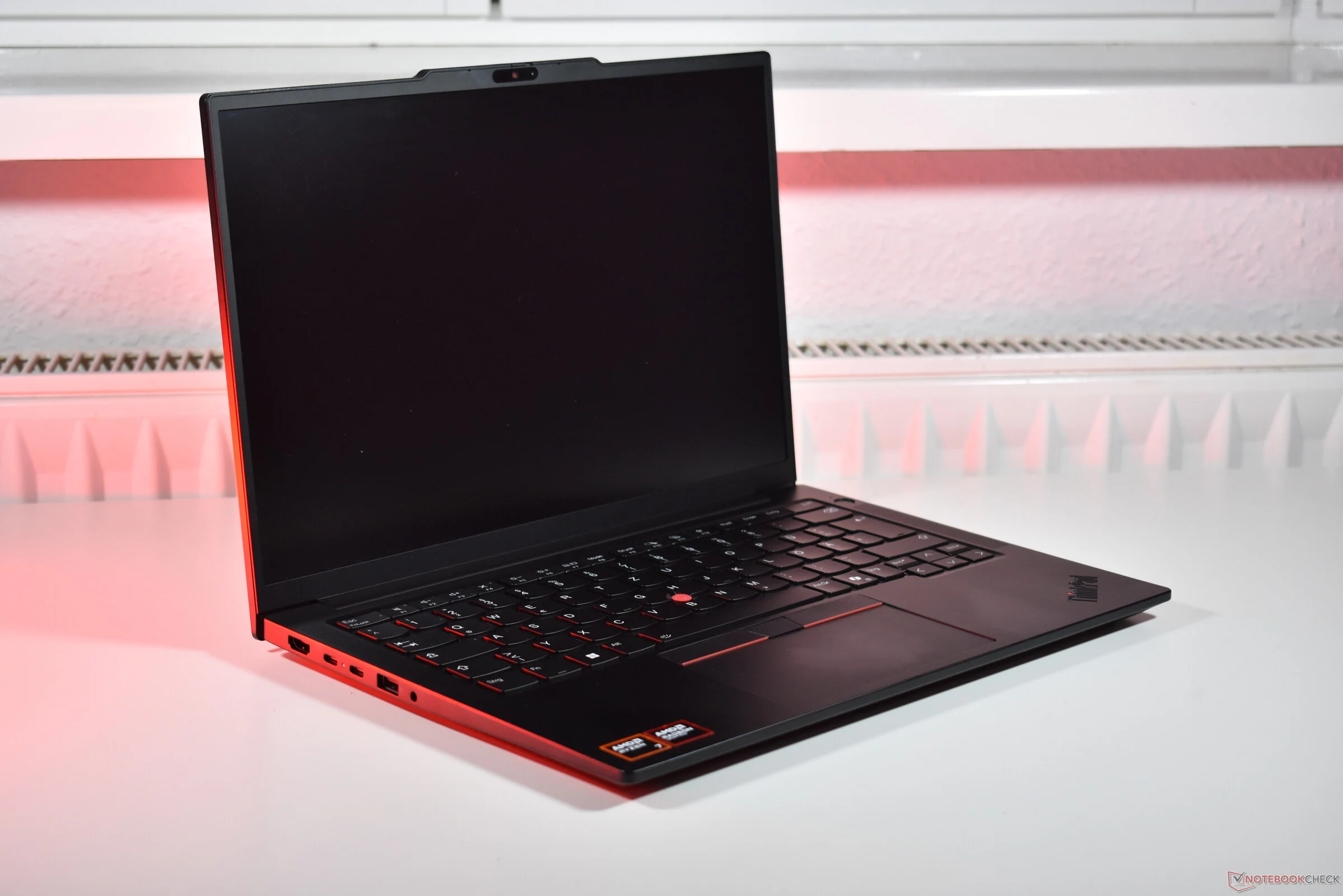
AMD or Intel? This is a question that many people ask when buying a PC, as these two brands are the leading manufacturers of processors for computers and laptops. Interestingly, some laptops are available with both types of processors. A clear example is Lenovo’s ThinkPad E14 Gen 7, which comes in both AMD and Intel options. We previously reviewed the Intel version this summer and have now published our thorough evaluation of the Lenovo ThinkPad E14 Gen 7 AMD model, so it’s time to compare the two!
Comparing Processors
The AMD Ryzen 7 250 is in the competition, featuring eight Zen 4 cores, whereas the Intel Core Ultra 7 255H boasts 16 cores (including 6 Lion Cove P cores, 8 Skymont E cores, and 2 Skymont LPE cores). The Intel version of the ThinkPad is equipped with a superior 2.8K (2,880 x 1,800) IPS display that supports a 120 Hz refresh rate, while the AMD variant has a simpler WUXGA (1,920 x 1,200) IPS display with a 60 Hz rate. Other essential specifications, such as battery capacity and cooling systems, remain the same. The AMD version operates at a power limit of 35 W, while the Intel model has a limit of 28 W.
Performance Insights
It appears that the Intel variant has the advantage overall. The screen quality is noticeably better on the Intel model, which raises the question of why Lenovo doesn’t provide the same display for the AMD version. Additionally, the Arrow Lake H processor generally outperforms the AMD CPU in most benchmark tests. While the AMD Ryzen 7 excels under continuous load, it falls short in single-core performance, with the Intel Core Ultra model being approximately 25 percent faster.
Heat, Noise, and Battery Life
Now let’s consider heat, noise, and battery life. The Lenovo ThinkPad E14 Gen 7 AMD runs somewhat cooler on average compared to the Intel model (which is found on lenovo.com) when under stress, and it is also a bit quieter. However, the battery life of the ThinkPad E14 Gen 7 Intel proves to be more efficient: even with the display that consumes more power, the Intel model nearly ties in our Wi-Fi browsing test. If both models had the same display, we are confident that the Intel version would outperform the AMD variant.
In conclusion, even though AMD has had a strong performance in recent years, Intel is simply the superior choice in this instance. A significantly better display combined with a more powerful and efficient processor leads to an improved user experience, despite the AMD model being cooler and quieter.
Source:
Link
Leave a Reply