Category: Computers

  • Panasonic Launches SC and QR 12.4-Inch Business Notebooks

    Panasonic Launches SC and QR 12.4-Inch Business Notebooks

    Key Takeaways

    1. Panasonic’s new rugged SC and QR 2-in-1 laptops will launch in Japan on June 20th, with prices expected between $2,000 and $3,000.
    2. The SC model features a powerful 16-core Intel Core Ultra 7 processor, while the QR model uses older 12-core Intel chips; both have a 3:2 1,920 x 1,280 LCD screen.
    3. Connectivity options include multiple USB ports, HDMI, Ethernet, and unique features like a VGA port and SD card reader on the QR model.
    4. Both laptops are MIL-STD-810H certified for durability, with the SC offering a longer battery life of 12.7 hours compared to the QR’s 7.6 hours.
    5. The QR model includes AI features for privacy and video calls, while the SC has a Microsoft CoPilot button for easy AI access.


    Panasonic Japan has revealed its newest lineup of tough business laptops, the rugged SC and QR 2-in-1 models. These devices are set to hit the Japanese market on June 20th. Although the exact pricing is still under wraps, similar laptops usually range from $2,000 to $3,000.

    Specifications Overview

    Both laptops feature a 3:2 1,920 x 1,280 LCD screen, with the QR model having a touchscreen. They also come with a 2.07 MP webcam for clear FHD video calls. The SC model is driven by the cutting-edge 16-core Intel Core Ultra 7 255H and the 12-core Ultra 7 225U processors. On the other hand, the QR runs on older 12-core Intel Core i7-1360P and 10-core Core i5-1335U chips. The SC can be customized to have up to 32 GB of RAM and a 1 TB SSD, while the QR comes standard with 16 GB of RAM and a 512 GB SSD.

    Connectivity Features

    For connectivity, these laptops come with two USB-C (Thunderbolt 4) ports, two USB-A (5 Gbps) ports, one HDMI port, one Ethernet connection, and a slot for a security cable. The SC model includes a 3.5 mm headphone jack, while the QR offers a VGA port and an SD card reader.

    The QR boasts AI capabilities like automatic detection of someone looking over the user’s shoulder, while the SC features a Microsoft CoPilot button for easy AI activation. Both laptops also come with additional AI functions, including automatic background blurring and noise cancellation during video calls.

    Size and Durability

    These two models have identical dimensions of 273.2 x 208.9 x 19.9 mm (10.8 x 8.2 x 0.8 in). The SC laptop weighs 0.919 kg (2.03 lbs.), and the QR 2-in-1 is slightly heavier at 0.949 kg (2.09 lbs.). The QR sacrifices the SC’s 12.7-hour battery life for a smaller 7.6-hour battery, enabling it to function as a tablet. Both laptops are designed to withstand rigorous use in a business environment and are MIL-STD-810H certified to endure falls from 76 cm (30 in.) onto hard surfaces.

    Though these models are only available through import from Japan, those living outside the country can still purchase other Panasonic laptops like this one from Amazon US.

    Source:
    Link
  • Minisforum AI X1 Launches Under $400 with AMD Ryzen and 64GB RAM

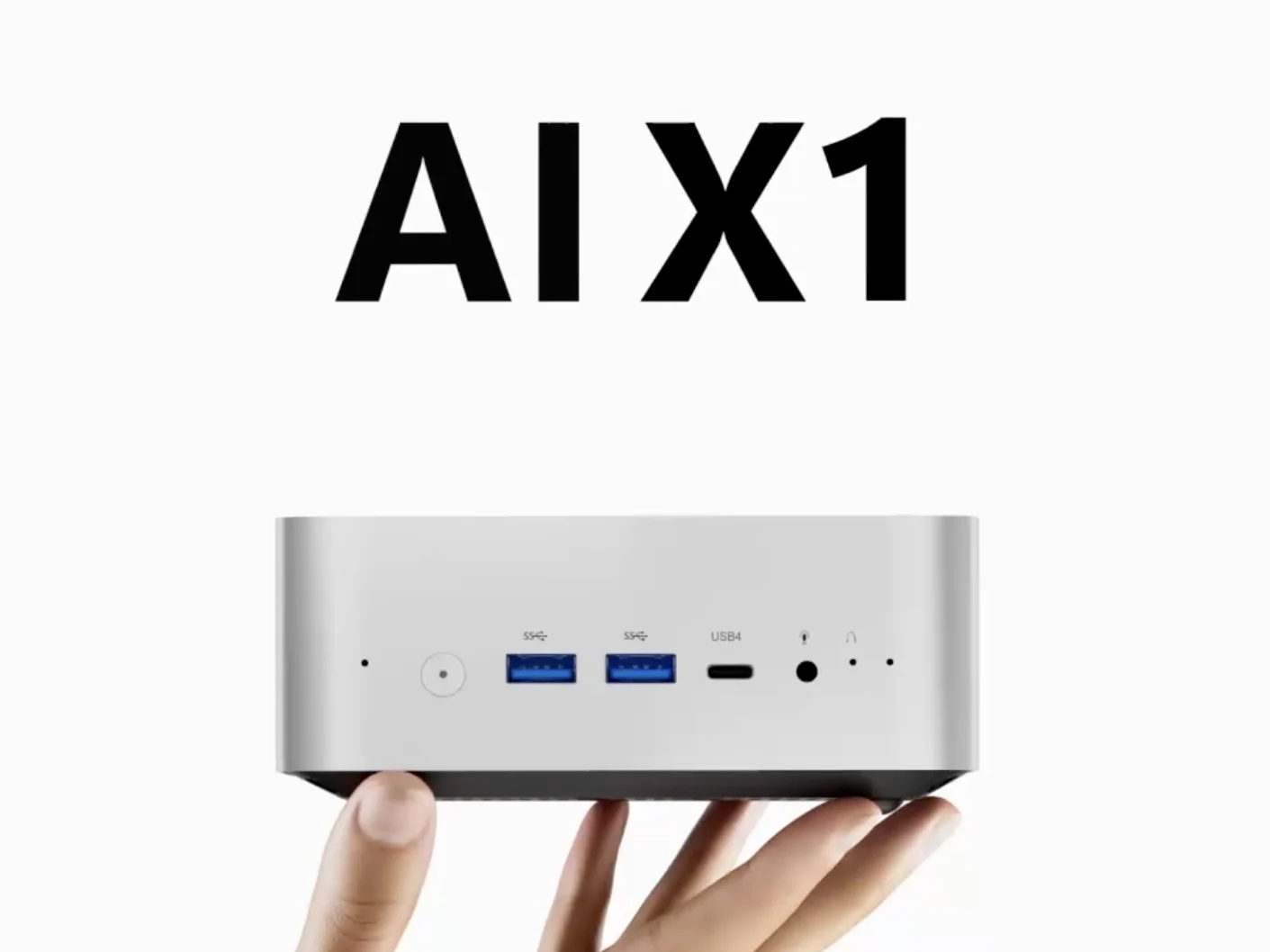
    Minisforum AI X1 Launches Under $400 with AMD Ryzen and 64GB RAM

    Key Takeaways

    1. Minisforum has released new mini-PCs, including budget-friendly versions of the AI X1 Pro, following the launch of the UM690L Slim and UM750L Slim.
    2. The AI X1 is offered with AMD’s Ryzen 7 260 APU, and a new less powerful APU option has reduced its starting price from $439 to $369 (or $349 with a coupon).
    3. A new configuration of the AI X1 features the Ryzen AI 9 365, starting at $579, promising improved CPU performance and integrated graphics.
    4. All AI X1 models include features like SO-DIMM RAM, dual M.2 slots, 2.5 Gigabit LAN, and dual USB4 ports in a compact design.
    5. The Ryzen 7 255 and Ryzen AI 9 365 versions can be configured with up to 64 GB of RAM and 1 TB SSD, with prices of $627 and $829 respectively, before discounts.


    Minisforum has been actively releasing new mini-PCs recently, following the recent launch of the UM690L Slim and UM750L Slim. The company has now revisited the AI X1, which was first introduced in March along with the AI X1 Pro. Interestingly, a few days ago, Minisforum announced more budget-friendly configurations for the AI X1 Pro in anticipation of a global release.

    Specs and Pricing Overview

    To summarize, the initial version of the AI X1 came equipped with AMD’s Ryzen 7 260 APU. This processor is part of the Hawk Point series and is essentially a renamed Ryzen 7 7840HS, which is now more than two years old. The AI X1 is also available with the Ryzen 7 255, which shares a similar age. The addition of this less powerful APU has allowed the starting price of the AI X1 to drop from $439 to $369, or even $349 if you use the coupon code x126030.

    New Options Available

    Minisforum is now providing the AI X1 with the Ryzen AI 9 365 as well, starting at $579 for a barebones setup. The Ryzen AI 9 365, part of the Strix Point series, is expected to deliver better CPU performance, featuring 4 Zen 5 cores and 6 Zen 5c cores, resulting in a total of 20 threads. Additionally, the Ryzen AI 9 365 includes a Radeon 880M integrated GPU, which is projected to surpass the Radeon 780M found in the Ryzen 7 255 and Ryzen 7 260 models.

    Features and Configurations

    All versions of the AI X1 come with SO-DIMM RAM, dual M.2 2280 slots, 2.5 Gigabit LAN, and dual USB4 ports, all packed into a compact case measuring 128 × 126 × 52 mm and weighing about 600 grams. Currently, the Ryzen 7 255 and Ryzen AI 9 365 models can be configured with up to 64 GB of RAM and a 1 TB SSD, priced at $627 and $829 respectively, before any promotional discounts. For further details, visit Minisforum’s official website.

    Source:
    Link


  • TSMC Warns US Chip Tariffs May Impact $165 Billion Arizona Investment

    TSMC Warns US Chip Tariffs May Impact $165 Billion Arizona Investment

    Key Takeaways

    1. TSMC has requested an exemption from U.S. Section 232 tariffs on semiconductor imports, citing concerns over demand and U.S. industry leadership.
    2. The company is investing $165 billion in Arizona for the construction of six wafer fabrication plants and associated facilities.
    3. TSMC warns that increased tariffs could raise product prices, negatively impacting chip demand and the viability of its Arizona operations.
    4. The firm emphasizes the need for duty-free access to foreign equipment and materials for companies with significant U.S. semiconductor production.
    5. Once fully operational, TSMC’s Arizona fabs could produce 100,000 wafers monthly and generate $200 billion in indirect economic activity, creating tens of thousands of jobs.


    Taiwan Semiconductor Manufacturing Co. (TSMC) has requested that the U.S. Department of Commerce exempt semiconductor imports from the new Section 232 tariffs. The firm expresses concerns that increased tariffs could lower demand in downstream markets and “endanger current U.S. leadership” in the semiconductor industry. This request was outlined in a letter from TSMC’s Arizona branch, sent on May 5, during the comment period set by the department regarding potential trade actions.

    Investment in Arizona

    Currently, TSMC is investing $65 billion into three wafer fabrication plants located in Phoenix. Of these, one plant is already in production, the second is close to completion, and the third just started construction last month. Additionally, in March, TSMC announced an extra $100 billion for the development of three more fabs, two advanced packaging facilities, and a research and development center, totaling their investment commitment to $165 billion.

    Concerns Over Tariffs

    The company has communicated to regulators that imposing tariffs which raise end-product prices would negatively impact chip demand and weaken the economic justification for the Arizona manufacturing site. TSMC is requesting that companies with “significant U.S. semiconductor production” retain duty-free access to foreign equipment and materials, many of which are not available within the U.S.

    As the Commerce Department works on its Section 232 report, which is anticipated to come out shortly after May 26, the timing of TSMC’s letter is notable. Former President Donald Trump has suggested tariffs as high as 100 percent on semiconductors produced in Taiwan, alleging that the island has “stolen” business from the U.S.

    Economic Impact

    The filing indicates that once all six fabs are fully operational, Arizona could produce around 100,000 wafers each month, which would be approximately 30 percent of TSMC’s expected capacity for 2-nanometer and more advanced nodes. TSMC believes that its U.S. operations could generate $200 billion in indirect economic activity and create tens of thousands of jobs. The company argues that these benefits are reliant on stable, tariff-free supply chains.

    Source:
    Link

  • Tianwen-2: China’s Mission to Collect Primordial Debris and Comet Dust

    Tianwen-2: China’s Mission to Collect Primordial Debris and Comet Dust

    Key Takeaways

    1. Tianwen-2 probe is prepared for launch on May 29 from the Xichang Satellite Launch Center using the Long March 3B Y110 rocket.

    2. The mission’s primary goal is to rendezvous with the quasi-satellite 2016 HO3 to collect and return surface materials for insights into the early Solar System and Earth-Moon evolution.

    3. After the sample-return phase, Tianwen-2 will change its trajectory to study the main-belt comet 311P/Pan-STARRS, focusing on its dust and potential water ice.

    4. Coordination among various control centers has been established to ensure effective tracking and command for the dual-target mission.

    5. The mission aims to answer key scientific questions about small bodies’ structures and the formation of main-belt comets through collected materials and direct observations.


    China’s Tianwen-2 probe is now stationed on the launch pad at the Xichang Satellite Launch Center, with its launch planned for May 29. The Long March 3B Y110 rocket has successfully gone through all essential steps, including transfer, hoisting, vehicle-rocket integration, fairing installation, and a complete system rehearsal; the last task before starting the countdown is loading the propellant.

    Mission Goals

    The primary aim of this mission is to meet up with the quasi-satellite known as 2016 HO3. This small body orbits the Sun once every 365.4 days, almost perfectly synchronized with Earth, and has been in resonance with our planet for over a century. The engineers are set to collect and return surface materials, providing a direct sample of ancient debris that tells us about the early conditions of the Solar System and could help refine our models regarding the evolution of the Earth-Moon system.

    Next Steps

    Following the sample-return phase, Tianwen-2 is slated to alter its path towards the main-belt comet 311P/Pan-STARRS. This object is categorized as both an asteroid and a comet, shedding dust while it travels in an orbit similar to an asteroid between Mars and Jupiter. Researchers are eager to find out if this dust holds water ice, how the energy source of the body causes its frequent eruptions, and if other ice-rich bodies are prevalent. The results could significantly change our understanding of where volatiles are located and how terrestrial oceans came to be.

    Coordination and Planning

    A number of control centers, including Beijing Flight Control, Xi’an Tracking, and the Yuanwang telemetry fleet, have successfully completed joint simulations to ensure effective tracking and command links for the two-target mission plan. The mission planners are stressing the tight timeline: a fly-by, sample gathering, Earth return, and an additional comet encounter—all carried out by just one spacecraft.

    Tianwen-2 is not only a feat of engineering but also addresses significant scientific questions. The material collected from 2016 HO3 could provide insight into how solar radiation and fast rotation affect the structure of small bodies, while direct observations at 311P will test theories regarding the formation and stability of main-belt comets.

    Source:
    Link

  • Nick Gillard Launches 62mm Pico-Mac-Nano: Raspberry Pi Classic

    Nick Gillard Launches 62mm Pico-Mac-Nano: Raspberry Pi Classic

    Key Takeaways

    1. Nick Gillard has created a tiny functional Macintosh Classic called the pico-mac-nano, measuring only 62 mm tall, using a Raspberry Pi board.
    2. The pico-mac-nano runs a modified version of the pico-mac Macintosh 128K emulator and is available for purchase online for around £56 (~$75).
    3. The project faced technical challenges, such as adapting the display resolution and color depth due to hardware limitations of the compact design.
    4. The device features a 2-inch LCD display and connects to keyboards and mice via a USB-C splitter cable, with a custom 3D-printed case.
    5. Beginners interested in Raspberry Pi can find a helpful guide on Amazon to assist with starting their own projects.


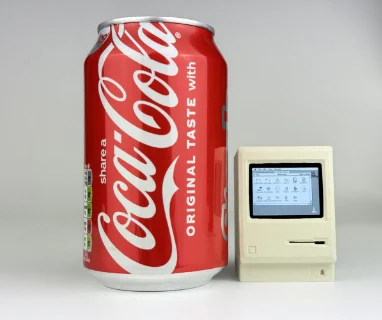
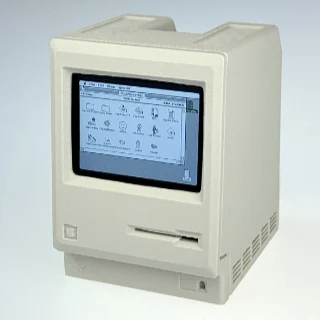
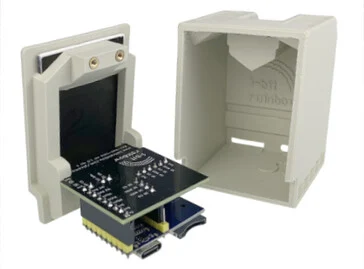
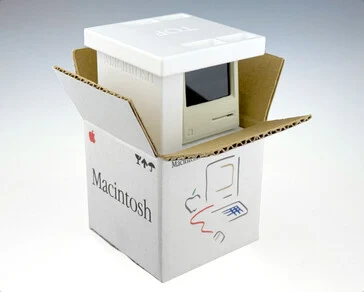
    Nick Gillard has introduced one of the tiniest functional Macintosh Classics, standing at only 62 mm (2.44 in.) tall. This innovative project utilizes the compact WaveShare Pico Zero Raspberry Pi board, which runs a tweaked version of the pico-mac Macintosh 128K emulator. You can buy the fully assembled pico-mac-nano from the 1-bit rainbow store for £56 (~$75). For collectors, there’s a boxed edition available for £78 (~$105).

    The World of Macintosh Emulation

    Macintosh emulation has existed for many years, with passionate fans running the operating system and applications on various devices, from desktops to tablets, often employing Hackintosh techniques. Interestingly, the only touchscreen Macs that can be found today are PCs running macOS. The pico-mac project effectively emulates the original 128K Mac Classic using Raspberry Pi boards.

    Crafting the Pico-Mac-Nano

    To bring the pico-mac-nano to life, Mr. Gillard employed multiple hacks and modifications to fit the functional components into the tiny 3D-printed case. One of the main challenges was addressing the hardware limitation of rotating the display frame buffer to accommodate the 2-inch 480 x 640 pixel LCD display. Due to the restricted processing bandwidth, the native Mac display resolution of 512 x 342 pixels could not be implemented, so the pico-nano emulator was adjusted to output 480 x 342 pixels, which worked out just fine.

    Technical Challenges with the LCD

    The LCD panel requires an RGB input of 5 bits for red, 6 bits for green, and 5 bits for blue; however, the total 16 bits once again surpass the available hardware bandwidth. The solution involved adjusting the two most significant bits of each color channel, which greatly lowered the total bits needed to operate the display.

    The custom interface PCB and case were made using 3D printing, which made it easy to connect the LCD to the Raspberry Pi board. The USB-C port on the back of the board provides power and connects to an external keyboard and mouse using a USB-C splitter cable. The modified pico-mac emulator operates through the rear-facing microSD card.

    Getting Started with Raspberry Pi

    For those new to Raspberry Pi projects and looking to dive in, there’s a helpful book available on Amazon that can guide them through the basics.

    Check out the 1-bit rainbow blog, visit the 1-bit rainbow store, explore the pico-mac-nano gallery, or find out more about pico-mac on GitHub and WaveShare.

    Source:
    Link


  • FEVM Unveils New eGPU with Thunderbolt 5 and RTX 4090 Laptop Support

    FEVM Unveils New eGPU with Thunderbolt 5 and RTX 4090 Laptop Support

    Key Takeaways

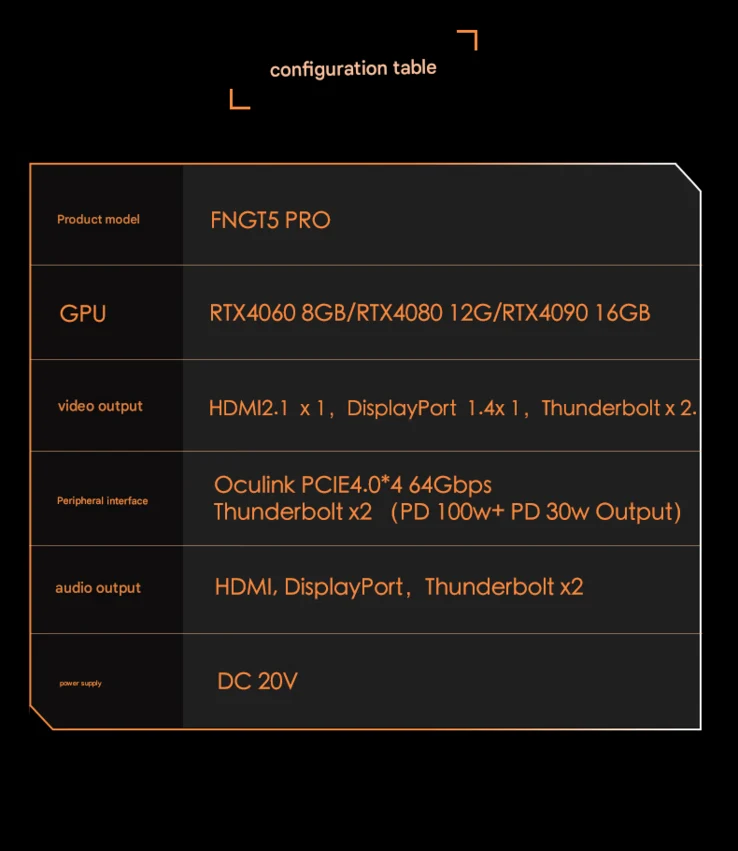
    1. FEVM has launched the FNGT5 Pro eGPU in China, supporting Nvidia RTX 4090, 4080, and 4060 Laptop GPUs with performance levels ranging from 115 W to 150 W.
    2. The eGPU features a Thunderbolt 5 port, which offers improved performance over the OCuLink port, and includes additional connectivity options like a Thunderbolt downlink port and a USB Type-A port.
    3. It has a compact 0.8-liter design with effective airflow and a quiet internal cooling system for heavy workloads.
    4. Pricing for the eGPU starts at CNY 3,998 (about $555) for the entry-level model, with higher configurations priced up to CNY 9,989 (approximately $1,386).
    5. While primarily available in China, FEVM products may eventually be found on platforms like AliExpress.


    FEVM has introduced a new eGPU in China, named the FNGT5 Pro. This external graphics card can be outfitted with up to the Nvidia RTX 4090 Laptop, and the company claims that its integrated cooler allows the top configuration to achieve performance levels of up to 150 W.

    More Models to Choose From

    There are also two other versions available. One of these includes the Nvidia RTX 4060 Laptop, while the other is equipped with the RTX 4080 Laptop. They are reported to provide performance levels of up to 115 W and 150 W, respectively. Notably, this FEVM dock features a Thunderbolt 5 port, which is quite intriguing.

    Advanced Connectivity Features

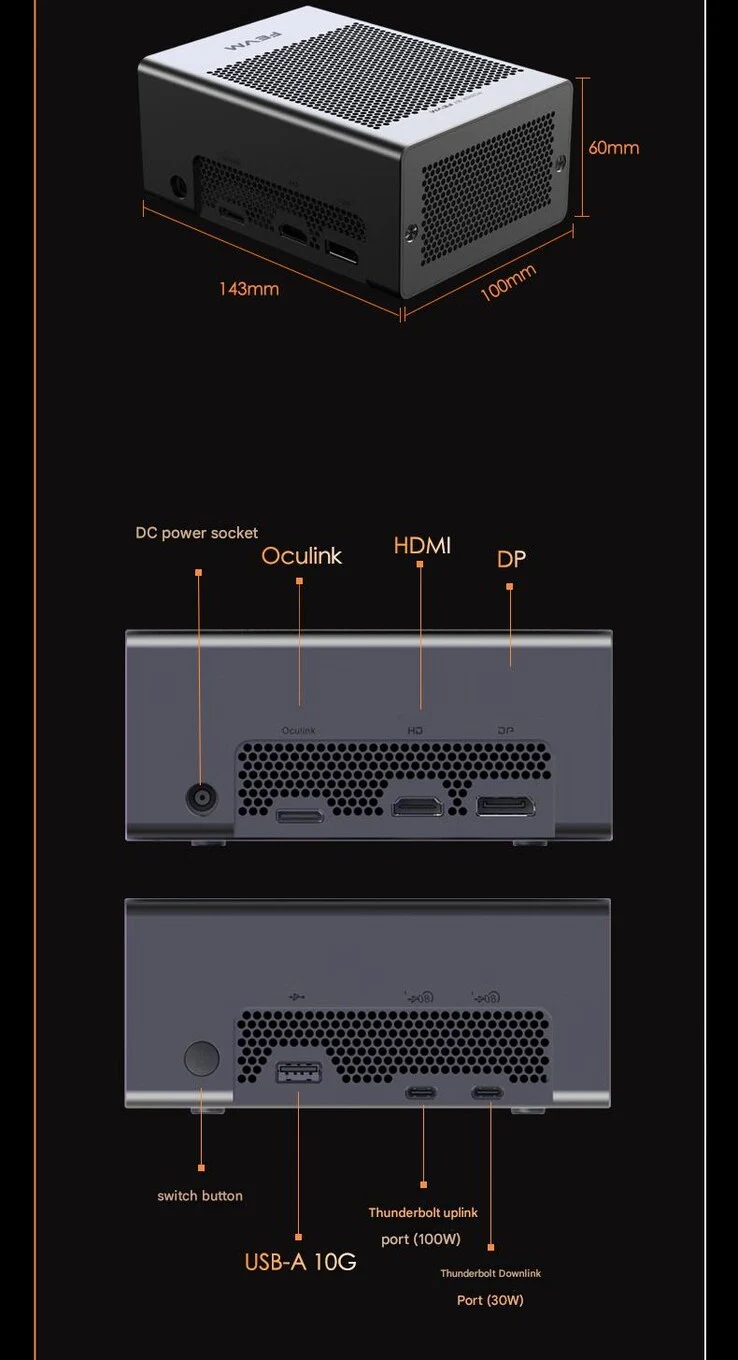
    According to the company, this port is supported by the JHL9480 controller, which delivers better performance compared to the OCuLink port. Besides the Thunderbolt 5 port, the eGPU includes an OCuLink port and is said to be compatible with Lenovo’s ThinkPad TGX interface.

    Moreover, the FEVM eGPU comes with an additional Thunderbolt downlink port, likely intended to supply extra power to connected devices (the 3.3-feet Cable Matters Thunderbolt 5 cable is currently priced at $27.99 on Amazon). It also features a 10 Gbps USB Type-A port, and for display purposes, this external GPU comprises one HDMI 2.1 and one DisplayPort 1.4 port.

    Compact Design with Effective Cooling

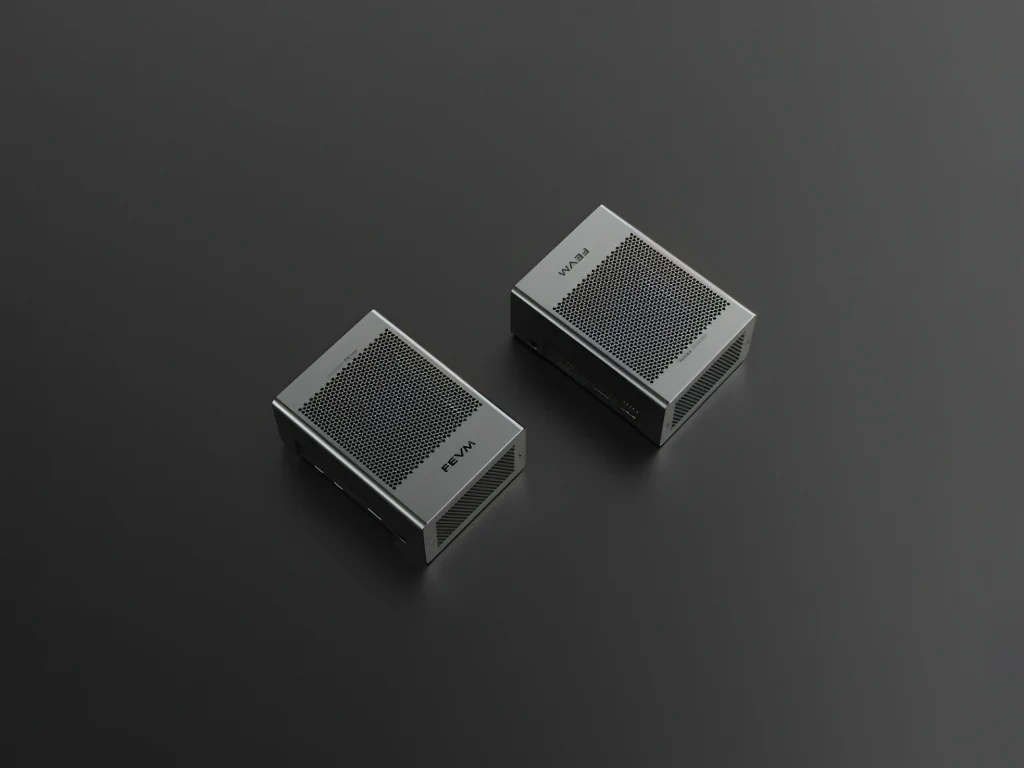
    In terms of design, the FEVM FNGT5 Pro boasts a compact 0.8-liter chassis with airflow vents strategically placed throughout. The company emphasizes that the internal cooler can operate quietly even under heavy workloads. Regarding pricing, the entry-level model of the eGPU is priced at CNY 3,998, roughly $555, while the mid-range configuration with the RTX 4080 Laptop retails for CNY 7,589, about $1,053. The variant featuring the RTX 4090 Laptop is priced at CNY 9,989, approximately $1,386.

    As for international availability, FEVM generally does not export most of its products outside of China; however, many of the company’s offerings eventually find their way to AliExpress.

    Source:
    Link


  • Beelink Announces Pricing for New Thunderbolt 5 Mac Mini Dock

    Beelink Announces Pricing for New Thunderbolt 5 Mac Mini Dock

    Key Takeaways

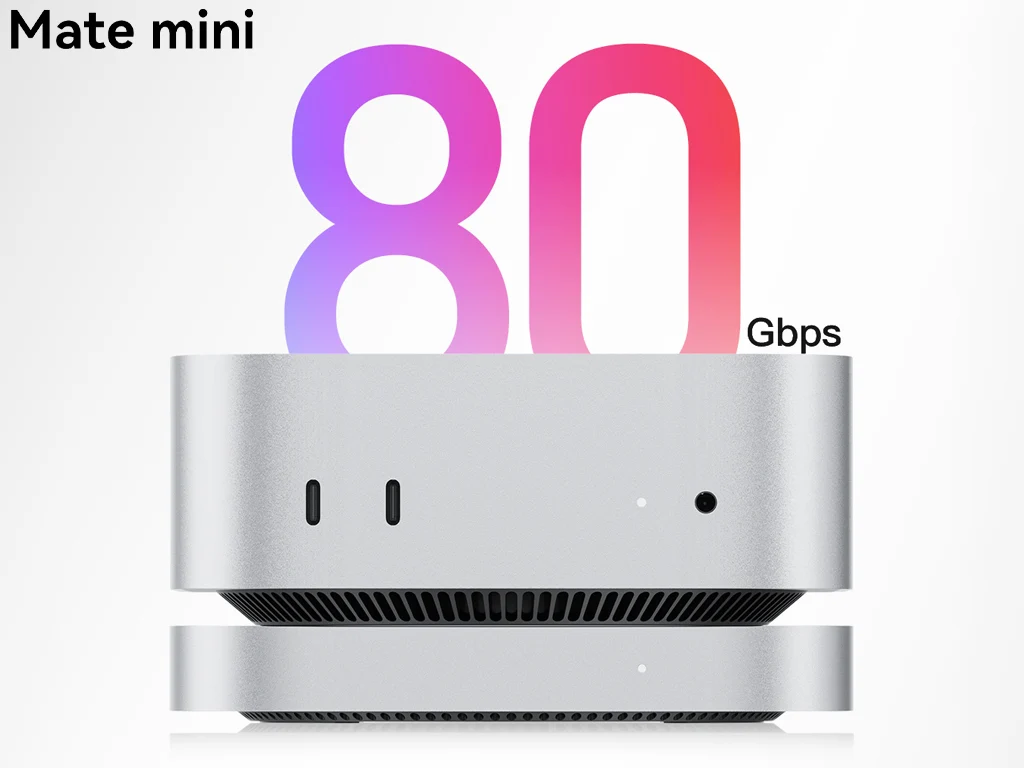
    1. Beelink’s Mate mini dock for Mac mini features Thunderbolt 5 and offers up to 16 TB of additional storage.
    2. The pricing for the Mate mini dock is CNY 985 in China, approximately $137, with potential global price variations.
    3. The dock comes in two versions: one focused on storage (16 TB with two M.2 PCIe x2 slots) and one focused on speed (8 TB with one M.2 PCIe x4 slot).
    4. Connectivity options include two USB 3.0 Type-A ports, one 2.5G LAN port, one SD 4.0 card slot, and a USB-C port with Power Delivery.
    5. The Mate mini dock features a built-in fan and radiator, designed to match the Mac mini’s aesthetics.


    Beelink has recently introduced the Mate mini, a new dock designed for the Mac mini that features Thunderbolt 5 and allows for up to 16 TB of additional storage. While the company shared many important details about this accessory earlier, it had not mentioned the price until now.

    Pricing Information

    The new Apple Mac mini docking station is priced at CNY 985 in China, which is approximately $137. It’s important to note that prices may differ globally compared to the Chinese market. However, Beelink is well-known for making most of its products available internationally, so the Mate mini is likely to be launched in other countries soon.

    Storage Options

    The Mate mini dock comes in two versions. One is designed for users who need more storage, while the other focuses on speed. Specifically, the storage-oriented version includes two M.2 PCIe x2 slots, allowing for a total of 16 TB, while the speed-focused option has one M.2 PCIe x4 slot that can hold up to an 8 TB SSD (currently priced at $619.99 on Amazon for the 8 TB WD_BLACK SN850X).

    Connectivity Features

    Beyond just extra storage, the Mate mini dock enhances connectivity for the Mac mini. It includes two USB 3.0 Type-A ports, one 2.5G LAN port, and one SD 4.0 card slot. The Thunderbolt 5 port is mainly for connecting to the mini PC, while an additional USB-C port with Power Delivery (PD) provides extra power for connected devices.

    Another noteworthy feature is the built-in fan along with a radiator, which shares design traits with the Mac mini itself. For more insights about this Mac mini dock, refer to our earlier articles.

    Source:
    Link

  • NanoPi M5: 16GB RAM, NVMe SSD, 4K Support – Raspberry Pi Rival

    NanoPi M5: 16GB RAM, NVMe SSD, 4K Support – Raspberry Pi Rival

    Key Takeaways

    1. The NanoPi M5 is a compact single-board computer measuring 3.54 x 2.44 inches, powered by the Rockchip RK3576 SoC with up to 2.2GHz performance.
    2. It offers memory options of 4GB, 8GB, or 16GB, making it suitable for various single-board computer tasks.
    3. Users can connect an M.2 2280 NVMe SSD for mass storage and utilize SD cards for additional storage.
    4. The board features dual Gigabit Ethernet ports but lacks built-in WiFi and Bluetooth, which can be added via an M.2 module.
    5. Pricing starts at $55, with the 16GB RAM variant costing an additional $30, and it can be powered via USB Type-C.


    FriendlyELEC has introduced a new single-board computer to their range. The NanoPi M5 has dimensions of 3.54 x 2.44 inches and is also offered with a matching case. This compact computer runs on the Rockchip RK3576 SoC, which features four Cortex-A72 and four Cortex-A53 cores, with clock speeds reaching up to 2.2GHz and 2.0GHz, respectively. It comes in memory options of 4GB, 8GB, or 16GB. The highest configuration should be suitable for most single-board computer tasks. However, it does not have built-in mass storage; instead, users can connect an M.2 2280 NVMe SSD using one PCIe 2.1 lane. Like other single-board computers, it also supports SD cards.

    Connectivity Features

    For network connectivity, the NanoPi M5 is equipped with two Gigabit Ethernet ports. There’s no built-in WiFi or Bluetooth, but these can be added with an appropriate M.2 module. The SoC includes an NPU that provides an INT8 performance of 6 TOPS. Users can connect 4K 60Hz monitors through HDMI 2.0, and MIPI DSI is also an option. The latter is frequently utilized for displays that can integrate into specific setups and devices using this SBC. For connecting sensors and actuators, a 30-pin header that supports I2C, UART, and PWM is provided.

    Power and Pricing

    Powering the Raspberry Pi alternative is done via USB Type-C, and it can be hooked up to a 5V fan. FriendlyELEC offers this new single-board computer starting at $55, with the 16GB RAM variant priced at an additional $30. Prospective customers should carefully check the shipping conditions before making their purchase.

    Source:
    Link


  • One-Million-Qubit Machine Can Break 2048-Bit RSA in 7 Days

    One-Million-Qubit Machine Can Break 2048-Bit RSA in 7 Days

    Key Takeaways

    1. Google Quantum AI’s research shows only one million noisy qubits may be needed to break 2048-bit RSA encryption, drastically reducing earlier estimates of 20 million qubits.

    2. Key advancements include improved Shor’s algorithm using approximation techniques and enhanced error-correction methods, lowering physical-qubit needs by a factor of twenty compared to 2019 projections.

    3. Current quantum hardware, like IBM’s 1,121-qubit Condor and Google’s 53-qubit Sycamore, falls short of the capabilities needed for the proposed encryption-breaking tasks.

    4. The future of secure communication is at risk, prompting NIST to advocate for a shift to post-quantum cryptography (PQC) to protect against potential quantum attacks.

    5. As quantum algorithms improve and error rates decrease, the gap between theoretical research and practical cryptanalytic attacks is shrinking, posing a significant challenge for hardware developers and policymakers.


    A recent preprint from Google Quantum AI has shifted the common beliefs about the hardware necessary to break widely used 2048-bit RSA encryption. The research team has shown on paper that around one million noisy qubits, running non-stop for approximately seven days, would be enough to achieve this. Earlier assessments suggested the need for nearly 20 million qubits, making this new estimate significantly reduce the gap between theoretical possibilities and actual dangers.

    Advances in Quantum Computing

    The reduction in qubit requirements is driven by two major developments. First, the researchers improved Shor’s factoring algorithm by employing approximation techniques instead of exact modular exponentiation. This adjustment decreases the logical qubits needed without excessively extending the run-time. Secondly, the use of tighter error-correction methods—like layered surface codes combined with “magic-state cultivation”—allows for tripling the storage density of idle logical qubits while managing error rates effectively. Altogether, these innovations lower the physical-qubit needs by a factor of twenty compared to projections from 2019.

    Current Hardware Limitations

    Despite these advancements, the hardware available today still doesn’t meet the capabilities suggested by the study. Current leading processors, such as IBM’s 1,121-qubit Condor and Google’s 53-qubit Sycamore, are still much smaller. There are plans for the future: IBM aims to develop a 100,000-qubit system by 2033, while Quantinuum is working towards a fully fault-tolerant platform by 2029. Nevertheless, maintaining a million qubits with sufficiently low error rates and executing billions of logical operations over a span of five continuous days presents a substantial engineering challenge.

    The Future of Secure Communication

    RSA, Elliptic Curve Diffie-Hellman, and other asymmetric encryption methods are the foundation of much of today’s secure communications. Because data that is encrypted now can potentially be decrypted in the future, NIST is advocating for a shift to post-quantum cryptography (PQC) algorithms. The agency plans to phase out vulnerable systems after 2030 and ban them entirely by 2035. Google has already begun implementing the ML-KEM key-encapsulation mechanism within Chrome and its internal systems, indicating a significant move towards quantum-resistant standards in the industry.

    This research presents a clear threat model for both hardware developers and policymakers. As quantum algorithms improve and error rates decrease, the divide between what can be done in the lab and what can be executed in a cryptanalytic attack diminishes.

    Source:
    Link

  • 2025 RedmiBook 14 Ryzen Edition: Affordable Thin and Light Laptop

    2025 RedmiBook 14 Ryzen Edition: Affordable Thin and Light Laptop

    Key Takeaways

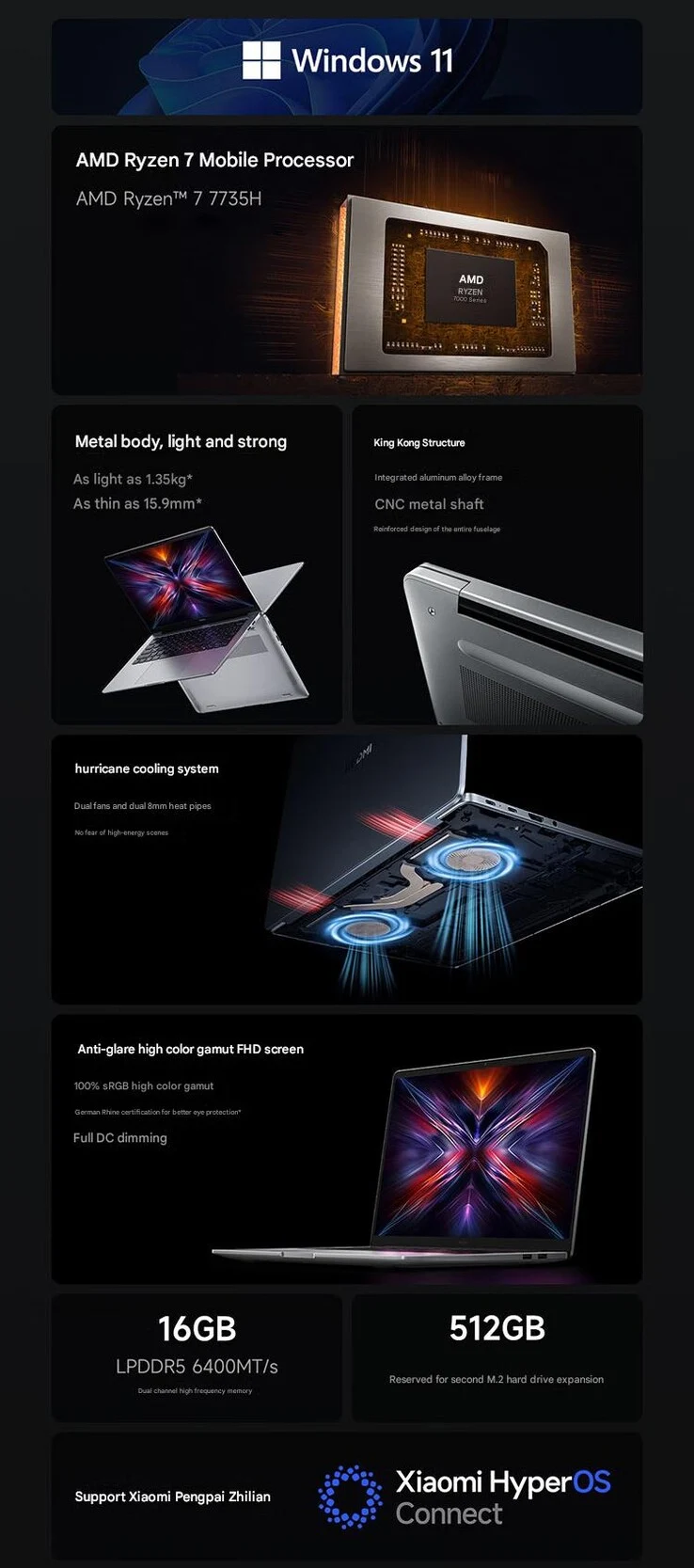
    1. The 2025 RedmiBook Ryzen Edition is a budget-friendly laptop with a slim design, measuring 15.9 mm thick and weighing 1.35 kg (2.97 lbs).
    2. It offers two AMD processor options: Ryzen 5 7535H with Radeon 660M and Ryzen 7 7735H with Radeon 680M, both using Zen 3+ architecture.
    3. Each model features 16 GB of LPDDR5 RAM at 6400 MT/s and a 512 GB SSD, along with multiple ports for versatility.
    4. The laptop has a 56 Wh battery, providing up to 17.8 hours of 1080p video playback, and includes a 68 W charger for quick charging.
    5. Pricing starts at CNY 3,299 (approximately $458) for the Ryzen 5 version and CNY 3,699 (about $513) for the Ryzen 7 version, with no details on international availability yet.


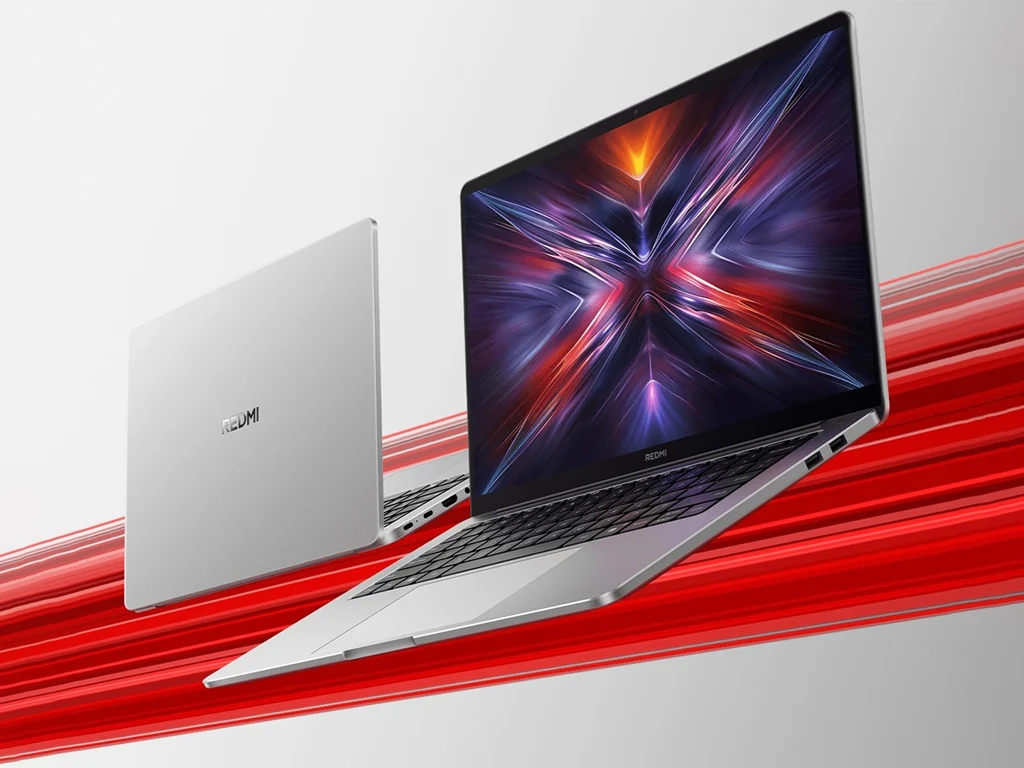
    The 2025 RedmiBook Ryzen Edition has just been launched in China. Xiaomi is marketing this model as a budget-friendly laptop featuring a slim and lightweight design. More specifically, the device is said to be just 15.9 mm thick and tips the scales at 1.35 kg (roughly 2.97 lbs).

    Performance Options

    In terms of performance, the 2025 RedmiBook comes with two AMD processor choices. The first option is the Ryzen 5 7535H, while the second is the Ryzen 7 7735H. Both processors belong to the Rembrandt-R series and incorporate Zen 3+ architecture. The Ryzen 5 variant includes a Radeon 660M integrated GPU, whereas the Ryzen 7 offers a more powerful Radeon 680M. Other specifications for both models remain quite alike.

    Memory and Storage

    Each configuration comes with 16 GB of LPDDR5 RAM operating at 6400 MT/s and features a 512 GB SSD (with a 2 TB Samsung 990 Pro selling for $164.89 on Amazon). The 2025 RedmiBook Ryzen Edition also includes a variety of ports, making it versatile for different uses.

    Powering this sleek and lightweight laptop is a 56 Wh battery, which Xiaomi claims can support up to 17.8 hours of 1080p video playback. The device is shipped with a 68 W charger that can charge the battery to 58% in just 31 minutes. Other notable features include an enhanced “hurricane” cooling system that is claimed to sustain 37 W of consistent performance, along with a 14-inch FHD display boasting 100% sRGB coverage.

    Pricing Information

    In terms of pricing, the Ryzen 5 version of the new RedmiBook 14 is priced at CNY 3,299, or about $458, while the Ryzen 7 version retails for CNY 3,699, which is approximately $513. Xiaomi has not yet revealed any information regarding international pricing or when it will be available elsewhere.

    Source:
    Link