Category: Computers

  • Cloud Z4Pro+: AI-Enhanced Network Storage Solution for You

    Cloud Z4Pro+: AI-Enhanced Network Storage Solution for You

    Key Takeaways

    1. The ZP4+ Pro is a new network storage device launched in China, priced around $375.
    2. It features an Intel N150 or Intel Core 3 N355 processor with options for 8 or 16 GB of RAM and supports up to 136 TB of storage.
    3. The device has six mounting bays for data storage, accommodating four 3.5- or 2.5-inch drives and two M.2 SSDs.
    4. Its advanced operating system includes AI capabilities for photo analysis, text recognition, and face recognition, along with an integrated media player.
    5. The ZP4+ Pro offers two Ethernet ports for 2.5 GBit/s data transfer and includes HDMI 2.1 and USB 3.2 Gen 2 ports for external connections.


    The variety of network storage devices is already large, and now there is a new one called the ZP4+ Pro. This model has recently been launched in China and is priced at around $375, as reported by the media. While there isn’t confirmation of a global release yet, it might be possible to import it directly in the future.

    Specifications and Features

    The Z4Pro+ is equipped with either an Intel N150 or an Intel Core 3 N355 processor, along with options for 8 or 16 GB of RAM. It has six separate mounting bays for storing data. Specifically, users can install up to four storage devices in 3.5- or 2.5-inch formats, and also up to two M.2 SSDs. The device boasts a maximum storage capacity advertised at 136 TB.

    Advanced Operating System

    The operating system comes with a variety of features, particularly emphasizing AI capabilities. It can intelligently analyze photos, support text recognition within them, and even recognize faces. Additionally, an integrated media player allows users to output media content directly from the network storage. The device is equipped with two Ethernet ports, offering a maximum data transfer speed of 2.5 GBit/s. An HDMI 2.1 port enables direct image output, while external storage devices can be connected via USB 3.2 Gen 2 ports, available in both type A and type C.

    Source:
    Link

  • NanoCluster: Compact Raspberry Pi Cluster Solution for Efficiency

    NanoCluster: Compact Raspberry Pi Cluster Solution for Efficiency

    Key Takeaways

    1. Compact Design: The NanoCluster can hold up to seven computing boards, including models from Sipeed and Raspberry Pi, but may require adapters for compatibility.

    2. Power Options: The system can be powered via USB-C with a maximum of 65 watts or through PoE over Ethernet, supporting Gigabit speed connections.

    3. User-Friendly Features: Each board is individually accessible through UART for easier troubleshooting, and it includes a USB-A port and HDMI output.

    4. Cooling System: A built-in 60mm fan ensures proper cooling for all connected units, enhancing performance and reliability.

    5. Affordability and Availability: The NanoCluster starts at $45, with Raspberry Pi CM modules priced at $89, making it an accessible solution for enhancing computing capabilities.


    Cluster systems make use of several identical or at least quite similar units to boost performance across different uses. The level of performance improvement relies on the specific application and how well the components collaborate with each other. In this regard, Sipeed has introduced a fresh solution for creating such a cluster, and it stands out for being notably compact.

    Compact Design

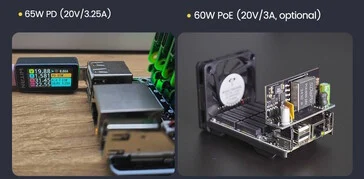
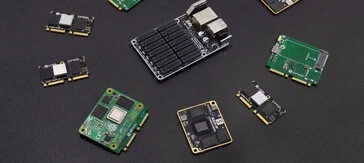
    The NanoCluster can hold as many as seven compact computing boards from different brands. It specifically supports the Sipeed Longon Pi 3H, Sipeed M4N, Raspberry Pi CM4, and Raspberry Pi CM5. Compatibility does have its limits: the Raspberry Pi modules need an adapter, and the power supply could be a limiting factor. The board can be powered through USB-C with a maximum capacity of 65 watts. Alternatively, power can also come via PoE over Ethernet. The Ethernet port is capable of handling Gigabit speed connections.

    User-Friendly Features

    There is a USB-A port included, which, similar to the HDMI output, is linked to the board in the first slot. Every board can be accessed individually through UART, which should simplify the troubleshooting process. A fan, measuring 60 millimeters in diameter, is built right into the board to ensure proper cooling for all connected units. When fully loaded, the system’s dimensions are 100 x 60 x 60 millimeters, and it is available for purchase now starting at a base price of $45. If you want to use the Raspberry Pi CM modules for compatibility, the starting price is $89.

    New Possibilities

    Sipeed’s new offering opens up more avenues for users looking to enhance their computing capabilities with a compact solution. With the blend of various boards and efficient cooling, this cluster system is tailored for those who need a reliable and powerful setup. It’s an exciting time for developers and tech enthusiasts who are interested in maximizing their performance through innovative hardware solutions.

    Source:
    Link


  • Lenovo Yoga Book 9 14 Review: Arrow Lake CPU Throttling Issues

    Lenovo Yoga Book 9 14 Review: Arrow Lake CPU Throttling Issues

    Key Takeaways

    1. The Yoga Book 9 14 features the Intel Arrow Lake Core Ultra 7 255H processor, offering significant performance upgrades over the original Yoga Book 9 13.
    2. The new CPU can achieve speeds up to twice as fast as the Core Ultra 7 155U in the previous model, with improved graphics performance.
    3. Performance may decline by up to 25% during continuous use due to thermal limits and Turbo Boost capabilities.
    4. The Yoga Book 9 14 experiences more throttling compared to the Xiaomi RedmiBook Pro 14, which uses the same CPU.
    5. Despite throttling concerns, the Yoga Book 9 14 still greatly outperforms its predecessor, making it a notable upgrade.


    The latest Yoga Book 9 14 has started shipping, equipped with the cutting-edge Intel Arrow Lake Core Ultra 7 255H processor. This is a notable upgrade from the original Yoga Book 9 13, which was limited to Core U-series processors. The new CPU boasts speeds that can reach up to twice as fast as the Core Ultra 7 155U found in the previous 13-inch version, and the graphics performance shows even more significant improvements.

    Performance Considerations

    However, it’s important to note that “up to” is a key term here. Our review highlights that the H-series CPU might be more than what the Yoga Book 9 14 can effectively manage. For instance, while running CineBench R15 xT in a continuous loop, we observed that the processor’s performance could decline by as much as 25% over time. This is likely caused by limited Turbo Boost capabilities or thermal limits, whereas the older 13-inch Yoga Book 9 exhibited minimal throttling even under similar testing conditions. Interestingly, the Xiaomi RedmiBook Pro 14, which uses the same CPU as the Yoga Book 9 14, demonstrated less throttling compared to our model, as illustrated in the graph below.

    Throttling Insights

    The throttling observed in our Core Ultra 7 255H setup raises concerns that a similar situation might arise with the more expensive Core Ultra 9 285H variant. As such, potential buyers might want to think about avoiding the pricier Core Ultra 9 option, as the performance differences between the two CPUs are expected to be quite small. Nonetheless, it’s still worth mentioning that the Yoga Book 9 14 significantly outperforms its older versions by a wide margin, irrespective of any throttling issues encountered.

    Source:
    Link

  • CrowPi 3: Crowdfunding Raspberry Pi 5 AI Learning Station

    Key Takeaways

    1. Crowdfunding Campaign: The CrowPi 3 is currently being crowdfunded by Elecrow, with a pledge of approximately $159 for early backers, excluding the Raspberry Pi 5.

    2. Portable Design: The CrowPi 3 is designed for portability, compatible with Raspberry Pi 5, Arduino Nano, and other single-board computers, and includes a 4.3-inch IPS screen.

    3. Comprehensive Kits: It comes with a “Basic Accessories Kit” (IR remote, SD card, card reader, RFID tags) and an “Expansion Accessories Kit” (main board, gaming controllers, NFC tags).

    4. Versatile Connectivity: Users can connect external sensors and actuators easily, with built-in modules like a smaller display and ultrasonic sensors for various projects.

    5. Focus on Learning: The CrowPi 3 aims to enhance the learning and development experience for makers and developers, particularly in AI applications.


    Some readers might already know about CrowPi and its maker, Elecrow, who is currently running a crowdfunding campaign for the new CrowPi 3 development and learning platform. Those who support the campaign can secure a unit for a pledge of approximately $159, with the first units expected to ship in August. This amount covers the platform and essential sensors and components, but it does not include the Raspberry Pi 5. As with most preorders, there are financial risks involved, though these are likely minimal this time since Elecrow is a well-established company with a good track record in crowdfunding.

    Portable Learning Tool

    Moving on, the CrowPi 3 is designed to be portable and suitable for use on the go. It is made for a Raspberry Pi and works with the latest Raspberry Pi 5 (available from $75 on Amazon), as well as the Arduino Nano and various other single-board computers. Additionally, this innovative AI station boasts a 4.3-inch IPS screen with a resolution of 800 x 480 pixels. The so-called “Basic Accessories Kit” provides an IR remote, an SD card loaded with the operating system, a card reader, and RFID tags. Moreover, the “Expansion Accessories Kit” includes the main board, two gaming controllers, and NFC tags. The system also features built-in speakers and a camera, weighing in at 2.4 lbs.

    Versatile Connectivity

    You can easily connect external sensors and actuators through a breadboard. However, there are also various modules located directly on the board, such as a smaller display and ultrasonic sensors. The Elecrow CrowPi 3 is versatile enough to be used in many projects, including AI applications like object recognition, just to give one example.

    Crowdfunding Future

    The CrowPi 3 represents an exciting opportunity for makers and developers alike. With its combination of portability, compatibility, and built-in features, it aims to provide a comprehensive learning and development experience for all users.

    Source:
    Link

  • Lenovo Yoga Book 9 14: Lighter than 13-inch with Bigger Displays

    Lenovo Yoga Book 9 14: Lighter than 13-inch with Bigger Displays

    Key Takeaways

    1. The Lenovo Yoga Book 9 series features stunning dual OLED touch displays in a convertible design.
    2. The latest 14-inch model is larger, lighter, and has a newer processor with improved refresh rates compared to the 13.3-inch version.
    3. The 14-inch Yoga Book 9 weighs 1214 g, making it lighter than the 13.3-inch version, which weighs 1346 g.
    4. The detachable keyboard for the 14-inch model is larger and has more keys than the one for the 13-inch model, adding to its overall weight.
    5. Usability can be challenging without the detachable keyboard and an external mouse, making the device feel bulky for travel.


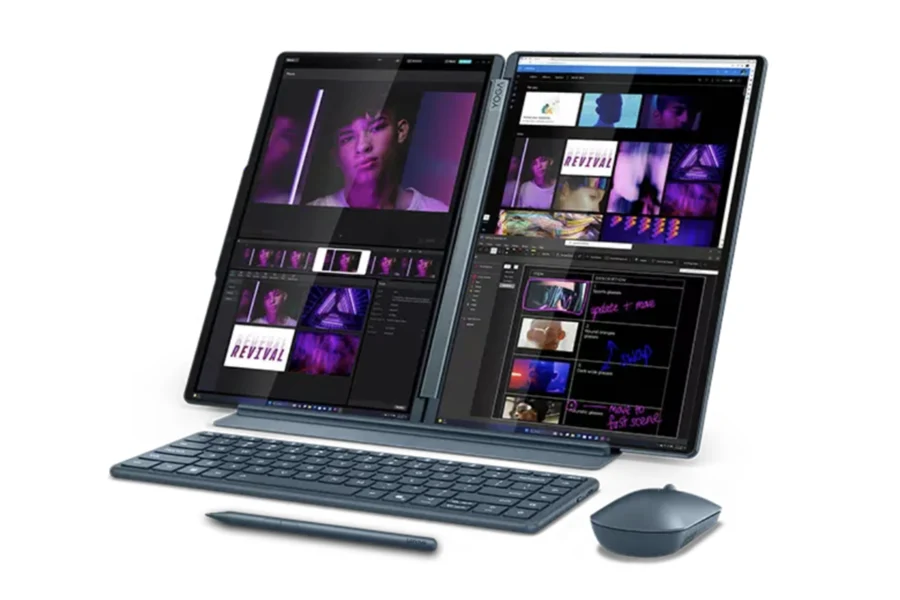
    Few laptops can compare to the stunning visuals of the Lenovo Yoga Book 9 series. The first model, featuring a 13.3-inch screen, was well-known for its dual OLED touch displays in a convertible design. The latest 14-inch version takes this concept further with larger screens, a newer processor, and improved refresh rates. Surprisingly, it is a bit lighter than its smaller predecessor, even with the enhancements in size and performance.

    Weight Comparison

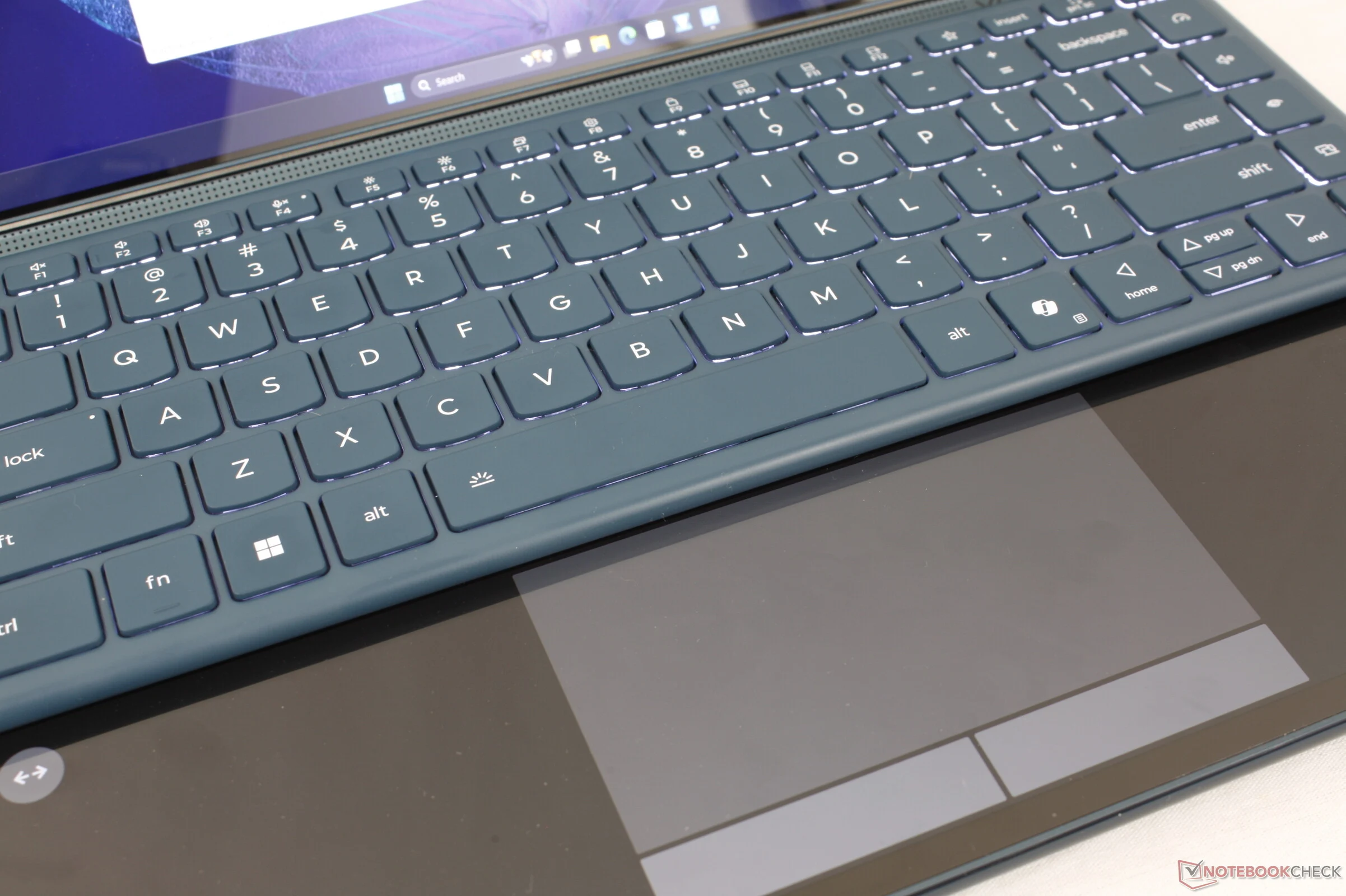
    As illustrated in the comparison image below, the 14-inch Yoga Book 9 has a weight of just 1214 g, whereas the earlier 13.3-inch version weighs in at 1346 g. If we include their detachable keyboards, the 14-inch model weighs 1554 g, while the 13-inch model comes in at 1588 g. The keyboard for the Yoga Book 9 14 is larger and has more keys than the one for the Yoga Book 9 13, which adds to the overall weight of the newer model.

    Usability Concerns

    Unfortunately, as detailed in a review of the product, using the Yoga Book 9 14 can be challenging without its detachable keyboard and an external mouse. The virtual keyboard and clickpad are not particularly ergonomic. Therefore, you will likely need to bring a keyboard and mouse along when you travel, which can make the device feel bulky despite its elegant design. For instance, using the Yoga Book 9 14 on a plane or train can be tricky, as its screens and external input devices require more space than a conventional laptop.

    Source:
    Link


  • MSI Mini PC: Core Ultra 7, 64GB RAM, Thunderbolt 4 Features

    MSI Mini PC: Core Ultra 7, 64GB RAM, Thunderbolt 4 Features

    Key Takeaways

    1. The MSI Cubi NUC AI 1UMG features Intel Core Ultra 7 155H or Ultra 5 125H processors, designed for enhanced AI performance.
    2. It includes two DDR5 slots supporting up to 64GB of RAM and space for two SSDs, one of which is pre-installed.
    3. The mini PC has compact dimensions of 4.71 x 4.54 x 1.48 inches and is powered by a 120W supply.
    4. Connectivity options include multiple USB ports, Thunderbolt 4 ports, HDMI 2.0 ports, and dual Ethernet ports supporting up to 2.5Gbps.
    5. MSI has not announced pricing or availability for the Cubi NUC AI 1UMG, though similar models are available from other brands.


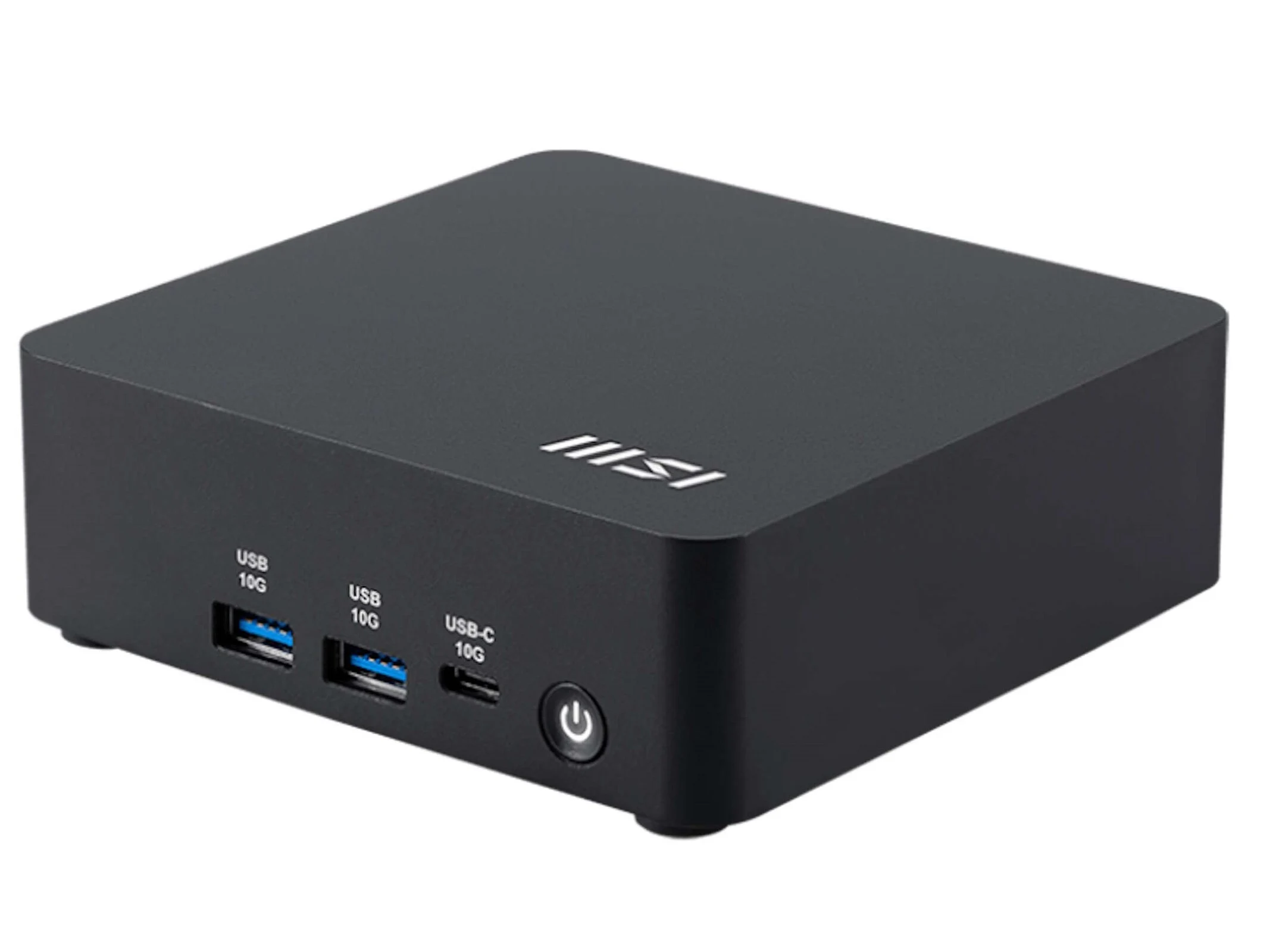
    MSI has introduced the Cubi NUC AI 1UMG, which will come in various models. Each version of this compact PC features either the Intel Core Ultra 7 155H or the Intel Core Ultra 5 125H. These APUs include a processor, integrated GPU, and an NPU designed to speed up AI tasks. It includes two DDR5 slots that can support up to 64GB of RAM. Additionally, it has room for two SSDs, with one M.2 2280 SSD already installed, and a second PCIe M.2 2242 slot for easy storage upgrades.

    Compact Design and Features

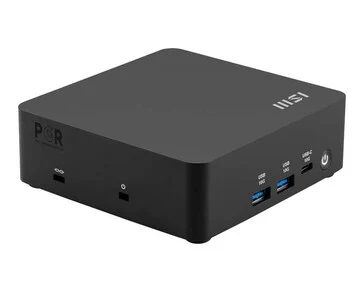
    The new mini PC from MSI has dimensions of 4.71 x 4.54 x 1.48 inches and is powered by a 120W supply. It features a Kensington lock for anti-theft security, along with two USB Type-A ports and one USB Type-C port at the front, each capable of providing speeds up to 10Gbps. For video connectivity, there are two Thunderbolt 4 ports and two HDMI 2.0 ports, with the HDMI ports capable of delivering up to 15 watts of power. With Power Link, the PC can automatically turn on when a connected monitor is switched on, making it very useful for those who use VESA-mounted setups, as it eliminates the need to reach around the monitor. The rear of the unit has two Ethernet ports, both supporting speeds up to 2.5Gbps, and depending on the setup, users can choose between Wi-Fi 6E or Wi-Fi 7 for wireless connections.

    Pricing and Availability

    As of now, MSI hasn’t provided any information regarding the pricing or when the Cubi NUC AI 1UMG will be available for purchase. However, similar mini PCs from brands like Asus can already be found on platforms like Amazon.

    Source:
    Link


  • Colorful AMD Strix Halo Mini PC with Radeon 8060S iGPU

    Colorful AMD Strix Halo Mini PC with Radeon 8060S iGPU

    Key Takeaways

    1. The Strix Halo mini PC features the AMD Ryzen AI Max+ 395 and RDNA 3.5 integrated graphics, claiming to outperform the Nvidia RTX 4070 Laptop.
    2. It includes 96 GB of LPDDR5X RAM, although maximum storage capacity details are not yet available.
    3. The chassis is made from premium aluminum and has a compact volume of 4.0 liters, designed for effective cooling with ventilation holes on the sides and rear.
    4. Release date and pricing information for the Strix Halo mini PC are currently unknown.
    5. For comparison, the GMKtec EVO-X2 with the same APU starts at $1,499, with higher configurations available at $1,999.99.


    Colorful gave a glimpse of the SMATR 900 at Computex 2025, and now the company has revealed more details about this mini PC. The Strix Halo mini PC comes equipped with the AMD Ryzen AI Max+ 395, which is their top-tier option featuring the latest RDNA 3.5 integrated graphics.

    Specifications Breakdown

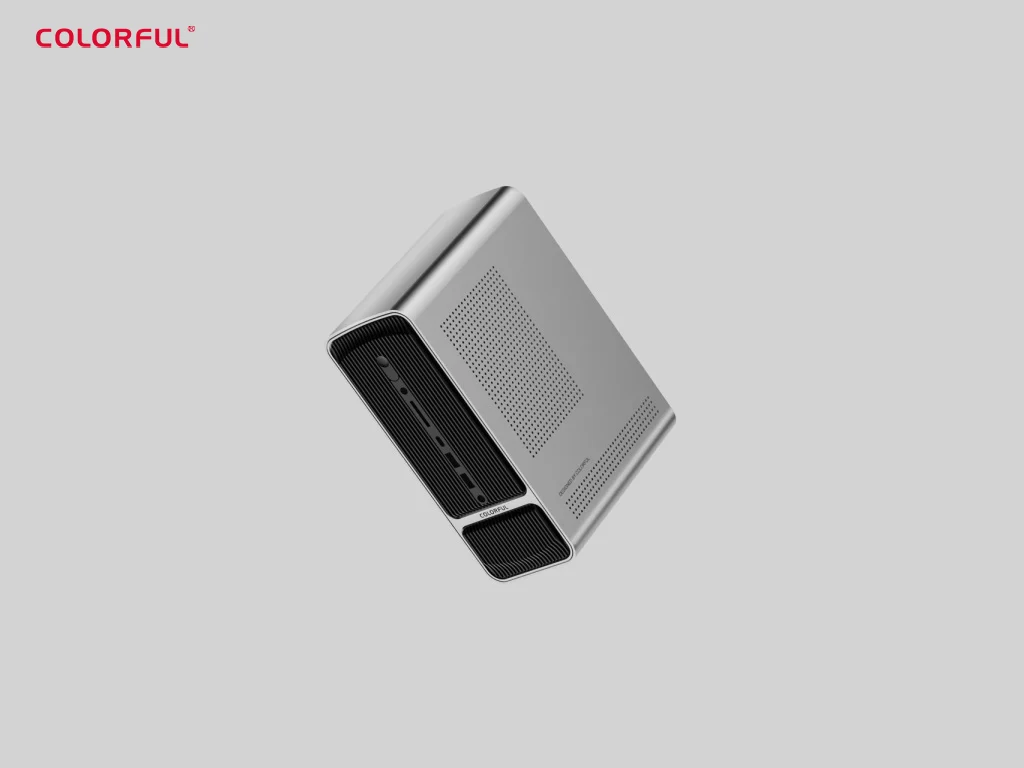
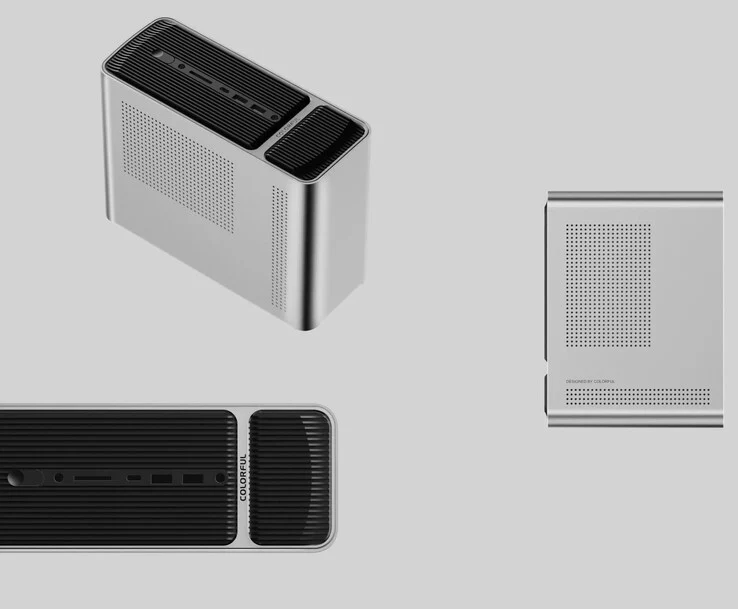
    Specifically, it has the Radeon 8060S integrated GPU, which includes 40 compute units (CUs). AMD asserts that this GPU can surpass the Nvidia RTX 4070 Laptop in performance. Colorful also includes 96 GB of LPDDR5X RAM in the setup. Although the company has not disclosed the maximum storage capacity, recent teaser images indicate the following port configuration:

    Design and Cooling

    Regarding the design, Colorful emphasizes that the chassis is crafted from premium aluminum and has a volume of 4.0 liters. The teaser images reveal ventilation holes on both the sides and the rear. While the specifics of the cooling system are not yet clear, the size of the chassis and the positioning of the vents suggest that the SMATR 900 is likely to have an efficient cooling solution.

    At this time, there is no information on when the AMD Strix Halo mini PC will be released for sale, and the pricing details remain a mystery. It is notable that the GMKtec EVO-X2 with the same Ryzen AI Max+ 395 APU has a starting price of $1,499 in the international market (the 128 GB RAM + 2 TB SSD variant is currently listed for $1999.99 on Amazon with a coupon).

    Source:
    Link


  • First Gigabit Starlink Dish: Tougher Against Rocket Vibrations

    First Gigabit Starlink Dish: Tougher Against Rocket Vibrations

    Key Takeaways

    1. SpaceX is launching a new Starlink satellite dish for moving vehicles, priced at $1,999, which is its most durable and fastest model yet.
    2. The dish offers gigabit download speeds and can withstand harsh conditions, including drops, hail, and military-grade shocks.
    3. Videos show the dish’s resilience, including tests on a Cybertruck and during rocket landings.
    4. The Performance Kit will enable gigabit Internet speeds in remote areas, with service plan upgrades expected in 2026 without new hardware.
    5. Monthly Internet service plans for the dish range from $65 for 50 GB to $540 for 2 TB of data.


    SpaceX is launching a new Starlink satellite Internet dish designed for use in moving cars and boats, which is claimed to be its most durable and fastest model to date.

    Pricing and Specifications

    This new dish comes in at a price of $1,999, offering superior robustness and gigabit download speeds, a notable upgrade from the $350 Starlink Mini dish which is also intended for mobile connectivity. The Performance Kit is backed by a generous 3-year warranty, with SpaceX stating it can last up to 10 years even under tough conditions. These harsh situations include drops from a height of one meter, hailstones measuring up to 1.25 inches in diameter, and snow with a density of 100 kg/m3. It is also built to withstand military-grade shocks and vibrations from various vehicles, including those used in construction, agriculture, and on the ground or sea.

    Surviving Tough Conditions

    SpaceX has published several videos demonstrating the resilience of the Starlink Performance Kit. In these clips, the dish endures the vibrations from a rocket landing and is shown mounted on a Cybertruck navigating through rough terrain, highlighting its capabilities.

    The new dish is the first in the Starlink lineup to support gigabit Internet speeds. Customers who purchase this dish will benefit from faster download rates once SpaceX activates its gigabit network, which will be powered by its V3 satellites—each as large as a Boeing 737 when extended.

    Future Enhancements and Plans

    According to SpaceX, “Starlink is focused on making network enhancements which will enable gigabit speeds starting in the most remote places on Earth with the Performance Kit.” The company promises that service plan upgrades will become available in 2026 without the need for any hardware changes. Currently, the kit can deliver satellite Internet speeds exceeding 400 Mbps.

    As for the cost, the new Starlink Performance dish is priced at $2,049, which includes shipping and handling. Local Internet service plans for this dish start at $65 per month for 50 GB and can go as high as $540 per month for 2 TB of data.

    Source:
    Link

  • New Fiber Optic Cable Sets World Record at 1 Petabit per Second

    New Fiber Optic Cable Sets World Record at 1 Petabit per Second

    Key Takeaways

    1. A new global record for data transmission was set at 1.02 petabits per second over 1,808 kilometers using a 19-core optical fiber.
    2. The new fiber optic line has a transmission capacity of 1.86 exabits per kilometer per second, surpassing the previous record of 1.71 exabits per kilometer per second.
    3. The research team was led by the National Institute of Information and Communications Technology (NICT) in Japan.
    4. An optical amplifier was integrated to extend the transmission range to nearly 2,000 kilometers.
    5. The team aims to address future data traffic demands and improve optical amplification efficiency with this new technology.


    Data transmission reached an astonishing rate of 1.02 petabits per second over a stretch of 1,808 kilometers, marking a new global record set by a team of international researchers. They employed a newly engineered standard 19-core optical fiber, which showcases low losses across various wavelength bands.

    Previous Achievements

    Earlier this year, in March 2023, a standard 19-core fiber optic cable achieved a transmission speed of 1.7 petabits per second, but this was only effective over a distance of a little more than 60 kilometers. The newly developed fiber optic line boasts a much higher transmission capacity of 1.86 exabits per kilometer per second, surpassing the former world record of 1.71 exabits per kilometer per second set in October 2023.

    Innovative Techniques

    The team, guided by the National Institute of Information and Communications Technology (NICT) in Japan, utilized a standard-diameter fiber optic cable featuring 19 cores that were linked together. By integrating an optical amplifier, the team was able to extend the transmission range to nearly 2,000 kilometers.

    The researchers aspire that the introduction of this type of 19-core fiber optic cable will effectively manage the rapidly growing amounts of data traffic expected in the future. Additionally, the research team is keen on advancing the efficiency of optical amplification and discovering practical uses for this new technology.

    Source:
    Link

  • Intel Nova Lake-S iGPU Leaks: Xe3 Celestial and Xe4 Druid

    Intel Nova Lake-S iGPU Leaks: Xe3 Celestial and Xe4 Druid

    Key Takeaways

    1. Core Count: Nova Lake-S CPUs may feature up to 52 cores, representing a significant advancement in Intel’s desktop CPU design.

    2. Integrated GPU Architecture: The CPUs will include a unique integrated GPU (iGPU) combining Xe3 for graphics performance and Xe4 for display and media tasks.

    3. Media Support: The iGPU is expected to have enhanced media capabilities with professional codec support and modifications to the standard Xe3 design.

    4. Variety of SKUs: The Nova Lake-S lineup might have four different models, but it’s uncertain if all will feature the same iGPU configuration.

    5. Manufacturing Technologies: Intel aims to utilize advanced manufacturing processes, including its 18A and TSMC’s 2 nm, for the Nova Lake-S CPUs, with a release expected in the second half of 2026.


    The Intel Nova Lake-S desktop CPU design is set to be a major advancement from Intel in the desktop market segment. Recent leaks indicate that the Nova Lake-S CPUs might boast up to 52 cores in total. When they are expected to be released next year, likely in the second half of 2026, it’s said that the chips will come with a distinctive integrated GPU (iGPU) that includes both Xe3 and Xe4 components.

    GPU Architecture Insights

    Insider Jaykihn on X has shared that the Nova Lake-S desktop CPUs will incorporate both Xe3 and Xe4 GPU designs for their iGPUs. The primary GPU tile is based on Xe3, while Xe4 will handle display functions and media tasks like encoding and decoding.

    To put it simply, the Xe3 “Celestial” architecture is the main source of graphic performance, while some features of Xe4 are used for additional support.

    Media Support Claims

    Furthermore, leaker Bionic_Squash has mentioned that “the media is very nice, professional codec support.” They also hint that the Xe3 component for the Nova Lake-S iGPU is not the standard version and includes “several changes.” The basic Xe3 might be saved for the Arc Celestial desktop GPUs and perhaps the high-end Panther Lake laptop models.

    From the leaks available, the Intel Nova Lake-S lineup appears to include four different SKUs:

    It remains unclear if all these versions will have the Xe3+Xe4 iGPU or if they will come with varied setups. Given that these are tile-based CPUs, Intel has the flexibility to adjust configurations with different architectures easily. Therefore, the final graphics solution remains uncertain.

    Manufacturing Processes

    Lastly, there are discussions about the possibility of using Intel’s 18A and TSMC’s 2 nm manufacturing processes for Nova Lake-S.

    With Panther Lake laptop CPUs anticipated in the second half of 2025, followed by the Arrow Lake Refresh for desktops, and finally Nova Lake in 2026, Intel seems to have an exciting CPU lineup ahead. The key for the company will be to provide strong products to regain its competitive edge.

    Source:
    Link