Tag: Raspberry Pi CM4

  • MutantC: Customizable Open-Source Linux Handheld Device

    MutantC: Customizable Open-Source Linux Handheld Device

    Key Takeaways

    1. The MutantC project is popular and accessible, suitable for beginners in crafting.
    2. Requires a 3D printer or third-party printing service; separate purchase of two circuit boards is necessary.
    3. Features a Raspberry-pi CM4 module and a sliding TFT touchscreen available in 4.3-inch or 5-inch sizes.
    4. Offers connectivity options with two USB 2.0 ports, GPIO ports, and add-on boards for extended capabilities.
    5. Versatile use cases include controlling home devices, serving as a portable computer, or acting as a home automation controller.


    The MutantC project has gained a lot of popularity and is now in its fifth iteration. This project is designed to be quite accessible, making it a great choice even for those who are not very experienced in crafting. Typically, you’ll need a 3D printer to create it, but you can also get the printing done by a third-party service if you prefer. Moreover, there are two circuit boards that usually need to be bought separately. You can choose between two models that differ in thickness: either 39 mm or 42 mm, and you can select a battery capacity of either 7,000 mAh or 10,000 mAh.

    Hardware Specifications

    At the heart of the MutantC is a Raspberry-pi CM4 module, which serves as the computing engine. The TFT touchscreen is available in sizes of 4.3 inches or 5 inches and cleverly slides up to uncover the keyboard. There’s also a thumbstick located on the right side for controlling the mouse. You can connect the device to an external display, making it a good option for office tasks like text editing on a larger screen.

    Connectivity Options

    The device comes with two USB 2.0 ports and GPIO ports that support SPI and I2C, enabling you to connect various external sensors and actuators. Furthermore, you can use add-on boards to extend its capabilities, such as adding an M.2 2280 SSD, extra USB ports, or Ethernet connectivity. To put everything together, you will need a soldering iron, and having a scalpel on hand could be handy too. Ultimately, the MutantC can serve many functions, from controlling home devices to functioning as a portable computer or even a home automation controller.

  • CyberT: Handheld BlackBerry Tribute with Raspberry Pi Keyboard

    CyberT: Handheld BlackBerry Tribute with Raspberry Pi Keyboard

    Key Takeaways

    1. The CyberT is a mobile device priced at $89, currently sold out, with an option to register for stock alerts.
    2. It uses a Raspberry Pi CM4 and a custom board for connectivity, making it compact and sleek.
    3. The device features a 4-inch screen with 720 x 720 resolution and can connect to external monitors via HDMI.
    4. It includes a physical keyboard and touchpad, reminiscent of classic BlackBerry phones.
    5. The CyberT is aimed at hobbyists, lacking an included battery, and encourages DIY exploration.


    The CyberT is a recently launched mobile device that’s technically available for buying, but it’s a bit tricky. This handheld is priced at $89 on Tindie, although it’s currently sold out. Interested buyers can register to receive an email alert when the CyberT is back in stock. This product is categorized as a cyberdeck, meaning it’s a flexible mobile system intended for use with Linux-based operating systems.

    Features and Components

    It makes use of a Raspberry Pi CM4, which is combined with a tailored board that provides connection options to attach a display, for example. The Compute Module contributes to the handheld being quite compact and sleek. An extra board is necessary since the Raspberry Pi CM4 itself lacks essential connections. Unfortunately, this BlackBerry-like device does not support the newest Raspberry Pi Computer Model 5.

    Technical Specs

    In terms of technical specifications, the CyberT features a 4-inch screen with a resolution of 720 x 720 pixels, which should offer decent clarity. If the built-in display isn’t good enough, users can connect an external monitor through HDMI. Typing text is made easy with a physical keyboard, which was likely one of the standout features of the classic BlackBerry phones.

    There’s also a touchpad, a microSD card slot, and while the CyberT can run on a battery, one is not included in the package. As a result, this mobile device is mainly aimed at hobbyists and other users who don’t anticipate a product that’s immediately usable. Instead, the CyberT invites users to explore more within the DIY realm.

    Source:
    Link

  • NanoCluster: Compact Raspberry Pi Cluster Solution for Efficiency

    NanoCluster: Compact Raspberry Pi Cluster Solution for Efficiency

    Key Takeaways

    1. Compact Design: The NanoCluster can hold up to seven computing boards, including models from Sipeed and Raspberry Pi, but may require adapters for compatibility.

    2. Power Options: The system can be powered via USB-C with a maximum of 65 watts or through PoE over Ethernet, supporting Gigabit speed connections.

    3. User-Friendly Features: Each board is individually accessible through UART for easier troubleshooting, and it includes a USB-A port and HDMI output.

    4. Cooling System: A built-in 60mm fan ensures proper cooling for all connected units, enhancing performance and reliability.

    5. Affordability and Availability: The NanoCluster starts at $45, with Raspberry Pi CM modules priced at $89, making it an accessible solution for enhancing computing capabilities.


    Cluster systems make use of several identical or at least quite similar units to boost performance across different uses. The level of performance improvement relies on the specific application and how well the components collaborate with each other. In this regard, Sipeed has introduced a fresh solution for creating such a cluster, and it stands out for being notably compact.

    Compact Design

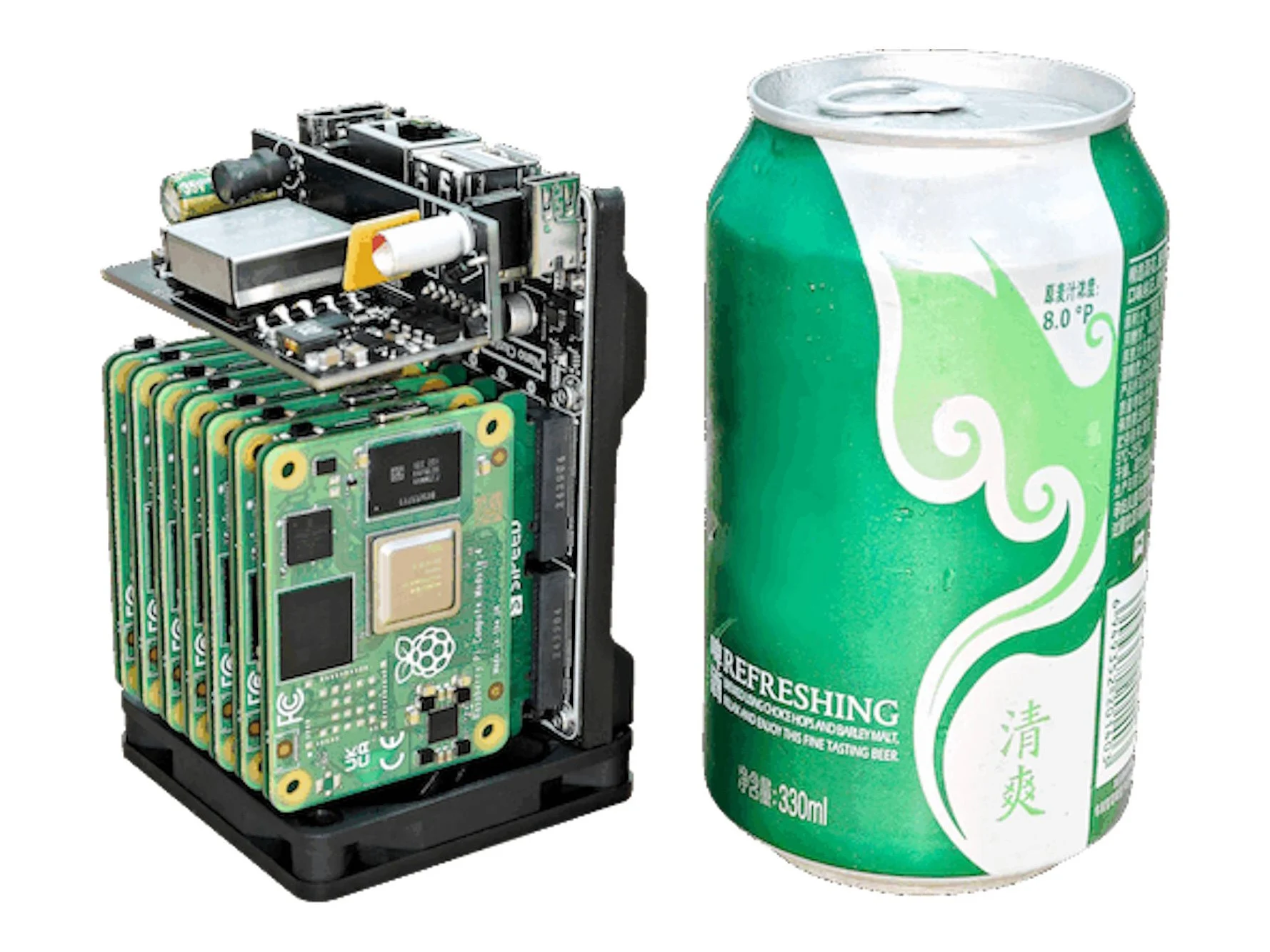
    The NanoCluster can hold as many as seven compact computing boards from different brands. It specifically supports the Sipeed Longon Pi 3H, Sipeed M4N, Raspberry Pi CM4, and Raspberry Pi CM5. Compatibility does have its limits: the Raspberry Pi modules need an adapter, and the power supply could be a limiting factor. The board can be powered through USB-C with a maximum capacity of 65 watts. Alternatively, power can also come via PoE over Ethernet. The Ethernet port is capable of handling Gigabit speed connections.

    User-Friendly Features

    There is a USB-A port included, which, similar to the HDMI output, is linked to the board in the first slot. Every board can be accessed individually through UART, which should simplify the troubleshooting process. A fan, measuring 60 millimeters in diameter, is built right into the board to ensure proper cooling for all connected units. When fully loaded, the system’s dimensions are 100 x 60 x 60 millimeters, and it is available for purchase now starting at a base price of $45. If you want to use the Raspberry Pi CM modules for compatibility, the starting price is $89.

    New Possibilities

    Sipeed’s new offering opens up more avenues for users looking to enhance their computing capabilities with a compact solution. With the blend of various boards and efficient cooling, this cluster system is tailored for those who need a reliable and powerful setup. It’s an exciting time for developers and tech enthusiasts who are interested in maximizing their performance through innovative hardware solutions.

    Source:
    Link