Tag: DIY handheld

  • ROG Xbox Ally Look-Alike: Reverse-Engineered PS2 Portable Handheld

    ROG Xbox Ally Look-Alike: Reverse-Engineered PS2 Portable Handheld

    Key Takeaway

    – It uses a custom reverse-engineered mainboard (not Sony) that reuses only six PS2 ICs, marking a first-of-its-kind hardware approach.
    – A Trion T20 FPGA handles video output with integrated deinterlacing, line doubling, and scaling to deliver a crisp display from the PS2’s interlaced signal.
    – Power and input emulation are handled by an RP2040, including USB-C charging and DualShock 2 rumble emulation; it runs on two 21700 batteries for about 4.5 hours.
    – The design draws heavily on Windows handheld ergonomics (ROG Xbox Ally-inspired shell) with premium, PS Vita-like controls and Hall-effect sticks, but requires advanced soldering and DIY skills.

    Overview of the PS2 Portable DIY

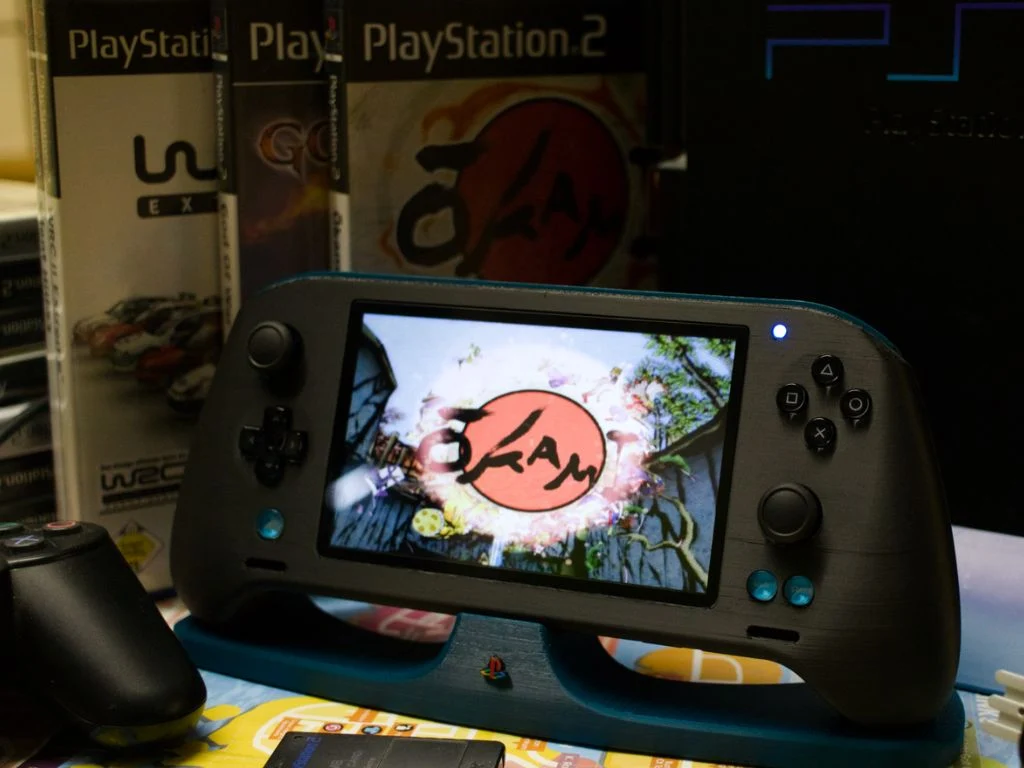
    A solo builder and modder named Tschicki recently created what many retro enthusiasts would consider the ultimate DIY portable PlayStation 2 handheld. Designed, soldered, reverse-engineered, and crafted from scratch, it draws design inspiration from the Asus ROG Xbox Ally and incorporates that Windows gaming handheld’s ergonomics into the outer shell. The project began in early 2022 and went public last year, gaining attention again this week. The device stands out because it uses a reverse-engineered motherboard not sourced from a PS2 or Sony, with only six ICs recycled from SCPH-7900x or SCPH-9000x mainboards.

    Technical Core and Display

    Most internal components are brand new, and a Trion T20 FPGA handles the digital video output, featuring a motion-adaptive deinterlacer, line doubler, and bilinear scaler to convert the PS2’s interlaced signal into a crisp image on the handheld’s LCD. Power management is driven by an RP2040 microcontroller, which also manages charging and even emulates a DualShock 2 controller complete with traditional rumble. The device relies on two 21700 batteries to deliver about 4.5 hours of playtime, and charging is done via USB-C with an undervolting configuration to keep temperatures controlled and stable.

    Design Aesthetics and Controls

    The handheld’s controller section looks notably premium, featuring PS Vita-inspired face buttons and Hall-effect analog sticks. While the project is impressive, it is not for the faint of heart, and the GitHub project description makes that explicit. All PCB designs, FPGA code, 3D printing files, and firmware are freely available, yet successful assembly requires fine-pitch BGA soldering skills, a capable chip programmer, and substantial troubleshooting patience. The author even cautions that prospective builders should think twice before diving in.

    Developer Notes and Accessibility

    In the project notes, Tschicki emphasizes the high difficulty level and the specialized equipment needed. The repository details that the effort goes beyond a simple retrofit or emulator run, involving reverse-engineered hardware and carefully tuned software. Even so, the ambition and craftsmanship demonstrate what passionate hobbyists can achieve when pushing the boundaries of portable gaming hardware. The project remains a testament to hands-on innovation, not just nostalgia.

    Conclusion and Status

    Overall, this portable PS2 project showcases reverse-engineered hardware and a dedicated modding ethos, yielding a handheld that many retro fans would deem the ultimate DIY specimen. It’s a clear reminder that, with the right mix of hardware, software, and tenacity, enthusiasts can craft bespoke devices that blur the line between original consoles and modern portable gaming. The work is publicly documented, inviting others to study, learn, and perhaps attempt similar feats in the future.
    Sources
  • Mecha Comet: Open-Source Handheld Launch with Discounts & Freedom

    Mecha Comet: Open-Source Handheld Launch with Discounts & Freedom

    Key Takeaways

    1. The Mecha Comet is a DIY device suitable for both experienced and novice users, with extensive customization options available.
    2. It features a 3.92-inch AMOLED touchscreen, HDMI connectivity, and is powered by either an i.MX8M or i.MX 95 processor with varying RAM and storage options.
    3. Users can upgrade the device with an M.2 3042 port for additional hardware, and it supports WiFi, Bluetooth, and various peripherals.
    4. The device is available for pre-order starting at $189, with delivery expected in May 2026.
    5. Crowdfunding risks include potential issues with product functionality or market availability.


    We previously discussed the Mecha Comet, and now it is up for pre-order. This device is mainly considered a DIY item, but it can also be bought by people who don’t have much experience in hardware or software development. Users can customize both the handheld unit and its software extensively if they wish. Mechanix offers a specially tailored Linux distribution for this purpose.

    Display and Connectivity

    The handheld comes equipped with a 3.92-inch AMOLED touchscreen boasting a brightness level of 550 cd/m² and a pixel density of 441 PPI. Users can connect the device to an external display using HDMI. There are two USB-C ports available, one of which is necessary for charging the 4,100 mAh battery. Depending on the chosen model, it features either an i.MX8M with four Cortex-A53 cores or an i.MX 95 with six Cortex-A55 cores. The RAM options include 2, 4, or 8 GB, while the eMMC storage is either 64 or 128 GB.

    Upgradability and Features

    An M.2 3042 port is included, allowing users to install a mobile modem, SSD, NPU, or a LoRaWAN gateway. It also supports WiFi and Bluetooth connectivity, features a motion sensor, and has a built-in camera. Additionally, the handheld can connect to a keyboard or a game controller for enhanced usability.

    The Mecha Comet is available for pre-order starting at a minimum of $189 as part of a crowdfunding initiative. The expected delivery date is set for May 2026. Those supporting the campaign should keep in mind that crowdfunding comes with certain risks, including the possibility that the product might not function as promised or may never reach the market.

    Source:
    Link


  • DIY Handheld PC with RTX 4090: 120 FPS AAA Games at 72°C

    DIY Handheld PC with RTX 4090: 120 FPS AAA Games at 72°C

    Key Takeaways

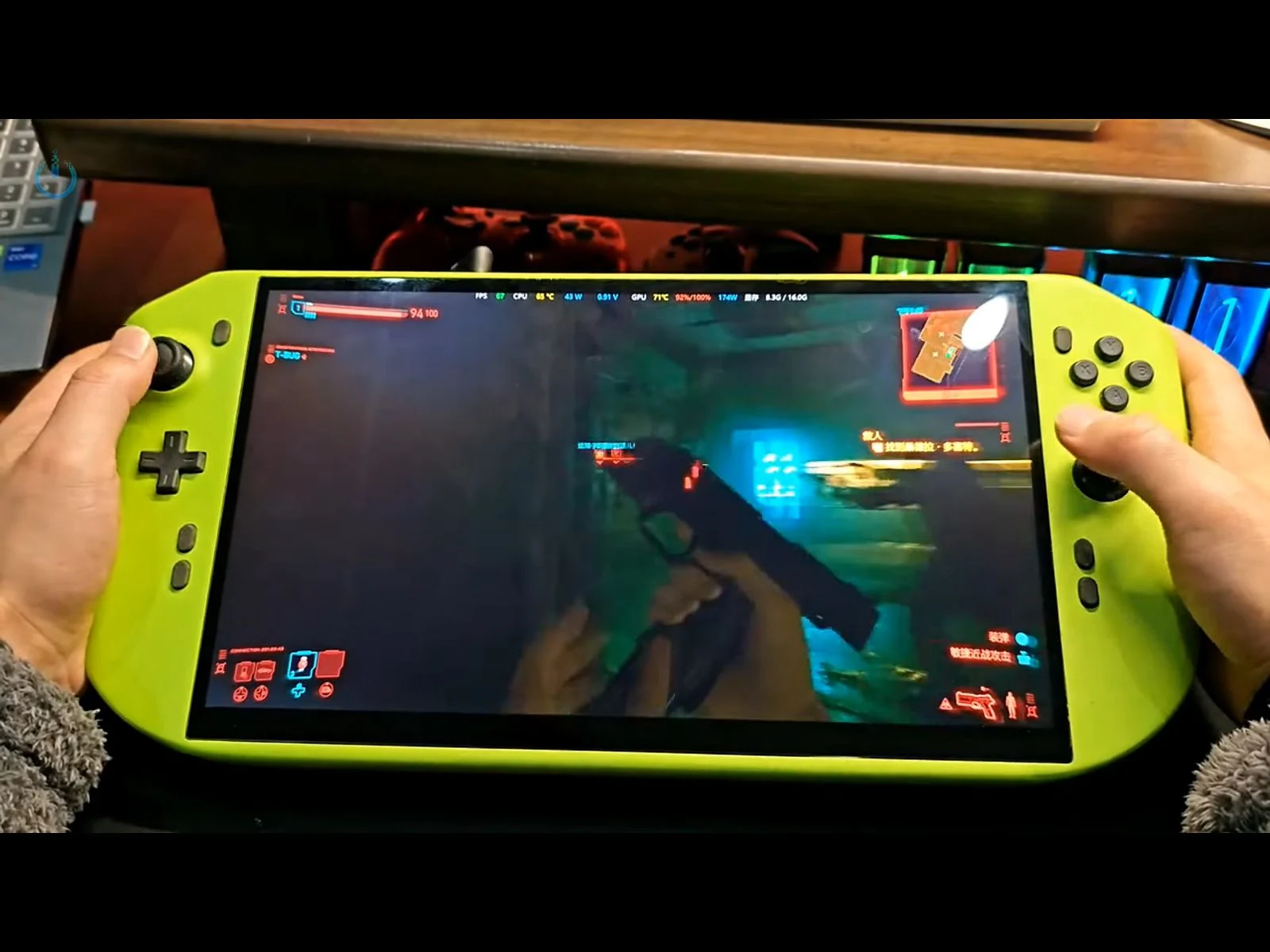
    1. A DIY handheld device powered by an RTX 4090 can run Cyberpunk 2077 at 4K 60 FPS.
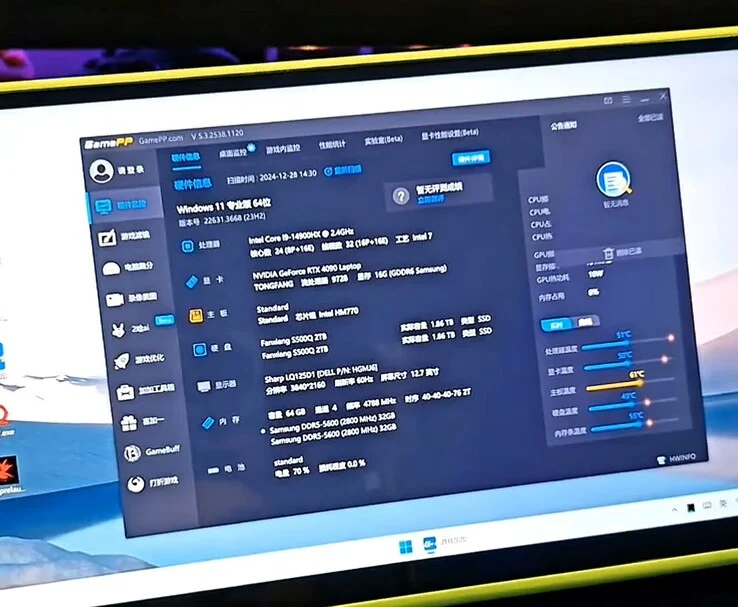
    2. The handheld features a 12.5-inch 4K IPS touchscreen, Intel Core i9-14900HX processor, 64 GB of RAM, and a 2 TB SSD.
    3. The device’s GPU operates at a TGP of 174 W, similar to a gaming laptop, and is powered by a standard gaming laptop charger.
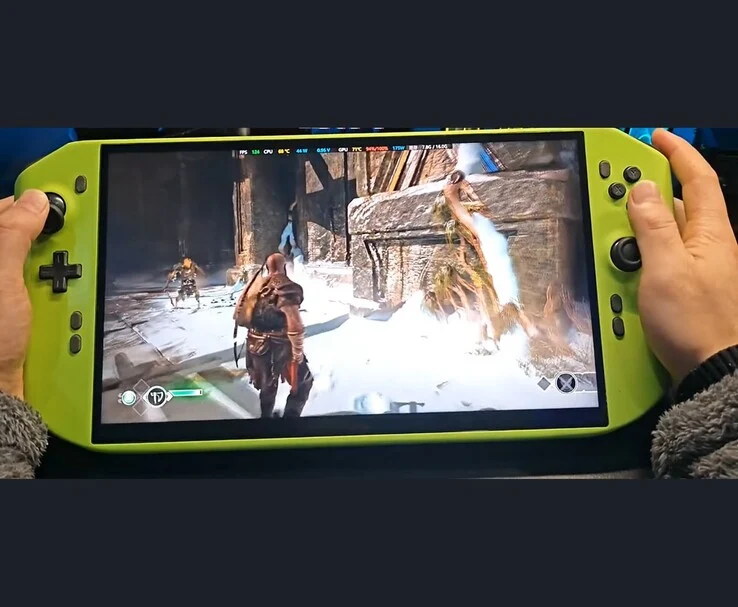
    4. In addition to Cyberpunk 2077, it can run God of War (2016) at 110-120 FPS with smooth gameplay.
    5. The system maintains impressive thermal performance, with the CPU and GPU temperatures staying around 67°C and 72°C, respectively.


    I never imagined that gaming in 4K on a portable device would become a possibility, but then I came across a video from the YouTube channel ‘NITTRX.’ In this clip, the creator demonstrated a handheld device powered by an RTX 4090, playing Cyberpunk 2077 at an impressive 4K 60 FPS.

    Impressive Showcase

    The video is fairly brief, yet it highlights the DIY RTX 4090 handheld remarkably well. The YouTuber has used the mobile version of the RTX 4090 chip, equipped with 16 GB of GDDR6 VRAM, which is shown when the specifications are revealed at the video’s start. During gameplay, it’s clear that the GPU operates at a TGP of 174 W, similar to the laptop version of the RTX 4090. A regular gaming laptop charger can also be spotted in the video, supplying power to the DIY handheld.

    Specifications Unveiled

    In terms of specifications, this RTX 4090 handheld boasts a 4K IPS touchscreen display measuring 12.5 inches, the same kind previously found in a Dell Latitude 12 E7275. Additionally, it features an Intel Core i9-14900HX processor, 64 GB of RAM operating in quad-channel mode, and a 2 TB SSD. Essentially, it’s like a full gaming laptop packed into a compact 12.5-inch frame.

    When we look at gaming performance, the DIY handheld was able to run Cyberpunk 2077 at approximately 4K resolution with high or maximum graphical settings. I’m not entirely sure of these specifics because the creator doesn’t clearly display them in the video. Nevertheless, with the Steam performance overlay showing about 8.3 GB of VRAM in use, it’s reasonable to think that the game is indeed running at high graphics and resolution. The frame rate was around 60–70 FPS.

    Gaming Performance Analysis

    The YouTuber then played 2016’s God of War, achieving between 110 and 120 FPS with smooth gameplay. A particularly interesting aspect was the thermal performance: the 14900HX was sitting at about 67 degrees Celsius, while the RTX 4090 reached 72 degrees Celsius. Fitting such high-performance components in a tiny chassis is already quite amazing, but managing to keep them cool is an even more impressive achievement.

    The YouTuber continues to explore more gaming features throughout the rest of the video, which is linked below. I highly recommend watching it, as a DIY RTX 4090-powered handheld is definitely something everyone should witness to believe.

    Source:
    Link


  • CyberT: Handheld BlackBerry Tribute with Raspberry Pi Keyboard

    CyberT: Handheld BlackBerry Tribute with Raspberry Pi Keyboard

    Key Takeaways

    1. The CyberT is a mobile device priced at $89, currently sold out, with an option to register for stock alerts.
    2. It uses a Raspberry Pi CM4 and a custom board for connectivity, making it compact and sleek.
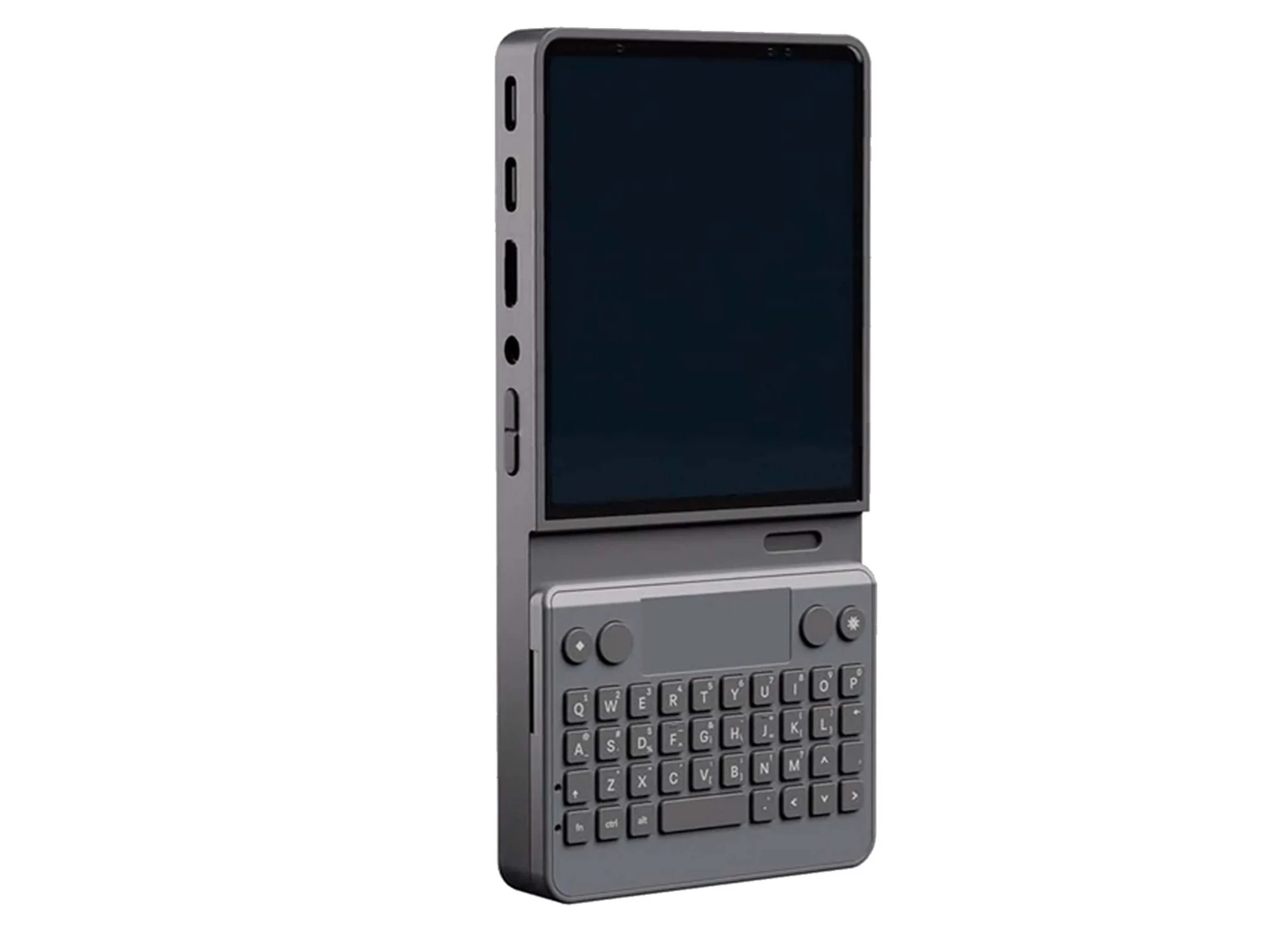
    3. The device features a 4-inch screen with 720 x 720 resolution and can connect to external monitors via HDMI.
    4. It includes a physical keyboard and touchpad, reminiscent of classic BlackBerry phones.
    5. The CyberT is aimed at hobbyists, lacking an included battery, and encourages DIY exploration.


    The CyberT is a recently launched mobile device that’s technically available for buying, but it’s a bit tricky. This handheld is priced at $89 on Tindie, although it’s currently sold out. Interested buyers can register to receive an email alert when the CyberT is back in stock. This product is categorized as a cyberdeck, meaning it’s a flexible mobile system intended for use with Linux-based operating systems.

    Features and Components

    It makes use of a Raspberry Pi CM4, which is combined with a tailored board that provides connection options to attach a display, for example. The Compute Module contributes to the handheld being quite compact and sleek. An extra board is necessary since the Raspberry Pi CM4 itself lacks essential connections. Unfortunately, this BlackBerry-like device does not support the newest Raspberry Pi Computer Model 5.

    Technical Specs

    In terms of technical specifications, the CyberT features a 4-inch screen with a resolution of 720 x 720 pixels, which should offer decent clarity. If the built-in display isn’t good enough, users can connect an external monitor through HDMI. Typing text is made easy with a physical keyboard, which was likely one of the standout features of the classic BlackBerry phones.

    There’s also a touchpad, a microSD card slot, and while the CyberT can run on a battery, one is not included in the package. As a result, this mobile device is mainly aimed at hobbyists and other users who don’t anticipate a product that’s immediately usable. Instead, the CyberT invites users to explore more within the DIY realm.

    Source:
    Link