Category: Computers

  • Intel 14A Node Cost Higher Than 18A Due to High-NA EUV

    Intel 14A Node Cost Higher Than 18A Due to High-NA EUV

    Key Takeaways

    1. The new 14A node from Intel will be more expensive than the existing 18A node due to advanced High-NA EUV lithography tools costing around $380 million.
    2. The 14A node is expected to improve performance-per-watt by 15-20% and reduce power consumption by 25-35%, featuring new technologies like RibbonFET 2 transistors and Turbo Cells.
    3. Intel’s success with the 14A node relies on attracting external foundry clients; insufficient interest could lead to a slowdown or halt in development.
    4. Intel plans to maintain its partnership with TSMC, with 70% of production in-house and 30% outsourced, and TSMC will manufacture key chip series for Intel.
    5. Intel has secured significant investments, totaling over $7 billion, and anticipates critical developments in 2026 related to the 14A node.


    Intel CFO David Zinsner has recently stated that the new 14A node from Intel will be pricier than the existing 18A node. The increased costs stem from the next-gen High-NA EUV lithography tools, which are priced at around $380 million, in contrast to the $235 million tools currently in use. Importantly, the 14A node is Intel’s first fabrication process tailored specifically for both internal and external foundry clients.

    Performance and Efficiency Boost

    The 14A node is anticipated to deliver roughly 15 to 20 percent improved performance-per-watt when compared to the existing 18A node, along with a power consumption reduction of 25 to 35 percent. This new node incorporates RibbonFET 2 transistors, PowerDirect backside power delivery, and Turbo Cells. Furthermore, the new High-NA EUV tool boasts a much finer resolution of 8nm in a single exposure, a significant improvement over the 13.5nm resolution of the current tools.

    Dependency on External Customers

    Intel must attract external foundry clients to validate the development expenses of the 14A node. If the foundry fails to secure a sufficient number of external customers, the company might need to slow down or possibly halt the node’s development. Nevertheless, CEO Lip-Bu Tan has expressed growing confidence due to enhancements in 18A yield. Additionally, due to US government contract stipulations (which require 51 percent control), Intel Foundry cannot be separated off.

    Ongoing Partnership with TSMC

    On another note, Intel’s CFO claims that the company will likely continue its partnership with TSMC indefinitely. Currently, production is split with 70 percent in-house and 30 percent outsourced to external foundries. It is reported that TSMC is responsible for manufacturing the entire Lunar Lake series and most Arrow Lake chips. Furthermore, Intel is expected to be one of TSMC’s initial clients for 2nm chips, with TSMC set to produce the upcoming Nova Lake chips.

    Recently, Intel has attracted substantial investments, including $2 billion from SoftBank and $5.7 billion from government funding. Additional funding is also anticipated from Mobileye ($1 billion) and Altera ($3.5 billion). Panther Lake on 18A is expected to commence production later this year, with 2026 seen as a crucial year for assessing the progress of the 14A node.

    Source:
    Link


  • NXPort: Tiny eGPU Dock Exceeds Crowdfunding Goal

    NXPort: Tiny eGPU Dock Exceeds Crowdfunding Goal

    Key Takeaways

    1. The NXPort is claimed to be the smallest eGPU dock in the world, measuring 169 x 102 x 82 mm.
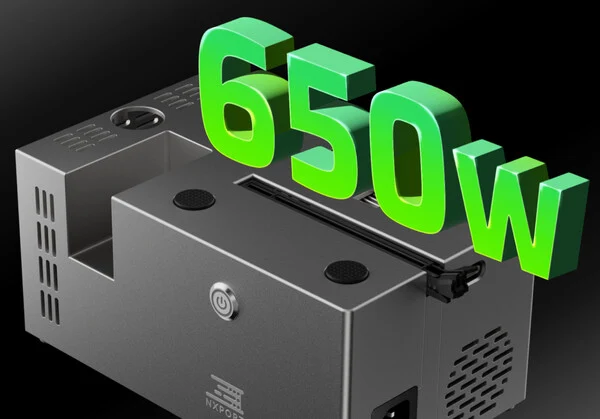
    2. It features a built-in 650 W ATX 3.1 power supply unit, but details about its fan size and noise level are not provided.
    3. The dock has a maximum power output of 525 W for desktop graphics cards and is suitable for mid-range options like the Radeon RX 9060 XT.
    4. The NXPort has surpassed its crowdfunding goal of HKD 30,000 and is currently offered at $239, with a future retail price of $259.
    5. Shipping for backers is expected to begin in January 2026, but delays are common in crowdfunding campaigns.


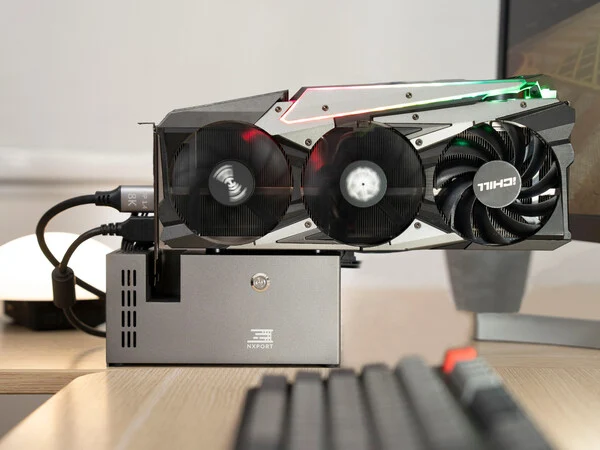
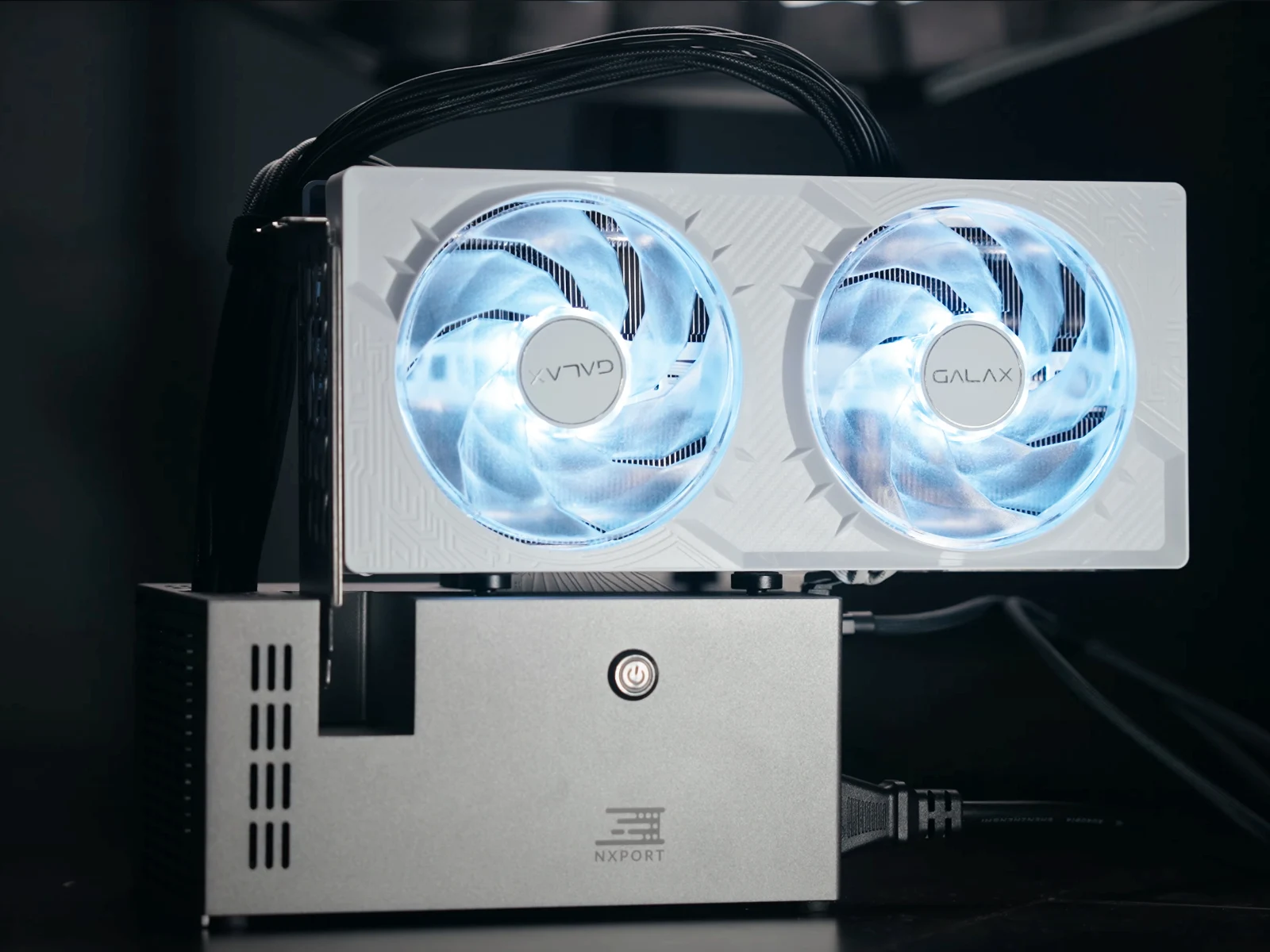
    The NXPort has just made its debut on Indiegogo, being touted as the ‘smallest eGPU dock in the world’ after its launch earlier this week. To summarize, the dimensions of the NXPort are 169 x 102 x 82 mm, and it comes with a built-in power supply unit (PSU) rated at 650 W ATX 3.1. It’s important to mention that NXPort hasn’t provided any additional information regarding this aspect.

    PSU Details Still Unclear

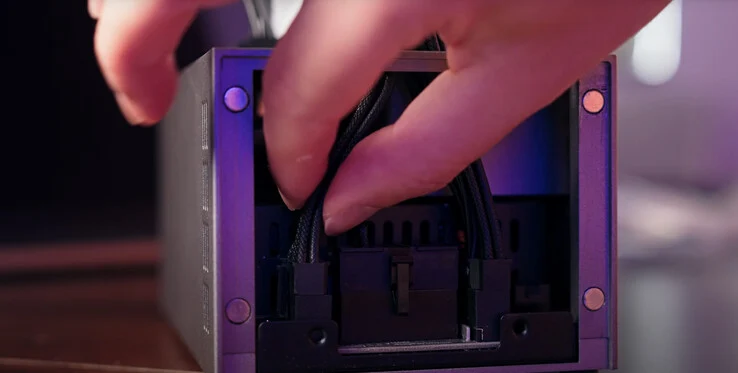
    In addition, the company has yet to disclose the size of the PSU’s fan or the level of noise it generates when in use. A noteworthy feature is the magnetic side plate that conceals two of the dock’s power connectors. From what we gather, the NXPort includes a third power connector positioned on its top edge, although it can only deliver a maximum of 525 W to a desktop graphics card.

    Performance Limitations

    Consequently, the NXPort is adequate for mid-range graphics cards, such as the Radeon RX 9060 XT. Even though it just launched on Kickstarter, NXPort has readily exceeded its funding target of HKD 30,000 (around $3,851). As of now, the company is offering the device for $239 through a VIP deal. Should that offer no longer be available, the NXPort is expected to retail for $259, claiming a 39% discount from its MSRP of $425.

    At the moment, NXPort aims to start shipping units to backers in January 2026. As always, it’s crucial to highlight that crowdfunding campaigns frequently experience shipping delays. For further information, refer to the NXPort Kickstarter campaign.

    Source:
    Link


  • HP EliteBook 865 G10 vs EliteBook 8 G1a: Key Upgrades Explained

    HP EliteBook 865 G10 vs EliteBook 8 G1a: Key Upgrades Explained

    Key Takeaways

    1. The 2025 EliteBook 8 G1a 16 features a slimmer design while maintaining the same battery capacity as its predecessor.
    2. Improvements include a larger clickpad and key font for enhanced usability.
    3. The number of USB-C ports has increased, making the laptop more future-proof and easier to charge.
    4. The new Ryzen AI 7 Pro 350 Zen 5 CPU offers performance similar to last year’s Ryzen 9 Pro 7940HS, primarily benefiting tasks that use Co-Pilot+ or the enhanced NPU.
    5. Overall, upgrades focus on design and ergonomics rather than significant performance boosts.


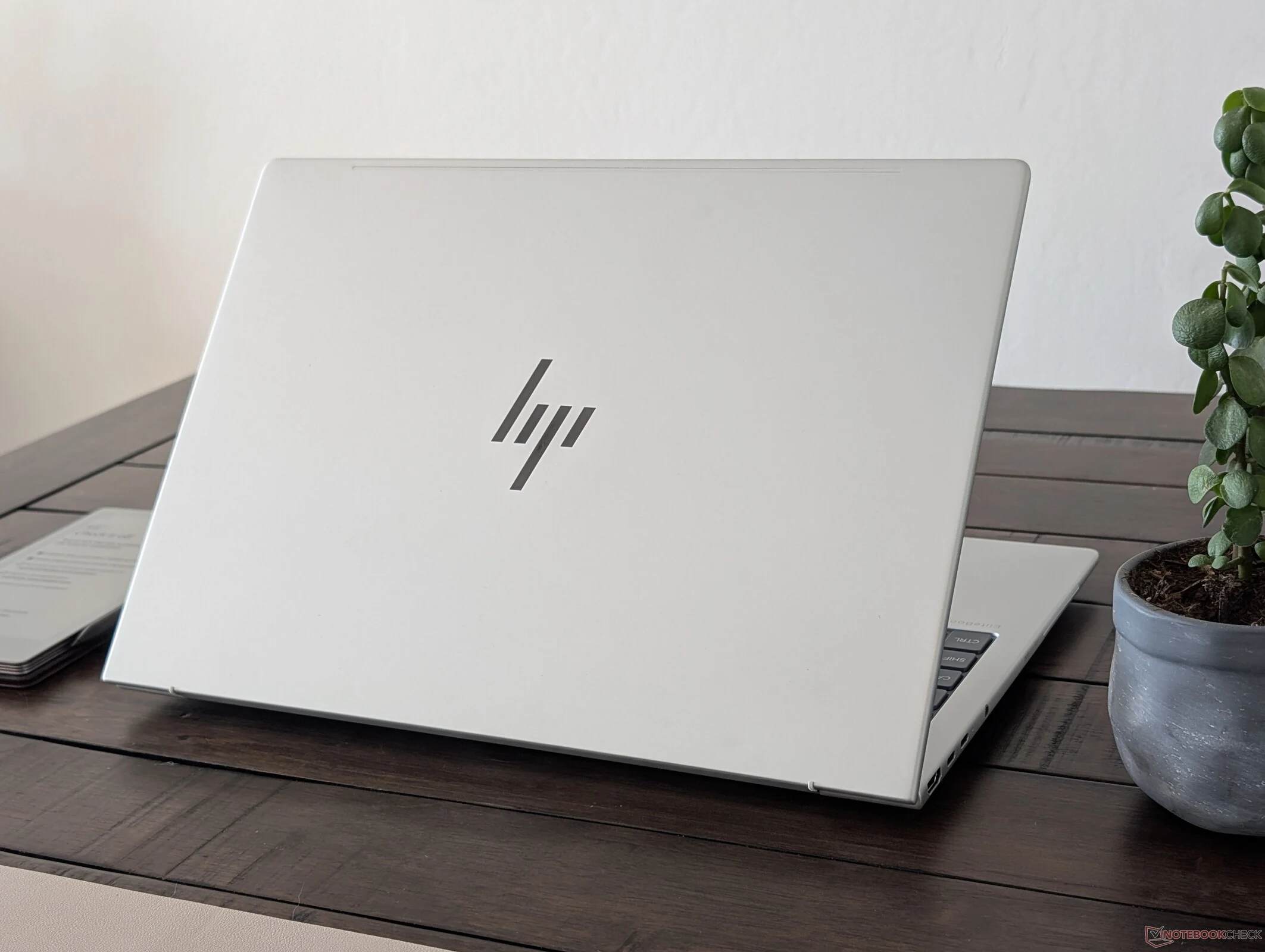
    The 2025 EliteBook 8 G1a 16 is a notable upgrade from the previous EliteBook 865 G10, featuring both new internal components and a revamped external look. Overall, the changes are mostly beneficial, which is not always the case when companies try to implement too many upgrades at once. HP has successfully made this model slimmer while keeping the battery capacity the same. Additionally, the clickpad size and key font have been enlarged for better usability. The number of USB-C ports has increased as well, making it easier to charge and ensuring it is more future-proof. These small improvements contribute to a more pleasant user experience over time.

    Performance Updates

    One update, however, is less impressive than we anticipated. The Ryzen AI 7 Pro 350 Zen 5 CPU takes the place of last year’s Zen 4 Ryzen 9 Pro 7940HS in the EliteBook 865 G10, but benchmark tests indicate that both perform similarly in terms of multi-thread and graphics performance. Unless your tasks depend on Co-Pilot+ or the enhanced NPU, you’ll find the performance levels of these two laptops to be quite comparable. Customers might lean toward the EliteBook 8 G1a 16 mainly for its enhanced design and better ergonomics.

  • OneXGPU Lite: Compact eGPU with OCuLink & 80 Gbps USB-C Ports

    OneXGPU Lite: Compact eGPU with OCuLink & 80 Gbps USB-C Ports

    Key Takeaways

    1. The OneXGPU Lite features the AMD Radeon 7600M XT and includes an 80 Gbps USB-C port, referred to as USB 5.0, which is actually a USB4 v2.0 port.
    2. The USB-C port allows for high-speed connectivity, promising less performance loss compared to standard USB4 and OCuLink, and is compatible with older standards.
    3. It includes an OCuLink port, one HDMI 2.1, and one DisplayPort 2.0, both supporting up to 4K resolution at 120 Hz.
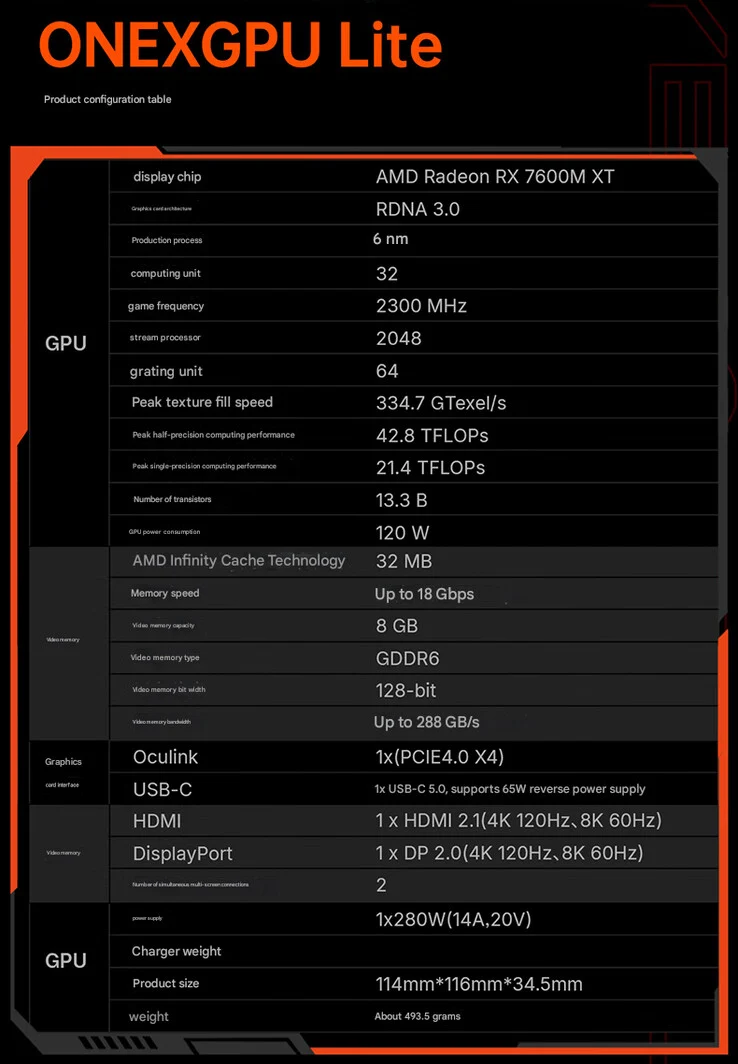
    4. The eGPU delivers around 60 FPS in most games at 1080p on low settings, with a performance capability of 120 W and a triple cooling system for stability.
    5. Launched in China for CNY 3,899 (approximately $547), details on global availability and pricing are expected soon.


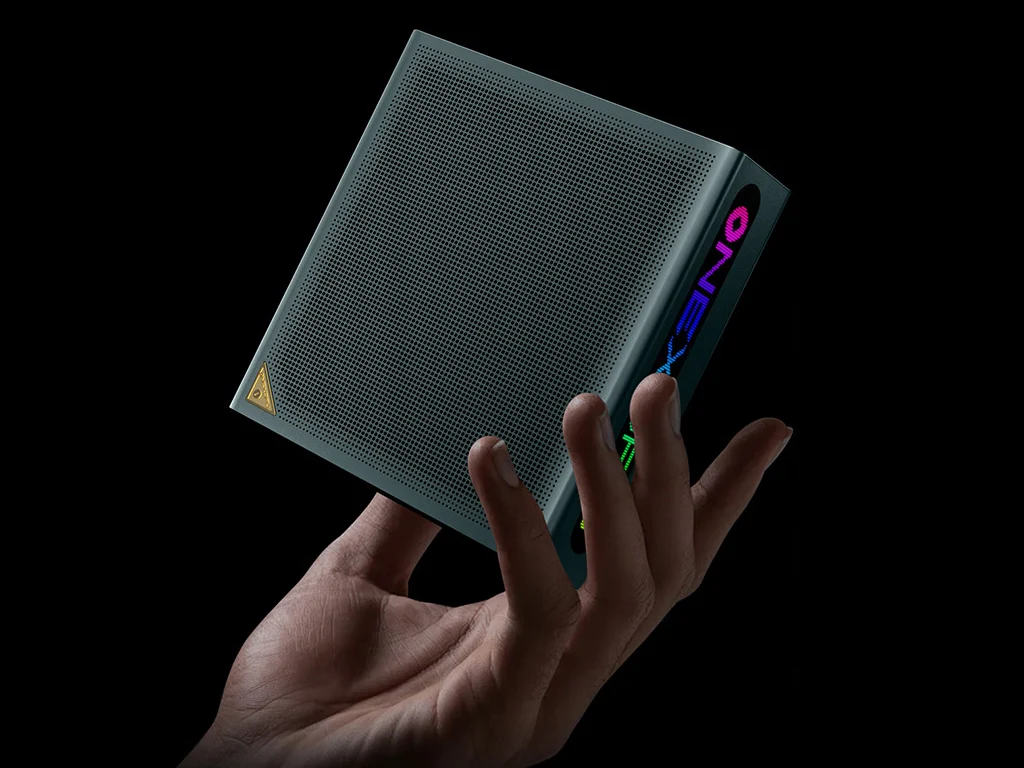
    The OneXGPU Lite has been recently unveiled as a compact external GPU featuring the AMD Radeon 7600M XT. OneXPlayer has officially launched it in China, and one of its standout features is the 80 Gbps USB-C port. The company refers to it as USB 5.0, but it’s really a USB4 v2.0 port.

    High-Speed Connectivity

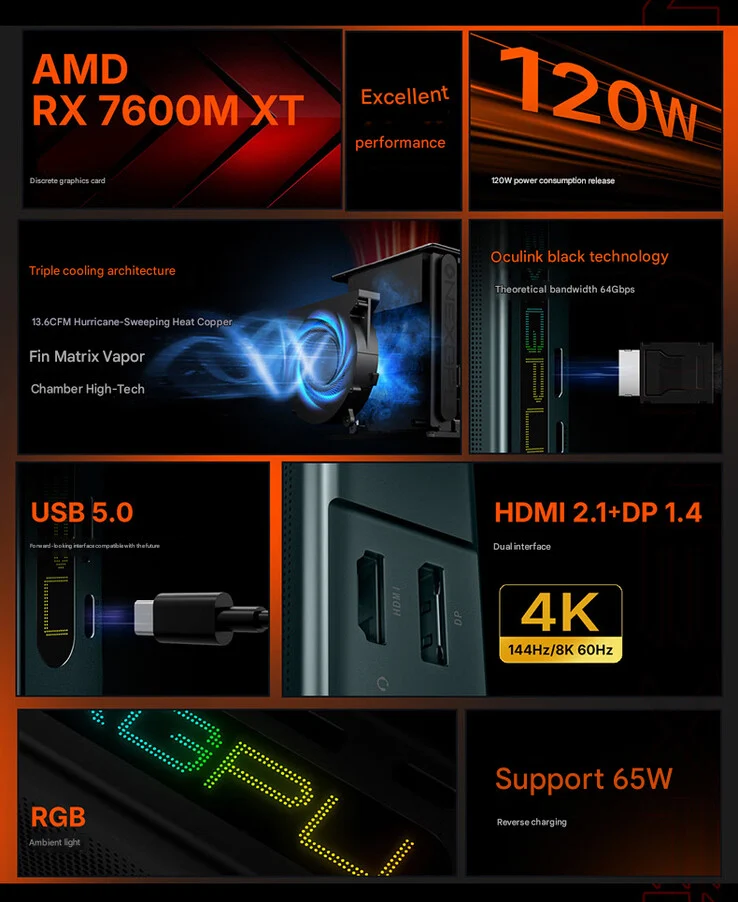
    This fast USB-C port is a significant upgrade compared to standard USB4 and OCuLink, promising less performance loss. To fully utilize the 80 Gbps bi-directional transfer rate, a device that supports USB4 v2.0 or Thunderbolt 5 is needed. However, the eGPU remains compatible with older standards too.

    Additional Features

    Alongside the impressive 80 Gbps “USB 5.0” port, the OneXGPU Lite includes an OCuLink port, enhancing its compatibility with various devices. For video output, the eGPU is equipped with one HDMI 2.1 and one DisplayPort 2.0, both capable of delivering up to 4K resolution at a 120 Hz refresh rate.

    Performance Insights

    When it comes to the GPU, the OneXGPU Lite comes with the AMD Radeon RX 7600M XT, a solid upper mid-range option that was also part of the first-gen OneXGPU. According to our tests, it can achieve around 60 FPS or higher in most current games with the settings on low and resolution at 1080p.

    OneXPlayer emphasizes that the GPU can deliver 120 W of performance, and the triple cooling system in the eGPU is designed to maintain stable performance during high-demand tasks. Other notable features include 65 W reverse charging support (for a 3.3-feet 100 W Baseus USB-C cable priced at $7.99 on Amazon), RGB lighting, and a sleek design, measuring 114 x 116 x 34.5 mm.

    Pricing and Availability

    In terms of cost, the OneXGPU Lite was launched in China for CNY 3,899, which is approximately $547. Details about global availability and pricing from OneXPlayer are still pending, but an international release is anticipated soon.

    Source:
    Link


  • Geekom Launches Laptops with Intel Arrow Lake Processors

    Geekom Launches Laptops with Intel Arrow Lake Processors

    Key Takeaways

    1. Geekom has entered the laptop market with the launch of the GeekBook series, featuring the X14 Pro and X16 Pro models.
    2. The X14 Pro has a 14-inch OLED display with a resolution of 2880 x 1800 pixels, while the X16 Pro has a 16-inch IPS screen with a resolution of 2560 x 1600 pixels.
    3. Both models are powered by Intel Arrow Lake H processors and support up to 32 GB of LPDDR5 RAM; the X14 Pro has one M.2 2280 NVMe slot, and the X16 Pro has an additional M.2 2230 slot.
    4. Each GeekBook model includes a USB4 port for eGPU connectivity; the X14 Pro features a 78-key keyboard and a 70 Wh battery, while the X16 Pro has a 98-key keyboard and a 75 Wh battery.
    5. Geekom has not yet announced the release date or pricing for the GeekBook laptops, but more information is expected soon.


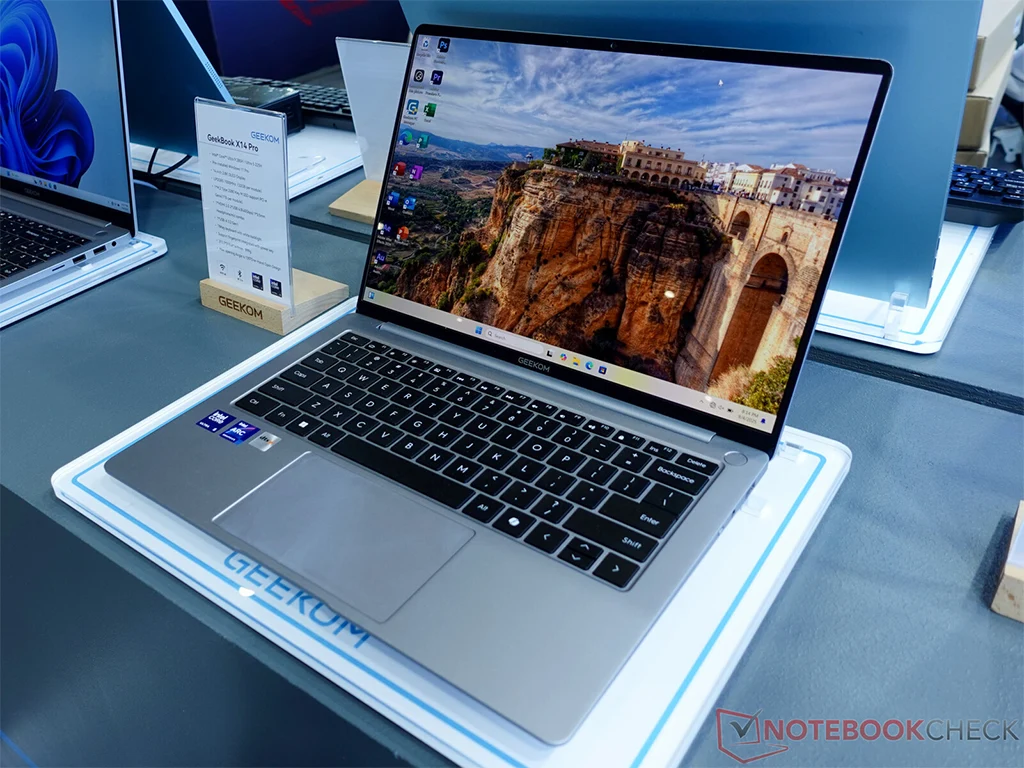
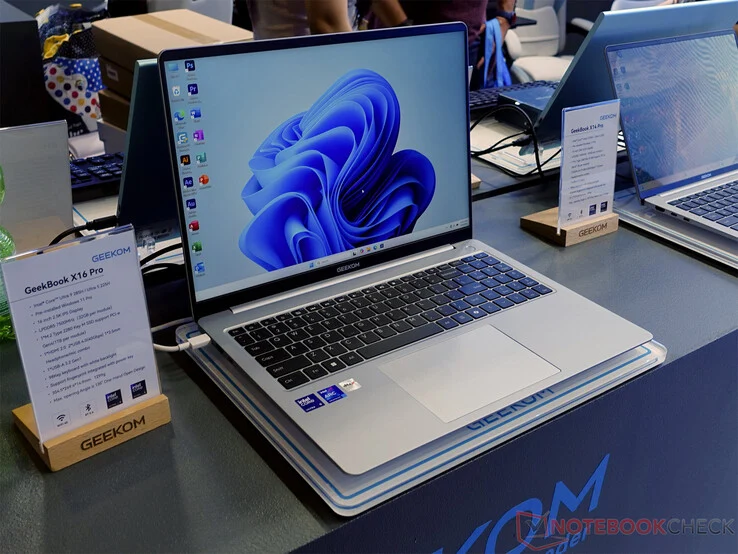
    With the launch of the GeekBook series at IFA 2025, Geekom has officially stepped into the laptop industry. The initial two models presented are the X14 Pro and X16 Pro. The primary distinction between these two is the type and size of their displays. The X14 Pro boasts a 14-inch OLED screen, while the X16 Pro features a larger 16-inch IPS panel.

    Display Specifications

    The OLED display of the GeekBook X14 Pro comes with a high resolution of 2880 x 1800 pixels, whereas the IPS screen of the X16 Pro offers a resolution of 2560 x 1600 pixels. Both laptops utilize 16:10 aspect ratio panels, with the X14 Pro achieving 100% DCI-P3 coverage, and the X16 Pro covering sRGB.

    Performance and Memory

    Both models are equipped with the Intel Arrow Lake H processors. More specifically, they can be configured with the Core Ultra 5 225H or the Core Ultra 9 285H options. They support up to 32 GB of LPDDR5 RAM. Notably, the X14 Pro includes one M.2 2280 NVMe slot, while the X16 Pro is designed with an extra M.2 2230 slot.

    Connectivity and Power

    The port setup on the GeekBook laptops looks quite good, with each model featuring one USB4 port, which allows connectivity with eGPUs. The more compact X14 Pro includes a 78-key keyboard and a 70 Wh battery, in contrast to the X16 Pro, which offers a 98-key keyboard and a 75 Wh battery (the 140 W Anker 737 24K power bank is currently priced at $94.99 on Amazon).

    Geekom has yet to announce the release date and starting prices for the GeekBook laptops. However, since they were unveiled at IFA 2025, the company is likely to provide additional information soon.

    Source:
    Link


  • 8TB Pen Drive Review: $9 Teardown Insights and Performance

    8TB Pen Drive Review: $9 Teardown Insights and Performance

    Key Takeaways

    1. Prices for data storage chips are decreasing, but extremely low prices may indicate potential scams.
    2. The “Xiaomi MIJIA USB 16TB” pen drive was found to actually contain only an 8-GB micro-SD card.
    3. The actual capacity of the card was only 221.7 MB, far below advertised specifications.
    4. Murometz successfully replaced the faulty card with a 64 GB card, demonstrating the pen drive’s card reader functioned.
    5. Consumers should be cautious of dubious offers and verify product claims before purchase.


    While the prices for data storage chips continue to drop and their sizes increase each year, there is a limit that distinguishes extremely cheap items from deals that might be too good to be true. A user on the MySKU forum, who goes by Murometz, received a malfunctioning “Xiaomi MIJIA USB 16TB 2TB OTG Metal USB 3.0 Pen Drive Key” from a friend. Although it was advertised as having a capacity of 8 TB, they quickly realized it belonged to the latter category.

    Product Variants and Claims

    The pen drive comes in various capacity options and is even marketed as being waterproof.

    Inside the Drive

    Murometz reported that opening the product was a quick process. Inside, they found a simple card reader and an 8-GB micro-SD card.

    Testing the Capacity

    Upon testing, the actual capacity of the memory card was revealed. Instead of the expected 8 gigabytes, it turned out to be only 221.7 MB.

    Since the card reader part of the supposed Xiaomi Mijia pen drive seemed to work, Murometz decided to install a decent 64 GB card (which is about ~0.8% of the claimed 8-TB capacity). They then reassembled it and returned it to their friend, advising them to avoid such questionable offers in the future.

    Source:
    Link


  • NXPort eGPU Dock Launches: Compact Design & 650W PSU

    NXPort eGPU Dock Launches: Compact Design & 650W PSU

    Key Takeaways

    1. Many eGPU options support Thunderbolt 3, Thunderbolt 4, or USB4, with some using OCuLink for higher bandwidth.
    2. New eGPU dock NXPort focuses on design and features a compact size with a 650 W ATX 3.1 certified PSU.
    3. NXPort is limited to Thunderbolt 4 and USB4 speeds, reaching up to 40 Gbps.
    4. Compatibility concerns exist regarding graphics card stability and cable management in the NXPort design.
    5. NXPort is set to launch on Indiegogo, but pricing and release date are currently unknown.


    Plenty of desktop eGPU options already exist, many of which support Thunderbolt 3, Thunderbolt 4, or USB4 devices. Some models, like the Minisforum DEG1 (currently priced at $99 on Amazon), offer OCuLink connectivity, which allows for much higher peak bandwidth than that of Thunderbolt 3, Thunderbolt 4, or USB4 alternatives. Additionally, there are a few Thunderbolt 5 eGPU docks now available, including the Peladn Link S-3 and the Razr Core X V2.

    New Focus on Design

    A fresh choice has emerged that emphasizes design rather than pure performance. Known as the NXPort, this eGPU dock has dimensions of 169 x 102 x 82 mm, yet it houses an ATX 3.1 certified power supply (PSU) that can provide up to 650 W. To give some perspective, the Aoostar AG02 is larger, measuring 225 x 110 x 60 mm, and includes a built-in 800 W PSU. It’s important to note that the NXPort is restricted to Thunderbolt 4 and USB4 transfer speeds, peaking at 40 Gbps.

    Concerns About Compatibility

    Graphics card compatibility raises some concerns, as there doesn’t seem to be a clear design to keep a connected card from tipping forward. Furthermore, product images only reveal one 8-pin connector. The design also means that there will be cables hanging from both sides, owing to the PSU and USB Type-C connector being located below the PCIe retention clip. As of now, it appears that the NXPort will be launched on Indiegogo, but there is no information available regarding pricing or when it will be released.

    Source:
    Link


  • Minisforum G7 Pro: 24-Core Intel HX & RTX 5070 Gaming Mini PC

    Minisforum G7 Pro: 24-Core Intel HX & RTX 5070 Gaming Mini PC

    Key Takeaways

    1. Minisforum showcased a range of high-end mini PCs at IFA 2025, including the AtomMan G7 Pro.
    2. The G7 Pro features an Intel Raptor Lake-HX CPU and an RTX 5070 Laptop GPU, while the G1 Pro uses an AMD Ryzen 9 8945HX CPU with a desktop-grade RTX 50 GPU.
    3. Both mini PCs are powerful and can handle demanding CPU tasks, with potential performance differences depending on cooling.
    4. The G7 Pro has a stylish design aimed at gamers, though its cooling performance remains uncertain.
    5. Pricing for the G7 Pro is yet to be announced, but more budget-friendly alternatives, like the Minisforum UM880 Plus, are available for lighter performance needs.


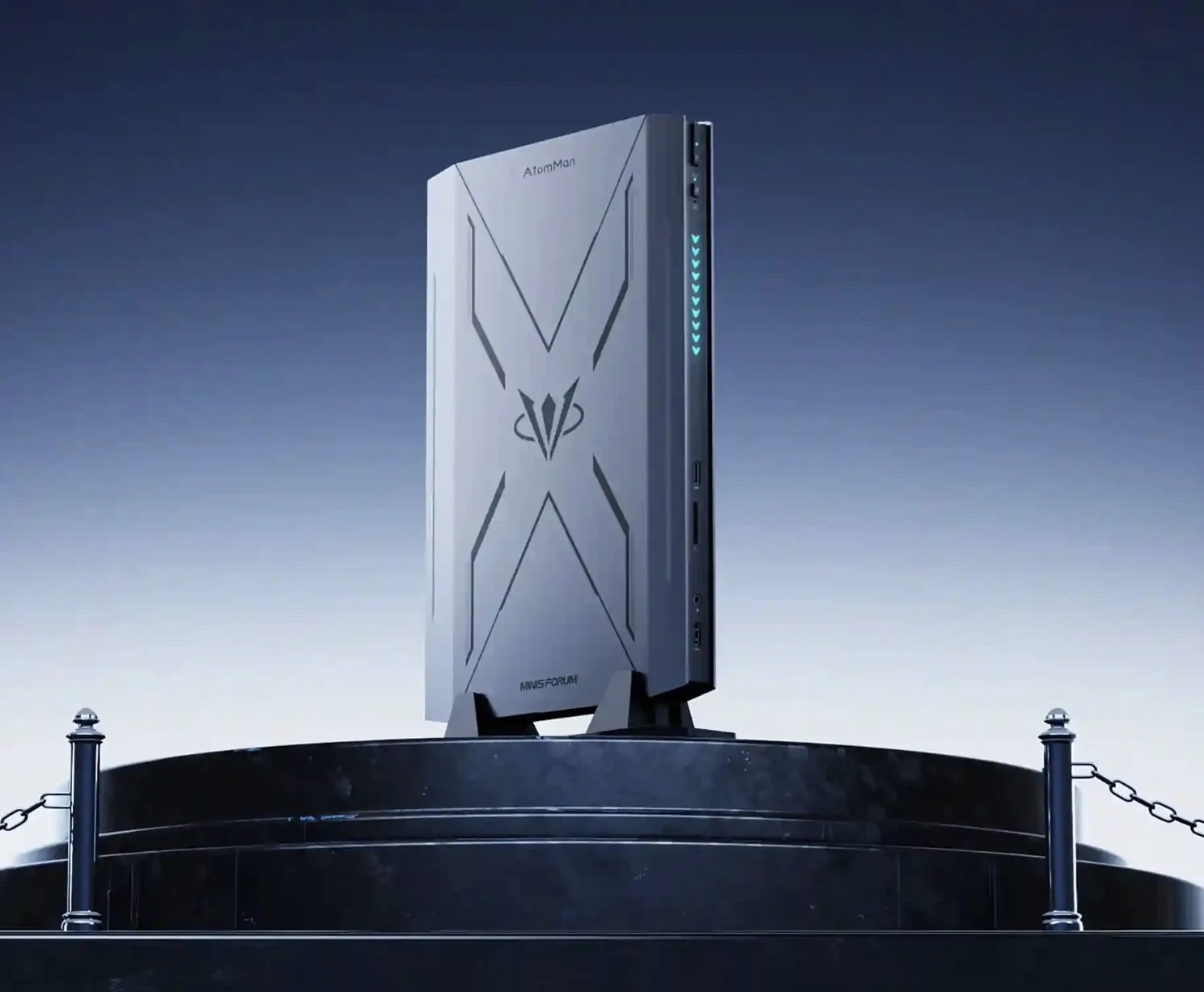
    More mini PCs were showcased at IFA 2025 than anyone might want to count. Minisforum, a well-respected name in this market, clearly didn’t want to be left behind and has introduced a range of high-end mini PCs. Among these is the AtomMan G7 Pro gaming mini PC, which combines an older Intel Raptor Lake-HX CPU with a contemporary RTX 5070 Laptop GPU.

    G7 Pro vs G1 Pro

    The G7 Pro serves as an option to the G1 Pro mini PC, which has been discussed previously. Unlike the G7, the G1 Pro is driven by an AMD processor, specifically the AMD Ryzen 9 8945HX “Dragon Range-Refresh” CPU featuring 16 cores and 32 threads. Both the Intel and AMD CPU choices are incredibly powerful, though the Intel version with the 24-core Core i9-14900HX CPU may have a slight edge in some workloads, depending on how well the systems are cooled. Regardless, both mini PCs can easily tackle almost any CPU-heavy task.

    GPU Differences

    When it comes to graphics, the AtomMan G7 Pro and G1 Pro mini PCs are equipped quite differently. The G1 Pro goes for a desktop-grade RTX 50 GPU, while Minisforum has outfitted the G7 Pro mini PC with a more budget-friendly, albeit less potent, RTX 5070 Laptop GPU. The specific SKU of the G1 Pro will ultimately decide which mini PC has a stronger GPU, but that remains uncertain for now. The I/O specifications include:

    Dual SODIMM slots and dual M.2 2280 slots will address memory and storage needs. The stylish design of the G7 Pro mini PC gives off gamer vibes, though not in an overly aggressive way. The cooling performance of this compact system is still uncertain as of now, but it will undoubtedly be a critical factor for such a high-spec setup.

    Pricing and Alternatives

    Details on pricing and availability are still unknown, but they should be revealed soon. Given the specs provided, the G7 Pro mini PC is not expected to be inexpensive. However, for those with lighter performance needs, there are always more budget-friendly options like the Minisforum UM880 Plus (currently $519 on Amazon), which offers solid specs and numerous ports.

    Source:
    Link


  • Aoostar MoDT Motherboard Supports Ryzen 9 9955HX3D & PCIe 5.0

    Aoostar MoDT Motherboard Supports Ryzen 9 9955HX3D & PCIe 5.0

    Key Takeaways

    1. Aoostar has launched the TA95X3D MoDT motherboard in China, supporting high-end AMD Ryzen 9 9955HX3D processors with 64 MB 3D V-Cache for better gaming performance.
    2. Users can choose between the Ryzen 9 9955HX3D and the similar Ryzen 9 9955HX, which lacks the 3D V-Cache feature.
    3. The motherboard supports DDR5 RAM up to 6000 MT/s and has two UDIMM memory slots, though maximum memory support is not specified.
    4. Key features include PCIe 5.0 support, two Gen 5 SSD slots, 5G network port, 7.1 audio, multiple USB ports, and video output options (DisplayPort and HDMI).
    5. Pricing for the Ryzen 9 9955HX3D model is CNY 4,799 ($673), while the non-3D version starts at CNY 3,799 ($532); global launch details are yet to be announced.


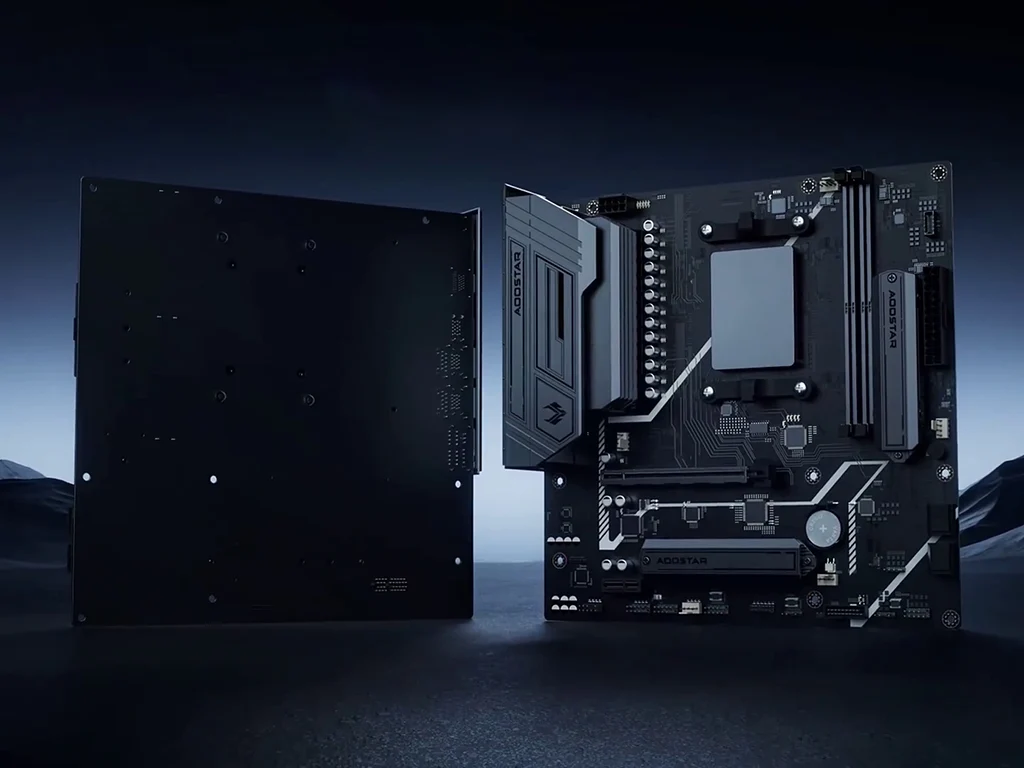
    Aoostar has introduced the TA95X3D MoDT series in China, a new kind of motherboard designed for use with mobile processors. This Mobile on Desktop (MoDT) board can support the AMD Ryzen 9 9955HX3D, which is a high-end APU from the Fire Range series. It boasts a 64 MB 3D V-Cache, promising improved gaming performance.

    Alternative CPU Options

    In addition to the Ryzen 9 9955HX3D, users can opt for the Ryzen 9 9955HX. This processor is quite similar to the 3D version but lacks the 3D V-Cache feature. The motherboard is compatible with DDR5 RAM, which can operate at speeds up to 6000 MT/s. While it is mentioned that there are two UDIMM memory slots available, the maximum memory support hasn’t been clarified.

    Features of the Motherboard

    Focusing on the motherboard’s features, it supports a PCIe 5.0 graphics card, and includes two Gen 5 SSD slots for fast storage options, such as the WD_BLACK 1 TB SN8100 priced at $159 on Amazon. Aoostar points out that the back of the motherboard includes a 5G network port and supports 7.1 audio, making it ideal for a versatile setup.

    The rear of the Aoostar TA95X3D MoDT also has multiple USB ports, with a total of six available. For video output, it includes one DisplayPort and one HDMI port. The motherboard also offers WiFi support and has SMA ports located on the back.

    Pricing Information

    When it comes to pricing, the model equipped with the AMD Ryzen 9 9955HX3D is available for CNY 4,799, which translates to roughly $673. The version featuring the non-3D 9955HX is more budget-friendly, launching at CNY 3,799, or about $532. Aoostar has not yet disclosed when the TA95X3D MoDT series will be launched in other parts of the world.

    Source:
    Link


  • Post Stops Letter Delivery: Overgang til den Digitale Tidsalder

    Post Stops Letter Delivery: Overgang til den Digitale Tidsalder

    Key Takeaways

    1. Danish letter carriers’ bags are getting lighter due to a 90% drop in letter volume since 2000, largely from fewer invoices and bank statements.
    2. The removal of red letterboxes in Denmark is progressing, ending 400 years of letter delivery service.
    3. Digital communication through apps like WhatsApp and online shopping has reduced the need for traditional letters.
    4. Job losses in the postal sector will affect about 2,200 employees, while 700 new jobs in parcel delivery will be created.
    5. The decline in letter sending is a global trend, with many countries seeing significant reductions in letter volume.


    For many years, the bags that Danish letter carriers use have been getting lighter and lighter. Since the year 2000, the amount of letters sent has dropped by about 90 percent. A major part of this drop is due to invoices and bank statements.

    Removal of Red Letterboxes

    The 1,500 red letterboxes still found on Denmark’s streets are slowly being taken away. Back in March 2000, PostNord first announced its plan to end letter delivery after 400 years, and this process is now in its final stages.

    Shift to Digital Communication

    The rise of digital technology means that very few people write and send letters these days. Instead, messaging apps like WhatsApp, Telegram, and Signal have become the go-to for communication. The increase in online shopping, which often involves cashless payments through apps and the use of digital mailboxes, has also contributed to this change.

    Job Changes in the Postal Sector

    About one-third of PostNord’s workforce—around 2,200 individuals—will be affected by job losses. At the same time, there will be around 700 new jobs created in the expanding parcel delivery sector. Even though Denmark ranks as one of the most digitized nations, according to the OECD’s 2023 Digital Government Index, the trend of decreasing letter deliveries can be seen in many countries around the globe. A report from management consulting firm McKinsey shows that the number of letters sent worldwide has dropped significantly.

    In the United States, the decline since its peak has reached 46 percent, with many other nations experiencing even larger reductions ranging from 50 to 70 percent. Germany and Switzerland have seen the least impact, with a decline of about 40 percent. Hazel King, the editor-in-chief of Parcel and Postal Technology International magazine, comments on the situation:

    Market Trends and Future Outlook

    Letters have been decreasing across Europe for many years. I believe PostNord’s choice is a sign of the overall market shift and reflects consumer behavior.

    However, Hazel King isn’t certain if mailing letters is doomed to disappear completely. In Denmark, the private delivery service DAO plans to take over the remaining letter deliveries with its own national service.

    Source:
    Link