Category: All News

  • OnePlus 12 Main Camera to Showcase Sony LYT-808 Sensor

    OnePlus 12 Main Camera to Showcase Sony LYT-808 Sensor

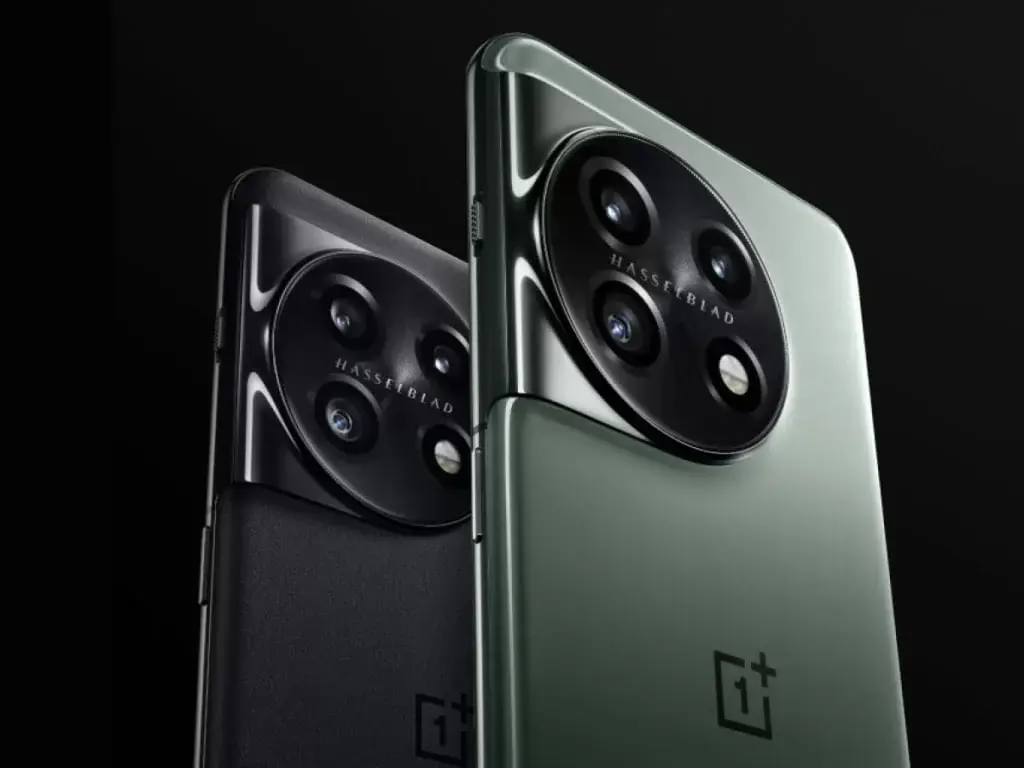
    OnePlus recently announced a collaboration with Sony to introduce a brand-new Lytia dual-layer stacked sensor for the upcoming OnePlus 12. As part of this unveiling, the company has now shared specific details regarding the smartphone’s camera.

    ## Detailed Camera Specifications

    Through a recent post on Weibo, OnePlus has officially revealed that the primary camera of the OnePlus 12 will be equipped with the cutting-edge Sony LYT-808 sensor. This sensor promises enhanced image quality and performance, especially in challenging low-light scenarios.

    Alongside this, the smartphone will boast a 64MP periscope zoom camera featuring a 1/2-inch sensor and an f/2.6 aperture. Equipped with Optical Image Stabilization (OIS), this camera has the ability to capture images with 3x optical zoom.

    Notably, the OnePlus 12 will be extending its collaboration with Hasselblad, leveraging the brand’s expertise in color science and image processing.

    In a teaser, OnePlus highlighted several image algorithms from OPPO, including the Ultra-Clear Image Quality Algorithm, Hyperlight and Shadow Algorithm, and Natural Color Algorithm.

    ## Introduction of Hasselblad HyperTone Camera Engine

    Today, Oppo and Hasselblad took the wraps off their joint endeavor, the Hasselblad HyperTone camera engine. This innovative system promises a complete reimagination of imaging processes and will be a core feature of the OnePlus 12.

    ## Enhanced Display Experience

    OnePlus has officially confirmed that the OnePlus 12 will sport a ProXDR display with a commendable 2K resolution.

    ## Launch Details and Pricing

    The OnePlus 12 is gearing up for an initial launch in China this month, followed by a global release slated for January 2024.

  • Leaked Specs of Xiaomi Pad 7 Pro Emerge on the Internet

    Leaked Specs of Xiaomi Pad 7 Pro Emerge on the Internet

    Xiaomi launched the Pad 6 series tablets earlier this year, which included the standard, pro, (review), and max models. Now, the company is reportedly working on the successor models, the Pad 7 series. The first details about the alleged Xiaomi Pad 7 Pro have been shared by reliable tipster Digital Chat Station on Weibo, a Chinese microblogging platform.

    Xiaomi Pad 7 Pro Features

    According to DCS, the Xiaomi Pad 7 Pro will have an LCD display panel, similar to its predecessor. It will also retain a 144Hz refresh rate for a smooth viewing experience. The device will feature a square camera module on the upper left corner of the back panel, similar to the recently launched Xiaomi 14 series smartphone. Under the hood, the Pad 7 Pro will be powered by an overclocked Snapdragon 8 Gen 2 processor, clocked at 3.36GHz. It’s worth noting that the Xiaomi Pad 6 Pro is equipped with a Snapdragon 8+ Gen 1 SoC.

    Launch Details

    Apart from the above information, the details about the Xiaomi Pad 7 Pro remain a mystery. The Pad 6 series was announced alongside the Xiaomi 13 Ultra smartphone in April this year. Reports suggest that the Xiaomi 14 Ultra is expected to launch in Q1, 2024, so it’s likely that the company may also announce the Pad 7 tablets alongside the flagship smartphone at the same event.

    Xiaomi Pad 6 Pro Specifications

    As a reminder, the Xiaomi Pad 6 Pro features dual rear cameras with a 50MP + 2MP setup. It is equipped with an 8,600mAh battery unit that supports 67W fast charging. The tablet offers up to 12GB of RAM and 512GB of storage.

  • Indian and North American OnePlus 11 Users Can Now Access OxygenOS 14 Open Beta 4

    Indian and North American OnePlus 11 Users Can Now Access OxygenOS 14 Open Beta 4

    OnePlus OxygenOS 14 Open Beta 4 Update Released

    OnePlus OxygenOS 14 Open Beta 4 Update Released

    Apply for the Update

    After OnePlus launched the OxygenOS 14 Open Beta 3 update for the OnePlus 11 last month, it is now time for the fourth beta build. As per the official announcement over at the OnePlus Community, participation in the Open Beta 4 will be open from November 3rd for Indian users. The update will also be available for NA users. Here are all the details.

    How to Apply:

    • India: It is essential to make sure your phone is updated to the detectable version, either CPH2447_13.1.0.596(EX01) or CPH2447_13.1.0.595(EX01). To apply, navigate to your phone’s Settings, select “About device,” tap “Up to date,” click on the icon at the top right, go to “Beta program,” and follow the provided steps. Once the application channel is closed, OnePlus will review your application within 5 working days. If your application is successful, you will receive the new version within 3 workdays. To download the new version after your application is approved, go to Settings, select “About device,” and click on “Download Now.”
    • North America: For users in North America, OnePlus will offer two versions: MP (Stable Official version) and OBT (Open Beta version). If you wish to upgrade from MP to OBT, please ensure that your device is running the designated OxygenOS 13.1 version, either CPH2451_13.1.0.590(EX01) or CPH2451_13.1.0.591(EX01). Prior to initiating the upgrade, make sure to back up your data. Here’s how to proceed:
    1. Download the latest ROM upgrade zip package from the specified server.
    2. Copy the upgrade package to your phone’s storage.
    3. Install the provided APK, which is necessary for the update process. Open the app, tap on the top right gear icon, locate the upgrade package, and tap it.
    4. Wait for the installation to finish, and then tap “reboot.”
    5. After the upgrade is complete, click “Restart” to ensure the update is successful.

    Known Issues:

    • Color changing and slow reaction issue of icon in the control center after switching to dark mode repeatedly.
    • Stuttering issue with camera and clicking is not responsive.
    • Probable flashback issue with camera when recording videos in rear video mode.
    • Lock screen notifications show blur after unlocking with fingerprint.

    Changelog

    System

    • Improved system stability and performance.
    • Fixed an issue where your face might not be recognized when you enroll your face.
    • Fixed an issue that affects transition animation when a certain page is opened in Settings.
    • Fixed an issue where some screen elements are not fully displayed after the system navigation method is changed.

    Camera

    • Fixed an issue where the screen might go black when you switch to the front camera.
    • Fixed an issue where the Private album might not show up at the bottom of the Albums page.
  • Generative AI in search by Google now available in over 120 new countries and territories

    Generative AI in search by Google now available in over 120 new countries and territories

    Google’s Search Generative Experience (SGE) is now available in over 120 new countries and territories, thanks to its utilization of artificial intelligence to provide more interactive and informative search results.

    Initially launched in the United States, SGE has expanded to India and Japan, and now includes countries such as Mexico, Brazil, South Korea, Indonesia, Nigeria, Kenya, and South Africa. A complete list of supported countries and territories can be found on Google’s website.

    To enable SGE in Chrome on desktop, users can visit Search Labs. Access to SGE through the Google app on Android and iOS will be available in the coming week.

    In addition to the expanded availability, Google has introduced four new languages for SGE: Spanish, Portuguese, Korean, and Indonesian. This means that users in these countries can now enjoy the benefits of SGE in their native language.

    New Features

    SGE also includes new features that enhance the search experience. Users can now ask follow-up questions directly from search results pages, allowing for a more conversational approach. Additionally, there is now a dedicated ad slot for displaying prior questions and search results, including search ads. These features will be rolled out gradually over the next few weeks, starting with English in the US.

    Google is also working on new AI-powered translation capabilities for SGE. Users will soon be able to indicate the specific meaning they have in mind when asking SGE to translate a phrase with words that can have multiple meanings. This feature is currently being launched in the US for English to Spanish translations, with plans to support more countries and languages in the future.

  • Everything you need to know about the Vivo X100 Series: Design, Specifications, Pricing, and more

    Everything you need to know about the Vivo X100 Series: Design, Specifications, Pricing, and more


    Vivo X100 Series: Rumors and Leaks | Specifications and Pricing

    Vivo X100 Series: Design & Display

    The Vivo X100 series is the brand’s latest generation of flagship smartphones. As we get closer to the official announcement, here’s a detailed roundup of all the rumors and leaks we have covered over the past few weeks. This should offer you a good idea of what to expect from the upcoming X100, X100 Pro, and X100 Pro+ models.

    Since these are high-end devices, the Vivo X100 lineup will launch with a premium design. In our previous report, we covered both leaked and official teaser image posters that revealed the color options of the X100 lineup. These images reveal not just the colors but the design of the upcoming smartphones as well. The X100 Pro models are set to launch in four color options, namely Star Trail Blue, Sunset Orange, White Moonlight, and Cheyne Black. The rear panel of the orange variant will include faux leather, while the others feature a glass back panel.

    A large circular camera island can be seen at the back, which houses the multiple cameras. The X100 Pro series is expected to have curved edges. On the front, the Vivo X100 is rumored to sport a 6.79-inch AMOLED display that offers 120Hz refresh rate and Full HD+ resolution. The higher-end Pro and Pro+ variants are rumored to feature the same display size, with curved edges being the main distinction. All three models will house a center-aligned punch hole cutout for the selfie camera.

    Specifications

    While the devices will likely appear similar from the outside, the internals are where the differences start surfacing. Under the hood, the base X100 and X100 Pro models are expected to feature the MediaTek Dimensity 9300 SoC. However, a recent GeekBench sighting hinted that the X100 Pro could arrive in a Snapdragon 8 Gen 1 variant, although this is highly unlikely. Lastly, the top-end X100 Pro+ variant will feature the Qualcomm Snapdragon 8 Gen 3 SoC. Interestingly, these smartphones will be the first to feature LPDDR5T RAM. This memory promises to offer 13 percent faster performance over the LPDDR5X modules.

    The X100 and X100 Pro will launch with at least one model that offers 12GB RAM, while the X100 Pro+ will top out with a whopping 24GB of memory and 1TB of UFS 4.0 storage. These could offer virtual RAM expansion support as well. A large 5,000mAh battery pack is expected to power the base model, while the Pro variants may pack a 5,400mAh battery. The lineup will offer 120W fast charging support, with the Pro models expected to offer 50W wireless fast charging as well. Vivo’s X100 phones would run on Android 14 OS based OriginOS 4 custom skin out of the box.

    Camera

    The Vivo X100 is expected to offer a triple camera setup that consists of a 50-megapixel Sony IMX920 primary sensor (OIS support, a 50-megapixel ultra wide-angle lens, and a 64-megapixel periscope zoom lens (OIS, 3x optical zoom, and 100x digital zoom). On the other hand, the X100 Pro will offer a 50-megapixel Sony IMX989 sensor primary sensor, a 50-megapixel Samsung JN1 ultra-wide-angle lens, and a 64-megapixel OmniVision OV64B telephoto sensor.

    Lastly, the Vivo X100 Pro+ features a 50-megapixel Sony IMX989 primary sensor as well, which is paired with a 50-megapixel Sony IMX598 ultra-wide-angle lens, and a 50-megapixel IMX758 portrait sensor, and a 200-megapixel Samsung HP3 periscopic telephoto sensor with 10x optical zoom. Notably, a recent report hints that the X100 Pro+ is tipped to feature a 1-inch LYT-900 primary camera. All three models are rumored to house a 32-megapixel camera for selfies and video calls and include Zeiss-certified Vario-APO-Sonnar lens for the periscope lens. To improve the photography experience, the X100 Pro models will also feature Vivo’s self-developed V3 image sensor chipset.

    Launch Date and Pricing

    On JD.com (a Chinese e-commerce website), the Vivo X100 will have a starting price tag of 3,999 Yuan (roughly 547 US Dollars). This variant offers 12GB of RAM and 256GB of internal storage. As per official notes, the Vivo X100 series will be unveiled in China on 13th November 2023. Vivo is expected to launch its flagship smartphones in the global market as well, although it is unclear which model will be released overseas.



  • Impressively Spec’d GT5 Pro Unveils Unbeatable Price

    Impressively Spec’d GT5 Pro Unveils Unbeatable Price

    Realme GT5 Pro: A New Peak of Flash Charging

    Realme GT5 Pro: A New Peak of Flash Charging

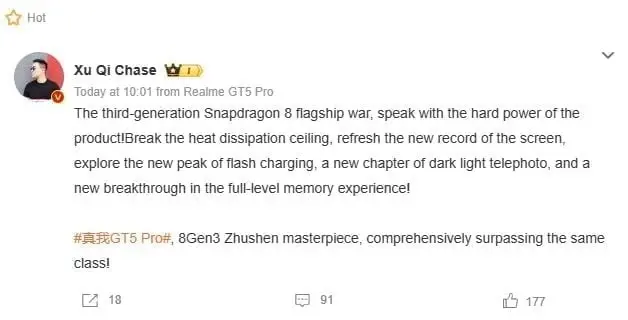
    Realme is preparing for the Snapdragon 8 Gen 3 flagship battle with the upcoming Realme GT5 Pro. Xu Qi, vice president of Realme, teases the upcoming device as ‘a new peak of flash charging’ that comprehensively surpasses its peers.

    Impressive Features and Advanced Technology

    The upcoming Realme GT5 Pro is making waves with its impressive features and advanced technology. One of the highlights of the Realme GT5 Pro is its enhanced heat dissipation capabilities. Realme is reportedly breaking through the boundaries of heat management, trying to ensure the device remains under a safe temperature limit during heavy usage and faster charging.

    Pricing and Specifications

    This device will house the powerful Snapdragon 8 Gen3 mobile platform, ensuring top-notch performance. Realme has also gone big on storage, offering up to 1TB of space. Specifically, there will be three storage and memory variants: 12GB+256GB, 16GB+512GB, and 24GB+1TB. These three variants will be sold for 2999 yuan, 3299 yuan, and 3699 yuan, respectively. It is clear that Realme is targeting the premium segment of the market.

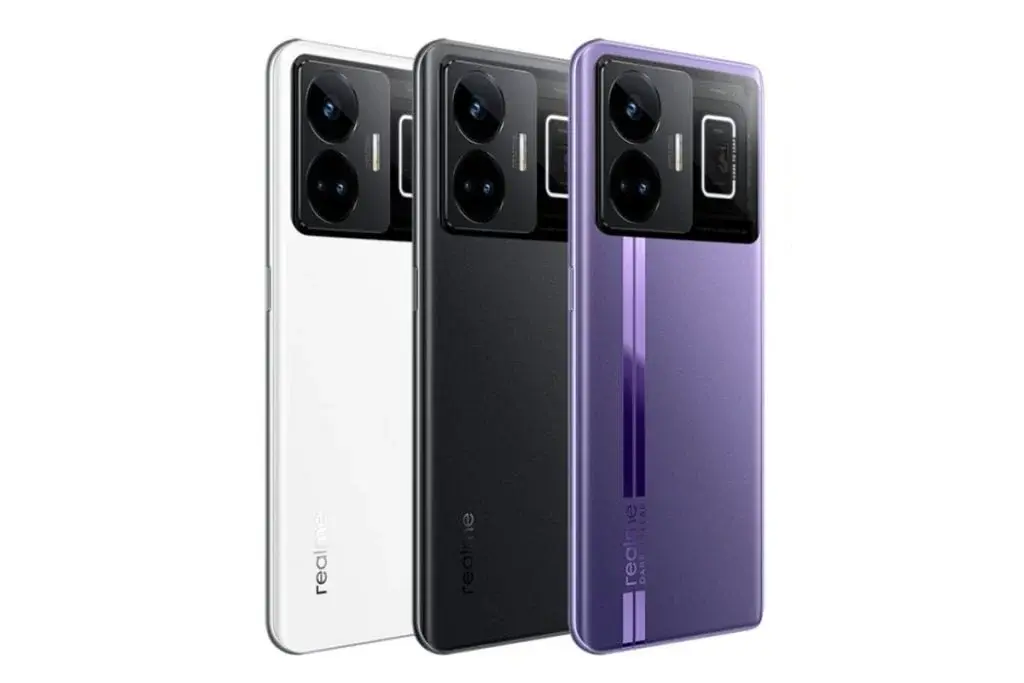
    Xu Qi also mentions the screen to set a new record. However, he didn’t mention any specific details about the display of the Realme GT5 Pro. Coming to the cameras, the device brings a centered camera module on the back. The rear camera setup consists of 50MP+50MP+8MP lenses, while the selfie camera boasts a 32MP lens. The 8MP camera on the back is seemingly a telephoto. Although its zooming capabilities are not known yet, “a new chapter of dark-light telephoto” mentioned by Realme’s vice president indicated that there will be something special, at least at the software level.

    Coming to the battery life, it’s a crucial aspect of any smartphone, and the Realme GT5 Pro doesn’t disappoint. With a 5400mAh battery, users can expect a long-lasting charge. Additionally, the device supports super-fast 240W wired charging, taking charging speeds to new heights.

    The upcoming flagship from Realme, the GT5 Pro, seems to be a great combination of the latest technology and high-end hardware. With advancements in heat dissipation, display quality, imaging, and charging speeds, this device is set to make a significant impact in the smartphone market.

  • GPT-4 Turbo Introduces a New Challenge for China’s AI Companies

    GPT-4 Turbo Introduces a New Challenge for China’s AI Companies

    The Impact of OpenAI’s GPT-4 Turbo on China’s AI Industry

    The launch of OpenAI’s GPT-4 Turbo has caused a stir in the AI community, particularly in China where AI researchers are making significant advancements in the field. This development marks a significant shift, propelling AI into an era where the understanding and generation of human language are becoming increasingly sophisticated.

    Cost-Effective AI Solutions

    GPT-4 Turbo, developed by OpenAI, has enhanced the capabilities of AI by enabling the recall of vast amounts of textual information. Additionally, it offers developers a more cost-effective approach to creating applications. This groundbreaking advancement has captured the attention of Chinese tech giants like Baidu and Alibaba, who are now strategizing to match or even surpass the features of this advanced AI model.

    The key question now is how companies can keep up with such rapid advancements. One approach is to enhance their own foundational models or develop tailor-made AI solutions to meet specific industry needs. This competition is not just about technology; it is a race for innovation and application across various industries.

    The Demand for AI Talent in China

    China’s urgent need for AI talent highlights the importance of innovation in the face of international developments like GPT-4 Turbo. While the Chinese government acknowledges the potential economic benefits that AI can bring, it remains cautious about the governance of this technology.

    However, local AI initiatives in China face challenges due to strict internet regulations that restrict access to foreign AI tools like ChatGPT. This creates a unique opportunity for domestic AI solutions to thrive and cater to the specific needs of the Chinese market.

  • Possible Development of Realme GT Neo 6 with Snapdragon 8 Gen 2 Hinted, Expected Pricing Mentioned

    Possible Development of Realme GT Neo 6 with Snapdragon 8 Gen 2 Hinted, Expected Pricing Mentioned

    Realme is preparing to release its latest flagship phone, the Realme GT 5 Pro, in China. In addition, the company is said to be working on the Realme 12 Pro series. However, according to a recent report from TechGoing, Realme may also introduce an affordable flagship phone called the Realme GT Neo 6 in early 2024.

    Preliminary details of the Realme GT Neo 6

    According to a Chinese leaker, the Realme GT Neo 6 will be equipped with the Snapdragon 8 Gen 2 chipset. This places it lower in the lineup compared to the Realme GT 5 Pro, which is rumored to be powered by the Snapdragon 8 Gen 3 and expected to cost around 4,000 Yuan (~$550).

    While the leaker did not provide further information about the specifications of the GT Neo 6, it is mentioned that the phone will feature a metallic frame. Additionally, the leak suggests that the GT Neo 6 will have a price tag of around 2,000 Yuan (~$275).

    The Realme GT Neo 6 is expected to be a strong competitor for other affordable flagship phones that are set to launch in the near future. These include the OnePlus Ace 3, Redmi K70, iQOO Neo 9, and Honor 100 Pro. Speculations are circulating that the Ace 3 and K70 will be rebranded as the OnePlus 12R and Poco F6, respectively, for their global releases, possibly in the first quarter of 2024.

    As for the GT Neo 6, it is anticipated to launch in China in the first quarter of 2024, following the unveiling of the GT Neo 5 in February of this year. Hopefully, more details about the Neo 6 will be revealed in the coming days.

  • WhatsApp Rolls Out New Privacy Feature to Conceal IP Address in Calls

    WhatsApp Rolls Out New Privacy Feature to Conceal IP Address in Calls

    WhatsApp Introduces New Privacy Feature to Hide IP Addresses During Calls

    WhatsApp, the popular encrypted messaging app, has recently introduced a new privacy feature that allows users to hide their IP addresses when making calls. This feature addresses a privacy concern that existed in the previous method of establishing one-to-one calls on WhatsApp.

    In the previous method, one-to-one calls were established as direct peer-to-peer connections between users. While this ensured optimal voice quality, it also meant that the connected devices had to expose their IP addresses to each other. This raised concerns about privacy and the potential for IP address tracking.

    To address this concern, WhatsApp has implemented a new approach. Now, all calls made on WhatsApp are routed through the company’s servers, effectively masking the users’ IP addresses and obscuring their locations. Despite this routing process, all calls remain end-to-end encrypted, ensuring that no one, including WhatsApp itself, can eavesdrop on the conversations.

    WhatsApp acknowledges that using the call relay privacy setting may slightly compromise call quality. However, for users who prioritize privacy, this feature provides an important safeguard.

    How to Hide IP Address During Calls in WhatsApp

    If you want to enable the new privacy feature and hide your IP address during calls on WhatsApp, follow these simple steps:

    1. Make sure you have updated WhatsApp to the latest version.
    2. Open WhatsApp and tap on “Settings”.
    3. Select “Privacy”.
    4. Tap on “Advanced”.
    5. Toggle on the switch next to “Protect IP address in calls”.

    It’s important to note that group calls on WhatsApp are automatically relayed through the company’s servers by default. Therefore, there is no need to enable this setting specifically for group conversations.

    With this new privacy feature, WhatsApp continues to prioritize the security and privacy of its users. By hiding IP addresses during calls, WhatsApp provides an additional layer of protection for its users’ personal information.

  • iQOO Neo 9 Series Rumored to Boast a 50MP Sony IMX920 Main Camera, Identical to Vivo X100

    iQOO Neo 9 Series Rumored to Boast a 50MP Sony IMX920 Main Camera, Identical to Vivo X100

    iQOO has just launched the iQOO 12 series of smartphones featuring the Snapdragon 8 Gen 3 chipset. Next month, the brand is expected to unveil the iQOO Neo 9 series of affordable flagship phones. In a new Weibo post, tipster Digital Chat Station has seemingly leaked details about the primary camera of what appears to be the iQOO Neo 9 Pro.

    iQOO Neo 9 Pro main camera details seemingly leaked

    iQOO Neo 8 series

    According to DCS, an upcoming iQOO phone is equipped with a Sony IMX920 50-megapixel primary camera with a 1.49-inch sensor size. The tipster did not specify the exact name of the iQOO device that will be featured. For those who don’t know, the Vivo X100 is also expected to feature the same primary camera.

    Since the above-mentioned camera seems suitable for a flagship phone, it appears that the upcoming iQOO Neo 9 Pro may come equipped with it. To recall, the iQOO Neo 8 and Neo 8 Pro, which debuted earlier this year, featured a 50-megapixel Samsung GN5 and a 50-megapixel Sony IMX866 primary camera.

    A recent report revealed that the iQOO Neo 9 and Neo 9 Pro are tentatively planned to launch in December in China. The devices are said to have V2338A and V2339A model numbers, respectively. It is speculated that the Neo 9 will feature the Snapdragon 8 Gen 2, whereas the Neo 9 Pro may have the Dimensity 9300 onboard. The other details of the Neo 9 series are yet to be revealed.

    The lineup is expected to ship with the Origin OS 4-based Android 14. It is speculated that the Snapdragon 8 Gen 2-powered Neo 9 may face competition from other rumored Snapdragon 8 Gen 2 phones, such as the Redmi K70, OnePlus Ace 3, Honor 100 series, and Realme GT Neo 6, in the Chinese market.