Category: All News

  • Lenovo Legion Gaming Phone Teased with New Unreleased Model

    Lenovo Legion Gaming Phone Teased with New Unreleased Model

    Key Takeaways

    1. Lenovo has launched the Legion Tablet Gen 5 with the Snapdragon 8 Elite Gen 5 chip.
    2. There have been no new Legion gaming phones since the Y70’s release in August 2022.
    3. Recent signs suggest a potential comeback for the Legion gaming phone line, with an unreleased model spotted.
    4. The new phone may feature a design similar to the Motorola Edge 70, with a rectangular camera module.
    5. Expected specifications include the Snapdragon 8 Elite Gen 5 chip, high refresh rate display, large battery, and advanced cooling system.


    Lenovo has just introduced the Legion Tablet Gen 5, marking the company’s latest top-of-the-line tablet equipped with the Snapdragon 8 Elite Gen 5. Despite the regular updates to this tablet series, there’s been a notable absence of new Legion gaming phones since the launch of the Y70.

    A Look Back at the Y70

    The Lenovo Legion Y70 first hit the market in August 2022, featuring the Snapdragon 8+ Gen 1 chip. It was designed to compete against devices like the RedMagic 7S series and the Asus ROG Phone 6. However, after this model, Lenovo stopped updating their gaming phone line.

    Signs of a Comeback

    Recently, there have been signs indicating that the Legion gaming phone might make a comeback. At a recent event in China, a Lenovo official was spotted with an unreleased Legion smartphone. Early images shared on the Chinese site Weibo suggest that the rear design might closely resemble that of the Motorola Edge 70, showcasing a rectangular camera module located at the top left corner.

    This camera module looks like it includes three lenses along with a flash, and just below it, there’s a clear Lenovo Legion logo. Although details about the front of the device are not yet available, and no specifications have been revealed, it is anticipated that this phone will rival the RedMagic 11 Pro.

    Expectations for the New Model

    If these assumptions are correct, the new device might come equipped with the Snapdragon 8 Elite Gen 5, a display that supports high refresh rates, a sizable battery, and a sophisticated cooling system (Black Shark phone cooler 4 Pro currently priced at $32.24 on Amazon). With the Legion phone already seen in public, Lenovo is likely to make an official announcement in the near future.

    Smart Pikachu on Weibo

    Source:
    Link



  • New Discoveries Reveal the Sun’s Origin by Astronomers

    New Discoveries Reveal the Sun’s Origin by Astronomers

    Key Takeaways

    1. The Sun’s origins are not fully understood, despite its importance for life on Earth.
    2. Scientists studied 6,594 stars similar to the Sun to learn more about its formation and history.
    3. Many of these stars are between 4 and 6 billion years old, suggesting the Sun’s age aligns with them.
    4. The Sun likely migrated a significant distance from the center of the Milky Way galaxy.
    5. The research highlights the need for further studies on star formation and the galactic structure, particularly the corotation barrier.


    Although the Sun plays a crucial role in sustaining life on Earth, its beginnings are still not fully understood. To help answer some of these lingering questions, scientists have compiled and examined a catalog of stars by utilizing data gathered from the Gaia satellite.

    Research on Similar Stars

    It’s known that our star emerged roughly 4.6 billion years ago in a region close to the center of our galaxy, yet some details are still unclear. To address this, Daisuke Taniguchi from Tokyo Metropolitan University and Takuji Tsujimoto from the National Astronomical Observatory of Japan have carried out a study focusing on stars that are alike to the Sun in terms of composition, mass, and temperature.

    They compiled a total of 6,594 stars and organized them based on their ages. This effort led to the identification of many stars that are between 4 and 6 billion years old, aligning with the age of the Sun. As a result of these similarities, the researchers suspect that the Sun has journeyed a considerable distance away from the central areas of our galaxy.

    Insights on Galactic Structure

    This finding also provides insights into the corotation barrier present in the Milky Way. This elongated structure within our galaxy restricts the movement of stars, and astronomers believe this migration took place before the barrier was established. However, while these discoveries offer some clarity, they also highlight the need for more research. The process of star formation in the Milky Way remains inadequately understood, leaving many questions unanswered.

    Source:
    Link


  • Anker Soundcore Liberty 5 Pro: AI Chip, Touch Display, Recorder

    Anker Soundcore Liberty 5 Pro: AI Chip, Touch Display, Recorder

    Key Takeaways

    1. Soundcore Liberty 5 Pro Features: Equipped with Anker Thus AI chip, Adaptive ANC 4.0, Dolby Atmos spatial audio, Bluetooth 6.1, and a touchscreen charging case for easy control.
    2. Battery Life: Offers 6.5 hours of playback with ANC on, up to 10 hours with ANC off, and a total of 28 to 45 hours with the charging case.
    3. Pricing and Availability: The Liberty 5 Pro will retail for $169.99 and come in Black and White options.
    4. Soundcore Liberty 5 Pro Max Enhancements: Shares features with Liberty 5 Pro but adds a voice recorder charging case and voiceprint recognition with 8 microphones.
    5. Liberty 5 Pro Max Pricing: Expected to cost $229.99 and available in Black and Gold, also includes extra ear tips and stabilizer arcs.


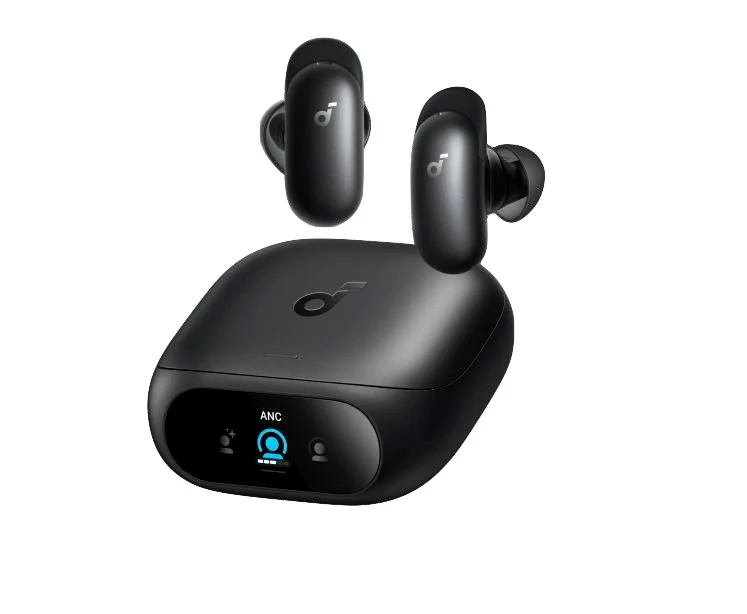
    In addition to disclosing the features of the forthcoming Soundcore Space 2 headphones, AnkerInsider has also unveiled information on two new pairs of Anker earbuds set to launch as the Soundcore Liberty 5 Pro and Soundcore Liberty 5 Pro Max. These fresh products will complement the already announced Soundcore Liberty 5.

    Liberty 5 Pro Details

    As per the source, the Soundcore Liberty 5 Pro will carry the model number “D1203”. These earbuds will be equipped with a compute-in-memory AI chip known as Anker Thus. This chip is expected to power the AI-driven audio upscaling feature mentioned in the leak.

    Advanced Features

    The Soundcore Liberty 5 Pro will include Adaptive Active Noise Cancellation (ANC), with version 4.0 being a significant upgrade over the Adaptive ANC 3.0 found in the Soundcore Liberty 5 (currently listed on Amazon for $99.99). The earbuds will have an IP55 rating for dust and water resistance, alongside features like Dolby Atmos spatial audio, Bluetooth 6.1, and Bluetooth Multipoint.

    A unique aspect of the Soundcore Liberty 5 Pro is its charging case, which includes a touchscreen. Users will be able to control playback, switch between connected devices, modify ANC levels, and view battery life through the case.

    Battery Life and Pricing

    The Soundcore Liberty 5 Pro boasts a battery life of 6.5 hours with ANC activated and a total of 28 hours when used with the case. When ANC is disabled, users can anticipate up to 10 hours of listening time and a total of 45 hours with the charging case. These earbuds will support fast charging and the case will feature a USB-C port for wired charging as well as wireless charging capabilities.

    AnkerInsider reports that the earbuds are expected to retail for $169.99 upon their launch in the US and will come in Black and White options.

    Liberty 5 Pro Max Features

    The Soundcore Liberty 5 Pro Max will be identified by the model number “D1204”. It will share many features with the Liberty 5 Pro, including the Anker Thus chip, Adaptive ANC 4.0, Dolby Atmos Spatial Audio, Bluetooth 6.1, etc. However, it will have two major differences from the Pro version.

    Firstly, the charging case will also serve as a voice recorder, equipped with its own microphones. According to the source, there will be 8 microphones in total. Additionally, the Liberty 5 Pro Max will incorporate voiceprint recognition, allowing them to identify the owner’s voice.

    The Soundcore Liberty 5 Pro Max is set to have a price of $229.99 and will be available in Black and Gold. Similar to the Liberty 5 Pro, they will include five pairs of ear tips in different sizes and three pairs of ear fins or stabilizer arcs.

    AnkerInsider on X: 1, 2

    Source:
    Link


  • Dreame Unveils First Electric SUV with Solid-State Battery and Speed

    Dreame Unveils First Electric SUV with Solid-State Battery and Speed

    Key Takeaways

    1. Dreame is expanding beyond robotic vacuums into electric vehicles and televisions, aiming to compete with Xiaomi.
    2. The Nebula Next 01X is a premium electric SUV featuring the first mass-produced solid-state battery, called the Starry Sky Crystal Core Power Battery.
    3. The solid-state battery offers high energy density (over 450 Wh/kg), fast charging (30% to 80% in 10 minutes), and improved safety, with future goals of reaching 800 Wh/kg by 2027.
    4. The Nebula Next 01X includes advanced features like an intelligent chassis with high-response suspension and self-driving technology, emphasizing precise control and energy efficiency.
    5. Dreame’s experience in consumer robotics could give it an edge in the automotive market, leveraging skills in thermal management and AI-driven data analysis.


    Dreame, known mainly for its robotic vacuums and home devices, is now venturing into new territories like televisions and electric vehicles, possibly aiming to rival Xiaomi.

    New Launch Announcement

    In an unexpected announcement, they revealed the Nebula Next 01X liftback, which can go from 0 to 60 mph in just 1.8 seconds, making it the first premium electric SUV equipped with a mass-produced solid-state battery.

    Dreame refers to its 60 Ah solid-state batteries as the Starry Sky Crystal Core Power Battery, claiming it is the first of its kind ready for mass production. These cells utilize a dry electrode process, much like Tesla’s 4680 battery, and include a sulfide-based electrolyte.

    Battery Specifications and Performance

    This design strikes a good balance between cost, safety, and energy density. While it may not surpass the theoretical maximum of solid-state batteries, it does provide double the range within the same size as current mass EV batteries.

    The Starry Core Power Battery boasts an energy density greater than 450 Wh/kg, an integration efficiency of 85%, and can charge from 30% to 80% in just 10 minutes, while also resisting heat up to 300°C. Dreame also aims to achieve a 2C charge/discharge rate and a cell energy density of up to 800 Wh/kg by the end of 2027.

    Competition and Features

    The Nebula Next 01X will launch with Dreame’s first-generation solid-state battery and will face competition from other manufacturers, including Toyota, which expects to release its own solid-state EVs by 2027.

    These vehicles are anticipated to be premium offerings, as solid-state batteries remain significantly more expensive to produce, and the Nebula Next 01X certainly fits that bill. It will feature the Starry Sky Tianxun intelligent chassis, utilizing a 14-degree-of-freedom non-linear control system for 1 ms full-domain synchronization across the powertrain and chassis, along with an EMAD electromagnetic active suspension that responds 10 times faster while cutting energy use by 50%.

    In the Ultra Luxury variant, the vehicle accelerates from 0 to 62 mph in just 1.8 seconds in the high-discharge Super Track mode, and an intelligent braking system reduces response times to less than 80 milliseconds, maintaining a precision of 0.1 MPa. The 2 nm process chipset delivers 2,000 TOPS of single-core computing power, enabling the first SUV under Dreame’s Starry Sky Plan to incorporate L4 self-driving technology across its electric vehicle range.

    Moving from Dreame’s fastest vacuum motor to a hypercar drivetrain might not be as ridiculous as it seems. Consumer robotics have honed skills in precise control, thermal management, and AI-driven sensor data analysis, areas where traditional automakers are just beginning to catch up. That’s the case Dreame is making, and it remains to be seen if the success of its award-winning robotic vacuums like the X60 Max Ultra, which offers 35,000 Pa suction, will carry over into the premium electric SUV market with this innovative solid-state battery approach.

    Source:
    Link


  • Anker Soundcore Space 2 Headphones: Improved Battery and Price Increase

    Anker Soundcore Space 2 Headphones: Improved Battery and Price Increase

    Key Takeaways

    1. The Soundcore Space 2 headphones, model number “D1402,” are set to launch on April 21 in the U.S. at a price of $129.99.
    2. They will feature 40mm double-layer diaphragm drivers, three microphones, and a 4-stage low-frequency noise cancellation system.
    3. The headphones support LDAC for Hi-Res Wireless Audio, wear detection, Bluetooth 6.1, and Bluetooth Multipoint connection.
    4. Battery life will improve, offering 50 hours with ANC on and 70 hours with ANC off, compared to the Space One’s 40 and 55 hours, respectively.
    5. The Soundcore Space 2 will weigh 264 grams and be available in Jet Black, Linen White, and Seafoam Green colors.


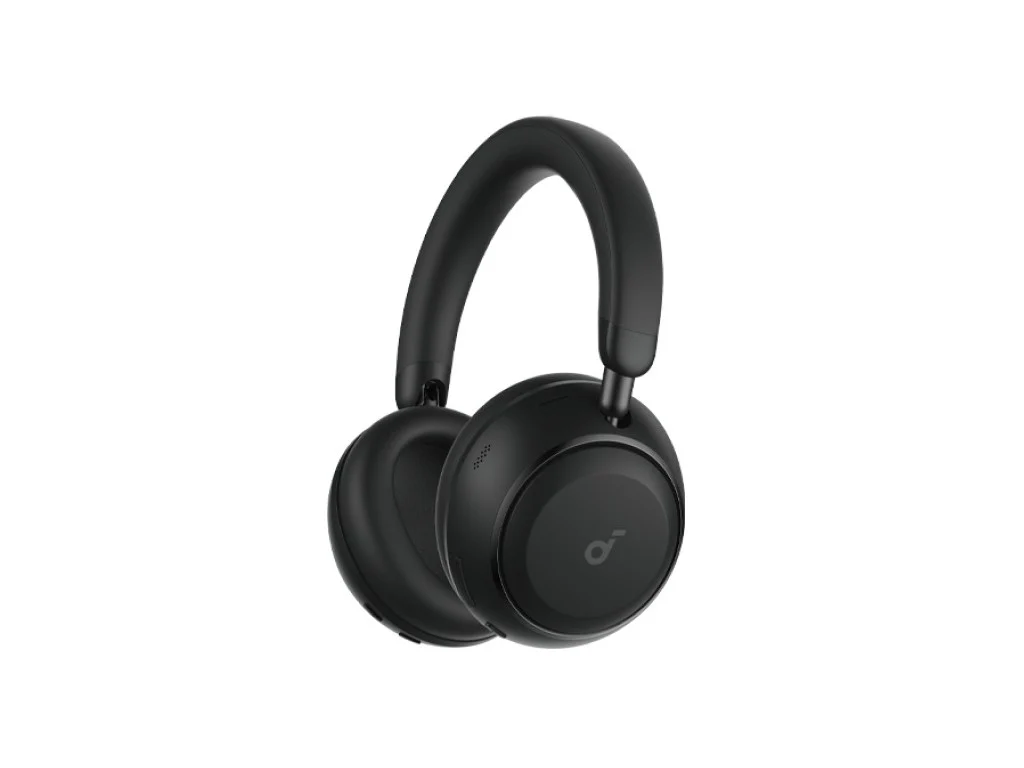
    It has been several years since Anker introduced the Soundcore Space One headphones. Although a pro version was launched in 2024, it’s clear that an affordable successor is needed. Recent leaks suggest that the Soundcore Space 2, also known as Space Two, could be on the horizon, revealing both specifications and a launch date, along with pricing.

    Specifications Unveiled

    The information comes from the X account AnkerInsider, which is recognized for sharing leaks related to Anker products. The Soundcore Space 2 will carry the model number “D1402.” This new headphone model is expected to feature 40mm double-layer diaphragm drivers, three microphones, and a 4-stage low-frequency noise cancellation system.

    Enhanced Features

    Similar to the Space One, which is available on Amazon for $99.99, the Soundcore Space 2 will also include support for LDAC to provide Hi-Res Wireless Audio and will come with wear detection features. Additionally, they will have Bluetooth 6.1 and support Bluetooth Multipoint connection.

    Improved Battery Life

    When it comes to battery performance, the Space Two is set to outperform its predecessor. The leak indicates that these headphones will deliver 50 hours of playtime with ANC activated and up to 70 hours when ANC is turned off at 50% volume. In comparison, the Soundcore Space One has a battery life of 40 hours with ANC on and 55 hours without it. Charging will utilize USB-C, and just a 5-minute charge offers 4 hours of playback.

    The Soundcore Space 2 will weigh in at 264 grams, which is slightly heavier than the Space One by 5 grams. Set to launch in the United States on April 21, these headphones will be priced at $129.99, a notable increase from the previous generation’s cost of $99.99. The available colors for the new model include Jet Black, Linen White, and Seafoam Green.

    This news comes from ‘Anker Insider’ on X.

    Source:
    Link


  • Oppo Launches Magnetic Accessory for Find N6 Foldable Phone

    Oppo Launches Magnetic Accessory for Find N6 Foldable Phone

    Key Takeaways

    1. Oppo will launch the Find N6 and a new Magnetic Turbo 2nd Generation 50W Wireless Charger on March 17, 2026.
    2. The magnetic charger features three modes: cooling and charging, charging only, and cooling only.
    3. A stand for the charger will be included, allowing users to create a desktop charging station.
    4. The charger is compatible with iPhone models and Android devices that support MagSafe accessories.
    5. The design of the charger is slim and lightweight, making it easy to use with the Find N6 and compatible cases.


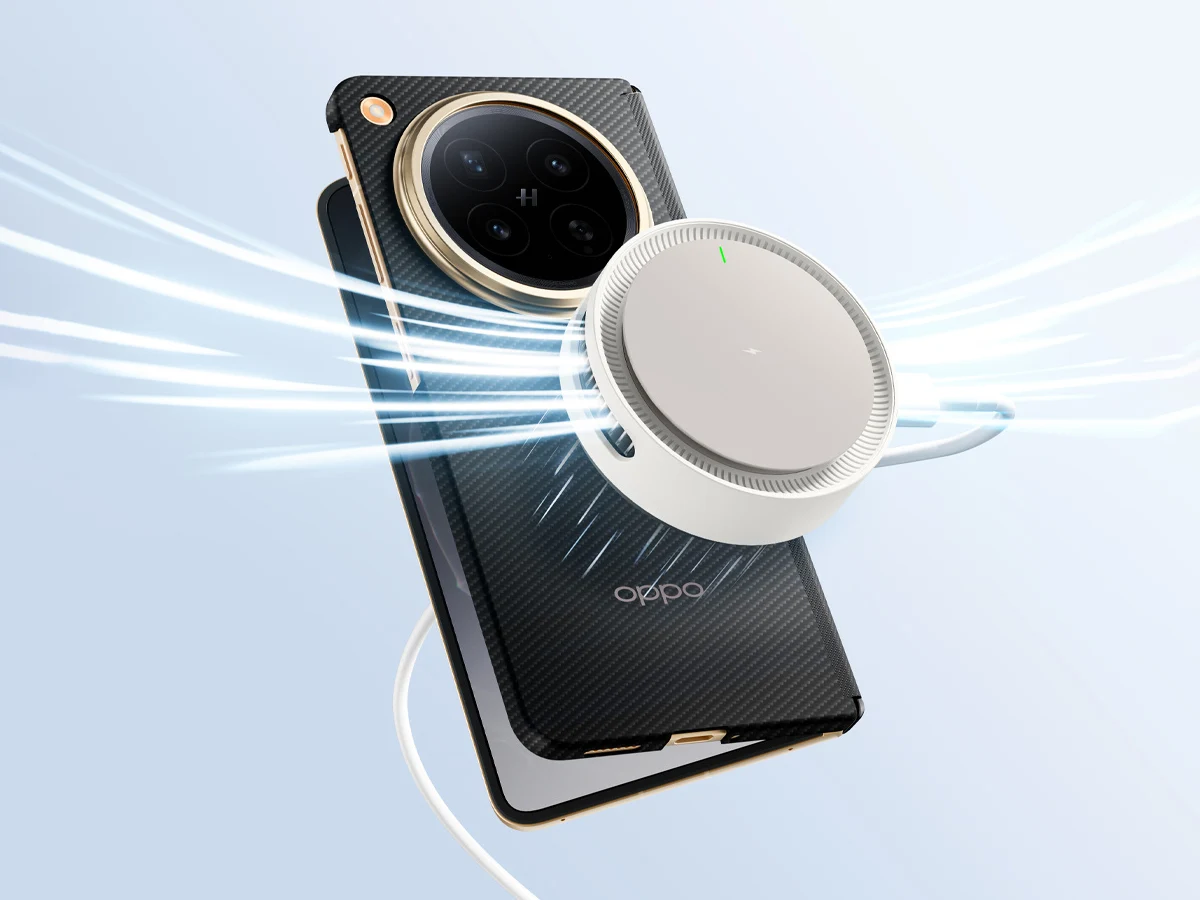
    Oppo is preparing to unveil the Find N6 in both the Chinese and global markets on March 17, 2026, which is just around the corner. Before the arrival of this foldable device, the company has introduced a new magnetic accessory designed specifically for it. The accessory, named the Magnetic Turbo 2nd Generation 50W Wireless Charger, is now available for pre-order in China.

    Versatile Charger Features

    This magnetic charger, set to debut alongside the Find N6, can also serve as a phone cooler. According to Oppo, it operates in three modes: cooling and charging, charging alone, and cooling alone. Additionally, the company is providing a stand that includes a slot for the charging puck, enabling users to create a desktop charging station, much like some existing wireless charging stands on the market (Anker MagGo currently priced at $36.99 on Amazon).

    Compatibility and Design

    Another impressive feature of this magnetic wireless charger is its compatibility with iPhone models. When it comes to Android devices, it will work with those that support MagSafe accessories, which most phones can do with the help of a case. Regarding its design, Oppo emphasizes that the magnetic charger is slim and lightweight, making it easy to align with the Find N6 when using a compatible magnetic case.

    Although there hasn’t been any official announcement about the price of this new 50W magnetic wireless charger, the launch is soon approaching. It’s important to mention that the first-generation model in the UK retails for £69.99, approximately $93.

    Oppo shared this news on Weibo.

    Source:
    Link


  • Windows 11 KB5084597: Out-of-Band Security Fix for Managed Devices

    Windows 11 KB5084597: Out-of-Band Security Fix for Managed Devices

    Key Takeaways

    1. Microsoft launched KB5084597, a hotpatch for Windows 11 25H2 and 24H2, addressing a security flaw in the Routing and Remote Access Service (RRAS) tool.

    2. The update resolves vulnerabilities CVE-2026-25172, CVE-2026-25173, and CVE-2026-26111, which could allow attackers to disrupt functions or execute code on devices.

    3. KB5084597 is a specialized security fix, not a typical cumulative update, and only addresses RRAS-related issues.

    4. The hotpatch is available for devices that support hotpatching, automatically downloading and applying without requiring a restart, aiming to minimize disruption.

    5. It is primarily relevant for enterprise IT administrators and requires specific criteria for Arm64 devices, with no known issues reported at this time.


    Microsoft has launched KB5084597, a hotpatch outside the usual update cycle for Windows 11 25H2 and 24H2, addressing a security flaw in the Windows Routing and Remote Access Service (RRAS) management tool. This update upgrades qualifying systems to OS Builds 26200.7982 and 26100.7982, and it was made available on March 13, 2026.

    Security Focus

    As noted on Microsoft’s support page, KB5084597 resolves a vulnerability tied to the RRAS management tool. They warn that if a user connects to a harmful remote server, an attacker might exploit this tool to disrupt its functions or execute code on the device. The hotpatch is connected to vulnerabilities designated as CVE-2026-25172, CVE-2026-25173, and CVE-2026-26111.

    Targeted Release

    This update is more specialized compared to a typical Patch Tuesday cumulative update. The changelog provided by Microsoft indicates that only a networking security fix is included, implying the patch was specifically released to address the RRAS security issue rather than to include a broader range of updates that are not security-related.

    Limited Rollout

    It’s important to note that KB5084597 isn’t a wide consumer rollout in the traditional sense. Microsoft clarifies that the update is only available for devices that support hotpatching, and it specifies that no action is needed for PCs receiving standard Windows updates. The patch will automatically download through Windows Update on eligible devices and will be applied without requiring a restart.

    According to Microsoft’s documentation on hotpatches, these updates are designed to be installed without needing a reboot, aiming to enhance compliance and minimize disruption. This documentation mentions that hotpatch requires Windows Autopatch and is meant for devices that are managed under a suitable quality update policy.

    Requirements for Arm64 Devices

    Microsoft has also announced that hotpatch is now generally accessible for Windows 11 25H2 and 24H2 Arm64 devices, provided they meet certain criteria. On the KB5084597 webpage, Microsoft lists prerequisites for Arm64 devices, which includes having Windows 11 Enterprise, Intune with a hotpatch-enabled policy, an eligible license, enabled virtualization-based security, and compiling hybrid PE disabled.

    This means that KB5084597 is primarily relevant to enterprise IT administrators rather than regular home users. However, for managed fleets that meet the requirements, this update illustrates why Microsoft continues to promote hotpatching: it allows for immediate security fixes to be deployed, applied automatically, and avoids the disruption of a reboot that typically interrupts work.

    No Known Issues

    As of now, Microsoft has stated that it is not aware of any known issues with KB5084597. This is noteworthy, especially considering how frequently emergency or out-of-band Windows patches can lead to deployment challenges, particularly when they involve security-sensitive networking elements.

    Users can report any issues through Microsoft’s Feedback Hub.

    Source:
    Link


  • Garmin Chat Connector: AI Analysis for Smartphones Without Subscription

    Garmin Chat Connector: AI Analysis for Smartphones Without Subscription

    Key Takeaways

    1. Garmin Connect combines data from Garmin devices and third-party services, offering insights into training load, performance, recovery, and sleep quality.
    2. Garmin is enhancing data presentation for better user understanding and organization.
    3. The new Garmin Chat Connector aims to provide conversational data analysis, though it is not yet officially launched.
    4. The Chat Connector works with Garmin Chat Desktop, enabling local data analysis using AI and allowing users to ask questions in natural language.
    5. Currently, there are 16 tools available for creating training summaries, with plans to support more AI platforms in the future.


    In Garmin Connect, various data sets from Garmin devices and some third-party services come together. This collection provides users with an in-depth look at their training load, performance status, recovery times, and sleep quality. Garmin is continually improving how this extensive data is displayed, ensuring it is organized and easy to understand for users.

    New Features on the Horizon

    Recently, the Garmin Chat Connector has been introduced as a new tool that focuses on conversational data analysis. Rod Trent mentioned that the project is close to being finished, although it is not yet officially launched and doesn’t represent an official Garmin product.

    Enhancing User Experience

    The Chat Connector works alongside Garmin Chat Desktop, which enables local data analysis via an AI model and allows users to ask questions in natural language. Even though it isn’t a mobile application in the traditional sense, it expands on existing mobile apps provided by AI companies. Users will get a private URL that can be set up as a custom connector in AI applications like ChatGPT or Claude. At this time, there are 16 tools available, categorized into five groups. These tools allow for the creation of training summaries over specific periods. Plans are in place to support more AI platforms in the future.

    Rod Trent, image source: Inge Schwabe, Notebookcheck

    Source:
    Link


  • Oppo Pad 5 Pro Specs and Launch Timeline Leaked

    Oppo Pad 5 Pro Specs and Launch Timeline Leaked

    Key Takeaways

    1. The Oppo Pad 5 Pro is expected to feature a large 13.2-inch display, but the type (IPS LCD or OLED) is still unknown.
    2. It will be powered by the Snapdragon 8 Elite Gen 5 processor, offering approximately 20% better CPU performance than its predecessor.
    3. The tablet is rumored to include a 13MP rear camera and an 8MP front camera, along with a battery capacity of around 13,000mAh and 67W fast charging support.
    4. Four memory options are anticipated: 8GB/256GB, 12GB/256GB, 12GB/512GB, and 16GB/512GB.
    5. The Oppo Pad 5 Pro may launch in April 2025, potentially alongside the Oppo Find X9 Ultra, with no details yet on international availability.


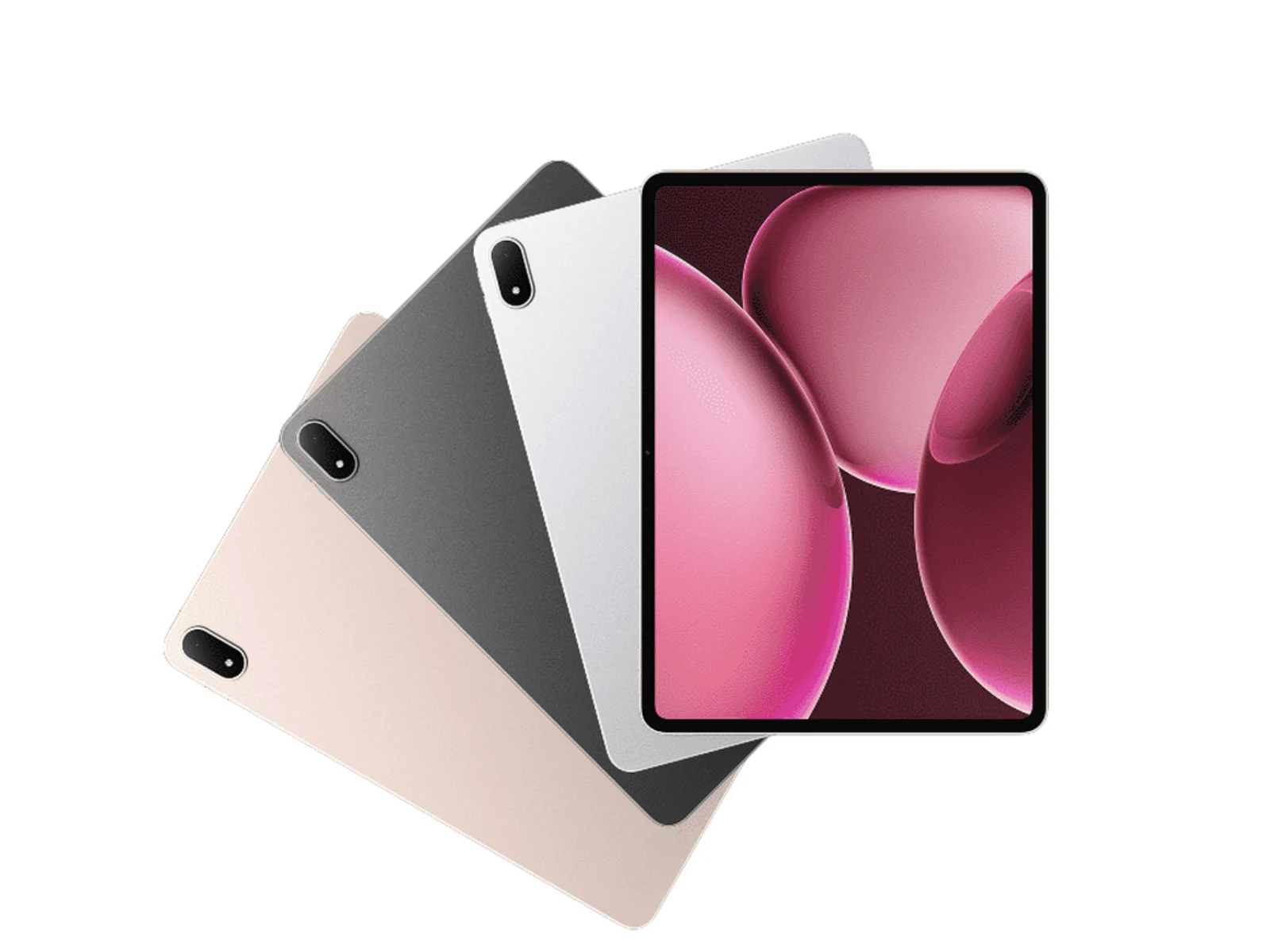
    Oppo is said to be developing the next version of the Pad 4 Pro, which was introduced in April 2025. To give you some background, the Oppo Pad 4 Pro was a top-tier Android tablet powered by a Snapdragon 8 Elite chipset. Recently, a source has disclosed important details about the specifications and when we can expect the Oppo Pad 5 Pro to be released.

    Display Information

    According to the source known as Digital Chat Station on Weibo, the Pad 5 Pro will boast a sizable 13.2-inch screen. However, it remains unclear whether this will be an IPS LCD or an OLED display.

    Performance Specifications

    The new tablet is rumored to be equipped with the Snapdragon 8 Elite Gen 5, a cutting-edge Qualcomm processor built on a 3nm architecture. In comparison, the Snapdragon 8 Elite Gen 5 is expected to provide roughly 20% better CPU performance than the Snapdragon 8 Elite seen in devices like the OnePlus Pad 3, which currently retails for $699 on Amazon.

    Camera and Battery

    The Oppo Pad 5 Pro is anticipated to have a 13MP camera on the back and an 8MP camera in the front. It’s also likely to come with a battery capacity around 13,000mAh, supporting 67W fast charging. Additionally, the tipster has mentioned four different memory options: 8GB/256GB, 12GB/256GB, 12GB/512GB, and 16GB/512GB.

    The same source suggests that the Oppo Pad 5 Pro might be launched in April, alongside the Oppo Find X9 Ultra. This timeline could be specifically for the Chinese market, and there’s no current information regarding international availability. In related news, the company is also expected to unveil a new compact flagship device called the Find X9s for the global audience.

    Source:
    Link


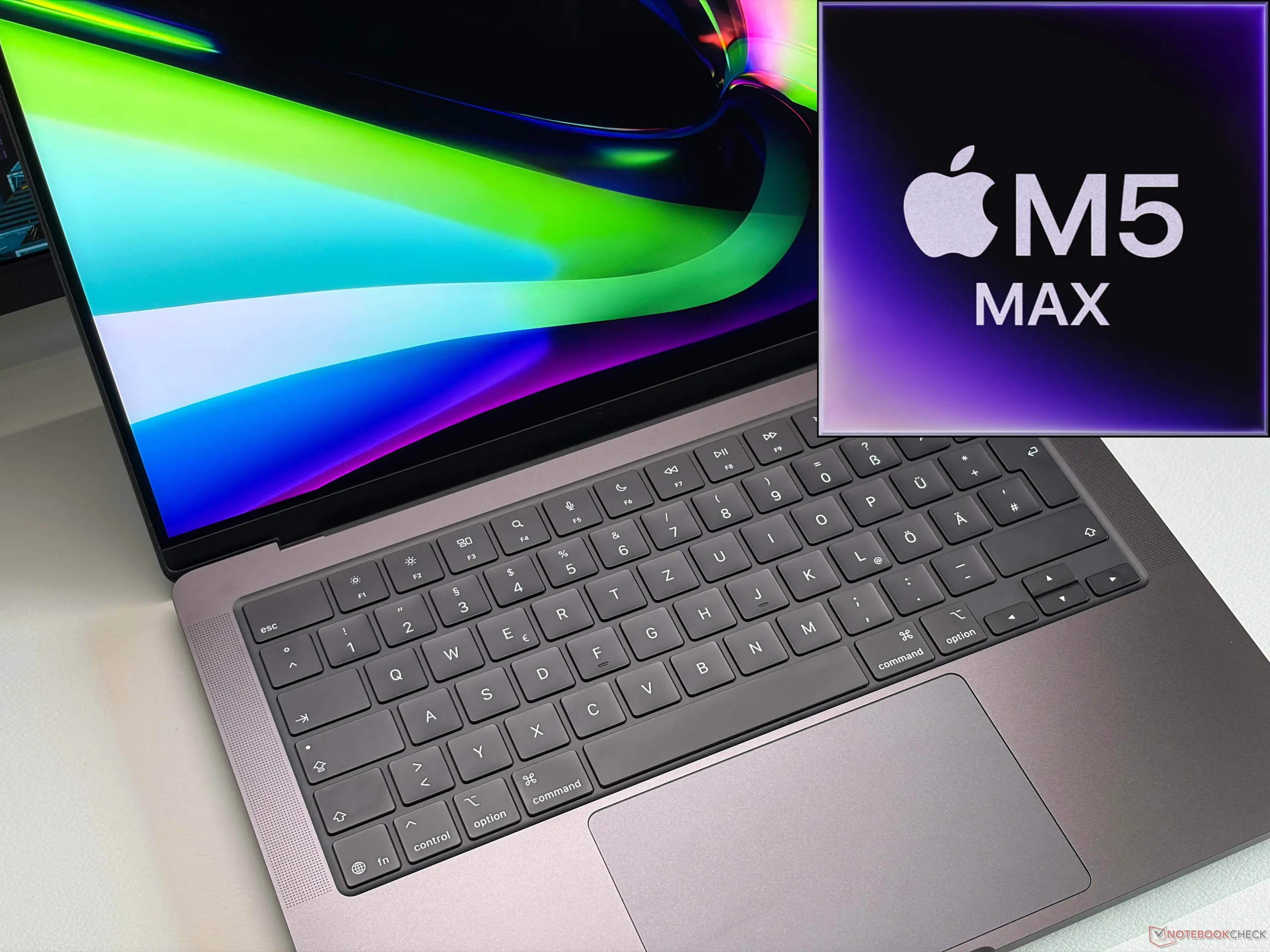
  • Apple MacBook Pro 14 Struggles with M5 Max Performance Issues

    Apple MacBook Pro 14 Struggles with M5 Max Performance Issues

    Key Takeaways

    1. Apple has launched the M5 Max chip with 18 CPU cores and 40 GPU cores in the MacBook Pro 14, but the power adapter is inadequate.
    2. In stress tests, the M5 Max peaks at 96 Watts briefly, stabilizing around 42 Watts, while the M5 Pro in the MacBook Pro 16 can draw 70W.
    3. CPU and GPU stress tests show a drop in power consumption after initial peaks, with the GPU performance decreasing by about 10% under continuous workloads.
    4. The MacBook Pro 16 is expected to outperform the 14-inch model, better utilizing the M5 Max GPU’s capabilities.
    5. Future M6 chips are anticipated to use a 2 nm manufacturing process, which may require Apple to improve cooling solutions in MacBook designs.


    Apple has introduced its latest powerful chip, the M5 Max, featuring 18 CPU cores and 40 GPU cores, in the compact MacBook Pro 14 that we just took a look at. Our evaluations revealed some problems, and we’ve already mentioned the inadequate power adapter.

    Stress Test Findings

    In our stress tests, the M5 Max (considering both CPU and GPU cores, excluding RAM) peaks at 96 Watts for a short duration of 1-2 seconds. After this burst, the chip drops rapidly to 46 Watts, but it can’t hold this level and eventually stabilizes around 42 Watts. The larger MacBook Pro 16 has an edge in this area, as the M5 Pro can draw 70W during stress tests, which is 66% more. This difference is clearly visible in the chart below (red indicates MacBook Pro 14 M5 Max; yellow represents MacBook Pro 16 M5 Pro).

    CPU and GPU Performance

    When only the CPU or GPU is under stress, similar patterns emerge. The CPU cores can briefly consume up to 75W but then fall back to about 50W. On the other hand, GPU stress can push consumption to 72W, which quickly drops to 55W and eventually stabilizes at 44W, even while using High Power mode. Under continuous workloads, the GPU performance also isn’t consistent, showing a decrease of around 10%. The MacBook Pro 16 seems likely to outperform the 14-inch model and fully showcase the capabilities of the new M5 Max GPU with its 40 cores, which we plan to test soon with a review unit.

    Future Expectations

    The current M5 generation still uses the well-known 3 nm manufacturing process (now in its third generation). We anticipate that the forthcoming M6 chips will transition to the 2 nm process at TSMC, which should enhance efficiency. However, these chips are becoming so powerful that Apple may need to rethink their MacBook designs, incorporating more effective cooling solutions. For more details, refer to our comprehensive review of the MacBook Pro 14 with M5 Max.