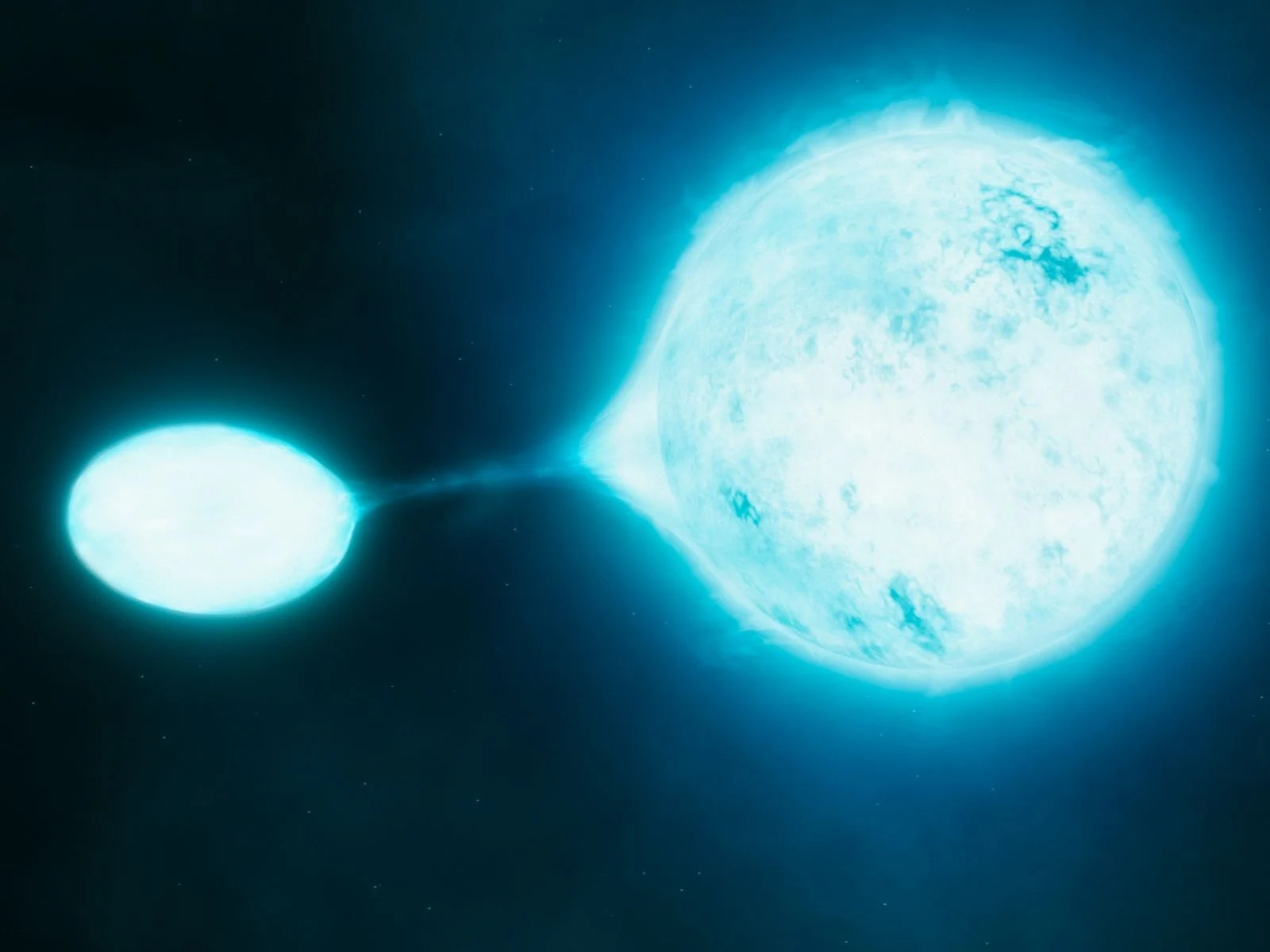
– SN 2023vbw is a rare supernova with unusually long brightness (190-day rise).
– It emits 10 times more energy than a typical Type II supernova, suggesting a different origin.
– Likely a pair-instability supernova from a blue supergiant star.
– The progenitor star may have formed from the merger of two massive stars in a binary system.
– These conclusions remain hypotheses due to limited understanding of such stars.
A Supernova Mystery That’s Still Baffling
A supernova is a powerful phenomenon that is still poorly understood. Indeed, there are different types of supernovae, and some are very rare, such as SN 2023vbw. This event was first detected by the Zwicky Transient Facility in October 2023, at a distance of about 1.3 billion light-years from Earth, and was classified as a Type II supernova.
Wait, It Might Not Be What We Thought
In other words, this giant star consumed all its nuclear fuel before collapsing, causing a powerful explosion. However, a new study recently published on arXiv suggests a different origin. By studying this supernova, astronomers noticed that its light curve continued to rise for 190 days. After that, it declined rapidly, and the energy released by this event was 10 times greater than a Type II supernova.
A Rare Beast Called Pair-Instability
As a result, it could be a pair-instability supernova, a phenomenon rarely observed in the universe. Thats not all, as this star would be a blue supergiant, and astronomers believe that this celestial object may have formed following a merger between two massive stars in a binary system. But be careful, because while this discovery is fascinating and could help us to better understand these supernovae, these are only hypotheses.
Many Uncertainties Remain
Indeed, these stars are poorly understood, and many uncertainties remain. The energy output was ten times greater then a normal Type II explosion. The star that exploded was likely enormous, possibly a blue supergiant formed from a binary merger event. The light curve begavior is inconsistent with standard models.