Author: GizNews

  • Casio Launches Affordable Watches with 10-Year Battery Life

    Casio Launches Affordable Watches with 10-Year Battery Life

    Key Takeaway

    1. The AE-1600HX series features a claimed 10-year battery life with 100-meter water resistance.
    2. The watches have a large case size (54.1 × 49.7 × 15.9 mm) and include an “Extra Long Strap” design supporting wrist sizes from 145 mm to 235 mm.
    3. Functional features include dual time, stopwatch, countdown timer, five alarms with snooze, hourly signal, and auto-calendar to 2099.

    Casio Reveals AE-1600HX Series Details

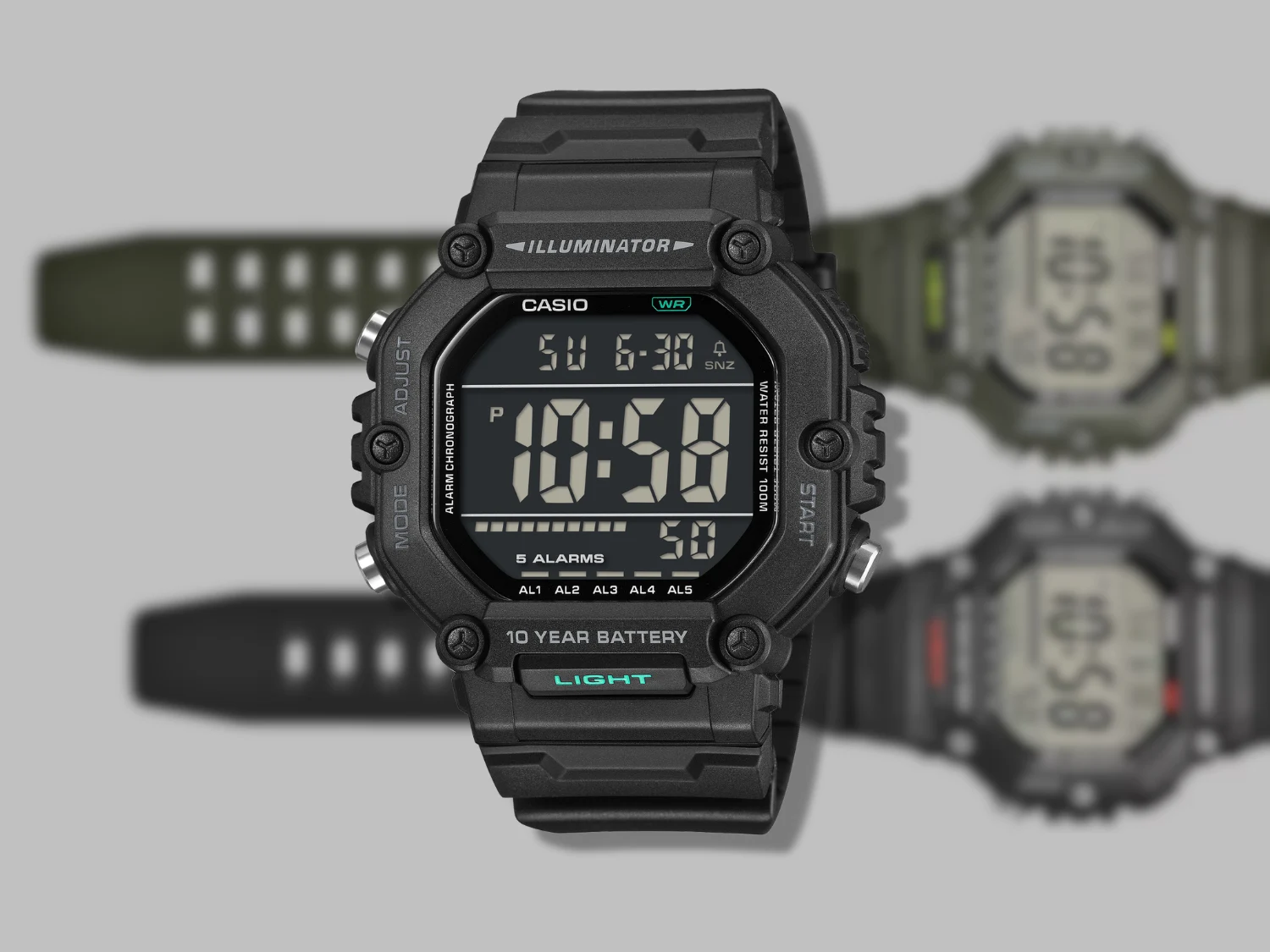
    Casio has just made it official by putting the AE-1600HX series on their international website, which confirms all the info from previous retailer listings. The models include AE-1600HX-1BV and AE-1600HX-3AV, both of which are kinda budget-friendly digital watches that pack a punch with their long battery life and larger case sizes, a signature of the AE-1600H series.

    Battery Life and Water Resistance

    The most attractive thing about these watches would probably be their promise of a 10-year battery life, powered by a CR2032 cell. They’re also water resistant up to 100 meters, which makes them quite decent for sports or everyday use. Moreover, the AE-1600HX-1BV features a negative display—the all-black look seems to be a hit with many buyers out there.

    Design and Construction

    The case dimensions of this timepiece are listed as 54.1 × 49.7 × 15.9 mm, and it weighs just 55 grams. It uses resin for the case and strap, with a resin glass protecting the display. One interesting thing about these is the “Extra Long Strap” feature, supporting wrist sizes from 145 mm to 235 mm, which makes it suitable for larger wrists or even worn over thicker clothing or jackets.

    Features and Functionality

    • Dual time zones
    • 1/100-second stopwatch
    • Countdown timer up to 24 hours
    • Five alarms with snooze options
    • Hourly chime
    • Full auto-calendar till the year 2099
    • LED backlight with amber illumination

    Availability and Pricing

    These models have been seen on international retailer sites recently which gave us clues about most of their specs early on. The official listing doesn’t really add much new. No official prices are announced yet, but they’re expected to be available for purchase in April 2026. On one website, it’s listed at €39.90 (~$46), so the official price should be similar or maybe a little less.

    Sources

  • AYN Odin 2 Portal Discount Starts at $249

    AYN Odin 2 Portal Discount Starts at $249

    Key Takeaway

    1. The Odin 2 Portal remains available at a discounted price, initially intended as a temporary promotion, effectively making it a permanent deal.
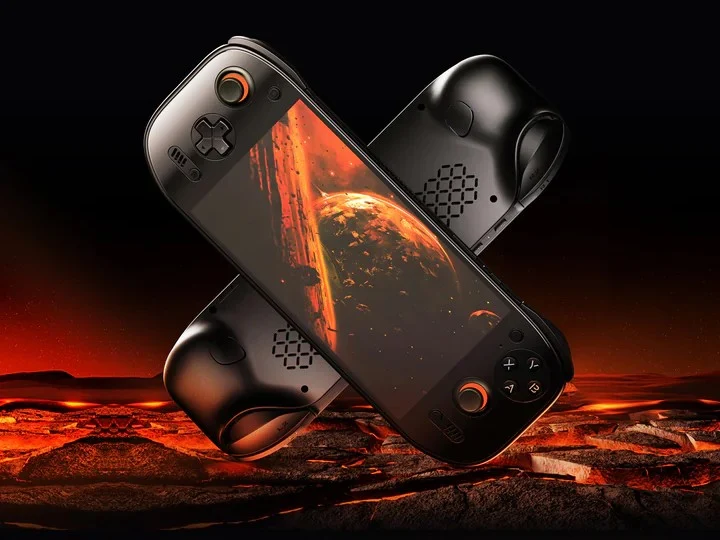
    2. It features a 7-inch 1080p OLED display with a 120Hz refresh rate, powered by Snapdragon 8 Gen 2, with multiple configurations ranging from $249 to $449.
    3. The device offers high-end specifications, such as Android 13, Wi-Fi 7, Bluetooth 5.3, and expandable storage, providing strong value compared to similar handhelds.

    Persistent Discount on Odin 2 Portal

    Back in late January, AYN has said the Odin 2 Portal’s discounted price was a limited offer which was supposed to end on February 25. But, little did anyone expect, the sale keeps going, which possibly means it will stay like that for good. It’s pretty rare for deals like these to last so long, given how fast prices can change in the market of handheld devices. This prolonged discount makes it quite a steal for consumers looking for a good deal on a capable device.

    Display and Technical Specs

    The Odin 2 Portal’s bright spot is its 7-inch 1080p OLED screen with a smooth 120Hz refresh rate. The device runs on the snappy Snapdragon 8 Gen 2 chip, which is also used in high-performing devices like the Retroid Pocket 6. Running Android 13, it boasts an 8,000mAh battery, Wi-Fi 7, Bluetooth 5.3, an active cooling fan, and a USB-C port with DisplayPort 1.4 support. This suite of features makes it a powerful pocket gaming device combined with versatility in connectivity and performance.

    Pricing and Variants

    Available in three variants, the Base, Pro, and Max, each offers different levels of RAM and storage. The base model with 8GB RAM and 128GB storage (expandable via microSD) is priced at just $249, which is only $5 more than the newer Retroid Pocket 6. Given the larger display and battery size, many see it as a fair price considering what you’re getting in return. For more robust options, the Pro version comes with 12GB RAM and 512GB storage for $369, while the Max boasts 16GB RAM and a hefty 1TB of storage at $449.

    Where to Buy and Accessories

    The Odin 2 Portal can be bought directly from AYN’s official website. The company also offers several accessories to enhance the user experience, including a $12 carry case, a $15 TPU grip for better hold, a $5 screen protector, and another $5 set of ABXY switch layout and textured joystick caps. These extras are designed to give users more customization and protection for their device.

    Sources
  • 600 Hours of RTS on Steam Deck Showcases Valve’s Greatest Handheld Success

    600 Hours of RTS on Steam Deck Showcases Valve’s Greatest Handheld Success

    Key Takeaway

    1. The Steam Deck remains the best handheld for strategy games, especially RTS titles, due to its optimized controls, trackpads, and customizable buttons.
    2. Valve has effectively addressed traditional control issues for RTS games, making complex titles manageable on a handheld device.
    3. Single-player RTS games like Stronghold Crusader, Spellforce, and Stellaris are highly playable and enjoyable on the Steam Deck, offering a relaxed gaming experience outside of PC.

    The Steam Deck has been around for over four years now, and during this time, newer gaming handhelds like the Asus ROG Xbox Ally X, which costs around $1,199, have come into the market with more impressive specs, better screens and bigger batteries. Nevertheless, there’s one type of game that the Steam Deck still dominates, which is strategy games.

    Popular Games on the Steam Deck

    The list of the hundred most played games on the Steam Deck mainly consists of indie titles that are controller-friendly, such as Slay the Spire 2, Stardew Valley, and Balatro. Though, it also includes major role-playing games like Baldur’s Gate 3 and Cyberpunk 2077. Surprisingly, real-time strategy (RTS) games are quite rare on the list, with only the turn-based game Civilization VI entering the top 100.

    Why RTS Games Are Rare on Handhelds

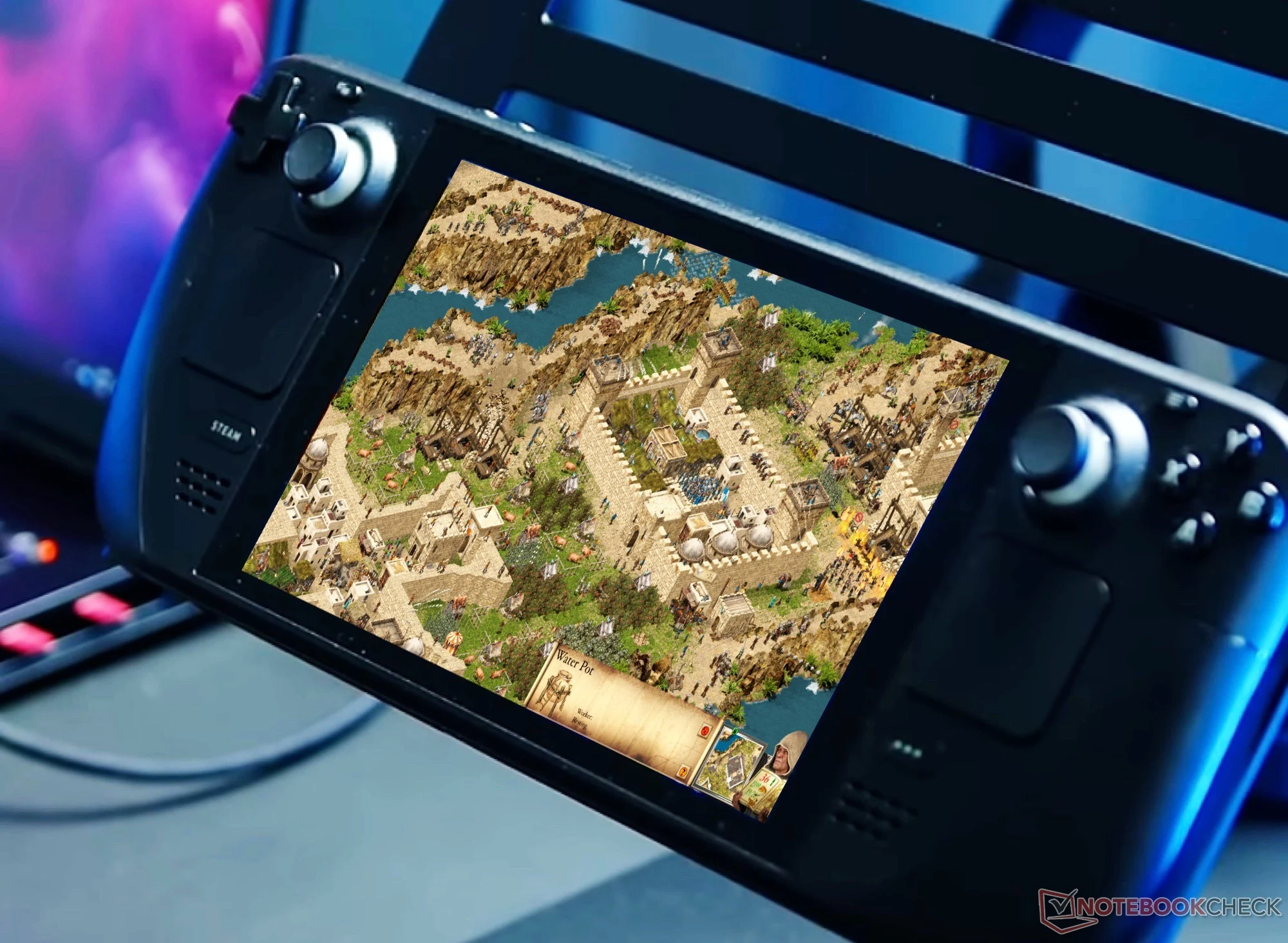
    This trend is not shockin’, considering that consoles, controllers, and handheld devices were, for ages, thought to be incompatible with RTS games. Using analog sticks to select small units or buildings is tedious and frustrating, and many handhelds lack the necessary function keys. Even navigating menus was once difficult without proper controller support. But after these four years, Valve’s Steam Deck has proved these obstacles are now tackled. The device’s trackpads, four customizable back buttons, and individually programmable controls for each game make managing even complex RTS titles much more achievable.

    Playing RTS Games on the Steam Deck

    Throughout 172 hours of trying, I managed to play Stronghold Crusader: Definitive Edition fully on the Steam Deck, completing all campaigns and experimenting with workshop content. The D-pad simplifies controlling game speed, which is vital because probably you’re a bit slower than usual when you play on portable. Shoulder buttons rotate the camera, triggers act as left and right mouse buttons, and the camera is maneuvered with an analog stick. The touchpad serves as a mouse, while the back buttons let you quickly select troop recruitment buildings.

    Extended RTS Experience

    From spending over 190 hours with Spellforce Platinum, 62 hours on Diplomacy is Not an Option, and 38 hours with Stellaris, I can confidently say that single-player RTS games run smooth on the Steam Deck. These experiences show it’s no longer just playable; it’s enjoyable and relaxing to play RTS games on the couch after a long workday instead of sitting in front of a PC.

    Comparison to Other Handhelds

    Other handheld consoles, like the Zotac Zone or Lenovo Legion Go, do feature trackpads as well, but those are neither as large nor as comfortable to use as those on the Steam Deck. Valve’s haptic feedback also enhances control, making in-game interactions more precise. Games like Frostpunk, which require less precision, or RTS titles with good controller support such as The Wandering Village, can also be controlled on other handhelds. But for someone passionate about strategy games, I truly recommend the Steam Deck for this genre.


    Sources

  • Boost Laptop Speed for $3 with Google’s New USB Dongle

    Boost Laptop Speed for $3 with Google’s New USB Dongle

    Key Takeaway

    1. The Google ChromeOS Flex USB dongle, costing $3 and limited to 3,000 units, can rejuvenate outdated laptops by allowing quick installation or booting without data loss.
    2. ChromeOS Flex requires fewer resources, significantly speeding up older laptops with a typical boot time under six seconds.
    3. The OS relies heavily on internet connectivity, with limited offline functionality, primarily supporting cloud-based services like Google Docs and Gmail.

    New ChromeOS Flex USB Dongle Now Available

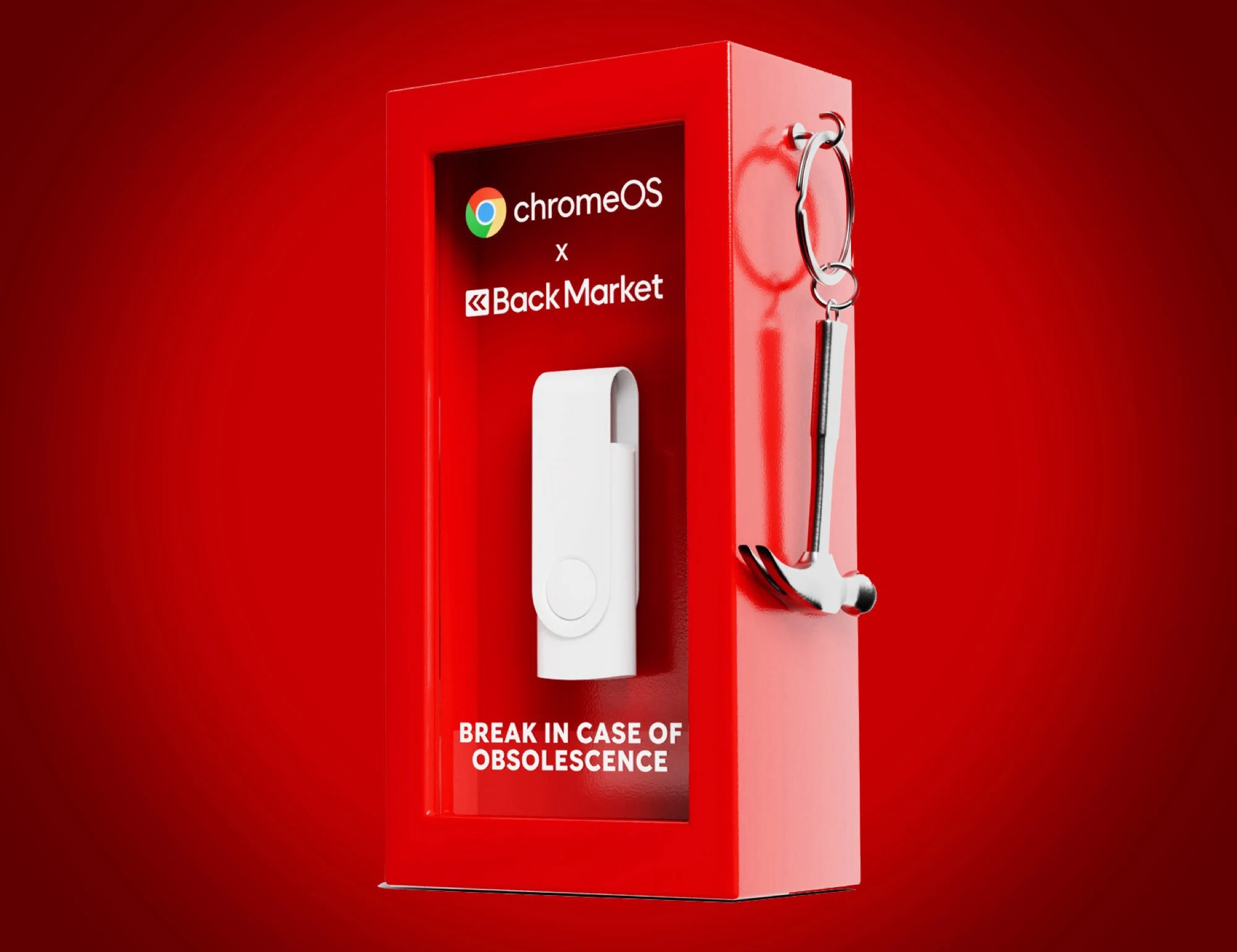
    After being announced early this March, the new Google ChromeOS Flex USB dongle is now ready for make a purchase. This small device can be grabbed from Back Market for just 3 dollars, which is quite cheap considering its purpose. The company, along with Google, markets this dongle as a way to revive those old notebooks that might otherwise be discarded, claiming it can breathe new life into them.

    Specifications and How It Works

    The device itself is a 16 GB USB stick with ChromeOS Flex installed on it. When you plug it into a laptop, you got two options it can do: either install ChromeOS Flex directly on your device or boot from the USB stick without affecting your existing data. The whole process is supposed to be quick, taking less than five minutes to finish. This way, even an outdated machine can feel much more modern and quick again.

    Performance and User Experience

    The most impressive thing about ChromeOS Flex on an older laptop is its lightweight nature—it needs way fewer resources compared to Windows or macOS. Google mentions that a laptop running ChromeOS Flex can boot up in under six seconds, which is pretty fast. Plus, all updates happen automatically in the background, so users don’t have to worry about manually updating their system or interruptions.

    Limitations and Supported Devices

    Though ChromeOS Flex sounds great, it does have some limitations. Since it relies heavily on cloud services, an internet connection is pretty much a necessity. Without connection, only few functions work, such as using Google Docs, browsing files, or accessing Gmail. On a support webpage, there’s a list of laptops officially compatible with ChromeOS Flex, which includes older models like some MacBook Airs, Asus Vivobook, Dell Inspiron, and LG Gram, among others.


    Sources

  • RPCS3 PS3 Emulator Displays Big Picture Mode Features

    RPCS3 PS3 Emulator Displays Big Picture Mode Features

    Key Takeaway

    1. The new “Handheld Experience” in RPCS3 integrates exhaustive settings accessible directly from in-game, enhancing performance customization for handheld PC users, especially Steam Deck.
    2. Enhanced UI features include SteamOS/Big Picture compatibility, game shortcuts with PS3 XMB artwork, and desktop UI autoplaying game audio/video on hover, rivaling RetroArch’s XMB clone.
    3. RPCS3 significantly improves controller support, closing the gap with other emulators, and offers a seamless experience for desktop and handheld users running PlayStation 3 games.
    4. The update underscores the relevance of handheld gaming devices like Steam Deck as successors to traditional PlayStation handhelds, emphasizing the appeal of PS3 emulation on portable platforms.
    5. The latest RPCS3 features are already available in the stable release, ready for users to enhance their PS3 emulation and handheld gaming experience.

    New Features for Handheld PC Gaming

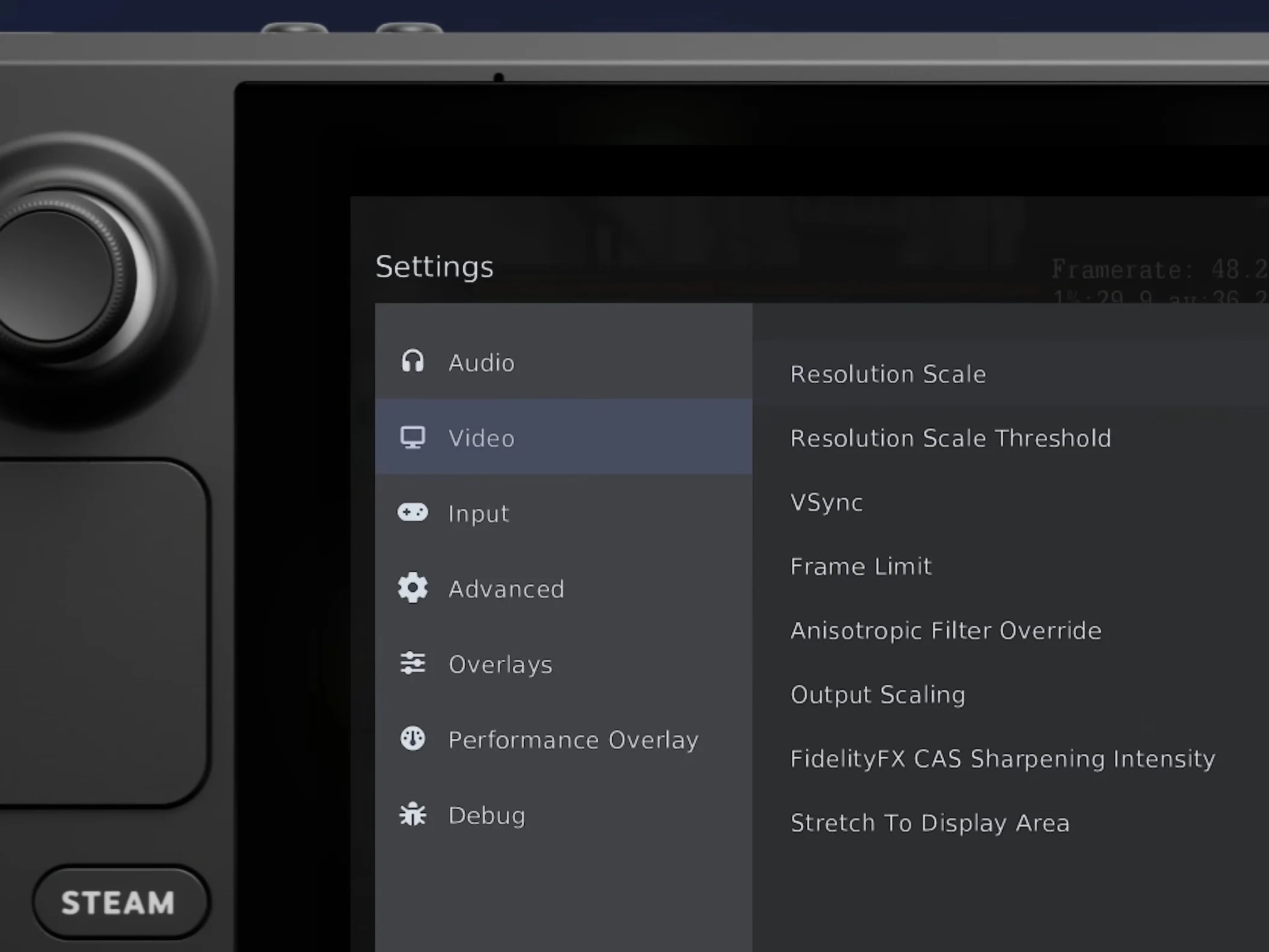
    RPCS3, being a very advanced emulator for the PlayStation 3, now love a more refined “Handheld Experience” which allow users to tweak all settings directly in game. This is a big improvement compare to before, inspired by Steam Big Picture and Steam Deck controls. The interface is designed for easy control from both desktop and handheld devices, making it more user-friendly for gamers on the go. The updates focus on making gameplay smooth while giving access to important configurations, with settings that can significantly influence performance. The new UI looks really modern and fits naturally with SteamOS themes, what makes the experience even better.

    Enhanced UI and Controller Support

    Much attention was paid, especially for Steam Deck users, but also for players using other devices like ASUS ROG Ally X. Now, users can add RPCS3 game shortcuts straight into Steam, with artwork from the original PlayStation 3 game. The desktop interface also autoplays game audio and videos when you hover over a link, just like old PS3’s XMB system. This is a lot more advanced than RetroArch’s UI clone, especially in controller support, because now RPCS3 offers more than just basic game functions. The new design feels totally at home on SteamOS/Big Picture, sharing the same color schemes and aesthetic.

    Emulation on Handheld Platforms

    Right now is a exciting time for fans who love PlayStation 3 games played on handheld gadgets. Sony is holding back on releasing more PC ports, but devices like Steam Deck lets gamers relive their favorite titles like God of War (2014). Interestingly, even the previous Sony CEO experimented with Steam Deck by running PS4 games. Rumors also say Sony might release a PlayStation 6 handheld console someday, but for now, Steam Deck and similar devices are seen as the modern successors to handheld consoles like PSP and PS Vita. The PS Vita was a standout with its OLED display, being the first portable with such a screen. Until the Sony released newer versions with LCD screens, the original PS Vita had the most premium display on a portable gaming device. The Nintendo Switch OLED and Steam Deck OLED are stepping into that same level now, marking a new era for handheld gaming visuals.

    Latest Updates Ready for Use

    If you’re interested in what the recent update includes, just watch the video above for a detailed demonstration. For those who already have RPCS3 installed or are thinking about getting it, the latest improvements are available in the stable release, and you can start enjoying new features right now. Emulation for PS3 games on handhelds is becoming more polished, thanks to these advanced UI and support improvements, making it easier and more enjoyable than ever to relive your favorite classics anywhere you go.

    Sources
  • HP Launches 14-Inch Laptops with Up to 64GB RAM and 1100 Nit OLED Screen

    HP Launches 14-Inch Laptops with Up to 64GB RAM and 1100 Nit OLED Screen

    Key Takeaway

    1. HP’s new OmniBook Ultra 14 series shifts from AMD to Intel and Qualcomm processors for 2026 models, offering configurations up to the Core Ultra X9 388H or Snapdragon X2 Elite X2E-90-100.
    2. The display features a 14-inch 2.8K OLED with a 120 Hz VRR refresh rate, 500 nits SDR, and 1,000 nits HDR brightness.
    3. Pricing varies widely depending on the configuration, with high-end models reaching over $2,400, influenced significantly by RAM, storage options, and processor choices.

    Introduction to the New OmniBook Ultra 14 Series

    HP has finally Initiated the transition from last year’s OmniBook Ultra 14 to the newer 2026 fresh lineup. In this latest versions, they shift their focus from AMD to Intel and Qualcomm processors, marking a big change in their product strategy. These new models, previewed in January, are told to feature options like the Core Ultra X9 388H and the Snapdragon X2 Elite X2E-90-100 which were announced during CES 2026.

    Features and Display

    The upgraded 14-inch laptops are packed with impressive specifications such as support for up to 64 GB of RAM and flaunt a 2.8K OLED screen. This display, mirroring the recent Lenovos, comes with a 120 Hz VRR refresh rate and brightness levels hitting 500 nits in SDR and 1,000 nits for HDR, offering a vivid visual experience that will surely attract tech enthusiasts. The contrasts in configurations cater to different user needs making the line quite versatile.

    Pricing Details and SKU Differences

    The pricing differs greatly depending on whether you choose Snapdragon or Panther Lake options. On Best Buy, the Snapdragon Ultra 14 costs a hefty $2,049 with a Snapdragon X2 Elite X2E-90-100, 32 GB RAM, and 1 TB storage. In contrast, the Panther Lake models start at $1,699 with a Core Ultra 7 356H, 16 GB RAM, and 512 GB storage, offering a more budget-friendly entry point. But, matching a Panther Lake SKU with similar specs hikes up the costs, often hitting over $2,300 to $2,400.

    Upgrades and Additional Costs

    Note that boosting the RAM from 32 GB to 64 GB alone costs HP around $500, and upgrading the SSD to 2 TB would add approximately $180 extra. Switching to the more powerful Core Ultra X9 388H for additional graphics capabilities like Arc B390 increases the price by about $80 compared to the Core Ultra 9 386H. As per HP’s info, these models will soon be available in European markets, making them more accessible to international buyers.


  • Unexplained Earth-Flashes Confirmed in 1950s: New Study

    Unexplained Earth-Flashes Confirmed in 1950s: New Study

    Key Takeaway

    – Mysterious flashes around Earth in the 1950s have been documented through photographic evidence, but their origin remains uncertain.
    – These luminous events are too rapid to be attributed to stars or distant celestial bodies, suggesting other possible causes.
    – The phenomena might be linked to artificial objects orbiting Earth or unidentified astronomical occurrences, requiring further research.

    The Mysterious Flashes in Earth’s Atmosphere

    From gazing at the night sky, you can see some really stunning sights as well as wierd thing go’s on. Many folks have spotted strange lights or flashes above, without really knowing what they are. Recently, a scientist named Ivo Busko, who use work at NASA, looked into these mysterious flashes and found out they happen around Earth back in the 1950s.

    The Use of Historic Archives in Scientific Discovery

    Busko and his team, in 2019, started a project called VASCO, aimed at digging through old photographic records to find unusual events. They traced back to photographs taken by the Palomar Observatory which led to evidence of these odd flashes during the 1950s. It is interesting but also confusing, cause many questions still remain unanswered about what these flashes really were.

    Theories Behind The Light Phenomena

    At first, people thinks these flashes were stars or some sort of human-made things like aircraft or satellites. But Sputnik 1, the very first satellite, didn’t fly till October 4, 1957, which is a few years after the observed phenomena. Plus, these flashes are far too quick and sharp compared to how stars or far away planets glow in the sky.

    Could These Flashes Be Something Else?

    So, some folks believe that these mysterious lights could be from objects artificially orbiting the planet—perhaps flat and disc-shaped. Others say it might be some astronomic mystery that scientists yet to understand. If more research is done, it might reveal new facts about these flashes and maybe lead us to learn more about our universe. The quest for answers continues, and each discovery helps us see the sky in a new light.


    Sources

  • Netrunner 26 Launches with XLibre X11 and Enhanced Security

    Netrunner 26 Launches with XLibre X11 and Enhanced Security

    Key Takeaway

    1. Netrunner has transitioned from a Debian 12 Bookworm base to Debian 13 Trixie, maintaining its Debian-based heritage.
    2. The latest version, Netrunner 26 Twilight, features the 6.16 kernel, updated software, enhanced security, and a focus on modern aesthetics.
    3. It includes updated applications such as Qt 6.8.2, KDE Apps 25.04.3, Thunderbird ESR 140.6.0, and VirtualBox 7.2.6.

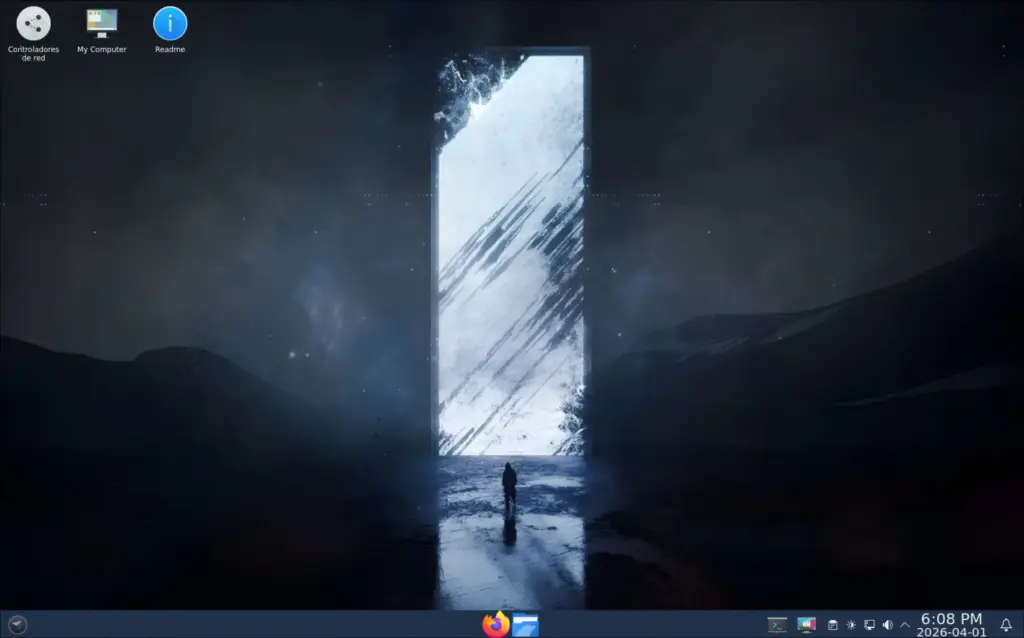
    Netrunner is a well known Linux distributions with a long history spanning over 15 years. This distro initially started based on Kubuntu but has since switched to Debian, making it quite robust and reliable. They just recently updated their core to Debian 13 Trixie from the previous Debian 12 Bookworm, with version 26 arriving a little over a year after the last update. The latest ISO is a 64-bit release, boasting the 6.16 kernel, aiming to offer users a modern aesthetic with latest software, security patches, and stability all in one package.

    Recent Updates and Features

    The official notes highlight some key improvements and recent features included in this release. For example, newer versions of core components ensure the system is fresh and secure. The inclusion of software like Qt 6.8.2 and KDE Apps 25.04.3 demonstrates their commitment to up-to-date desktop environments and utilities. Additionally, Thunderbird ESR 140.6.0, Inkscape 1.4, and VirtualBox 7.2.6 are some of the highlighted applications that enhance the user experience.

    Technical Specifications and Download Info

    The Netrunner 26 Twilight iso file weighs in at approximately 3.4 GB. Interested users can access the download through their official page, ensuring they get the latest and most secure version. This latest iteration continues to focus on providing a stable, secure, and visually appealing desktop environment, catering to both new and experienced Linux users. All these updates solidify Netrunner’s reputation for delivering a dependable and modern Debian-based distro for a broad user base.

    Sources
  • OnePlus New Flagship Scores High on Latest AnTuTu Benchmark

    OnePlus New Flagship Scores High on Latest AnTuTu Benchmark

    Key Takeaway

    1. The iQOO 15 Ultra leads the March 2026 AnTuTu ranking with the highest score, followed closely by the OnePlus 15T.
    2. The Snapdragon 8 Elite Gen 5 remains the dominant chipset in these top-performing devices.
    3. The OnePlus 15T achieves a high benchmark score due to optimized cooling and power management, despite sharing the same processor as its non-T variant.
    4. AnTuTu rankings are based on specific criteria and are subject to change monthly; real-world performance factors are also important when evaluating devices.

    Latest AnTuTu Top 10 Devices for March 2026

    Antutu recently published its selected list of latest high-end gadgets, showing off the coolest phones with the best benchmark scores in March 2026. And yes, these scores are based on some rigorous testing, making sure these are truly the cream of the crop in performance.

    Snapdragon 8 Elite Gen 5 Continues to Lead

    This month, the Snapdragon 8 Elite Gen 5 remains the star of the show, standing proud at the top of the list. The standout device that led the pack is the iQOO 15 Ultra which scored an impressive 4,174,911 points. Close behind, the new OnePlus 15T has nabbed the second spot with a score of 4,164,561 points, proving its worth as a powerful contender.

    The Rise of the OnePlus 15T

    It’s kinda surprising but cool that the OnePlus 15T, especially the version available on TradingShenzhen, did so well, securing second place. This device uses the same Snapdragon 8 Elite Gen 5 chip as its non-T sibling, but it outperformed it thanks to better cooling and performance tweaks. The testing revealed it could push higher scores, which indicates some beneficial improvements over earlier models.

    Important Factors to Remember

    But don’t forget, these monthly rankings aren’t static — they update over time, as Antutu looks at what really makes a device good beyond just benchmarks. They also take in account real-world usage, and aspects like user interface, camera quality, and battery effectiveness. So, while these scores give good hints, they aren’t the stand-alone decision makers when choosing a smartphone.


    Sources

  • Leica D-Lux 9: The Ultimate Smartphone Upgrade Option

    Leica D-Lux 9: The Ultimate Smartphone Upgrade Option

    Key Takeaway

    1. High-end smartphones with advanced features are increasingly expensive and may not match the image quality of dedicated cameras.
    2. Most compact cameras either have fixed lenses or small sensors, limiting their effectiveness compared to smartphones.
    3. The Leica D-Lux 8 offers versatile features like a zoom lens and external flash support, making it a notable high-end compact camera despite outdated hardware.

    High-End Smartphones and Their Impact on Photography

    Smartphones are getting better and better at taking photos, especially in the high-end segment. But, with these advancements, their prices are also soaring. For instance, the Vivo X300 Ultra has a price tag of nearly €2,000 ($2,300) in some parts of the world. Despite packing two 200-megapixel cameras and advanced features, many full-frame cameras still cost less and often deliver superior image quality.

    Choosing Compact Cameras in the Market

    The market for compact cameras is shrinking because many people rely on their smartphones for everyday photography. If you prefer a device that’s small, versatile, and simple to operate, your options are limited. Most premium models like the Fujifilm X100 VI or Ricoh GR IV only have fixed lenses, making them less adaptable than a smartphone with multiple cameras. Cameras with zoom lenses tend to be less appealing because of tiny sensors that don’t compare well to modern smartphones.

    Leica D-Lux 8 Features and Capabilities

    One notable exception for high-end compact cameras is the Leica D-Lux 8. It pairs a micro FourThirds sensor with a zoom lens covering a 24-75mm equivalent focal length, with an aperture range of f/1.7 to f/2.8. This provides a 3.1x optical zoom. It also includes features like an electronic OLED viewfinder and compatibility with external flashes, which smartphones cannot match.

    Ease of Use and Price Point

    This camera supports automatic shooting modes, but experienced users can manually adjust aperture and shutter speed using dedicated dials, bypassing complicated menus. The Leica Photos app makes wireless photo transfer to smartphones straightforward. Priced at $1,915, the D-Lux 8 is actually more affordable than some flagship smartphones, making it an attractive option.

    Limitations Due to Outdated Hardware

    However, the D-Lux 8 isn’t without flaws. Its primary challenge lies in its aging hardware. Both the sensor and lens are from the Panasonic Lumix LX100 II, released back in 2018. Consequently, its resolution, dynamic range, and handling of image noise lag behind newer models. Additionally, the Wi-Fi connection uses outdated Wi-Fi 4, resulting in slower photo transfers to smartphones.

    Performance and Video Capabilities

    The autofocus system is sluggish, and the display doesn’t flip out for flexible shooting angles. Video recording is limited to 4K at 30 frames per second, and it lacks RAW video support, which many photographers desire. If Leica updates the D-Lux 9 with modern hardware and features without significantly increasing the price, it could become a compelling alternative to high-end smartphones. Such a modernization would enhance its appeal significantly, especially for those seeking a premium compact camera experience.


    Sources