Tag: smartphone photography

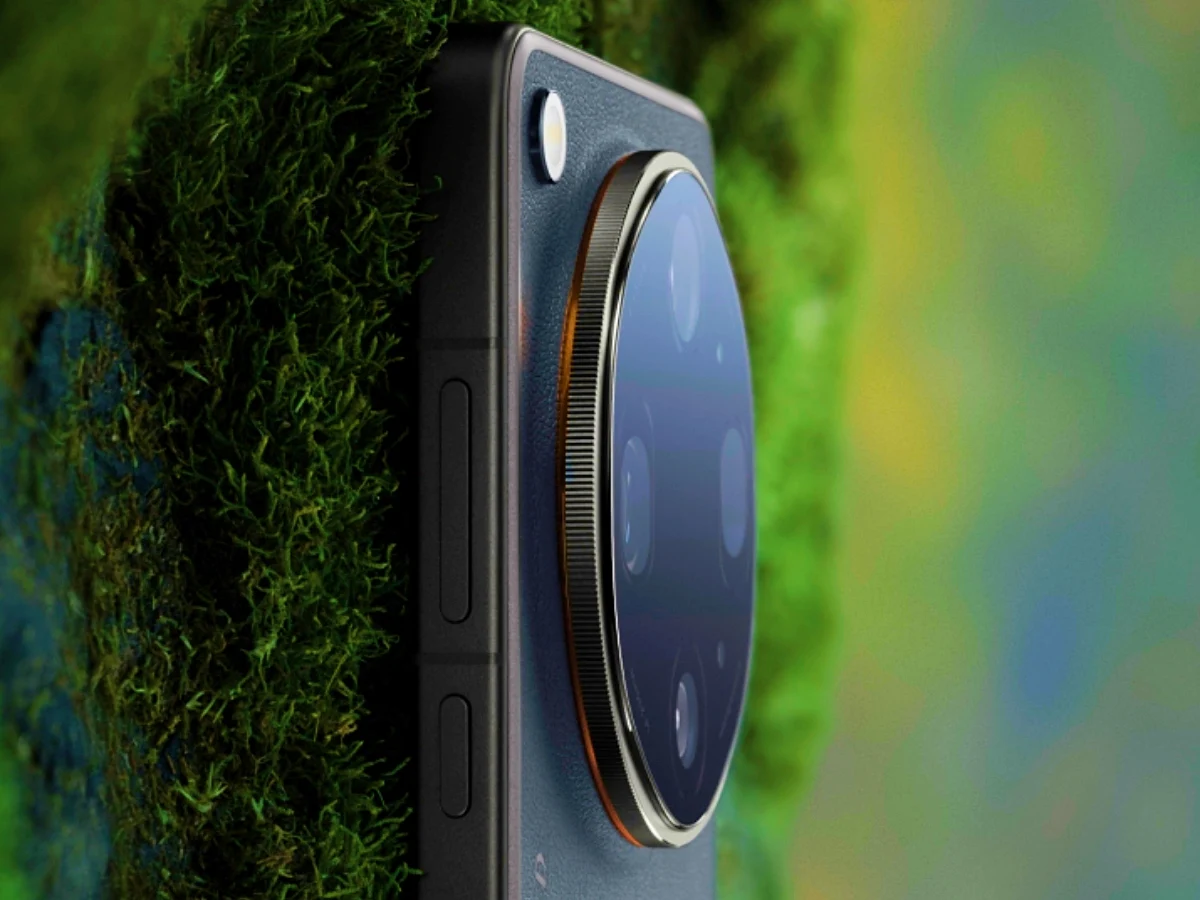
  • OPPO Find X9 Ultra Specs: 16EV Dynamic Range & Hasselblad Master Mode 2.0

    OPPO Find X9 Ultra Specs: 16EV Dynamic Range & Hasselblad Master Mode 2.0

    Key Takeaway

    1. The Hasselblad Master Mode on the Oppo Find X9 Ultra offers expanded creative control with up to 16EV dynamic range and native film styles.
    2. The device supports RAW MAX and JPEG MAX formats across six focal lengths, bridging smartphone photography and professional optics.
    3. Features include adjustable manual controls, AI-powered customizable film presets, and native filming styles such as Portra and XPAN.

    Oppo Prepares to Launch the Find X9 Ultra with Exciting Camera Updates

    As the launch date of the Oppo Find X9 Ultra approaches, the company has dropped some teasers about its camera features to create buzz. The new flagship is expected to shake up the mobile photography scene, especially with a big upgrade to its Hasselblad Master Mode. The announced improvements have sparked interest among tech and photography lovers alike, hinting at a device designed to serve both casual snappers and professional photographers.

    Enhanced Photography Options with RAW and JPEG Formats

    Celebrating the idea of a “camera in your pocket,” Oppo is offering advanced features like RAW MAX and JPEG MAX formats. These are available across six focal lengths which include 14mm, 23mm, 46mm, 70mm, 140mm, and 230mm. This advanced focus on diverse lens capabilities means users will be able to capture a wide array of scenes with more professional quality than ever before. The emphasis on flexible shooting options targets users who want both convenience and creativity in their mobile photography.

    Focus on Creative Flexibility

    The new Master Mode on the upcoming device is designed to cater to experienced photographers who like to tinker. It features an impressive dynamic range of up to 16 EV, allowing for better detail in shadows and highlights. Fans can also choose from a collection of native film styles, like Portra and TX400, which are immediately applied without needing any editing. It’s like carrying a mini darkroom in your phone, perfect for those looking for quick artistic results.

    Manual Controls and Custom Presets

    • Extensive manual controls for fine-tuning shots
    • AI-assisted “film presents” that mimic traditional film aesthetics
    • Ability to save up to 20 custom presets for quick access in future shoots

    This system offers serious flexibility, giving photographers multiple ways to tailor their images to personal preferences. Whether you want precise manual adjustments or want to use AI suggestions, the Ultra model seems geared towards a wide spectrum of users eager to experiment with their selfies or landscapes alike.

    Technical Camera Specs and Expected Performance

    The Find X9 Ultra packs impressive hardware, including a 200MP primary Sony sensor (LT-901) with a 1/1.12-inch size, aperture f/1.5, and a 23 mm focal length. The telephoto lenses include a 200MP OmniVision OV52A for 3x optical zoom at 70mm, a 50MP ISOCELL JNL for 10x zoom at 230mm, and a 50MP Sony model for ultra-wide shots with a 14mm focal length. These specifications promise high-quality images across diverse shooting scenarios, appealing to photography enthusiasts.

    Anticipation Builds for the Launch

    The official unveiling scheduled for tomorrow, April 21, stands to reveal a flagship packed with innovative features that could set a new benchmark in smartphone photography. With Oppo’s focus on enhancing user control and creative options, this device has the potential to impres many with its camera capabilities. Stay tuned for the detailed specs and how it performs in real-world testing once it officially hits the markets.


    Sources

  • Leica D-Lux 9: The Ultimate Smartphone Upgrade Option

    Leica D-Lux 9: The Ultimate Smartphone Upgrade Option

    Key Takeaway

    1. High-end smartphones with advanced features are increasingly expensive and may not match the image quality of dedicated cameras.
    2. Most compact cameras either have fixed lenses or small sensors, limiting their effectiveness compared to smartphones.
    3. The Leica D-Lux 8 offers versatile features like a zoom lens and external flash support, making it a notable high-end compact camera despite outdated hardware.

    High-End Smartphones and Their Impact on Photography

    Smartphones are getting better and better at taking photos, especially in the high-end segment. But, with these advancements, their prices are also soaring. For instance, the Vivo X300 Ultra has a price tag of nearly €2,000 ($2,300) in some parts of the world. Despite packing two 200-megapixel cameras and advanced features, many full-frame cameras still cost less and often deliver superior image quality.

    Choosing Compact Cameras in the Market

    The market for compact cameras is shrinking because many people rely on their smartphones for everyday photography. If you prefer a device that’s small, versatile, and simple to operate, your options are limited. Most premium models like the Fujifilm X100 VI or Ricoh GR IV only have fixed lenses, making them less adaptable than a smartphone with multiple cameras. Cameras with zoom lenses tend to be less appealing because of tiny sensors that don’t compare well to modern smartphones.

    Leica D-Lux 8 Features and Capabilities

    One notable exception for high-end compact cameras is the Leica D-Lux 8. It pairs a micro FourThirds sensor with a zoom lens covering a 24-75mm equivalent focal length, with an aperture range of f/1.7 to f/2.8. This provides a 3.1x optical zoom. It also includes features like an electronic OLED viewfinder and compatibility with external flashes, which smartphones cannot match.

    Ease of Use and Price Point

    This camera supports automatic shooting modes, but experienced users can manually adjust aperture and shutter speed using dedicated dials, bypassing complicated menus. The Leica Photos app makes wireless photo transfer to smartphones straightforward. Priced at $1,915, the D-Lux 8 is actually more affordable than some flagship smartphones, making it an attractive option.

    Limitations Due to Outdated Hardware

    However, the D-Lux 8 isn’t without flaws. Its primary challenge lies in its aging hardware. Both the sensor and lens are from the Panasonic Lumix LX100 II, released back in 2018. Consequently, its resolution, dynamic range, and handling of image noise lag behind newer models. Additionally, the Wi-Fi connection uses outdated Wi-Fi 4, resulting in slower photo transfers to smartphones.

    Performance and Video Capabilities

    The autofocus system is sluggish, and the display doesn’t flip out for flexible shooting angles. Video recording is limited to 4K at 30 frames per second, and it lacks RAW video support, which many photographers desire. If Leica updates the D-Lux 9 with modern hardware and features without significantly increasing the price, it could become a compelling alternative to high-end smartphones. Such a modernization would enhance its appeal significantly, especially for those seeking a premium compact camera experience.


    Sources

  • Xiaomi 17 Ultra Leaked Images Show Rival Cameras to Vivo X200 Ultra

    Xiaomi 17 Ultra Leaked Images Show Rival Cameras to Vivo X200 Ultra

    Key Takeaways

    1. The Xiaomi 17 Ultra is expected to be officially released in less than a month, with a global launch likely in March next year.
    2. Leaker Kacper Skrzypek has shared images of the Xiaomi 17 Ultra Photography Kit, hinting at a photography-centric accessory for the device.
    3. The design of the Xiaomi 17 Ultra features a more rounded body and a large circular camera housing.
    4. The device is expected to have three visible rear cameras, including a prominent periscope zoom camera.
    5. There is speculation about a potential four-camera version, but the credibility of the leaked images is still uncertain.


    The Xiaomi 17 Ultra is expected to be officially released in less than a month. Current predictions suggest that Xiaomi will not unveil its next flagship globally until early next year. It is likely that the company will hold off until March to launch the device on a worldwide scale, similar to how it introduced the Xiaomi 15 Ultra and Xiaomi 15 previously (curr. $875 on Amazon).

    Sneak Peek of the Xiaomi 17 Ultra

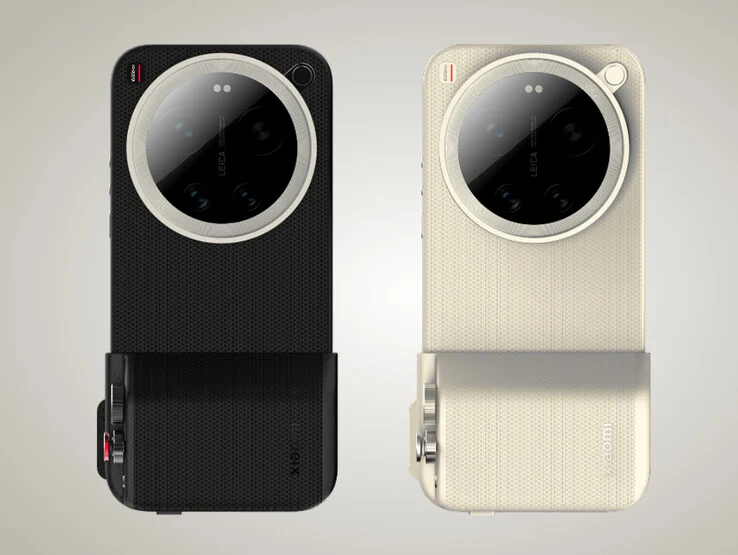
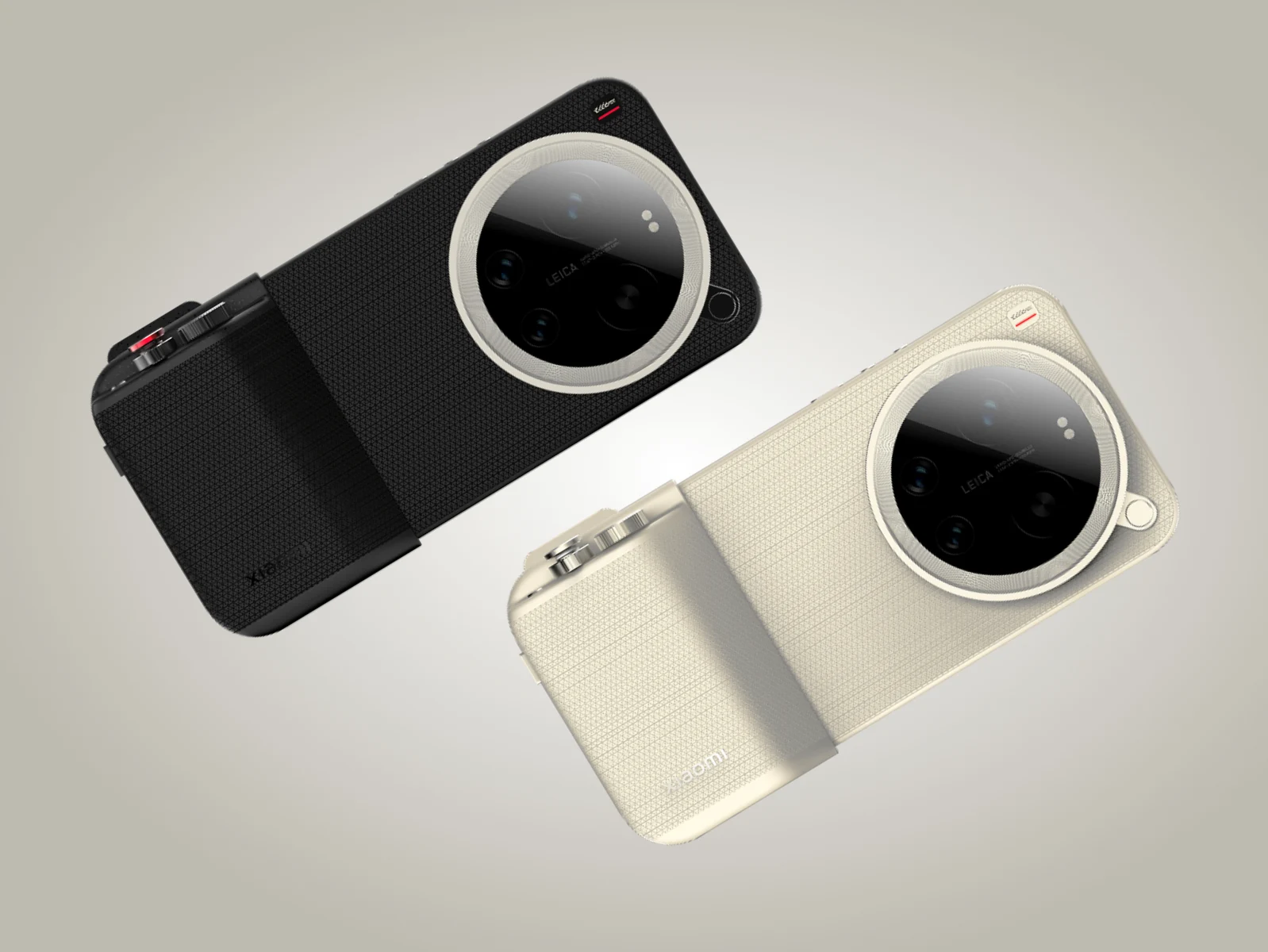
    In the meantime, leaker Kacper Skrzypek might have just shared the first glimpse of the Xiaomi 17 Ultra, ahead of the company’s series of pre-release teasers. On X, Skrzypek simply mentions that these are images of the Xiaomi 17 Ultra Photography Kit, without going into further detail. However, we can still gather some extra information, particularly that Xiaomi plans to include a photography-centric accessory for its upcoming flagship.

    Design and Camera Features

    On one hand, it appears that the Xiaomi 17 Ultra sports a body that is a bit more rounded compared to its predecessor, featuring a large circular camera housing as well. On the other hand, there are only three visible rear-facing cameras, with a periscope zoom camera taking center stage, much like the Vivo X200 Ultra.

    Camera Configuration Speculation

    Earlier, there were indications that Xiaomi might have designed the Xiaomi 17 Ultra with either three or four rear cameras. Alleged sensor details for the four-camera version have also surfaced. Therefore, the credibility of these images is still uncertain at this point, even though Skrzypek has a strong history of providing accurate leaks.

    Source:
    Link


  • Camera with 8× More Channels Revolutionizes Mobile Photography

    Camera with 8× More Channels Revolutionizes Mobile Photography

    Key Takeaways

    1. The University of Utah has developed a camera system for smartphones that captures 25 color channels instead of the usual three (red, green, blue).
    2. This technology allows smartphones to perform advanced tasks like evaluating fruit ripeness, recognizing plant stress, and improving facial recognition.
    3. The system uses a specialized diffractive filter with nanoscale patterns to encode spectral information into a compressed 2D image.
    4. This innovation offers advantages over traditional hyperspectral cameras, which are often large, costly, and slow for video capture.
    5. Potential applications extend beyond smartphones to include surveillance, food processing, and improved data transmission for satellites.


    Researchers at the University of Utah have created a groundbreaking camera system that might soon enable your smartphone to observe the world with significantly greater detail than is currently possible. Unlike traditional cameras that only capture three color channels (red, green, and blue), this innovative technology captures 25 different color channels. This allows it to record a “spectral fingerprint” for each pixel in high-definition video.

    Revolutionizing Smartphone Photography

    The scientists claim their system is compact enough to fit inside a cellphone, which could transform smartphone photography. A future device equipped with this technology may be able to instantly evaluate the ripeness of fruits, recognize stress or illnesses in plants, distinguish various skin conditions, and much more. Furthermore, it could enhance facial recognition technology by detecting features that are invisible to both human eyes and standard digital cameras.

    Breakthrough Technology

    This innovation — discussed in the journal Optica — consists of a specialized diffractive filter with nanoscale patterns, which is placed directly over a conventional camera’s sensor. This filter encodes all 25 channels of spectral information from a scene into a compressed 2D image, known as a “diffractogram.” Subsequently, a computer algorithm reconstructs this image into a comprehensive data cube.

    Future Applications

    This method marks a significant advancement, as traditional hyperspectral cameras are typically large, costly, and too slow for video capture. While the possibilities for smartphones are vast, this technology also has great potential in other fields. It could be adapted for use in surveillance cameras, food processing facilities, and beyond. Due to the compression of captured images, the resulting data files are much smaller, which could be advantageous for satellites that need to transmit data over long distances. If this technology is further developed and embraced, it could lower the costs of hyperspectral cameras across various industries, while also enhancing their portability.

    Source:
    Link


  • Vivo X200 Ultra: Transform Your Android into a Pro Camera with Zeiss

    Vivo X200 Ultra: Transform Your Android into a Pro Camera with Zeiss

    Key Takeaways

    1. The Zeiss teleconverter extends the focal length of the Vivo X200 Ultra to 200 mm, providing 8.7x optical zoom.
    2. Image quality is impressive, especially at higher zoom settings, with minimal distortion and commendable sharpness.
    3. Comparing images taken with and without the teleconverter shows clear improvements in detail and quality.
    4. The Vivo X200 Ultra performs well even without accessories, thanks to its built-in periscope camera reaching up to 800 mm.
    5. Overall, the Vivo X200 is a strong choice for photography enthusiasts, especially when used with quality accessories like the Zeiss teleconverter.


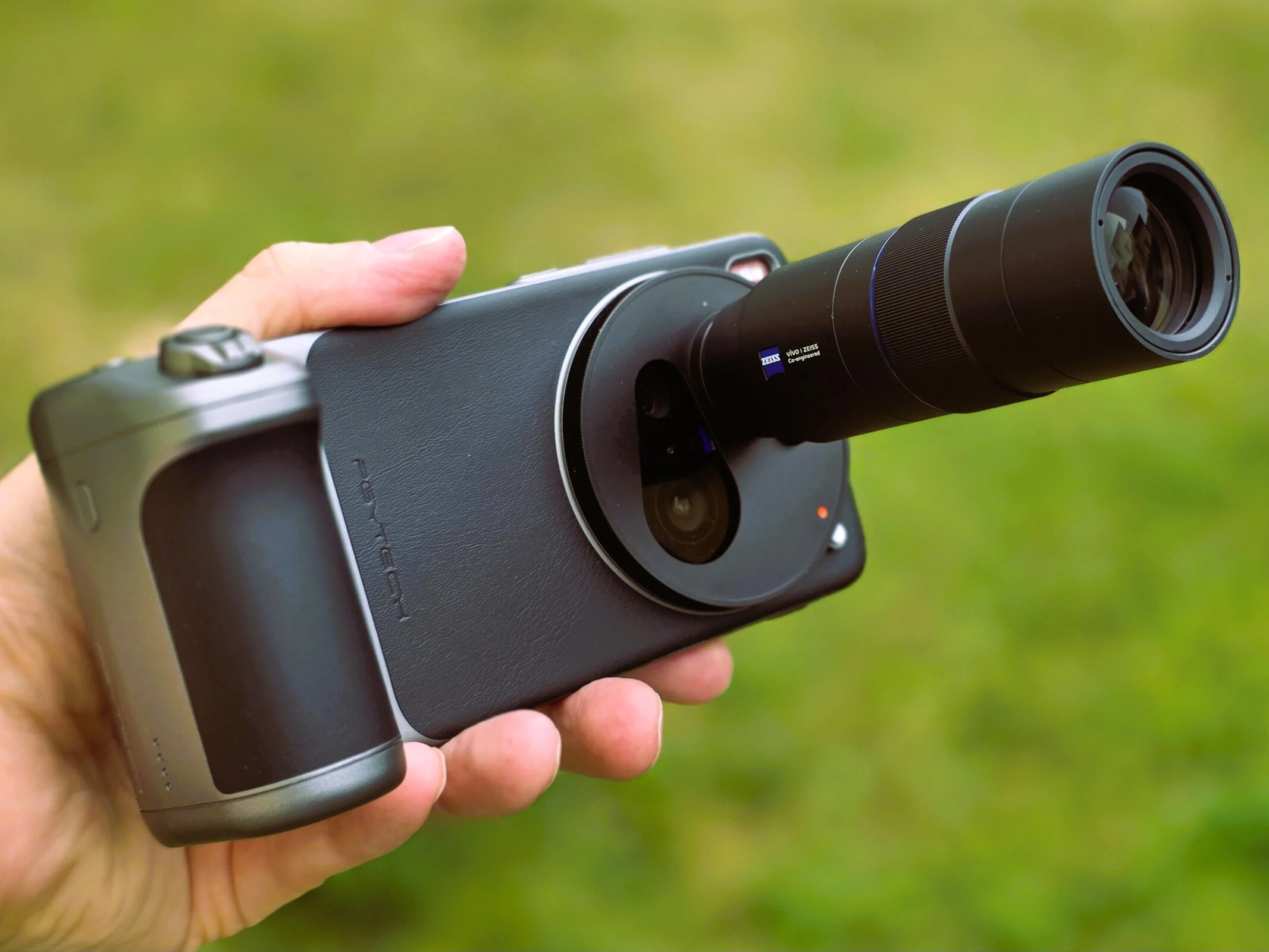
    In our latest review about the Photography Kit, we explored a wide range of camera accessories. We tested these with the Vivo X200 Ultra, which included the Zeiss teleconverter, while taking some pictures outdoors. The sample we used was supplied by Trading Shenzhen.

    Focal Length and Zoom Capabilities

    Using the Zeiss teleconverter, we could extend the focal length to 200 mm, which equals 8.7x optical zoom. By comparison, the smartphone has a maximum lossless zoom of 85 mm. Additionally, there are special modes in the camera app that allow for presets at 400 mm, 800 mm, and 1,600 mm.

    Image Quality Assessment

    The images taken with this setup are impressively good for a smartphone, particularly at higher zoom settings. Although there is some blurriness in the shots, this might be attributed to the camera software rather than the lens. The Zeiss teleconverter seems to be of excellent quality and yields solid image results. We noticed no significant distortion, and the sharpness of the pictures is commendable. The subjects also exhibit a lovely bokeh effect.

    Comparing Without Accessories

    When we compared the Vivo X200 Ultra with and without the accessories, the added quality from the Zeiss teleconverter was quite clear. There were more details and less sharpening, which highlights the benefits of the additional Zeiss optics. Nonetheless, the Vivo flagship performs beautifully even without the extended focal length, thanks to its periscope camera that reaches up to 800 mm.

    For all the pictures we captured, we used the default settings in the camera software. To help identify details in the images, we included all the image files alongside their respective photos. You can click on the individual photos to see them in full resolution.

    Conclusion on the Vivo X200

    In conclusion, the Vivo X200 offers a great photography experience, especially when paired with quality accessories like the Zeiss teleconverter. The camera’s capabilities stand out, making it a solid choice for photography enthusiasts.

    Source:
    Link

  • Capture Stunning Portraits with Vivo X200 Ultra Smartphone Camera

    Capture Stunning Portraits with Vivo X200 Ultra Smartphone Camera

    Key Takeaways

    1. The Vivo X200 Ultra features a unique camera setup, making it difficult to identify a single “main camera” due to its well-balanced sensor sizes.
    2. It utilizes dual chips for image processing: the Vivo V3+ for post-processing and the Vivo VS1 for initial image data processing, enhancing portrait photography.
    3. The smartphone’s 35mm lens with a 1/1.28-inch sensor provides optical stabilization and excels in capturing natural-looking portraits with less distortion.
    4. Compared to rivals, the Vivo X200 Ultra offers superior portrait framing and a more attractive bokeh effect, especially in challenging lighting conditions.
    5. Users can benefit from a telephoto lens with a 3.7x zoom capability, providing versatility beyond the primary lens for various photography needs.


    The Vivo X200 Ultra stands out as one of the top smartphones of this year. Readers can discover all the specifics in our comprehensive Notebookcheck review. With its well-balanced sensor sizes, pinning down a definitive “main camera” for this flagship device from the Chinese brand proves challenging.

    Image Processing Power

    For several years, Vivo has relied on its in-house technology for the Image Signal Processor (ISP). Unlike its counterpart, the Vivo X200 Pro, which solely utilizes an ISP, the Ultra version incorporates both the Vivo V3+ chip and the Vivo VS1 chip. The V3+ chip focuses on enhancing the post-processing of images, while the VS1 chip acts as a “pre-ISP,” aimed at improving the initial processing of image data. This setup is especially advantageous for capturing portrait images.

    Photography Features

    The Vivo flagship impresses photography lovers with a 35mm lens that includes a 1/1.28-inch LYT-818 sensor along with optical stabilization. When compared to flagship rivals like the Apple iPhone 16 Pro or the Oppo Find X8 Ultra, this focal length is quite distinct.

    The distinction between the 35mm lens of the Vivo X200 Ultra and a 23mm lens, such as that found in the Galaxy S25 Ultra, lies primarily in the angle of view. Additionally, variations in focal lengths can influence distortion levels. The Vivo flagship excels in portrait photography, as it tends to result in less facial distortion compared to the broader angles found in competing smartphones. The 35mm lens on the Vivo X200 Ultra also provides a more pleasing and natural visual experience.

    Performance Comparison

    Photographs taken with the Vivo X200 Ultra versus the Galaxy S25 Ultra highlight that the former not only achieves a more natural portrait framing but also creates a more attractive bokeh effect. This is particularly beneficial when dealing with challenging subjects like our kitten, as portrait mode with artificial background blur often struggles to meet expectations.

    If the 35mm lens sometimes presents a slightly wider angle than conventional 85mm portrait lenses, users can also take advantage of the telephoto lens on the Vivo X200 Ultra, which offers a useful 3.7x zoom capability.

    Source:
    Link

  • CheckMag: Vivo X200 Ultra Zeiss Camera Phone First Reviews & Images

    Key Takeaways

    1. Camera Performance: The Vivo X200 Ultra features a triple-camera system that excels in various focal lengths, although competitors like the Oppo Find X8 Ultra and Xiaomi 15 Ultra may offer better quality at 23/24mm.

    2. Video Reviews: Initial reviews from Gizmochina and Ben’s Gadget Reviews highlight the camera’s capabilities, including some issues with the photography kit and teleconverter, along with comparisons to other flagship devices.

    3. Filmmaking Features: Vivo has integrated advanced video features like 4K60 LOG and 4K120, appealing to filmmakers, as showcased in a video that filmed a Porsche 911 entirely with Vivo devices.

    4. Photography Capabilities: The Vivo X200 Ultra is particularly strong in portrait photography, low-light conditions, and offers impressive results in macro, concert, landscape, and architectural photography.

    5. Community Response: The device is generating significant buzz on Chinese social media, with many users sharing high-quality images taken with the Vivo X200 Ultra, demonstrating its popularity and performance.


    The Vivo X200 Ultra has been on the market in China for nearly a week, and it’s the hottest topic on Chinese social media platforms. With some initial feedback from international reviewers now available, we’ll examine two videos from Gizmochina and Ben’s Gadget Reviews, as they seem more accessible for global audiences.

    Camera Setup Comparison

    The image below is from a Chinese review that highlights how the Vivo X200 Ultra’s triple-camera system stands out from typical flagship cameras. If you’re in search of top-notch quality at a 23/24mm focal length, you might find the Oppo Find X8 Ultra, Xiaomi 15 Ultra, or Galaxy S25 Ultra to be better options. However, when it comes to other focal lengths, the three similarly sized sensors in the Vivo X200 Ultra perform quite well.

    Insightful Videos

    The first English-language video about the Vivo X200 Ultra probably comes from Gizmochina. It provides a comprehensive overview of the Vivo camera and features a separately sold photography kit and teleconverter, which are already available for import at pretty high prices. The reviewer points out that the quality of the adapter isn’t very impressive, and there seem to be some software problems affecting both the Vivo X200 Ultra and the teleconverter, which we hope will be resolved soon.

    In addition, Ben Sin has also released a video sharing his initial thoughts on the Vivo X200 Ultra, including the camera grip and the 85 to 200mm lens. The reviewer appears to be a fan of Vivo and seems quite pleased with the Vivo X200 Ultra. The video compares photos and videos taken with the iPhone 16 Pro Max and Oppo Find X8 Ultra, and he promises to deliver more detailed comparisons with the Xiaomi 15 Ultra and other devices shortly.

    Filmmaking Features

    Vivo aims to attract filmmakers with features like 4K60 LOG and 4K120 video, and it looks like they’ve succeeded in this instance. A Chinese video linked below showcases the Porsche 911, filmed entirely using Vivo devices including the Vivo X200 Ultra.

    While scrolling through Weibo, we discovered a plethora of stunning images, all captured with the Vivo X200 Ultra. Some representative shots can be viewed below, with the first gallery showcasing impressive macro photography.

    Portrait photography, especially in low light, was one of Vivo’s main focuses for the X200 Ultra’s camera. This seems to have paid off, as shown by the portrait images shared by a Weibo user.

    Concert photography, landscapes, as well as street and architectural photography particularly benefit from the enhanced ultra-wide camera and the dedicated 35mm lens of the Vivo X200 Ultra. It was challenging to choose which photos to highlight, as there are many high-quality images on Weibo taken with the Vivo X200 Ultra or the optional teleconverter.

    Source:
    Link

  • Vivo X200 Ultra Unveils Detachable 200mm Super Telephoto Lens

    Vivo X200 Ultra Unveils Detachable 200mm Super Telephoto Lens

    Key Takeaways

    1. The Vivo X200 Ultra features a unique external super telephoto lens developed in collaboration with ZEISS, enhancing its photography capabilities.

    2. The new telephoto lens has a 200MP sensor, 200mm focal length, and f/2.3 aperture, offering an 8.7x optical zoom.

    3. It employs advanced design and technology, achieving up to 1600mm digital zoom and image quality similar to traditional 30x systems.

    4. The X200 Ultra includes a robust internal camera setup with three high-resolution sensors and supports 4K video recording at various frame rates.

    5. The device comes with a comprehensive Photography Kit that includes accessories like a battery, case, shoulder strap, and specialized buttons for enhanced user experience.


    Earlier this week, Huang Tao, who is the Product Vice President at Vivo, hinted at a mysterious fourth camera for the upcoming X200 Ultra. Although the device already has a triple camera configuration, there were rumors about an external accessory meant to improve its photography features. Now, Han Boxiao, Vivo’s Product Manager, has confirmed this speculation.

    Vivo X200 Ultra Unveils New 200MP Telephoto Lens

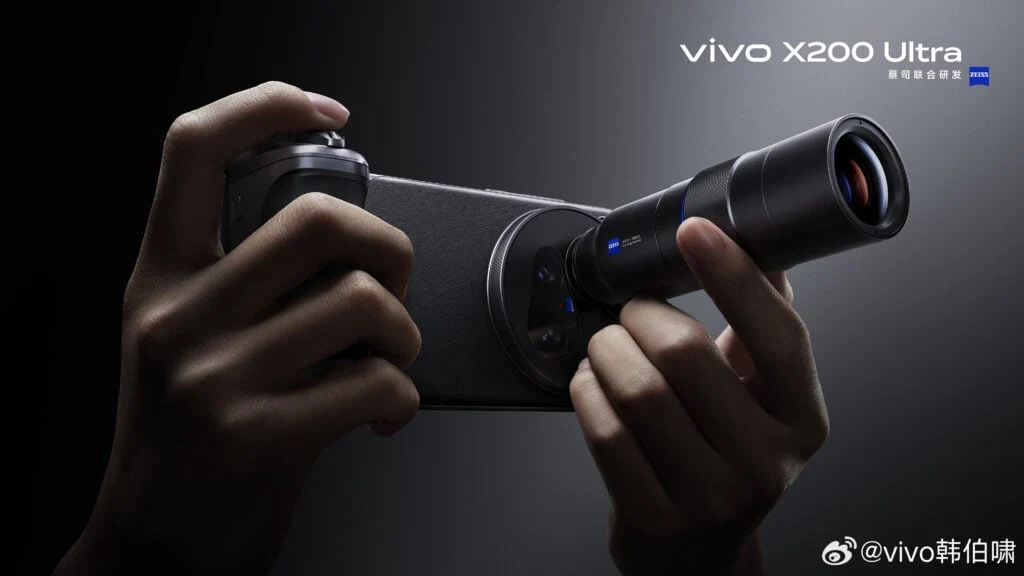
    The fourth camera on the Vivo X200 Ultra is an external super telephoto lens created in partnership with ZEISS. This lens sports the ZEISS Blue Label and contains a 200-megapixel sensor with a 200mm focal length and an f/2.3 aperture. The combination offers an impressive 8.7x optical zoom, designed to enhance mobile photography experiences.

    Specifications of the New Telephoto Lens

    This external lens is constructed with a 3-group, 13-element Kepler-style design using high-transmittance glass elements to ensure maximum clarity and precision. It also features RMSC technology, providing a second zoom stage that can achieve an 800mm equivalent (35x) zoom and up to 1600mm (70x) digital zoom, delivering image quality comparable to traditional 30x systems.

    Inside the Vivo X200 Ultra

    Alongside the external lens, the X200 Ultra boasts a robust internal camera setup, which includes:
    – 50MP Sony LYT-818 main sensor (35mm)
    – 50MP LYT-818 ultra-wide lens (14mm)
    – 200MP Samsung HP9 periscope telephoto sensor (85mm)

    The device is capable of recording 4K video at 60fps with 10-bit Log as well as cinematic 4K at 120fps. Vivo’s proprietary VS1 and V3+ imaging chips facilitate both pre- and post-processing, aiming for outputs comparable to those from DSLR cameras. Furthermore, a physical camera control key, known as the Action Button, is located on the right side, which also manages the customizable zoom flash system for portrait photography reminiscent of DSLRs.

    Full Photography Kit for Creators

    The external lens comes as part of the Vivo X200 Ultra Photography Kit, which connects to the phone through USB Type-C for quick response times. The kit includes a 2,300mAh battery, a vintage-style case with a kickstand, a professional shoulder strap, and a specialized video recording button.

    With its cutting-edge optics and the external ZEISS lens system, the Vivo X200 Ultra is shaping up to be an exceptional tool for professional photography enthusiasts.


  • Vivo X200 Ultra: 4K 120fps Video Recording & Camera Samples

    Vivo X200 Ultra: 4K 120fps Video Recording & Camera Samples

    Key Takeaways

    1. Vivo will launch the X200 Ultra in China, enhancing the legacy of the X100 Ultra with improved camera features.
    2. The X200 Ultra will feature a full-focus triple-camera setup with Optical Image Stabilization (OIS) on all lenses.
    3. It will support all-focus 4K video recording at 120fps and 4K 10-bit true Log video for professional-quality cinematography.
    4. The smartphone is expected to include a 50MP Sony LYT-818 primary sensor, a 50MP ultra-wide lens, and a 200MP Samsung HP9 periscope telephoto lens.
    5. A dedicated camera shutter button with a sliding action will enhance user control over zoom, focus, and exposure.


    Vivo is all set to unveil the Vivo X200 Ultra in China later this month, alongside other devices like the X200s, Pad 5 Pro, Pad SE, and the Watch 5. The X200 Ultra is expected to continue the impressive legacy of the Vivo X100 Ultra, promising to deliver an even better camera experience. The Vivo X200 Pro has already been recognized as one of the best smartphones for photography, and the Ultra version aims to surpass that standard. Prior to its launch, Vivo’s Product Manager Han Boxiao shared some exciting camera features through a few Weibo posts.

    Innovative Camera Features

    Han Boxiao hinted at the X200 Ultra’s innovative features, particularly concerning its camera abilities. One of the standout features is a full-focus triple-camera setup, which is the first in the industry to offer Optical Image Stabilization (OIS) across all three lenses. The X200 Ultra will also enable all-focus 4K video recording at 120fps and support 4K 10-bit true Log video, catering to those who seek professional-quality cinematography.

    Sensor and Photography Enhancements

    Equipped with a significant 1/1.28-inch sensor and Zeiss Ultra-level optical image stabilization, the X200 Ultra is likely to change the game for wide-angle photography, making it perfect for capturing wide landscapes. Above are some camera samples taken with the device showcasing its capabilities.

    Anticipated Camera Specifications

    Rumors suggest that the X200 Ultra will come with a camera arrangement that includes a 50-megapixel Sony LYT-818 primary sensor, a 50-megapixel LYT-818 ultra-wide lens, and a remarkable 200-megapixel Samsung HP9 periscope telephoto lens. To enhance the photography experience, it will include VS1 pre-processing and V3+ post-processing chips.

    Moreover, this smartphone is likely to feature a dedicated camera shutter button that has a unique sliding action. This design will provide users with better control over zoom, focus, and exposure, significantly improving the photography experience, especially when capturing images in landscape mode.


  • Vivo X200 Ultra: V3+ Features & VS1 PreISP vs iPhone 16 Pro Max

    Vivo X200 Ultra: V3+ Features & VS1 PreISP vs iPhone 16 Pro Max

    Key Takeaways

    1. The Vivo X200 Ultra will be released in April 2025, featuring two specialized imaging chips: the V3+ and the new VS1.
    2. The VS1 chip functions as a “pre-processing chip” to enhance exposure settings, focus adjustments, and overall camera reliability.
    3. The V3+ chip handles post-processing tasks like noise reduction and detail enhancement, working alongside the Snapdragon 8 Elite ISP.
    4. Vivo’s dual-chip strategy aims to improve image quality, competing with professional SLR cameras and enhancing consistency in photography.
    5. The smartphone will include a triple flash system, known as Zoom Flash, offering better illumination across the entire field of view compared to standard single LED flashes.


    Vivo is gearing up to transform the world of smartphone photography with the upcoming X200 Ultra, which is expected to be released in April 2025. Recently, an executive from the company disclosed that this flagship model will feature not just one but two specialized imaging chips—the vivo V3+ and the new VS1—crafted to enhance photo quality to levels akin to professional SLR cameras. Additionally, it will include a revamped triple flash system.

    Understanding the VS1 Chip

    The camera configuration of the X200 Ultra is cleverly designed for maximum performance. The VS1 serves as a “pre-processing chip” or “PreISP,” which manages early processing functions such as exposure settings, focus adjustments, and image stacking. Furthermore, it aims to boost the overall dependability of the camera system, an area where iPhones have earned significant accolades. It’s encouraging to observe Vivo’s commitment to enhancing the consistency and reliability of the X200 Ultra’s imaging capabilities.

    Dual-Chip Advantage

    The VS1 chip collaborates with the V3+ post-processing chip, which tackles more intensive tasks like noise reduction and detail enhancement. This dual-chip strategy, when combined with the robust ISP of the Snapdragon 8 Elite, is set to significantly enhance image processing—a vital feature for a device competing with standalone cameras. While this “PreISP” technology isn’t groundbreaking (similar to Google’s Tensor chips or Apple’s Deep Fusion), Vivo’s unique approach could distinguish it from competitors, especially as the VS1’s algorithms are honed on a vast array of SLR photos to ensure precise lighting accuracy.

    Innovative Flash System

    Another striking aspect of this Ultra model is the triple flash system, also known as Zoom Flash, which adeptly illuminates the entire field of view and ensures the subject is adequately lit. This level of exposure isn’t achievable with just a single LED flash as seen in typical smartphone cameras.

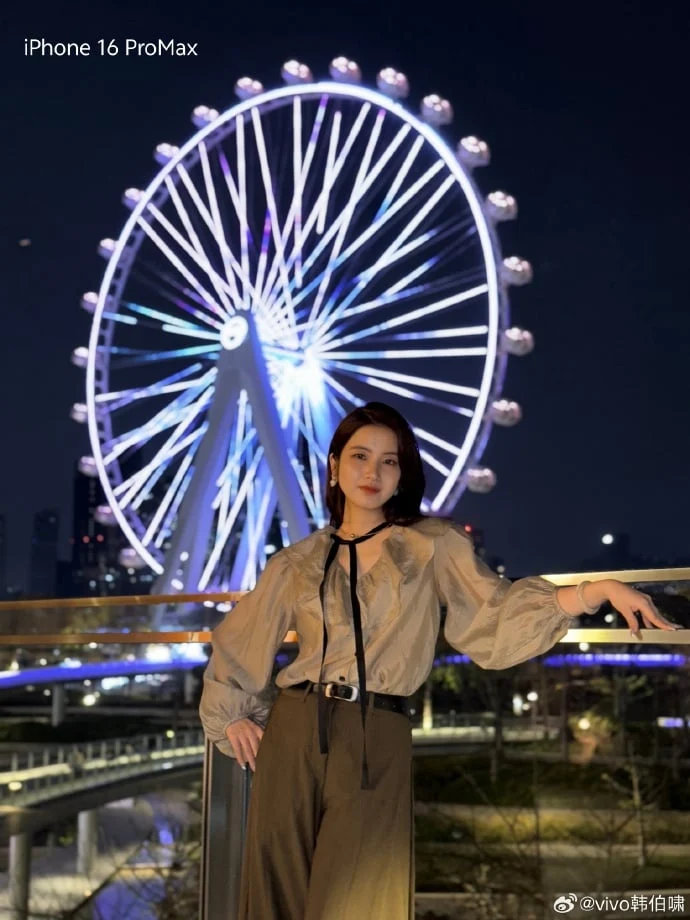
    The company representative also presented low-light image examples taken with the vivo X200 Ultra, Canon 5D Mk IV, and iPhone 16 Pro Max. The sample from the vivo X200 Ultra not only appears brighter than the latest iPhone but also demonstrates significantly better detail resolution upon further examination.

    Source: