
Key Takeaways
1. The University of Utah has developed a camera system for smartphones that captures 25 color channels instead of the usual three (red, green, blue).
2. This technology allows smartphones to perform advanced tasks like evaluating fruit ripeness, recognizing plant stress, and improving facial recognition.
3. The system uses a specialized diffractive filter with nanoscale patterns to encode spectral information into a compressed 2D image.
4. This innovation offers advantages over traditional hyperspectral cameras, which are often large, costly, and slow for video capture.
5. Potential applications extend beyond smartphones to include surveillance, food processing, and improved data transmission for satellites.
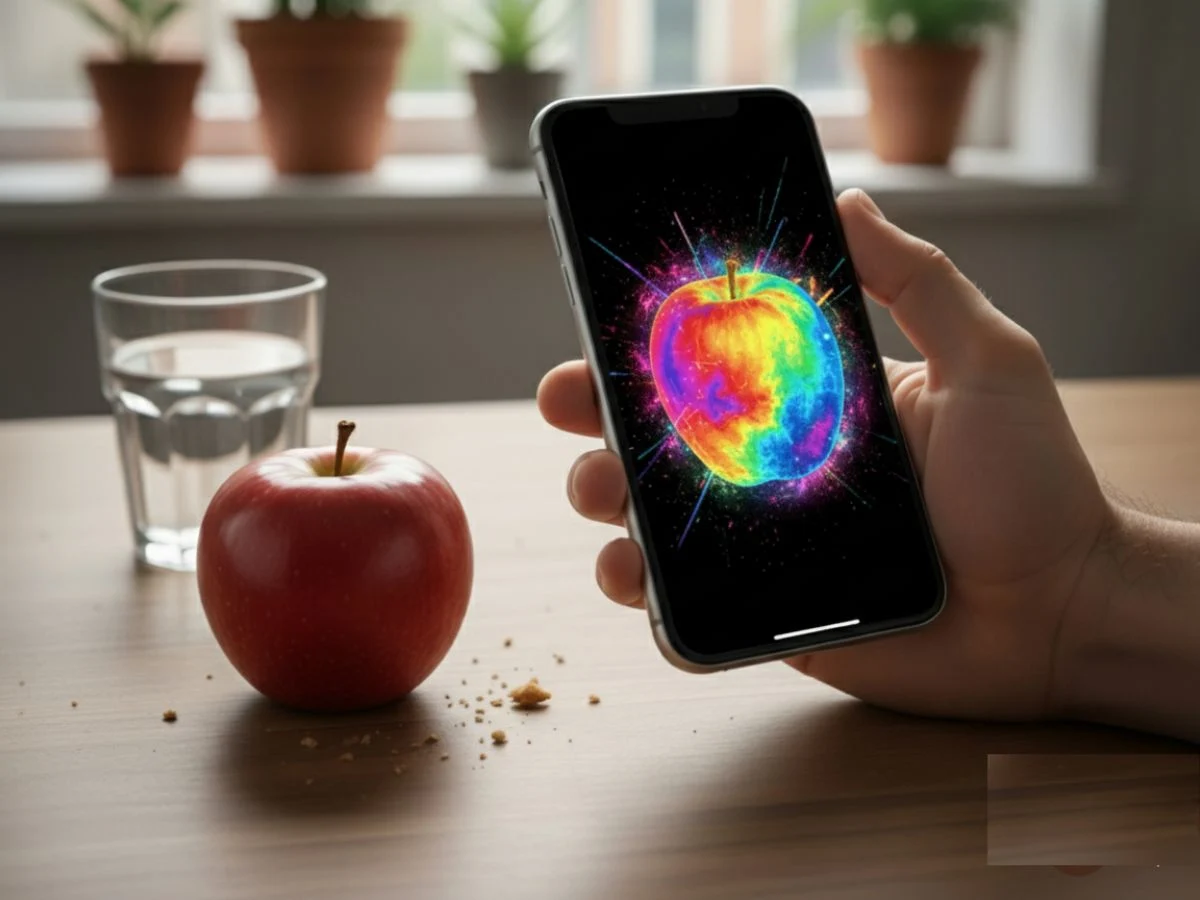
Researchers at the University of Utah have created a groundbreaking camera system that might soon enable your smartphone to observe the world with significantly greater detail than is currently possible. Unlike traditional cameras that only capture three color channels (red, green, and blue), this innovative technology captures 25 different color channels. This allows it to record a “spectral fingerprint” for each pixel in high-definition video.
Revolutionizing Smartphone Photography
The scientists claim their system is compact enough to fit inside a cellphone, which could transform smartphone photography. A future device equipped with this technology may be able to instantly evaluate the ripeness of fruits, recognize stress or illnesses in plants, distinguish various skin conditions, and much more. Furthermore, it could enhance facial recognition technology by detecting features that are invisible to both human eyes and standard digital cameras.
Breakthrough Technology
This innovation — discussed in the journal Optica — consists of a specialized diffractive filter with nanoscale patterns, which is placed directly over a conventional camera’s sensor. This filter encodes all 25 channels of spectral information from a scene into a compressed 2D image, known as a “diffractogram.” Subsequently, a computer algorithm reconstructs this image into a comprehensive data cube.
Future Applications
This method marks a significant advancement, as traditional hyperspectral cameras are typically large, costly, and too slow for video capture. While the possibilities for smartphones are vast, this technology also has great potential in other fields. It could be adapted for use in surveillance cameras, food processing facilities, and beyond. Due to the compression of captured images, the resulting data files are much smaller, which could be advantageous for satellites that need to transmit data over long distances. If this technology is further developed and embraced, it could lower the costs of hyperspectral cameras across various industries, while also enhancing their portability.
Source:
Link
Leave a Reply