Author: GizNews

  • GTA Online Revenue Leak Explains Delayed GTA 6 PC Release

    GTA Online Revenue Leak Explains Delayed GTA 6 PC Release

    Key Takeaway

    1. Rockstar Games refused to meet ShinyHunters’ demands, resulting in the exposure of financial data, including GTA Online metrics.
    2. PS5 leads in active users and revenue, with console platforms dominating per-player spending compared to PC.
    3. GTA 6 will not feature GTA Online, and a new online service may launch post-release, with potential for GTA 6 Online shortly after.
    4. The GTA 6 PC release has not been confirmed, but historical delays suggest a possible release as early as February 2027.
    5. Despite a smaller GTA Online player base, the PC market is growing, and Rockstar may shift focus to capitalize on this trend.

    Cybercriminals expose data from Rockstar Games

    Rockstar Games, famous for their hit titles like GTA, have had a rough time lately. The company refused to give into extortion demands from the cybercriminal group called ShinyHunters. Because of that, some sensitive financial data was leaked, including stats for GTA Online. This leak revealed important revenue metrics that are likely to influence the company’s priorities, especially concerning the development and release of GTA 6 for different platforms.

    Details on platform user engagement and revenue

    Social Media and Player Statistics

    CharlieIntel shared insights from social media regarding the leaked data. It shows that PS5 gamers are the most active, with 3,474,021 weekly users and generating around $4,486,346 in revenue. Xbox One players are also quite numerous, making the multiplayer servers quite lively, with approximately 894,621 users helping bring in $264,273. Interestingly, more Xbox One users are playing than PC or laptop gamers combined, which could influence future platform focus.

    Spending Patterns Across Platforms

    Looking at how much players spend, consoles tend to be the leader. Users on the Xbox Series X average about $1.65 each, while PS5 gamers spend around $1.29. On the other hand, PC players spend significantly less, with average spending near 30 cents per person. These numbers demonstrate the overall trend of higher monetization on gaming consoles compared to computers.

    Future GTA Online and Single-Player Focus

    It seems that GTA 6 will probably not include GTA Online at launch, given that the original GTA Online started way back in 2013. Many rumors hint that a new online service might launch after GTA 6’s release. There’s even speculation that GTA 6 Online might be available within a month after the main game’s launch on November 19th. But the game franchise still holds its biggest fan base on PlayStation consoles, meaning Sony might get priority updates or features first.

    PC Gaming and Third-Party Multiplayer Options

    More players on Windows prefer alternative multiplayer options like FiveM, which offers role-playing servers with mods and custom modes. These popular community-created servers aren’t reflected in the official numbers leaked by ShinyHunters. So, the actual engagement on PC could be higher than what is seen in the leaked data, especially considering the active modding scene.

    GTA 6 Launch and PC Version Rumors

    Rockstar’s parent company Take-Two hasn’t officially confirmed a GTA 6 PC port yet, and the release date is still uncertain. Once launched on consoles, history shows it usually takes a while for the PC version to drop. For example, GTA 5 took nearly 19 months to reach PC after its console debut. Some industry insiders believe that GTA 6’s PC version could be ready by February 2027, but nothing is set in stone yet. Still, there is an expectation that the game will eventually come to PC, given the rising importance of the platform in their overall market strategy.

    Industry Trends and Developer Outlook

    Even with lower active GTA Online players, CEO Strauss Zelnick of Take-Two has mentioned that the PC market is growing fast. Rockstar seems to prioritize a console-first approach but isn’t overlooking the potential for PC market growth. This push towards multiple platforms hints that PC gamers might see GTA 6 on their devices sooner rather than later, even if the initial focus remains elsewhere.


    Sources
  • Xiaomi 4K 27-Inch Gaming Monitor with Mini LED Local Dimming Zones

    Xiaomi 4K 27-Inch Gaming Monitor with Mini LED Local Dimming Zones

    Key Takeaway

    1. Xiaomi has launched a 27-inch Mini LED gaming monitor (G Pro 27Qi 2026) internationally, starting in Australia, Germany, and Japan.
    2. The Redmi Monitor G Pro 27U 2026 features a 4K/160 Hz IPS panel with switchable resolution modes and supports AMD FreeSync Premium Pro, offering high brightness and color coverage.
    3. The Redmi Monitor G Pro 27U 2026 is priced at CNY 2,699 (~$395) in China, but its global availability remains unconfirmed.
    4. Both monitors include high-end features like Mini LED local dimming zones, HDR support, and multiple connectivity options, with the G Pro 27Qi targeting gaming use.

    Introducing Xiaomi’s New Gaming Monitors

    Earlier medias has announced that Xiaomi are now selling a new 27-inch gaming monitor across different countries around the world. The device, named Mini LED Gaming Monitor G Pro 27Qi 2026, boast 1,152 Mini LED local dimming zones. It is now available in several countries including Australia, Germany and Japan, with plans for a worldwide release in the future. Fans of gaming tech are excited, as the monitor offer a high-quality display with impressive features.

    Specifications and Features in Details

    The Xiaomi Mini LED Gaming Monitor G Pro 27Qi 2026 features a 27-inch screen with Mini LED technology that improves contrast and brightness. The monitor’s high refresh rate makes it ideal for gaming, although the exact refresh rate isn’t mentioned here. The monitor also supports HDR, bringing vibrant images to the screen, and it’s backed by a broad array of ports including DisplayPort 1.4, HDMI 2.1, USB Type-A, and USB Type-C offering 90 W power delivery. It’s designed with that gaming vibe in mind, with smooth responsiveness and vivid visuals you expect from a gaming monitor.

    Chinese Market Launch and Model Variety

    On a different note, Xiaomi has launched the Redmi Monitor G Pro 27U 2026 specifically for China. This model was initially introduced nearly a year ago and gets a fresh update now. It maintains the 4K/Q-160 Hz IPS panel but is also capable of switching to 1080p at a blazing fast 330 Hz, comparable to what the Asus ROG Strix XG27UCG offers. Also, it supports AMD FreeSync Premium Pro with typical 1 ms GtG response time, a broad 98% DCI-P3 color coverage, and peak HDR brightness of 1600 nits within its Mini LED zones. The monitor runs on HyperOS 3, ensuring a user-friendly experience.

    Pricing and Global Availability Outlook

    This particular monitor in China retails for CNY 2,699 (around $395). Xiaomi hasn’t confirmed if this product will be found outside China, but the release of the Mini LED Gaming Monitor G Pro 27Qi 2026 suggests that Xiaomi might be planning to make it globally available soon. Both models demonstrate Xiaomi’s commitment to pushing cutting-edge display technology, especially in the gaming sector, promising an immersive experience for users. Clearly, the company’s expanding its monitor lineup and tech options for gaming and professional use alike.


    Sources

  • Xiaomi Redmi K90 Max Outperforms Flagship Phones in Early Benchmarks

    Xiaomi Redmi K90 Max Outperforms Flagship Phones in Early Benchmarks

    Key Takeaway

    1. The Redmi K90 Max features powerful Dimensity 9500 and D2 graphics chips, outperforming other Dimensity 9500-backed smartphones on Geekbench.
    2. The device is expected to have CPU performance comparable to modern flagship phones and potentially come with up to 16 GB of RAM.
    3. Xiaomi is preparing to launch the Redmi K Pad 2 and Redmi K90 Max on April 21 in China.

    Redmi K90 Max’s Recent Geekbench Leak

    Xiaomi is all set to launch its latest line of Redmi gadgets soon, and news about the Redmi K90 Max is starting to get attention. The company confirmed that this device, along with the Redmi K Pad 2, will be launched on April 21 in China. The upcoming event is anticipated to draw many fans eager for new tech releases, particularly because of the Redmi K90 Max’s promising specs.

    Performance Metrics & Chips

    In recent Geekbench listings, the Redmi K90 Max has been showcasing its impressive hardware. Xiaomi has been breathing about the device’s powerful Dimensity 9500 processor and discrete D2 graphics chips on social media. The scores from Geekbench suggest that this phone comfortably beats other smartphones powered by the same Dimensity 9500 chip, such as the Oppo Find X9 Pro, showcasing its superior performance capacity.

    Real-World Comparison & RAM Options

    The CPU performance of the Redmi K90 Max appears to be quite on par with what we expect from modern flagship processors, supporting its status as a high-end device. This means it can compete with market leaders like the Galaxy S26 Ultra, Xiaomi 17 Ultra, and OnePlus 15, all of which are premium models that cost around $899. The listing also hinted that Xiaomi might offer the Redmi K90 Max with up to 16 GB of RAM, making it an appealing option for power users.


    Sources

  • Sony Xperia 1 VIII Release Date Leaked Ahead of Schedule

    Sony Xperia 1 VIII Release Date Leaked Ahead of Schedule

    Key Takeaway

    1. Sony is developing the Xperia 1 VIII, likely to be released before the first anniversary of the Xperia 1 VII.
    2. The upcoming Xperia 1 VIII is FCC certified and expected to support 5G, Wi-Fi 7, and retain a 3.5mm headphone jack.
    3. The redesign of the Xperia 1 series is anticipated with the eighth-generation model.


    It appears that the long-awaited update about Sony planning to refresh the Xperia 1 series is real. In October, Qualcomm disclosed that Sony, along with Samsung, Xiaomi, and OnePlus, signed agreements to use their Snapdragon 8 Elite Gen 5. Multiple sources and signs over the past few months strongly suggest Sony is working on not just a new Xperia 1 but also a Xperia 10 device.

    Speculation and Certifications

    Sources have been buzzing with speculation, and recently, images of the Xperia 1 VIII renderings popped up online. These visuals give some idea about its design, yet full specifications remain a mystery. Meanwhile, monitoring agencies like the FCC have spotted a new Sony device with the code ‘PY7-30515Z,’ sparking rumors about which device it might be.

    Potential Launch Timeline and Features

    Although there’s no official confirmation, the timing suggests this could be the Xperia 1 VIII, especially since Sony tends to refresh its flagship lines around May. Interestingly, the FCC listing appeared a month before the previous Xperia 1 VII was documented in the same platform, hinting at an upcoming launch. Despite the uncertainty, the FCC approval confirms the device supports 5G and Wi-Fi 7 and still maintains a 3.5mm headphone jack. Reports indicate that the new Xperia 1 will undergo a comprehensive redesign for its eighth iteration.


    Sources
  • Microsoft Considers Raising Xbox Game Pass Prices

    Microsoft Considers Raising Xbox Game Pass Prices

    Key Takeaway

    1. Xbox is considering making Game Pass more flexible and cost-effective, moving away from the current model.
    2. Introducing new tiers or customizable subscription options could help address interest and retention issues.
    3. Reducing choice overload may improve game completion rates and overall user engagement.

    Xbox Game Pass Price Hikes and Future Plans

    Since its launch, Xbox Game Pass has seen multiple increases in its subscription prices. These hikes have pushed the service closer to becoming unsustainable for both the company and its users. There are rumors that Microsoft might be considering removing popular titles like Call of Duty from the service as a strategy to combat poor sales. But, don’t worry, fans of the service. Not everything is doom and gloom, as fresh information has lately come to light. An internal memo from the new Xbox head, Asha Sharma, revealed some plans that could change how Game Pass is structured.

    Sharma’s Vision for a More Flexible Service

    Sharma emphasized that Game Pass is a key component to Xbox’s gaming value, but the current system isn’t perfect. She admitted that in its present form, the subscription has become too pricey for many players, which calls for a better value proposition. Looking ahead, the company aims to develop a more adaptable model, though she acknowledged it would take time to test and refine these ideas. Readers should understand that this suggests a potential shift towards customizable tiers or payment options, rather than just a flat fee for access to everything.

    Potential Changes to Subscription Tiers

    The idea of making Game Pass more ‘flexible’ could entail offering various subscription levels. One possibility could be a system where players pick a specific set of games based on their interests and pay accordingly. This might involve filtering options like genres or tracking how many hours someone spends in their favorites. While this isn’t confirmed, such a model could better suit individual preferences, offering a tailored experience instead of a one-size-fits-all approach. Creating this system would be technically complex, but it might solve many issues currently faced by subscribers.

    Addressing Content Overload and User Engagement

    Right now, one of the big problems with Game Pass is the overwhelming amount of titles available. Users often find themselves unable to experience most of what’s on offer because of the huge selection. A more curated experience might help players focus on titles they are genuinely interested in. Additionally, limiting options could make it easier for players to complete games. Currently, many users start multiple games but rarely finish them due to having too many options distracting from completing any one game. Fewer choices could improve overall engagement and satisfaction.

    Sources
  • Nvidia RTX 5090 Works on macOS with Tiny Corp’s Custom Driver

    Nvidia RTX 5090 Works on macOS with Tiny Corp’s Custom Driver

    Key Takeaway

    1. A new open-source driver from Tiny Corp enables Nvidia Blackwell GPUs to connect with macOS Macs via Thunderbolt 5 or USB4, reintroducing Nvidia hardware into the Mac ecosystem.
    2. The setup currently uses a custom kernel extension and Tiny Grad compiler, resulting in lower performance compared to native Metal or CUDA solutions.
    3. While performance is modest now, the project holds significant potential for future optimization, especially in improving kernel efficiency for heavy compute tasks.

    Apple and Nvidia had a fallout many years ago, which left Mac users without official GPU support. This break up killed CUDA support on macOS, making developers and researchers turn to Apple’s Metal framework. But now, a new open-source driver from Tiny Corp has changed the game, reintroducing Nvidia Blackwell hardware to the Mac environment.

    Introduction to the Tiny GPU Project

    The project utilizes a special kernel extension called Tiny GPU. It permits external GPUs such as the RTX 5090, with its 32 GB VRAM, to connect directly with Apple Silicon Macs over Thunderbolt 5 or USB4. This significant tech advancement bypasses the need for virtual machines, streamlining the connection process. In a demo shown by Alex Ziskind, the RTX 5090 successfully paired with a Mac Mini M4 Pro, which retails at approximately $1399 on Amazon, featuring 24 GB RAM and 512 GB storage (note: price may vary).

    Performance and Current Limitations

    Though the connection is stable, the current software is still in early phases. The driver is dependent on the Tiny Grad compiler rather than native Metal or CUDA, leading to noticeable performance limitations during heavy calculation tasks. When testing with the Llama 3.1 8B model, the setup managed about 7.48 tokens each second. While offering compatibility benefits, it’s considerably slower than the native Metal-based Llama CPP, which is nearly ten times faster on similar hardware, Alex explains.

    Future Potential and Usage

    Nonetheless, the major value of this project lies in its future prospects for optimization. The main bottleneck now isn’t the Thunderbolt 5 cable—which transfers model weights efficiently—but the efficiency of automatically generated kernels. For simple chat functions, the Blackwell setup performs quite well, providing time-to-first-token speeds that are three to four times quicker than native Metal solutions.

    Installation and Practical Use

    The setup involves approving a system extension and running a Docker-based compiler pipeline. Although this isn’t yet a replacement for streamlined Metal workflows, it marks the first operational solution in years. It offers a promising glimpse into future possibilities for Nvidia GPU support on macOS.

    Alex Ziskind discusses this project extensively on his YouTube channel, demonstrating its potential and progress.


    Sources

  • DJI Mic 4 vs Mic Mini 2: Teasing New Colorful Wireless Microphone

    DJI Mic 4 vs Mic Mini 2: Teasing New Colorful Wireless Microphone

    Key Takeaway

    1. DJI is teasing a new wireless microphone release expected on April 28, likely the DJI Mic Mini 2.
    2. The teaser hints at a colorful lineup, suggesting more vibrant options for a lifestyle-focused user base.
    3. The upcoming product launches include the DJI Osmo Pocket 4 and DJI Lito drones, with the microphone release fitting into this upcoming launch lineup.


    Exciting News for DJI Fans This April

    This month is looking really exciting for DJI with lots of new gadgets hitting the market. The company has been dropping teaser images for multiple upcoming products like the DJI Osmo Pocket 4 coming on April 16, & the DJI Lito drones scheduled for April 23. Fans are eagerly waiting to see what’s next from this innovative brand.

    Hints of a New Wireless Microphone

    Recently, DJI gave us a sneak peek of a tiny square device via a teaser captioned “More Than Sound – April 28”. The image shows a silhouette similar to a DJI Mic transmitter which indicates a new wireless microphone might be on its way. Speculations are high whether we are getting a flagship DJI Mic 4 or a more affordable DJI Mic Mini 2.

    What Could This New Microphone Be?

    The last DJI Mic 3 was launched just in August 2025, so more likely, this teaser is related to an upgrade of the DJI Mic Mini which first appeared in November 2024. Given the short gap, fans believe it could be a refreshed, new version of this pocket-friendly mic. The teaser’s vibrant colors also suggest a switch towards a more lively, lifestyle-oriented product that appeals to casual users rather than just professionals.

    Colorful Lineup & Accessories

    The teaser video shows plenty of colors, hinting at a broader range of products this time, possibly including colorful stickers or accessories to make the transmitters stand out. It’s still not clear if the colors are just for appearance or part of a new product line. The fact that leaked marketing images show the DJI Mic 3 included with the Osmo Pocket 4’s “Creator Combo” added more clues pointing to the possibility of a new Mini 2 model arriving soon.

    What’s Next in Store

    Until DJI makes an official announcement, all these clues remain in the realm of speculation. But one thing is for sure: this month promises some major new launches that will surely excite tech and gadget lovers alike. Keep an eye out for more updates about DJI’s upcoming releases as the dates get closer.


    Sources

  • DJI Teases New Device Release in April: What’s Coming at Your Fingertips

    DJI Teases New Device Release in April: What’s Coming at Your Fingertips

    Key Takeaway

    1. DJI is launching multiple new devices in April, including drones and microphones.
    2. The latest announcement involves a device related to the Osmo series, possibly the Osmo Mobile 8 Pro.
    3. The new Osmo Mobile 8 Pro is expected to offer improved stabilization and an upgraded Multifunctional Module.

    DJI’s Exciting New Launches in April

    DJI has announced they are rolling out a bunch of fresh gadgets this month. It started with the reveal that they will launch the Lito 1 and Lito X1 drones on April 20. Followed shortly by teasing some new microphones scheduled for April 28. It’s pretty clear that the company is aiming to expand its product lineup quite aggressively this spring.

    Details about the New Device

    Now, the latest update from DJI is about another product launch happening sometime in April. They choose to only share information via their Chinese social media accounts this time, making it a bit more mysterious for the global audience. But, since DJI usually makes its new consumer gadgets available worldwide down the line, hope remains high that this will also be available internationally soon. Fans are left to wonder whether this new device will be published outside China on April 21 or not, depending on the official confirmation.

    What’s Currently Known

    In the teaser video, DJI shows a small accessory detaching from what looks like a stabiliser for cameras. The same clip hints that this release might be part of the Osmo series too. Leaks online suggest that it could be the Osmo Mobile 8 Pro, which is a more advanced version of the Osmo Mobile 8 that was released back in November 2025. The current price for the Osmo Mobile 8 on Amazon is approximately $126. Rumors suggest that the Pro version will supercharge video stabilization compared to the regular one and add an enhanced Multifunctional Module. But as of now, DJI has yet to reveal any official prices for this new gadget.

    Sources
  • Xiaomi’s New iPad Mini Rival with 165Hz Display Launches Soon

    Xiaomi’s New iPad Mini Rival with 165Hz Display Launches Soon

    Key Takeaway

    1. The Redmi K Pad 2 is set to launch in China on April 21, 2026, alongside other Xiaomi devices.
    2. It will feature a Dimensity 9500 chipset and a large 9,100mAh battery.
    3. The tablet will have an 8.8-inch LCD display with a 165Hz refresh rate, maintaining similar specifications to its predecessor.
    4. The design has been updated to a minimalistic look, similar to the latest iPad mini.

    Upcoming Xiaomi Device

    Xiaomi is ready to introduce a new device that is gonna shake things up in the tablet market in China soon. The Redmi K Pad 2, which is a successor to the previous compact model, is packing some flagship features but keeps the small, handy size. Recently, the company showed off its design, and now, we got word on the official launch date.

    Launch Details

    According to the latest update, Xiaomi will release its new gadget in China on April 21, 2026. This launch will happen along side the debut of the K90 Max and the Redmi Book Pro 2026 series that are powered by Intel Panther Lake chips. No other info has been shared yet, only the date is confirmed for now.

    Specifications and Rumors

    If you missed previous rumors, the Redmi K Pad 2 is said to have a Dimensity 9500 processor—MediaTek’s latest flagship chip. It will also pack a sizeable 9,100mAh battery, making it quite the powerhouse for a compact tablet. As for the display, Xiaomi announced an 8.8-inch screen but didn’t specify whether it will be LCD or AMOLED. The Digital Chat Station report indicates LCD, so don’t expect a radical upgrade here. Also, the refresh rate will stay at 165Hz, matching the last model’s performance.

    Design & Expectation

    The design of the K Pad 2 has received a fresh look with a more minimalistic rear, resembling the style of the 2024 iPad mini 128GB Wi-Fi model, which costs around $474 currently. Xiaomi’s upcoming teasers might reveal more details about this flagship tablet’s specs before the scheduled launch, so stay tuned for more updates soon.


    Sources

  • DaVinci Resolve Photo Mode: Free Lightroom Alternative for Photographers

    DaVinci Resolve Photo Mode: Free Lightroom Alternative for Photographers

    Key Takeaway

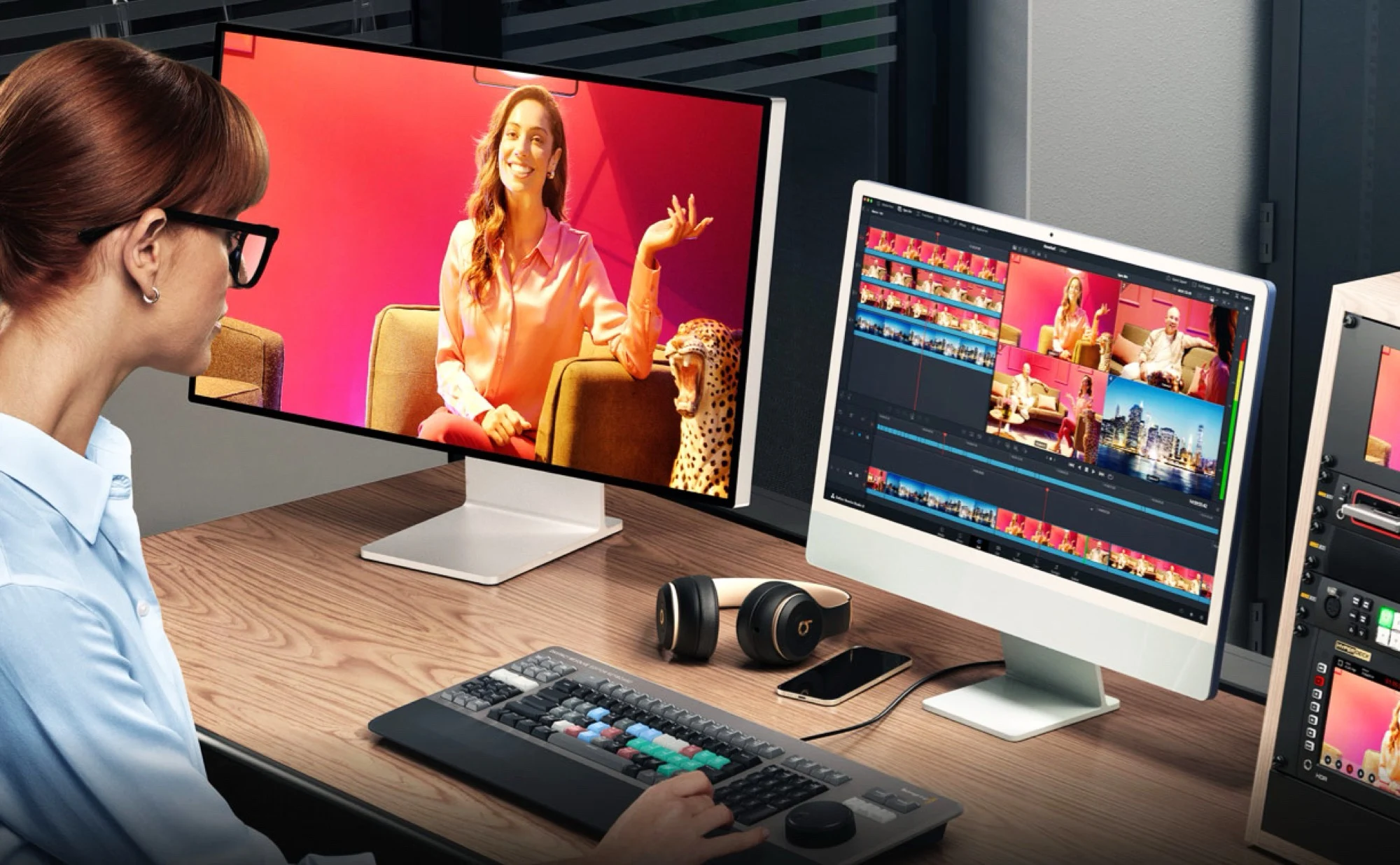
    1. DaVinci Resolve 21 now offers a free photo management mode with features like sorting, tagging, rating, and AI-powered search.
    2. It supports RAW, ProRAW, JPEG, and HEIC files from select Canon, Sony, Nikon, Fujifilm, and Apple iPhone cameras.
    3. Tethering and live camera controls are available for selected Canon and Sony cameras.
    4. Many video editing tools are integrated into photo mode, including AI-driven masking, depth of field adjustments, age alteration, and color correction.
    5. Some advanced features require purchasing a DaVinci Resolve Studio license for $295, and the current version is a public beta.

    A Bright New Free Choice for Photographers

    If you’re tired of paying for Adobe Lightroom, then here is good news, like really good. DaVinci Resolve version 21 has just made a user-friendly photo mode, which allows you to manage huge collections of pictures easily. You can organize images into albums, tag them, and rate your photos. Plus, it has this cool AI-powered search feature that helps find images based on specific content, saving you lot of time.

    Supported File Formats and Camera Compatibility

    This software is compatible with RAW files of select cameras from brands like Canon, Sony, Nikon, and Fujifilm. However, it’s worth noting that the list of supported cameras isn’t as big as some market leaders in this area. Still, if you have an Apple iPhone ($819 on Amazon), you can edit ProRAW photos directly. Also, JPEGs and HEIC files are supported, making it versatile for most users.

    Connectivity and Editing Features

    With certain Canon and Sony cameras, you can connect your devices via tethering, which means you transfer photos directly after snapping, without needing to save to a computer first. The software also let you change camera settings from your PC and view the live camera feed. For editing, most of DaVinci Resolve’s video tools are available here, including AI-powered mask creation, depth of field adjustments, aging effects, and color corrections, all in photo mode for this multi-purpose software.

    Download, Cost and Extra Features

    Download DaVinci Resolve 21 free from the Blackmagic Design website, although keep in minds, this is still a public beta, so bugs might be around. To unlock advanced features like lens distortion correction, AI-based noise reduction, and powerful GPU acceleration, you can opt to buy the DaVinci Resolve Studio license for $295. It’s quite a reasonable price for professional-grade tools included in this option.


    Sources