
Key Takeaways
1. The iPhone 17 and iPhone 17 Pro have improved cameras, especially in telephoto and front-facing options, but overall camera performance still shows limitations compared to previous models.
2. The ultra-wide camera experiences vignetting and captures less detail in the corners, relying on digital zoom for macro photography, similar to the iPhone 16 series.
3. Macro mode requires users to get very close to subjects, leading to distorted views and increased depth of field, with the iPhone Air lacking macro support entirely.
4. Apple’s marketing claims about 8x optical zoom on the iPhone 17 Pro and Pro Max are misleading, as this zoom is achieved through digital magnification, not true optical zoom.
5. The quality of digital zoom is questionable, effectively reducing the telephoto camera’s capabilities compared to older models, raising concerns about misleading advertising practices in the industry.
According to Apple, the iPhone 17 and iPhone 17 Pro bring notable upgrades to their cameras, but when compared to the iPhone 16, the enhancements are mainly seen in the telephoto and front-facing cameras. The iPhone 17 and iPhone Air both feature a 48 MP f/2.2 ultra-wide camera with a 1/2.55-inch sensor and a 48 MP main camera that combines a 1/1.55-inch sensor with an f/1.6 lens. In contrast, the iPhone 17 Pro is equipped with an f/1.78 lens and a 1/1.28-inch sensor.
Limitations in Camera Performance
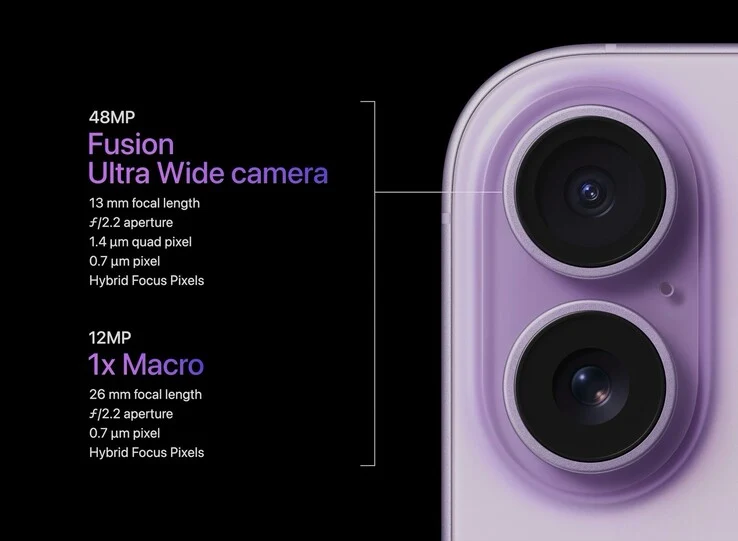
The inability of Apple to make improvements to these cameras presents several challenges for users. For instance, the ultra-wide camera still suffers from noticeable vignetting in initial sample images, and the corners of the photos capture significantly less detail. Additionally, Apple continues to depend on the ultra-wide camera for macro photography, just like it did with the iPhone 16 series. It also uses a standard 2x digital zoom, which effectively turns the camera into a 26mm macro camera with a small 1/5-inch sensor.
Macro Mode and User Experience
While it is possible to utilize the complete 48 MP sensor and 13 mm field of view in macro mode, users have to get really close to their subjects to take a large format shot. Even Apple’s sample photos indicate that, in contrast to rivals that allow macro photography with the telephoto lens, the wide-angle lens creates a distorted view with a significantly increased depth of field. The reliance on the ultra-wide camera also means that the iPhone Air does not even support macro mode at all.
Misleading Marketing Practices
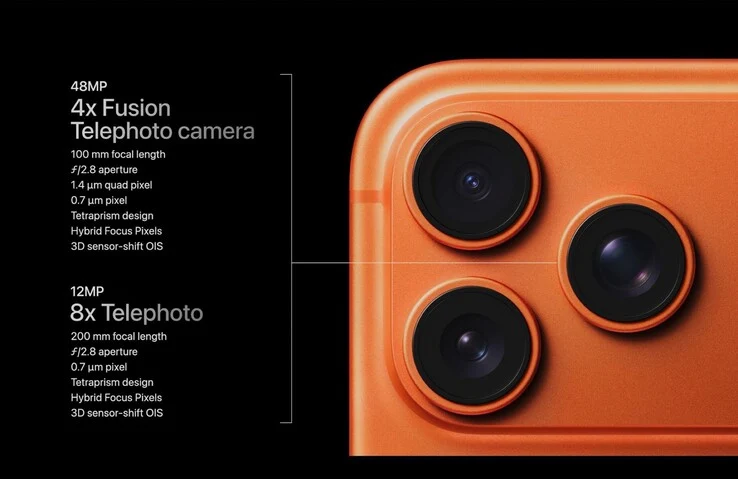
What’s even more frustrating is that Apple’s marketing seems to be more misleading than ever before. The company claims that both the iPhone 17 Pro and iPhone 17 Pro Max can achieve 8x optical zoom with a focal length of 200mm, which could be considered a blatant falsehood without a lot of fine print. The 48 MP telephoto camera, which has a 1/2.55-inch sensor, provides a 35mm-equivalent focal length of 100mm. The touted 8x zoom can only be achieved through digital magnification.
Apple asserts that the quality of this digital zoom is comparable to optical zoom, but this claim is questionable. Essentially, digital zoom reduces the camera to a 12 MP telephoto camera with a tiny 1/5-inch sensor, and the effective sensor area is less than half the size of the 5 MP sensor used in the iPhone 4 from 2010. Apple is not the only company engaging in this misleading advertising; for example, Samsung also promotes a 2x “optical quality zoom” for the Galaxy S25. Overall, Apple’s aggressive marketing tactics risk misleading unsuspecting consumers.
Source:
Link


Leave a Reply