
Key Takeaways
1. Apple is predicted to surpass Samsung temporarily and maintain its lead in the smartphone market by 2025, reclaiming the title of largest smartphone manufacturer since 2011.
2. The global smartphone market is expected to grow by 3.3% in the coming year, with Apple forecasting a significant 10% increase in sales compared to Samsung’s 4.6% growth.
3. The success of the iPhone 17 series, especially in the US and China, is driving Apple’s growth, aided by a “super cycle” effect as consumers upgrade outdated devices.
4. A large second-hand market for iPhones is bolstering new sales, with 358 million used iPhones sold between 2023 and mid-2025, leading to new purchases.
5. Upcoming product launches, including a foldable iPhone in 2026 and a budget-friendly iPhone 17e, along with challenges for Chinese manufacturers, will further enhance Apple’s competitive position.
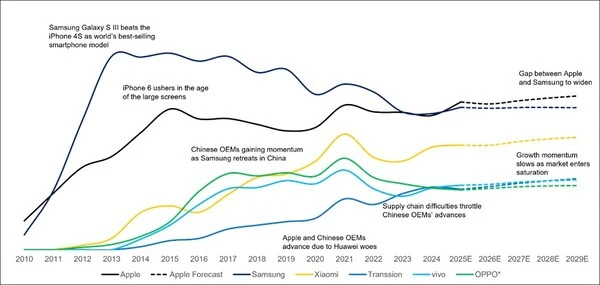
Analysts from Counterpoint Research have made some daring predictions in their latest report. They assert that the smartphone industry’s balance of power will totally shift by 2025. Samsung should prepare itself, as Apple is not only predicted to surpass the South Korean brand temporarily but also to maintain its lead. Analysts estimate a global market growth of 3.3% for the coming year.
Market Trends
Despite the overall market seeing steady growth, Apple is anticipated to experience a significant rise of 10% in sales. In contrast, Samsung is projected to gain a modest 4.6%. This increase won’t be enough for Samsung to retain its title as the world’s leading smartphone maker. If the analysts are correct, Apple will reclaim the title of largest smartphone manufacturer for the first time since 2011, increasing its market share to 19.4%. Conditions might get even worse for Samsung, as the report forecasts Apple remaining at the top until at least 2029. Thus, this would signify not just a change in leadership but a whole new era.
Reasons Behind the Shift
What’s driving this change now? The reasons are rather simple. The iPhone 17 series is flying off the shelves, not just in its primary market, the USA, but also in China. Researchers are observing impressive double-digit growth rates year-over-year there, which is quite notable given that China has previously posed challenges for Western companies. Additionally, there’s a “super cycle” effect where many people purchased new smartphones during the COVID-19 lockdowns. Those devices are becoming outdated, with dead batteries and scratched screens. Now is the time for upgrades.
Next, there’s a vast second-hand market to consider. Between 2023 and mid-2025, 358 million used iPhones were sold. Users of these devices frequently opt for a new model afterward. Moreover, a foldable iPhone is expected to launch in 2026, posing a direct challenge to Samsung right in its own market. Simultaneously, the iPhone 17e, a more budget-friendly option (which could replace the “Slim” or SE), is aimed at drawing in new customers. Bloomberg also mentions a full design revamp scheduled for 2027. Meanwhile, Chinese manufacturers are facing difficulties. Their domestic markets are weak, and supply chains are under pressure. Starting in 2026, component prices are also likely to rise. Apple and Samsung, with their considerable financial resources, have a notable edge when it comes to acquiring components.
Source:
Link
Leave a Reply