
Key Takeaways
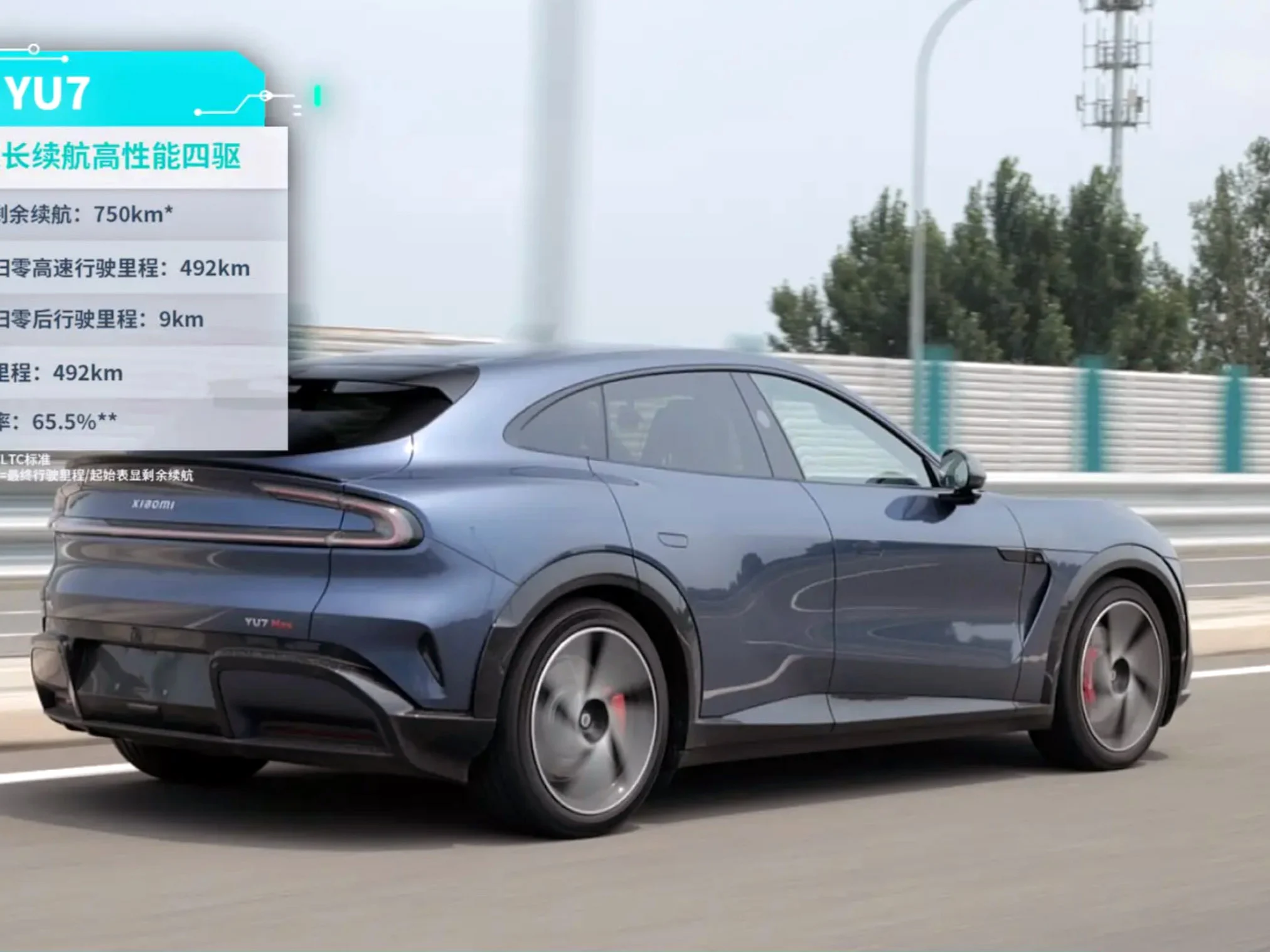
1. The Xiaomi YU7 Max SUV claims a range of 466 miles, but independent testing shows it only achieves 306 miles, over a third less than advertised.
2. Chinese CLTC testing standards often inflate electric vehicle range estimates compared to the stricter EPA standards used in the US, which are more reliable.
3. Official range claims for electric vehicles from Chinese manufacturers should be viewed skeptically, as testing conditions and methods can distort actual performance.
4. Huawei’s claim of a solid-state battery achieving 1,864 miles on a five-minute charge is likely exaggerated; realistic estimates suggest around 800 miles after accounting for testing methods and material inefficiencies.
5. The EPA testing routine, despite its flaws, remains the most accurate measure of electric vehicle range compared to other standards, indicating a need to reduce Chinese EV claims by roughly one-third for fair comparisons.
A test of the Xiaomi YU7 Max SUV, a key rival to the Tesla Model Y in China, has revealed that the bold range claims made by Chinese car makers should be viewed skeptically.
At first glance, the YU7 boasts an impressive range of 466 miles, which greatly surpasses the Tesla Model Y’s longest range variant in the US, with a maximum of 344 miles on a full charge.
Testing Standards Comparison
However, anecdotal observations indicate that the Chinese CLTC testing standard often inflates range estimates compared to the stricter EPA standards used in the US. The new EPA testing process, which includes a balanced mix of city and highway driving, has also been shown to be more reliable than the European WLTP standard by about 10-15%.
To further back up these claims, independent testing of the Xiaomi YU7 Max has revealed that it falls significantly short of its claimed CLTC range. Instead of reaching 466 miles, the YU7 Max only achieved 306 miles in testing, which is over a third less than its advertised range. This test took place in warm weather, with the correct tire pressure, and at an average speed of 62 mph, simulating typical highway conditions around Beijing.
Implications for Range Claims
Even though the CLTC tests lean more towards city driving, which can distort the figures, this assessment highlights that the official range claims for electric vehicles in China should not be taken at face value, as the driving conditions differ.
A recent example includes Huawei’s patent for a solid-state battery that made waves with its astonishing claim of 3,000 km (1,864 miles) on a five-minute charge. While fast charging from 10% to 80% is common with solid-state batteries, achieving such an energy density to support that range is not. Although prototypes could theoretically double current battery energy densities, Huawei also cites the same 500 Wh/kg limit as other developers in this field.
Realistic Expectations for Future Batteries
If the CLTC testing method is employed, the stunning 1,864-mile range begins to make more sense. This figure would need to be reduced by at least a third to align it with EPA estimates, and then another third for weight material and thermal inefficiencies from prototype to finished battery, according to researchers in Korea.
This suggests that a realistic range for Huawei’s eventual solid-state battery would be around 800 miles, which aligns better with what other companies like Toyota and Samsung are predicting for mass production.
In conclusion, while the EPA testing routine used in the US to assess electric vehicle ranges is not without its flaws, it remains the most accurate reflection of actual EV range compared to other official standards. When it comes to Chinese EV claims, it’s advisable to reduce their figures by roughly one-third for a fair comparison with the EPA estimates.
Ultimately, the Xiaomi YU7 Max SUV has shown a power consumption rate of just over 20 kWh/100 km, which is typical for a high-performance AWD electric SUV during highway travel. This indicates that Xiaomi and other Chinese EV manufacturers are not providing anything particularly exceptional in terms of efficiency, despite their lofty range claims.
Source:
Link
Leave a Reply